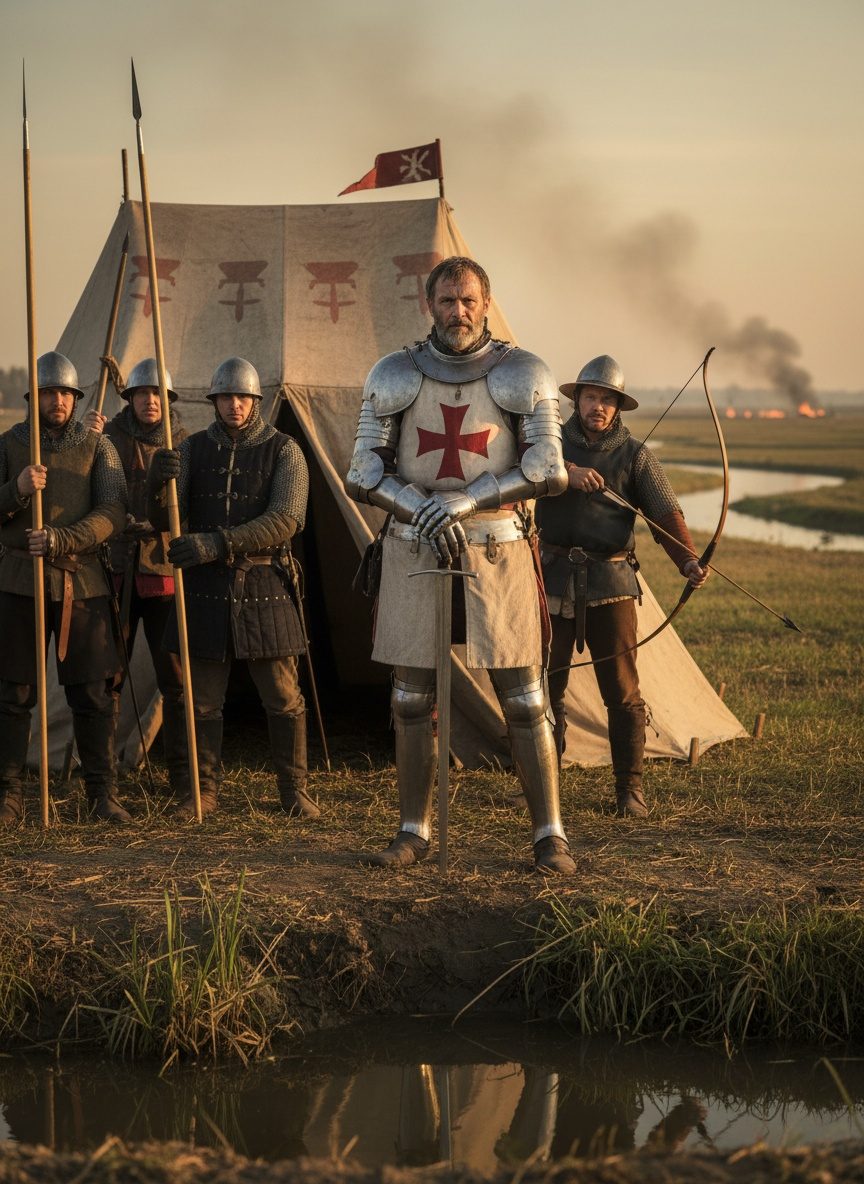
He was an artisan's son who rose to command legions. He had crossed the Alps with little more than the sword on his hip.
The Tanner's Child: An Unexpected Beginning
It was a modest Essex village, a place that seemed more inclined to birth farmers than future legends. It was here, in the shadow of his father's tannery, that a boy who would one day haunt the Italian nightmares first saw daylight. The stench of leather hides and the simple rhythm of village life formed the backdrop of his early years, shaping a childhood far removed from the intrigues of courts and the conflicts of soldiers. His upbringing was devoid of the trappings of wealth and privilege, yet it was perhaps in that unadorned childhood that his resilience was forged.
Opportunity knocked in the shape of an apprenticeship to a London tailor—a slight shift of fate, a path tangential to the grimy world of tanning but one that nudged him closer to the bustling heart of England's greatest city. Here, among the looms and needles, the young man learned craft, diligence, and a discipline that soon craved larger realms of action. Many would assume a tailor's apprentice destined for a life behind a workbench. But this young man, with an eye for the horizon and steel in his blood, saw beyond tailor's seams and garment stitches.
Inspired perhaps by the tales of distant lands whispered around the hearths of London, or by a glimmering dream of greatness, he traded needle for sword. He gathered around him a band of fellow adventurers, wanderers at heart and soul. With scarce resources and little more than a collective will, they embarked on an audacious journey to the continent, setting their course south over the formidable sweep of the Alps—a venture that would turn the path of history.
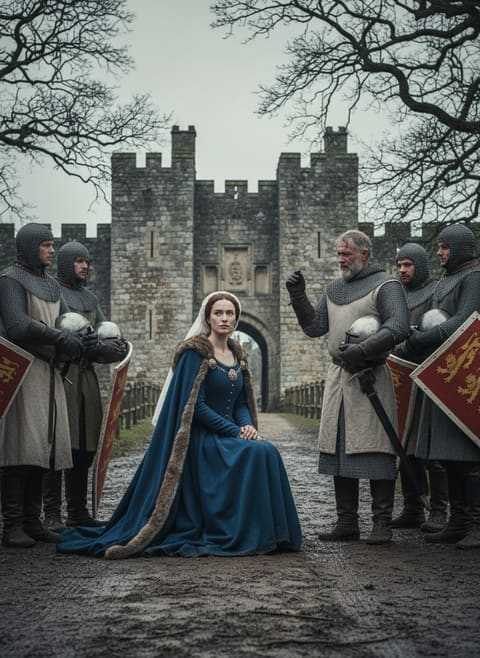
Read next: The Day a Welsh Girl Barred the Door on a King's Army
Sword Across the Alps: Forging a Reputation
Crossing the Alps stood as a testament to their determination, a deliberate passage into a world marred by strife yet ripe with opportunity for those daring enough to seize it. The Italian states, fragmented and ever in turmoil, became the stage where our tailor-turned-soldier would carve his name into the annals of warfare. His reputation, nurtured by relentless ambition and raw martial aptitude, grew with each encounter.
In medieval Italy, blood ran thick, and cities jostled for supremacy. Mercenaries were prized, feared, and necessary. He became a commander within this seething cauldron of alliances and betrayals, his tactics surprising allies and confounding foes. Though the details of early skirmishes often blur in the course of time, stories of his bold maneuvers traveled farther and swifter than any herald. His strategic acumen earned him peers among the most hardened of mercenaries—until soon he was not just another sword for hire but a leader whose name could echo like the toll of a cathedral bell.
His erstwhile tailor's hands now commanded not scissors but an army, and his new cloth was that of military standards. It is recorded that under his command, no fortress seemed too formidable, no prize out of reach. As cities fell and banners changed hands, his name became synonymous with fear. Yet, it was not only through brazen force that he left his mark. Cunning, gallantry, and the knack for turning foes into allies were as much his weapons as steel and fire.
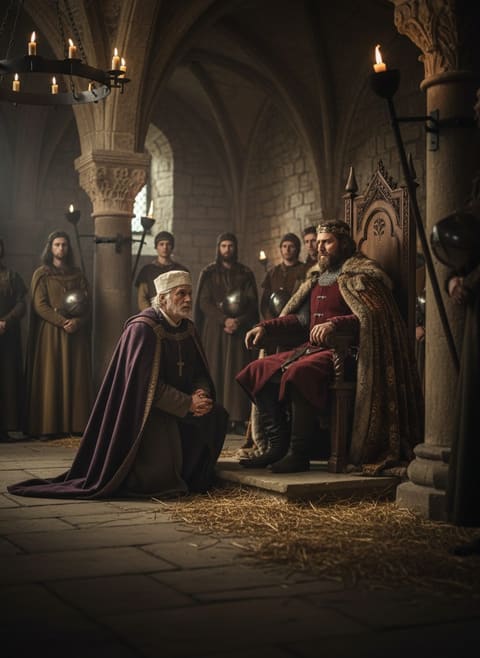
Read next: The Day a Medieval Mayor Knelt and Saved Six Condemned Men
Florence's Giant: Remembered In Grandeur
Decades passed, and the boy from Essex stood as a titan in Italy. It is a curious irony that, in death, he received a ceremony grander than most received in life; a state funeral in Florence—reserved not for knights and kings of Italian blood, but for an Englishman of humble origin. Such was the regard for his deeds that the colossal image of him, painted twenty-seven feet tall on a cathedral wall, tried to capture a legacy that seemed to transcend even the broad expanse of art's canvas.
As remarkable as his meteoric rise was, his death enshrined him into history—a reminder that Europe, though split by seas and mountains, lay bound by common stories of conquest and myth. Florence, a city of light and learning, wrapped this man in honor and mystery. Perhaps their act of remembrance speaks less to the military might he wielded than to his other, more subtle triumphs: that of a man who had crossed distance in temperament and aspiration as much as in geography.
Thus, the tale of the Essex tanner's son is a complex one, woven with threads of adventure, ambition, and an unyielding drive that dared to challenge the status quo. It serves as a reminder of the infinite potential that lies in each unassuming life, waiting only for the spark of opportunity to illuminate its path. As much a caution as it is inspiration, his life invites us to look beyond circumstances, to the meteoric leap from obscurity to immortality etched forever in the annals of Florence—and the unpainted history books of Britain.