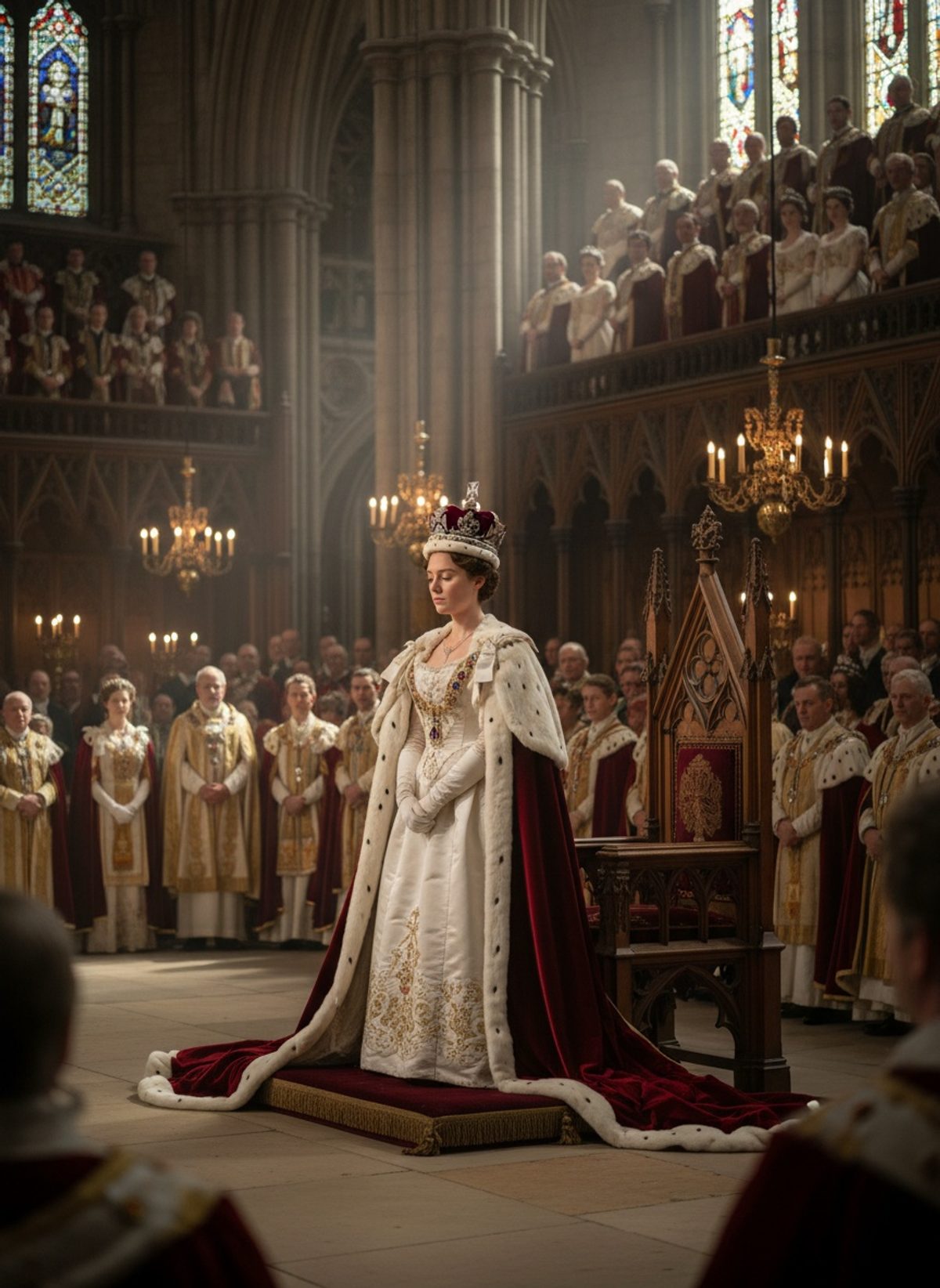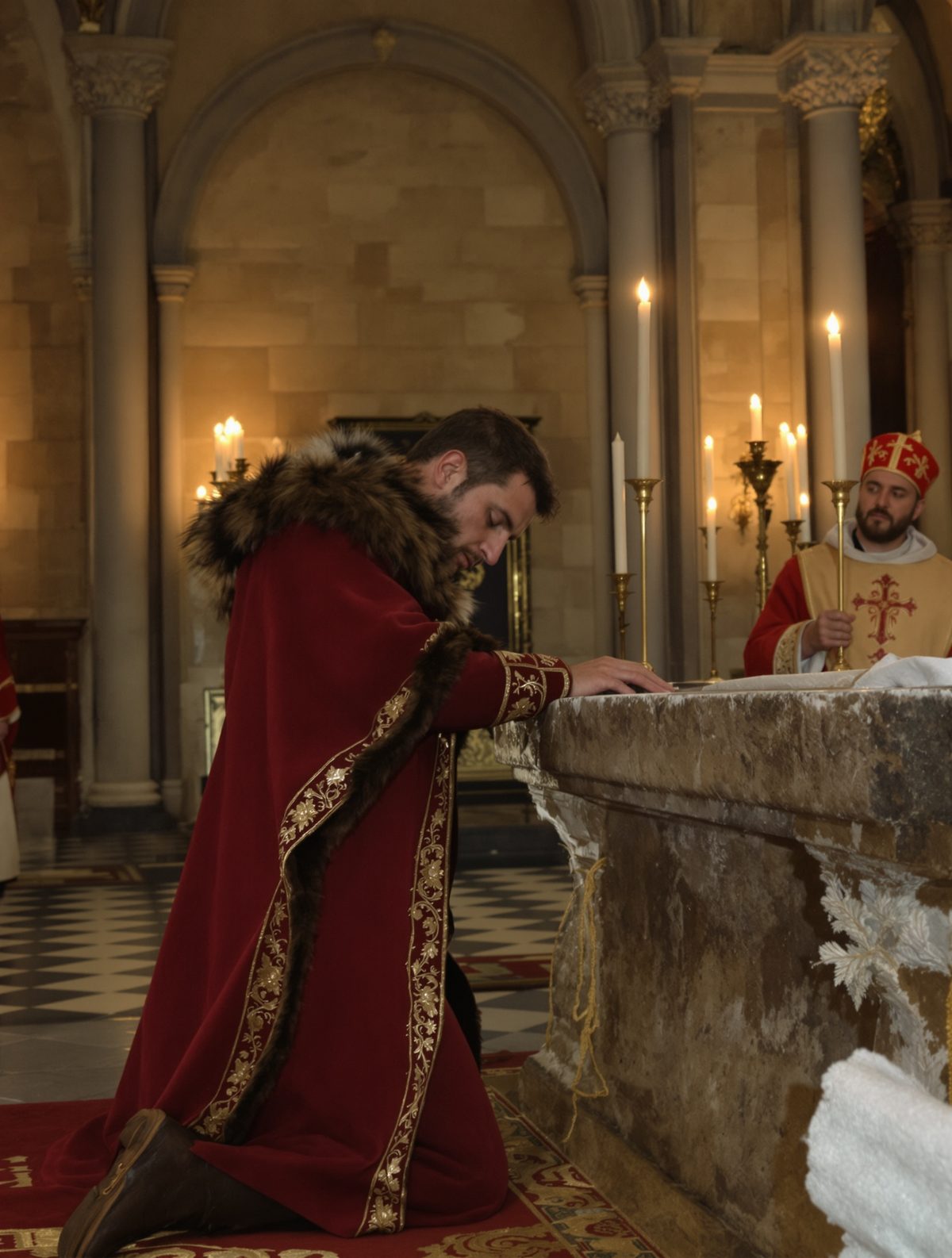
In the flickering candlelight of Westminster Abbey, on a solemn morning in August of 1100, a man knelt alone. His breath heavy from a moonlit ride, his mind heavy with the weight of an unexpected destiny. This was Henry, the youngest son of William the Conqueror, poised to become Henry I of England. But as he approached this monumental threshold, tears welled in his eyes. They were not tears of joy nor of sorrow, but of an overwhelming sense of duty and impending challenge. Here began the reign of the king who wept at his coronation.
The Blood-Stained Path to Kingship
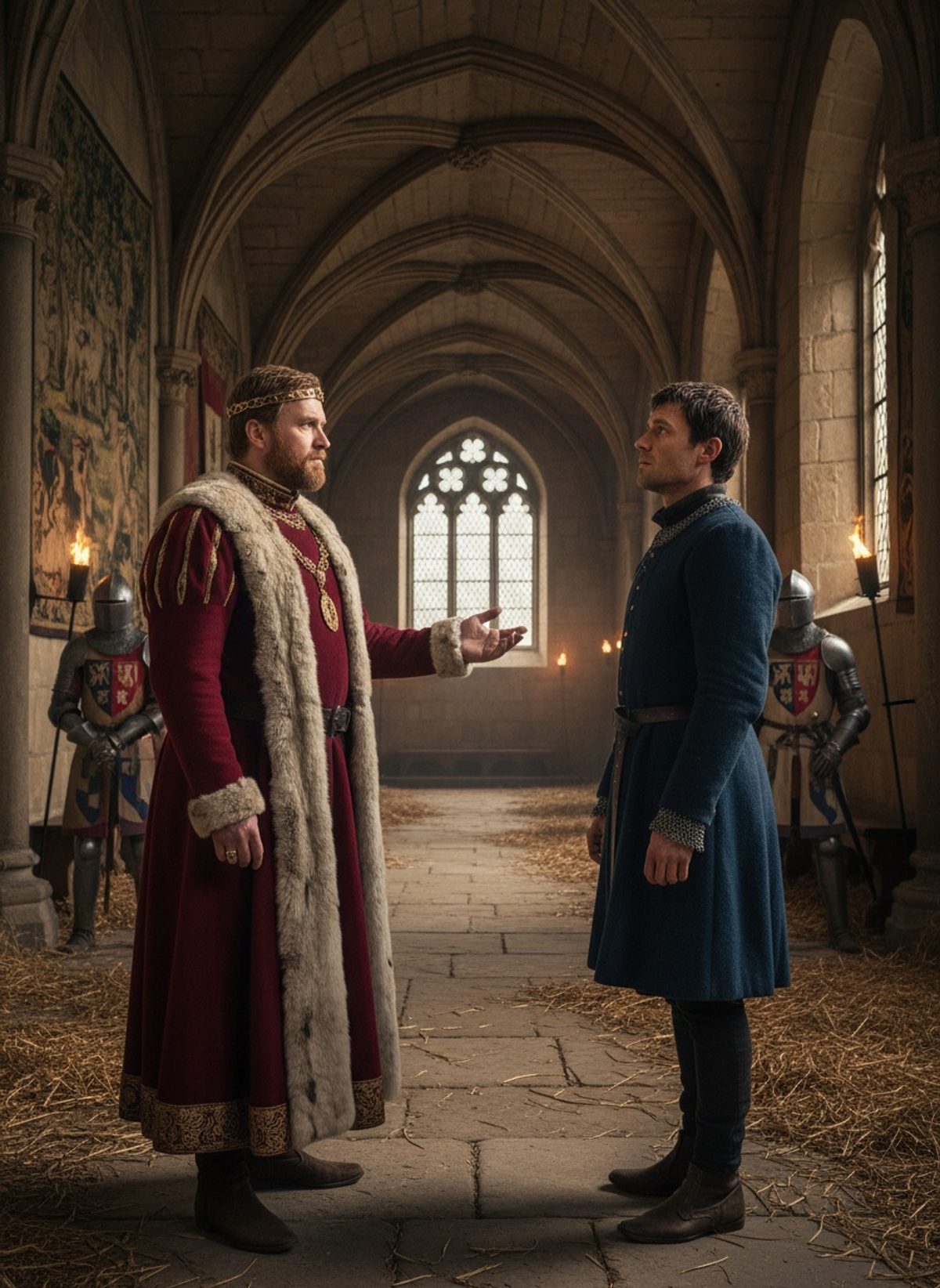
The tale of Henry's ascent to the throne is one marked by urgency and survival. On the second day of August 1100, his brother, King William II — known as "William Rufus" for his ruddy complexion — was felled by a crossbow bolt during a hunting expedition in the New Forest. The event was suspicious, shrouded in mystery and whispered conspiracy. Did an accident claim his life, or was it a rival's calculated move?
In an era when the throne was never guaranteed — especially for a younger brother with two older siblings — Henry seized upon the moment with a steely resolve. Mounted atop his horse, he rode from the forest, charging towards London at a speed that legend claims would blister any saddle. Less than three days later, he stood at the doors of Westminster Abbey, a stunned kingdom looking on.
The King's Lonely Vigil
It was within the austere walls of the grand Abbey, among echoes of prayers and chants, that Henry, often perceived as the least imposing of his kin by stature, faced his solitude. Unlike any predecessor, Henry ascended the throne almost immediately after his brother's shrouded demise, with little time for mourning or preparatory fanfare. The crown was, metaphorically and almost literally, still warm.
Read next: The Day a King Knelt to Wash a Beggar's Feet
Those tears he shed were not merely for William Rufus, the brother whom he did not always agree with, nor for the grave responsibilities lying ahead. They were a lament for the realization that he now bore the mantle of all England, with every expectation upon him, lone and unending.
Seizing the Crown: A Calculated Gambit
Henry's path to the throne, while swift, was far from guaranteed. As the fourth son, his legitimate claim paled against his elder brother, Robert Curthose, the Duke of Normandy. But Robert's absence — being in the Holy Land as part of the First Crusade — left a convenient vacancy.
Henry's strategic acumen kicked into gear the moment the bolt struck Rufus. He orchestrated a swift allegiance, drawing the powerful Bishop of London and the Archbishop of Canterbury to his promise of a renewed and just dominion. By granting a charter vowing the reformation of abuses rampant under Rufus's tyranny, Henry secured the support of the barons and the clergy — a masterstroke of medieval politics.
A Kingdom in the Balance
Henry I did not weep for long. Once crowned, his actions spoke louder than any moment of solitude in the Abbey. He moved quickly to consolidate power, marrying Matilda of Scotland, thereby uniting Norman and Anglo-Saxon nobility—an astute political maneuver that quelled potential rebellion.
His reign began with profound effect. Henry reinstated certain laws and charters, calmed unrest, and restored feudal rights, establishing a reputation as a ruler who valued justice over tyranny. The signing of the Charter of Liberties, a precursor to the Magna Carta, marked a significant shift in favor of both baronial and ecclesiastical stakeholders.
The Weight of the Crown
Henry's tears reflected a new era for England — one where the ruling monarch understood the deep implications of leadership. His governance would see the kingdom flourish in stability, education, and commerce. His keen senses of diplomacy and administration cemented the newfound legitimacy of his reign.
Throughout his life, Henry exemplified a rarity in rulers: the ability to balance reform and authority. Known as "Henry Beauclerc" for his scholarly aptitude, he left a lasting mark on legal systems and administration. This duality mirrored his coronation tears — a reflection of vulnerability met with determination.
Lessons of the Weeping King
Today, Henry I’s weeping in the heart of a vast abbey remains an emblematic moment—a reminder of the innate humanity behind the facades of power. It illustrates that the great shifts in history are often built on moments of profound personal reckoning. Kings were once men; they embraced with dread the heavy robes of rule, and none more so than Henry.
This story is more than a historical footnote. It speaks to leaders in every arena about the inevitable, often hidden burdens of authority. In an age where ambition often masks the vulnerabilities of leadership, Henry’s tear-streaked face behind the famous Coronation Chair offers an example of conscientious sovereignty. It leaves us with a reflection on leadership today: that with power comes profound responsibility, and in that balance lies the true weight of a crown.