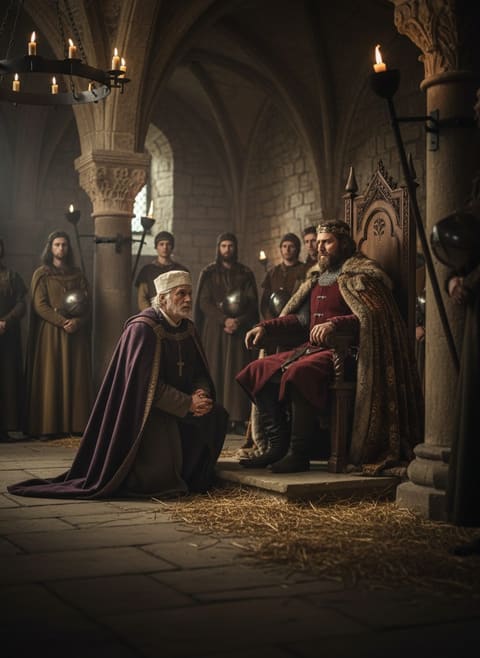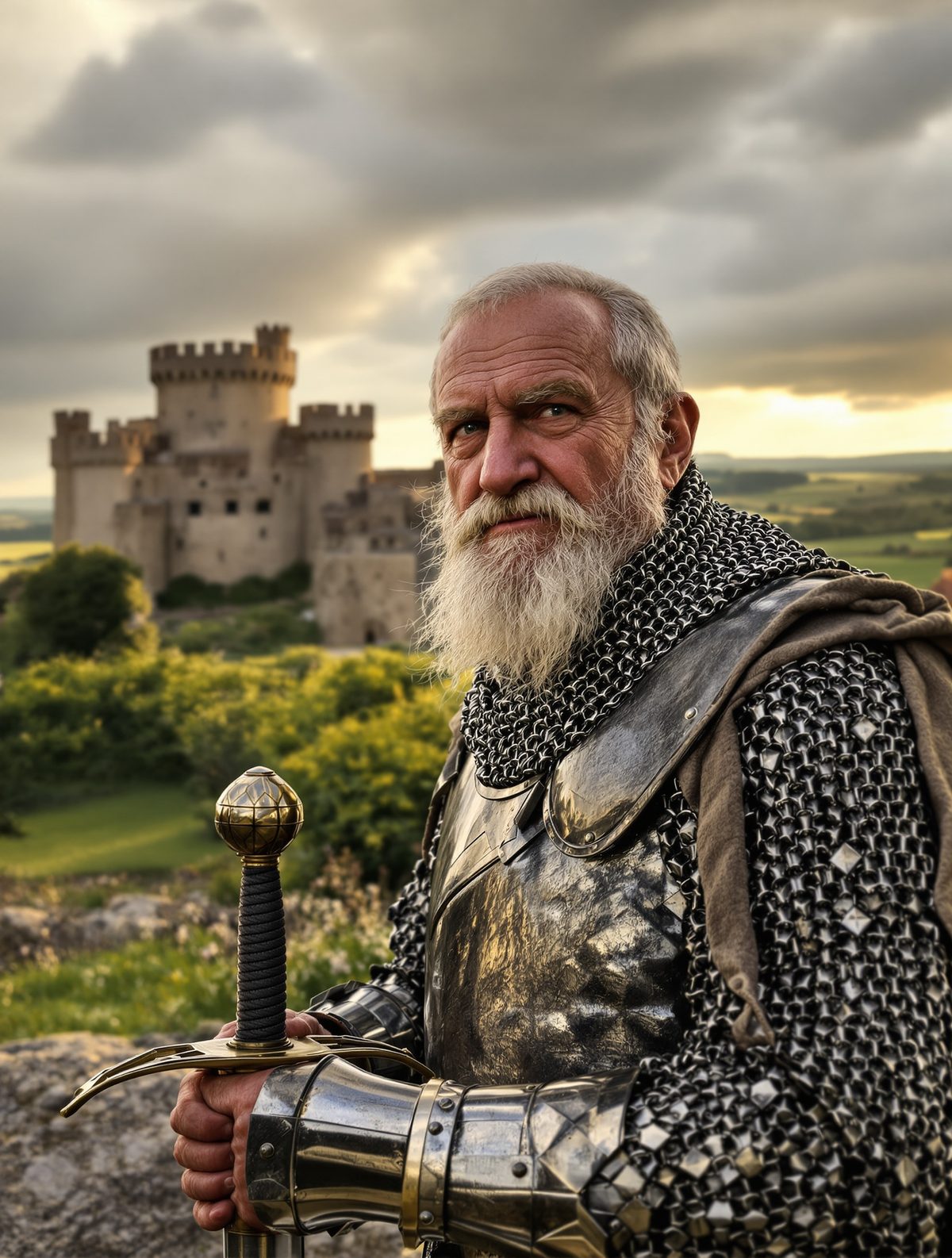
Picture this: a grey-haired knight, seventy years old and stiff in his joints, mounting his destrier one last time. Around him, the flower of French chivalry advances across the fields of Lincoln, confident they're about to carve up England like a Sunday roast. The year is 1217, and William Marshal—veteran of five royal courts, survivor of countless political storms, and the most feared tournament fighter of his age—is about to charge into battle for what might be his final time. What happened next would save a kingdom and cement a legend that somehow slipped through the cracks of popular history.
The Making of a Legend: From Landless Knight to Royal Champion
William Marshal's story begins not with glory, but with the harsh mathematics of medieval inheritance. Born around 1147 as the fourth son of minor nobility, William faced the brutal reality of primogeniture—his eldest brother would inherit everything, leaving him with little more than his sword arm and his wits. In an age where landless knights were barely a step above beggars, young William had two choices: find a patron or fade into obscurity.
Fortune smiled when he entered the household of his cousin, the Earl of Salisbury. It was here, in the dusty training yards of noble estates, that William began honing the skills that would make him legendary. Medieval tournaments weren't the romantic pageants of Hollywood—they were brutal, often deadly affairs that served as both entertainment and military training. Knights charged at each other with real weapons, seeking to unhorse opponents and claim their equipment as prize money.
William's talent was immediately apparent. By his early twenties, he had developed an almost supernatural ability to read his opponents, anticipating their moves with uncanny precision. Contemporary chroniclers recorded that in over 500 tournaments across his career, William Marshal was unhorsed only once—and that was due to his horse stumbling, not his opponent's skill. But here's what the history books often miss: William wasn't just unbeatable in single combat. He pioneered tournament tactics that are still studied today, treating these events like military campaigns rather than individual duels.
Read next: The Day a Welsh Girl Barred the Door on a King's Army
The King Maker: Serving the Plantagenet Dynasty
William's breakthrough came in 1170 when Henry II appointed him tutor-in-arms to the Young King Henry, the monarch's eldest son. This wasn't just a teaching position—it was a political appointment that placed William at the very heart of royal power. For the next thirteen years, he guided the prince through the treacherous world of medieval politics while building his own reputation on the tournament circuit.
The relationship between William and Young Henry reveals something remarkable about medieval loyalty. When the prince rebelled against his father in 1183, William faced an impossible choice: betray his student or oppose his king. He chose a third option, remaining loyal to the prince while refusing to take up arms against Henry II. It was a masterclass in political navigation that would define his entire career.
When Young Henry died of dysentery in 1183, William made a decision that stunned the medieval world. Instead of immediately seeking a new patron, he fulfilled a promise to his dead lord and embarked on crusade to the Holy Land. For two years, he fought in the dusty campaigns around Jerusalem, adding to his already formidable reputation. But the most significant aspect of this crusade wasn't military—it was personal. William had proven that his word was literally worth more than his life.
The Survivor: Navigating Royal Succession and Political Chaos
Returning from crusade in 1185, William found himself serving Henry II directly. The aging king, perhaps recognizing a kindred spirit in this unshakeable knight, made him a marshal of the royal household—hence the surname that would become his legacy. When Henry II died in 1189, William performed what might have been the most crucial five minutes of his entire career.
As the king lay dying at Chinon Castle, his son Richard (soon to be the Lionheart) arrived to claim his inheritance. In the tense moments that followed Henry's death, William stepped forward and performed the act of homage to Richard, essentially legitimizing the succession. It was a moment that required split-second political calculation—back the wrong claimant, and your head ends up on a spike.
Richard I rewarded William's support magnificently, arranging his marriage to Isabel de Clare, one of the richest heiresses in Britain. At a stroke, the landless knight became one of the most powerful barons in the realm, controlling vast estates in Wales, Ireland, and Normandy. But here's the twist that makes William's story so remarkable: wealth and power didn't corrupt him. If anything, they seemed to strengthen his sense of duty.
When Richard died in 1199, William again found himself at a succession crisis. Arthur of Brittany had a stronger legal claim to the throne than John, Richard's brother. Yet William chose pragmatism over legal niceties, supporting John because he believed the realm needed a strong adult ruler, not a teenage puppet controlled by foreign interests. It was the kind of decision that required both political wisdom and moral courage.
The Darkest Hour: Loyalty Tested Under King John
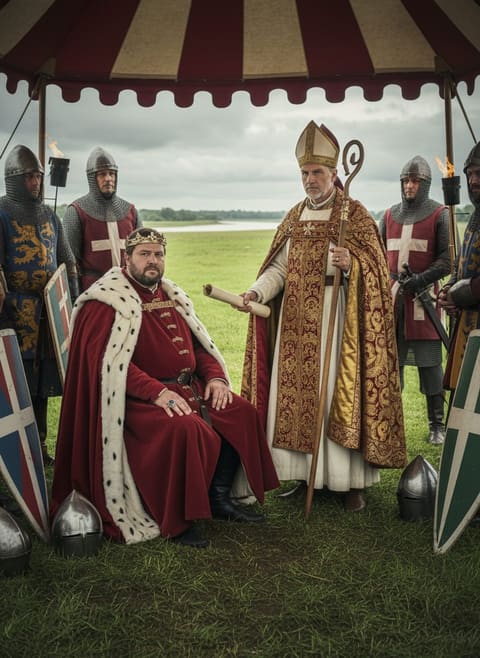
Serving John Lackland tested William's loyalty to its very limits. John wasn't just unpopular—he was catastrophically incompetent, losing Normandy to the French and alienating virtually every important baron in England. By 1215, the realm was in open rebellion, with barons forcing John to sign Magna Carta at Runnymede. William was there, one of the few magnates still standing by his king, helping to negotiate the terms that would change English history forever.
But William's finest hour—or perhaps his most morally complex moment—came during John's final campaign in 1216. As French prince Louis invaded England at the invitation of rebellious barons, the elderly Marshal found himself commanding loyalist forces against his own countrymen. When John died suddenly in October 1216, leaving a nine-year-old heir, many expected the kingdom to fragment completely.
Instead, the barons turned to the one man whose integrity was beyond question. At nearly seventy years old, William Marshal was appointed regent for the boy-king Henry III. It was an unprecedented appointment—a landless knight's son given supreme authority over the realm. The rebellious barons accepted it because William's reputation for honor transcended political divisions.
The Battle of Lincoln: An Old Knight's Greatest Victory
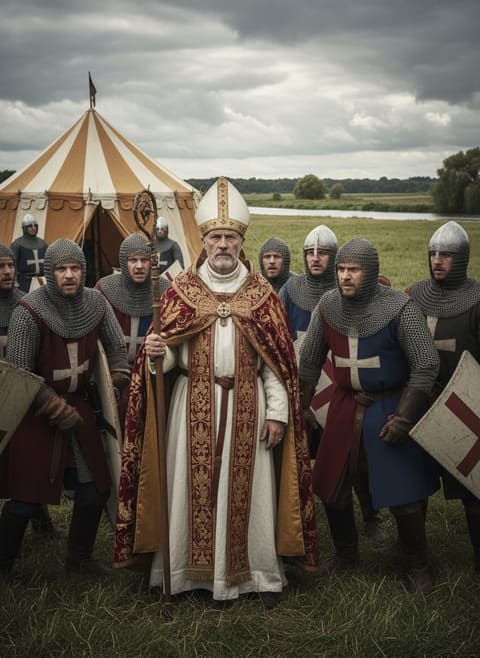
The moment that crystallized William's legend came on May 20, 1217, at the Battle of Lincoln. Prince Louis of France, still claiming the English throne, had besieged Lincoln Castle with a formidable army. Contemporary sources describe a force that included many of the greatest knights of France, confident they were about to complete their conquest of England.
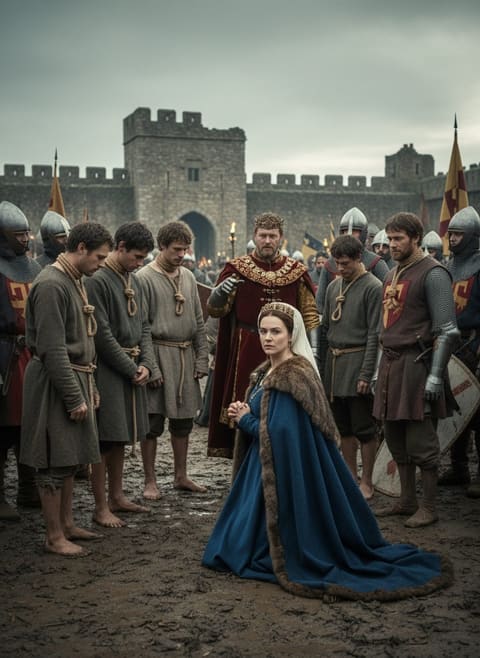
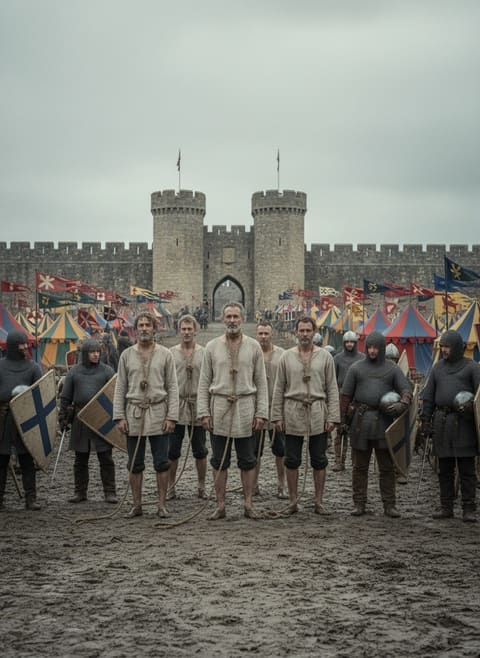
Read next: The Day a Medieval Mayor Knelt and Saved Six Condemned Men
William Marshal, now seventy and feeling every year of tournament combat in his aching joints, made a decision that epitomized his entire career. Instead of directing the battle from the rear, as befitted his age and rank, he insisted on leading the charge personally. His knights were horrified—losing the regent in battle would mean losing the war and probably the kingdom.
But William understood something his younger companions didn't: sometimes leadership requires symbolic acts that transcend tactical sense. When the royalist cavalry thundered into the French lines with the elderly Marshal at their head, it sent a message that resonated across medieval Europe. Here was a knight so committed to his duty that he would literally die before abandoning it.
The battle was a complete rout. The French army collapsed, Prince Louis sued for peace, and England was saved. William Marshal had achieved something almost unprecedented in medieval warfare—decisive victory through personal example rather than superior numbers or tactics.
Legacy of the Perfect Knight
William Marshal died peacefully in 1219, surrounded by knights who had gathered to witness the passing of what they recognized as the end of an era. His deathbed scene, recorded in loving detail by his household chroniclers, reads like something from Arthurian legend. Knights wept openly as the old Marshal distributed his possessions and offered advice on how to live with honor in a dishonorable world.
But perhaps the most telling tribute came from an unexpected source: the French. Despite having fought against them for decades, French chroniclers consistently praised William as "le meilleur chevalier du monde"—the best knight in the world. In an age of bitter national rivalries, this cross-cultural recognition of excellence speaks to something that transcended politics.
Today, as we navigate our own era of shifting loyalties and flexible principles, William Marshal's story offers something both inspiring and challenging. Here was a man who found a way to remain honorable while being politically effective, loyal without being blindly obedient, and powerful without being corrupt. His secret wasn't supernatural skill or political cunning—it was the radical idea that your word, once given, becomes more important than your life. In our age of expedient promises and disposable commitments, that might be the most revolutionary concept of all.