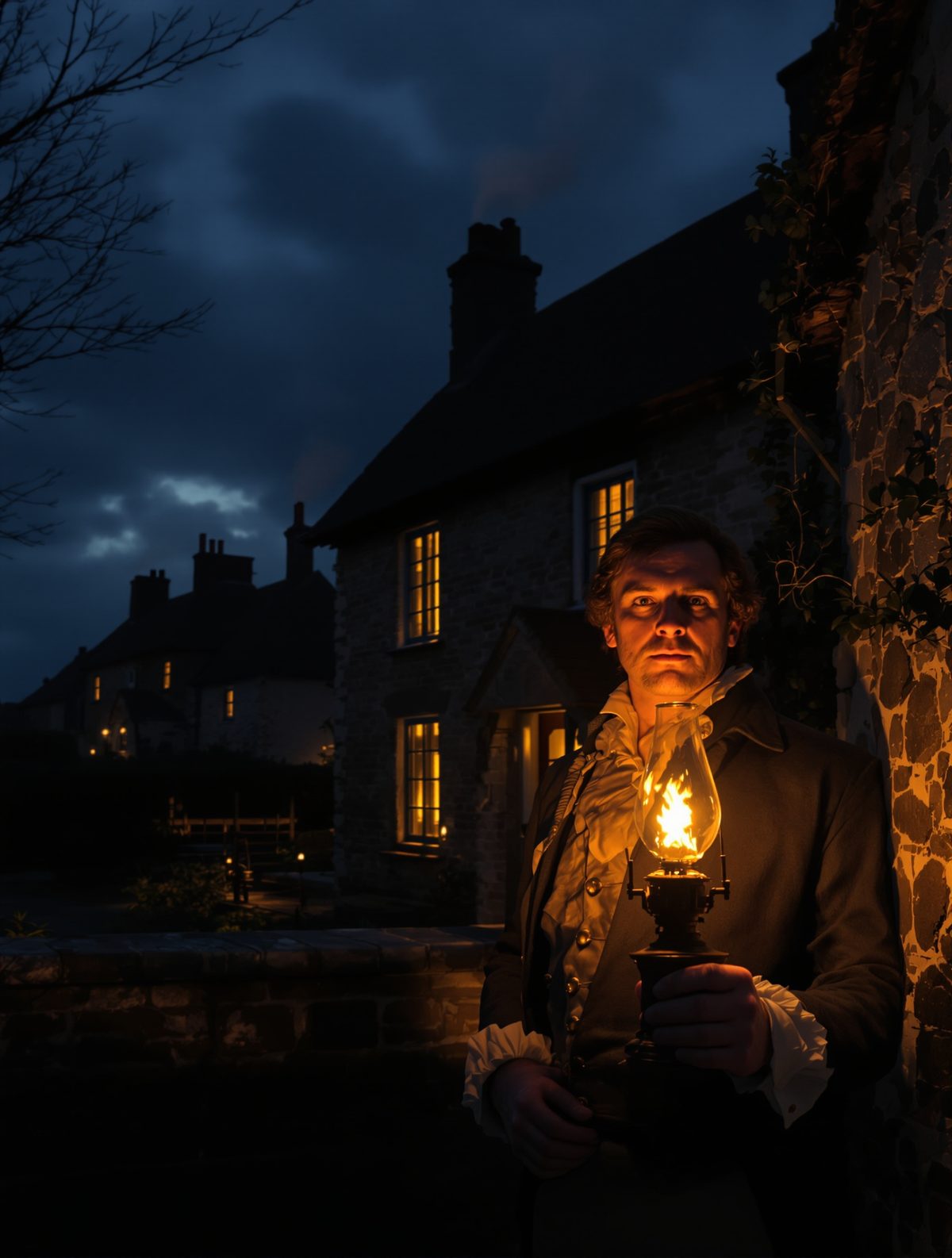
The Devil himself had come to Cross Street in Redruth, Cornwall—or so the terrified neighbors believed as they watched an eerie, dancing flame flicker through William Murdoch's cottage windows on that October evening in 1792. No candle flame ever burned like this. No oil lamp ever cast such an otherworldly glow. Some crossed themselves and muttered prayers. Others simply ran.
But the 38-year-old Scottish engineer sitting calmly in his illuminated parlor wasn't communing with dark forces. He was making history. In that modest Cornish cottage, using nothing more ingenious than heated coal, old gun barrels, and his own restless curiosity, Murdoch had just become the first human being to light his home with manufactured gas. The age of gaslight—and with it, the modern illuminated world—had begun.
The Scotsman Who Couldn't Sit Still
William Murdoch was the kind of man the Industrial Revolution seemed to breed—brilliant, restless, and utterly convinced that the world could be improved through clever engineering. Born in Lugar, Scotland, in 1754, he'd inherited his mechanical genius from his father, a millwright who taught him that any problem could be solved with the right combination of ingenuity and elbow grease.
By 1779, Murdoch had talked his way into a job with Boulton and Watt, the Birmingham engineering firm that was revolutionizing industry with their steam engines. But desk work didn't suit a man whose idea of relaxation was tinkering with gas-filled pig bladders (yes, really—he'd fill them with gas and ignite them for entertainment). When the company needed someone to oversee their operations in the remote mining districts of Cornwall, Murdoch volunteered immediately.
Read next: The Day a Weaver's Son Lit Britain's First Public Railway
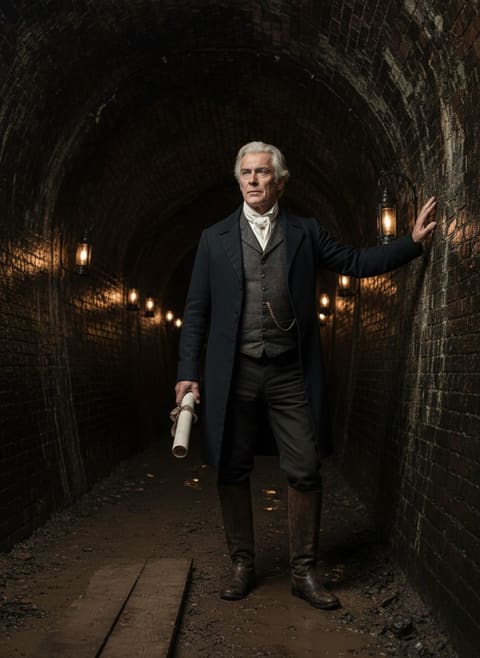
Cornwall in the 1780s was Britain's industrial frontier—a landscape scarred by copper and tin mines, where massive steam engines pumped water from shafts that plunged hundreds of feet into the earth. It was here, surrounded by the constant hunger for better, more efficient technology, that Murdoch's most famous experiments began.
Playing with Fire in a Coal Pot
The breakthrough came from the most mundane of observations. Like everyone in the 18th century, Murdoch heated his home with coal, and like any curious engineer, he'd noticed the blue flames that sometimes danced above his coal fire. What was that flame, exactly? And more intriguingly—could it be captured?
Murdoch's first experiments were delightfully makeshift. He filled an old gun barrel with coal, sealed one end, and heated it over his fire. To his delight, inflammable gas poured from the open end. But Murdoch wanted more than party tricks. He wanted to harness this mysterious vapor for something useful.
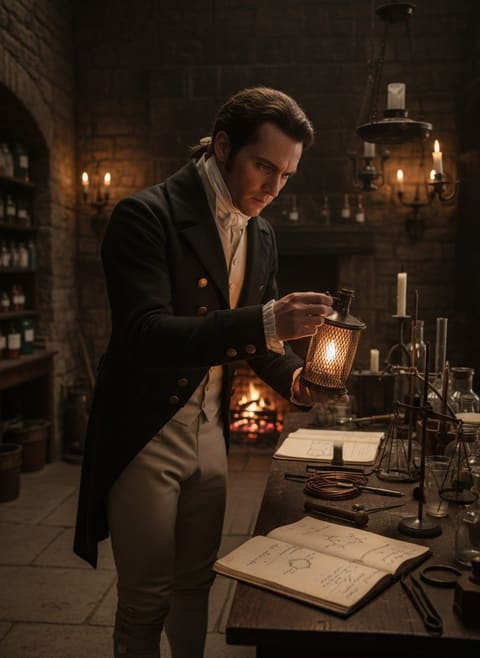
Working by candlelight in his cottage (the irony wasn't lost on him), he constructed what he called a "gas retort"—essentially a large iron pot where coal could be heated without air, causing it to break down and release its gaseous components. From this retort, he ran a series of connected gun barrels and metal pipes throughout his house, creating the world's first domestic gas distribution system.
The technical challenges were immense. Too much pressure and the pipes would burst. Too little and the gas wouldn't flow. The joints had to be perfectly sealed, or deadly gas would leak into his living spaces. One miscalculation could kill him—or burn down half of Redruth.
The Night That Changed Everything
On that fateful October evening in 1792, everything finally worked. As darkness fell over Cornwall, Murdoch lit a match and turned his homemade gas tap. Flame spurted from his crude burner, casting a steady, brilliant light that was unlike anything his neighbors had ever seen.
The reaction was immediate and dramatic. Within minutes, curious onlookers had gathered outside his cottage, pressing their faces against his windows to gawk at the impossible sight. Some thought it was supernatural. Others suspected trickery. A few wondered if Murdoch had finally lost his mind.
But the engineer himself was too busy taking notes to worry about public opinion. The flame burned steadily for hours without flickering. It didn't smoke like candles or smell like oil lamps. It could be turned on and off instantly with a simple valve. And most remarkably, it was cheap—a few pounds of coal could provide hours of brilliant illumination.
News of the "miracle light" spread through Cornwall's tight-knit mining community within days. Some local clergy denounced it as ungodly, but practical Cornish miners were more interested in the possibilities. If gas could light houses, could it light mine shafts? Streets? Entire towns?
From Cottage Experiment to Global Revolution
Murdoch's employer, Boulton and Watt, initially showed little interest in their engineer's domestic lighting experiments. Steam engines were their business, and gas seemed like an expensive distraction. But Murdoch was nothing if not persistent. He continued refining his system, eventually lighting not just his house but his entire garden with gas flames.
The real breakthrough came in 1798 when Murdoch installed gas lighting in the main Boulton and Watt factory in Birmingham. Suddenly, workers could labor safely after dark, productivity soared, and other manufacturers began paying attention. This wasn't just a novelty—it was a competitive advantage.
By 1807, London's Pall Mall became the world's first gas-lit street, illuminated by the newly formed Gas Light and Coke Company. The transformation was immediate and dramatic. Crime rates plummeted in well-lit areas. Businesses stayed open later. Social life flourished as people ventured out after dark with confidence.
Read next: The Day a Mill Owner Walked Into Court and Freed His Rivals' Children
Within a generation, gas lighting had spread across Europe and America. Paris installed its first gas lamps in 1817. New York followed in 1825. By 1850, virtually every major city in the Western world glowed with the descendants of Murdoch's coal-fired flame.
The Shadows Behind the Light
But Murdoch's revolution came with costs that few anticipated. The gas industry's voracious appetite for coal accelerated mining and pollution. Gas leaks caused explosions that killed hundreds. The new street lighting, while reducing some crimes, also displaced traditional industries like candle-making and oil pressing, throwing thousands out of work.
Perhaps most poignantly, Murdoch himself never profited significantly from his world-changing invention. Although Boulton and Watt eventually embraced gas lighting, patents and profits flowed to the company rather than their innovative engineer. Murdoch continued working for the firm until his retirement, achieving recognition but not wealth.
He died in 1839, just as gas lighting was reaching its golden age, but already facing competition from a new technology: electricity. The gas era that had begun in his Cornish cottage would last barely a century before being superseded by even more revolutionary forms of illumination.
The Flame That Still Burns
Today, as we flick electric switches without a second thought, it's easy to forget that our brightly lit world began with one man's curiosity about the blue flames dancing above his coal fire. But Murdoch's legacy extends far beyond lighting technology. He proved that a single innovative mind, working in isolation with makeshift materials, could transform civilization itself.
Every time we work late under artificial light, walk safely down illuminated streets, or enjoy evening entertainment, we're benefiting from that October night in 1792 when a Scottish engineer ignored his terrified neighbors and lit up his cottage with captured fire. In an age when we're once again reimagining our energy systems—trading fossil fuels for renewable sources—Murdoch's story reminds us that the most profound changes often begin with someone brave enough to try something that everyone else considers impossible.
The Devil's fire, as it turned out, was actually humanity's first glimpse of the modern world.