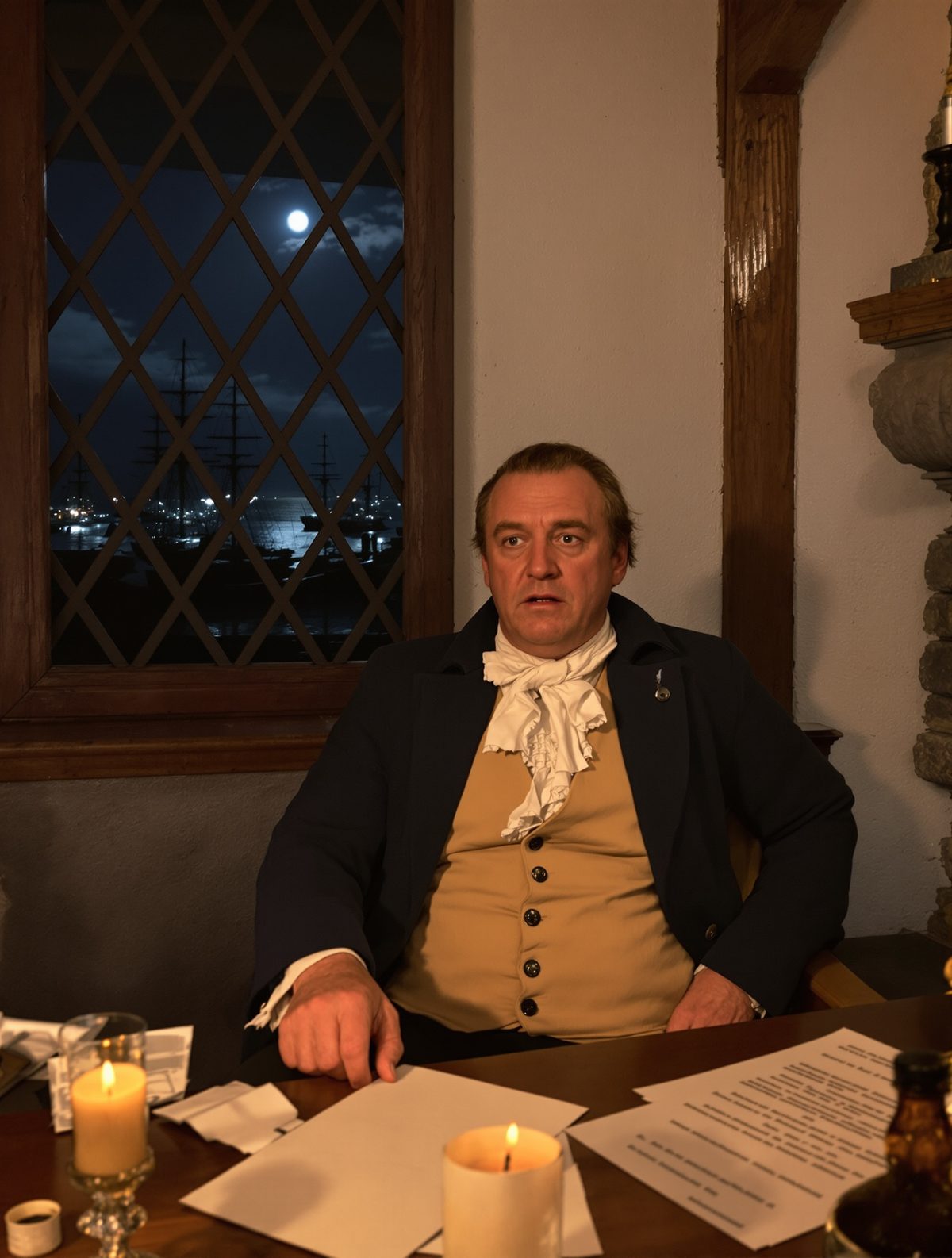
The autumn fog rolled off the English Channel as Thomas Paine nursed his ale in a cramped Dover tavern, watching the door with the intensity of a hunted man. Every creak of floorboards, every jingle of harness outside made his pulse quicken. Somewhere in London, a warrant bearing his name was being prepared—a document that would brand him a traitor and send him to the gallows. The author of the most inflammatory book in British history was about to become the most wanted man in the realm.
It was September 13th, 1792, and Paine had just twenty minutes left as a free man on English soil.
The Book That Shook an Empire
Two years earlier, Edmund Burke's Reflections on the Revolution in France had dismissed the French Revolution as dangerous mob rule. The British establishment nodded approvingly—until Thomas Paine fired back with literary cannon shot. His response, Rights of Man, didn't just defend the French Revolution; it systematically dismantled the very foundations of British society.
Paine's words cut like a blade through centuries of accepted wisdom. He declared that kings ruled by accident of birth, not divine right. He argued that aristocrats were parasites living off the labor of common people. Most dangerously of all, he suggested that the British people had the same right as the French to overthrow their government if it failed to serve them.
Read next: The Day a Black Sailor Walked Into Court and Freed Himself
The book's success was nothing short of extraordinary. Within weeks of publication in February 1791, Rights of Man was being devoured in coffee houses, passed hand-to-hand in workshops, and read aloud in taverns across Britain. By 1792, an estimated 200,000 copies were in circulation—a staggering number in a nation where literacy was still limited and books expensive. The government watched in horror as radical ideas spread like wildfire through the very people they governed.
What terrified the authorities wasn't just what Paine wrote, but how he wrote it. Unlike other political philosophers who buried their ideas in dense academic prose, Paine wrote for ordinary people. His sentences were crisp, his arguments clear, his examples drawn from everyday life. A blacksmith could understand Thomas Paine as easily as a university professor—and that made him infinitely more dangerous.
The Establishment Strikes Back
By early 1792, the British government had seen enough. Prime Minister William Pitt's administration, already nervous about revolutionary fervor spreading across the Channel, decided that Thomas Paine represented a clear and present danger to the realm. In May 1792, the Crown prosecuted Paine for seditious libel—essentially, the crime of encouraging rebellion against the government.
But Paine wasn't content to defend himself quietly. Even as legal proceedings began, he published Part Two of Rights of Man, which proved even more radical than the first. This time, he didn't just attack monarchy and aristocracy—he provided a detailed blueprint for revolution. He outlined how Britain could become a republic, complete with a written constitution, universal male suffrage, and a welfare system funded by inheritance taxes on the wealthy.
The government's response was swift and brutal. They launched what amounted to a propaganda war against Paine, encouraging loyalist groups to burn him in effigy. Across England, angry mobs—many of them organized and funded by local magistrates—gathered to condemn the "traitor" Paine. Effigies bearing his likeness were hanged, drawn and quartered, and burned in market squares from Cornwall to Yorkshire.
The message was clear: this was what happened to those who challenged the established order. But the very violence of the reaction only seemed to prove Paine's point about the nature of the British system.
Friends in High and Low Places
Despite the government's campaign against him, Paine had powerful allies. The poet William Blake, who would later write "Jerusalem," was among his supporters. So was Mary Wollstonecraft, author of A Vindication of the Rights of Woman. Even some members of Parliament, particularly the radical Whigs led by Charles James Fox, defended Paine's right to publish his opinions.
More importantly, Paine had friends who moved in the shadows between respectability and rebellion. These men—lawyers, merchants, and gentlemen radicals—formed an informal network that kept Paine informed of the government's moves against him. They had contacts in government offices, allies among court clerks, and sources close to the prosecution.
It was this network that saved Thomas Paine's life on that foggy September evening in Dover. Word had reached them that the government, tired of the slow pace of legal proceedings, had decided on a more direct approach. A warrant for Paine's immediate arrest was being prepared, and officers were already en route to Dover where Paine was known to be staying.
The message was urgent: flee now, or face the gallows.
Twenty Minutes to Freedom
The scene in that Dover tavern must have felt like something from a spy novel. Paine sat with his friend and fellow radical Thomas Christie, both men acutely aware that their conversation might be their last on English soil. Outside, they could hear the sounds of the harbor—ships creaking at anchor, sailors calling to each other, the splash of oars in the dark water.
When the warning came, Paine had to make the most important decision of his life in a matter of minutes. Stay and fight the charges in court, risking execution if found guilty, or flee to France where his reputation as a defender of revolution would guarantee him a welcome—but where he could never return to the country of his adoption.
The choice was made for him by the sound of hoofbeats on cobblestones. The authorities had arrived in Dover, and they were searching the inns methodically. Paine grabbed what few possessions he could carry and slipped out the back of the tavern into the salty darkness of the harbor.
The last boat to Calais was preparing to leave, its captain reluctant to delay departure for a passenger who looked suspiciously like a man fleeing from something. But gold coins spoke louder than suspicions, and as the boat pulled away from the Dover quay, Thomas Paine watched the white cliffs of England disappear into the fog.
Read next: The Day a London Clerk Walked Into Court for a Dying Slave
Twenty minutes later, the arrest warrant arrived at the tavern where Paine had been drinking. The officers found only a half-finished ale and a warm chair.
The Trial of a Ghost
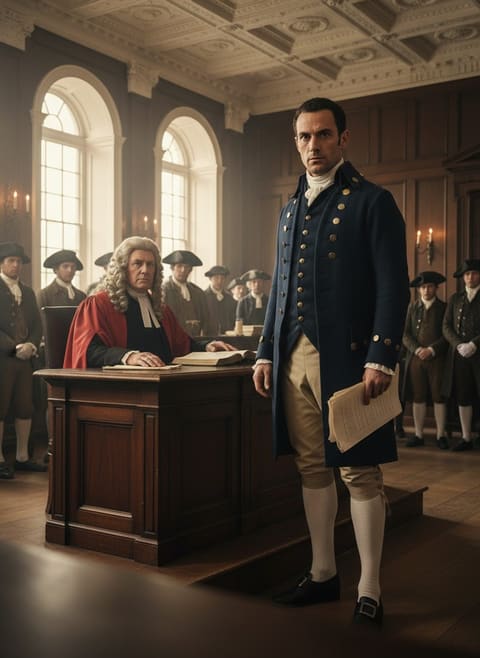
The British government, robbed of their prize, decided to proceed with Paine's trial anyway. On December 18th, 1792, Thomas Paine was tried in absentia for seditious libel. The prosecution painted him as a dangerous revolutionary who sought to overthrow everything decent and orderly in British society. The defense, led by Thomas Erskine, argued brilliantly for freedom of thought and expression.
The outcome was never in doubt. Paine was found guilty and sentenced to be outlawed from the realm forever. If he ever set foot on British soil again, he could be arrested and executed without further trial. The man who had helped create America and inspire France was now a man without a country in the land where he had spent his formative years.
But the government's victory was pyrrhic. By making Paine a martyr, they had only amplified his message. Rights of Man continued to circulate underground, copied by hand when printed versions became too dangerous to own. The ideas that Paine had planted in the British consciousness—democracy, equality, social justice—would not die with his exile.
The Ideas That Wouldn't Die
That dramatic escape from Dover proved to be one of history's sliding door moments. Had Paine been captured, his voice would have been silenced just as democratic revolutions were spreading across Europe. Instead, he lived to play a crucial role in the French Revolution, to write The Age of Reason, and to continue championing the rights of common people against entrenched power.
The principles that forced Paine to flee Britain in 1792—that governments derive their power from the consent of the governed, that all people are born with equal rights, that society has a duty to care for its weakest members—seem obvious to us today. But in Paine's time, these were revolutionary concepts that threatened the very foundations of European civilization.
Today, as we watch democracies around the world grapple with new challenges to freedom of speech and expression, Paine's midnight escape reminds us how fragile these freedoms can be. The man who fled Dover with twenty minutes to spare helped plant the seeds of democracy that we still tend today. His story is a reminder that sometimes the most important battles for human freedom are fought not on battlefields, but in the pages of books—and in the courage of those willing to risk everything for an idea whose time has come.