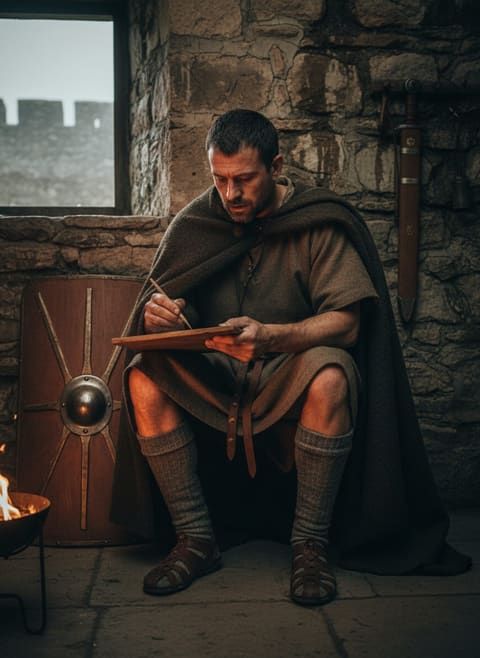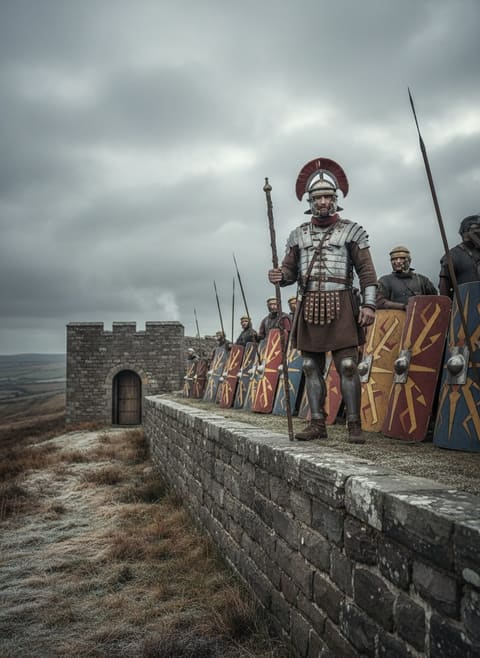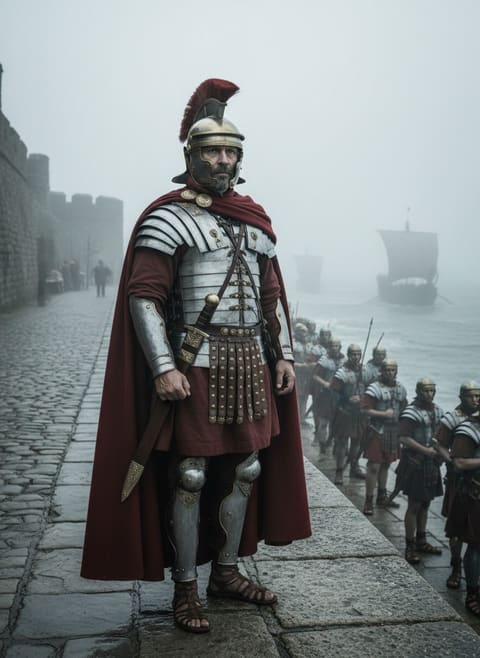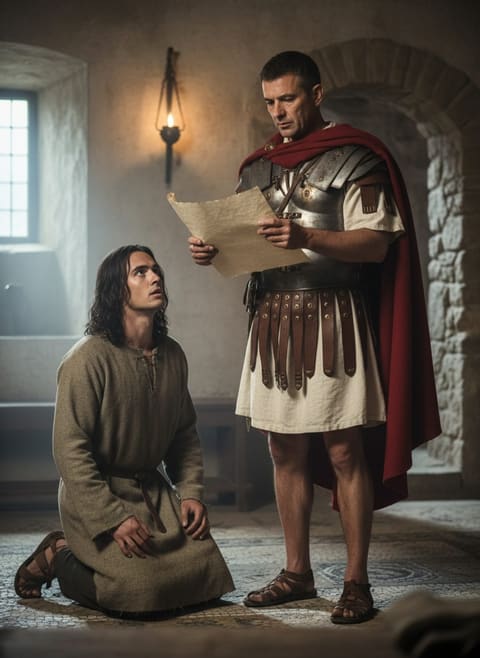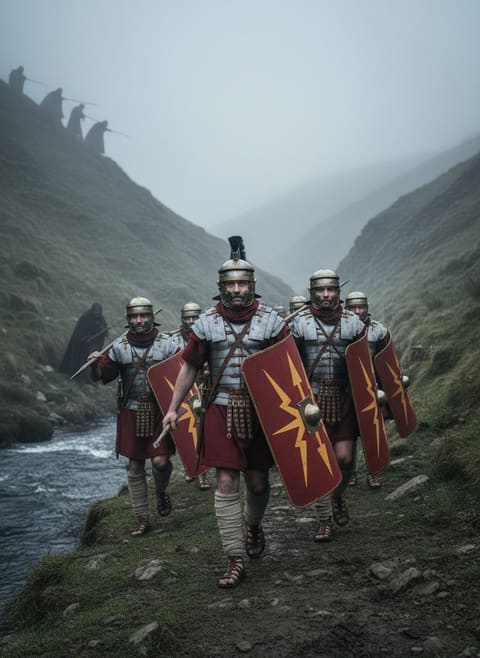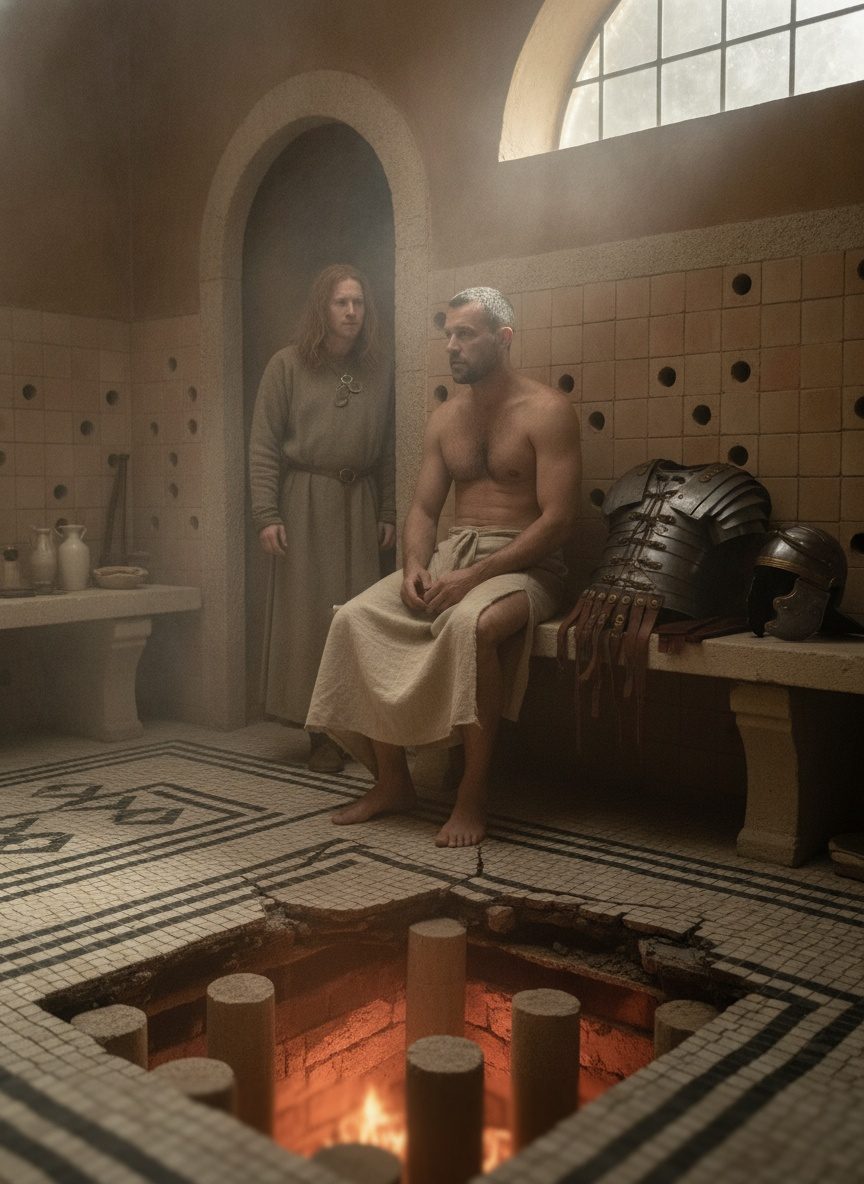
The hot steam clung to his skin as he emerged from the caldarium, the murmured Latin of his fellow soldiers blending into the background hum of the Roman bathhouse. The stark chill of the northern air hit his damp body like a javelin, providing a bracing contrast that shook him back to full alertness after the drowsy embrace of the hot waters. He could almost forget he was in the wilds of Britain, at the very edge of the Roman Empire, where the skirmishes with native tribes were as constant as the rain soaking the streets outside.
In the heart of Eboracum, which centuries later would be known as York, this bathhouse was a beacon of civilization and might. Constructed in 71 AD as part of the Roman effort to tame Britannia’s northern reaches, it stood as a testament to Rome’s engineering genius. Tall, echoing halls housed hypocausts—an underfloor heating system that kept the bathhouse warm despite the relentless chill of Yorkshire winters. Fires burned ceaselessly in chambers beneath the stone floors, their heat rising into the rooms above, creating an oasis of warmth in a land that knew more of mud and mist than marble and mosaic.
Daily life in Eboracum orbited around this pulsating heart. It was here that soldiers, merchants, and sometimes even the Britons themselves congregated. The bathhouse was more than a place for washing away the grit of the day; it was a forum, a gathering spot where allegiances were forged and fortunes debated. For a soldier stationed far from the sunlit avenues of Rome, the bathhouse offered a fleeting reminder of home.
Picture the tepidarium, where the lukewarm waters served not only to cleanse but to calm. Passing through its archways, one was met with the scent of oils and the gentle lapping of water against stone. Merchants often gathered here, discussing the day’s trade, voices carrying tales of exotic goods ferried up the River Ouse. Furs, salt, and metals changed hands, their value mingling with the steam that wove stories of connection from the heart of empire to the farthest outposts.
Read next: The Day a Roman Slave Left a Message That Outlasted an Empire
Yet, it wasn’t just the settlers of Roman descent who felt the draw of the bathhouse. Some curious Britons ventured inside, tentative steps on mosaic floors, eyes wide with wonder at the grandeur that spoke of a power much older and sophisticated than their own tribal customs. Initially, suspicion and separation marked these encounters, but over the years, the lines began to blur, fostering an environment where cultures, once worlds apart, began to intermingle.
The bathhouse was a classroom of sorts, introducing the local populace to Roman ways. Here, Roman customs were explained, albeit through the rudimentary Latin that many soldiers spoke. It was in places like these that Britannia’s transformation from a land of isolated tribes to a part of the Roman world began in earnest.
As the evening shadows lengthened, the frigid air from the baths' entrance filled with the chatter from the frigidarium, the cold room. It was common for visitors to brave the icy plunge, wresting vitality from the very shock to their systems. This was followed by invigoration, as pink-skinned soldiers joked and slapped each other on the back, invigorated by a ritual as ancient as Rome itself.
Such was the bathhouse’s centrality to life in Eboracum that it even featured prominently in the local governance’s decisions. A place of leisure doubled as a venue for the serious business of administration. Provincial governors would sometimes hold court here, settling disputes with deliberations punctuated by the dripping of water and the chorus of voices. Policies that affected the lives of thousands were formed within these steam-veiled walls, decisions that echoed out to the encompassing lands.
Read next: The Day a Roman Officer Freed His Captive and Walked Away
The architects of this grand structure brought with them the latest innovation beyond just architectural prowess—knowledge. Knowledge of hydraulics, of sanitation, that elevated Roman cities far above others of their time. The plumbing that crisscrossed beneath Eboracum’s streets reduced sickness, a blacksmith’s aqueduct skills extending lives even in fierce Britannia.
As the empire eventually waned, around 400 AD, so too did its hold over these lands and the once-glorious bathhouse began its steady decline. The fires that never ceased began to dwindle, no longer sustained by an empire stretching itself thin. Eventually, the stone structures were left to the whims of time and nature, their remnants speaking in whispers of ancient glories as York rose anew from the Roman foundations.
Reflecting on the Roman bathhouse of Eboracum ensures that even the coldest regions of our world cannot resist the warmth of civilization’s reach. This small slice of Roman life left an indelible mark, laying a foundation for the multicultural tapestry of Britain as we know it. In many ways, it reminds us of how physical spaces serve as meeting grounds for innovation, cultural exchange, and sometimes, as seeds from which cities like York grow strong and enduring, embodying the resilience of classified histories untold. A simple ritual of bathing turns into a saga of connection, where the lines between conqueror and conquered blur in the steam of shared experience.