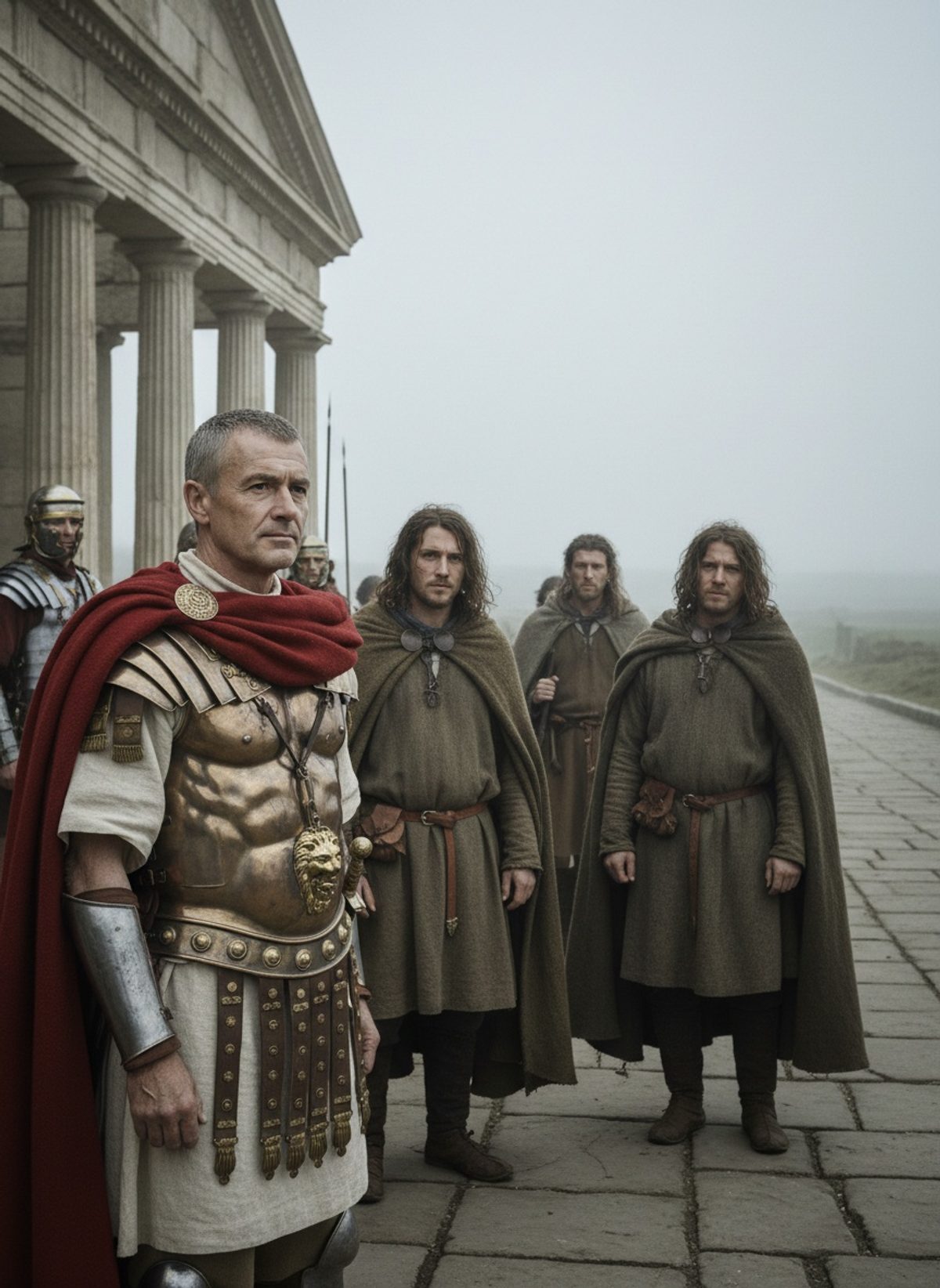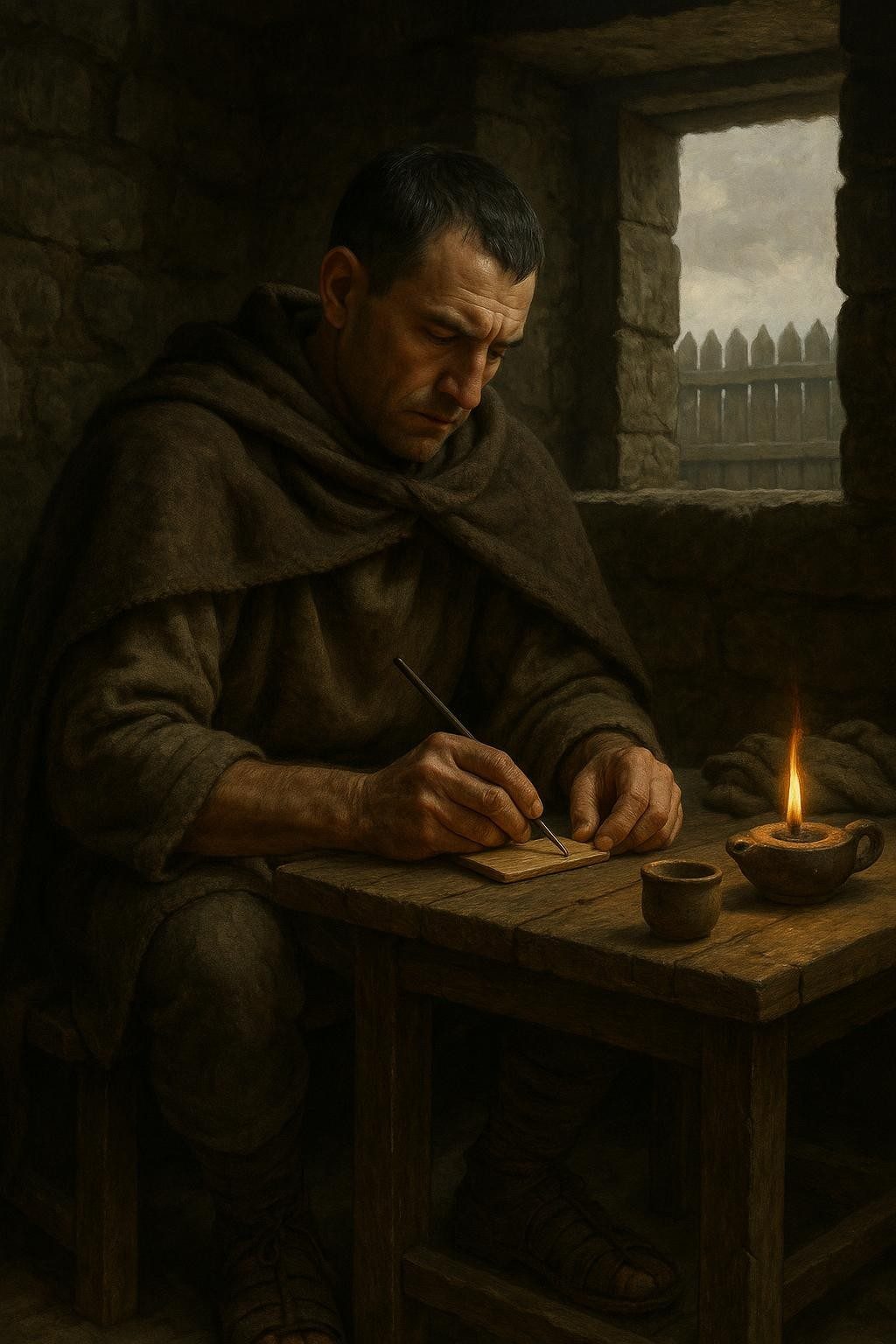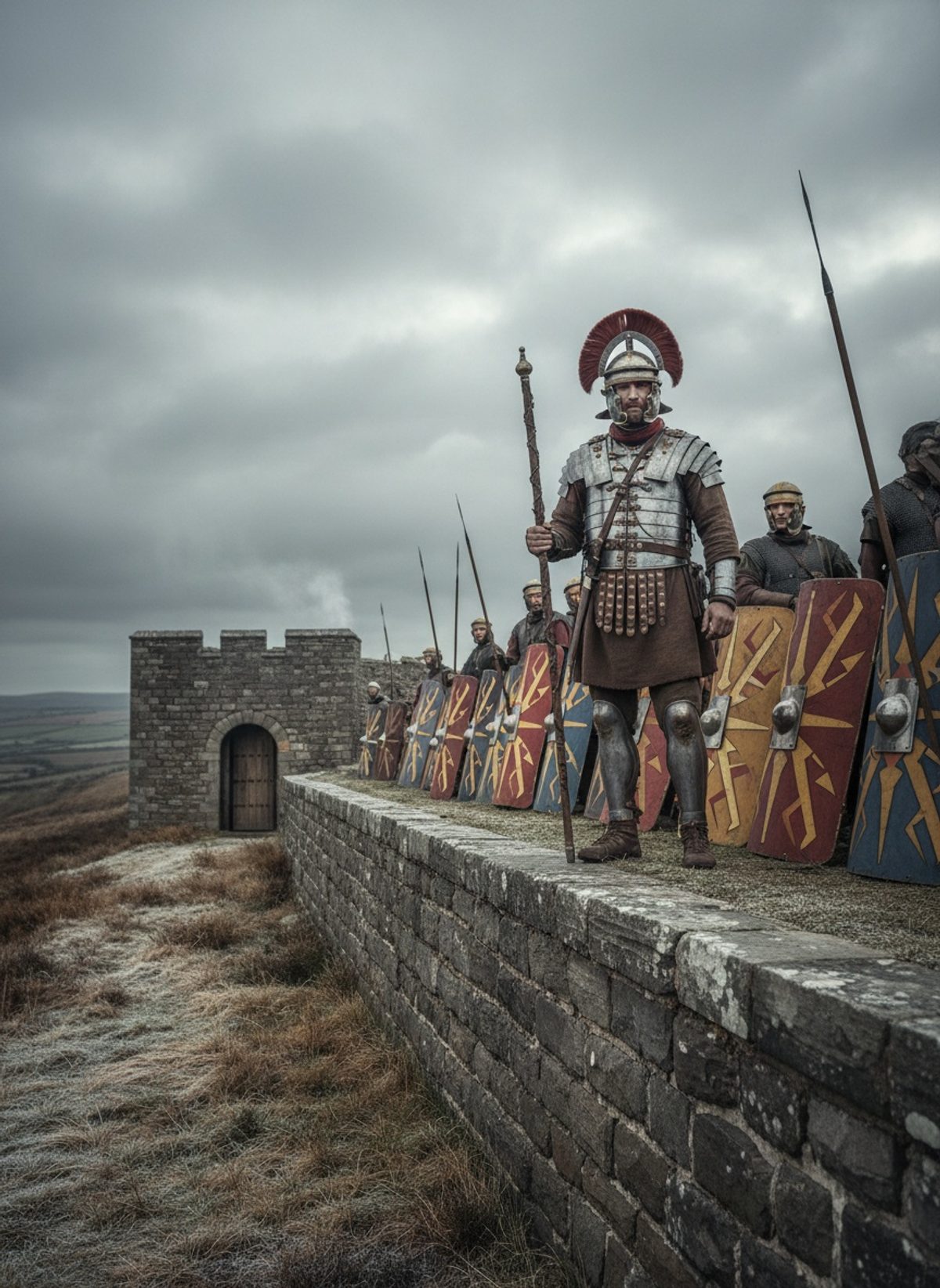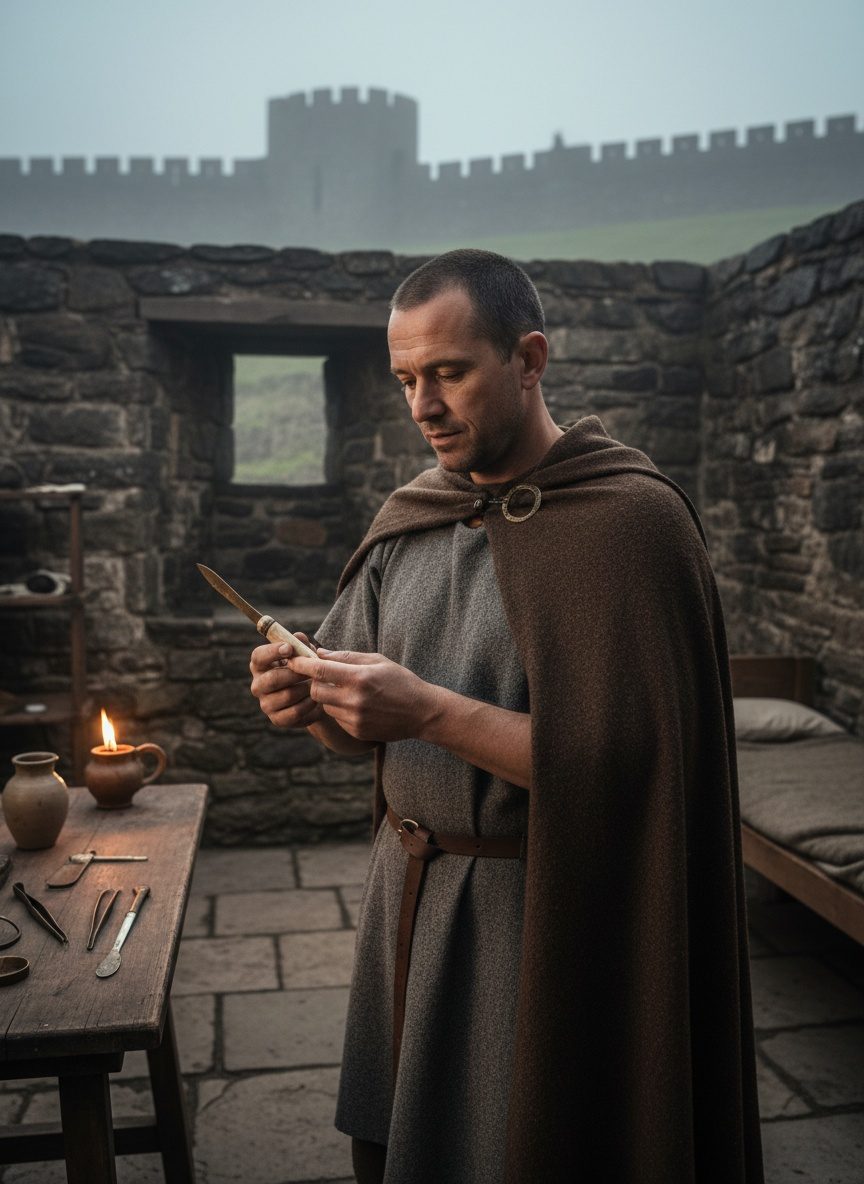
It was a landscape stark and formidable, where the raw winds of the north swept across barren hills and rocky outcroppings. In the 2nd century AD, at the very edge of the Roman Empire, stood Hadrian's Wall, a monumental symbol of Roman might posed against the untamed wilderness of Britannia. Amidst the hundreds who called Housesteads Fort home, there was one man whose life's work was not defined by sword and shield but by healing hands and a steadfast resolve. He was Anicius Ingenuus, a military doctor, who transcended the chaos of war to cure those in need, whether friend or foe.
The Edge of the Empire: Life on Hadrian's Wall
Stretching across Northern England, Hadrian's Wall was more than a mere line of defense; it was a thriving tapestry of Roman military life. Established around AD 122 under Emperor Hadrian’s directive, the fort at Housesteads housed roughly 800 soldiers at its height. This far-flung outpost served not only as a bulwark against the tribes of Caledonia but as a melting pot of cultures, mingling Romans, Britons, and various other peoples drawn into the sweeping arms of the Empire.
To be stationed here was to live at civilization's frontier, a daunting task not for the fainthearted. The climate was brutal, with icy winds and relentless rains shaping the hard, austere landscape. Yet, amidst all this, you could find Roman cities’ trappings: granaries, barracks, bathhouses, and beneath one overlooked stone, the final resting place of Anicius Ingenuus. This medicus ordinarius left behind more than just medical implements; he left a legacy.
The Life and Times of Anicius Ingenuus
Little remains of Ingenuus' personal history, save for a solemn tribute inscribed on his tombstone. It describes him as a medicus ordinarius, indicating his position as a senior physician, assigned the critical duties of tending to the health of Roman legionaries stationed at Housesteads. Interestingly, Roman military doctors were typically soldiers first, yet many, like Ingenuus, performed their healing duties because of their profound knowledge of medicine.
Read next: The Day a Roman Soldier Defied an Emperor to Free a Province
During his tenure, Ingenuus would have possessed a toolkit comprised of scalpels, forceps, and probes, as well as medicinal herbs and balms. Such instruments allowed him to perform everything from basic wound care to more complex surgical procedures. At a time when the average life expectancy hovered around 30 years, a capable healer's skill could mean the difference between life and death.
Healing Amidst Hostility: Enemies and Allies Alike
The duties of a Roman medic like Anicius Ingenuus were anything but ordinary. During periods of skirmishes, when the tribes of the north clashed fiercely with Roman legions, Ingenuus did not discriminate against those seeking his aid. The remarkable reputation of Roman medicine meant it extended beyond the military to local populations and even their would-be enemies. The Roman philosophical axiom of cura animorum, or care of the soul, challenged medics to extend their healing touch to all humans, transcending cultural and political barriers.
This practice of medical diplomacy not only sowed seeds of goodwill among indigenous tribes but revealed something profoundly human about an empire often associated with conquest and oppression. Accounts of Roman medics treating "barbarians" provide a window into an often-overlooked facet of Roman military engagements—a battlefield dotted with compassion amidst the ravages of war.
Advanced Medicine at the Fringe of the Empire
Ancient Roman medicine was a sophisticated blend of practical treatments and burgeoning medical theory, surprising even by today’s standards. Roman military doctors, like Anicius Ingenuus, studied texts by the likes of Hippocrates and Galen. Their knowledge was a rich tapestry woven from Greek and Egyptian traditions, tempered with innovations of their own.
In addition to technical prowess, Roman medics were responsible for organization—establishing field hospitals, maintaining hygiene to prevent outbreaks of disease, and ensuring a steady supply of medicinal herbs. It’s said that the Romans pioneered the use of wine as an antiseptic, elevating their medical practices to a level of sophistication that might make today’s practitioners stare in admiration.
A Legacy of Compassion
The tale of Anicius Ingenuus may have faded from historical memory but for the persistence of a solitary gravestone. His story, while couched in the shadows of greater Roman myths and legends, invites us to reconsider what it means to be remembered. Ingenuus serves as a reminder that sometimes, the greatest tales are not of victories won and territories claimed, but of humanity shown and lives healed.
Anicius Ingenuus' life on Hadrian's Wall reminds us of the enduring power of empathy and skill. In a world often divided by walls—literal and metaphorical—his legacy prompts us to reflect on the universal capacity to heal and connect, regardless of the boundaries we confront. The Roman doctor who healed enemies and friends alike illustrated what history often forgets: the most resonant victories are those of the heart.