In the mists of Roman Britain, at the turning point of the third century, an extraordinary figure emerged from the shadows of imperial politics. He was a man of the sea, a masterful commander, and an audacious ruler who dared to carve out his own empire on the fringes of the known world. His name was Marcus Carausius, and his tale is one of adventure, rebellion, and a remarkable seven-year reign where Britain stood proudly apart from Rome. Stretching beyond textbooks, his story invites us into a lost chapter of history where ambition matched the might of the Roman Empire.
A Storm in the Empire's Heart
By 286 AD, the Roman Empire, an indomitable colossus, stretched from the sun-bathed lands of North Africa to the windswept shores of Britannia. Yet, within its staggering expanse, storms brewed. Pirates from the Saxon and Frankish tribes raided the seas, threatening crucial trade routes and Rome's image of invincibility.
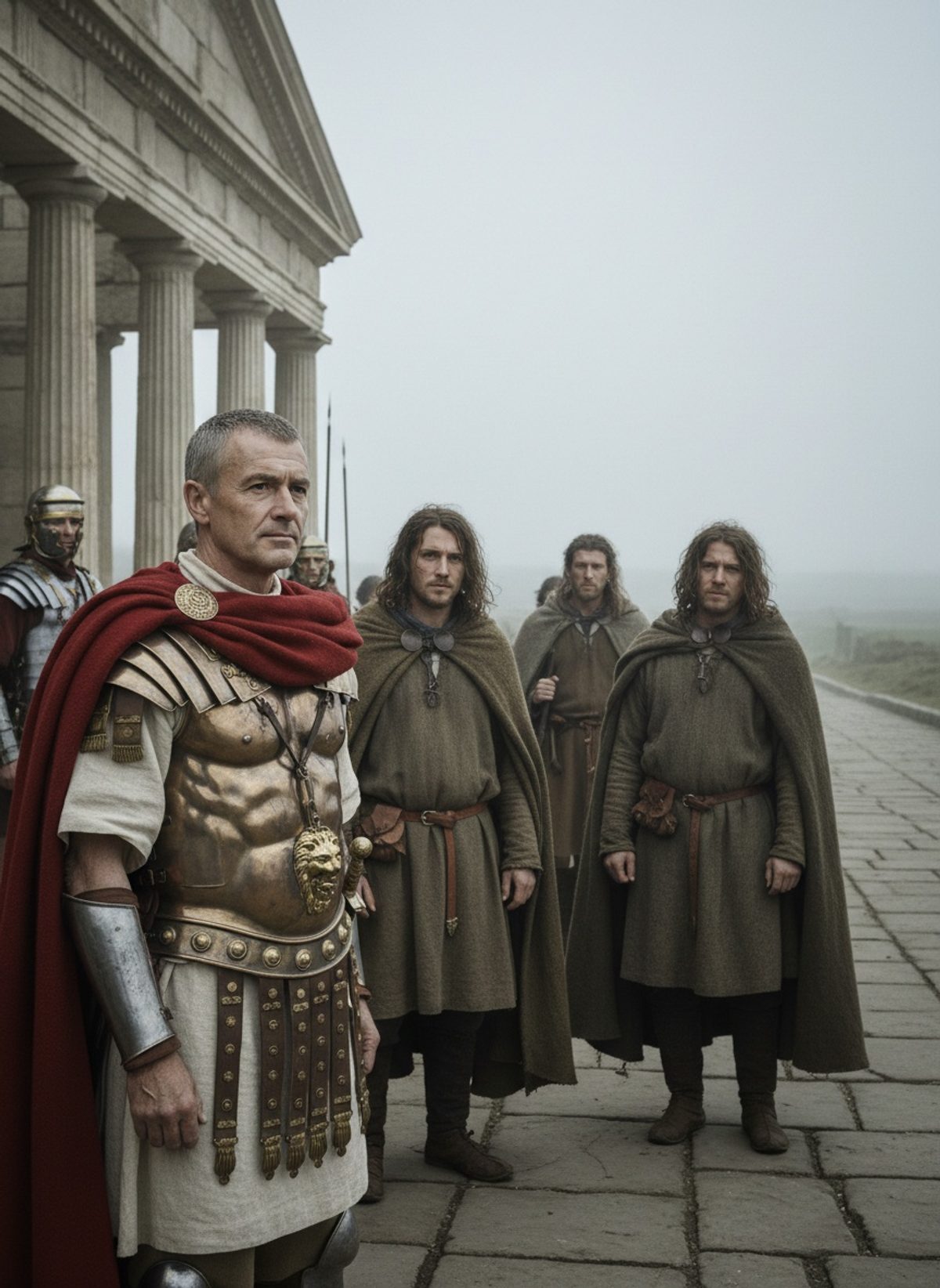
This was the stage on which Marcus Carausius entered. A Roman admiral hailing from the Menapian tribes in the Low Countries, Carausius was summoned to combat the watery menace. His success at sea quickly became legendary; he captured pirate ships with an adeptness that drew both admiration and suspicion. Allegedly, Carausius seemed to harbor the pirates' plunder for himself, a rumor that created waves in the corridors of power in Rome.
The empire was not kind to those whose prowess rivaled its own ambitions. When Maximian, co-emperor with Diocletian, ordered Carausius's arrest, the seasoned admiral made a daring escape to Britain. It was here that Carausius cast off the shackles of mere servitude and declared himself emperor, proclaiming Britain's independence from Rome—a maneuver few saw coming.
Read next: The Day a Roman Soldier Defied an Emperor to Free a Province
The Island Empire
On the edge of the Roman Empire, Britain was both resource-rich and strategically pivotal. Marcus Carausius understood this intrinsic value. Establishing his rule, he became the master of a newfound island empire with Londinium (modern London) as its heart.
To fortify his reign, Carausius courted the loyalty of the Roman legions stationed in Britain. It has been suggested that his charm and shared warrior ethos with the local soldiers were central to this success. Yet it wasn’t just military might that Carausius called to his side. As a cunning statesman, he crafted a symbol of his sovereignty: his very own currency.
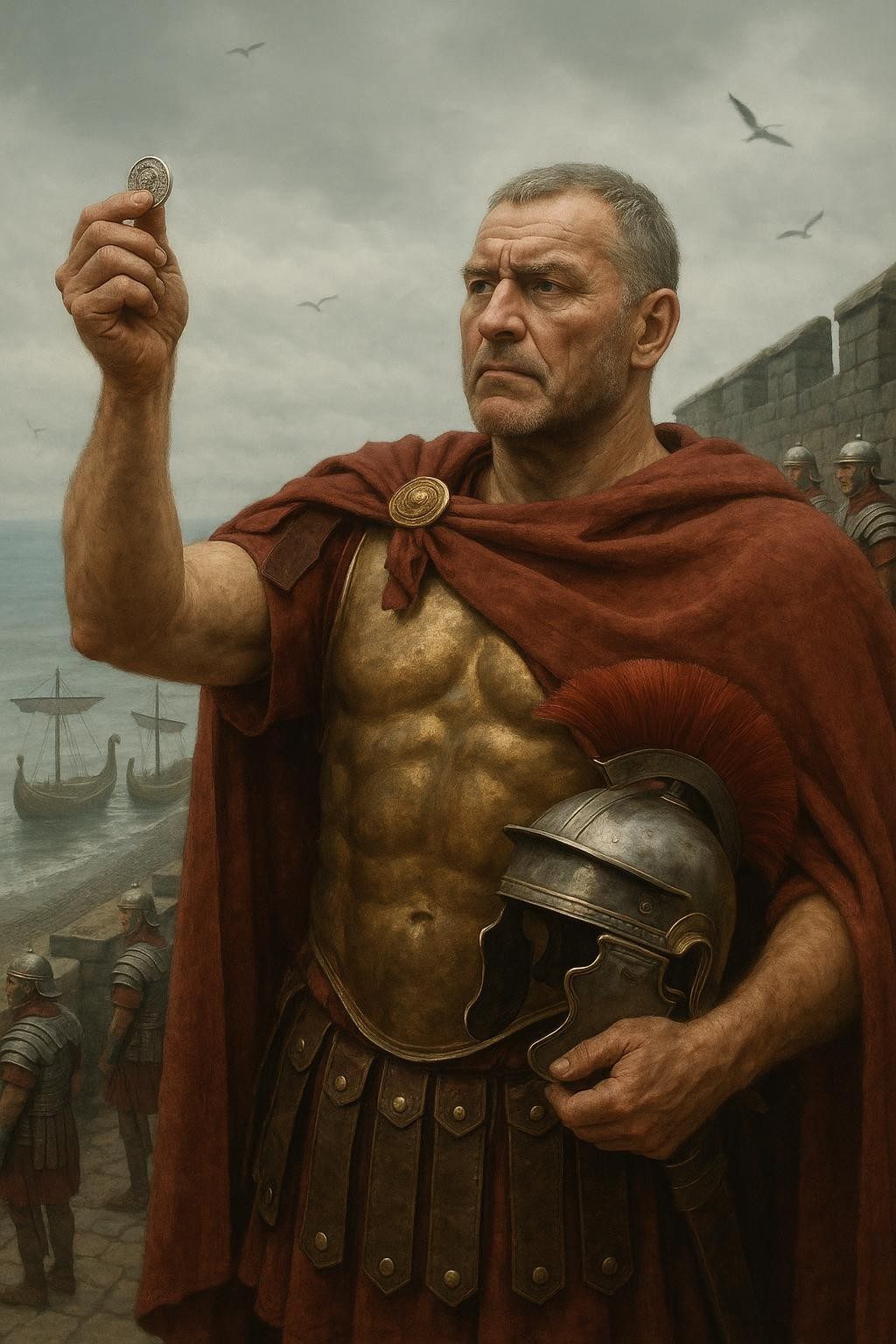
Carausius minted coins engraved with not only his image but illustrious quotes from Virgil, like *"Veni, Vidi, Vici"* (I came, I saw, I conquered), a bold statement that underlined his defiance. These coins weren’t just legal tender; they were declarations of independence to Roman and Briton alike, tokens of a realm proud to stand apart.
Bordered by Legacy: Mend and Defend
Marcus Carausius's isolated empire was not without its trials. While Britain found new strength in its independence, it existed under the specter of retaliation. The Roman Empire, led by a team of co-emperors, could not ignore the insubordination of one of its former military leaders.
Yet Carausius demonstrated not only the mind of a strategist but the heart of a diplomat. Rather than constant confrontation, he sought recognition through peace. Historical accounts suggest that a truce with Rome was at least nominally achieved, granting respite to consolidate his rule and advance Britain's defenses.
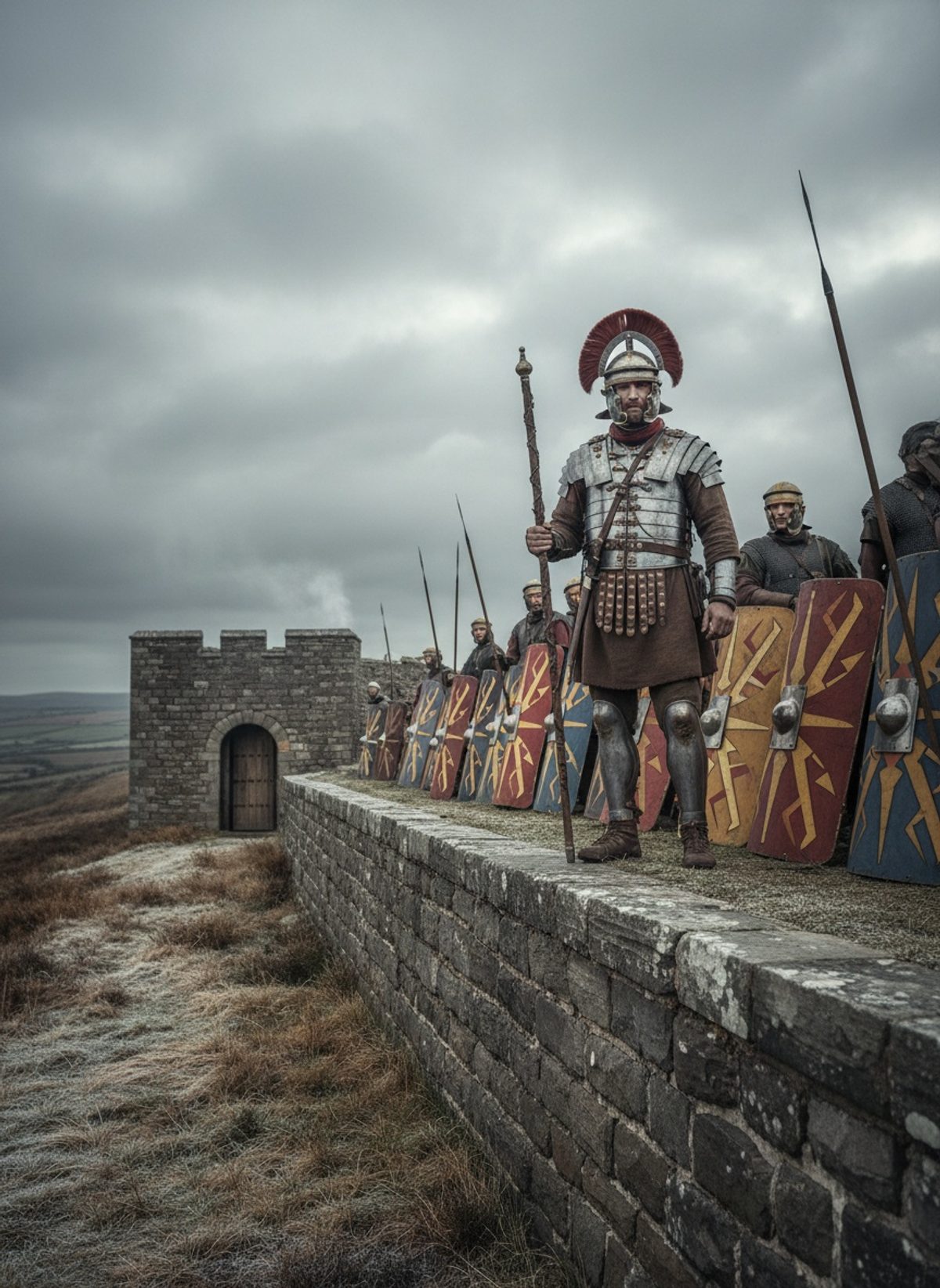
Imposing forts along the ‘Saxon Shore’ were bolstered to protect from seafaring marauders. The remains of some of these structures, like those at Richborough in Kent, whisper tales of this Roman general’s vision—a Britain unyielding, a fortress afloat amid the waves.
The Aftermath of Rebellion
Carausius's rule, while defiant, was shadowed by vulnerability. In 293 AD, the tumultuous balance he maintained began to crumble. Julius Constantius, commissioned as Caesar underneath the reform-minded tetrarchy, launched an assault on the seceded territory.
Before Constantius could strike, Carausius fell victim not to Roman steel but the dagger of betrayal. Allectus, his finance minister, ended the emperor's rule, assuming control in a calamitous coup. Despite its origins in ambition, Carausius’s lost reign dissipated swiftly under internal strife.
Constantius moved decisively. In 296 AD, the almost mythic autonomy of Carausius's Britain concluded as Roman forces reclaimed the island. Allectus met his doom in battle, paving the way for Roman reintegration. Yet, Carausius's legacy endured—a testament to the possibilities of sovereignty and survival even within an ancient global power.
The Echoes of Independence: Why It Matters
The tale of Marcus Carausius, the self-proclaimed emperor, remains a powerful narrative in the annals of history. It reminds us how complex the threads of power and identity are even within the seemingly invincible structures of empire. His actions echo the timeless human desire for autonomy, a reflection on the surprising potential for change in the most formidable of systems.
In today's world, where discussions of sovereignty and national identity remain vibrantly alive, Carausius's defiant leap into the unknown resonates. His Britain was more than a breakaway state; it was an experiment in self-determination, a declaration that even on the edges of a vast empire, voices on the fringe could roar.
Carausius’s chapter might have been left in the margins of textbooks, but as history has shown, sometimes it's those forgotten edges that hold the most remarkable tales of courage, vision, and the enduring spirit of independence.