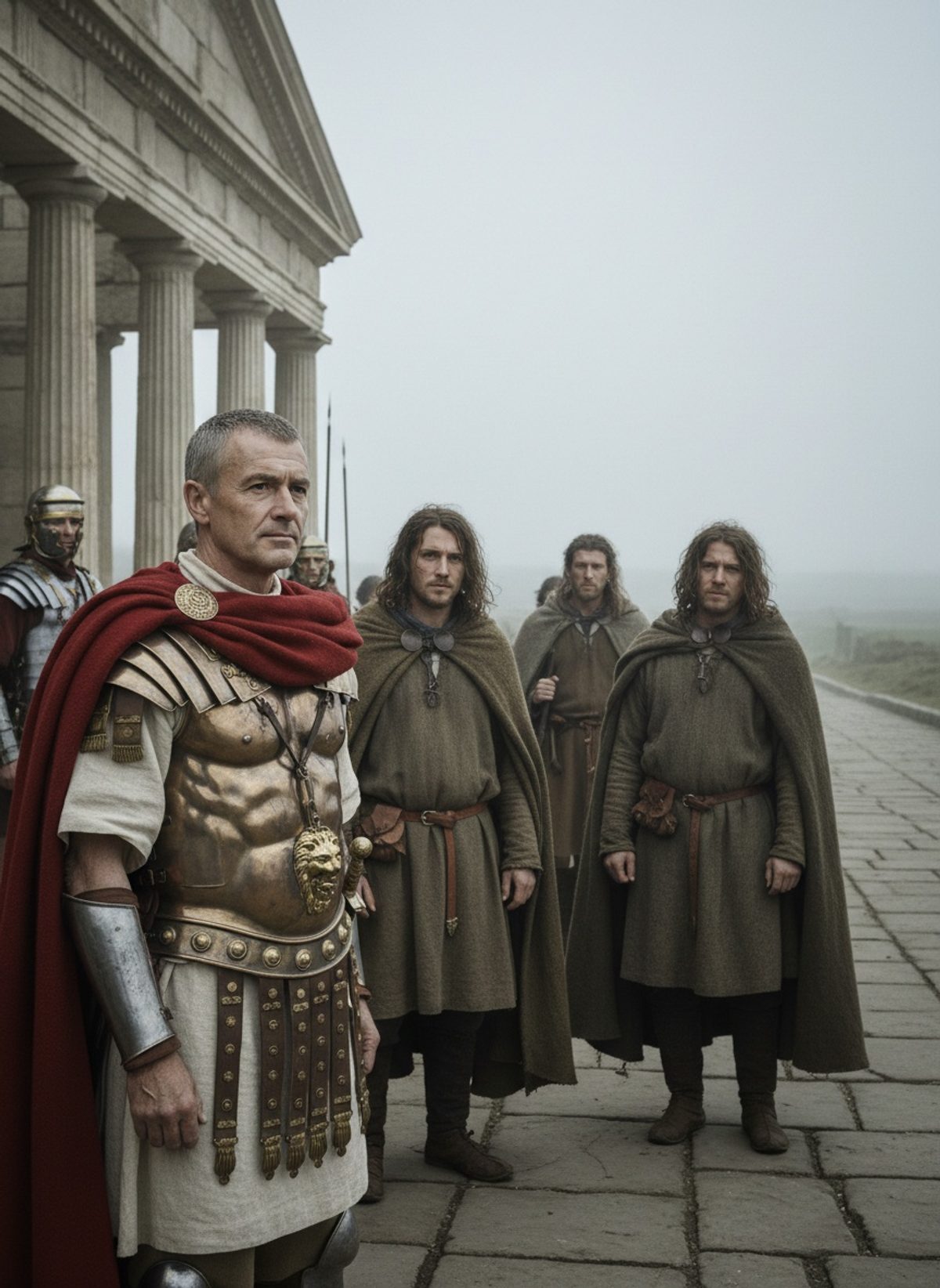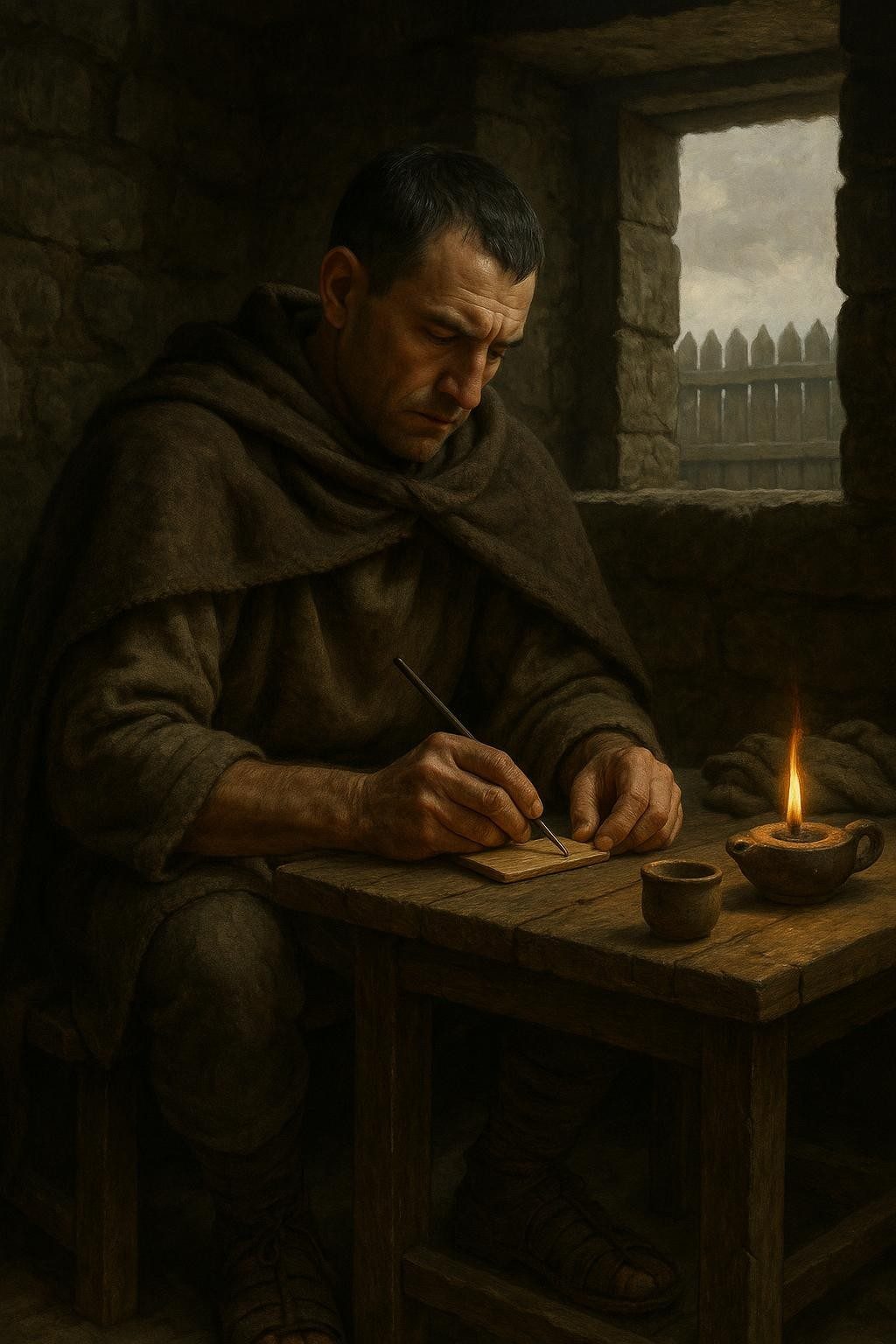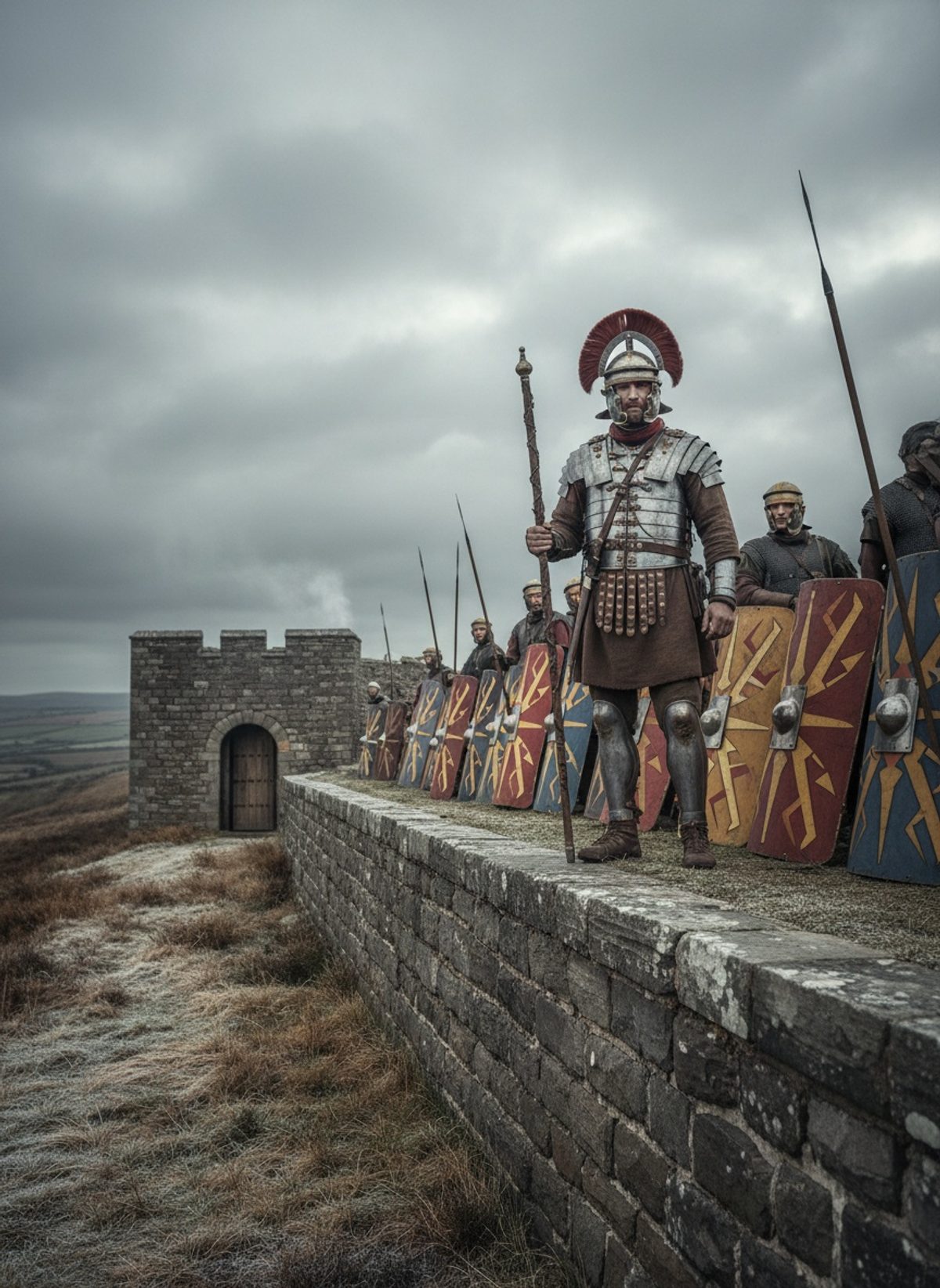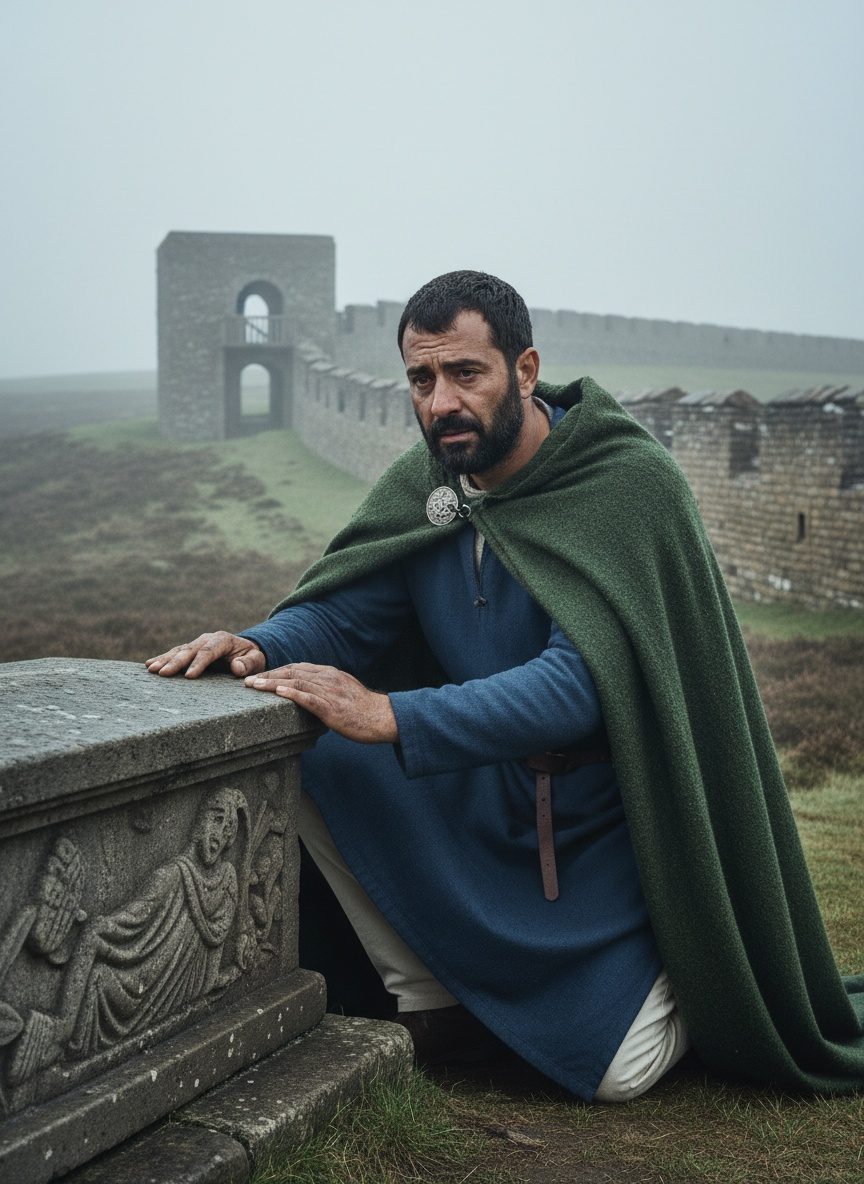
A Roman frontier was a distant and lonely place. Yet, within its bounds, love and loss carved lasting legacies.
The Unlikely Journey of Barates the Syrian
In the year 122 AD, as Hadrian's Wall began its majestic rise across the stark Northern landscape of Britannia, a Syrian archer named Barates found himself standing at the world's edge. Thousands of miles from his homeland of Palmyra, Barates was among the auxiliary troops who marched under the banner of Rome's relentless expansion. His journey was more than geographical; it was a venture into cultures unknown, climates unforgiving, and challenges unimaginable.
Palmyra, his birthplace, was a flourishing trade city, known for its palm trees, monumental architecture, and the confluence of Greco-Roman and Eastern influences. Contrast this with the damp and chill of northern Britannia, where the sky seemed a perpetual shade of grey and the terrain was as wild as the tribes it sought to contain. Here, at the brink of the Roman Empire, Barates was far from the sunlit streets and oases of his youth.
Yet, it was here, beyond the comfort of familiarity, that Barates wove himself into the local tapestry, a testament to the vast and varied human experiences under Rome's expansive domain.
Read next: The Day a Roman Soldier Defied an Emperor to Free a Province
Brick by Brick: The Wall Rises
Emperor Hadrian's eponymous wall was no mere border; it was a statement of power, a spine stretching 73 miles from Wallsend on the River Tyne to Bowness-on-Solway. Constructed with stone, it boasted large ditches in the front and rear, with soldiers stationed in forts and milecastles along its length. This impressive fortification was an architectural feat, created by legions of soldiers, stonemasons, and laborers under harsh conditions. It was here, amid this monumental effort, that Barates labored for the empire, one brick at a time.
Hadrian's Wall wasn't just a defensive structure. It became an emblem of Roman ambition and engineering prowess, a boundary delineating the civilized world from the untamed. Within its shadow, diverse peoples interacted, traded, and occasionally clashed. It was a melting pot at the margins, a microcosm of the Empire's vast cultural landscape, fermenting new blends of traditions and identities.
For Barates, being part of building such a boundary must have been an exercise in dichotomy — a Syrian integrating into Roman ranks, reinforcing walls against the Britons, whose lands they claimed.
Unexpected Ties: Love Beyond the Wall
Love is a force that knows no borders, and amidst the Wall's shadows, Barates found Regina, a freedwoman of the Catuvellauni tribe. The chasm between their worlds was significant; he, a Syrian archer entrenched in Roman military life, she, a daughter of Britannia, navigating a new reality as a liberated slave. Yet, love blossomed, defying cultural and social boundaries drawn tighter than Hadrian's formidable wall.
Little is known about Regina's early life, except for her servitude and subsequent freedom, likely a rarity in such a frontier setting. Her marriage to Barates signifies a personal triumph over the barriers of class and heritage. Together, they carved out a shared existence in a place where few thought to look for resilience apart from the cold stone of the wall itself.
This union was emblematic of the human spirit's indomitability — the ability to find common ground amid a sea of differences, love more binding than the mortar that held the Roman stones together.
A Legacy Etched in Stone
Tragedy struck with Regina's death, leaving Barates to immortalize his grief in stone. He commissioned a tombstone bearing an inscription that, nearly two millennia later, speaks to us across time: *To the spirits of the departed (and) of Regina, freedwoman of the Catuvellauni, Barates, a Palmyrene (set this up). She lived 30 years.*
This poignant epitaph, found at South Shields, is one of the few personal memorials from the period that has endured. It's a window into the past, capturing the affectionate regard of a husband honoring his wife in a foreign tongue — Latin — yet adding an epithet in Palmyrene, a mark of his identity preserved in love and loss.
Regina's memorial is not merely an archaeological find; it is an enduring reminder of individual stories woven through the larger historical narratives. It underscores a connection that transcended life's inevitable brevity and cultural divides.
The Timeless Resonance of Human Stories
In the end, the story of Barates and Regina is not about a wall, a tribe, or even an empire; it's about the profound human experiences often obscured by monumental histories. In a world driven by conquest and construction, such tales whisper continuity: life's endurance amid change.
As we stand before the stones that line Britain's rugged horizon, let us remember those who loved where they lived. Barates’ tale gives voice to those whose stories lie hidden beneath the surface of recorded history; a tale reminding us of the interconnectedness of the human story. There's a resonance in past lives echoing into our present, a subtle doctrine awaiting discovery beneath each lichen-covered stone.