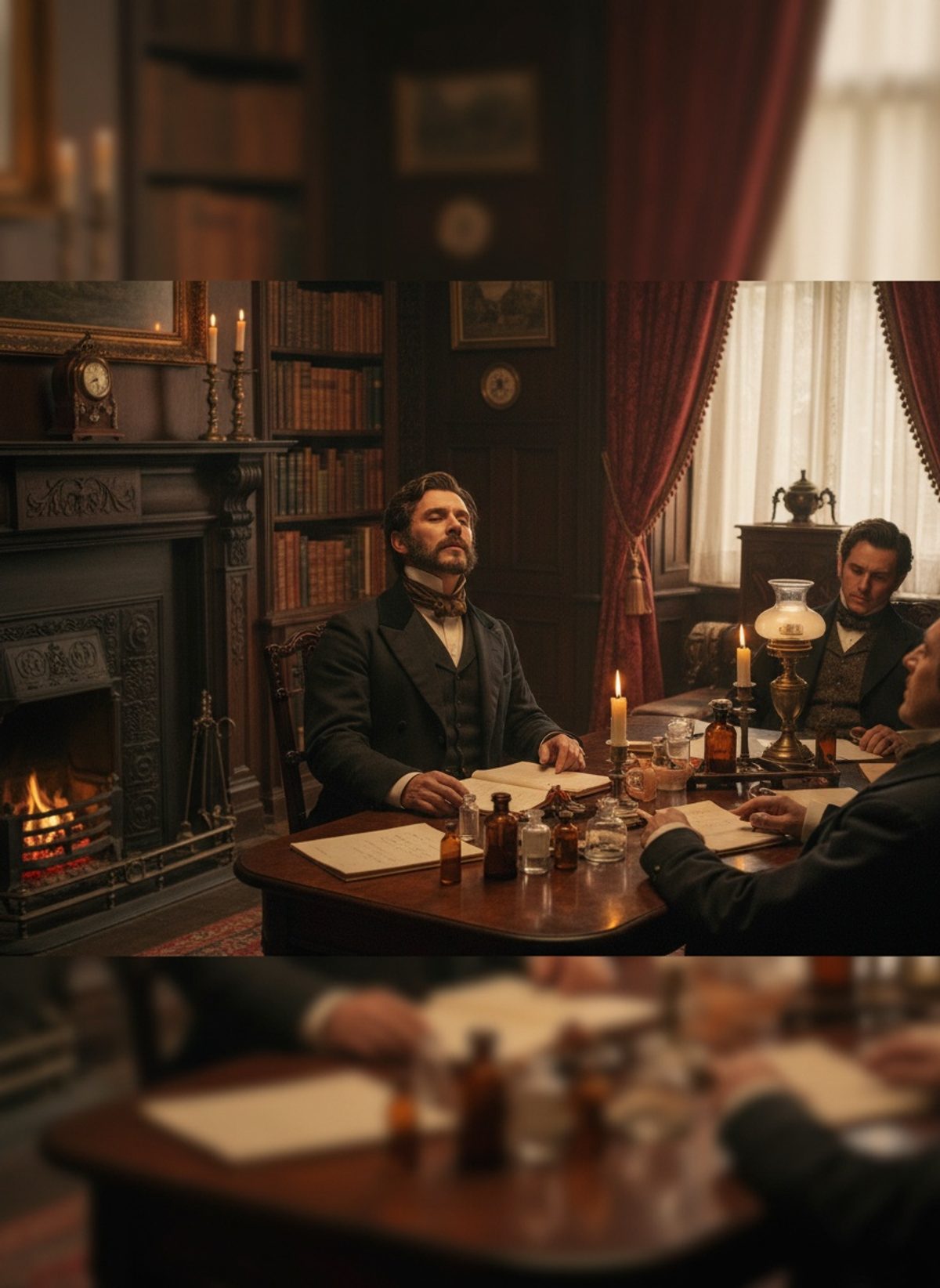
He was from a modest family in Worcestershire. Yet Rowland Hill would become the man to revolutionise communication across Britain.
The Precarious World of Post
Britain in the early 19th century was a land of contrasts. The Industrial Revolution had spun a web of iron rails and factories across the nation, linking cities and towns, yet the common folk found themselves disconnected. For many, family and friends were a distance unbreachable not by land or mind, but by the prohibitive cost of communication. Before 1840, the postal system was a relic of privilege, an enterprise restricted to those with deep pockets. While the nation expanded its railroads and smokestacks, a simple letter—the bearers of thoughts and affections—cost a working man's daily wage. Even more striking, the cost fell upon the receiver, leaving the poor to ponder letters they could not claim.
Rowland Hill, a man with relentless resolve, saw the unfairness of this barrier distinctly. The son of a schoolmaster, Hill was well-acquainted with the struggles of the common man. Born in Kidderminster, Worcestershire, his upbringing was modest. However, it was his father’s devotion to educational reform that ingrained in Hill a spirit of social equity. The postal system’s injustice gnawed at him, yet many in power saw nothing amiss. To them, the barricade of correspondence seemed a trivial nuisance, not a national plight. However, through the lens of Rowland Hill, it was an injustice screaming for resolution.
The Battle for Change
A decade before the multitudes rejoiced at the birth of the Penny Post, Rowland Hill began concocting his radical proposal. His plan was simple yet revolutionary: a mere penny for each letter, pre-paid by the sender rather than the receiver. With these changes, the humble letter could become a mass-market commodity, not a privilege. Critics scoffed. Could change really be won through such simplicity? The corridors of power, from Westminster to the local postal officers, seemed fortified against any such notion of equality.
Read next: The Day a Widow's Son Lit Up the Victorian Night
Hill faced enormous resistance from the establishment. Civil servants, postal workers, and naysayers claimed his propositions were impractical, even reckless. The revenue lost from reduced postal rates appeared, to the elite, as a disaster in the making. Year after year, meeting after meeting, Hill advocated for the poor, armed not with a silver tongue but with facts, figures, and unwavering dedication. His proposal wasn’t just visionary; it was backed with meticulous research and statistics, proof that the post could remain profitable even at a fraction of the cost.
Hill’s persistence bore fruit. After a decade of tireless advocacy, the eye of the government finally turned toward his plan. In 1839, his ideas were embraced as a trial nothing less than monumental began to take shape. It was a new dawn—when the clock struck midnight on January 10, 1840, Britain awoke to a postal system reborn. It was a brave new world where every person, regardless of rank, could send their words of love, loss, or labor for merely a penny.
The Voice of a Nation
The impact was instantaneous and profound. From bustling London streets to the quiet hamlets of the Welsh valleys, letters flew with unprecedented speed and affordability. People who’d never imagined writing a letter could now send away their voices with ease. Families reunited over distances, businesses transformed their communication strategies, and literacy blossomed among the populace. When the iconic Penny Black, the first adhesive postage stamp, was introduced in May 1840, bearing the visage of Queen Victoria, it became a symbol of the people’s emancipation from communication captivity.
The post was not merely a means of communication—it was revolution incarnate. Suddenly, the postal service facilitated the spread of ideas and movements that could shape public opinion. It turned the entire nation into a vast network of interconnected, informed citizens. Political pamphlets, serialised novels, and impassioned appeals traveled swiftly through the land, fueling debates and enlightening minds. The humble penny had given every Briton a voice - a phenomenon that echoed beyond letters and transformed society in ways even Rowland Hill had not foreseen.
Today, we navigate a world where digital messages and instantaneous emails dominate. It's easy to overlook the revolution sparked by Hill's Penny Post. Yet, without it, Britain’s Victorian age might have been less vibrant, less connected, less aware of itself. Hill didn't merely alter a postal system; he laid foundations for the modern, global era of communication. Through the visionary eyes of Rowland Hill, a world bound by privilege became a society strengthened by communication. In the pages of history, his legacy reigns steadfast—a testament not just to innovation but to the enduring impact of tireless resolve against the odds.