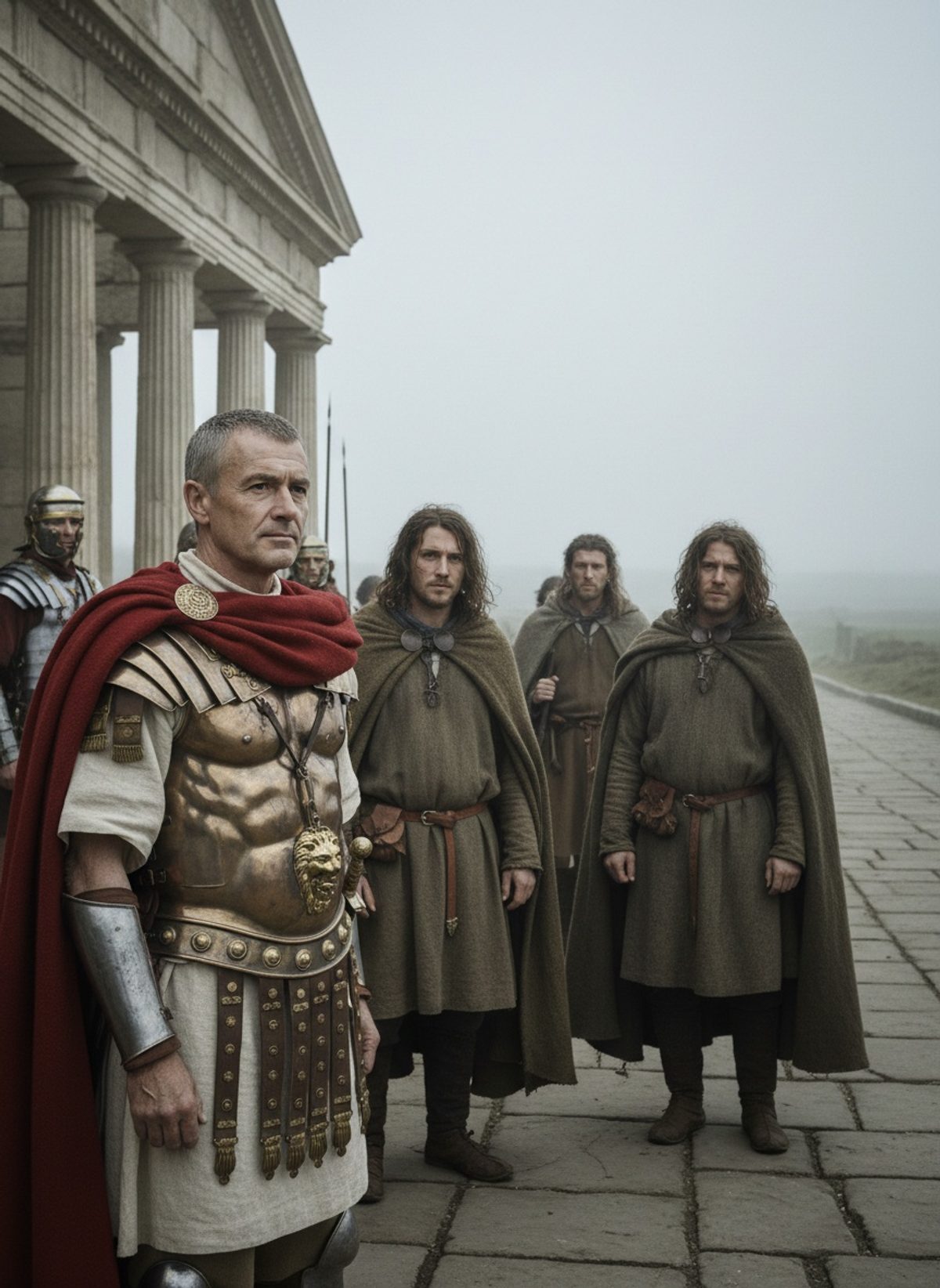
200 AD. The soft whisper of the wind passed over the rugged expanse of Carrawburgh, part of the towering rock and rubble of Hadrian’s Wall.
The Unexpected Devotion
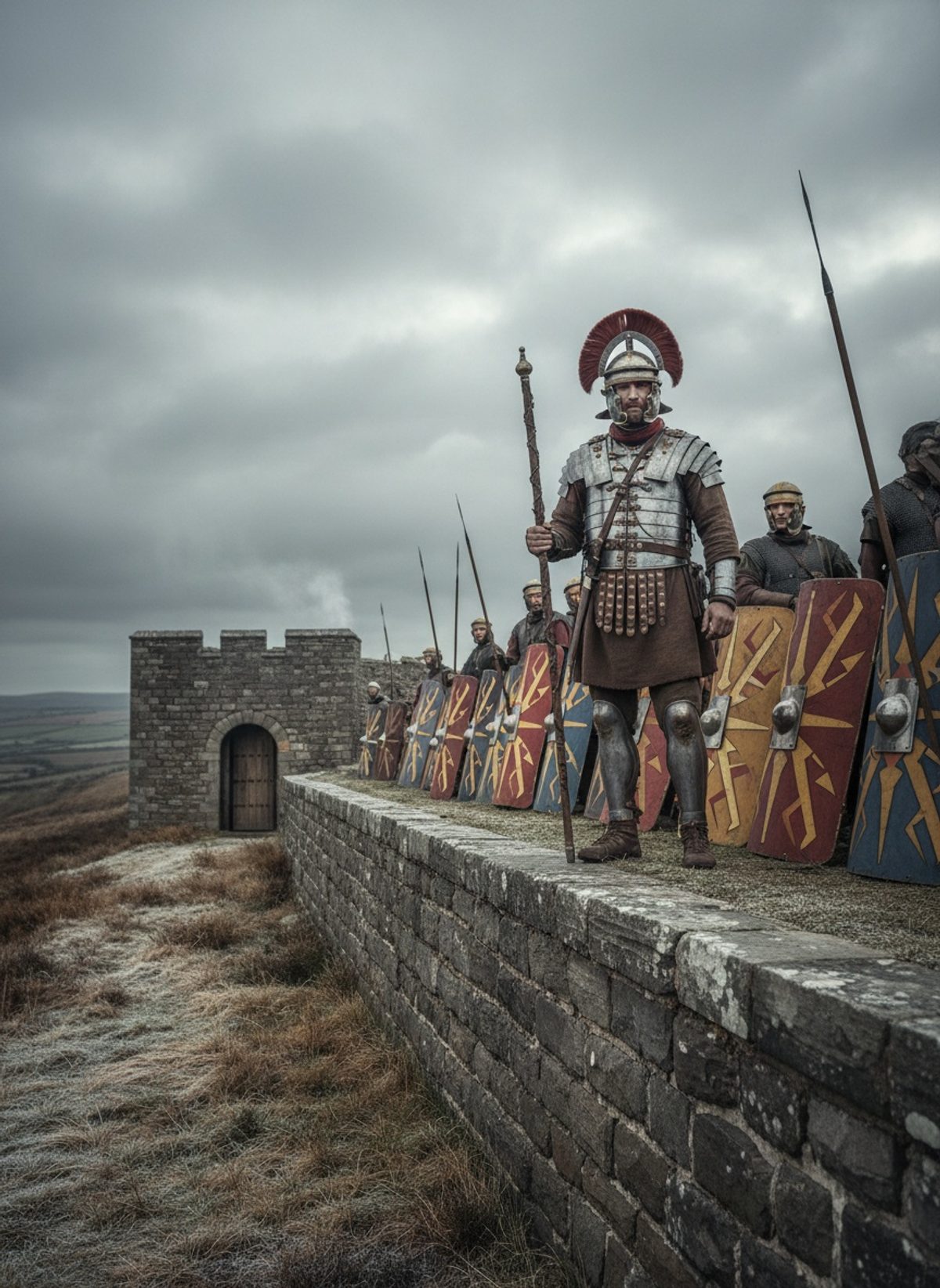
Standing vigilantly at the edge of the Roman Empire, Hadrian’s Wall was not just a boundary of stones and mortar; it was a living, breathing tapestry of culture and chaos. For a Roman centurion stationed at one of the wall's forts, the Wall represented both protection and exile. Known historically for its harsh climate and remote location, this was a place where soldiers learned to make a home of an unfamiliar land.
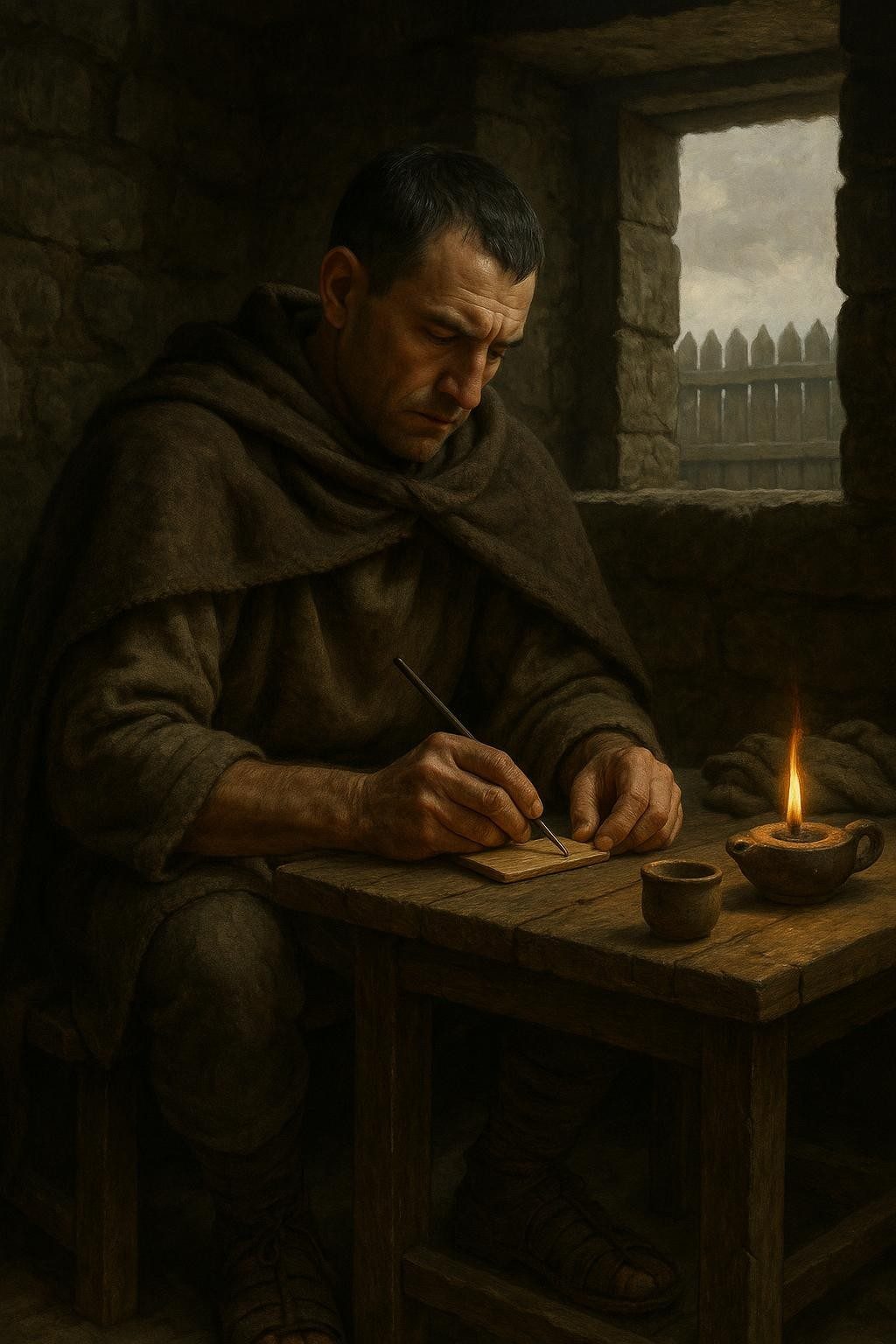
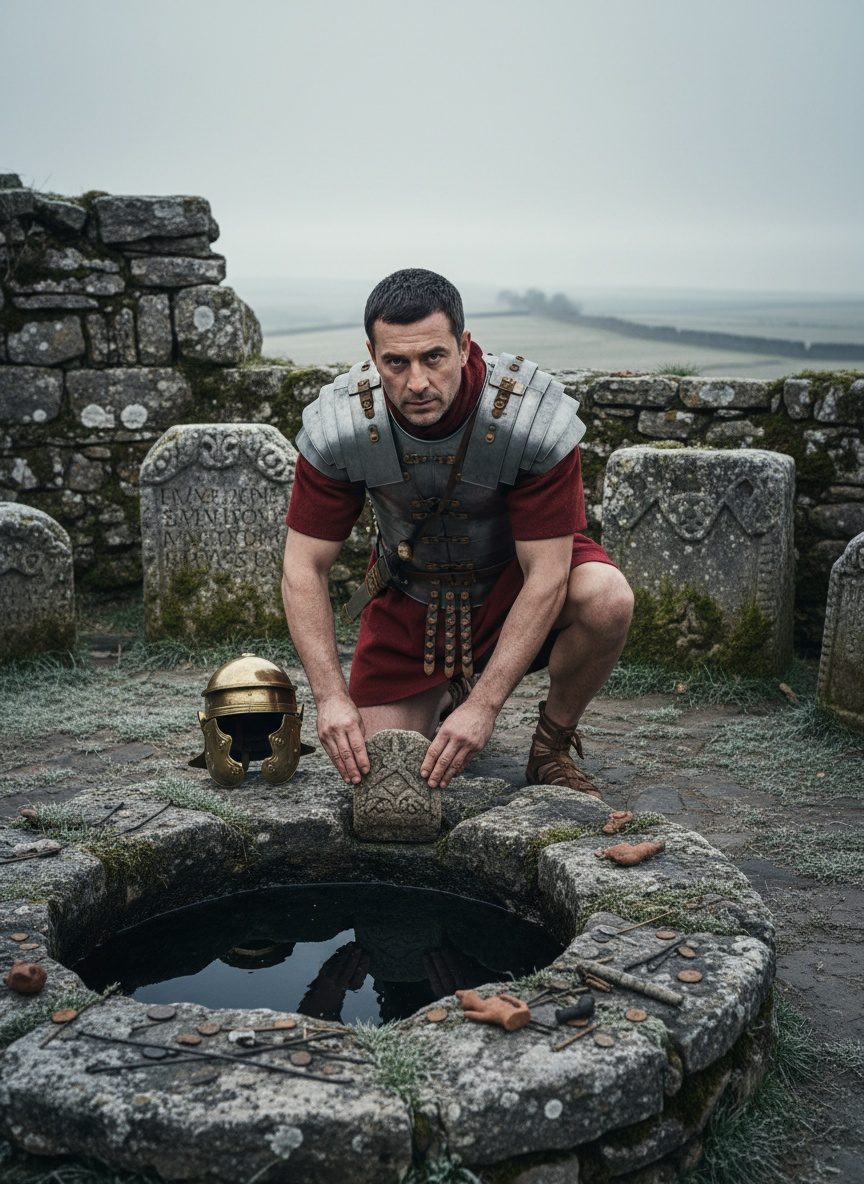
One particular centurion, whose name has faded from memory, performed an act that has intrigued historians and modern visitors alike. Standing before a sacred spring at Carrawburgh, an area frequented by Roman soldiers for respite and reflection, he undertook the construction of a worship place—not for one of his own Roman deities, but for Coventina, a local British goddess of water.
Coventina was not a name celebrated across the vast Roman pantheon. She was a relatively obscure goddess, worshipped primarily by the local tribes in this far-flung corner of Britannia. Her domain was the springs and rivers; water was life, and for those stationed so far from the heart of the Empire, the symbol of flowing water held paramount importance. It was under these auspices that the centurion decided to carve Coventina’s name into stone, creating a lasting tribute to the essence of life.
Read next: The Day a Roman Soldier Defied an Emperor to Free a Province
To build such a temple was a choice of profound culture-melding significance. At a time when Roman soldiers often held onto their native customs as tightly as their swords, incorporating local deity worship into their routine reflected an acknowledgment of the land they occupied. This centurion’s act was more than a solitary soldier’s pious endeavor; it was an acceptance and respect that transcended typical Roman practice, bridging two worlds through the shared reverence of the divine.
A Crossroads of Belief
The worship of Coventina took place at a sanctuary known as Coventina's Well, an ancient spring that bubbled forth with promises of divine favor and healing. This sacred site was not just a local secret. Roman soldiers often threw offerings into its waters, an array of coins and precious artifacts, hoping to curry favor or express gratitude to the goddess. The well quickly became a repository of Roman and British traditions converging in reverence and ritual.
This action to build a shrine was no modest endeavor. In construction, and by extension in belief, the centurion committed stone and sweat to this work. Yet for these soldiers, the community around Coventina's Well offered more—it was both spiritual and social, a place of gathering that unified not just religious belief but identities.
When Roman legions moved across the empire, they adapted and adopted parts of the cultures they encountered. Yet what set the establishment of a temple to Coventina apart was its subtle assertion that release from Roman religious tradition could coexist alongside traditional Roman spiritual practices. Ordinarily, Roman deities like Jupiter or Mars received homage on the empire’s frontiers, gods of war and thunder whose ferocity matched the might of the legionnaries.
The introduction of Coventina into their lexicon was profound. The centurion’s choice spoke to a broader experience, an understanding that water was not merely a physical necessity but a spiritual alliance with the land where they found themselves. And so, the Roman soldiers, often viewed as conquerors, became participants in a local religious tradition, their beliefs as mixed and flowing as the waters of Coventina's sacred well.
Echoes Across Time
Today, the remnants of the temple at Carrawburgh invite visitors to imagine the convergence of Roman ambition with British spirituality. Fragments from the well, including coins and altars offered to Coventina, continue to hint at a more complex historical narrative. It tells of men far from home, seeking solace in the unknown, finding connection and perhaps redemption in the beliefs of others.
The significance of this unexpected dedication endures. The Roman centurion’s tribute to a British water goddess illustrated a moment when cultures melded not merely on the level of trade or territory but through the sacred. This was not the imposition of belief but an embrace of it—a spiritual partnership rather than a conquest.
In the centuries since this unlikely votive dedication, the story of Coventina's shrine remains a point of contemplation and curiosity. Its stones may be weathered by time, yet they communicate a powerful truth: sometimes, the acceptance of another's belief system can surpass boundaries drawn by human hands and hearts. This is the enduring lesson of Carrawburgh and its once-forgotten centurion—a reminder that bridges framed by respect span further than walls of division.