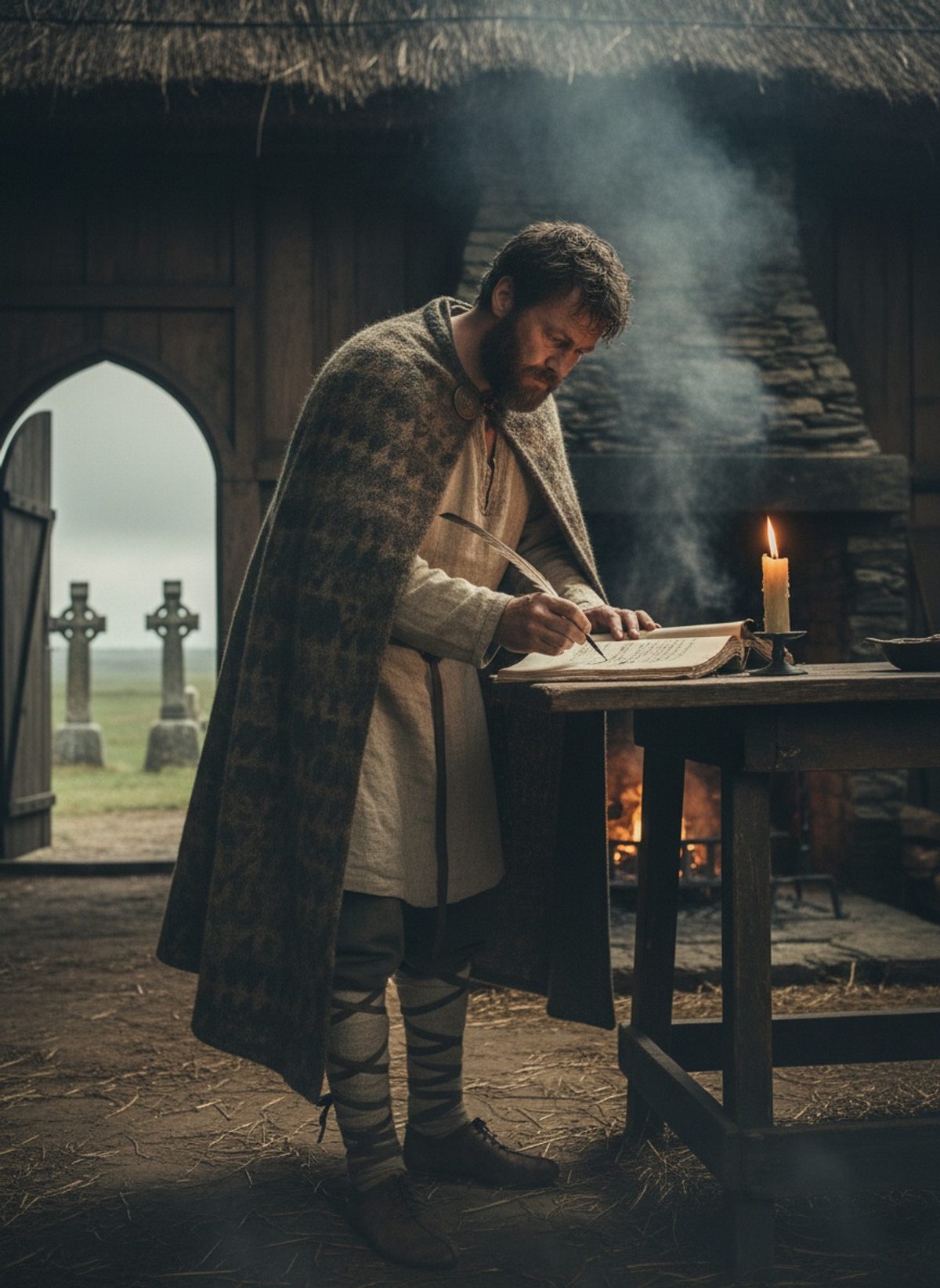
680 AD. The winter wind howled across the Northumbrian moors.
A Hall of Song and Silence
At the monastery of Whitby, nestled on the clifftops overlooking the North Sea, it was a scene of warmth and merriment. The hearth crackled with firelight bouncing off stone walls, a balm against the biting chill outside. Monks and lay brothers gathered, filling the great hall with laughter and the rich aroma of roasted meat. Tradition demanded the sharing of song after their evening meal, a ritual as sacred as the prayers uttered in the chapel. Each man would take his turn with the harp, a proud display of wit and creativity.
But not Caedmon. A simple herdsman, he was a man whose hands were accustomed to the physical exertion of tending to the abbey’s livestock rather than the delicate strings of a harp. His reticence to sing was not just shyness; it veiled a deep-seated shame. Whenever the harp was passed to him, his heart would pound, and his throat would tighten with the fear of choking out an ungainly note, a terror not uncommon to those unfamiliar with the musical arts. On this evening, as laughter and song filled the air, Caedmon quietly slipped away, seeking solace in the cold night air while the others celebrated within.
The night sky opened above him, stars twinkling with the same bright promise carried in the melodies he could never find. It was among the darkened folds of this night, free from the echo of human voices, that Caedmon found a sanctuary from his self-imposed silence.
Read next: The Day a Saxon Abbot Walked Into a Slave Market Alone
A Dream in Divine Verse
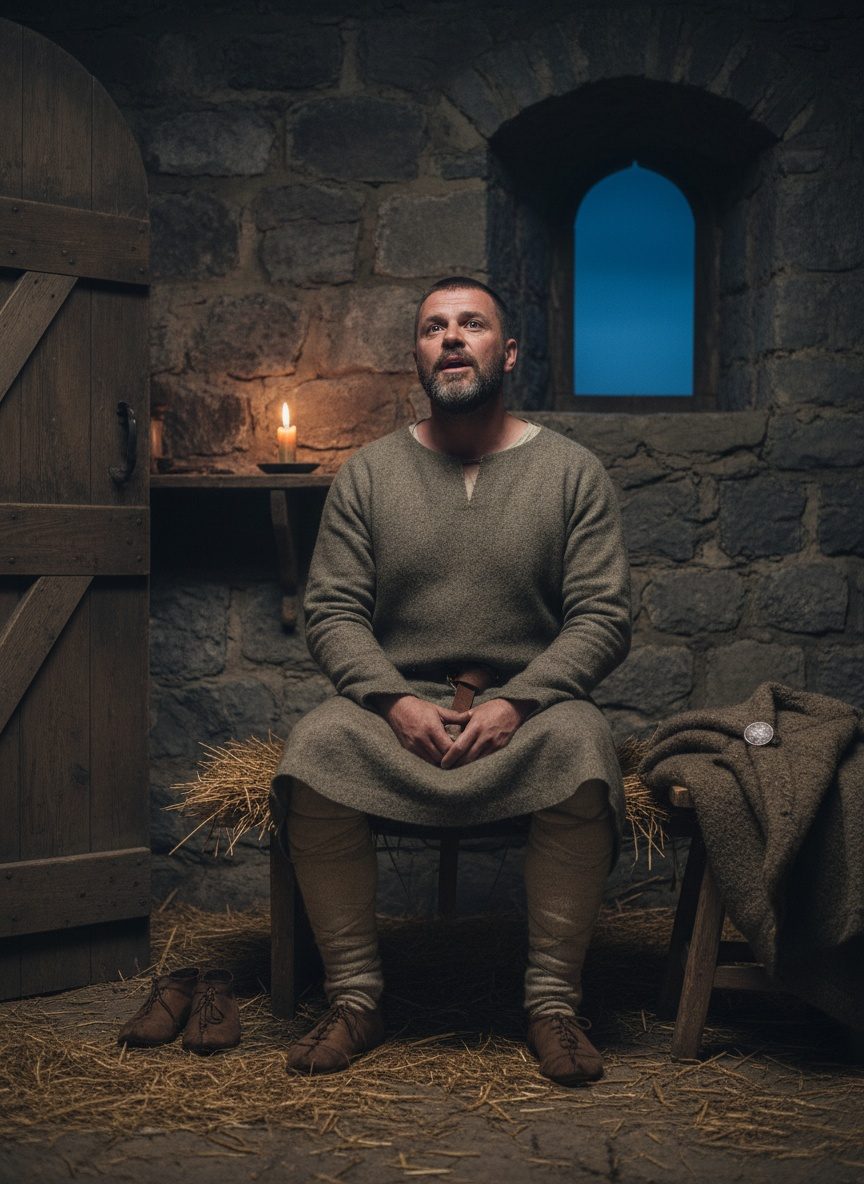
As Caedmon slumbered, a dream, vivid and lucid, unfurled within his mind. In this realm of shadows and whispers, a figure appeared before him with an aura of command and warmth, asking him to sing. The familiar dread gripped him even in sleep, and he lamented that he could not. The figure's voice, patient and firm, urged again, this time instructing him to sing of the creation of all things.
A miracle unfurled in Caedmon’s subconscious; words poured forth as if from a hidden wellspring, flowing into song. He sang of the earth’s beginnings, of creation's beauty, a song so perfect and complete, it sang itself into his very being. Upon waking, the dream clung to him with a clarity unlike any other. Every word remembered, every note a part of his being. Eager to test the bounds of this new reality crafted between dreams and consciousness, Caedmon sang his song aloud to the dawn sky, feeling the catharsis in every word sung with devotion and joy.
The monastery was abuzz with astonishment by morning, the transformation of the once-silent herdsman into a master of verse a subject of both wonder and divine speculation. The abbess, Saint Hilda, summoned Caedmon before the learned men to recount his dream and sing his newfound verses. Their scrutiny melted into awe as he performed the song with clarity and grace. Cajoled by divine inspiration or some latent gift, Caedmon brought forth a song that spoke to the hearts of man and God alike.
The First Poet of England
Marked by this miracle, Caedmon abandoned the humble pastures for the erudition of the monastic life. Guided by the abbey's monks, he nurtured his newfound talent, creating hymns and religious narratives in the vernacular Old English, a transformation itself that was as revolutionary as his experience. Until this time, religious texts were predominantly Latin-bound, accessible only to those well-versed in such scholarly tongues. Caedmon’s verses broke these barriers, reaching the lay population in language they understood, embedding their faith within their daily lives.
His poetry lingered in the transition between oral and written traditions, much of it preserved through the later retellings by the influential historian Bede. Caedmon’s verses echoed the rhythms of an age-old longing for understanding the divine, a creative force that mirrored the act of creation itself, not just in content but in its very genesis through his dream.
The significance of Caedmon's story is multifaceted. It illustrates how creativity and inspiration can emerge from the most unlikely of sources, transforming personal limitations into collective cultural enrichment. In a world where language and control of narrative equated to power, Caedmon's story is a timeless reminder of the profound impact that tapping into one's inner song can have. His life, an allegory of the potential hidden within silence, offers solace and encouragement to the voiceless, reminding them that every soul has a song waiting to be sung.