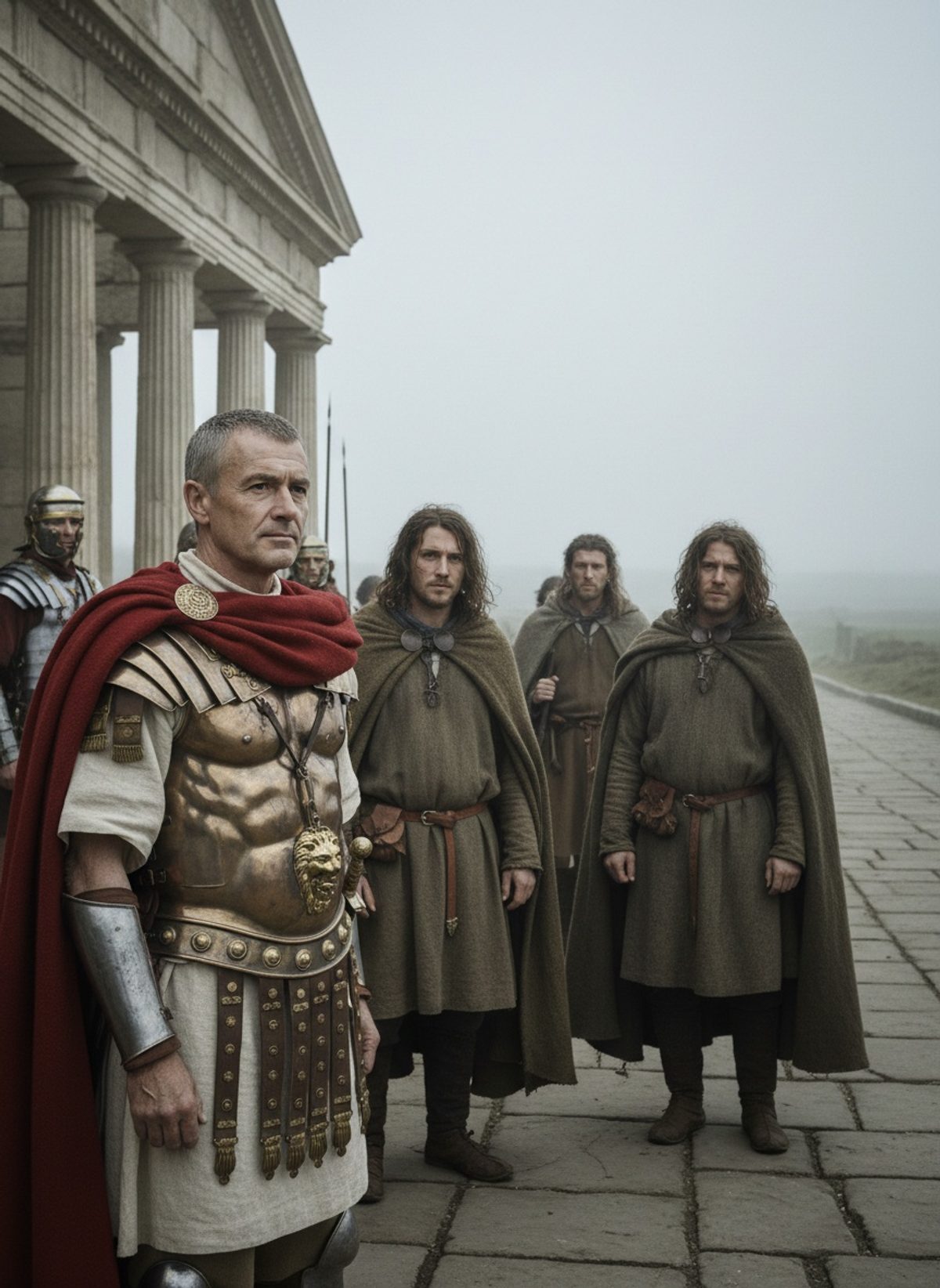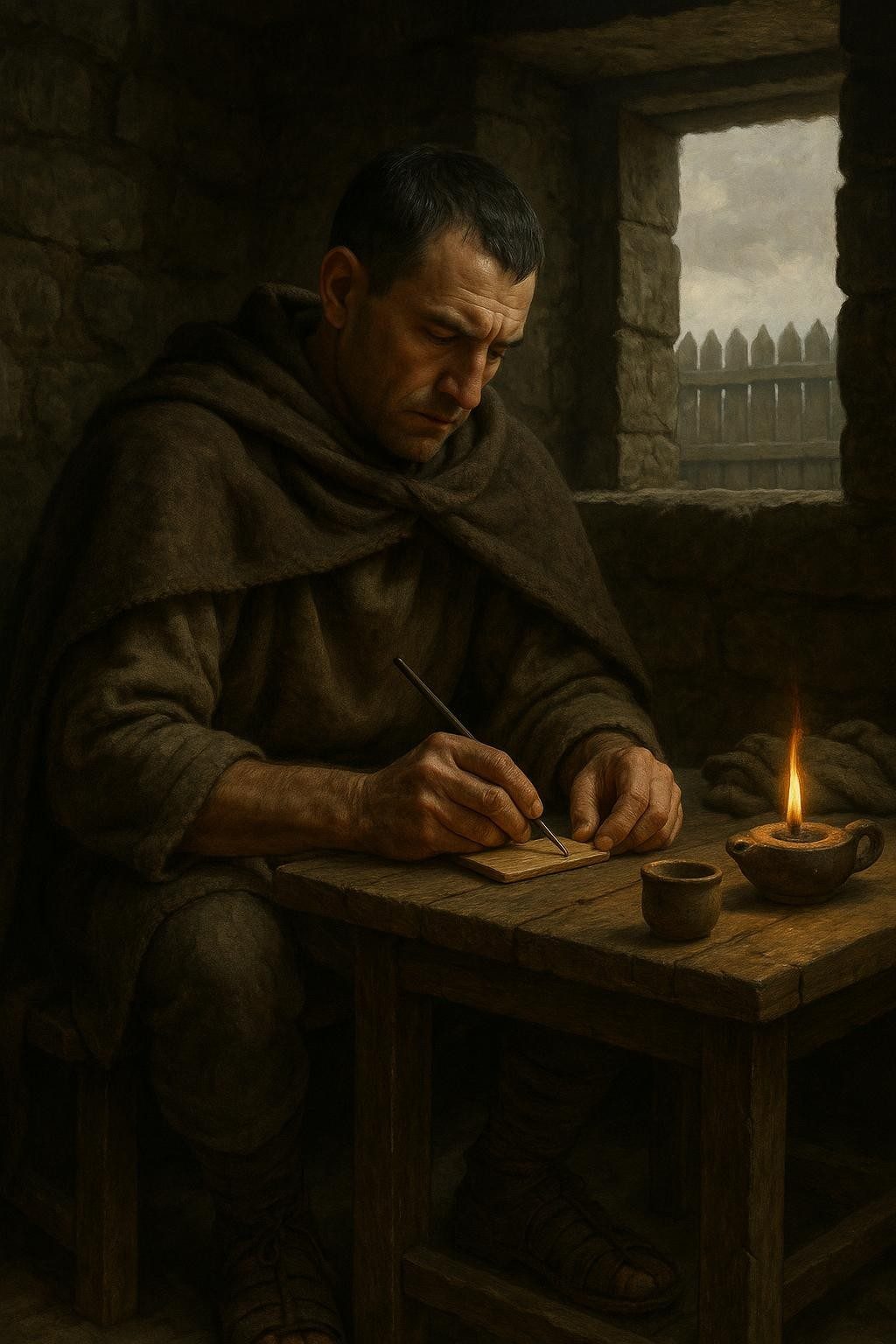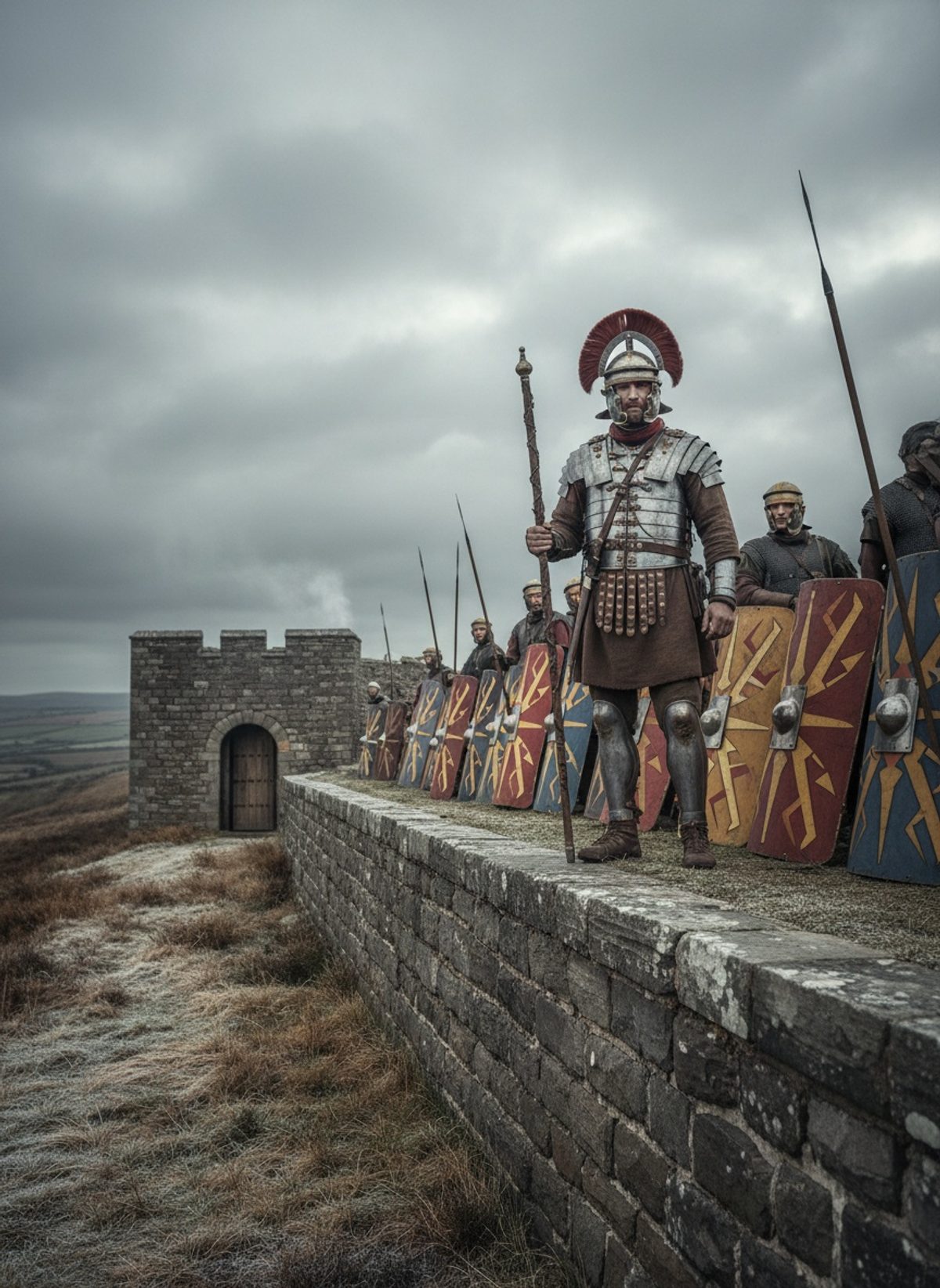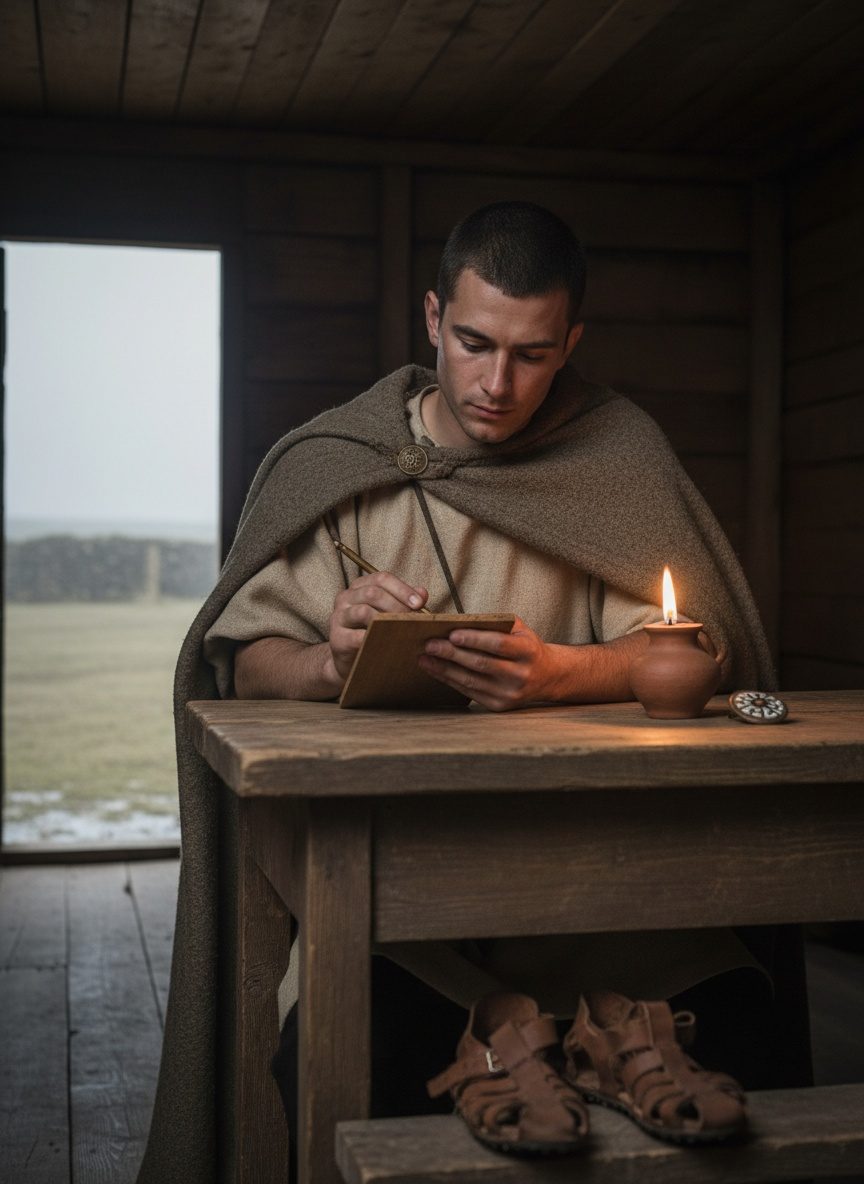
On a brisk day in the autumn of 100 AD, the northern frontier of the Roman Empire lay teetering on the edge of civilization. Vindolanda, a robust Roman auxiliary fort perched on the rugged terrain near Hadrian’s Wall in Britain, stood stark against the harsh backdrop. The sky hung low, boundless and gray, as gusts of wind swept across the barren landscape, whispering through the wooden palisades and filling the air with a biting chill. It was a world on the brink of wilderness, where legions of Roman soldiers clung to their orders and maintained watch against the untamed lands of the Caledonian tribes beyond. Amidst this distant outpost's hustle, one soldier paused to write a letter home—his words destined not to reach their intended recipient, but to bridge millennia in a testament to the enduring human spirit.
From Rome to the Britons
The world beyond the Roman Empire was often cloaked in mystery for those within its reach. At the far-flung edges of Roman Britain, Vindolanda played a crucial role as one of many fortifications dotting the horizon. Built of wood and stone, its walls were a testament to Roman engineering, designed to hold the burgeoning empire's border steady. Here, legionaries and auxiliary troops alike stood guard against the perceived chaos of the unknown North.
Yet beyond the strategic significance lay a remote wilderness; thick woods and barren moorlands stretched endlessly, falling away to a perpetual horizon. For those stationed at Vindolanda, these surroundings served as a constant reminder of their isolation from the comforts of Rome. The fort became a microcosm of the Empire, blending cultures and languages while anchored to a singular aim.
The soldier who took to writing that day was one of many who frequently thought of home, a concept as far removed as Rome itself. In his heart, the echo of bustling marketplace sounds and the familiar scent of olive oil and bread lingered, a distant, comforting memory against the daily challenges posed by life on the frontier. The letter he composed was a modest request, seeking the simple comforts of daily life—a pair of warm socks, durable sandals, and fresh underwear. These were not the spoils of a victorious campaign but the everyday essentials that spoke to the humanity inherent in each soldier's narrative. In these humble requests, his missive highlights a hidden, personal story often lost amidst the recounting of conquests and military exploits.
Read next: The Day a Roman Soldier Defied an Emperor to Free a Province
The Discovery in the Mud
Fast forward nearly two millennia to 1973. Within the confines of archaeologists' eager hands, Vindolanda began to unveil its secrets, revealing treasures encased in the fort's protective layers of mud and anaerobic soil. Among the most remarkable discoveries was a thin sliver of wood, etched with faint Latin script. The Vindolanda Tablets, as they came to be known, offered an unprecedented glimpse into the daily workings of Roman frontier life, with each letter's intricacies shedding light on a world once thought lost.
The soil's unique preservation properties had halted time, providing historians with tangible connections to the famed past. These wooden tablets, once mundane artefacts, transformed into cherished threads, weaving tales of life at the very edge of the empire. The soldiers' words, informal and filled with the minutiae of day-to-day existence, painted vivid pictures of the interplay of personal and military life.
The letter asking for socks was one among many. Yet it stands out because it encapsulates a stark contrast: a mighty empire reduced to the individual's voice, yearning for the warmth and comfort a mother lovingly provides. The everyday needs of these soldiers—often subjected to harsh climates and grueling conditions—remind us that the same emotions and desires transcend both time and distance.
The Human Heart of Empire
In contemplating the significance of this unpretentious letter, one is drawn to the striking sense of intimacy it engenders. Empires throughout history have been characterized by grand narratives of triumph and expansion, yet the Roman soldier's plea for warm socks is a fragment of this bigger picture, imbued with a striking sense of immediacy. It paints the Roman Empire not as an indomitable force, but as a collection of individuals echoing through the ages.
This sense of human drama and enduring connection exemplifies how history can speak across centuries. Every stroke of the stylus across wood reverberates with the somber reminder of the personal sacrifices woven into an empire's grand designs. Vindolanda and its tablets present a timeless crossroads where the personal meets the powerful, grounded in the tangible realities of weariness, resilience, and hope.
It is stories like these that anchor the high visions of history to humble human truths. They serve to remind us that, amidst the machinery and might of empires, it was people—ordinary and poignant in their desires—who wore the burden of the crown. The soldier's unsent letter thus becomes more than a call for socks; it's an enduring thread in the tapestry of humanity—history embodied in everyday necessity, echoing the unending march of time.