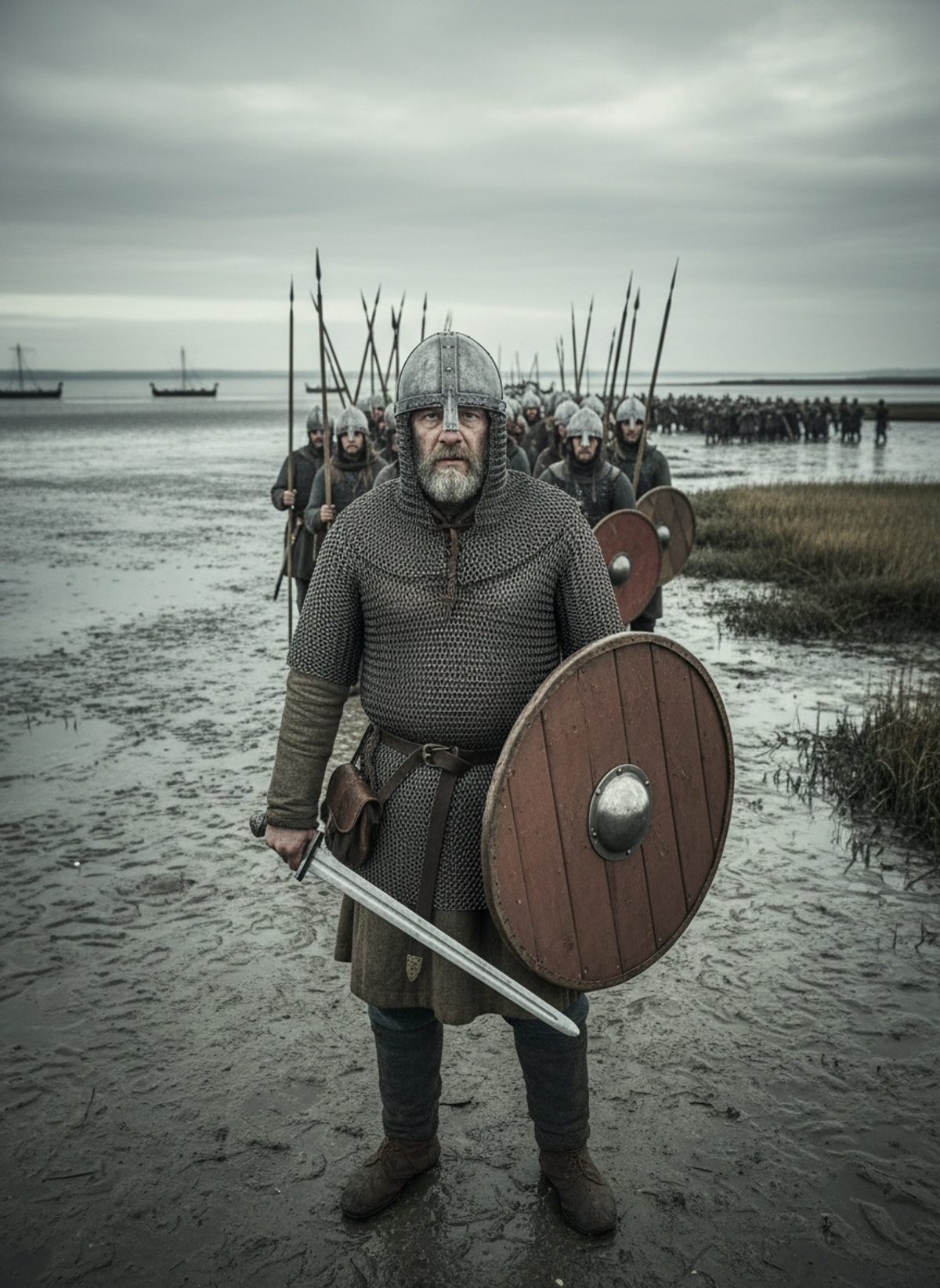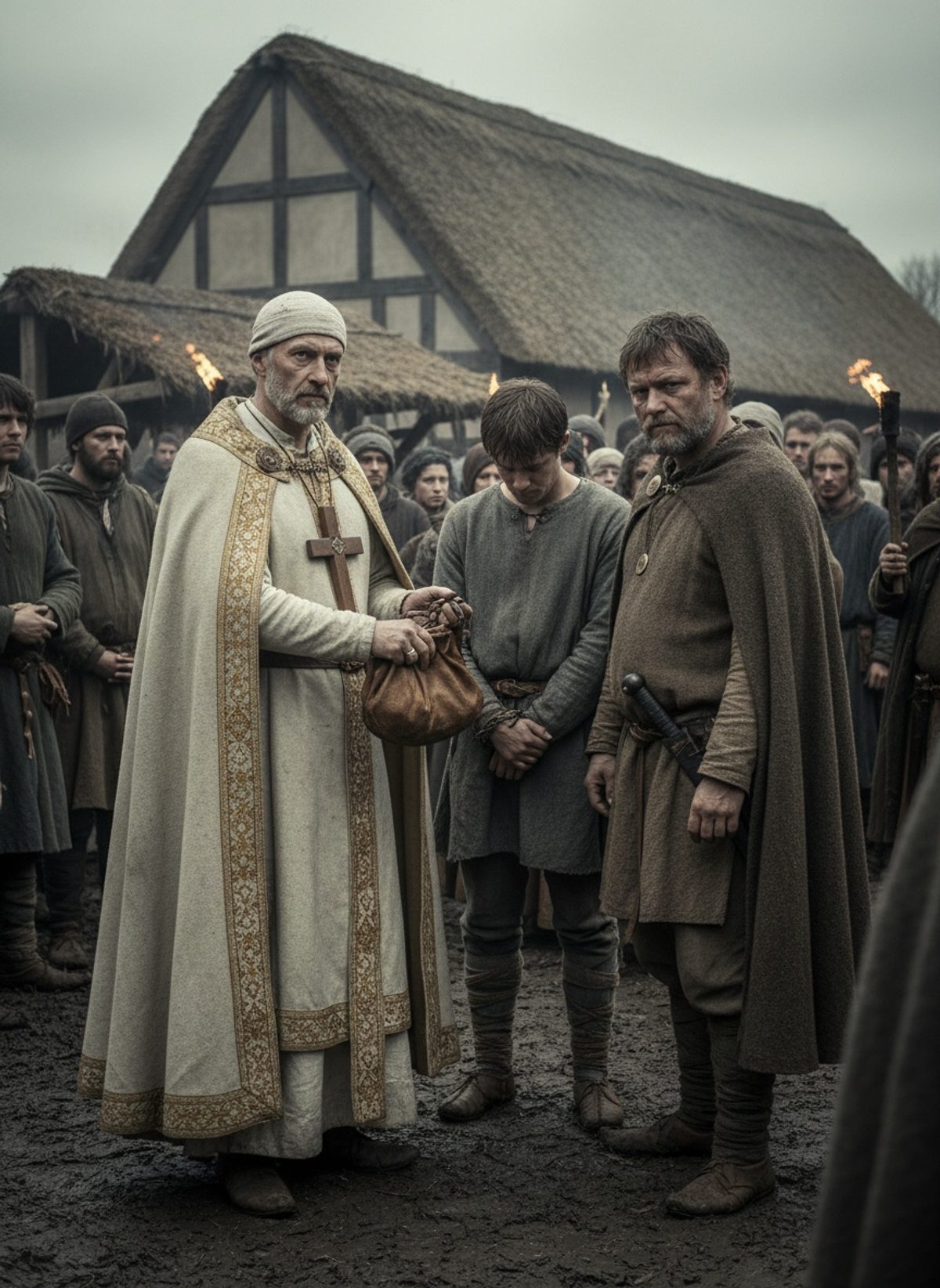
January 878. Cold seeped into every corner of the fens.
The King in the Marsh
The frosty air wrapped the bogs of Somerset like a shroud, a chill that bit through skin and spirit. It was here, amidst the thick reeds and sodden earth, that Alfred of Wessex found himself hiding from the Viking onslaught. Behind him lay ruin: his kingdom overrun, his warriors scattered, and his crown hanging by a thread. In these desolate marshes, his only companions were a band of loyal followers and a single manuscript, its pages painstakingly adorned with exquisite illustrations and Saxon script.
Alfred had come here in a state of despair that threatened to swallow him whole. Yet, in the quiet hours spent turning the vellum pages of his illuminated treasure, he found the kernel of an idea that would transform his people's fate. This manuscript was not just a relic of spiritual devotion—it kindled a spark of strategic brilliance that would help lead Alfred out of obscurity and back to power.
The Sacred Manuscript
To understand the significance of the book Alfred clutched in those dark times, we must consider why it was unlike any other. Illumination, the medieval art of decorating texts with intricate images and gold leaf, was a luxury reserved for significant works. This manuscript—named though histories hesitate, for the Lost and Faded have their silence—was more than mere parchment. It contained a unique blend of religious scripture, wisdom literature, and strategies derived from the ancients that offered insight far beyond the spiritual.
Read next: The Day a Saxon Abbot Walked Into a Slave Market Alone
For Alfred, the teachings within represented not just divine inspiration, but a tactical playbook. It spoke of endurance, of patience, of the power to fight not just with sword and shield but with sagacity and cunning. As he scanned its ornate pages under flickering candlelight, he absorbed lessons of leadership and resilience that had been tested by time itself.
Here was a document that doubled as a persuade of faith and fortitude, a symbol of Saxon intellect and tradition. And it whispered strategies he would use to redefine not only his life but the fate of England.
The Turn of the Tide
Beneath leaden skies, Alfred crafted his plan, drawing from the deepest well of strategic thought illustrated in his manuscripts. Where others might have seen only unrelenting defeat, he saw opportunity—to galvanize his people, to outmaneuver the enemy with a mind honed on the lessons of history and belief. He reached out to the ealdormen and thegns, summoning them with messages carried through hidden woods and secret paths. His whispers converged into a roaring call to arms.
His comeback campaign was not built on brute force but on precision—just like the artwork enlivening those manuscript pages, each stroke deliberate and calculated. The marshes provided a natural defense as well as mystique. From here, he launched attacks that were as unexpected as they were effective, striking at weakened Viking posts, eroding their confidence, and regaining control of strategic positions.
Encouraged by these small victories, Saxon forces began to rally around their king, driven by a newfound purpose. Alfred was carving a trail back to power and dominance using methods inspired by not just military prowess but the cunning and patience rooted in his cherished book.
A New Dawn for England
By the spring of 878, Alfred had reestablished his presence. The Battle of Edington marked his decisive victory. It was more than a clash of swords; it was a testament to the power of a well-timed revelation. In the aftermath, the Viking leader, Guthrum, faced with Alfred's resurgent forces, agreed to a truce and underwent baptism, ensuring a fragile but lasting peace.
With his reclaimed throne now secure, Alfred took his manuscript's lessons to heart, transforming Wessex into a bastion of learning and culture. He championed education, commissioning translations of scholarly works and fostering a spirit of literacy among his people. Literary endeavors became as critical to his reign as the battles he'd once fought, establishing the foundations for what would later be known as the English nation's golden age.
This story matters because it reminds us that power preserved by brain, rather than just brawn, is formidable and enduring. Alfred's triumph was not merely survival—it was the creation of a legacy born out of books and belief, strength derived from pages turned in secret. In overcoming annihilation with words instead of solely weapons, Alfred became more than a king—he became a symbol of the persistence of culture and intellect in the face of barbarism.