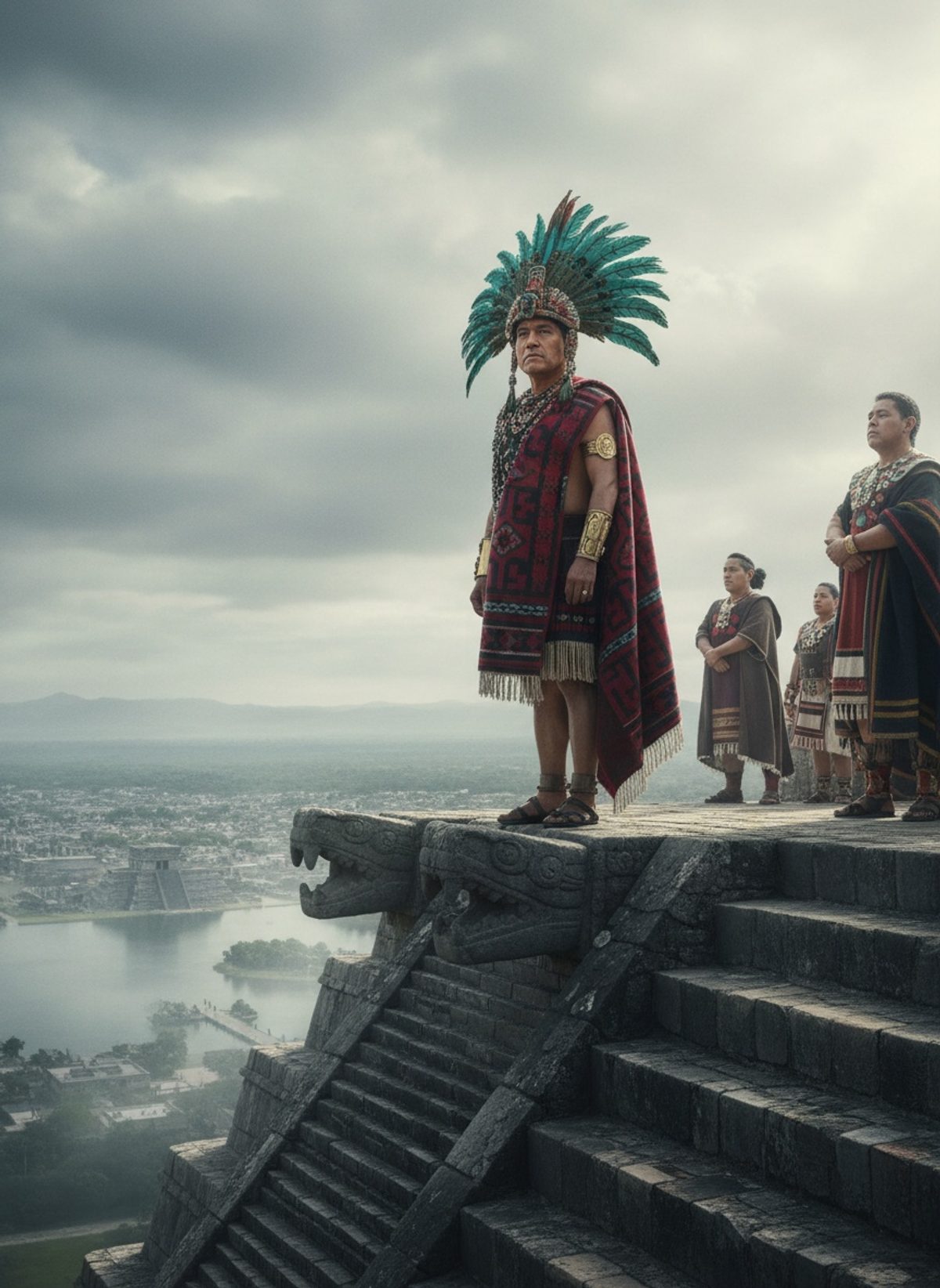
1481. The scent of cocoa lingered, thick and earthy, in the air above Tenochtitlan. It was a smell the people of this great city knew well, but on this day, it held a tinge of apprehension. The new Aztec king, Tizoc, freshly anointed as tlatoani, felt the weight of centuries pressing down upon him. He stood upon the dizzying heights of power in a world where such heights were as treacherous as they were exalted.
A Dynasty Under Strain
When Tizoc ascended to the throne in the Aztec year "2 House," he inherited not only an empire but also an expectation of conquest and might. His lineage was one of remarkable prestige, being a grandson of the formidable emperors Moctezuma I and Itzcoatl. Yet, the burden was heavy, and predecessors' legendary conquests loomed large over his reign.
Tizoc's accession followed the rule of his older brother Axayacatl. His brother had left an indelible mark on the empire, not least by adding the rich region of Tlatelolco to the Aztec dominion. Tizoc's family connections were impeccable. His sister Chalchiuhnenetzin was married into Tlatelolco's royalty, and he was uncle to future emperors like the storied Cuauhtémoc, Moctezuma II, and Cuitláhuac. All eyes were on him to maintain and extend the family's legacy of dominance.
The Campaign That Couldn't Conquer
Yet, as history would have it, Tizoc's inaugural campaign was nothing short of a catastrophe. Charged with expanding Aztec power, he marched an army into a rebellion-torn landscape. The target, a coalition of rebellious settlements, should have crumbled under the might of Tenochtitlan. Instead, the campaign ended in a humiliating return — a mere forty prisoners taken when the expected haul was far greater. It was a stark departure from the victories chronicled in records like the Codex Mendoza, which celebrated past triumphs of territories like Tonalimoquetzayan and Toxico falling under Aztec control.
Read next: Tezozomoc Took Everything. She Kept Her Son Alive.
This pronounced failure was more than just a blow to Tizoc's prestige; it threatened the very foundations of his rule. In the Aztec world, where successful conquest equaled divine favor and political legitimacy, such an outcome whispered inklings of disfavor from the gods themselves. The priests, keepers of spiritual truths, began to murmur among themselves.
The Murmurs in the Palace
Aristocracy in the days of the Aztec Empire was a sophisticated, if lethal, dance. The fragile balance of power within the walls of Tenochtitlan’s palatial grandeur was perpetually teetering. Noble families watched closely, calculating their advantage, preparing for shifts in power. For a king like Tizoc, whose failures were laid bare under the unyielding sun of public scrutiny, the palace that should have been his fortress became a cage brimming with intrigue and silent condemnation.
Whispers of inadequacy echoed through marble corridors — a new generation of nobles, educated in politics, who questioned whether he truly embodied "He who makes sacrifices," as his name suggested. The revered position of tlatoani, which Tizoc had hoped to dignify, was fast slipping into the perilous realm of mockery.
The Insidious Cup
Historians often point to a crucial symbol of Aztec culture — chocolate, a divine substance from the gods, was more than just a luxurious drink. To the Aztecs, it was a medium of power, the sacred liquid of rulers and divines. Therefore, it was perhaps fitting yet grimly ironic that it was in his chocolate where Tizoc may have found his undoing. The possibility of poison was, and remains, a credible cause for suspicion surrounding his untimely demise in 1486, after only five years on the throne. The exact circumstances of his death are shrouded in opaque mystery, blending with tales of illness.
Rumors circulated that a faction within the palace — those who sought a return to unequivocal strength — turned to subterfuge. They ensured that Tizoc’s reign met an unceremonious end, enabling the rise of his charismatic brother Ahuitzotl.
An Empire on the Brink
Ahuitzotl, Tizoc’s successor, would go on to reign with vigor and military prowess, restoring the Aztec confidence in their empire’s divine mandate. He completed the Great Pyramid of Tenochtitlan, a monumental task Tizoc had initiated. Under Ahuitzotl’s rule, the Aztecs experienced a resurgence of power, emphatically quelling doubts about their dominion.
Tizoc's reign, a brief chapter in the vast annals of Aztec history, is a study in the fragility of power. It serves as a reminder of the pressures leaders face when tradition, divine mandate, and politics intertwine. This tale of intrigue, failure, and possible betrayal reveals truths about human nature that transcend time. While timelines and kings' names may change, the ambitions, fears, and intrigues within corridors of power do not.
Today, history may whisper Tizoc’s name only quietly, overshadowed by the brilliance of others. Yet his story is immortalized in lessons on the essential, often fickle, nature of leadership. It encourages a reflection on how societies remember their bravest — and their most beleaguered. Such reflections remain timeless, urging us to consider not just the victories and the statues, but also the whispers, the motives, and the dark hints that shape the legacy of entire empires.