
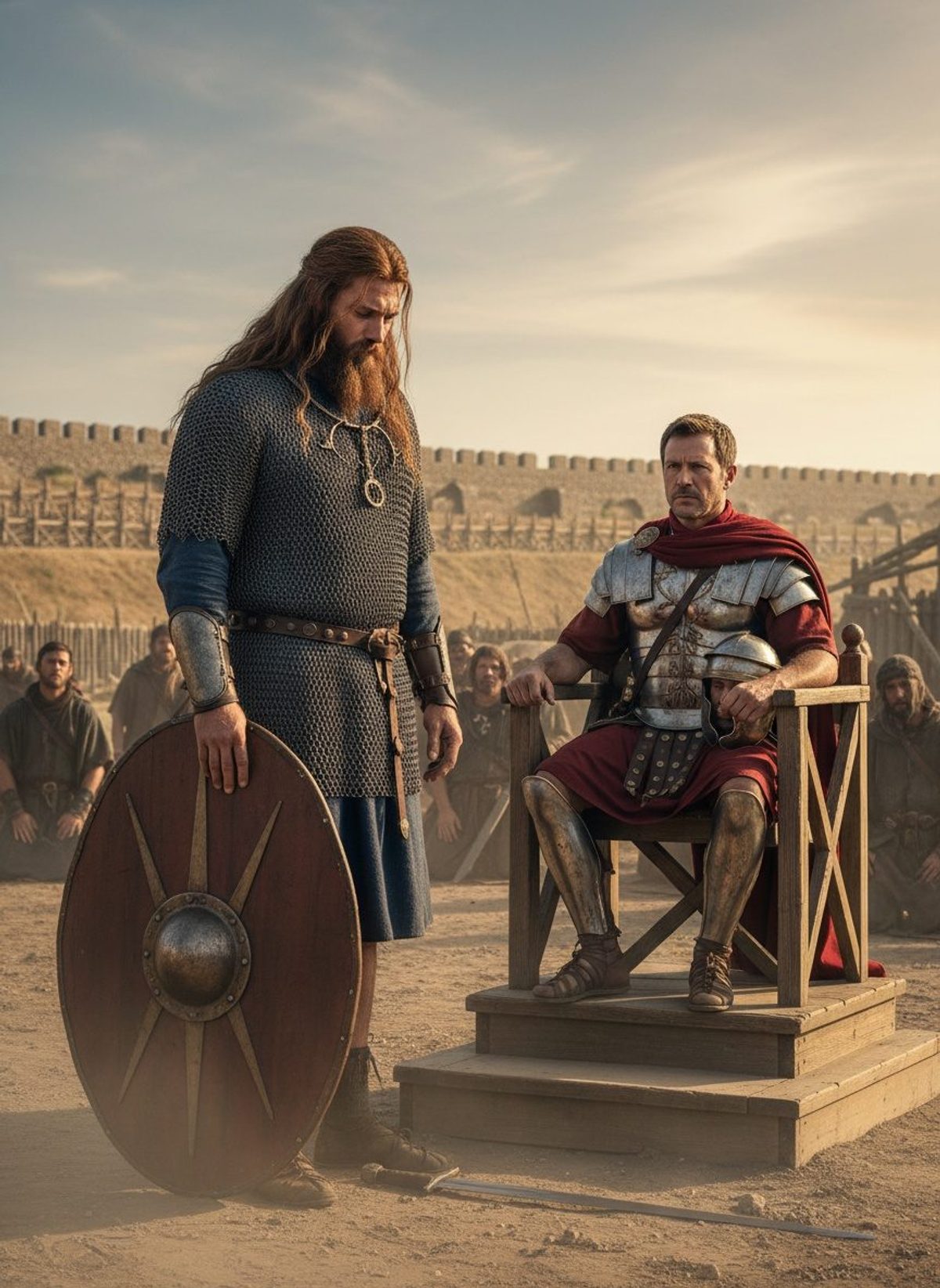
Many remember Julius Caesar's grand campaigns and triumphs. Yet, the tears he shed at Alesia mark one of history's most compelling stories of resistance and defeat.
The Rise of the Gaul
In the midst of sprawling forests and fierce tribal rivalries, a single voice emerged — that of Vercingetorix, a chieftain destined to alter the course of history. Gaul, a region of modern-day France, was a land of fragmented tribes, each with its own leaders and vendettas. But in the face of external threat, a new vision took hold. Vercingetorix was not just another chieftain; he was a visionary who saw strength in unity.
As the chill of 52 BCE set in, the once disunited Gallic tribes began to coalesce. Vercingetorix, wielding both charisma and strategy, managed to achieve what many deemed impossible: he organized a cohesive force that dared to stand against the might of Rome. His rallying cry was a novel one for the Gauls — put aside differences for the greater good and challenge the hegemonic power that threatened their autonomy.
Julius Caesar, Rome's celebrated general, was the embodiment of Roman dominance. He had subjugated regions and forged expansion through the known world, his ambitions unchecked — until he met the indomitable will of Vercingetorix. At the Battle of Gergovia, the Gallic leader achieved the unthinkable by not only resisting Roman military prowess but by reversing their momentum completely. In the rolling landscapes of Gaul where the Romans believed they would easily trample opposition, they tasted defeat at the hands of a chieftain who could unify — a leader who could strategize victory in places they thought unwinnable.
Read next: Regulus Was Free. He Chose to Walk Back Into Chains.
The Siege of Alesia
Gergovia was a spark that ignited wider resistance. As Roman legions realigned and strengthened their resolve, Vercingetorix prepared for a final showdown in Alesia. This fortified hilltop town was a testament to both Gallic engineering and the dire resolve of its people. Within its walls, warriors awaited a siege that would test every aspect of their endurance. Caesar saw it as a necessity: choke off this rebellion by demolishing its heart.
The Siege of Alesia was as much a battle of wits as it was a physical confrontation. Caesar, notorious for his tactical genius, besieged the town with double fortifications, preventing supplies and reinforcements from reaching Vercingetorix. Trapped, the Gauls faced starvation and despair. However, despite isolation, Vercingetorix inspired his warriors to endure, promising that a coalition of tribes would come to lift the siege from outside.
Hope, however, became a double-bladed sword. When the Gallic relief failed to break through the iron grasp of Roman fortifications, Vercingetorix faced a grim reality. The scales had finally tipped. The siege, an epic endeavor of strategy and endurance, lasted weeks, with Caesar watching his adversary and the last attempts of the Gallic compatriots falter. The end hovered over Alesia like a storm cloud, culminating in an extraordinary act of devotion and surrender.
The Unforgettable Surrender
When the walls could hold no more, Vercingetorix, draped in his ceremonial armor, bid farewell to the hopes of an entire people. The gravity of the moment did not escape anyone; it was a surrender staged not just before the Roman forces but under the eyes of Caesar himself. Vercingetorix mounted his horse and rode out, the quiet strength of resignation visible in every stride.
Before one of history's greatest generals, Vercingetorix performed an unforgettable act of defiance turned submission. Circling Caesar, he wordlessly approached, his armor glinting in the sun, before slowly dismounting and laying down his weapons — his sword, his armor, and with it, the dreams of a unified Gaul. It was a moment steeped in both defeat and dignity, an action that sent ripples through the Roman camp and reverberated back to the very heart of Rome itself.
Despite the offer of life in exchange for his people’s preservation, Vercingetorix’s fate was sealed. His surrender bought mercy for his followers, but for him, it meant six long years of captivity before he was paraded in Caesar’s triumph and executed, a grim reminder of the costs of rebellion. The gravity of his sacrifice, however, was a complexity even Caesar could not overlook. As Vercingetorix fell, so did the symbol of unified Gallic defiance.
Why does this ancient tale matter today? It is not merely a story of victory and defeat but a profound and enduring testament to leadership in adversity. Through Vercingetorix, history presents us with a narrative of mighty resistance and inevitable capitulation that underscores the struggle for sovereignty amidst overwhelming odds. The tears of Caesar, juxtaposed against the armored surrender of Vercingetorix, remind us of the human cost of ambition and control. This powerful tableau of legacy serves as a stark reminder that history is not just written by the victors but is also colored by the valor of those who dared to resist.