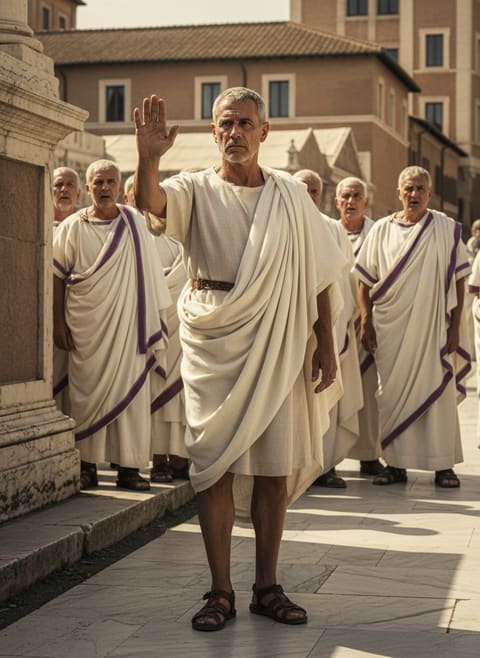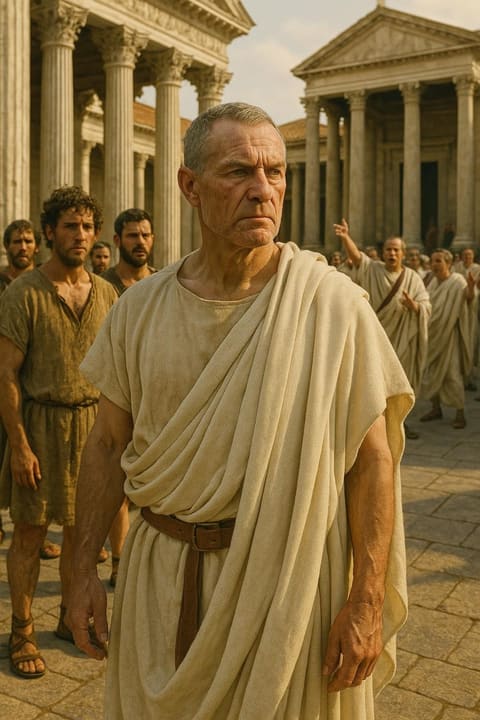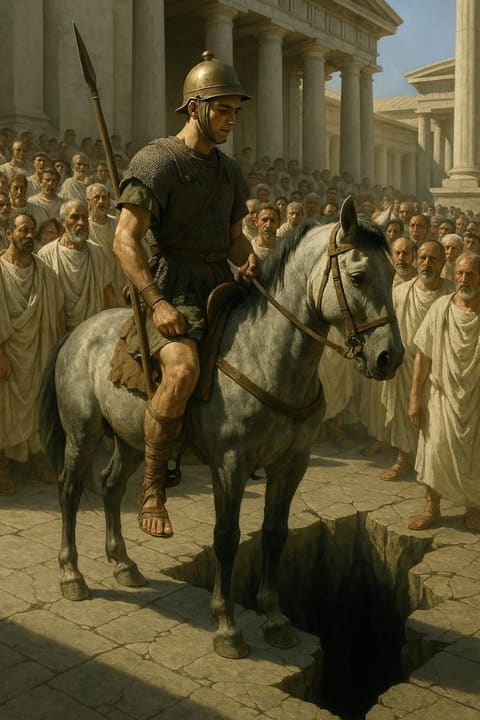
A low, diffuse light fell over the city of Rome, its cobbled streets slick with early morning dew. The air was cool and heavy with the scent of wet stone and damp earth. Citizens bustled about, their muted conversations mingling with the distant clatter of hooves on stone and the occasional squawk of a merchant hawking his goods. Just outside the Senate House, under the watchful eyes of towering marble statues, Marcus Atilius Regulus stood cloaked in his Roman toga, waiting with an air of calm determination. His presence there on this morning in 255 BC was more than a summons; it was a testament to an unwavering sense of duty, forged in the fires of war and steeled by an unbending personal code.
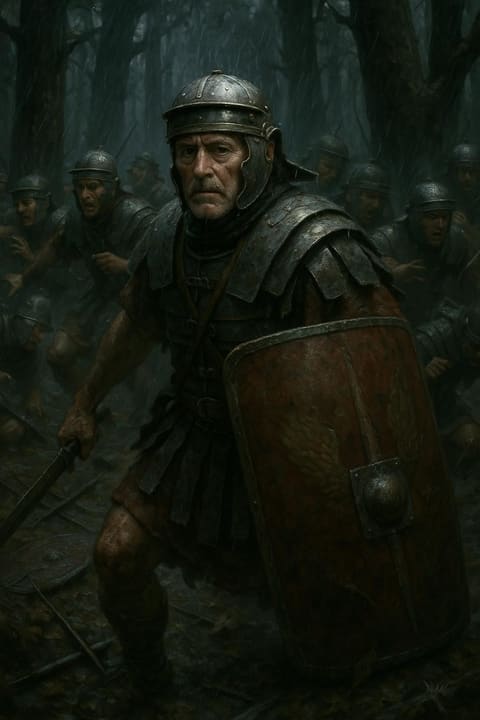
Regulus, a Roman general and statesman, had been pulled back to a city that was both his home and the locus of his greatest trials. A victor and prisoner of war, he bore stark reminders of battle against Rome's formidable adversary, Carthage. He had once prided himself on his many victories, among them the celebrated naval battle at Cape Ecnomus in 256 BC, when he and Lucius Manlius Vulso Longus had shattered the Carthaginian fleet. Buoyed by such triumphs, Regulus had led Roman forces into North Africa with visions of conquering new lands for the Republic. Yet, victory proved elusive on the African plains.
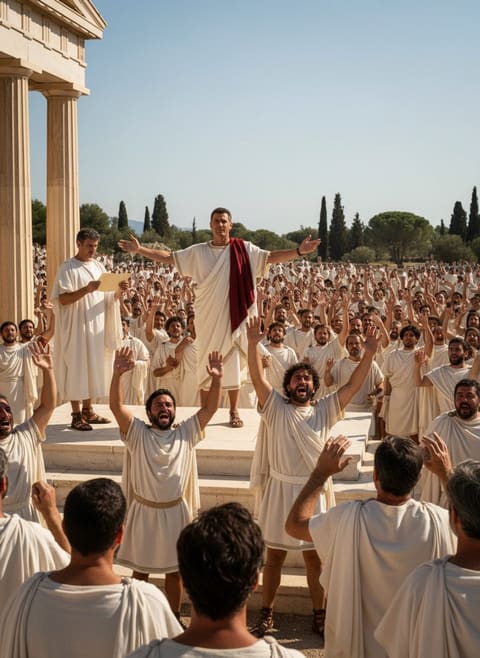
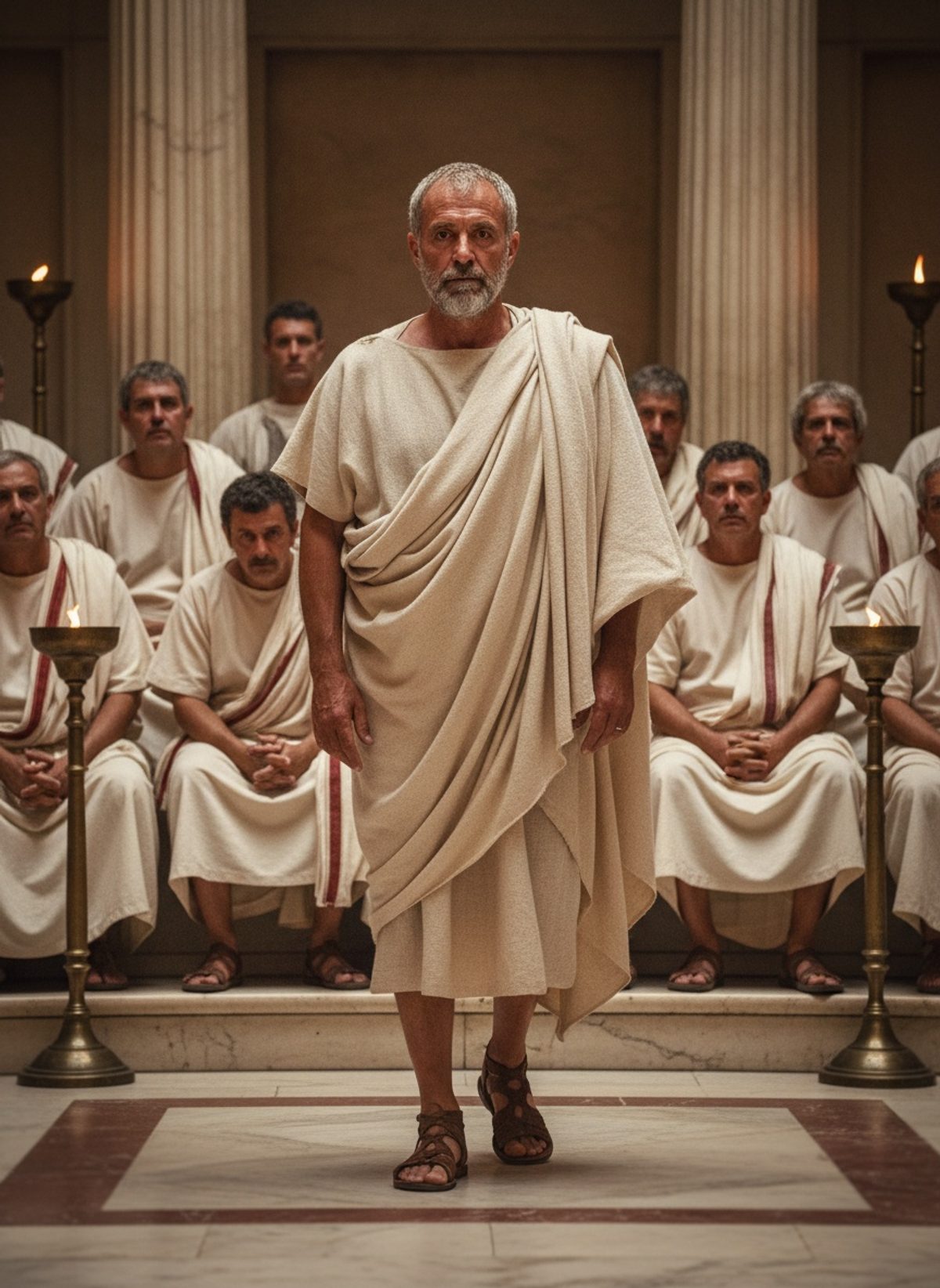
As he entered the Senate, the room buzzed with the debates of powerful men, their voices a symphony of authority and ambition. It was here, amid the grand columns and storied history, that Regulus was to speak on behalf of Carthage, his captors, who had gambled on his reputation and honor. The Carthaginians had released him under oath, hoping he might broker an end to the First Punic War's brutal violence. The peace terms included a ceasefire or an exchange of prisoners, promises that must have weighed heavily on his conscience as he faced his fellow senators.
Regulus stood before Rome's elder statesmen not as a supplicant, but as a man convicted by his principles. Tossed into his mission awkwardly between diplomacy and betrayal, he knew the gravity of his words. Carthage, defeated on their soil, was desperate, their plea a sign of a faltering resolve. Yet, standing beneath the basilica's looming apse and echoing rafters, Regulus urged rejection of Carthage's terms. Rome would gain nothing from such a peace built on compromise. He advised the Senate against the prisoner exchange, arguing that Carthage's capitulation was within grasp if Rome only had the courage to tighten its grip.
Read next: Fabricius Stood Before Pyrrhus. He Refused the Bribe.
Compelled by humility and honor, Regulus kept his eyes steady on the textured marble floor. His arguments were compelling; yet the cost, for him personally, was dear. When a solemn hush settled after his address, his intention was clear: though his words should doom him, he would return to Carthage as promised. It was a decision etched by tales of virtue and ethical stoicism, later vented with the patina of a legend—a tale perhaps too conveniently aligned with Roman ideals. Perhaps it was devised to justify further cruelty by Regulus' own sons. Did his sons' revenge on enemy prisoners stem from this legend, one so conveniently embellished by those who came after?
Nevertheless, on that fated day, as the senators weighed his counsel, the room's collective breath marked the crux of Rome's decision. Influenced by tales that would soon be embroidered in Roman lore, what we know from Polybius may suggest a simpler truth of neglect and hunger, with Gaius Sempronius Tuditanus giving form to the story a century later. But in the immediate aftermath of his senatorial address, whether fable or fact, a resolute Regulus fulfilled his promise to return to a city now lined with hostile eyes.
Read next: Musonius Rufus Was Banished. He Kept Teaching.
The journey from Rome back to Carthage was a solemn trek, shadowed with resignation to a fate sealed by both destiny and conviction. Perhaps it was not the walk itself that was stark but the moral coloring with which Rome painted it afterwards. His ultimate sacrifice, plagued by hostile embellishments, eventually served as a weighty moral exemplar, invoked by storied orators like Cicero. Regulus, whether driven by duty or legend, embraced the consequences of his bound promise. The torturous demise awaiting him in legend seems almost theater; in truth, fate seized him more with quiet detachment than public spectacle.
Yet, the narrative persisted over the centuries, a testament to the power of storytelling and myth in shaping history's landscape. Its details, infused with moral gravity, provided Rome the kind of exemplum they cherished and emulated. Despite its speculative roots, the story challenges us to reflect on the constructs of honor and commitment that are both personal and cultural. Was Regulus' return a triumphant assertion of freewill over fear, or the somber negotiation of a man trapped between realms of valor and surrender?
As today's readers peer through the mist of time, examining this blend of historic deeds and mythic embellishment, Regulus' tale remains not just a Roman narrative, but a universal one. It reflects on how we choose to remember acts of courage and consequence—how stories, marinated in the savors of moral longing and political need, become rich tapestries of identity. Whether true hero or legendary symbol, Marcus Atilius Regulus challenges each generation to walk its own path, trailed by the haunting echo of integrity's call. Let's remember Rome, in all its might, as a place where such calls were heard, where oft the sword yielded to the word. In this lies a story that transcends its ancient origins, embracing both the fallibility and ferocity of human nature.