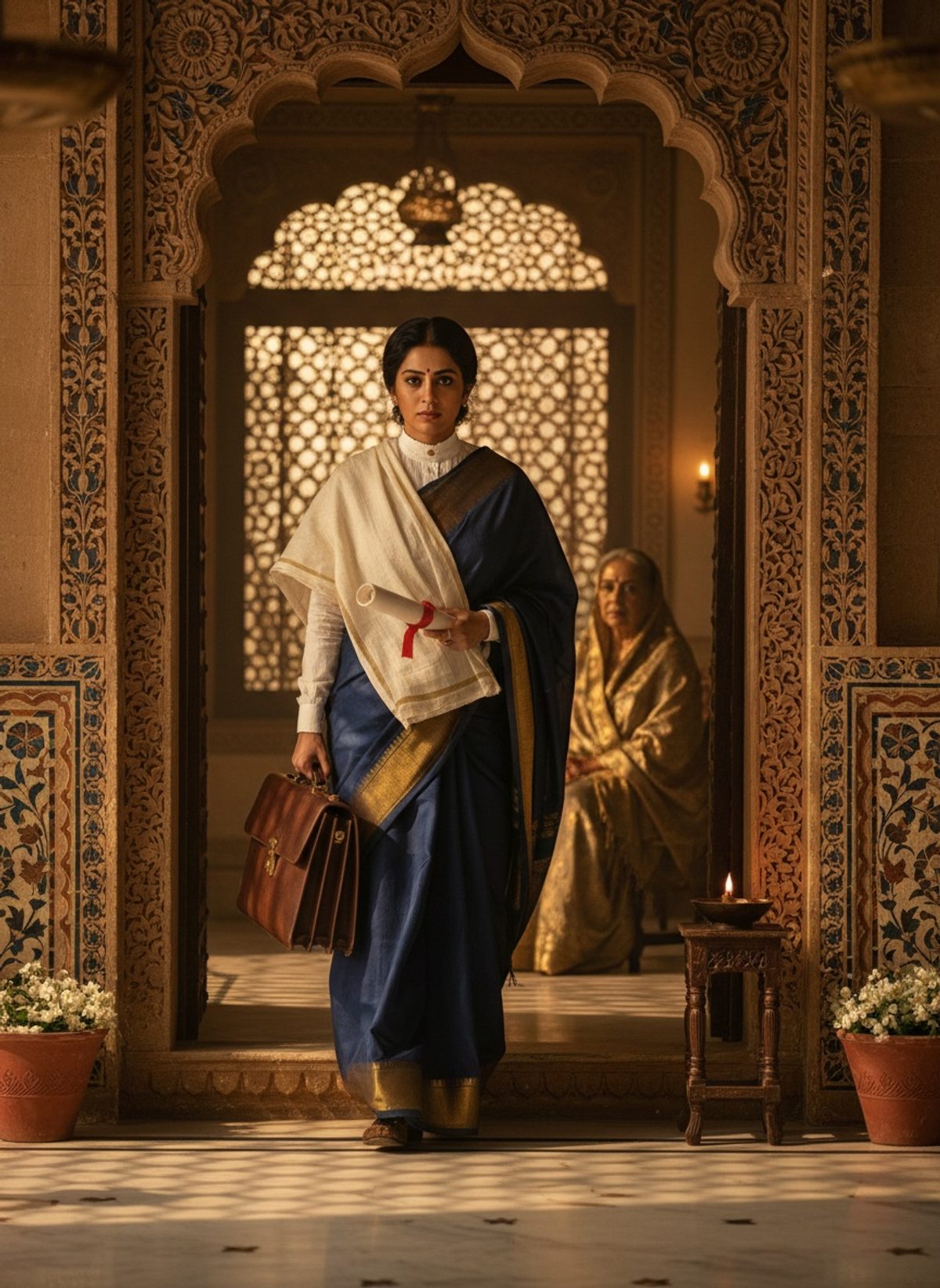
October 8, 1904. The gate to the zenana creaked open under a leaden sky.
The Silent World of the Zenana
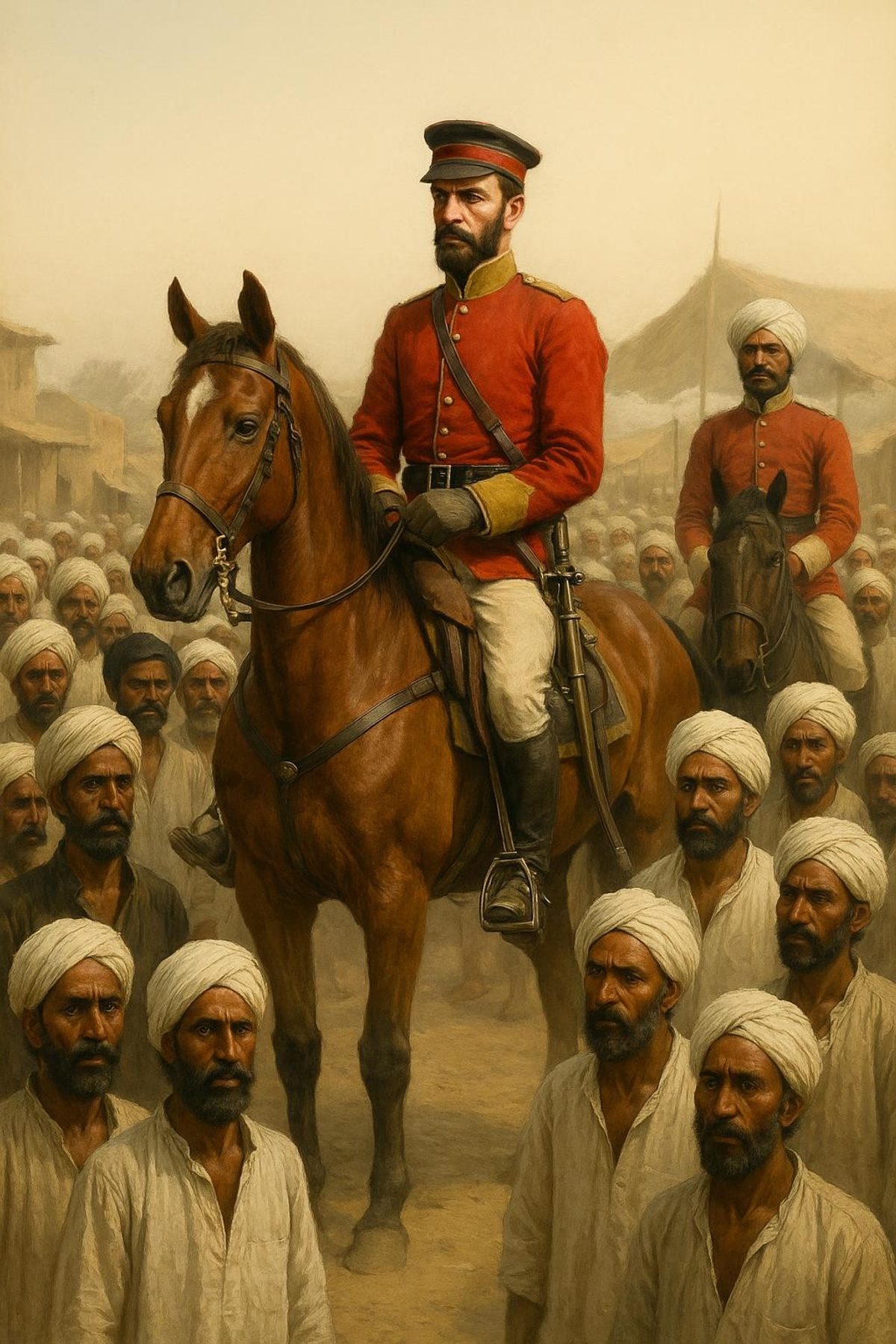
In the sprawling estates of Allahabad, where British architecture coalesced with Indian grandeur, lurked the elusive world of the zenanas. These were not mere spaces, but entire universes cloaked behind the heavy drapery of purdah. Within these rooms dwelled the lives of countless purdahnashins—women whose existence was an echo, muffled and barely heard. They were the unheard widows and daughters of India's stodgy patriarchy, women whose voices were trapped behind culturally imposed curtains. The zenana was a sanctuary, but also a prison where whispers of injustice threaded through the folds of silken saris.
No man could enter. No male lawyer could break through the meticulously enforced barriers that separated these women from legal recourse. Their properties were pilfered, their futures decided by strangers holding power in public spheres. Yet, the zenanas were not completely impenetrable. In 1904, these walls of silence trembled as Cornelia Sorabji crossed the threshold, wielding the impossible—a woman's visage as a champion for justice.
A Journey Forged in Courage
Cornelia Sorabji was born into a tempest of changing times on November 15, 1866, in Nashik, Bombay Presidency. The daughter of a reform-minded Parsi couple, she was nurtured in an environment that valued education and defiance of the status quo. Her metamorphosis into a legal pioneer began when she became the first female graduate from Bombay University, a feat as monumental as any Everest ascent.
Read next: When New Zealand Gave Women the Vote and Dared the Empire
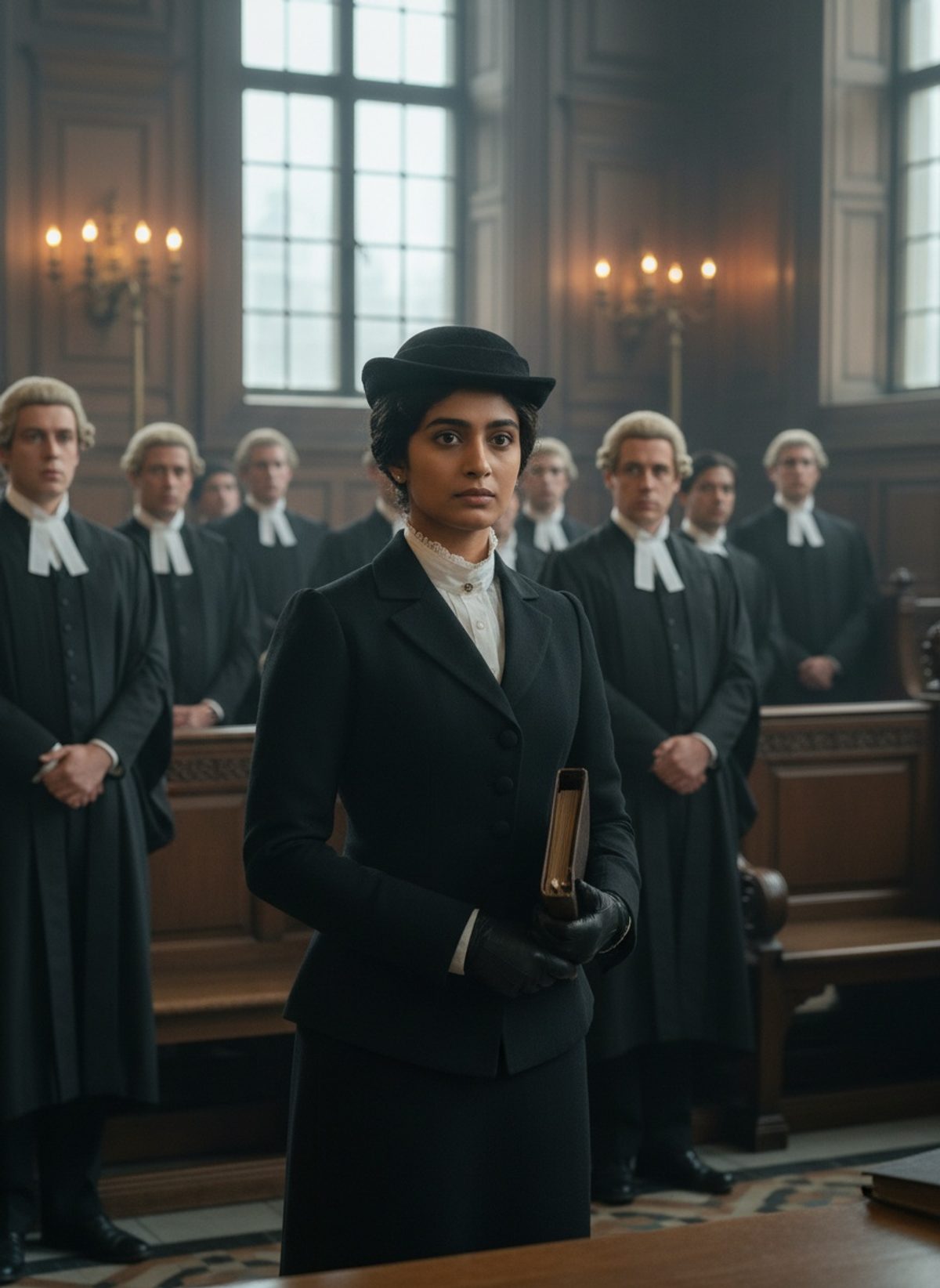
Her journey led her to Oxford University in 1889, where she was the first woman to study law, breathing the air of ancient libraries reserved for men in stiff collars and judgmental eyes. But return she did, not to a room of her own, but to tackle the impossible in India. Sorabji's accolades were numerous; she presented herself for the LLB examination of Bombay University in 1897 and cleared the pleader's examination of Allahabad High Court in 1899. Despite these triumphs, entrenched societal orthodoxy meant she lacked professional standing to actually argue in the courts. Undeterred, Sorabji navigated these patriarchal reefs with dexterity, her efforts focused on protecting women who could not even whisper their grievances beyond a purdah.
Behind the Curtain of Injustice
Indian zenanas were thick with tales of inherited property squandered and lives maneuvered by nefarious relatives. Sorabji entered these spaces not with authority derived from a court robe but with the trust of familiarity and a promise of justice. Her ears became the vaults for stories of suffering, her determination a distillery for hope. Her keen understanding of law translated into tangible strategies to reclaim lost inheritances and offer women agency over their own lives.
Cornelia Sorabji's interventions were selfless endeavors in navigation without recognition; she could draft pleadings, but a male lawyer would present them. She fought battles on behalf of more than 600 women and orphaned children, her mind a formidable fortress against the marauding tides of injustice. Though these profound achievements were fragments of her lifelong dedication, her endeavors were but uncredited blips in the male-dominated annals of legal history.
Her work bore fruit in the form of legal victories, but also in the seeds of inspiration sown within the minds of cloistered women. In inching open the doors to these private lives, Sorabji delivered not a promise of redress but planted an idea that they were indeed worthy of it.
Unlocking History's Bandwidth
October 8, 1904, may have begun with a simple creak of a gate, but it signaled seismic shifts in the terrains of gender and justice. Cornelia Sorabji’s life was testimony to audacity—she challenged her exclusion from courtrooms while simultaneously crafting an indelible history within zenanas that would otherwise have remained forever silent.
Cornelia did more than open doors; she laid out a metaphoric bridge for countless women to walk across, from the shadows and into conversations of agency. Despite being recognized as a barrister only in 1923, her laurels in legal history were already being woven into painful-yet-hopeful societal fabrics decades earlier.
Why does Cornelia Sorabji’s story resonate? Because it’s a reminder that history doesn’t simply advance by way of recorded speeches and enacted laws. True progress often hinges on the quiet, relentless defiance of individuals like Sorabji. It explodes into legacy when one person decides that silence will no longer suffice. The zenanas behind purdah spoke, and the world, thanks to Cornelia Sorabji, finally heard.