Elizabeth Macarthur was never supposed to be a colonial pioneer. Yet, that's exactly what she became.
A Husband's Absence, A Colony's Challenge
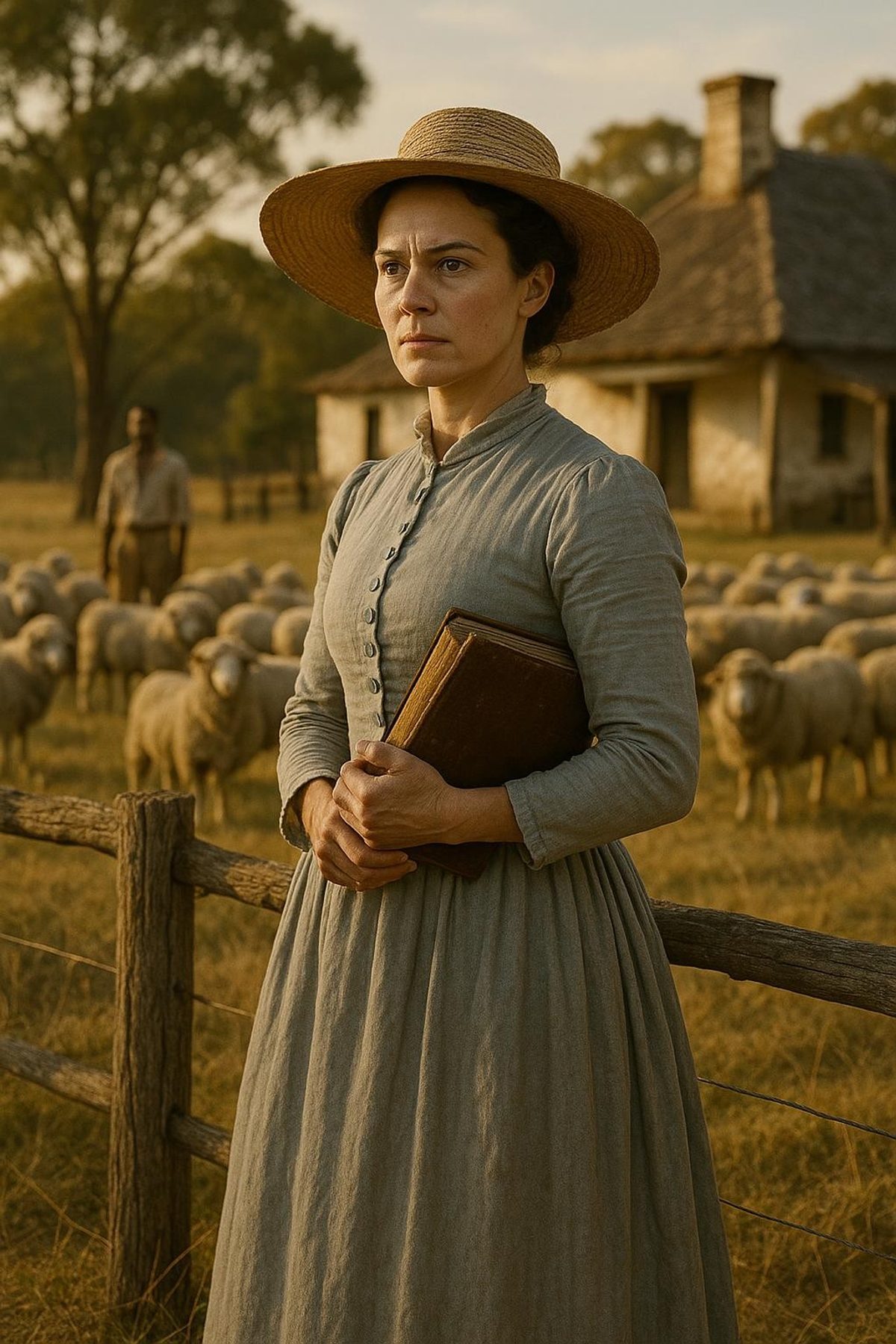
In 1801, the penal colony of New South Wales was a precarious outpost at the fringes of the British Empire. It was here, in this rough, untamed wilderness that Elizabeth Macarthur found herself suddenly in charge. Her husband, John Macarthur, the man credited with sowing the seeds of Australia's wool industry, had been shipped back to England under arrest. The Macarthurs had seven children, and with John absent, the looming responsibility of both their family and their sheep station at Parramatta fell squarely on Elizabeth's shoulders.
The colony was far from the idyllic landscapes of England, with harsh terrain and unfamiliar climates posing constant challenges to those trying to make it their new home. The idea of a woman running a wool enterprise in these conditions was almost unheard of, yet Elizabeth seized control of their holdings with remarkable resolve. She had no formal training, no real partner to consult, and no guarantee of her husband's return. Yet she ventured into an uncharted world of agriculture and commerce with quiet determination.
From Domesticity to Industry
When John was taken away, Elizabeth did not falter. The humble beginnings of the Macarthur’s sheep flock were not glamorous by any means; their sheep were scrawny and their wool coarse — an unlikely boorish treasure destined to reinvigorate an empire’s markets. She skillfully managed not only to maintain the station but also to expand the flock over those eight arduous years. Her ability to do so defied the societal expectations of women of her era, painting her as a powerful silent partner in Australia’s formative years. As she crossed bridged cultural and logistical gaps, her task was to oversee the station's laborers, manage the accounts, and even engage with the harsh elements of the Australian bush.
Read next: When Thomas Peel's Settlers Planted a Flag and Starved, 1830
Elizabeth's attention to detail and astute management bore fruit as she preserved and even proliferated the prized Merino breed. While most of her contemporaries saw sheep as merely shapely things to graze, she saw them as futures on four legs, a steady growth nurtured by patience and skill. Her practical intelligence and resilience elevated the venture, turning their farmstead into a respectable supplier even amidst global disruptions like the Napoleonic Wars, which intensified demand for raw materials such as wool.
The Quiet Architect of an Empire's Wardrobe
The ingenuity behind Elizabeth’s achievement lies in the less visible, nuanced conduct of her management. Her letters, often seen exchanging news and advice with John while he was in England, reveal a woman of astute business acumen and a noteworthy blend of pragmatism and forward-thinking. This correspondence shows her developing a flair for forecasting, adapting to market conditions even with rudimentary communication tools.
Back across the sea, John would have learned — if not from letters, then from hearsay — that the wool sent from their Parramatta station began receiving attention from English manufacturers who marveled at the quality improvements. This recognition was crucial, laying groundwork for what would become the Australian wool industry. Though John Macarthur is often dubbed the ‘father of the wool industry,’ it was Elizabeth who kept this heritage alive during those defining years.
A Legacy in the Sail
Elizabeth’s story is rarely encountered in history books, an omission that speaks volumes about how narratives are crafted. Yet, her contributions got commemorated in a way that sails onward; there's Elizabeth Macarthur Bay in Sydney, named to honor her role in Australia's agricultural rise against the odds. It stands, or floats rather, as a symbol of the quiet yet substantial impact a determined individual holds, even when stationed at an empire's periphery.
At the core of it, Elizabeth Macarthur illustrates the unsung power of a woman whose diligence and foresight cradled a fledgling industry through uncertain times. It’s remarkable how she turned adversity into opportunity, leading a transformative page in Australia’s colonial story without ever clamoring for recognition. When we speak of pioneers, reigning empires on far-off shores, we would be remiss to overlook her contributions. While John Macarthur is the name often written in history books, it is Elizabeth who deftly penned the unwritten margins — the legends they left out of the textbooks.