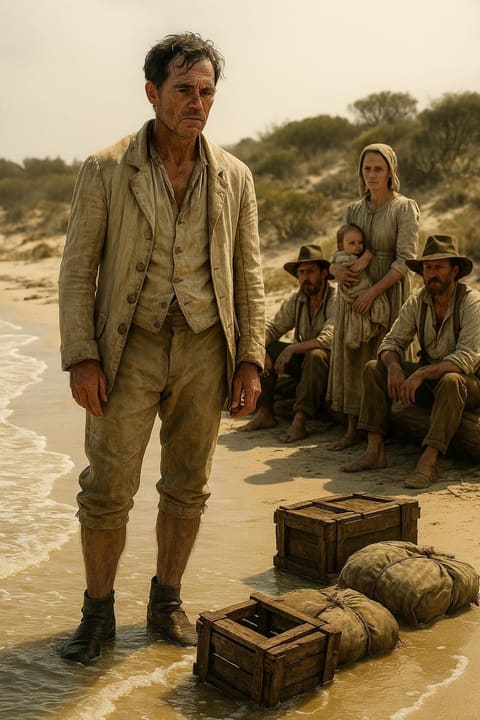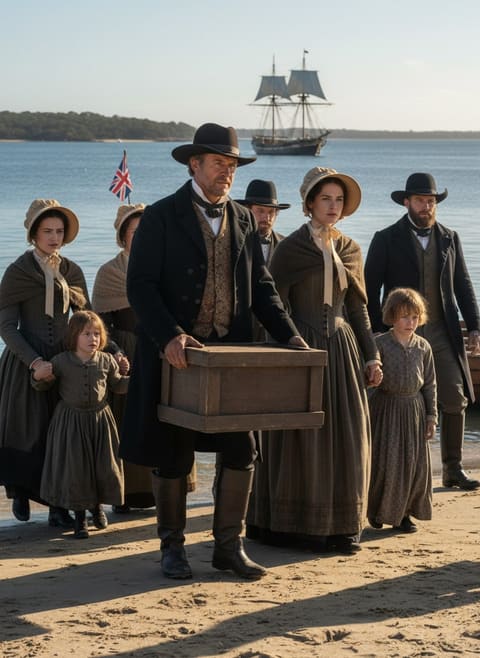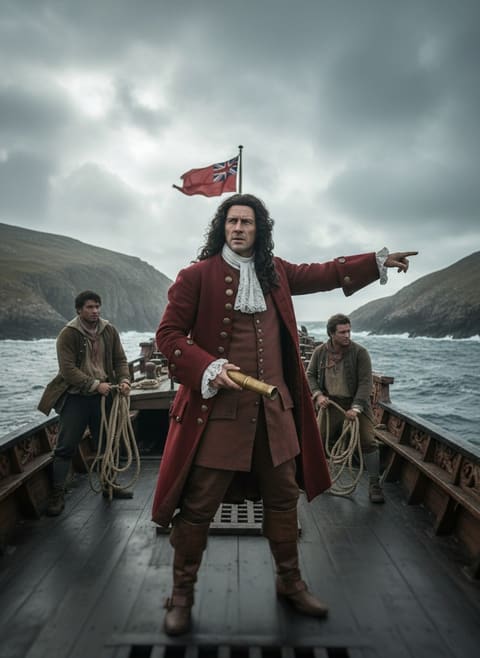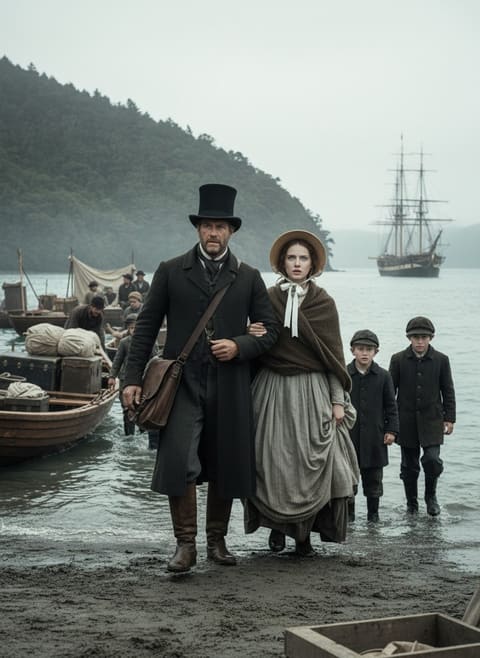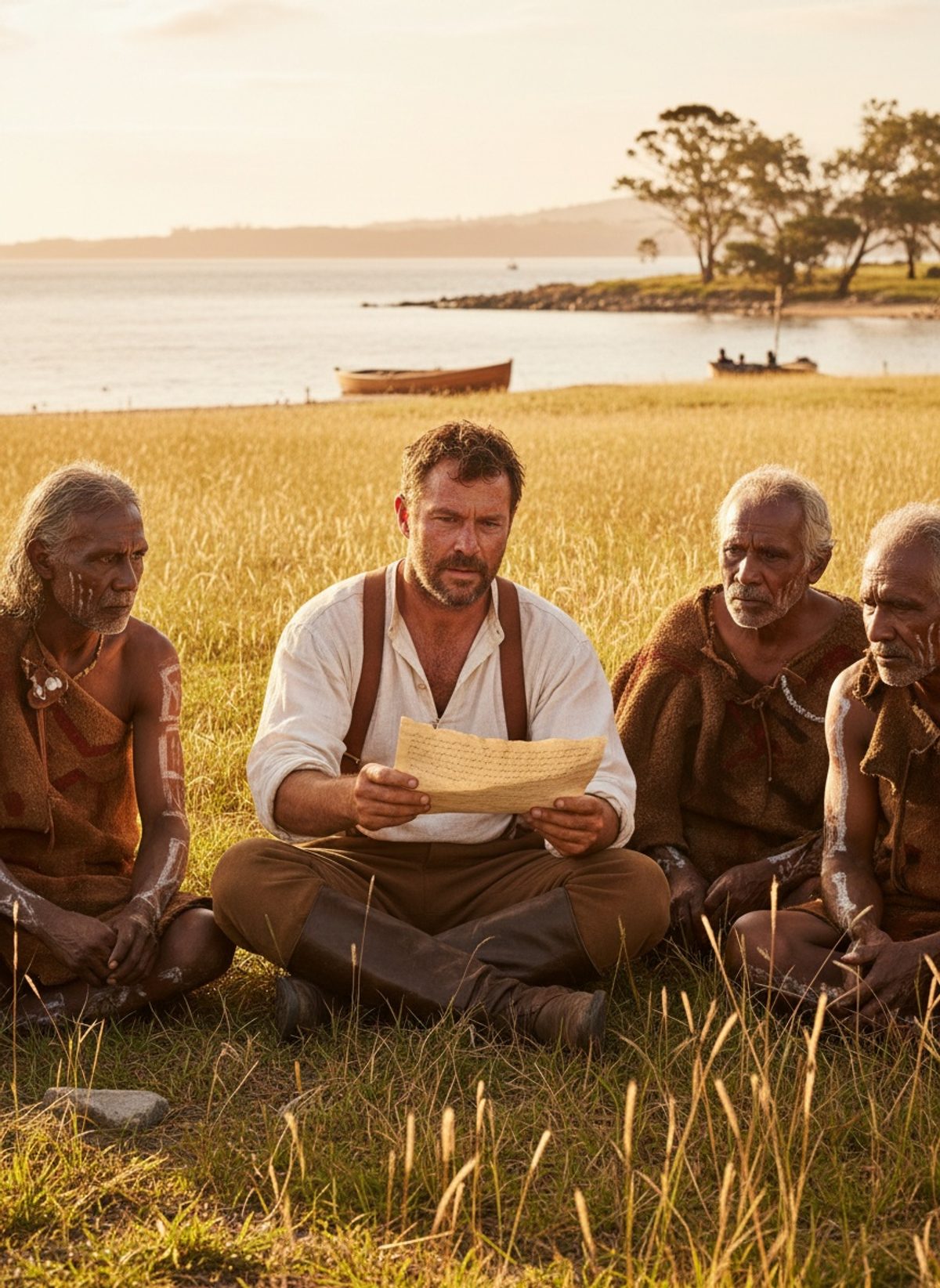
The sails flapped sharply as John Batman stood at the bow, eyes fixed on the horizon where the sun began to lift the morning mist off Port Phillip Bay. The choppy waters jostled his small vessel, but his hands were steady, gripped around the promise of undiscovered land. Behind him, the deck thrummed with quiet anticipation as his fellow sailors peered into the haze, hoping to catch sight of the rolling hills that called them to shore.
The Unseen Council
Among the coastal shadows, beneath the low hum of cicadas, elders of the Wurundjeri people gathered, their presence as ancient as the eucalyptus standing sentinel between coastal winds and inland secrets. They bore an intricate oral tradition, one that had safeguarded these lands long before the concept of borders trespassed Australian soil. The anticipation of meeting newcomers was not unfamiliar to them, yet each encounter bristled with uncertainty.
As Batman approached, his footfall transforming sand into stilled dust, he brought with him not only the cool persistence of a winter sea but also the heavy yoke of a land-grant treaty. Here, beneath azure skies, rested untold potential — vast acres that could cradle a village. Within his coat pocket lay a treaty brimming with English script: it spoke of promises sealed with goods and goodwill, but it did not speak Woiwurrung.
The Uneasy Commerce
With cultural chasms yawning between them, Batman met with tribal leaders, offering blankets and flour in exchange for territory far beyond what the eye could hold. The transaction unfolded with choreographed solemnity, a pantomime of exchange. Batman, earnest in his approach, no less driven by the ambition of what might become, handed over his goods with assured humility under the guise of reciprocity.
Read next: When John Macarthur's Rival Built a Free Colony, 1836
The treaty, though bearing the ink of the colonist’s promise, held little authority outside the interlocutors' constrained understanding. Batman’s entry into Port Phillip wasn’t an invasion backed by regimented force, nor an official decree. It was audacity personified; a single man’s bold gambit that would wrinkle the landscape’s future canvas.
Foundations of a Dreams and Dilemmas
In Batman’s eyes, the expanse before him bristled with potential. "This will be the place for a village," he mused, a visionary declaration that would echo through time itself. Within months, surveyors carved out portions of this land, lines drawn upon land where no compass was supposed to dictate. As pioneers filtered in from Tasmania, drawn by tales of fertile plains and generous harbor, the skeleton of Melbourne began to emerge.
While his actions were dismissed by Governor Bourke of New South Wales as unauthorized and invalid, Batman’s treaty represents a unique moment in colonial encounters. It marked an unsolicited recognition of land rights, albeit flawed, within an epoch unyieldingly disposed to dispossession. Batman saw himself as a benefactor; the Wurundjeri, perhaps, saw ambiguity straddling an unfamiliar precipice.
Read next: When Caroline Chisholm Fed the Hungry at Sydney's Gate, 1841
Portent and Place in History
Over time, the landscapes around the nascent Melbourne city would occupy an undeniable place on the map, reshaping the lives within its periphery amid commerce and convicts, pastoralists, and gold-seekers. The events of June 1835 thread together notions of irony and resolution: in Batman’s handshake, an empire’s reach met a culture’s resilience.
What unfolded was an uneven accord, the unraveling ambiguity of which still whispers through Melbourne’s streets. Batman’s journey into Port Phillip, comprised of intentions profound yet problems nascent, extends lessons on the perils of presumption. More than an episode of colonial ambition, it highlights dialogues that linger — between settlers and lands, enablers and inheritors.
As we reflect on John Batman’s expedition, we grasp the tangled layers within which our historical narratives are draped. The handshake at Port Phillip isn’t merely a tale of colonial enterprise; it’s a reminder etched into time, urging contemplation of coexistence and stewardship. For the echoes of those who once stood and bartered beneath the same southern sky remind us that history is never truly settled, only shared.