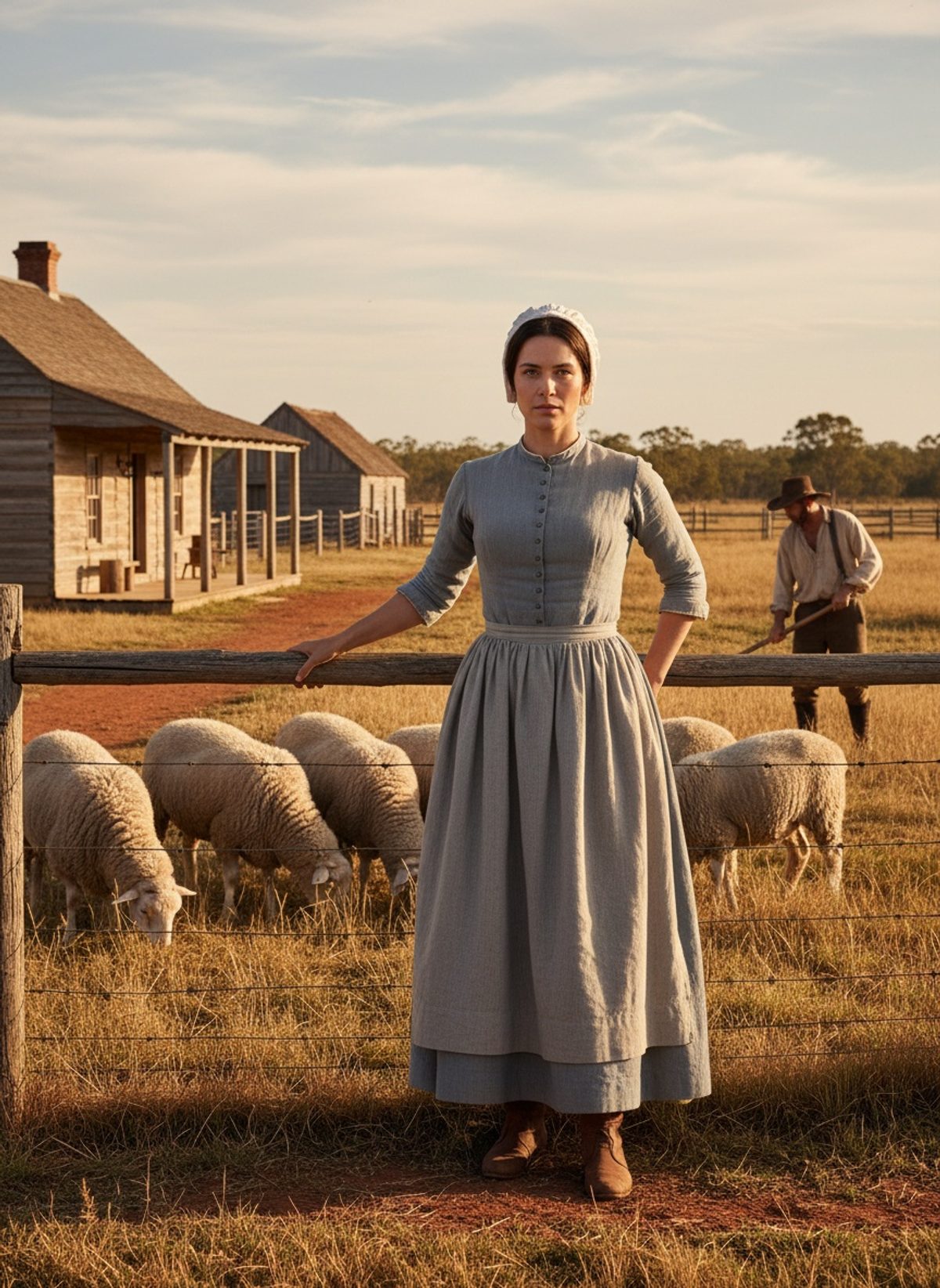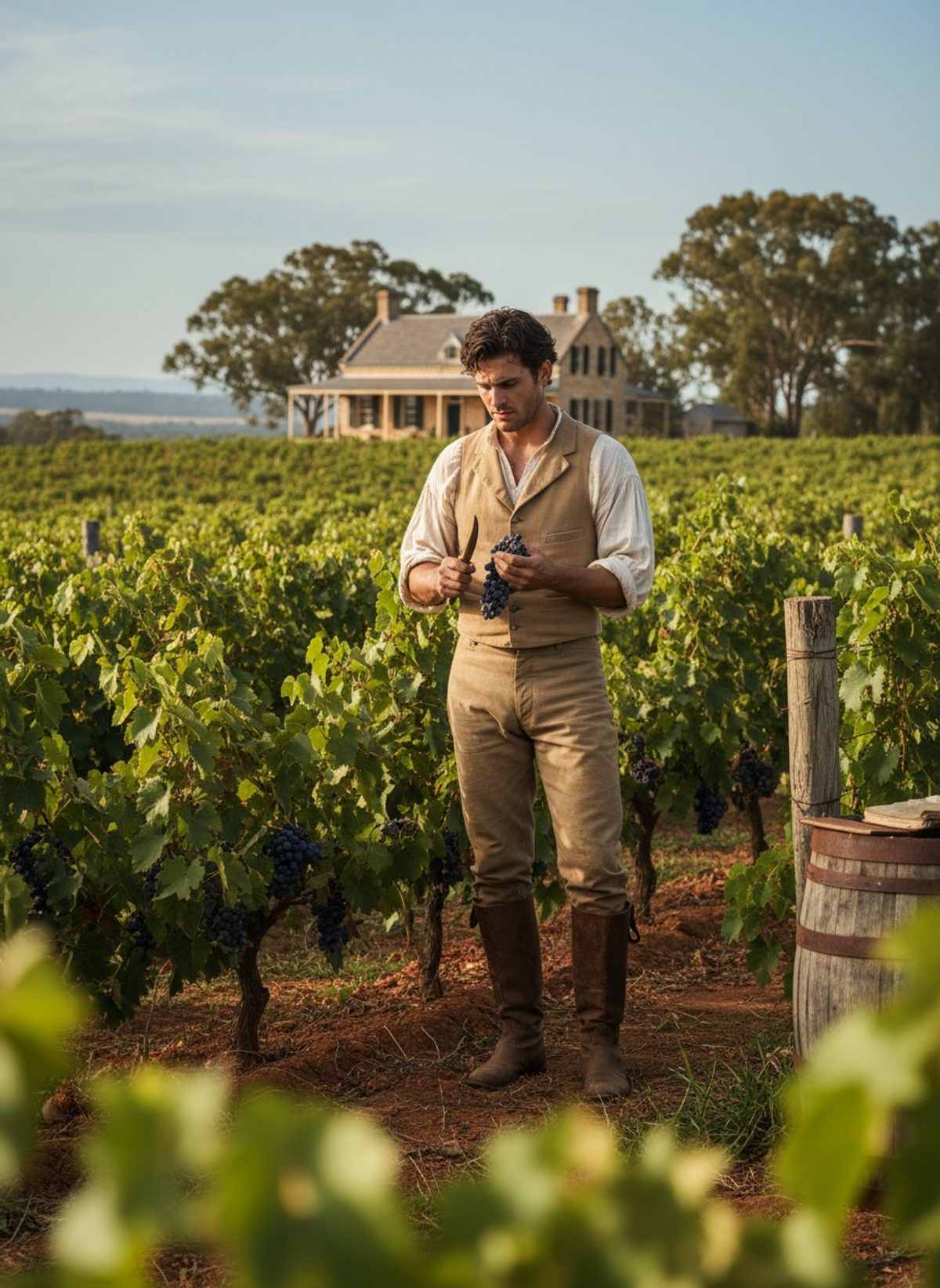
The morning sun rose lazily over the rolling landscapes of Camden Park, casting a gentle glow across the red, fertile soil that had witnessed a curious transformation. The air was crisp and fragrant with the promise of autumn, a season perfectly attuned to nurturing both the land and the dreams that took root within it. Nestled within New South Wales, this expansive estate hummed with a peculiar excitement, the rustle of leaves whispering secrets from centuries past. In these early hours of 1827, the gentle clinking of glass bottles marked a quiet revolution; James Macarthur had just harvested the fruits of an experiment his father, John Macarthur, could never have imagined—an experiment named wine.
James Macarthur stood amidst a vineyard, each vine a testament to perseverance and vision. Though not the first to plant grapes in Australia, he was the first to press grapes with an eye for commerce. This contrast set him apart from his father, who had crafted an empire on the backs of sheep and the finest merino wool. While John Macarthur was a name synonymous with Australian pastoral expansion, James chose a path that twisted between patience and finery, offering the colony something more delicate yet equally potent.
The dream began with whispers and rumors. Some said European vines could not thrive on Australian soil, that the sun would scorch them, or the soil would prove too unforgiving. Others, perhaps with more optimism or simply less to lose, envisioned vineyards stretching across the continent. James Macarthur fell into the latter category. With Camden Park as his laboratory, he would either confirm or dispel the myth that Australian land could yield something both luxurious and truly Australian.
Camden Park itself was a world away from England. Here, eucalyptus trees dominated the horizons, their distinctive scent wrapping around the grapes in a tormented yet harmonious dance. Hills rolled away into the distance, punctuated by the sudden leap and bound of kangaroos grazing nonchalantly, oblivious to the drama unfolding at their feet. This setting demanded an equally dramatic endeavor, and the stoic vines bore witness to James’s willingness to gamble on the uncertainties of climate and soil.
Read next: When Elizabeth Macarthur Kept the Colony Alive, 1804
The history of wine in Australia is entwined with ambition, adversity, and adaptation, much like the land itself. Each vine planted was a challenge to the sun that would scorch and the floods that would drown. In 1827, when James pressed the first commercial vintage from Camden Park, it wasn’t simply wine that filled those inaugural glasses but the essence of exploration and a defiance of expectations. As the juice flowed, it drew upon not just the soil but the sweat and labor of those who believed in his vision—convicts and free men working side by side, all united by a budding belief that something extraordinary was afoot.
Guided by necessity and ingenuity, James imported vine cuttings, experimenting with varieties that seemed best suited to the Australian climate. He worked meticulously, noting changes in growing cycles and experimenting with clone selection, focusing on resilience as much as flavor. The results were remarkable enough to catch the attention of even those skeptical of his ambitions. It was said that the first pour was akin to tasting the adventure itself—bold, with a raw edge, yet promising sophistication with time.
The Macarthur estate bustled with unprecedented activity during the first harvest. The vineyard, vibrant with amber-hued leaves, was alive with laughter, the joyful sounds of men and women working the land. Baskets brimmed with glistening grapes, each bundle heavy with potential, each cluster whispering of meals shared and tales spun around fires. As the workers pressed the grapes, the rich juice spilled forth—a pour as red as the sunbaked sandstone of the Blue Mountains.
Yet, behind this triumph was a tumultuous reality. At the time, the colony of New South Wales was a place rife with conflict and opportunity. Land disputes and the murmur of rebellion were ever-present, even as settlers sought to carve out livelihoods on land once home to Indigenous communities. Wine became more than a drink; it was a beacon of European culture transplanted to unfamiliar antipodean shores, a nod to the traditions they sought to preserve amidst the new and strange.
As bottles of James Macarthur’s wine began to circulate, they captured the curiosity of those who saw in them a narrative of possibility. Shops and taverns around Sydney began to offer the local vintage, its taste a conversation starter that bridged the gap between the adventurous new arrivals and their skeptical, tradition-loving forbearers. The colonists found themselves holding in their hands more than a beverage; they held an unspoken promise that this untamed land could not only support lives but enrich them.
Australian wine, with its humble beginnings at Camden Park, charted a course that would come to interlace itself with the nation’s identity. Whereas wool spoke of industry and grit, wine hinted at leisure, camaraderie, and the dawning of a convivial culture steeped in hospitality and grace. James Macarthur had crafted not merely Australia’s first commercial vintage—a historical milestone—but had laid the cornerstone for an industry that would flourish across the continent, underpinning future narratives yet to be dreamed.
Today, when one stands amidst Australian vineyards, it is not merely visions of tawny deserts or coastal fringes that come to mind but echoes of a moment where persistence conquered doubt. The vines swaying gently under the same antipodean sun tell a story as rich and nuanced as any narrative faded ink could ever hope to capture, of a land and a people growing into themselves. Where wool spoke to keeping warm, wine came to speak of hearts warmed and tales shared—a testament to the alchemy of spirit rendered through time and earth.