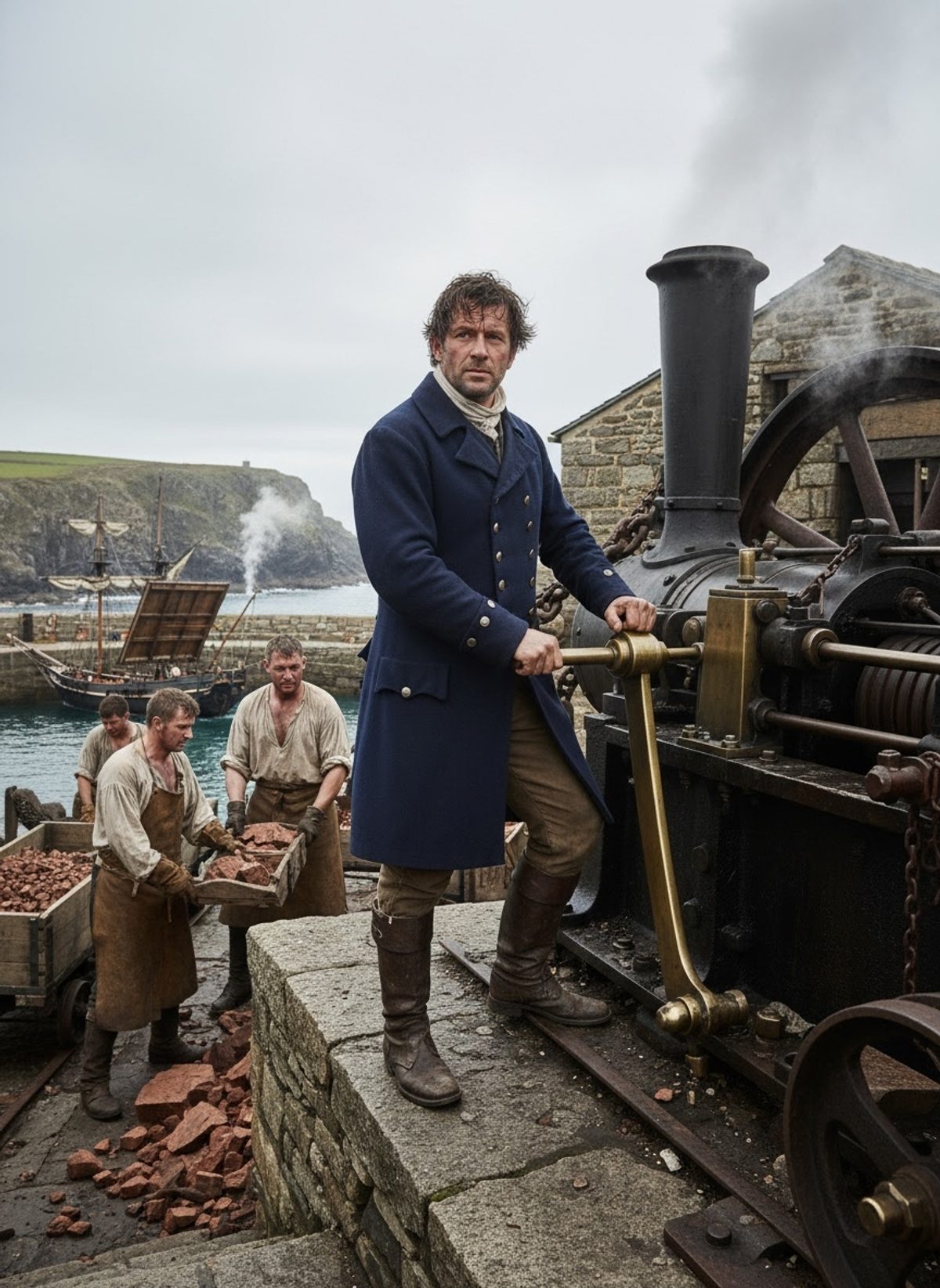
January 28, 1812. Damp tendrils of mist clung to the hills of Cornwall, shrouding the landscape in a ghostly haze.
The Copper Conundrum
Throughout the early 19th century, the copper mines of Cornwall were facing a dire predicament. Rich veins of copper sat untouched beneath the rugged Cornish terrain, but the cost of transporting this valuable ore to the coast was a heavy financial burden.
The unyielding, muddy roads between mine and harbor demanded a toll that far outweighed the worth of the metal. High transportation costs threatened to snuff out the economic potential of the area. The miners toiled using traditional, labor-intensive methods as they watched fortunes slip away.
It was a time when steam was beginning its reign over the landscape of invention, hinting at a revolution but needing champions to seize its power for specific purpose. In Cornwall, an innovative young mind saw beyond the unyielding terrain and towards the freedom that steam could unleash.
Read next: When Thomas Lipton Blended Ceylon's Broken Leaves and Fed an Empire
Trevithick's Vision
Richard Trevithick was a man cut from a different cloth, one of Cornwall’s own, whose vivid imagination was matched by his indomitable will. Born among the mines, Trevithick possessed an intimate understanding of the miners' plight and a passion for steam technology. His work over the preceding years had already begun to show that steam might answer questions no human hand could resolve.
By 1812, Trevithick had turned engineering marvels into practical tools to reshape industry. In the depths of the Cornish valleys, he envisaged a locomotive powered by steam, capable of pulling the ore-laden carts from the mines to the coast with unprecedented efficiency. His name was synonymous with innovation and resistance to impossibilities, a driving force against pragmatism that insisted the terrain was too tough, the solution unviable.
The Engine That Could
This visionary task was no small feat. Trevithick assembled an engine like none before it, utilizing high-pressure steam to haul heavy loads across uneven ground. It embodied his conviction of functionality over finery; a raw, iron heart set to beat against the rigorous demands of Cornish industry.
His steam engine, though small compared to modern marvels, was a towering presence upon the dockyards. It rumbled with silent potential awaiting release. Constructed in the opaque Cornish winter, whispered stories of its capabilities flew through the mining communities like wildfire.
Success would demand navigating not only geographic but also human resistance. Skeptics watched with doubt from the sidelines, questioning whether such a machine could ever replace the horses and carts that had become synonymous with Cornish copper trade. But on that wintry January day in 1812, Trevithick's engine emitted its first victorious hiss and jerked the laden wagons forward, defiant against the sodden landscape.
Forging New Pathways
The trek from mine to sea was arduous but met with growing triumph at each successful journey. Trevithick's steam locomotive answered questions that damp roadways had long repressed. The strain of oxen and horse no longer limited the mines' bounty; steam itself pulled wealth across the moors to meet the waiting ships.
Read next: When Robert Fortune Stole China's Greatest Secret, 1848
As tales of the steam engine's triumph spread beyond Cornwall, it catalyzed a broader trend throughout Britain and ultimately the world. Across the empire and beyond, steam locomotives multiplied, transforming landscapes, economies, and industries. A paradigm shift in transport commenced, linking previously isolated regions with urban centers and new markets. The very commerce of an empire shifted on the axles of Trevithick's dream.
A Whispered Impact
The Cornish hills that once hindered economic growth became a most vital proving ground, not just for Richard Trevithick but for a burgeoning industrial revolution. Though time tempered the raw genius of Trevithick with technological refinements, the impulsive brilliance of Cornwall's own was never lost in the annals of progress.
Trevithick’s steam-powered breakthrough quietly laid the foundation for modern railroads and influenced trade more than his boldest proponents might have imagined. When copper blackened the pockets of Britain and beyond during the Industrial Revolution, few saw the shadow of Cornwall’s engine in those pockets — yet there it resided, quietly underpinning an empire.
Our reminder, then, is clear: innovation thrives on persistent vision, determination wresting resources from an obstinate environment. In our tumultuous shift towards new technological terrain, revisiting the steam-laden whispers of Cornwall offers a lesson: the challenges we face today might be the very crucible of tomorrow's unfathomable triumphs.