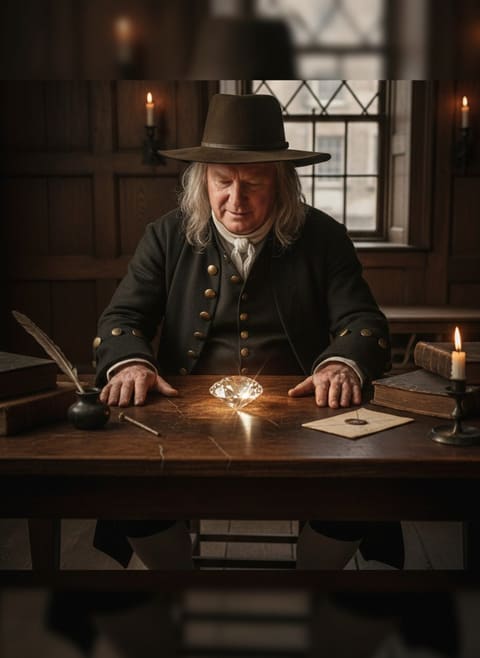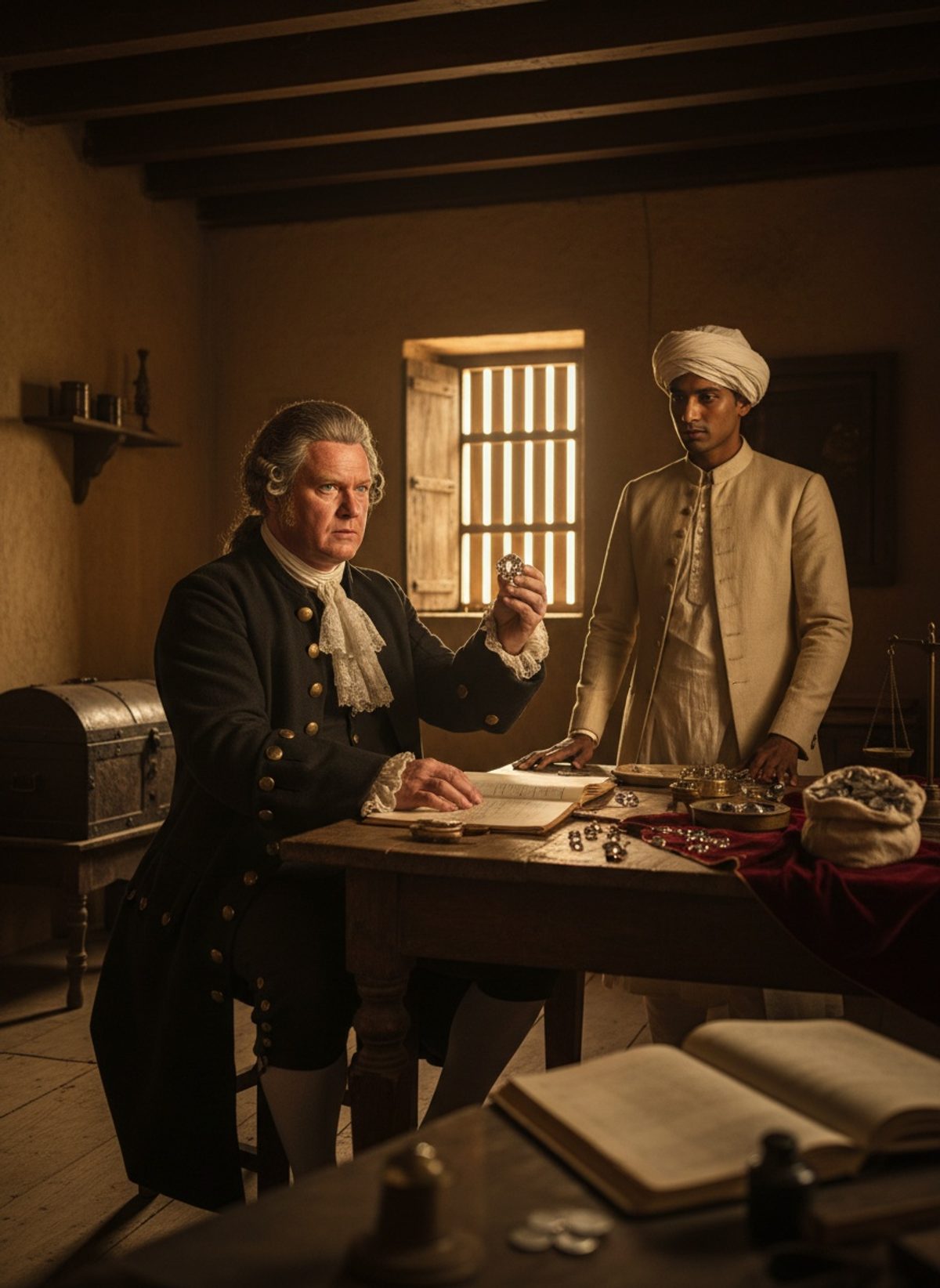
Thomas Pitt was a man like any other East India Company trader. Except he gambled on a diamond no one else dared touch.
The Diamond in the Rough
In the bustling bazaar of Madras in 1701, merchants hawked their wares under an azure sky. The scents of exotic spices and the clamor of trade filled the air as throngs of people crisscrossed the pathways. Among them stood Thomas Pitt, Governor of Fort St. George, eyeing a marvel that seemed too good to be true.
The object of his fascination? A diamond larger than any he'd ever seen, rough as the day it was wrested from the earth. It was said to be the size of a pigeon’s egg, and its potential was enormous.
Pitt, however, was no greenhorn when it came to the risks of trade. Diamonds like this were notoriously tricky to assess, their worth shrouded in uncertainty until the gem-cutters had their way. Yet, the merchant in this colonial outpost held firm, insisting it was a fortune wrapped in stone. The price was steep, turning wary onlookers away. But Pitt, sensing history in the making, paid the 48,000 pagodas—roughly £20,000 of his time—a fortune indeed.
Read next: When Josiah Wedgwood Sailed His Pottery to America, 1765
From Colonial Trader to European Fame
The acquisition was just the beginning of Pitt’s audacious bet. He sent the diamond on a perilous journey back to England, accompanied by letters filled with passionate descriptions of its beauty and value. When it arrived, the stone was dispatched to a renowned cutter in London who spent the next two years transforming the rough into a true masterpiece.
The gamble paid off magnificently. The final 141-carat oval diamond emerged as the largest and most exquisite gemstone in Europe. It was clear, colorless, and dazzling—the very embodiment of luxury and power. Pitt's name, once synonymous with colonial affairs, became etched in the annals of gem history with this sparkling treasure.
The French Connection
With his newfound treasure, Pitt had created a sensation. European nobility vied for the jewel, each seeking to elevate their status through its acquisition. Yet, it was France’s King Louis XIV who laid claim to this coveted piece. The diamond, cut and set into the French crown jewels, became known as the "Regent Diamond." To this day, it remains one of the most revered pieces in the world, residing in the Louvre's opulent displays.
Read next: When Robert Fortune Smuggled China's Tea Across the World, 1848
This was more than a transaction; it was an act that influenced the very direction of European power plays. The diamond, imbued with the aura of the Mughal Empire’s riches, also stood as a testament to the burgeoning influence of colonial capitalism. Pitt, through one bold purchase, became not only a kingmaker but a key figure in the intertwining stories of commerce, empire, and prestige.
A Legacy Sparkling Through History
Thomas Pitt, with this single audacious act, shifted the narrative of his time. He not only embraced the risks of colonial trade but transcended its typical rewards. The Regent Diamond is more than just a stone; it’s a symbol of the complexities and intrigues of the early Georgian Empire.
From the dusty streets of Madras to the gilded halls of Versailles, the journey of this diamond mirrors the rise of a global economy and the promise and peril entailed in those early trade networks. In understanding Pitt's boldness, we see the full spectrum of human ambition, frailty, and the timeless allure of wealth that glittered then as it does now.