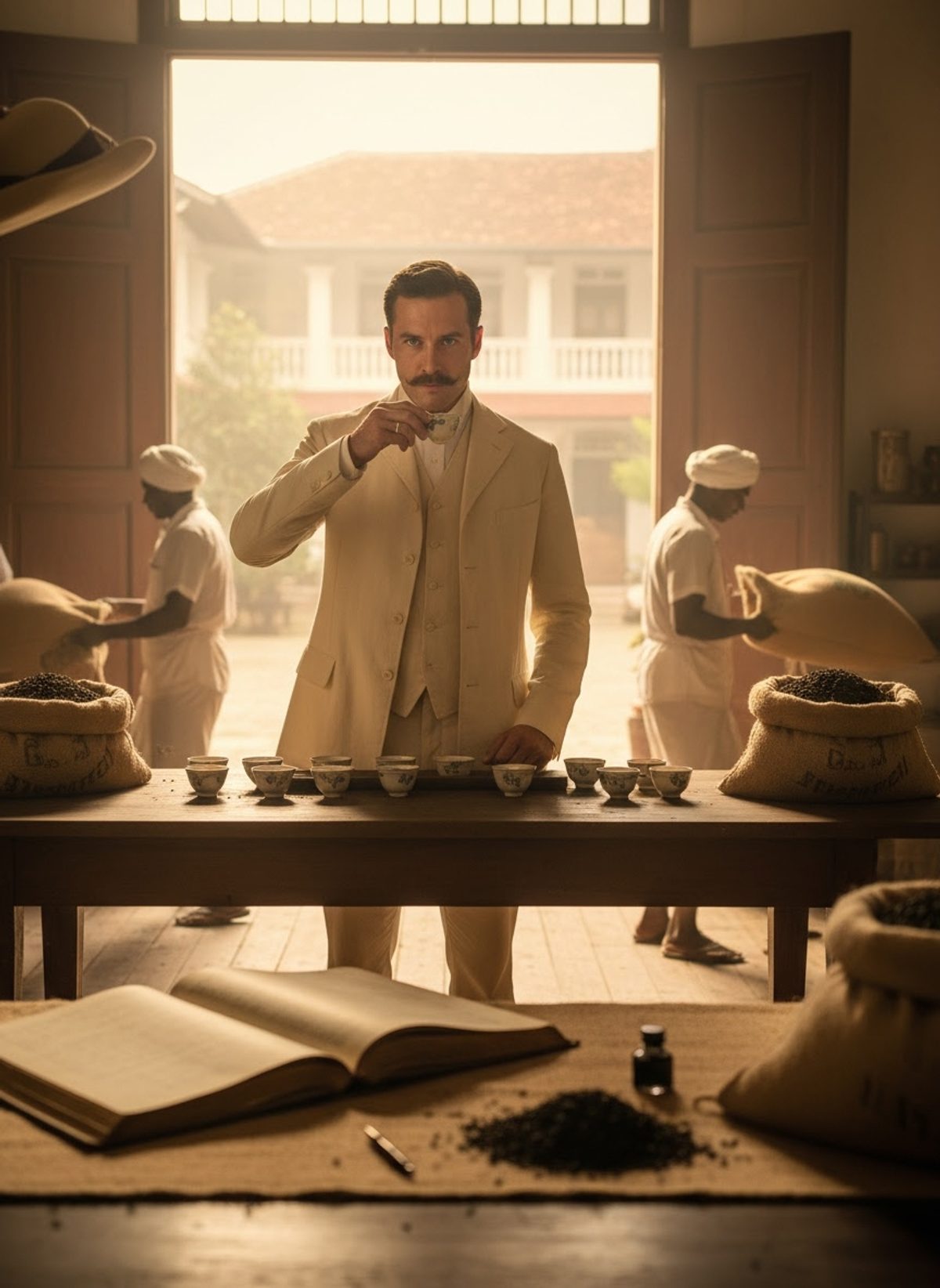
Thomas Lipton, the man who redefined tea for the British masses, spent his early life in the buzzing chaos of Glasgow. He started as the son of a humble Irish grocer and never forgot the vibrancy of a working-class life. But his unparalleled influence on tea-drinking culture wasn't born from refined parlors or elite gatherings; it grew from his instinct to see potential where others saw only waste.
A Journey to the Heart of Ceylon
In 1890, when Lipton sailed the seas towards Ceylon, it wasn't merely an expedition; it was a calculated move that would alter Britain's relationship with tea forever. Ceylon, known today as Sri Lanka, was then a colony where tea plantations sprawled over rolling hills as far as the eye could see. This region, rich in fertile soil and ideal climate, had become a hub for producing tea mainly for export to Britain, yet the brew was still a luxury item.
At that time, the British tea trade was firmly under the grip of middlemen who swelled the price as the leaves passed through their hands. These merchants marked up the costs so that by the time the tea reached British homes, its price was out of reach for many.
Lipton saw an opportunity not in the elegant, whole leaves but in the broken ones, often overlooked and undervalued. These broken leaves were less aesthetically pleasing but could be just as flavorful, and more importantly, they were affordable.
Read next: When Thomas Pitt Weighed a Fortune in an Indian Bazaar, 1701
Lipton envisioned a direct trade, cutting out the middlemen to pass the savings onto the consumer. By purchasing his own plantations in Ceylon, Lipton gained control over the production process, ensuring the quality of his tea from bush to cup. His bold move paid off; he packaged his tea himself, placing his own name boldly across the labels. This was more than a brand; it was a promise of affordability and quality that consumers could count on.
The Birth of a Tea Empire
Upon his return to Britain, Lipton's strategy was simple but revolutionary: sell an affordable cup of quality tea to the masses. He debuted his product in his own grocery stores, ensuring it reached the everyday person. The genius lay in the marketing, as much as in the business model. Lipton's packaging boasted of “direct from the tea garden to the teapot,” a captivating promise that resonated with customers.
Before Lipton's intervention, tea was often sold loose in bulk, which led to irregular pricing and dubious quality. Lipton introduced the concept of packaged tea in attractively designed boxes, standardising both the price and assuring consistency. It was a masterstroke that would evoke trust in the Lipton name and solidify its position as a household staple.
The impact was swift and profound. Britain's working class, once denied of the comfort of a steaming cup of afternoon tea due to its prohibitive cost, now found Lipton's product within reach. Tea drinking, which had been an exclusive ritual of the upper echelons, trickled down, democratizing an entire culture. With Lipton's easily accessible tea, the beverage became an integral part of daily life for people across the socio-economic spectrum.
Read next: When Nathan Mayer Rothschild Cornered the London Market, 1815
A Cultural Shift in Every Steaming Cup
As Lipton's empire grew, so did the accessibility of information about the product. Marketing ploys, such as large billboards and promotional stunts featuring the audacious gazing of Sir Thomas Lipton himself, made tea not just an everyday commodity, but a trendsetting phenomenon. The brand became as much about the personality behind it as the tea itself.
This shift was more significant than many realized at the time. Beyond satisfying a nation's thirst, Lipton's tea became a symbol of broader social transformation during the Victorian era, a period rife with economic disparities and strict social hierarchies. By bridging a gap long existing between classes, Lipton’s tea offered a form of social cohesion, uniting the populace in a shared simple pleasure.
The legacy of Thomas Lipton is not merely found in his global enterprise, but in the way he sculpted a culture, changing teatime from a luxury to a commonplace enjoyment. His foresight in using broken leaves to feed an empire demonstrated that simplicity and accessibility could shift societal norms, paving the way for future entrepreneurs.
Today, we remember Thomas Lipton not just for being a business magnate, but for seeing revolution where others saw remnants. In every warm cup held by those from all walks of life, there is a hint of Lipton’s vision—an enduring reminder of his ability to blend the ordinary with the extraordinary, feeding not just the body, but the spirit of an entire empire.