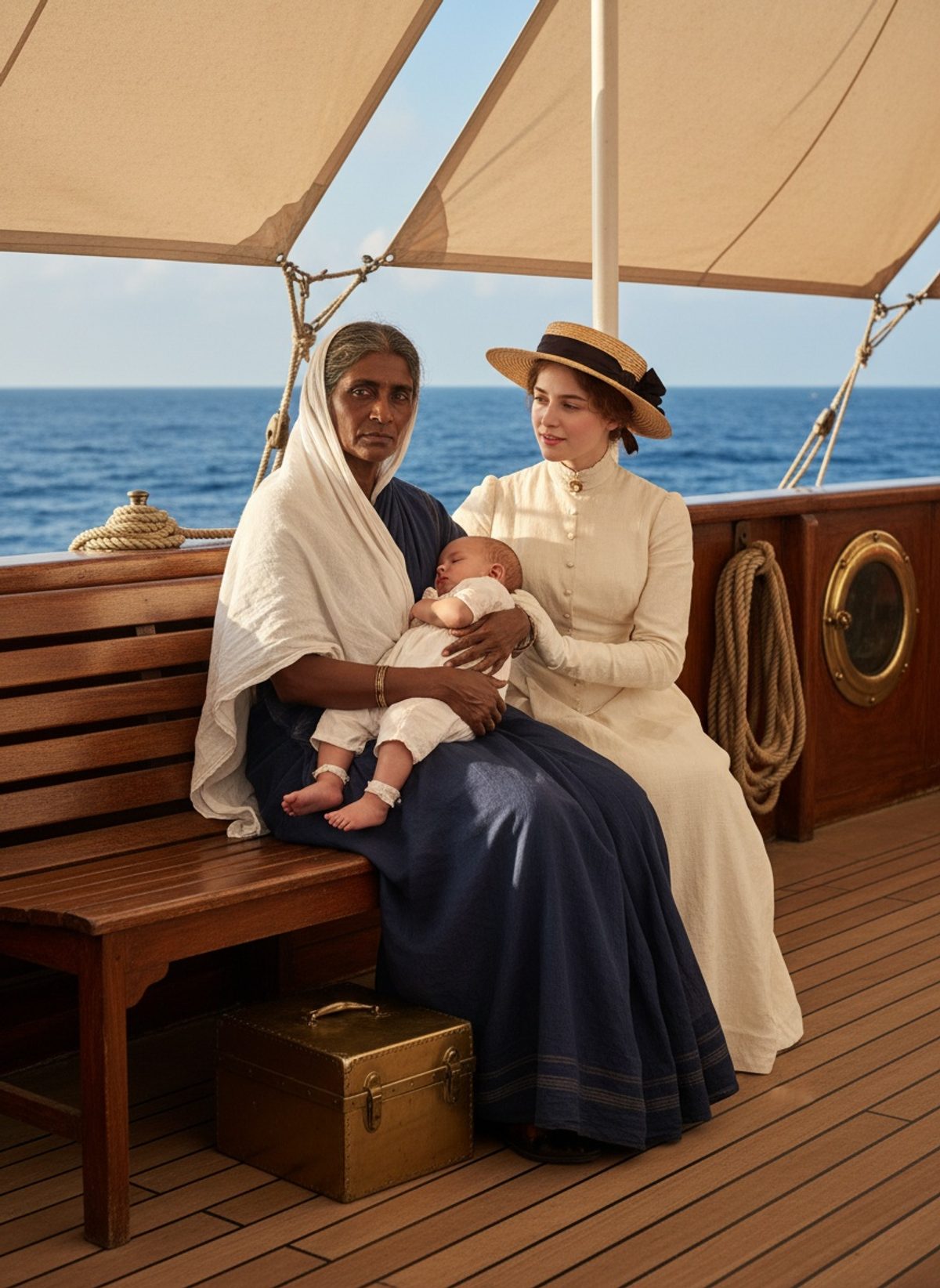
The morning mist hung over the cobbled streets of Edwardian London, swirling in the light of streetlamps just starting to dim with the approach of dawn. The city was a bustling mosaic of clattering hooves and hurried footsteps, overseen by the towering, gothic outlines of its cathedrals and townhouses. It was a typical London morning—damp, persistent, and buzzing with an unspoken tension as the empire grappled with the stirrings of change. In 1906, amidst London's sprawling network of grand drawing rooms and exclusive clubs, an encounter was set to redefine the way one man—and ultimately, much of the world—would perceive a faraway land: India.
The Meeting in Bloomsbury
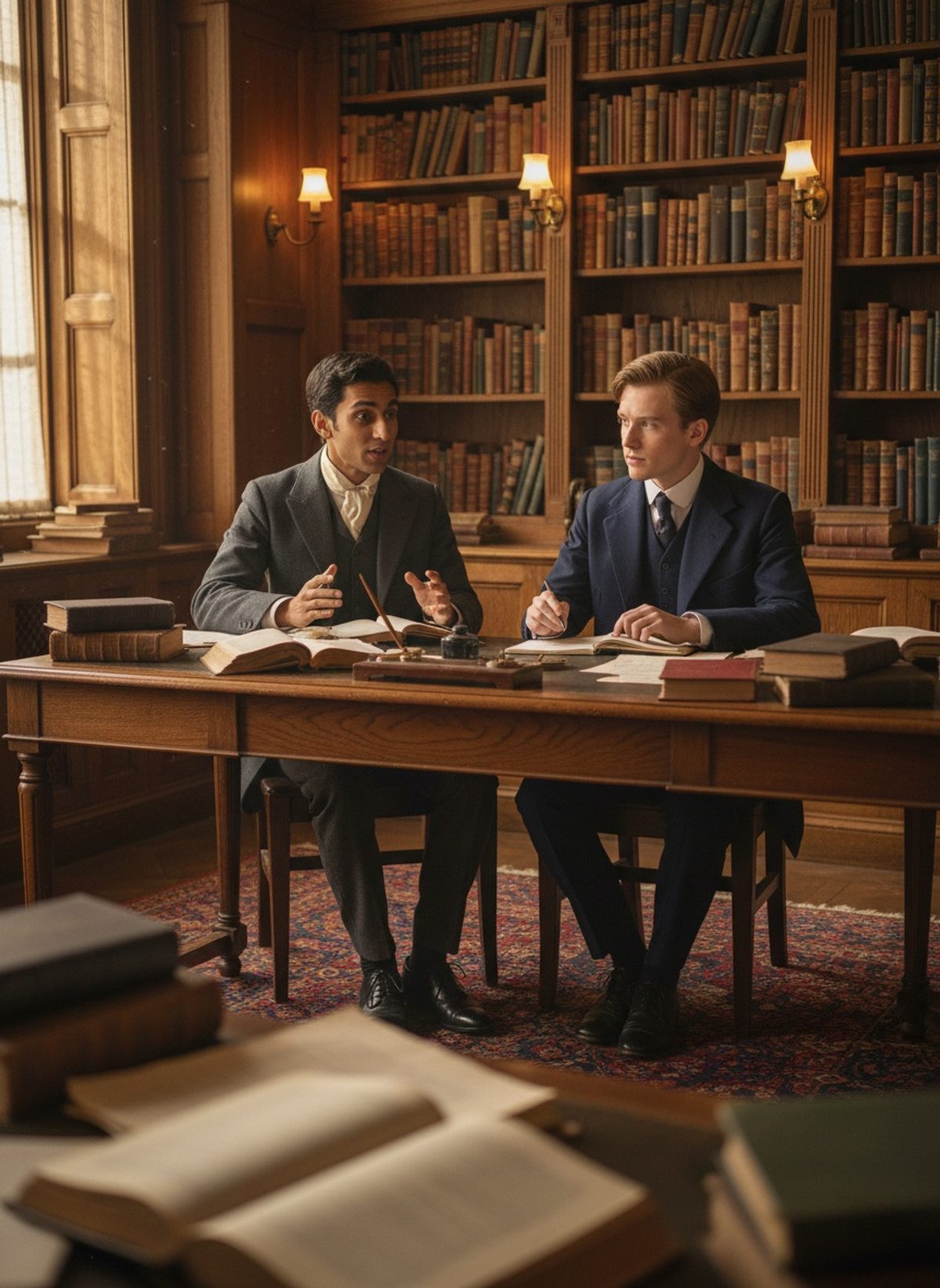
In the heart of Bloomsbury, a precinct known for intellectual vigor and artistic pursuits, a young Indian student named Syed Ross Masood sought academic guidance. Twenty years old and already bearing the complexities of a culture caught in the crosshairs of colonization, Masood walked the corridors of academia with a purpose. Not for him were the stiff and aloof introductions to the empire's machinations; he ventured into these territories with a personal tutor, a bespectacled English novelist named E.M. Forster. Their initial meeting was orchestrated under quintessentially British conditions—a recommendation, a letter, and a handshake. Yet, this seemingly mundane interaction was about to pierce the façade of empire.
Elegant and incisive, Masood was no stranger to the intricacies of language; however, Latin required mentorship. So began his tutelage under Forster, which swiftly unraveled the threads of mere education into an enriching friendship. Masood—not just a student of classical languages but an ambassador of the intangible world of Indian social stratification and spirituality—shared his perspective with a curiosity that jolted Forster from complacency. Through vivid descriptions of festivals, familial bonds, and spiritual rites, Masood revealed to Forster the dynamism of an India largely obscured from British consciousness. It was in these dialogues that the intellectual and emotional foundations for A Passage to India were quietly laid.
Beyond the Gaze of Empire
Forster, through the immediacy of Masood's observations, began to unravel the layers of India—its geographical complexities mirrored in the diversity of faiths and cultures seamlessly woven into daily life. Masood took Forster into conversations and spaces the Empire's structure typically obscured from view. The mundane life of the domestic courtyard was as significant as the grandeur of Mughal architecture, and the whispers of prayer reverberating in mosques were as crucial as political oration within imperial walls. This intimacy fostered a comprehension in Forster that went beyond the cold statistics and guttural proclamations of colonial administrators.
Read next: The Six Mysteries of Empire You Can Only Answer Once
In this symbiotic friendship, Forster was exposed not only to realities but to the profound injustices of British dominion—the disdain cloaked in civic tutelage and economic superiority were as life-draining as the Delhi heat. Yet, amid the disillusionment, Masood imparted the persistent, almost rebellious, joy of Indian life—a life lived amidst adversity, not in ignorance of it. Forster recorded these impressions with meticulous care, noting the harmonies and discordances of a world seen through an uncolonized lens.
This relationship came into sharp relief during their walks through lush countryside landscapes and during conversations in dim-lit interiors suffused with the fragrance of spice and tea. For Forster, there was never just one India: it was plural, and it was personal. Every story Masood shared became more than an anecdote; it was a counter-narrative to the empire's official lore—a living testimony of voice and vision. It was Masood's India; it was truth speaking softly.
The Passage Opens
The friendship that nurtured understanding culminated into literature, with each page of Forster's eventual novel A Passage to India bearing the unmistakable imprint of Masood's influence. Critics would hail the novel as a masterpiece—a scathing and intricate critique that stripped bare the pretensions of colonial superiority. In its pages, the chaos and beauty of India were interwoven with an Englishman's conscientious yet often clumsy attempts at navigating a cultural mosaic his home country barely comprehended.
Masood had illuminated India not as a monolithic subject of colonial endeavor but as a planet unto itself, spinning within and against the gravity of empire. Forster's work, profoundly informed by this authentic portrayal, challenged readers worldwide to question the moral fabric of imperialism. Through his friendship with Masood, Forster could explore themes of misunderstanding, friendship, and betrayal—each interaction a portrayal not just of cultural clash but of shared humanity.
That synergy between student and tutor was revolutionary in its simplicity. Masood never sought to indoctrinate Forster with polemics or predictions; instead, he presented a world he lived daily—a world of cricket matches and poetry recitals, of social stratification and spiritual gravitas. This was an India that Empire had never meant its schoolmasters to see.
The tale of E.M. Forster and Syed Ross Masood reminds us that truth, through friendship, often defies the strongest empires. It is a powerful echo from the annals of history, telling us that empathy and shared experience have the power to dismantle the walls that separate perception from reality. In an age when empires rose and fell, it was the unseen India that resonated, persistent as the dawn mist over Edwardian London, inevitable as the tide bringing ships into harbors yet unknown.