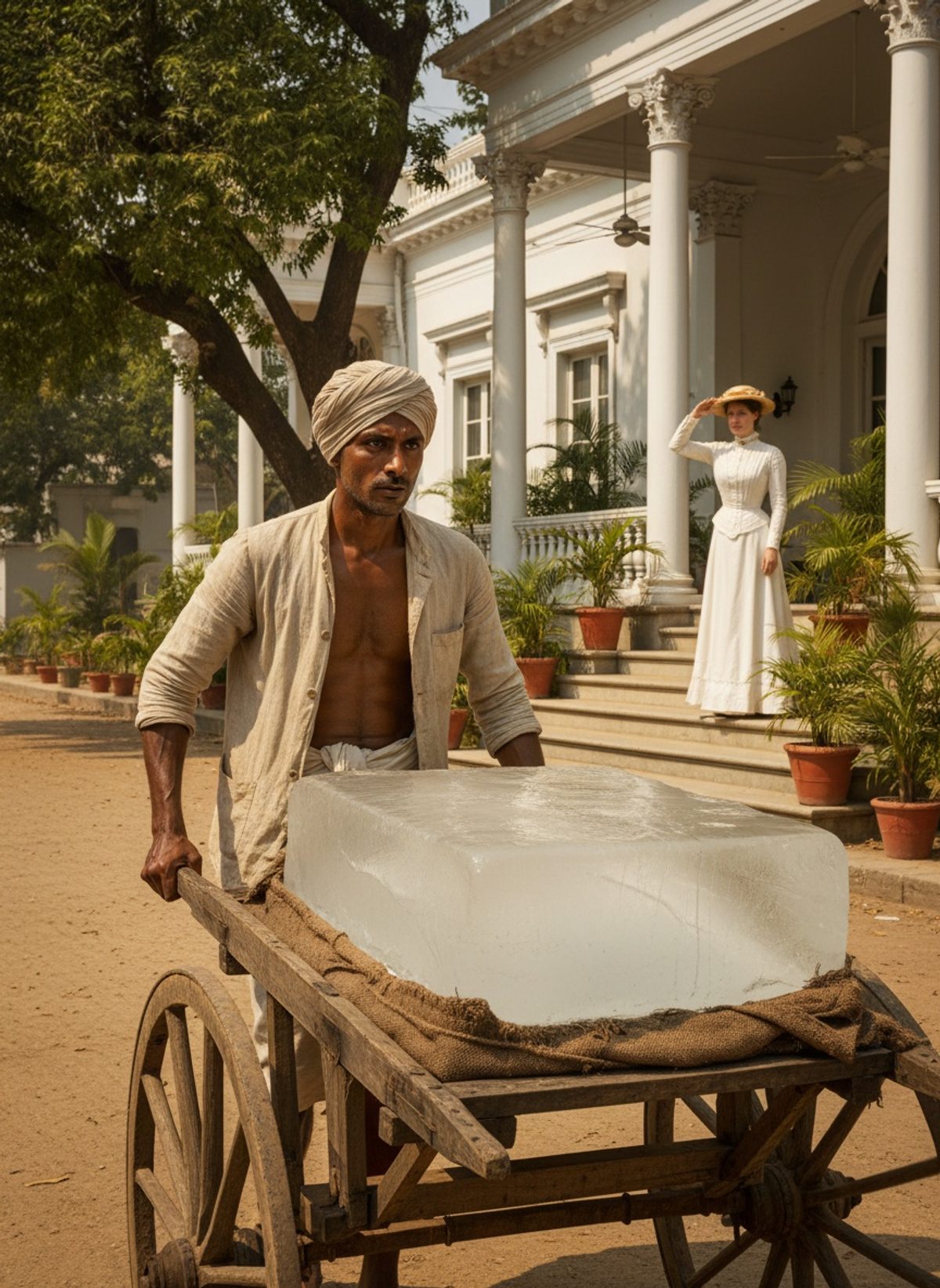
The ice fractured under the wooden tongs with a sharp crack, sending a brief spark of coolness into the thick Calcutta air. Ranjit, an ice-wallah long accustomed to the demands of the Viceroy’s table, lifted the heavy block from the wagon. Beads of sweat gathered and dripped from his brow as he carried his crystalline burden through bustling streets, alive with the sounds of vendors and the cries of hawkers. Beneath the relentless sun, the ice shimmered like a precious jewel—an elusive treasure destined for the dining table of the British Raj’s highest official.
From the Cradle of Winter
The journey of this ice began thousands of miles away, not in the tropical heat of India, but in the frozen landscapes of New England. In winter, when the ponds of Massachusetts lay under blankets of snow, workers carved pristine blocks of ice from the surface. These were no mere cubes for cooling a drink, but grand slabs cut with meticulous precision by men who’d mastered the frost. Loaded onto ships, these blocks traversed the ocean via the steamships that plied the Atlantic, heading towards far-flung dominions of the British Empire.
The vision for this icy trade materialized thanks to the foresight of Frederick Tudor, known as the “Ice King.” Tudor had revolutionized the concept of cooling by transforming what was once a local curiosity into a staple commodity for the elite across tropical colonies. The logistics were daunting; this wasn’t merely about exporting ice, but creating a transcontinental refrigeration network in an era long before electricity lit up Calcutta's nights. Yet, the allure of making New England's winter a part of Calcutta's summer was irresistible, and Tudor’s vision soon had ice flowing like a new currency of cool comfort.
The Voyage on the High Seas
Each winter, as New England’s ponds froze, a countdown commenced. Timing was crucial, for the stone-gray ice would endure a perilous voyage in insulated holds, where layers of sawdust and straw formed a thermal shroud. This ingenious packaging minimized melting as humongous, silent, icy cargos floated away from Boston, navigating storm-churned seas towards the Indian subcontinent over the course of several months.
Read next: If You Had Lived Under the British Empire — Where Would You Choose?
Upon reaching the Calcutta docks, it wasn’t the end of the ice’s arduous journey. The welcoming waters of the Hooghly River demanded their own toll in patience and manpower. Here, cargo was offloaded onto smaller boats, battling tides upstream under the watchful gazes of fishermen and the raucous riverbanks. A network of laborers worked in concert. They hauled the blocks onto waiting oxen carts which, under the vigilant eyes of foremen, carried the precious, now meagerly diminished blocks into the heart of Calcutta.
The City Beats to a Different Drum
Through the busy lanes of Calcutta, the ice-wallahs marched with their wares wrapped tightly, their rhythmic calls harmonizing with the city’s own vibrant pulse. The British enclave in Calcutta demanded ice for more than just luxury—it was a symbol of their dominion and modernity, a reminder of home where afternoon teas and grand dinners could defy the oppressive heat.
British dignitaries cherished this crystalline luxury, transforming it into cool sorbets served in delicate crystal, frosty cocktails that whispered of cooler climes, and in ice creams scooped like heavenly clouds. It was a ritual at the Viceroy’s residence, where daily menus meticulously accounted for sweet treats and chilled drinks, completely reliant on the silent army of ice-wallahs to make this possible.
Behind the Ice Curtain
For the Indian laborers, this task was one of daunting extremes. Delving into sweltering streets from the shores of Boston's frozen expanse, the ice trade straddled worlds. They worked in rhythm with the sun, knowing that each moment mattered, constantly racing against time. All the while, their efforts went largely unnoticed, their names unrecorded in history's finer ledgers, yet they were the sinew and bone of empires.
But the ice trade bestowed more than chill comfort—it blended cultures in unexpected ways. Calcutta’s burgeoning market saw local patrons delight in the novelty of ice, experimenting with its uses and cultivating a new culture entirely around cool drinks and chilled sweets. And in this exchange, the ice-wallahs became harbingers of an unsung cultural synapse; they were purveyors of progress that intertwined the best of East and West.
Chilling Emblems of Change
The arrival of ice did more than soothe the elite’s thirst: it provoked shifts in lifestyle, catalyzing energy around refrigeration that would echo through to the present day. The improbable journey from frozen ponds to colonial tables serves as a symbol of unchecked human ambition and industry’s march across continents.
To cooler heads, the history of the ice-wallahs offers a whispered tale of quiet rebellion—against climate, against odds, and against the very constraints of time. The legacy is not just in blocks of ice, but in humans harnessing nature to create comfort and continuity, seamlessly embedded into the landscapes of far-flung homes as a casual elegance. The forgotten ice-wallahs of Calcutta, with their burdens of crystal clarity, carried the weight of innovation on their shoulders, their passage marked by the melting droplets of history’s deepest frosts.