He ran faster than most horses could gallop. His endurance exceeded that of many soldiers, yet he wore no uniform and bore no rank.
The Unseen Artery of Empire
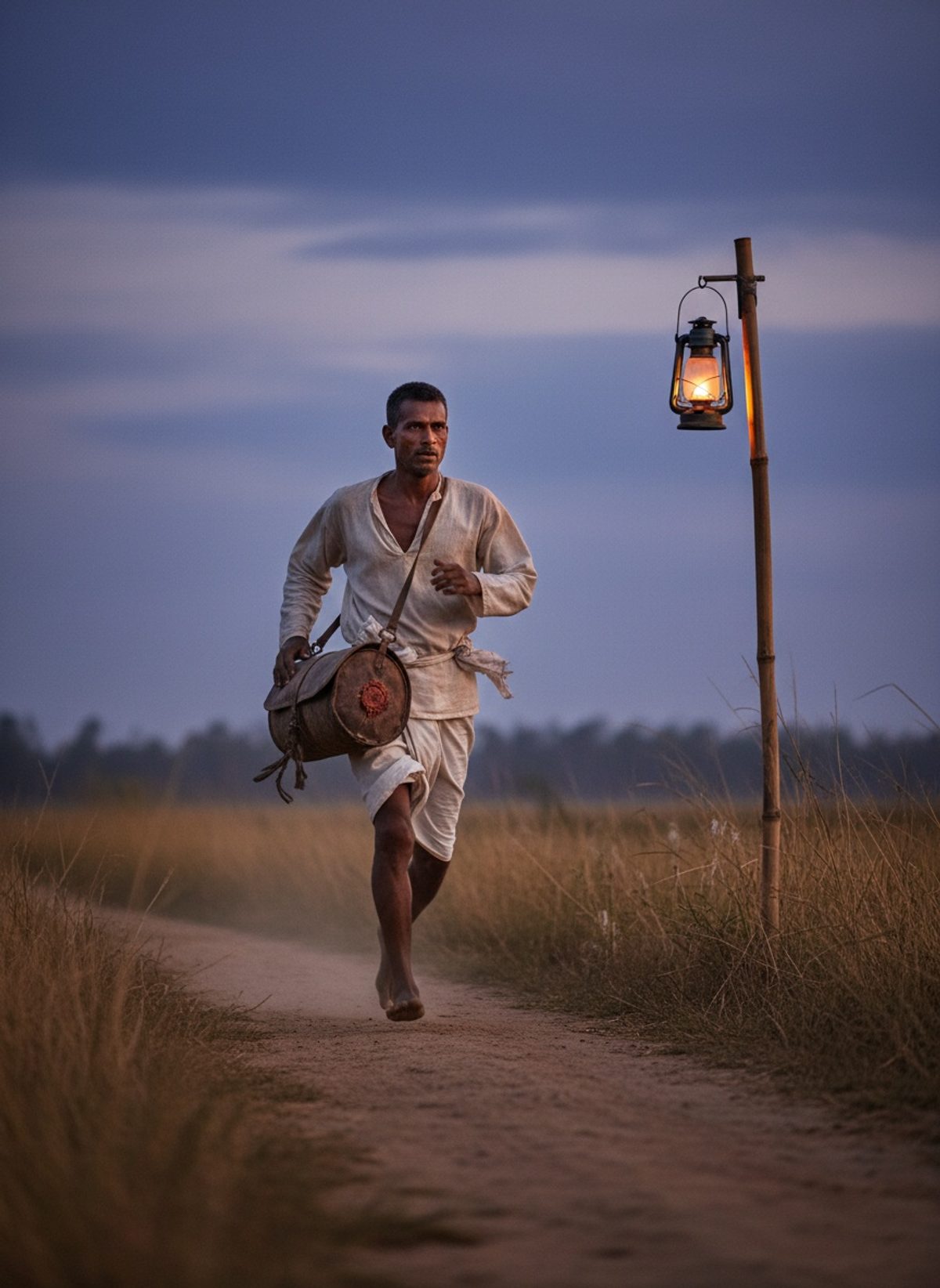
In the flickering shadows of the Victorian era, where British imperial ambition carved borders across continents, the dak runner of India was more than mere muscle and speed. He was a living, breathing artery of communication, an essential thread in the tapestry that was the British Empire. Imagine him, silhouetted against the expansive Bengal plain, pounding the dirt path from one lantern post to the next, his bare feet near silent against the earth but for the rhythmic thud of his determination.
It was 1875. The telegraph had made its grand entrance elsewhere, but technology lagged behind the needs of an empire stretching its tendrils through vast and varied landscapes. Before this marvel of wires could reach every corner, the dak runner was indispensable, a vital messenger connecting the isolated echo chambers of power. Although he carried neither sword nor shield, he traversed landscapes both profound and perilous — through monsoon-drenched fields and jungles haunted by the stealthy tread of tigers.
A Solitary Vocation
Despite the inherent risks of his nightly sprints, the dak runner's task was markedly solitary. In an era defined by layers of bureaucracy and the clamor of colonial enterprise, his profession was conspicuously personal. There was no team, no relay. A pair of trained feet, a prepared mind, and an indomitable spirit were all he had. For weary villagers and isolated outposts, his appearance meant connection to a world beyond the confines of their daily toil.
Read next: When Forger Thomas Griffiths Wainewright Charmed Colonial Sydney, 1837
The dak runner's realm was that of dusty paths and moonlit corridors, of distances measured not by miles but by the cadence of his breathing. What he carried was more than mail; it was a lifeline woven out of dispatches, letters, and imperial orders that silently bolstered the Raj's omnipresence. Payment for such a task was modest to the point of austere — a pittance in the face of the relentless footsteps required.
Mother Nature's Gauntlet
India's land was as much an adversary as it was a landscape. Monsoon rains transformed plains into sprawling quagmires with every season, yet the dak runner maneuvered through with tenacity. Soaked clothes clung to his limbs, but his pace endured, a testament to a commitment as deep as the swelling rivers he skirted.
And then there were the jungles, dense and alive with the nocturnal symphony of life. A chance encounter with a curious tiger could spell disaster, yet the dak runner's only companion against this danger was his wits and a vigilance honed over countless dispatches. In a world with no promise of security, courage and audacity were his constant companions.
Why We Should Remember
The tale of the dak runner is woven with threads of resilience, duty, and understated heroism. His story is compelling not because he was armed or elevated by titles, but because of the weight he bore with every step. In a world that spun on the will of empires and the dreams of imperialists, his role was testament to human perseverance in the face of grand designs.
As we reflect on this chapter of colonial history, the echoes of the dak runner’s footsteps remind us of the countless unsung individuals who sustained an empire. In a time when communication is virtually instantaneous, his nightly journey through the soaked and shadowed plains of Bengal challenges us to appreciate the fragility and tenacity of human connections. Embedded within the marches of history are stories of silent valor, waiting to be retold, resounding through the ages like the footsteps of the runner who never stopped.