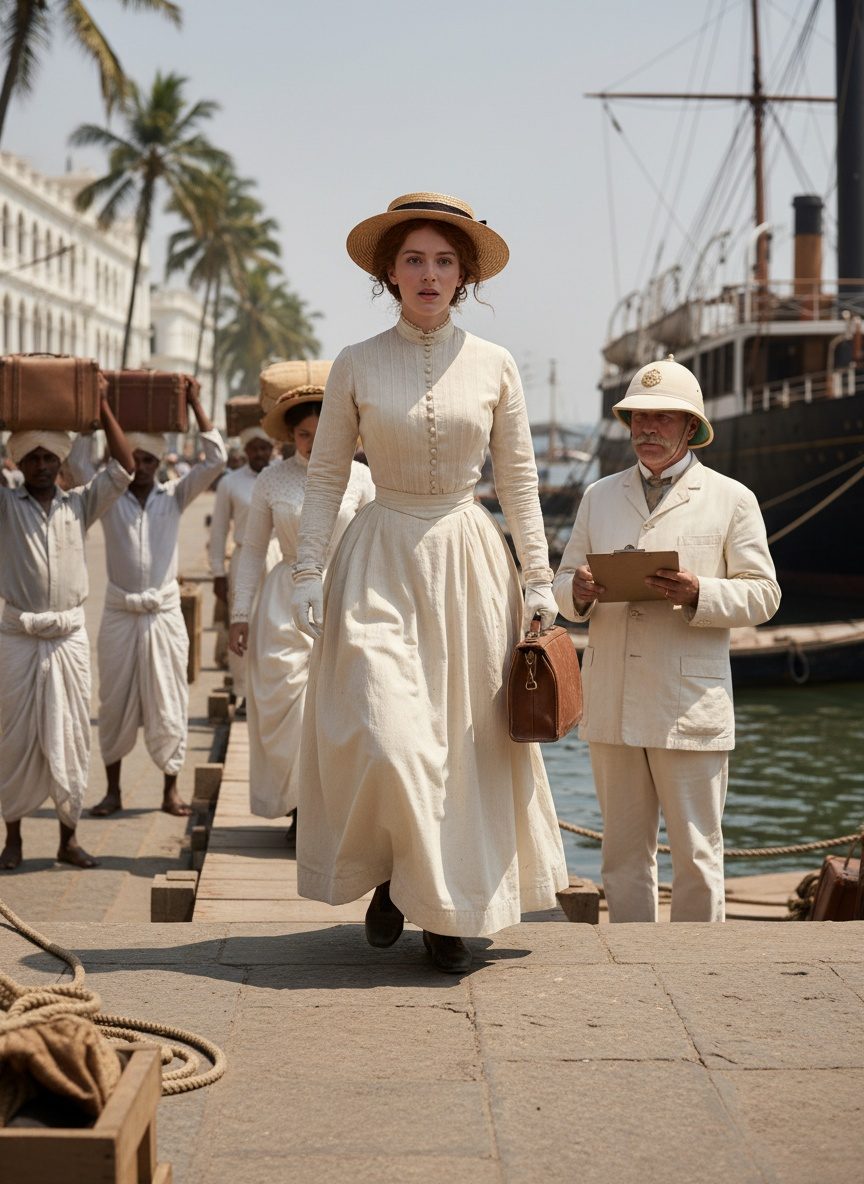
The humid air of Bombay wraps around you with a fierce warmth as the sun dips below the Arabian Sea in a blaze of orange and purple. The narrow lanes are alive with the scent of spices—cumin, coriander, turmeric—each adding its own character to the city's vibrant tapestry. The noise is a heady mix of merchant chatter, donkey brays, and distant music wafting from a street festival. It's the late 18th century, and the British East India Company is beginning to cement its dominance over the subcontinent's trade routes. This is a moment of transformation and opportunity, where fortunes could rise like the steam from the chai vendors' kettles.
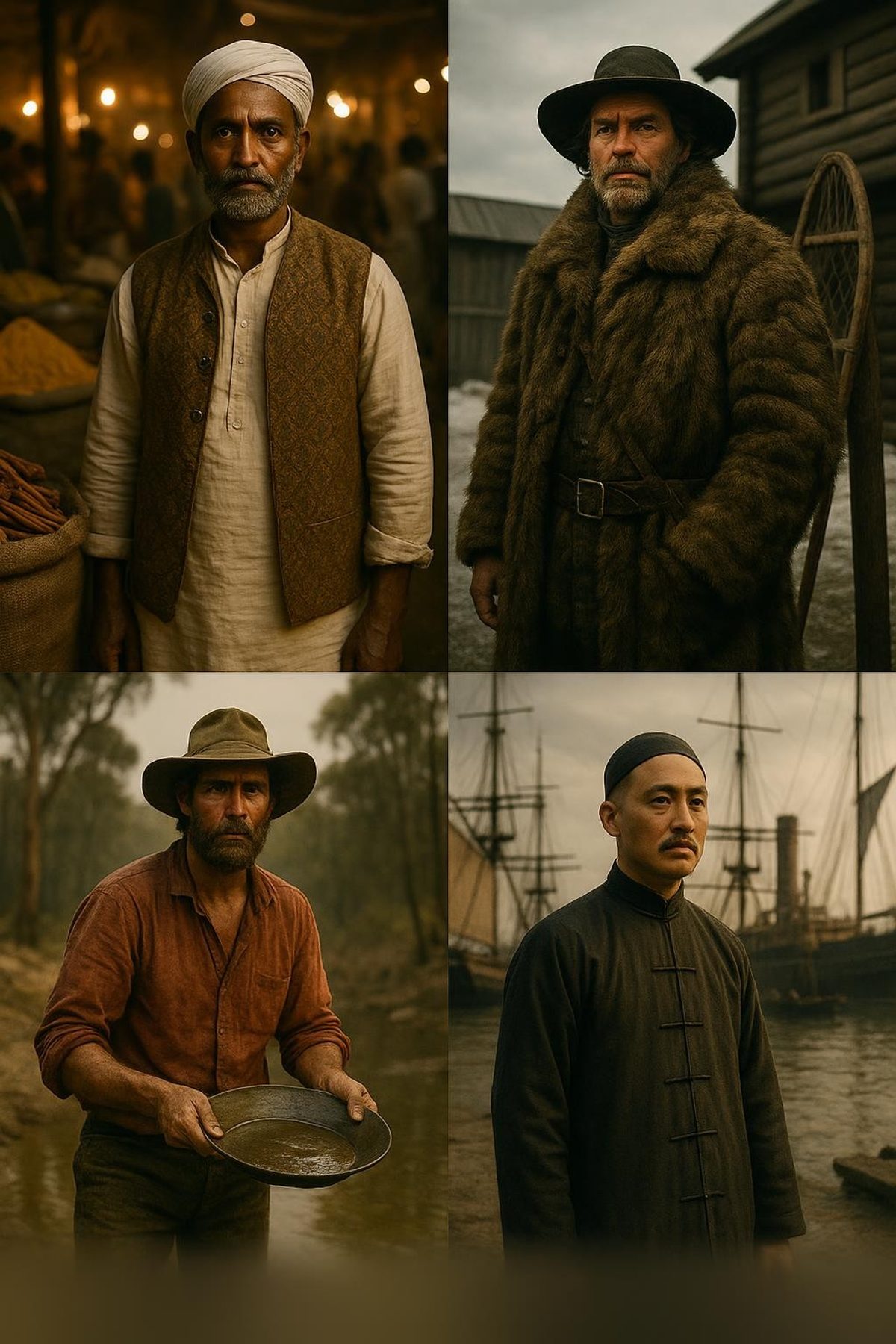
As a merchant in this bustling port, you would be at the epicenter of the spice trade, a network that stretches from the Malabar Coast to the grand cities of Europe. Living here means constant navigation of intricate social networks, dealing not just with Europeans but a myriad of cultures as diverse as the cityscape itself. For some, like those bold enough to carve their niche in the competitive marketplace, the rewards were manifold, their personal wealth mirroring the gold-lined ledgers of the Company's accounts.
Journey now to a different landscape altogether, six months of travel on unforgiving seas landing you in the harsh wilderness of what would become Ontario. It's the early 19th century, and Canada is a land of icy lakes and dense forests, where winter swallows the sun and the howl of wolves pierces the night. As a fur trapper, every day is a calculated risk where survival takes the form of skill, endurance, and respect for nature’s unforgiving temperament. The men who thrive here understand the value of the land's riches—beaver pelts known as "brown gold" that fashion London hats, seal coats in Parisian boutiques.
This life is a solitary one, marked by a rugged independence and a tacit understanding with the Indigenous peoples who teach you the secrets of the land. For some, the appeal is in living at the edge of civilization, where the only barriers are those set by the earth itself. The rhythm of life here is dictated by the seasons, with every path you carve through the snow contributing a new line to the expansive map of British territorial ambitions.
Read next: When the Metropolitan Police Stood Tall on London's Streets, 1880
Half a world away, the colony of New South Wales opens its doors to adventurers in the mid-19th century, whose dreams are gilded by tales of goldfields that shimmer in the hot Australian sun. The earth, a rich red beneath a cobalt sky, promises redemption for many who have little else to lose. The gold rush transforms this distant penal colony into a land of immense possibilities, where diggers work tirelessly as the sound of picks and shovels reverberate through the valleys. In this frontier landscape, communities spring to life overnight—tent cities where the air buzzes with tales of riches just a shovel's breadth away.
To join the gold rush means to embrace uncertainty, where the line between success and ruin is as fine as the dust that clings to your skin. It’s a place where traditional social structures are left behind, democratized by the pursuit of wealth that can turn a pauper into a baron in the blink of an eye, and back again just as swiftly. Some find not just gold, but a new beginning, amid landscapes that feel as vast as the lives being reinvented here.
Finally, the bustling port city of Hong Kong opens up, a beacon of trade between the East and West by the late 19th century. The South China Sea provides a steady backdrop against which the city’s skyline grows, a blend of Chinese junks and European ships bobbing against a canvas of opportunity. As a trader here, you would partake in a dance as delicate as the silks passing through your hands, negotiating goods from porcelain to precious tea leaves that are worth their weight in silver.
Life in Hong Kong requires a keen understanding of both British diplomacy and Chinese culture, a tightrope walk where the stakes are always high but so are the rewards. Experience the fusion of tastes, sights, and sounds—a city where neon lanterns reflect over the narrow canals and the smell of roasting duck hangs delectably in the air. The juxtaposition of cultures in Hong Kong speaks to a modernity few places rival at this time, a microcosm of global ambitions etched into every skyline shadow.
Each corner of the British Empire offers a distinct tapestry of life, each thread intertwining personal stories with epochal change. Whether it be the spices of Bombay, the furs of Canada, the gold of Australia, or the trade of Hong Kong, each choice represents more than a geographical decision—it’s a choice of fate, of the kind of life one would craft under the sun and shadow of empire. This era of unprecedented expansion and connection was more than the sum of its parts, offering not just a chance to partake in a world empire, but to help shape it. Across the many worlds contained within its borders, the British Empire offered a selection of lives as varied and vibrant as the lands they unfolded across. Which one would you choose?