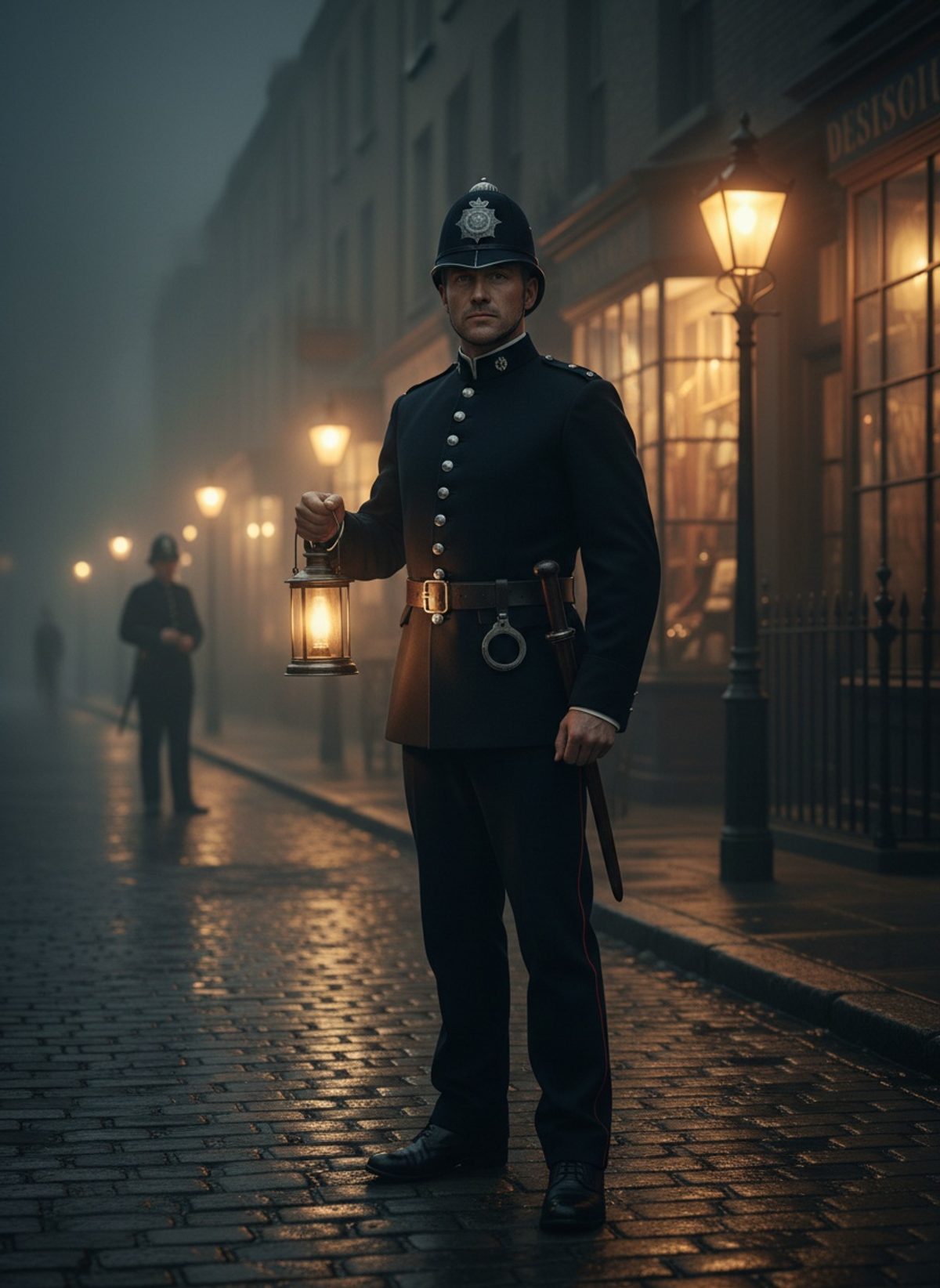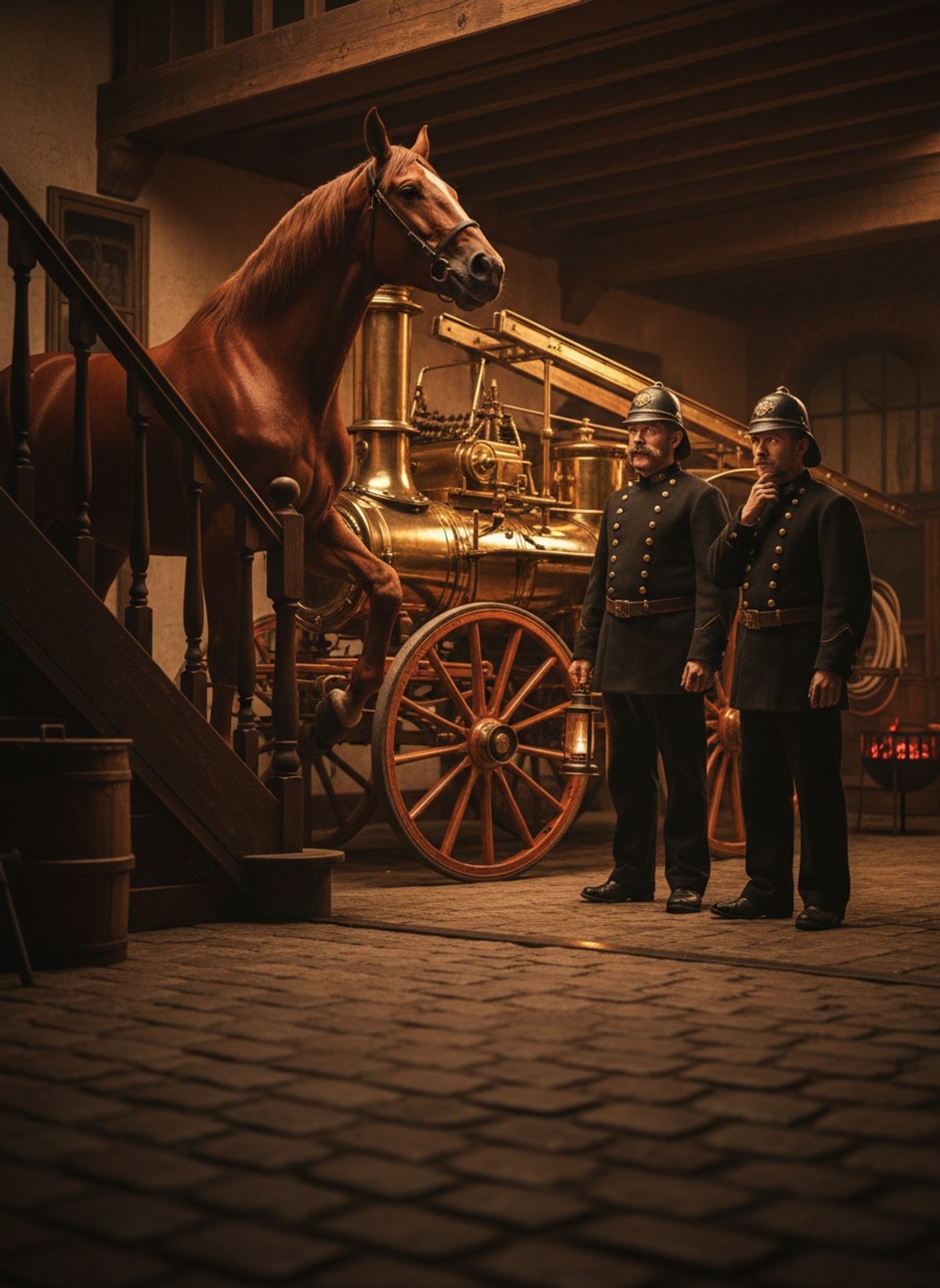
The rhythmic clatter of hooves echoed violently on the narrow wooden steps as George Lorimer staggered out of bed, heart pounding. The sound was unmistakable—one of their strong, bay horses was ascending the staircase, its heavy, determined steps driving splinters into the old wood. "This cannot be real," Lorimer muttered, scrambling for his coat, yet knowing full well that the improbable was happening. He burst from his quarters to witness the chaos, a fire station thrown into disarray by the audacious ascent of an indignant mare.
The Divided House
Victorian London in 1891 was a city of evolving infrastructure and bustling innovation, yet at its heart was a problem rooted in simplicity. Fire stations across the city had adopted a consistent architectural design: horses quartered on the ground floor, and the firemen's living quarters perched above. This setup seemed practical at first glance—keeping the men and beasts apart while maintaining quick access to the vehicles they powered. But London had become an urban tapestry woven with narrow streets and crowded alleyways, where every second counted in a fire emergency.
The fire stations were lively, if cramped, spaces. Below, mighty horses stood ready in their stalls, their ears twitching at unexpected noises. The upper floors were a patchwork of laughter, snoring, and lively conversation. Here was where the men retreated after a grueling day battling flames, anticipating their duties might rouse them again before morning. Unfortunately, this arrangement overlooked one crucial flaw: no one had told the horses to remain in their own domain.
In Pursuit of Freedom
Horses, despite their utility, were often misunderstood by their human handlers. They are creatures of habit and curiosity, with a tendency to test boundaries—both geographic and hierarchical. This became apparent in London's bustling fire stations, where certain keen-eyed equines noted the incessant comings and goings of their bipedal companions upstairs. The allure of the forbidden proved too great for one bay mare, whose nocturnal expedition via the cramped stairway lit the torch for change.
Read next: When the Ayah Rocked the Empire's Children to Sleep
That fateful night, George Lorimer and his fellow firemen faced an exhilarating and puzzling predicament. The mare, now trepidatiously peering over the station’s railings, symbolized more than a structural faux pas—it was a clarion call for innovation. The very anatomy of these stations had become their own enemy. Ladder transport for the equines was impossible, and the elevator had not yet achieved standardized use. Thus, the solution required thinking both outside and above the box.
An Unintended Architect
George Lorimer was neither engineer nor architect by trade, yet he possessed an innate understanding of mechanical practicality. "The horses must remain where they belong," he declared, frustration yielding to creativity. Observing how the feline agility of the mare allowed her navigated the stairs, albeit with palpable difficulty, Lorimer realized the flaw was not in the eagerness of the horse, but in the design that facilitated it. Inspiration struck him amidst the chaos—perhaps it was not the horses that required containment, but the design of the firehouse that required rethinking.
Thus, born from necessity, the early precursor to the modern Fire Pole was conceptualized. While legend depicts Lorimer heroically sliding from above—aided by nothing but gravity—to reach the ground floor quickly, his true innovation was more grounded. By rejecting the ponderous stairs in favor of swift descents, the process of moving from rest to rescue became seamless, circumventing not just errant horses but the very constraints of time.
Architects of Safety
With Lorimer’s practical intervention, fire station design underwent a profound transformation. The advent of the brass pole fundamentally altered the tenor of fire service response times, reducing the wait from wakefulness to action to mere seconds. This simple yet brilliant addition to the station infrastructure was quickly copied, becoming an integral part of firehouses across the burgeoning empire.
But more than an architectural adjustment, this story of a curious mare and a clever engineer underscores a timeless truth: innovation thrives in adversity. Lorimer’s solution may have started as a solution to an unexpected problem, but it ultimately served as a lasting reminder of the human capacity to adapt and overcome, even when the challenge is a horse that simply would not be fenced in.
The tale of George Lorimer and the climbing mare is more than a curious footnote in the chronicles of Victorian England. It serves as a potent reminder that boundless curiosity and resourceful thinking can turn chaotic loopholes into evolutionary leaps, reshaping systems and saving lives in ways that textbooks might gloss over but history must never forget.