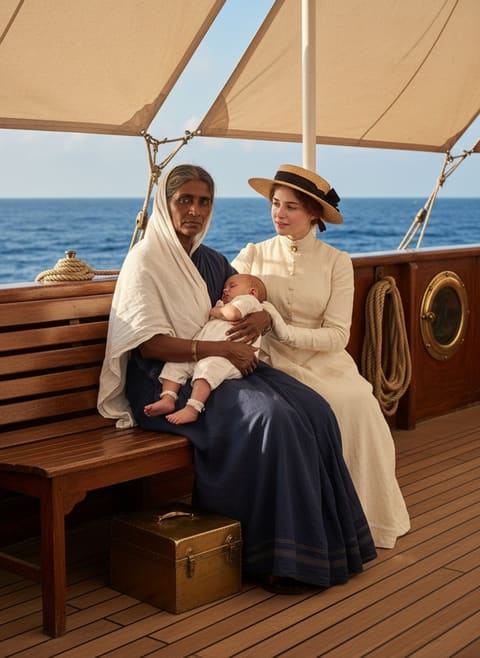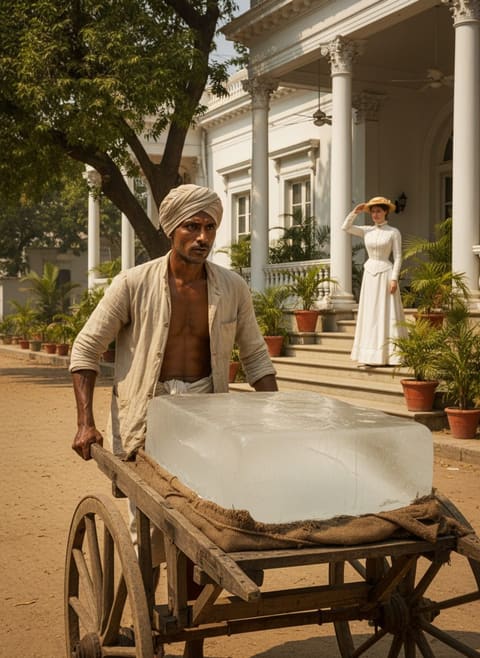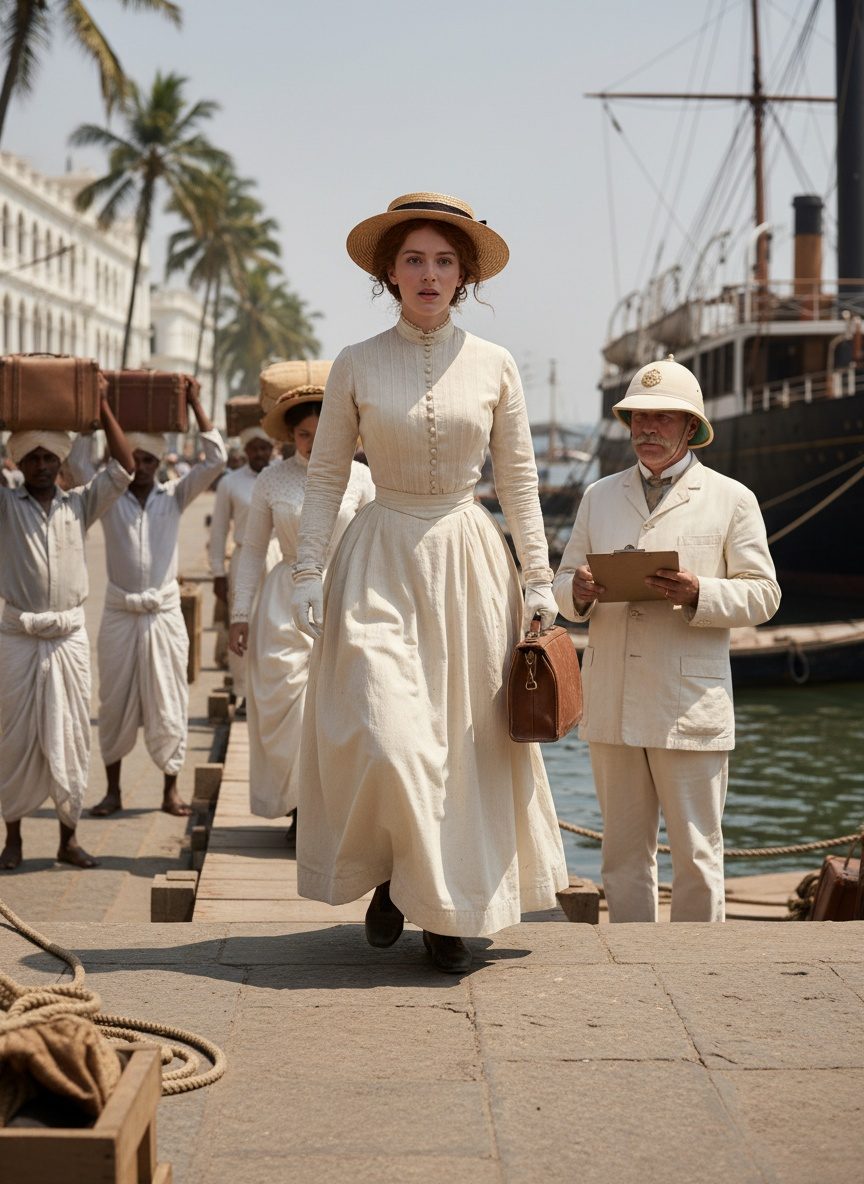
The dawn of an October morning in 1880 revealed a misty Bombay skyline, softly veiled in the early light. The Arabian Sea, tranquil yet teeming with the anticipation of a new day, lapped gently against the docks, whispering secrets of distant lands. Just as the golden hue began to brush over the sprawling city, a P&O steamer approached, its dark silhouette gradually defined against the lilac horizon. On board, a lively group of young British women prepared for their first steps on Indian soil, their hearts carrying a blend of hope, anxiety, and daring ambition. These women were part of the "Fishing Fleet," an annual migratory phenomenon embodying the dreams and societal pressure of young Victorian women in search of prospective husbands within the sprawling British Empire.
A New World Beckons
As the steamer docked at Apollo Bunder, the heart of Bombay's cosmopolitan confluence, the humid air, tinged with the scent of spices and sea salt, enveloped these intrepid newcomers. The cacophony of hawkers mingled with the earnest greetings from locals, marking a stark contrast to the misty cold of their English homeland. Here, they were met with the ceremonial garlands, a fragrant welcome that symbolized the intertwining cultures at play within the city's colonial tapestry.
The Fishing Fleet girls, often in their late teens and twenties, were driven by the unique socio-economic conditions of Victorian Britain, where demographics and tradition conspired against an easy pathway to matrimony. With more eligible men stationed overseas than there were suitable women to marry them back home, these young adventurers embraced the opportunity, propelled by tales of exotic lands and handsome officers whose professions promised both excitement and stability.
Once ashore, the women faced an immediate whirlwind of social engagements, designed not just for leisure but for strategic connections. Colonel-worthy ballrooms, tea parties under the sprawling banyans, and meticulously arranged dinner parties became their battlegrounds for courtship. To succeed in this endeavor, the Fishing Fleet girls were expected to be both demurely charming and strategically astute, navigating not only the nuanced hierarchies of British expatriate society but also the broader Indian cultural milieu overlaying their new environment.
Read next: When the Dhobi Wallahs Kept the Empire's Armies Clean
Love and Longing in the Empire
Each autumn, Bombay transformed into a social nexus where romance was intertwined with the pursuit of advantageous alliances. The city, with its blend of Gothic Revival and Mughal architecture, became a backdrop for personal dramas unfolding daily. Amidst the vibrant saris and military uniforms, British women's fashion blossomed with the colors of ambition and expectation.
The Fishing Fleet faced the paradox of choice and chance. While some women found love blossoming amidst the expansive estates of the hill stations or the bustling dinner tables of Calcutta and Madras, others confronted the harsh logistics of colonial realities. Their lived experiences were chronicled in elaborate diaries and letters home, filled with descriptions of whitewashed clubs, monsoon-fueled gardens, and the ever-present march of life in an alien yet enchanting land.
Read next: When Syed Ross Masood Made Forster See India Whole, 1906
Finding a partner was not merely a personal venture but often a communal exercise. The introduced gentlemen constituted civil servants, army officers, and occasionally wealthy planters, each shaped by their entanglements with the British Raj. These engagements, whether successful or not, frequently involved extensive negotiation—not just of affection but of culture and class. Success was marked by marriages announced in the local papers; failure faced a quieter, personal return journey to England as one of the unfortunate "Returned Empties."
The Unscripted Legacies
Not all tales of the Fishing Fleet reached fairy-tale conclusions. Some found themselves entranced by the vibrancy of the country itself, choosing to remain as spinsters woven into the fabric of Bombay. Here, life expanded beyond mere matrimonial pursuits, touching deeper into the cross-cultural dialogues that defined the times. Yet for others, the movement back across the ocean marked a silent return to conventional English social roles, their adventures reduced to family anecdotes or stories unwritten in the pages of history.
The phenomenon of the Fishing Fleet subtly yet powerfully traces the undercurrents of an age defined by both imperialism and changing femininity. While some succeeded in securing alliances that would elevate them within the rigid structures of British society, the deeper narrative lies within the complexities of these journeys. These women, treading boldly beyond geographical and societal constraints, did more than merely search for husbands; they ventured into unknown territories seasoned with new experiences, personal growth, and global linkages.
The stories of the Fishing Fleet offer a lens not only into the personal stakes of marriage and migration but also into the broader currents shaping Britain's imperial society. The real legacy resides in the individual choices and lives of those women navigating uncharted waters, their stories steeped in a determination that echoed far beyond the shores of the Empire.