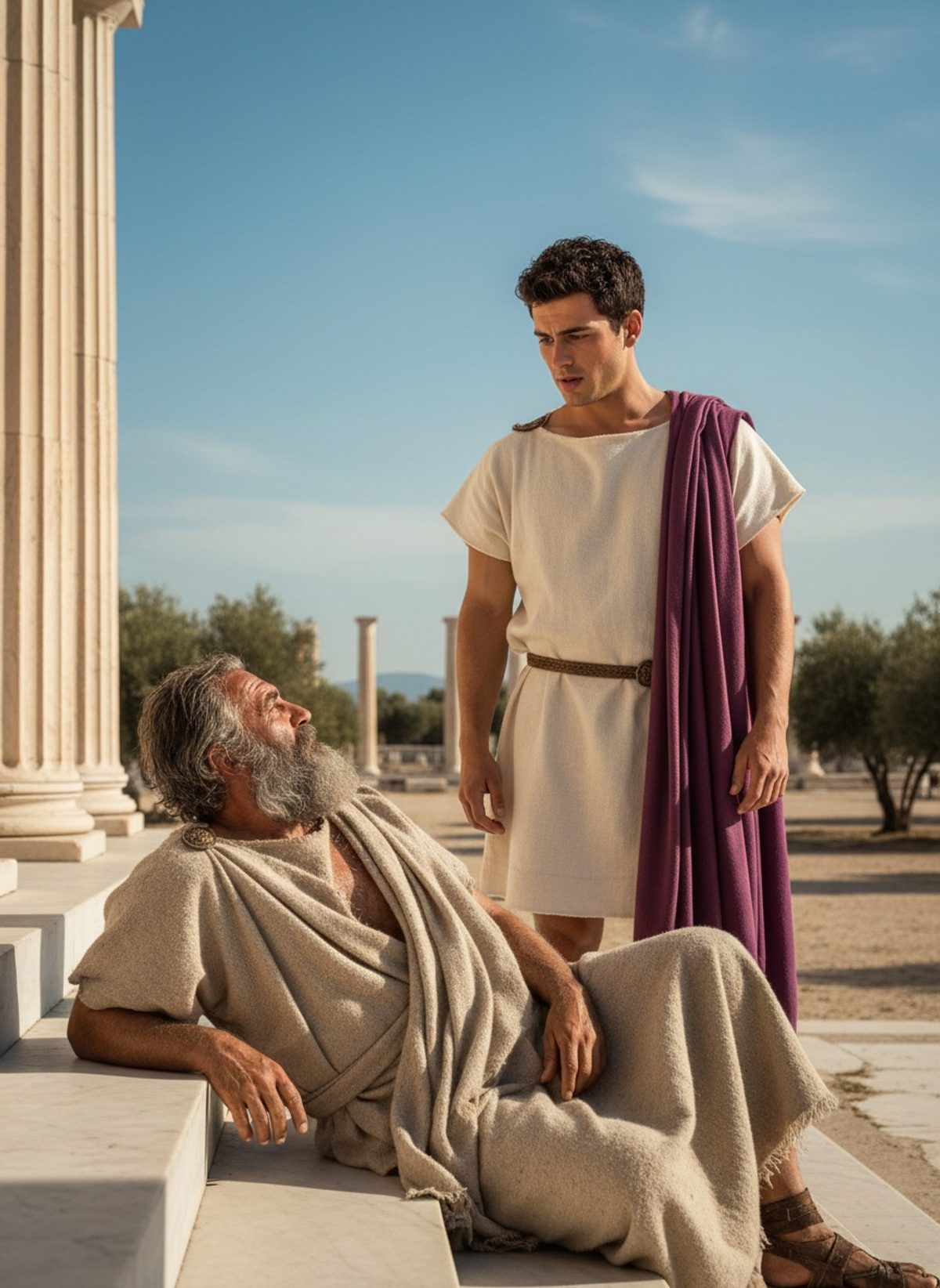
The people of ancient Athens had a voice. Aristides taught them to listen carefully.
The Shard That Spoke for a City
In the ancient world, democracy was a delicate dance, not a given. Athenian citizens wielded extraordinary power over the fate of their city and their peers. With a simple piece of pottery, an *ostrakon*, they could cast their votes to ostracize any citizen they deemed too powerful or dangerous to the democracy. Once someone’s name appeared 6,000 times—a significant fraction of the city’s free male populace—they were banished for a decade, exiled not for a crime but for the potential of one. In this intricate web of civic duty and caution, Aristides stood like a moral giant, known reverently as "the Just".
Aristides was an emblem of fairness in a society where fairness held the reins of governance. Yet, ironically, it was democracy's very mechanism that once sought to cast him into the shadows. This paradoxical moment in 482 BC left an indelible mark not just on his legacy, but on the fabric of Athenian democracy itself. Imagine the scene in bustling Athens: amid heated debates and impassioned speeches, a citizen approached the renowned Aristides with an *ostrakon* in hand, requesting a name. That name was none other than “Aristides.”
The Humble Hand That Wrote His Fate
The streets of Athens buzzed with the energy of its citizens. The sun beat down on groups discussing the city's future as they milled about the Agora. A middle-aged man, rugged and sun-tanned from his laborious work, approached a stranger renowned for his integrity in Athenian military and political life. This laborer had no idea he was requesting a favor from the very person he intended to exile. He held out the shard, his fingers dusty with red clay, and requested the name "Aristides" to be inscribed upon it.
Read next: Damon Walked Into the Cell. Pythias Walked Free.
Aristides, whose reputation for integrity was as undoubted as the marble columns of the Acropolis, did not flinch or recoil in indignation. Instead, he took the shard, its edges rough against his skilled fingers which had wielded both pen and spear, and quietly etched his own name onto the pottery. The craftsman, unaware of the identity of the man before him and focused purely on his civic task, was moved to confession. "I am tired of hearing him everywhere called 'the Just,'" he explained vaguely. Such is the burden of unyielding virtue—it oft goes unnoticed until it wears thin.
The Unseen Currents of Power
What drove the citizens to such actions? Unlike modern political maneuvering, ostracism required no wrongdoing. Breaking from personal vendettas or sensational accusations, it was a move to safeguard Athenian democracy from unchecked might. Aristides’ peers feared ambition turning toxic. The balance of power was fickle, easily undone by ambition, envy, or simple weariness towards pervasive integrity.
Ostracism was a democracy’s brake lever, pulling it with caution, but firmly when needed. As Aristides inscribed his name, the air around him was charged with palpable tension—each participant in the drama struggling with deeper societal currents. This simple act was not one of defeat but of profound self-awareness and civic responsibility, a personal sacrifice to preserve the very system he dutifully served.
Why Aristides Matters Today
The tale of Aristides and the *ostrakon* offers timeless lessons on governance, power, and justice. In a single act, he encapsulated the humility required of those who hold authority and the often overlooked burden of civic participation. Aristides' willingness to accept his potential exile reflects an understanding that sometimes, personal sacrifice for the common good is the epitome of leadership. In today’s world, leaders and citizens alike can glean wisdom from Aristides’ reaction—to temper power with justice and to act with humility even in the face of misunderstanding.
As we ponder the serene and timeless face of Aristides carved in plaques and reliefs, his narrative whispers a truth that transcends centuries: Leadership and justice must walk hand in hand, each tempering the other. In every age, democracy remains as fragile as a clay shard—a vessel for the will of the people, yet easily shattered if stripped of its honorable guardians. Aristides' legacy serves as a beacon for all, illuminating the path of integrity, silent sacrifice, and the profound simplicity of true justice.