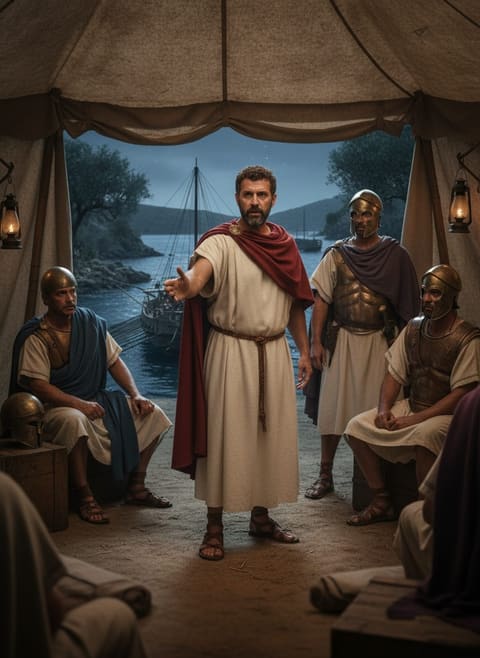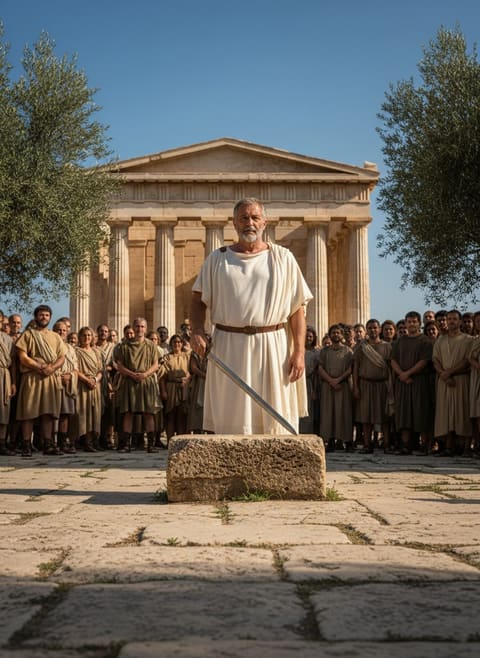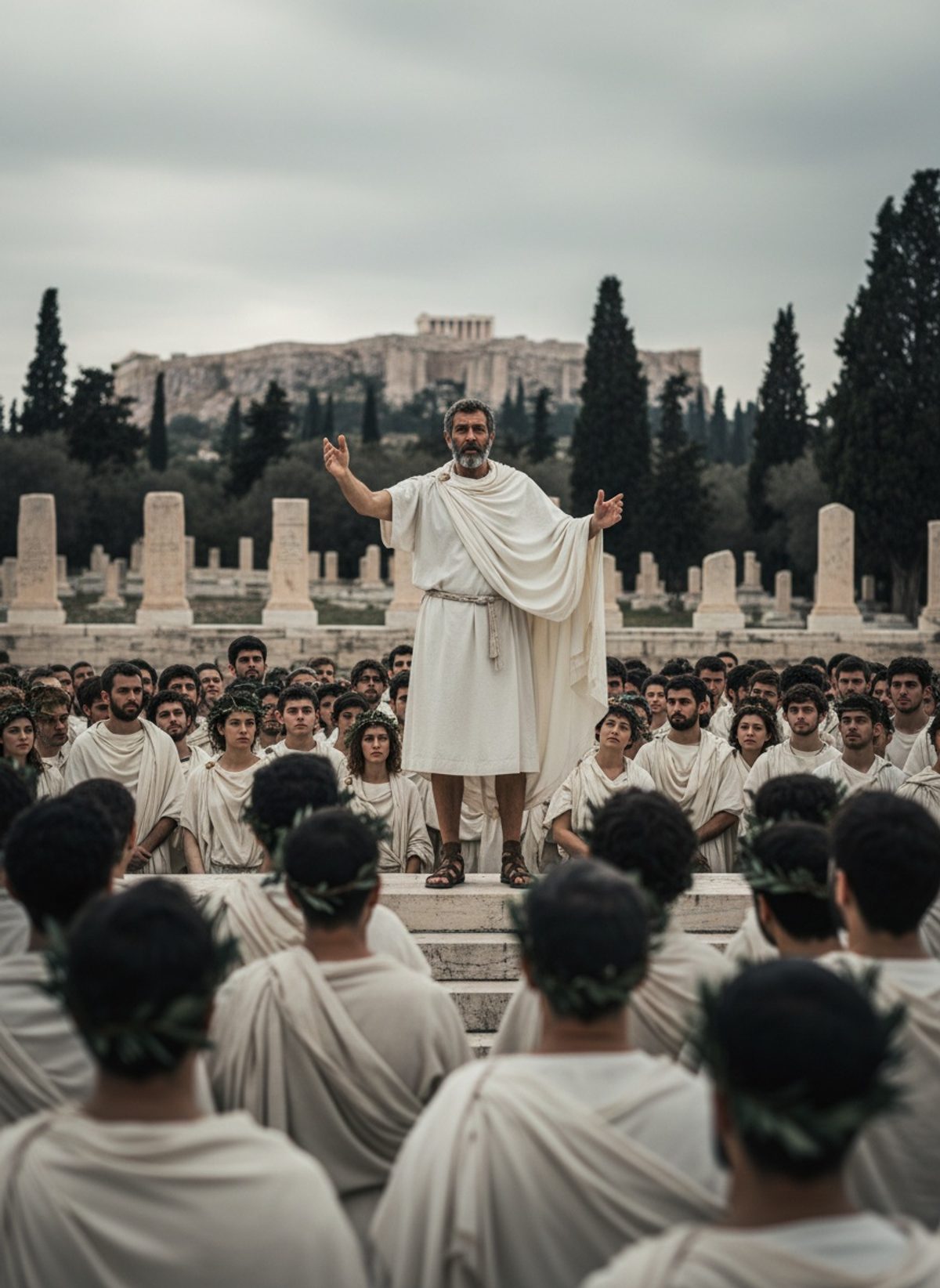
The chill of winter hung over Athens in 431 BC, casting a somber shadow across the city as dusk descended upon the heartland of democracy. The gentle murmur of the Aegean Sea met the hushed whispers of the crowd gathered at Kerameikos, Athens’ ancient cemetery, where a ritual so familiar yet so profound was about to unfold. The amphitheater of mourners was there to honor the fallen — the first soldiers of the Peloponnesian War, Athenian citizens who had given their lives in the early battles against Sparta. They awaited words of solace, words of courage, words that would stir their souls. Into this heavy air of expectation stepped Pericles, not just a statesman, not a king or demigod, but a man of eloquence, understanding, and vision.
Pericles, the son of Xanthippus and Agariste, born around 495 BC, was a beacon of Athenian intelligence and culture. His father's triumphs and his mother's lineage provided him with both prestige and potential. Educated by the greatest minds of his era — philosophers who questioned the fabric of existence itself — Pericles had a mind sharpened and honed to not only lead but inspire. This moment in Kerameikos, however, was to test not just his leadership but his ability to communicate a new understanding of power, of people, and freedom.
Amid the soft lament of lyres, as the winter light faded, Pericles took his place, signifying the transition from mourning to meaning. His presence was not one to brighten with grandiose gestures or divine proclamations but to illuminate the significance of the citizenry in this nascent democracy. As he spoke, his words floated like embers from a forge, glowing with the heat of fresh ideas. Unlike any oration before it, Pericles avoided the glorification of conquest or aggrandizement of mythic figures. Instead, his focus was resolutely human, grounded in the clay of everyday lives.
"Our ambition," he declared with conviction, "is for our city to be admired for something far greater than its past conquests. We honor the fallen for embodying virtues that exemplify our way of life." As he continued, he stripped away the conventional pomp of heroic deeds to expose a radical core: the essence of democracy depended on its citizens, ordinary men who upheld freedom as a flame worthy of any sacrifice. Every word he chose was deliberate, a reflection not only of Athens’ aspirations but of its communal soul.
Read next: Polycrates Held the Aegean. One Letter Ended Him.
This watershed moment in rhetoric did more than comfort the bereaved. It transformed the role of Athenian power, redirecting it inward. The city's glory, according to Pericles, lay not in the fortunes it amassed or foes it vanquished, but in its capacity to nurture citizenship, to be "an education to Greece." He extolled Athens, not as a city of stone, but as a living, breathing entity, defined by its citizens' freedom and collective courage.
The implications of Pericles’ Funeral Oration resonated far beyond the funeral pyres. It echoed the ethos of his era, aptly known as the "Age of Pericles," where Athens flourished as a cradle of culture and intellect. Under his guidance, initiatives flourished that illuminated the Acropolis with the Parthenon and flooded the streets with the ideas of Socratic dialogues. His leadership fused politics with philosophy, art with governance, bringing the intangible values of democracy into tangible form.
Yet, this elevation of the ordinary citizen as a cornerstone of greatness was not without its controversy. Critics accused Pericles of populism, suggesting that his democratic ideals were mere tools for consolidating personal power. However, the groundwork he laid for participative governance was undeniable, a bold framework from which future generations could dream expansively and act purposefully.
Read next: Pytheas Sailed Beyond the Edge of the World. He Was Right.
In hindsight, the courage spoken of on that cold day amidst graves and ashes transcended the immediacy of war. It was not merely the courage to face the Spartan sword but the courage to reexamine and redefine what it meant to live and die as a free person. In this light, Pericles’ oration reached beyond the here and now, planting seeds of civic identity that would rise again in future republics across history. Through his words, he demanded a reexamination of the individual's role in the communal tapestry, daring to empower the voiceless with the simple truth of their collective sovereignty.
The enduring power of Pericles’ message lies in its confident step away from tradition, an assertion that the strength and spirit of a people rest not in the hands of a select few, but in the collective heart of its populace. Listening to his speech was not just witnessing the honoring of the dead but experiencing the inception of a democratic ideal that would ripple through time, a compelling testament to the worth of every citizen's freedom – a value ancient Greece had not so explicitly, so plainly cherished before.
Even as Pericles himself succumbed to the devastating Plague of Athens in 429 BC, his intellect flickered on like an eternal torch in the halls of history, guiding future generations toward a horizon where human dignity and democratic ideals remain enduringly aspirational. In the quiet echoes of that wintry day in 431 BC, there lies the cornerstone of our understanding of citizenship and freedom today, reminding us that the words we choose can indeed alter the course of civilization.