The sun hangs heavy over the North African steppe, casting long shadows across the land in the late afternoon haze. A dry wind whispers through the scrub, curling dust into tiny whirlwinds that dance across the arid expanse. This is a land on the brink of transformation, a terrain as harsh as the history it harbors. It is the year 695 AD, and a formidable force brews on the horizon, threatening to reshape this stark landscape forever. Yet, it is here amid the rocky plains and sparse vegetation that the Berber queen known as Dahia al-Kahina will make her most defiant stand.
The Prophetess from the Mountains
The phrase "Dahia al-Kahina" stirs images of mystique and power. Al-Kahina, meaning "the prophetess", speaks volumes of both reverence and fear. Born into a Berber tribe that claimed lineage from the eastern Mediterranean Jews, Dahia was a figure who merged leadership with prophecy - a rarity in the patriarchal frameworks of her time. Her home, the Aures Mountains, fortified and isolated, gave her a commanding vantage point overlooking the broad expanses of what we now know as Algeria and Tunisia. From this citadel, Dahia wielded her influence, uniting the various Berber tribes who, though fiercely resistant to domination, were now faced with a new, formidable adversary: the advancing Arab Caliphate.
For years, the Arab armies had swept across North Africa in a relentless wave of conquest. They fortified their presence in the once-mighty cities of Carthage and Roman Africa, subsuming cultures and economies into the burgeoning Islamic empire. However, their victory was not destined to be uncontested. As the Caliphate armies approached, they encountered Dahia, a leader with vision far clearer than any desert mirage. Her reputation for foresight, derived from her alleged prophetic abilities, only enhanced her stature amongst allies and enemies alike.
A Scorched Strategy
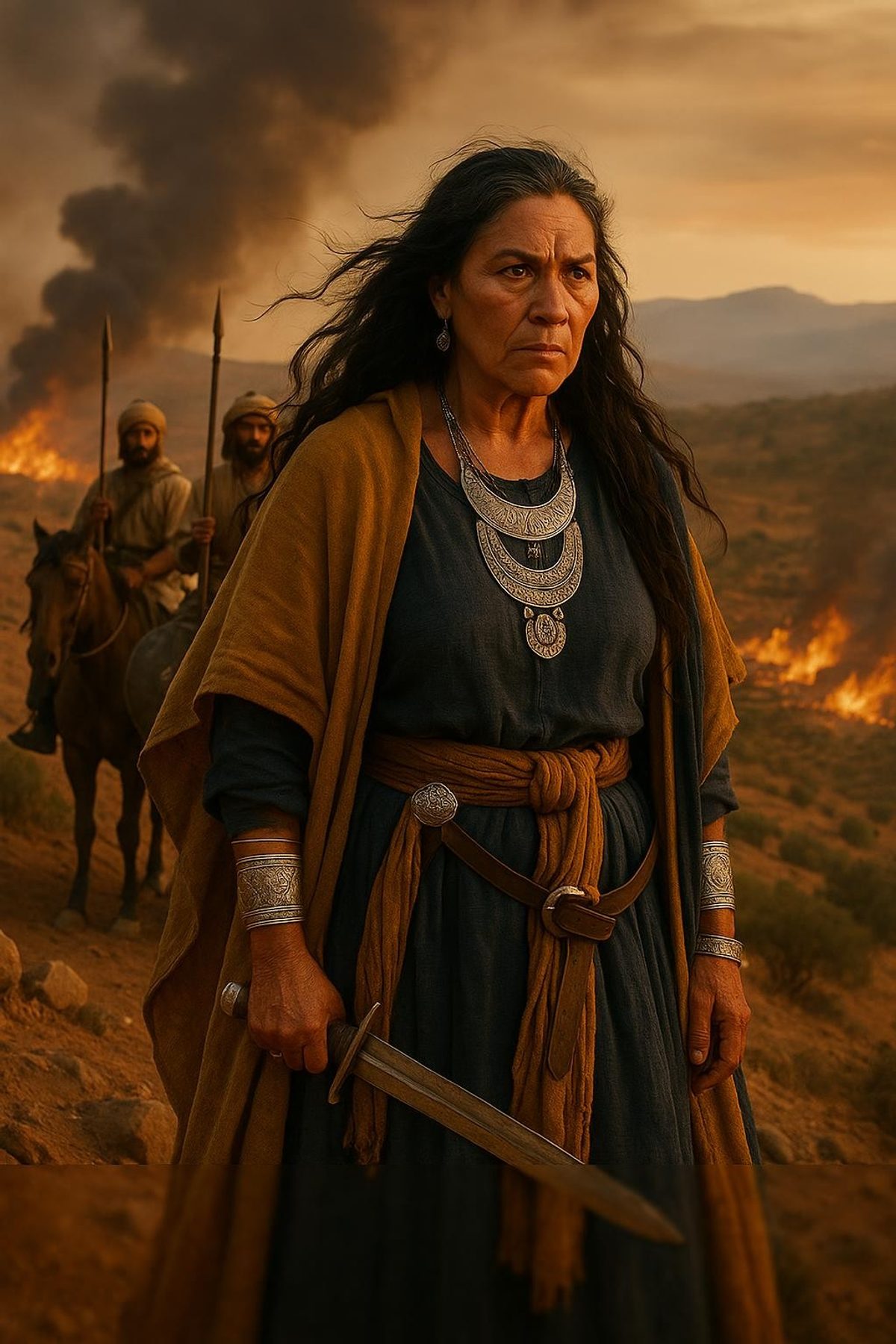
As Dahia surveyed her lands from the peaks of the Aures, she understood that direct confrontation with the Arab forces would lead to inevitable defeat. The Berber tribes, despite their valor, lacked the cohesion and resources to withstand the Arab onslaught in open warfare. In an audacious strategy, Dahia decided on a tactic that would become her legacy: she scorched the land she loved. In a deliberate act of rebellion, she instructed her followers to burn crops, destroy wells, and decimate the very resources that sustained life in the region.
Read next: Mansa Musa Gave Away So Much Gold It Broke Egypt
This was a gamble that bordered on the desperate. The aim was simple yet devastating; by starving the advancing army of supplies, she could delay their progress and buy her people precious time to regroup and strengthen their defenses. Fields that had provided sustenance for generations were consumed in flames, reducing vast tracts of fertile land to barren ashes. The land itself became an inhospitable specter that not even the most hardened of soldiers could endure for long.
This strategy inflicted severe logistical challenges on the Arab armies, accustomed to living off the land as they expanded their territories. Without food or water, the once-unstoppable force now faced attrition on hostile terrain, hampering their advance into Berber strongholds. For five years, this act of scorched earth sufficed to hold at bay one of the mightiest empires of the era—a testament to the tactical ingenuity of Dahia al-Kahina.
A Queen's Last Stand
Despite the temporary reprieve, the balance of power was not in Dahia’s favor. After years of delaying tactics, fortune eventually favored the Arab forces. The tide shifted as exhaustion amongst the Berber tribes set in, and internal discord began to unravel the fragile alliances Dahia had forged. The Arabs, led by the resourceful Hasan ibn al-Nu'man, finally breached the resistant barrier Dahia had set in place.
Echoing through the al-Kahina's legacy is her final battle, fought with the ferocity and courage of a warrior sworn to her people. Legend purports that she fell near the present-day town of Khenchela, her death marking both an end and a beginning. Her demise cleared the path for Islam to spread more definitively across North Africa, weaving itself with the indigenous Berber culture to form a new societal fabric.
Courage alone, as embodied in Dahia's fight, was not enough to alter the course of history. Yet her actions stirred a legacy that resonated in Berber tradition. For her people, she became an emblem of resistance and a symbol of the enduring spirit of indigenous North African culture, fiercely proud and distinctly independent throughout history.
Lessons in Resilience
The tale of Dahia al-Kahina is one not just of warfare, but of steadfastness and sacrifice. In choosing to torch her own lands, Dahia leveraged a profound understanding of her limitations and wielded them with tactical brilliance. Her story speaks to the resilience found within acts of rebellion and the often-overlooked narratives of women who have shaped the course of history. The scorched earth policy she articulated was a strategy born of necessity, revealing a leader's vision that looked beyond immediate devastation to focus on long-term resilience.
In today's world, where cultural identities are constantly under negotiation and where state sovereignty faces new threats, the saga of Dahia al-Kahina becomes even more pertinent. Her story underscores the complexity of defending autonomy in the face of overwhelming forces. It is a lesson in the stark choices leaders must often make and the lengths to which they will go to preserve the essence of their people. Thus, the legacy of Dahia al-Kahina endures, carved into the rocky landscape of North Africa, echoing a narrative of indomitable resistance and the unyielding spirit of survival.