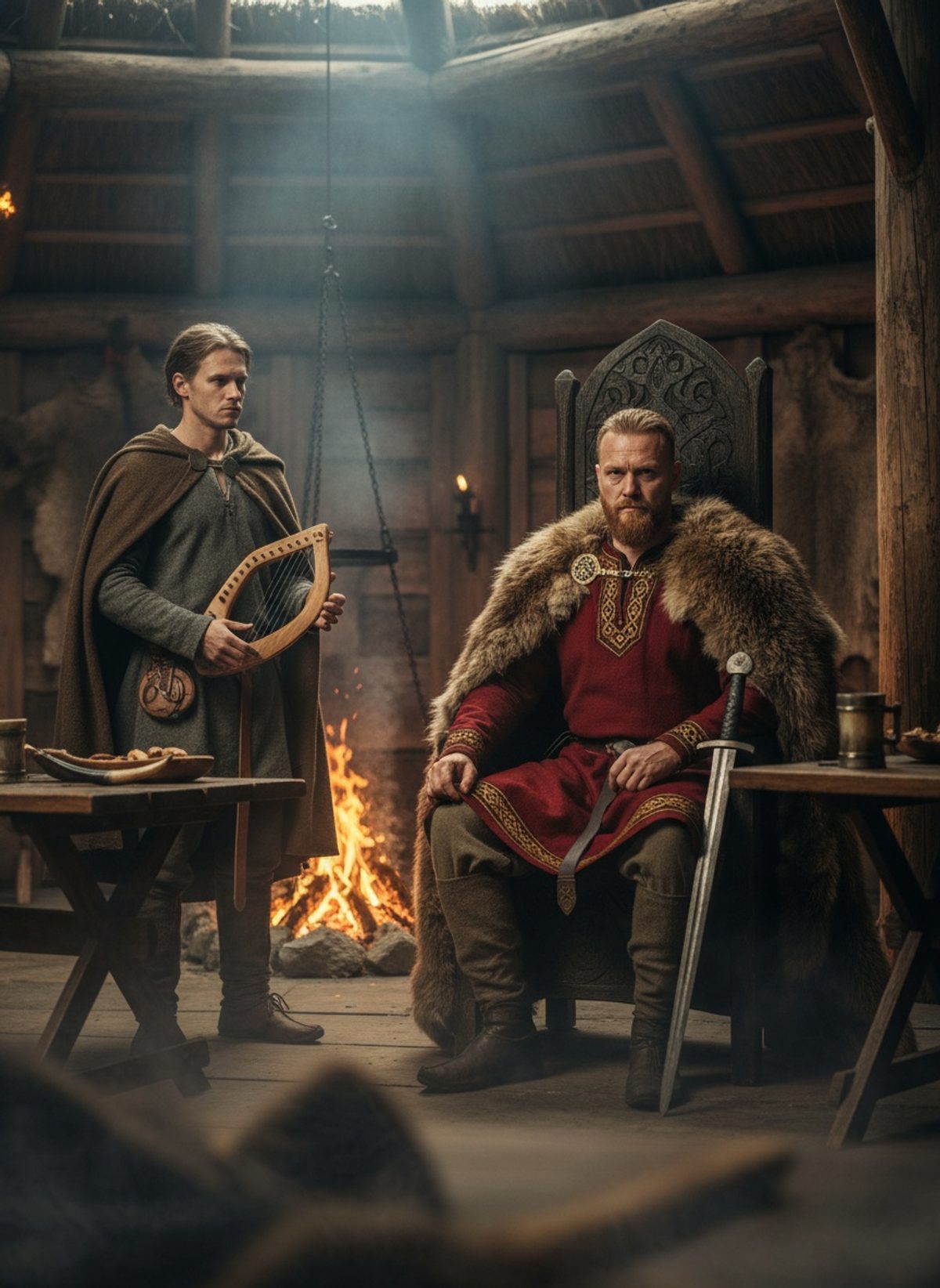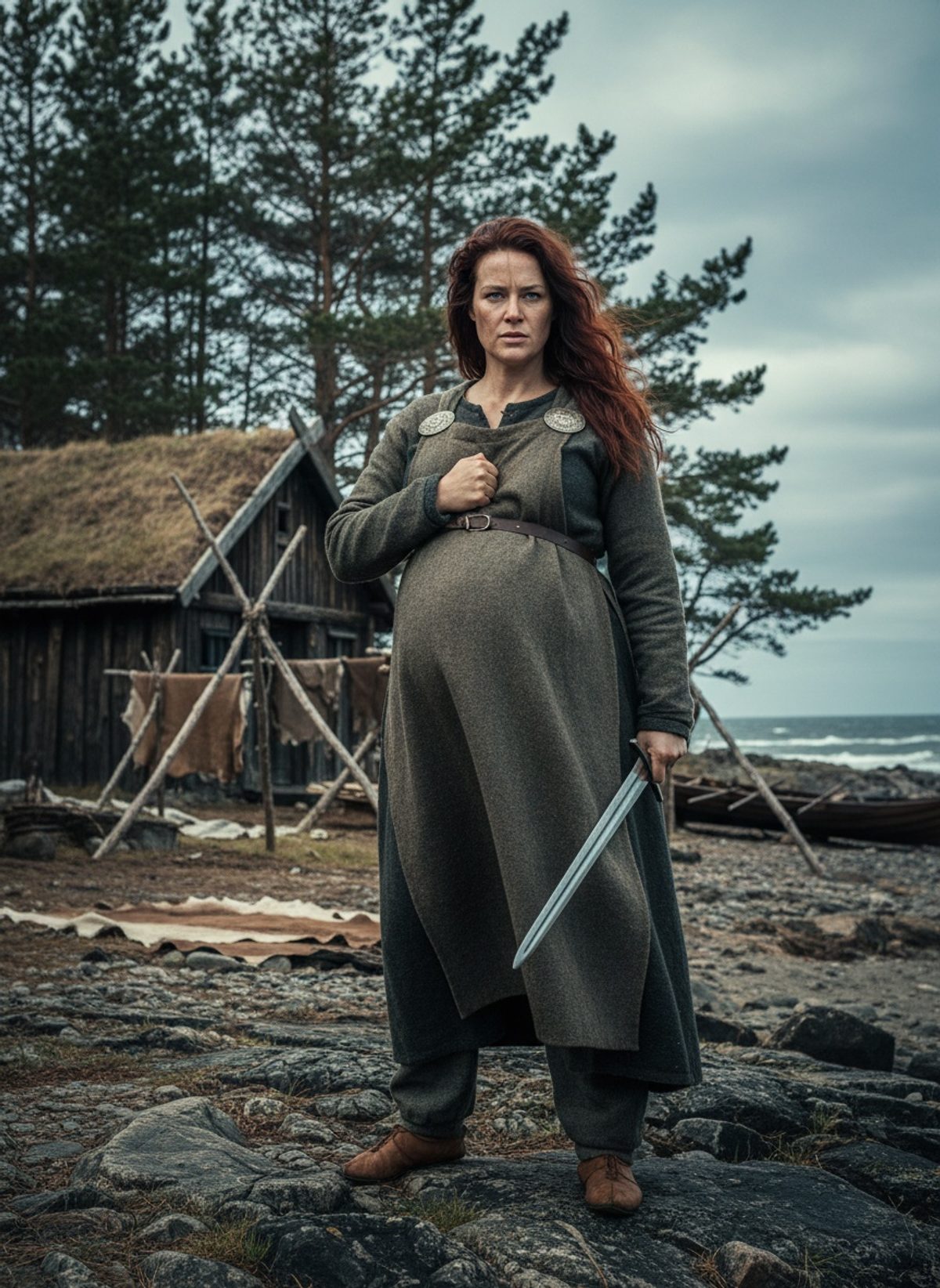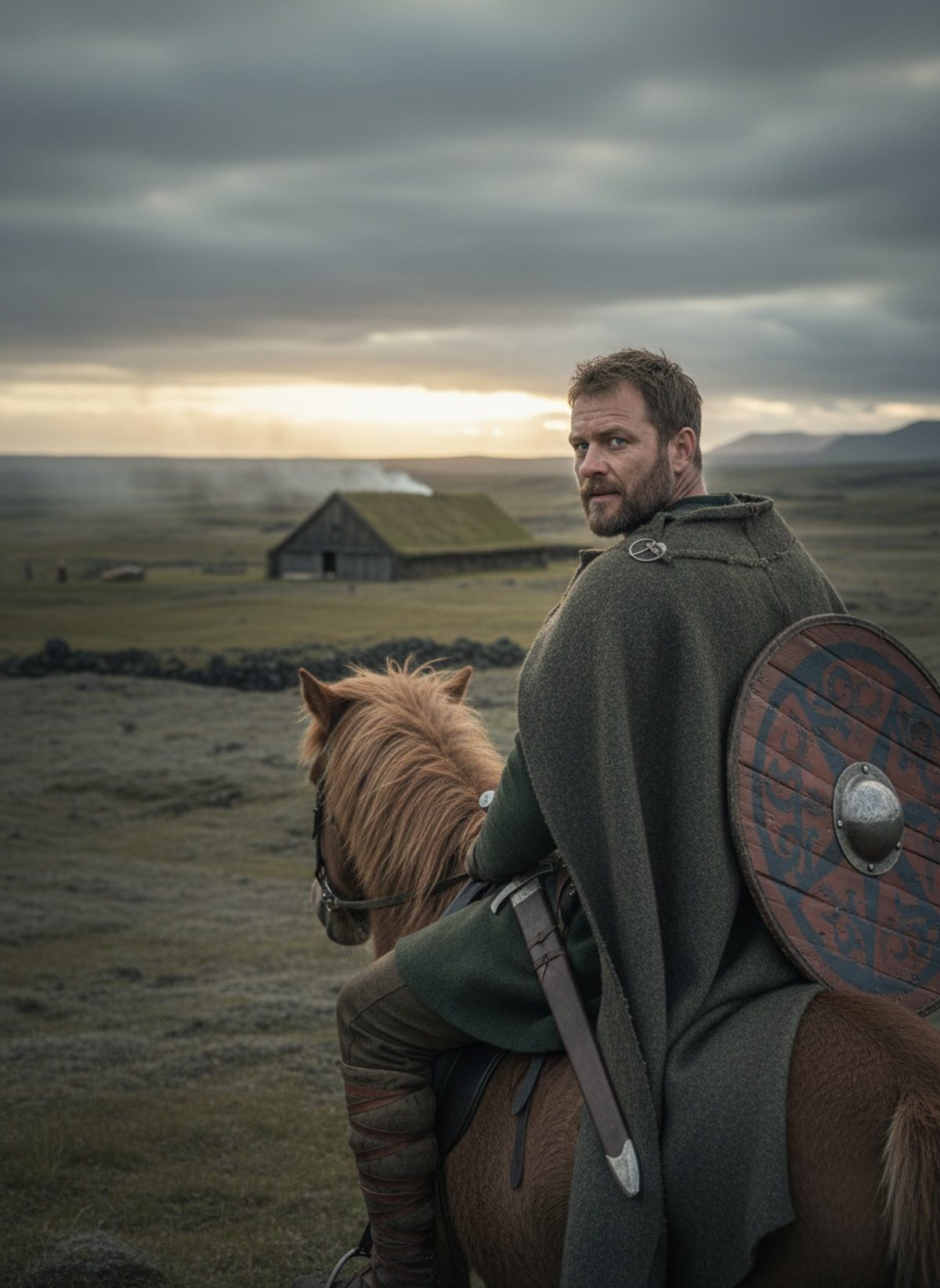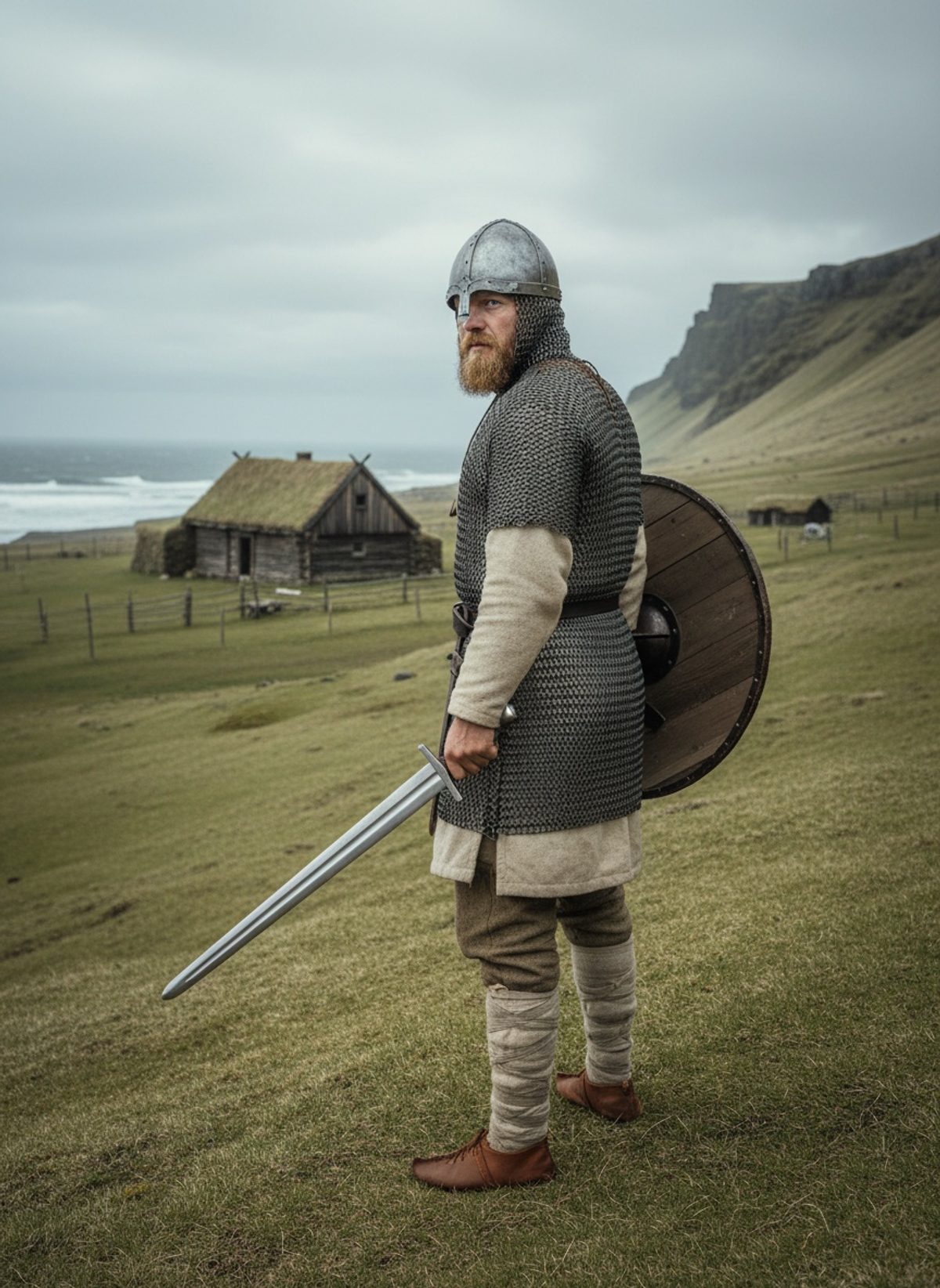
982 AD. The chilling breeze swept across the Icelandic coastline, rustling through the rugged landscape that unfolded beneath the overcast sky. In the crisp morning light, Gunnar Hámundarson, a formidable chieftain well-versed in the art of war, prepared for a journey of consequence. His steed stood by, the air lively with the imminent sense of departure. This was supposed to be the path that would lead Gunnar away from the life he knew, from the farm known as Hlíðarendi nestled in the hills.
Gunnar was no ordinary Norseman. His name was spoken with a mix of reverence and fear across the land. Renowned not just for his prowess as a warrior but also for his unparalleled skill in wielding the atgeir, a type of spear unique to the Norse fighters, he commanded respect in the ever-turbulent societies of the Viking Age. His name echoed the valor spoken of in the sagas where heroes lived eternally through their deeds.
His life, however, had spun into turbulent waters after a series of events that embroiled him in a vendetta, typical of the complex feuding that characterized Icelandic society. The Icelandic Althing, one of the oldest surviving parliamentary institutions in the world, was the court that had condemned him. Exile was Gunnar’s sentence, the forced departure into the unknown or perhaps, an unfriendly territory where survival was anything but certain.
As he rode towards the harbor to board the ship that was to spirit him away, a curious thing happened. His faithful horse, long-used to the dips and rises of the land they traveled together, stumbled. It was an unusual misstep, given the beast's sure-footed nature. Gunnar turned, eyes catching the familiar sight of his farm nestled in the green and gold hills of Hlíðarendi. In that moment, every echo of laughter and work, every memory etched into the soil, surged through him like the tide crashing against the shore.
Read next: Hallfred Faced the King. He Would Not Change a Word.
"Fögur er hlíðin svó að mér hefir hon jafnan í hugum verit, en sé ek eigi svá at ek fara mega í brott," Gunnar reportedly said. The translation of his poignant words is often cited among historians: "The hillside is so beautiful to me, as it always was, that I shall not go away." It was in that fleeting yet eternal glance that Gunnar made the choice that would cement his legend.
Defying the edict of the Althing, Gunnar turned his horse back towards Hlíðarendi, embracing the fate he knew with an intimacy denied to those who leave their home. What followed in the days after would be told and retold, not just for the grim finality but for the fierce loyalty to land and legacy it demonstrated.
Gunnar’s refusal to leave sealed his fate. His enemies, emboldened by the law that made him an outlaw, gathered to attack his homestead. But Gunnar was no easy quarry. The vivid accounts of his defense describe a man who fought with the spirit of ten warriors, his atgeir flashing with lethal precision. Yet even as he repelled the onslaught, Gunnar knew the inevitable tide was against him — he was one against many.
On that fateful last stand, history does not forget that he fought valiantly, his skills and resolve casting fear into the hearts of his assailants. There are tales from the Njáls saga that whisper of uncanny powers, of axes that sang through the air guided by the hand of a master. How much is true and how much is myth crafted in the telling of sagas is for the scholars to debate. What remains is the indelible mark left by a man who chose death over dishonor, a man at peace with his choices, standing firm on his land where he wielded the power to shape his story’s end.
Gunnar’s defiance echoes through time, beyond the written pages of medieval manuscripts or the retelling around hearth fires. It speaks of human survival not just in physical terms, but in the essence that every person yearns to hold their ground, to defend their story even when the world calls for surrender. Iceland, then a young nation, had its narrative shaped by such instances of defiance, where a man’s bond with his land became the soil from which cultural legacies stemmed.
The saga of Gunnar Hámundarson remains more than a mere historical footnote. It opens a window into the soul of a warrior who chose his end with clarity, profoundly shaping the dialogue on duty, courage, and belonging. The tale survives because there is a part of Gunnar's truth in everyone who has ever stood defiant in the face of overwhelming odds. And so, as we reflect on this thousand-year-old story, we might find a deeper understanding of ourselves in the hills of Hlíðarendi, where Gunnar’s spirit still rides with the wind.