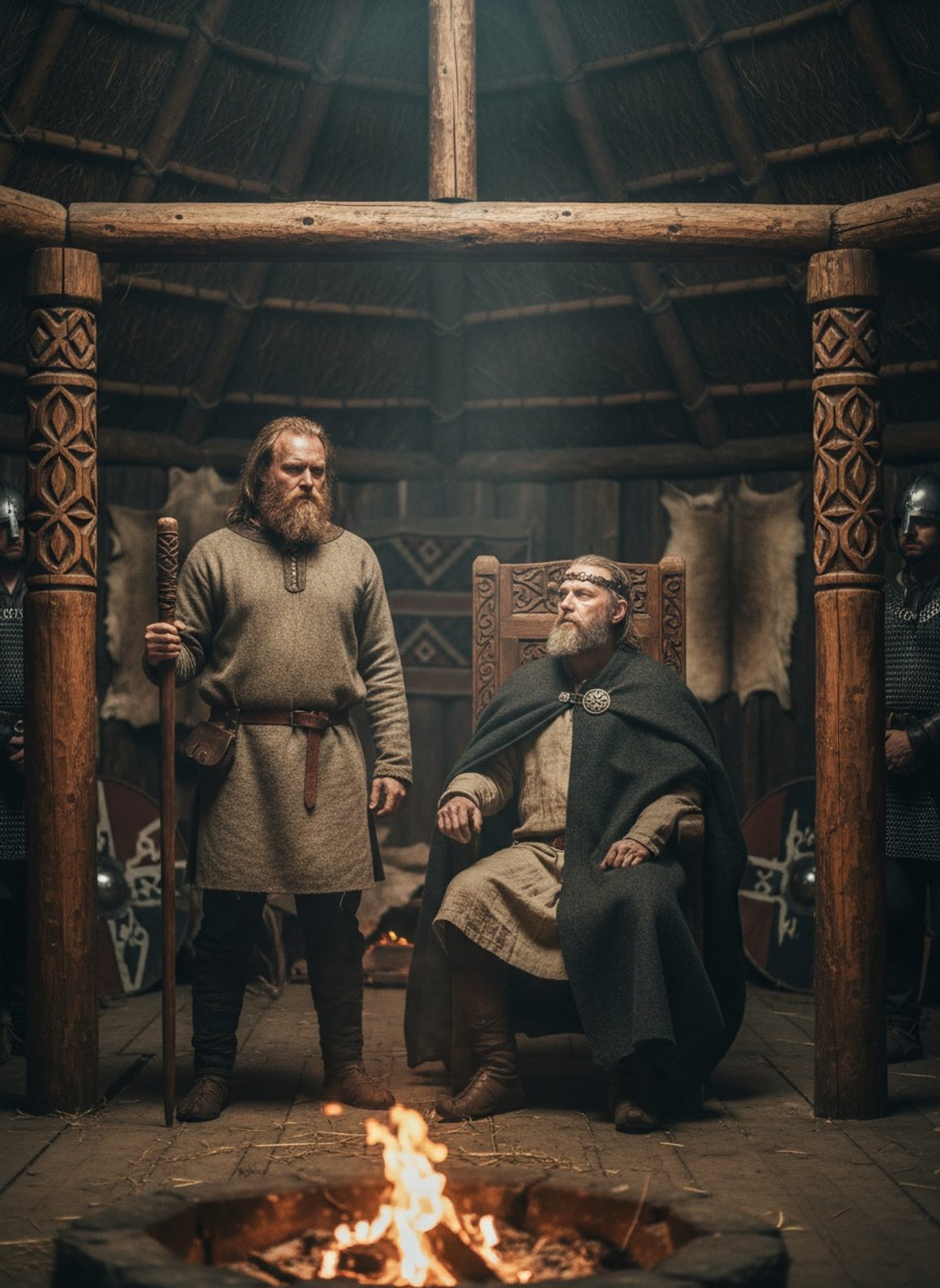
Summer of 990 AD. The skies wore a cloak of sapphire blue over Iceland’s rugged landscape.
The Man of Many Talents
Gunnar Hamundarson, a name echoing through the sagas of the Viking Age, was a man of prodigious skill. Known across Iceland not just for his bravery in battle but also for his prowess in less violent pursuits, Gunnar was a master of the bow and arrow, an agile swimmer, and strangely for a Viking era warrior, a poet. Described as being strikingly handsome, he was a figure who could inspire support, or envy, with equal ease.
His talents were not confined to the battlefield alone; tales of his abilities are scattered throughout *Njáls saga*, a saga rich with the flavor of Icelandic tradition. His stubborn locks of fair hair, together with his warm demeanor, only added to the spell he cast over those who were fortunate enough to cross his path. He was a man blessed by destiny, and yet, fate is a fickle mistress, easily courted by fortune and misfortune alike.
The Bloody Feud and the Sentence
In an age where every insult was perceived as a deadly affront to honor, Iceland was a turbulent place where grudges readily transformed into lethal vendettas. Feuds were a fixture of Viking life, often erupting into deadly skirmishes that claimed lives and bred resentment across generations. Gunnar, with his amiable nature, was no stranger to conflict.
Read next: Leif Eriksson's Father Was Banished. He Sailed Anyway.
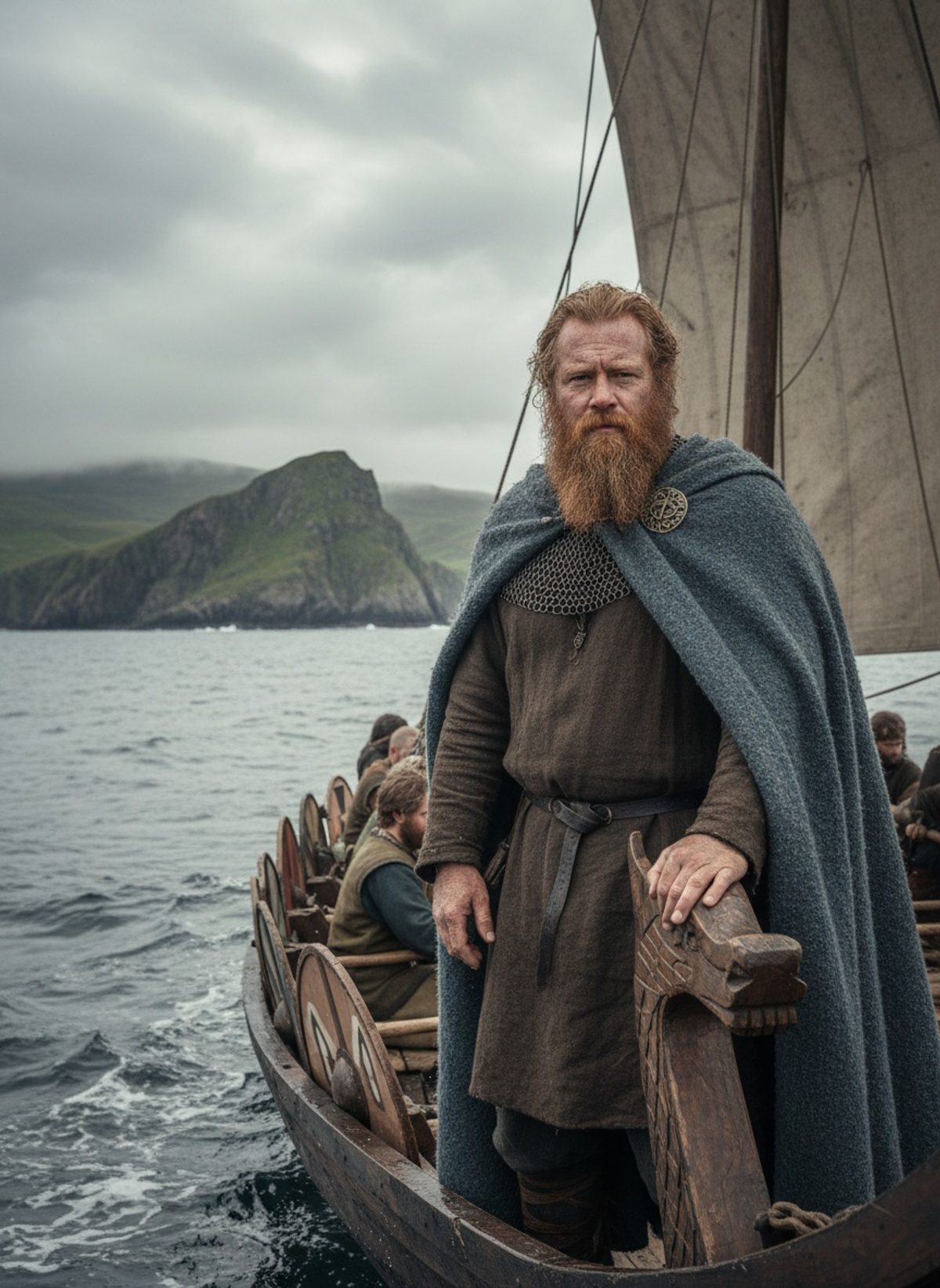
It was during one such feud — a tangled series of events involving Viking politics, family honor, and stark betrayals — that Gunnar found himself condemned to exile. The sentence, handed down at the Alþingi, Iceland’s open-air assembly, was seen as a solution to end the cycle of violence. Exile was, in some respects, a death sentence—the seafaring journey it entailed fraught with peril and uncertainty. Yet, it presented an avenue for Gunnar to preserve his life and end the bloodshed. In this, the laws of the land had been just; he was commanded to leave the shores of Iceland for three years, a hope for peace amid the chaos.
The Pause at the Shoreline
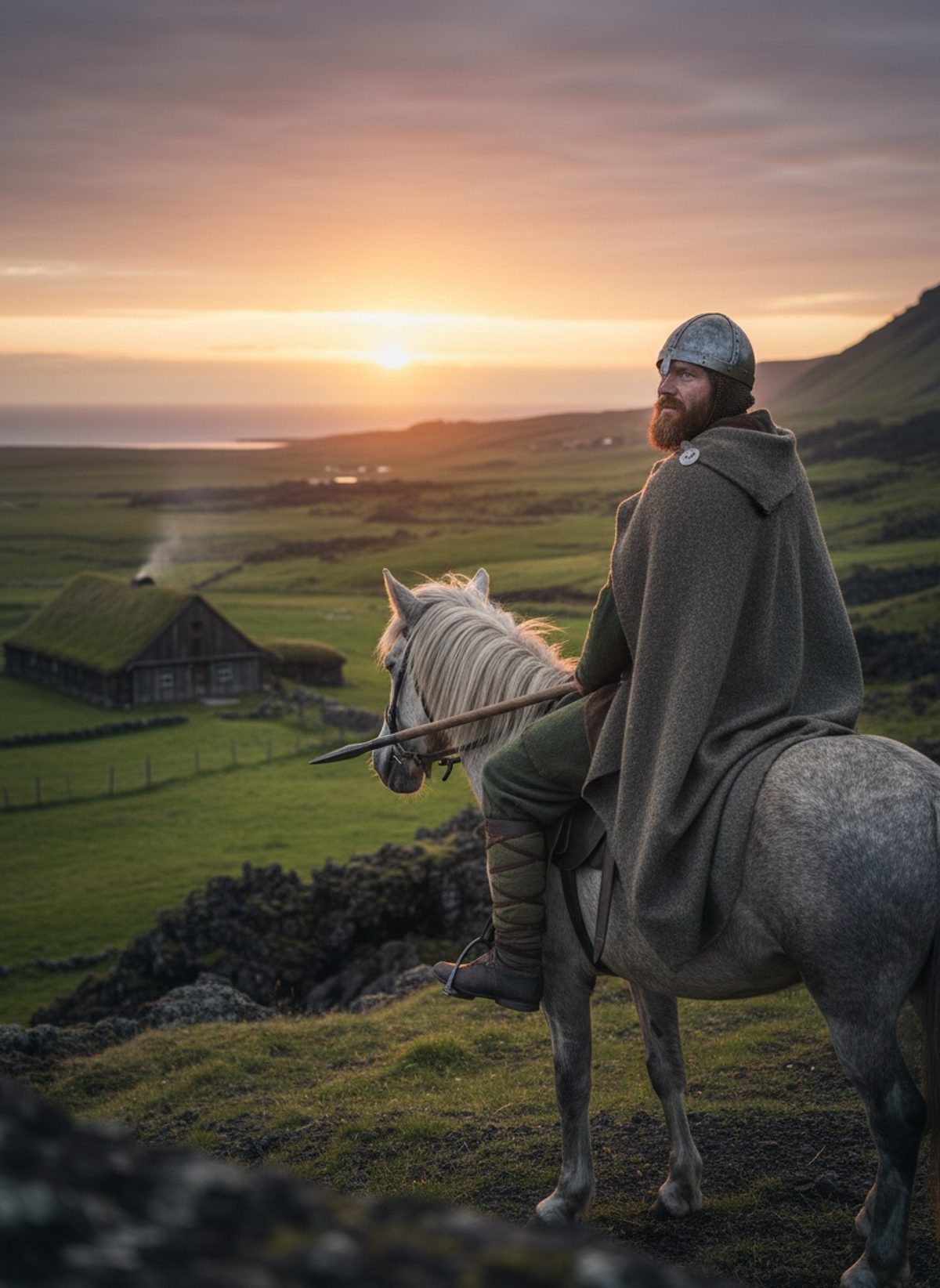
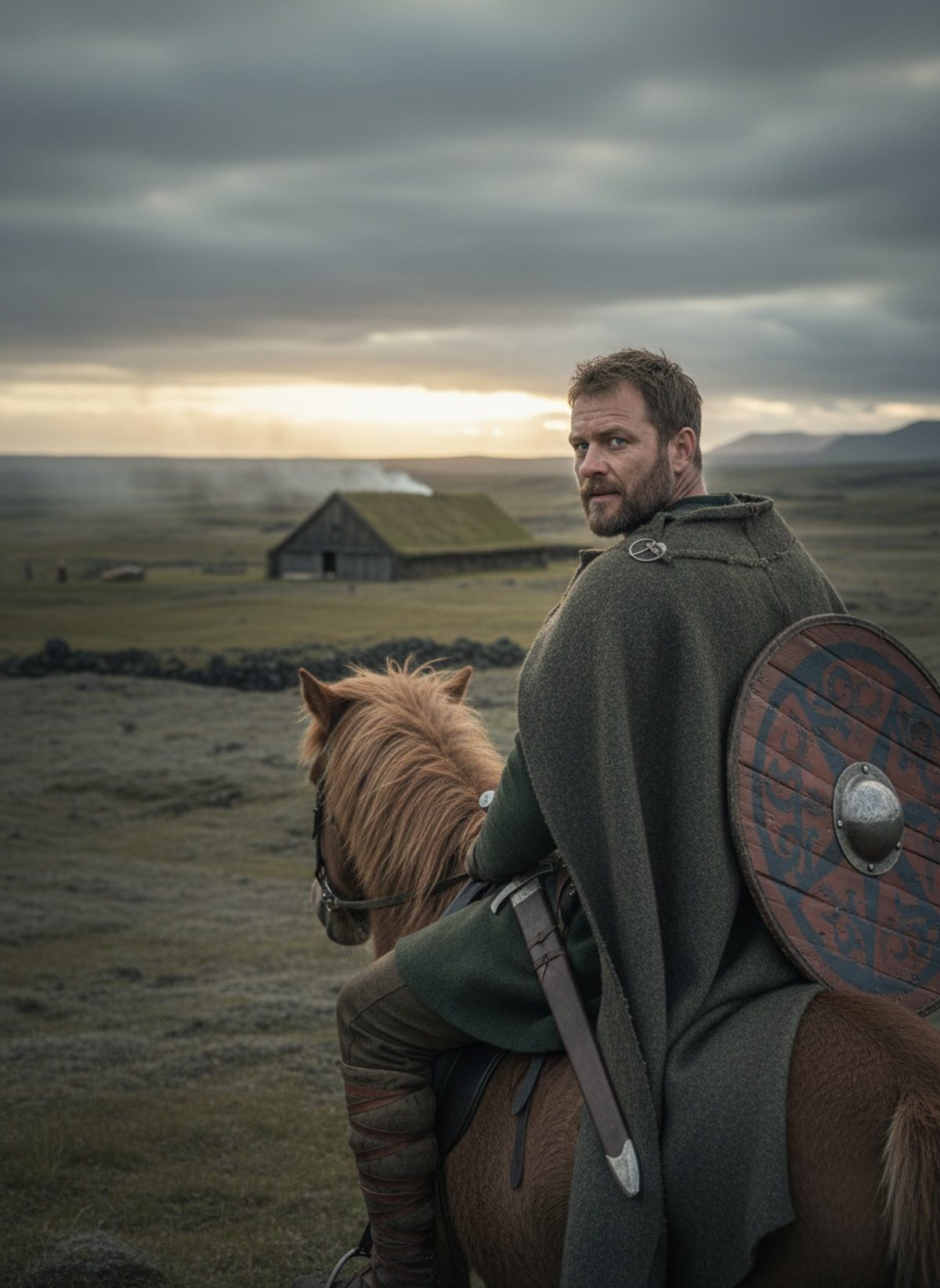
On the day set for his departure, Gunnar readied himself for the voyage that would carry him away from all he knew and loved. Mounting his horse with the resolve of a warrior, he left for the shore where a ship awaited his exile. Yet, as he reached the heights overlooking Hlíðarendi, his beloved home nestled in the lush Icelandic countryside, doubt crept in.
It was here, standing on the precipice, that Gunnar felt the weight of his sacrifice. The fields that spread before him like a sea of green, the gentle sway of the barley in the summer breeze, the distant silhouette of his farmhouse nestled against the mountains—it was all a part of him. The serenity of Hlíðarendi was irresistible.
With one last look, he allowed himself to absorb the very essence of the land that had nurtured him from youth. Turning his back on it felt akin to tearing away a portion of his very soul. The previous determination shattered, lost amid the beauty that lay spread out before him. Gunnar turned his horse and rode back, choosing the embrace of familiar lands over the uncertainty of life abroad.
The Last Stand at Hlíðarendi
By choosing to stay, Gunnar knowingly walked back into a storm of retribution. His foes were many, and they did not forget. It wasn't long before the hammer of vengeance fell upon him. While living out those final days, Gunnar again showed why he was revered in song and tale.
The assault came as expected. His last stand at Hlíðarendi was etched into the saga—the image of Gunnar, fighting valiantly on home soil, wielding his sword while arrows rained down, a testament to his indomitable spirit. It was said that he fought with such ferocity and unmatched skill that it inspired awe even in his enemies. Despite his unmatched prowess, he succumbed to numbers too great to overcome. The attackers’ success was bittersweet; in killing Gunnar, they had extinguished one of the brightest flames of their time.
The Choices We Make
Gunnar's story is not just a shard of history, but a profound reflection of human nature. His decision to reject exile in favor of a perilous homecoming was an act of defiance against destiny—a profound statement of his love for the land and life he had crafted. Gunnar’s choice reminds us what it means to confront the irrevocable decisions that define a lifetime.
In the end, Gunnar Hamundarson’s life and death tell the tale of a man who lived in pursuit of honor, for which he would sacrifice everything. The echoes of his choice reverberate beyond the icy plains of Iceland and through the corridors of time. His refusal to abandon his home when all pressures urged him to leave shows the boundless depth of his connection to the land and spirit of Iceland—a legacy that still calls to us from across the centuries, urging us to reflect on what defines our own lives.