January 22, 1879. Sweat mingled with dust under the punishing sun of the South African veldt.
The sky was brilliantly blue, a stark contrast to the turmoil unfolding on the ground below. In the heart of Natal, the mission station at Rorke's Drift sat as a lonely outpost of the British Empire, a sentinel of civilization in a vast and unpredictable land. Amid the clamor of battle, one figure moved with an unyielding sense of duty and calm: Colour Sergeant Frank Bourne. At just twenty-four years old, Bourne was already a seasoned soldier, the youngest Colour Sergeant in the British Army, and about to cement his place in history.
With the echoes of the calamitous defeat at Isandlwana still fresh, fewer than 150 soldiers manned the remote mission station, bracing themselves for the onslaught of nearly 4,000 Zulu warriors. The stakes couldn't have been higher, and the odds appeared grim. Yet Bourne, undeterred by the palpable sense of impending doom, became the glue that held the British defense together. His presence on the battlefield was a testament to leadership under pressure, a reminder that courage oftentimes is quiet and resolute, not boisterous or grandiose.
As the warriors approached, a dust cloud heralded their arrival from the horizon. Bourne worked tirelessly, organizing his men with keen strategic expertise. He moved among them with purpose, his clear orders cutting through the mounting chaos. Ammunition was running low, but Bourne's quick-thinking and steady resolve kept the defenders' spirits buoyed even as he orchestrated the careful redistribution of bullets and shells, all under a relentless barrage of Zulu fire.
Read next: When Noor Inayat Khan Broadcast Lies Into Nazi France, 1943
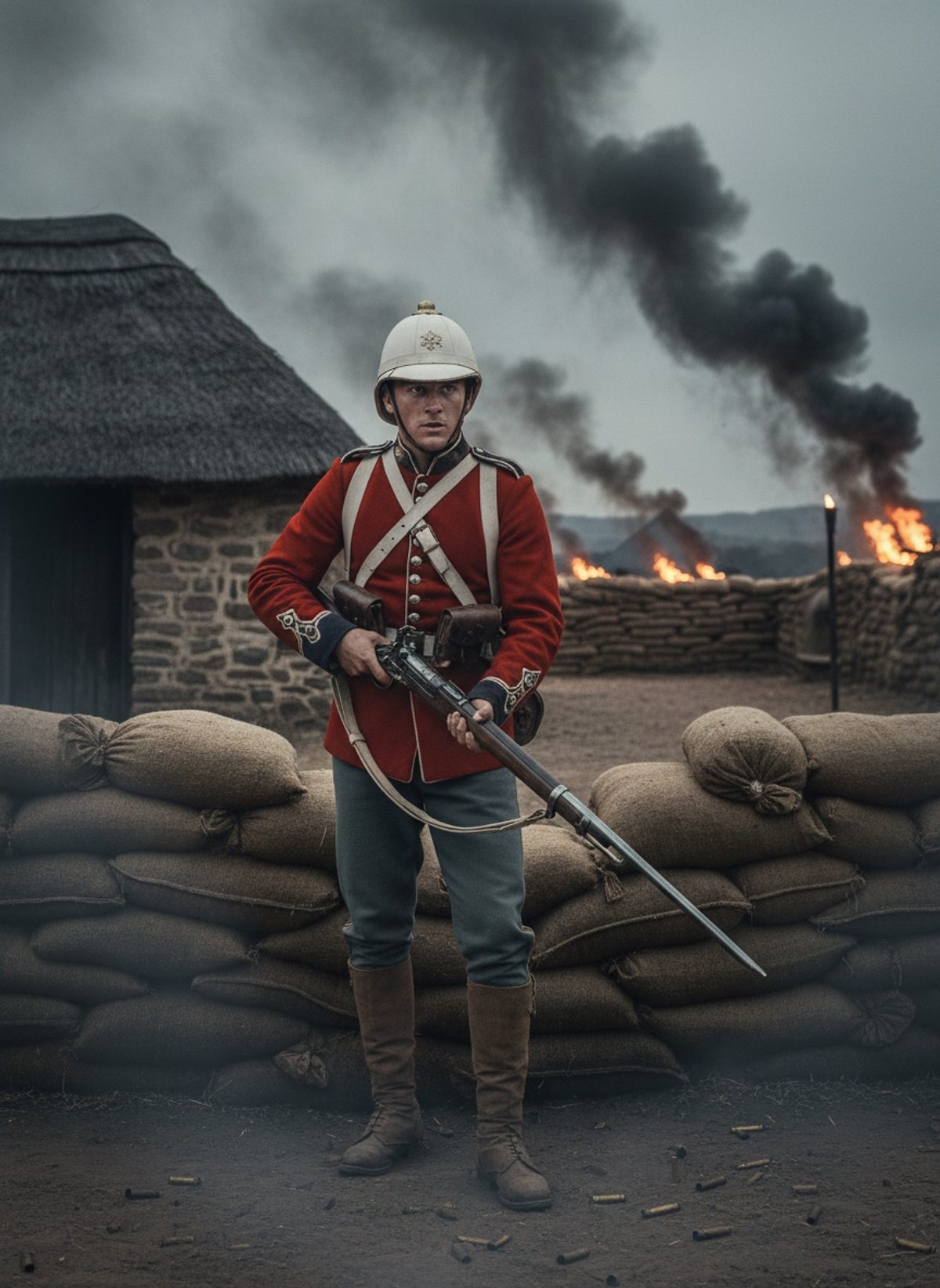
The siege at Rorke's Drift was more than just a clash of arms; it was a collision of cultures, each fighting with unyielding commitment to protect or to conquer. The mission station transformed into a crucible of human endurance and strategic acumen. As day stretched into night, the makeshift fortifications became dens of resistance. Sandbags piled high and hastily constructed barricades afforded little more than psychological comfort to those cowering behind them. It was into this fray that Frank Bourne's leadership emerged as a defining force.
The night was a cacophony of sounds: rifles cracked, warriors chanted battle cries, orders were shouted above the roar of combat. Shadows loomed large in the flickering light of burning structures, and the mission walls trembled under the ceaseless assault. The human toll of the conflict was staggering, and come dawn, the grim testament to the battle lay in heaps of bodies — both attackers and defenders — piled before the breached defenses of the erstwhile hospital and storage rooms.
When the darkness finally yielded to the first light of dawn, the remnants of the once-mighty Zulu regiment receded. The defenders, battered and bloodied, had achieved the improbable. But victory, as it often is, came at great cost, paid for with the lives of many brave souls. Bourne, however, was unscathed, his tactical prowess and unwavering spirit drawing admiration from his peers and commanders alike. Several defenders would receive the Victoria Cross for their bravery during the ordeal, but much more intriguing is Bourne's own reaction to his survival.
When the accolades were finally being dispensed, Bourne surprised many with a simple request: to go back. Deferring decorations, he sought instead a return to duty at the soonest opportunity, a reflection not only of his unassuming nature but also a deep-rooted sense of responsibility to his regiment and country. After Rorke's Drift, he continued to serve the Victorian Empire with distinction, though his conduct at the mission station left an indelible mark on the annals of military history.
Frank Bourne’s life extended far beyond the tumultuous skirmish in Africa. Even as the 20th century dawned and carried the remnants of empires into a new era, Bourne lived on, witnessing two World Wars, the rise and fall of states, and sweeping societal changes. He passed away in 1945, outliving all his comrades from that fateful day. His longevity afforded a retrospective on his actions at Rorke’s Drift — not of a hero seeking glory, but of a soldier fulfilling his duty under circumstances that remain awe-inspiring even today.
Rorke’s Drift continues to captivate the imagination not only because of the valor displayed but also due to the lessons about leadership and tenacity it imparts. Frank Bourne, known as 'The Kid' for his relative youth, embodied these attributes, enforcing order where chaos threatened to consume and exemplifying steadiness amid desperation. His story, often overshadowed by the larger historical tapestry of empire and resistance, reveals that sometimes the utmost resilience is born not in great expectations, but in answering the simple yet profound call to stand firm. Today, as we look back on tales like Bourne's, we recognize that behind every textbook account lies the potential for untold narratives of bravery, quietly held, yet deeply impactful.