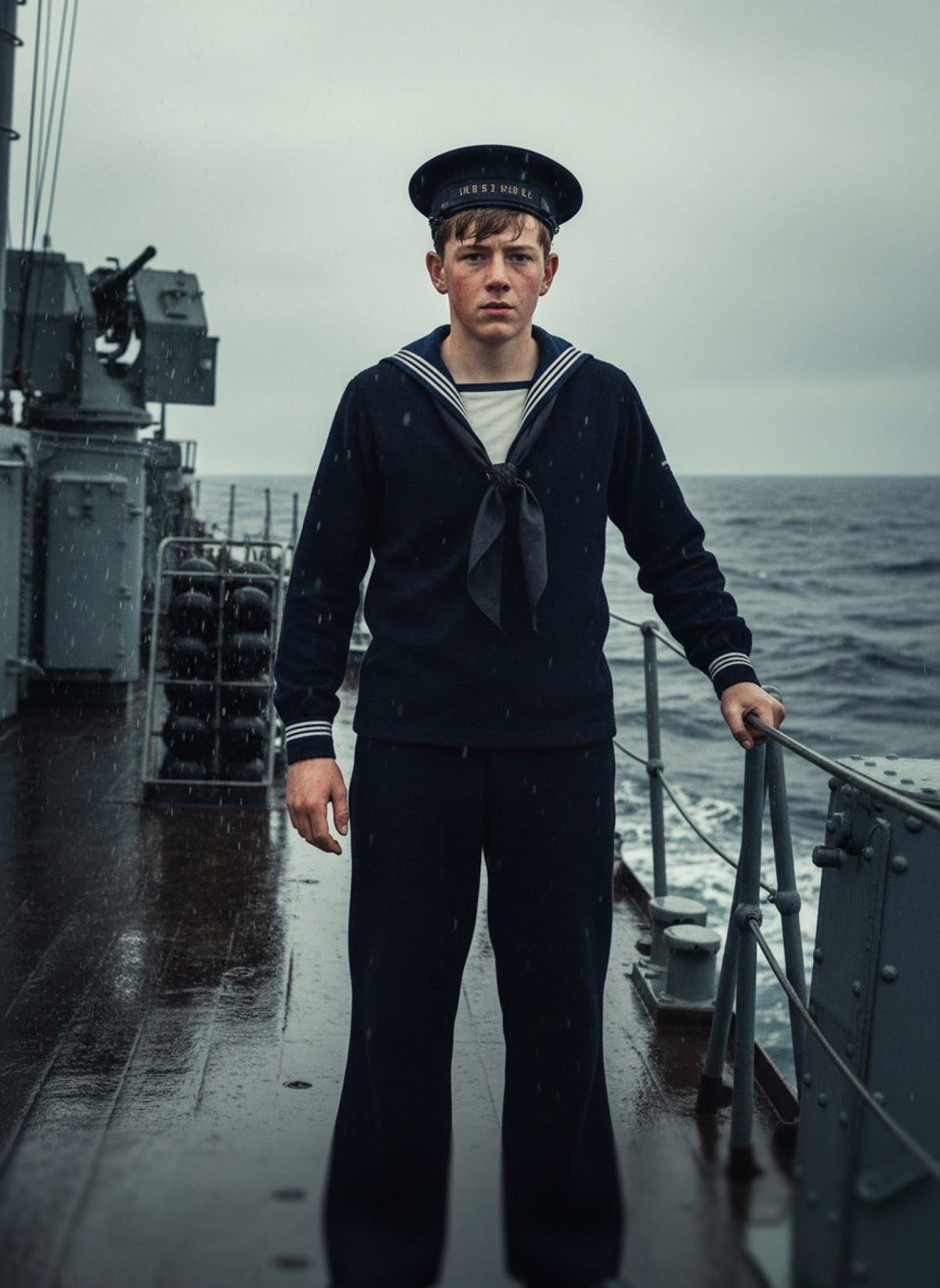
He's known as the thirteen-year-old boy who joined the Royal Navy. That was only part of his story.
Signing On Against All Odds
In the throes of war, a thirteen-year-old British boy found himself faced with a seemingly insurmountable barrier: his age. Britain in 1942 was in desperate need of servicemen, and the allure of the sea and adventure called to him stronger than any school bell ever could. He forged documents and lied about his age, creating a story older than himself. This was not so much a tale of innocence lost as it was of innocence willingly set aside. Passing for sixteen — the minimum age requirement at the time — he was handed a naval kit and a rifle, and trained for a world in which few survive unscathed.
His journey, though audacious, was not entirely unique during these uncertain times. Tales of youthful braves tricking recruitment officers dotted the landscape of a Britain that found itself at war. Yet, few could boast the same determination this young sailor embodied, crossing not just physical frontiers but the moral ones that separated childhood from the crucible of war.
The Murky Waters of the North Atlantic
Having successfully inveigled his way into the ranks of the Royal Navy, he soon came face to face with the harsh, unforgiving theatre of the North Atlantic. A perilous convoy route, it was notorious for its relentless U-boat assaults and treacherous weather. The boy, still emerging from the innocence of childhood, would march into the heart of darkness armed only with a determination reckoned rare, even amongst seasoned men.
Read next: When Hertha Ayrton Fixed the Searchlights No Man Could Repair
As sprays of freezing seawater lashed against the hull, he and his crewmates stood vigilant on the decks. Turbulent seas were the least of their worries; German submarines lurked in the depths, rendering each voyage a deadly gamble. The boy quickly learned the art of survival, his youthful naivete failing to shield him from the stark reality of warfare. Yet, strangely, amidst the chaos, he found a sense of belonging.
A Boy Decorated in Strength
To live through the convoys crisscrossing the beleaguered Atlantic was akin to a miracle, yet the boy achieved more than mere survival. His valor in the face of danger was recognized, and he was decorated for his bravery—a remarkable accolade for one so young. The war grimaced heavily on those soldering through its sinister theatre, but the boy's unyielding spirit sparkled in the gloom like phosphorescent sea creatures illuminating the dark ocean depths.
Though his accolades were admirable, he was still a boy caught in the web of man's mightiest quandary. The Navy believed he was a young man of valor, much like the tales the boy dreamed up before his adventure began. Here lay the peculiar irony, where reality only occasionally flirted with the fictitious identity he crafted.
Unmasked by Recognition
The boy's story stumbled over a truth stranger than fiction—a face recognized in the tumult of homecoming. Someone aboard recognized the gleam in those youthful eyes. This chance encounter would unravel his deception. When the reality of his tender age reached the ears of the naval hierarchs, their reaction was swift, and not unlike a stern father's reprimand to a mischievous child. His naval service was terminated, and the accolades stripped away. The youth who had given so much was left adrift, proud yet officially forgotten, his deeds erased like chalk on a slate.
Despite the honor stripped from his record, the boy carried no bitterness. His fleeting naval career had granted him something far more precious than medals—courage, camaraderie, and tales that would echo through his soul forever. Yet it would take three decades before the bureaucratic blindness recognized his courage anew, reinstating his honors long after peace had quieted the storms of war.
Beyond Medals and Deceptions
The story of the boy who became a sailor is more than the annals of a simple adventure. It strips bare the veneer from the notion of war heroes, laying bare the bone-chilling urgency of a nation—and the remarkable lengths one might go to serve it. In the life thrust upon him, this boy unwittingly shaped a narrative larger than heroism, forever a question of moral fabric, duty, and the passage from youth to manhood under cannon fire's shadow.
Though his accolades were lost to the quagmire of Naval regulations and his youthful insurgency, the boy's story lingers, a testament to the human spirit's inflexible resolve. To bind such innocence so indelibly with sacrifice reminds us of the human cost of war—an echo from the past urging us to remember the legends left out of textbooks.