217 stories
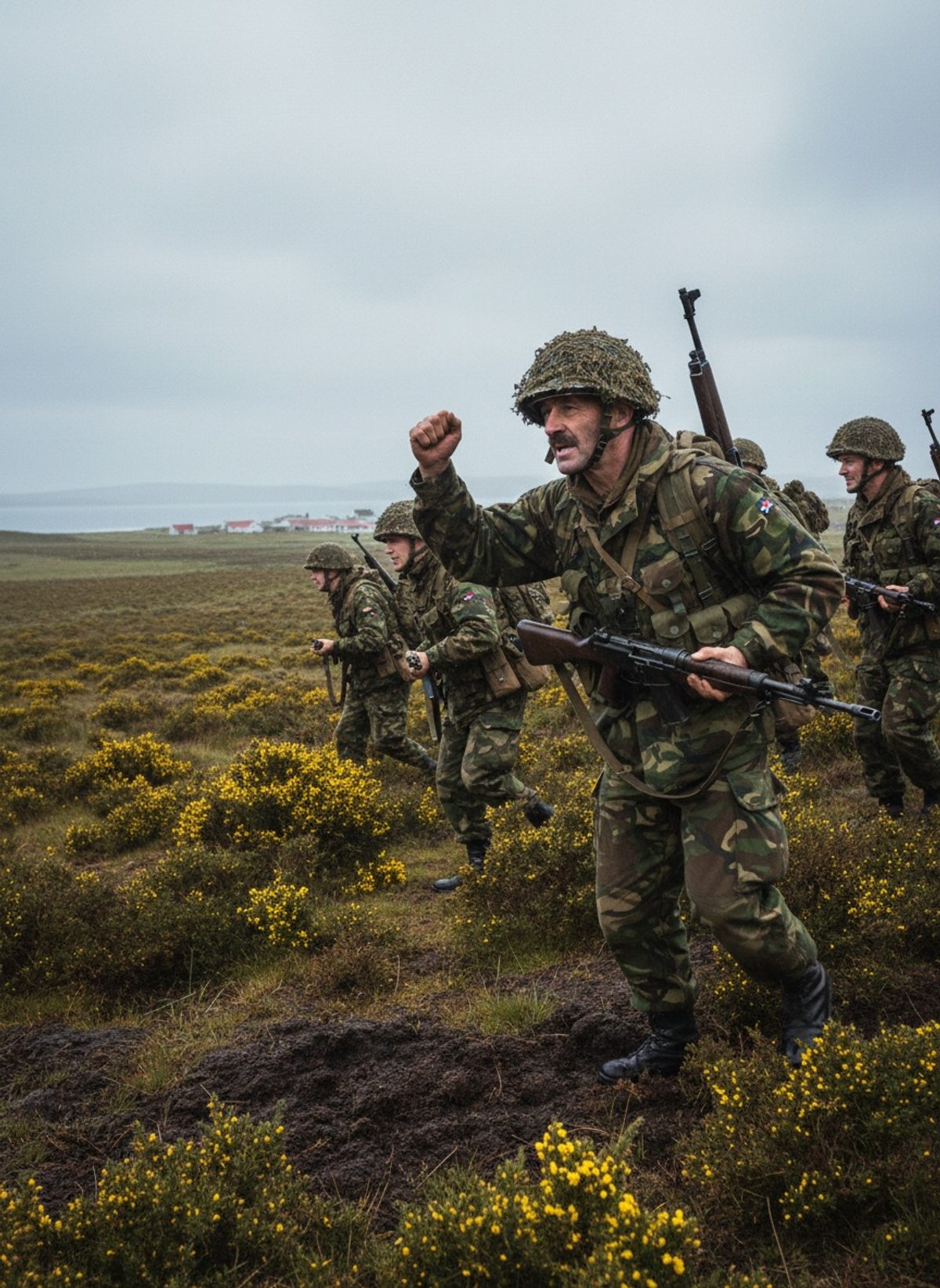
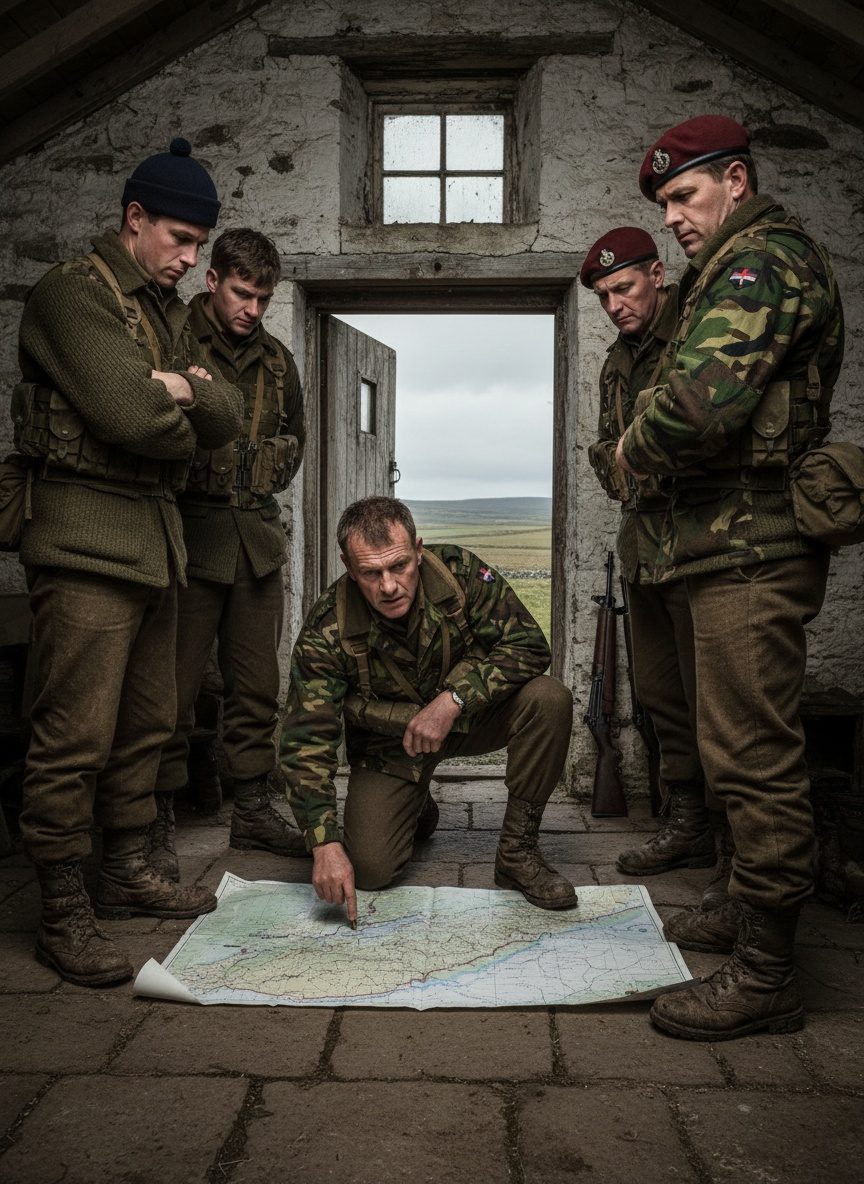
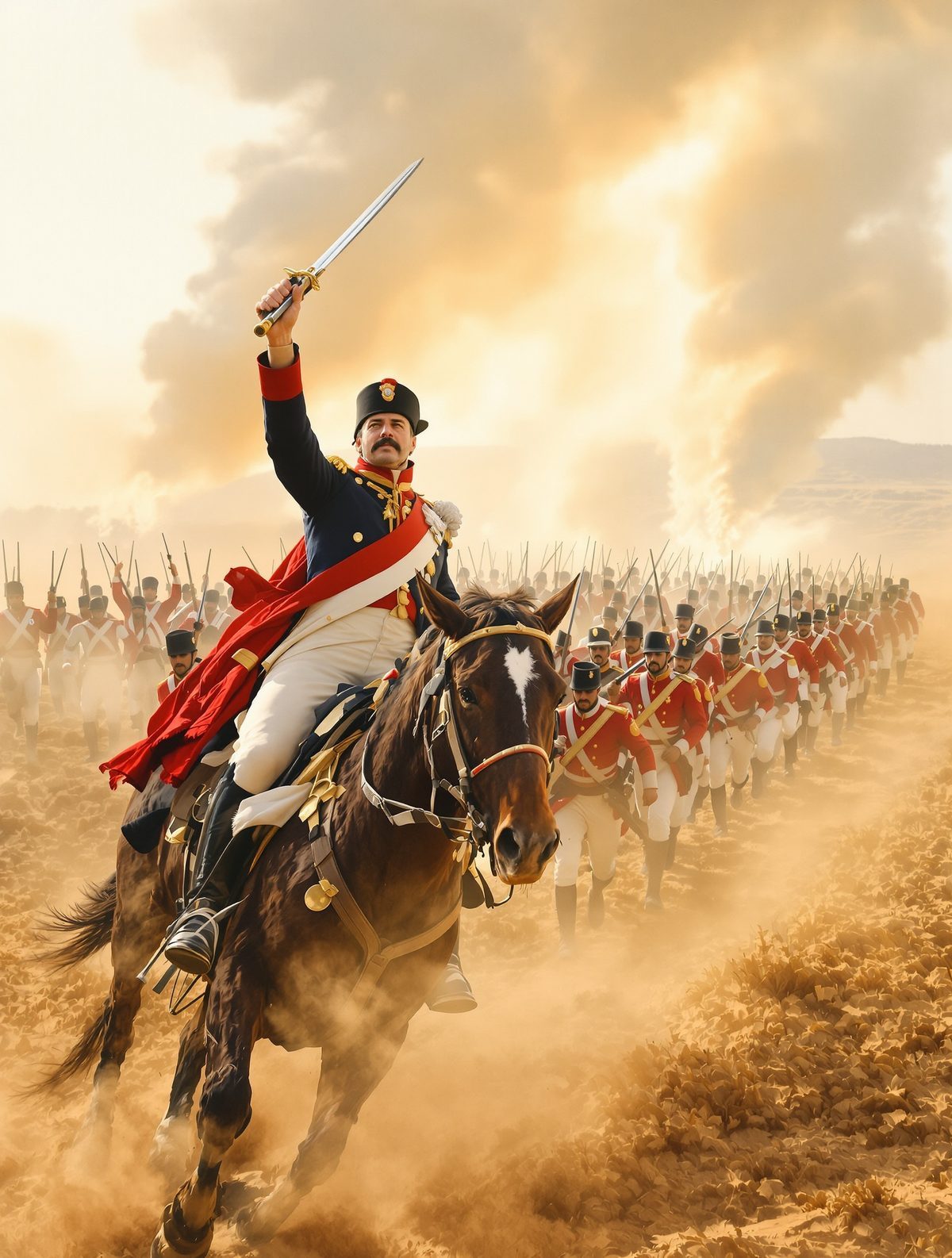
28 May 1982. Goose Green. The attack stalled on Darwin Hill. Lieutenant-Colonel H Jones went forward himself. He never came back. He was awarded the Victoria Cross.
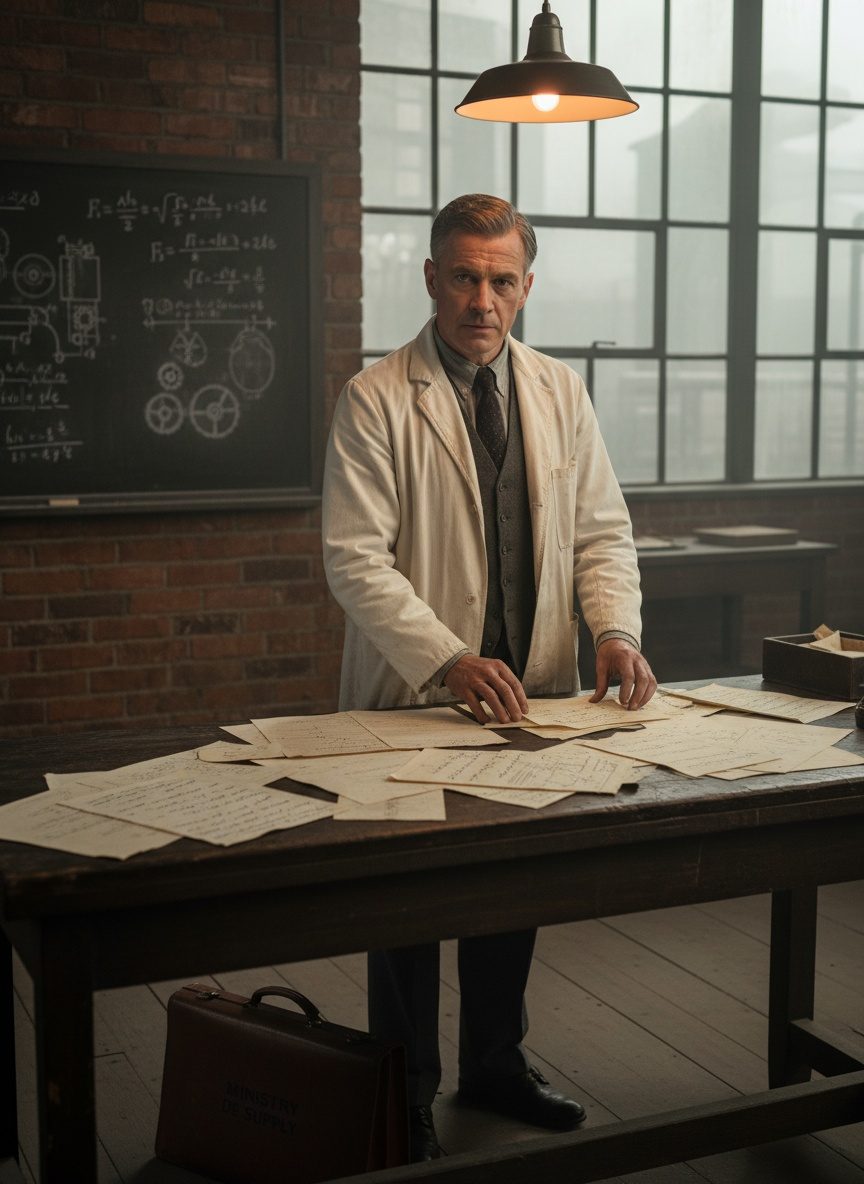
A Spanish poultry farmer walked into the British Embassy in Madrid. They turned him away. So he invented 27 spies, blinded the Wehrmacht, and saved D-Day from a hotel room in Lisbon.
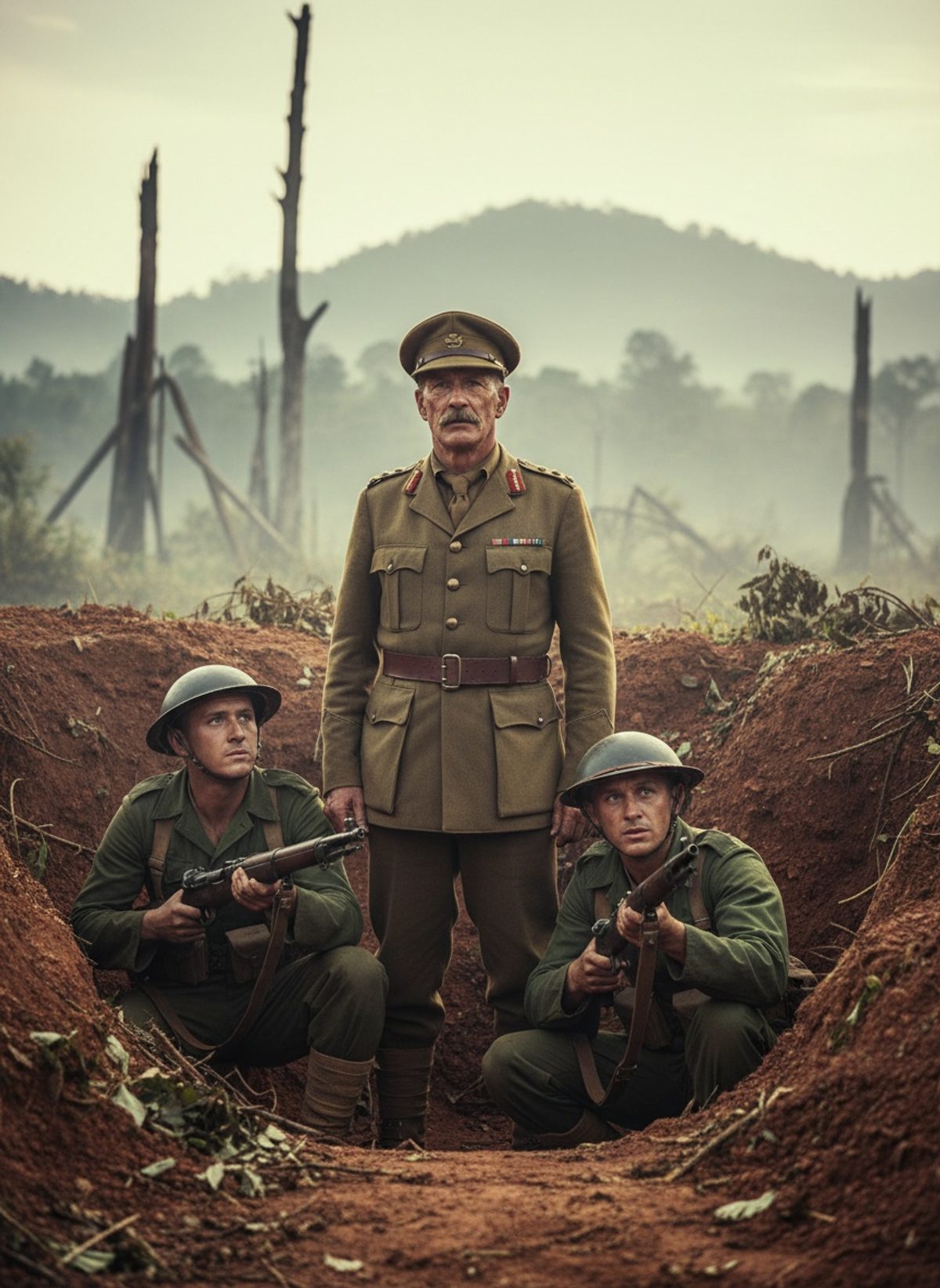
His doctors said he had months to live. His men didn't know. At Kohima, Brigadier John Laverty walked the forward trenches every morning under Japanese fire — not because orders required it, but because he believed men fight harder when their commander stands beside them.
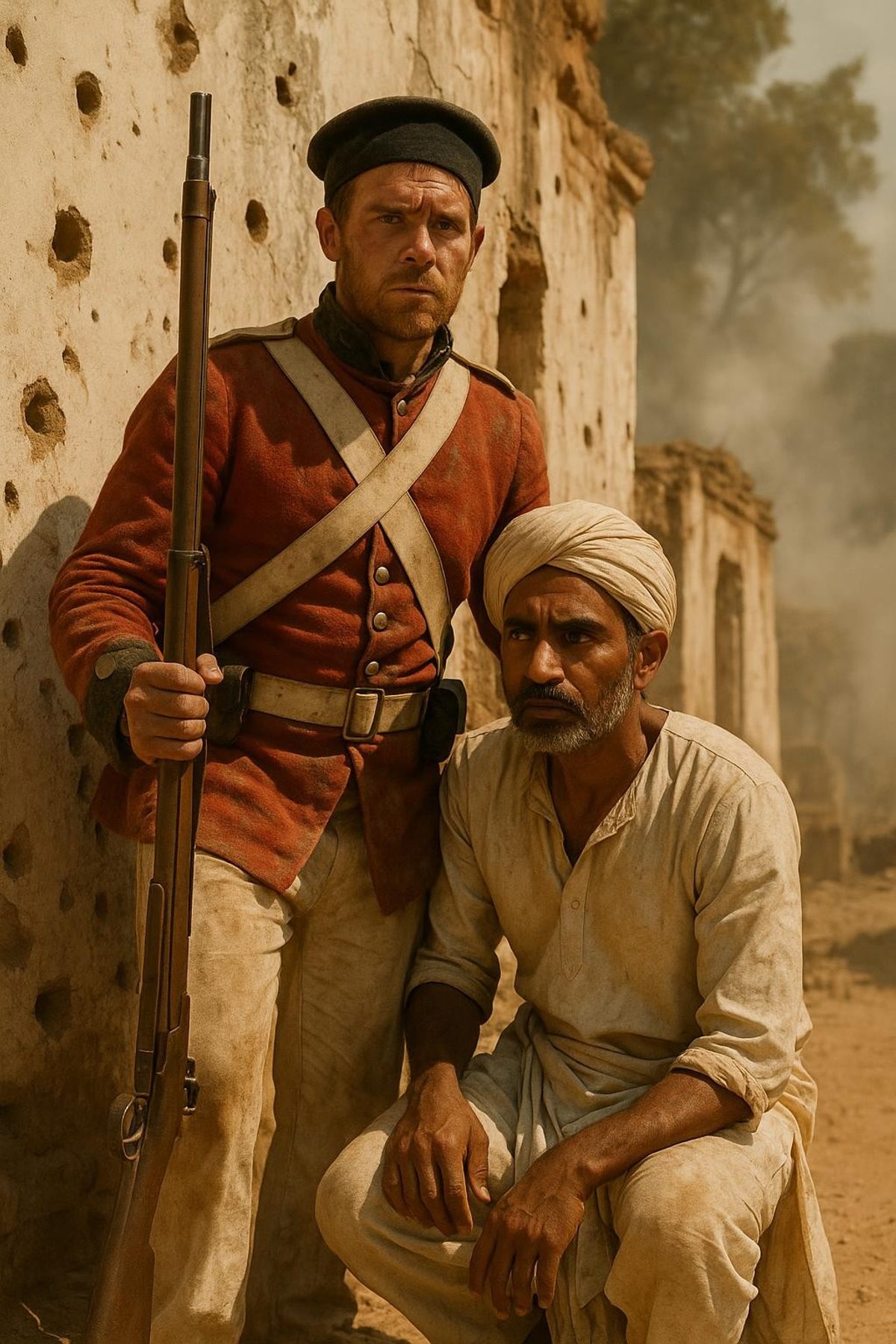
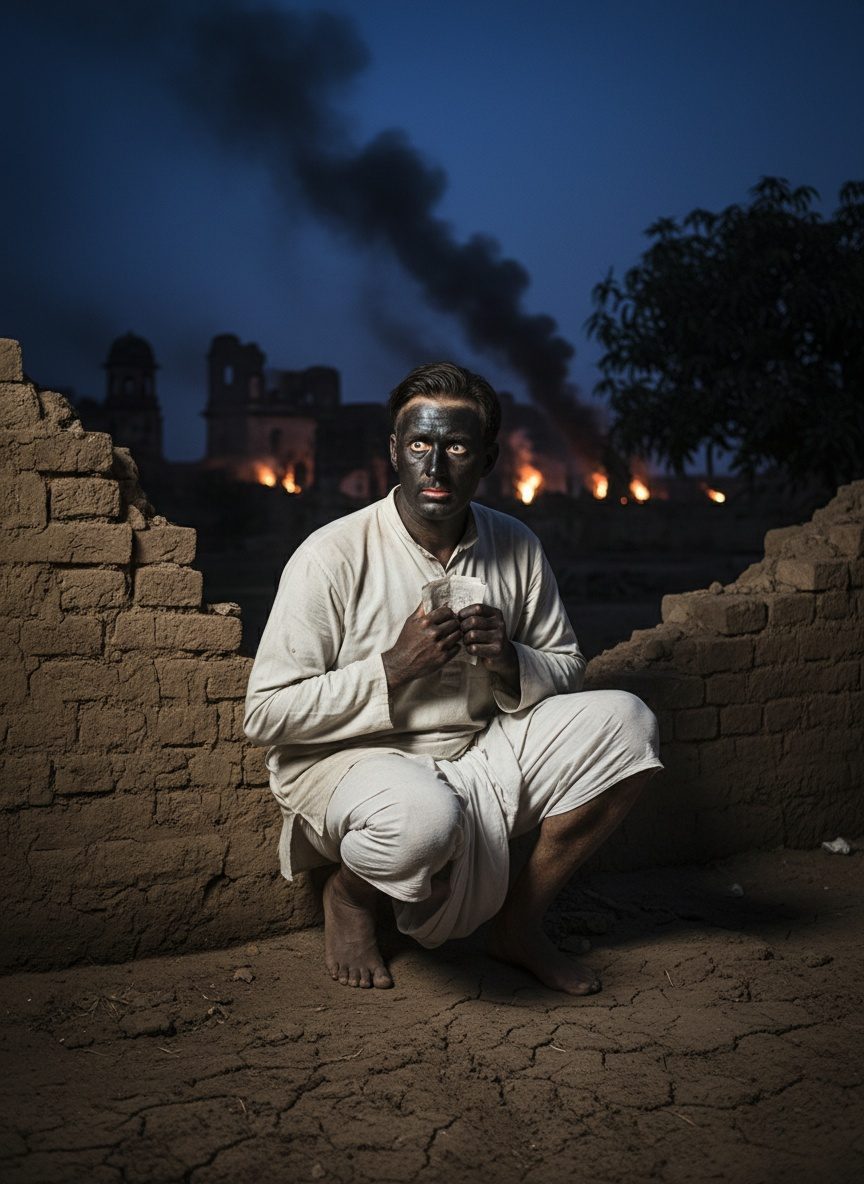
Lucknow, 1857. A siege. A firing squad. One British soldier stepped forward and offered himself in place of a condemned Indian. The officer in charge paused. Then he nodded.
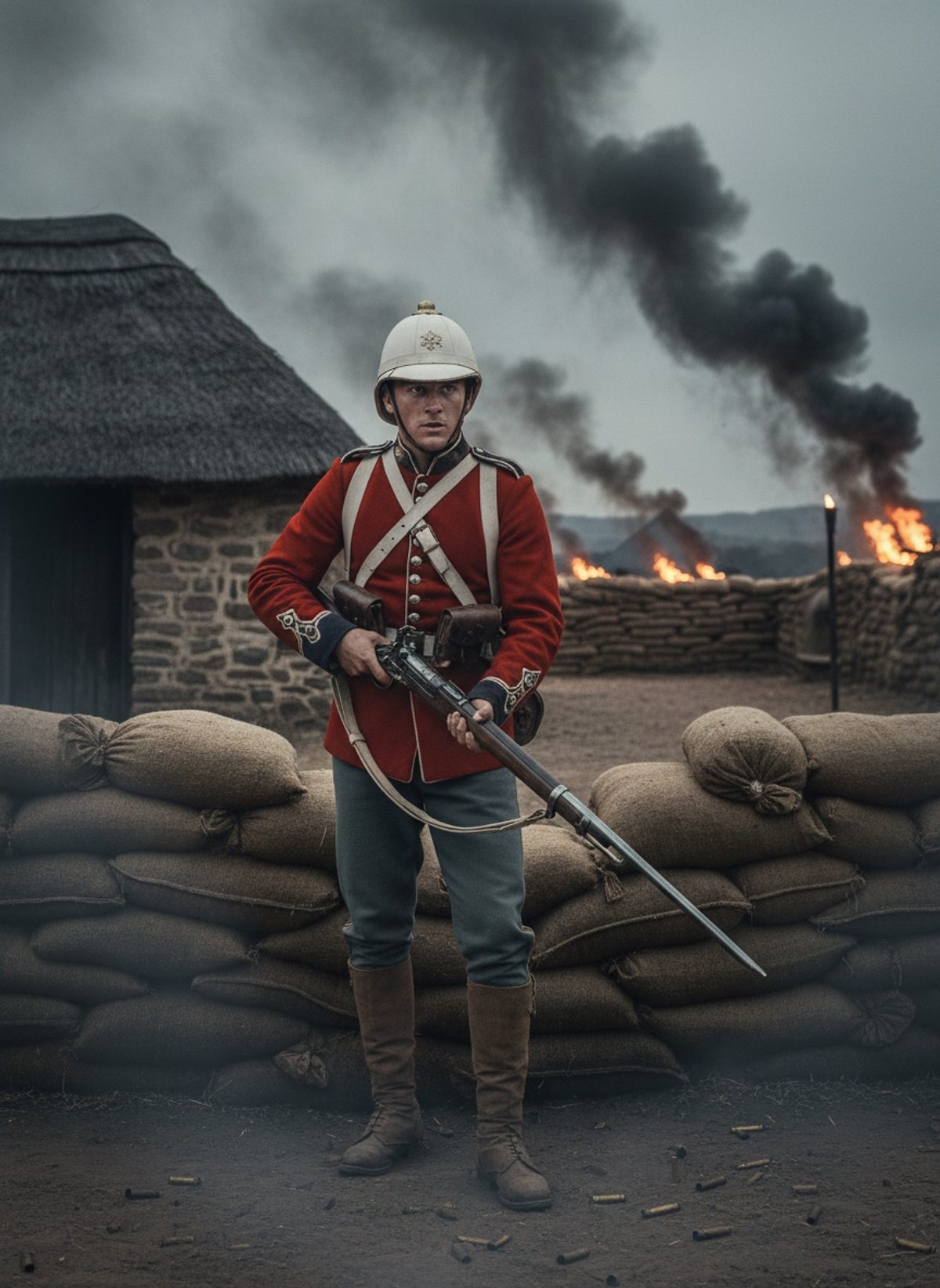
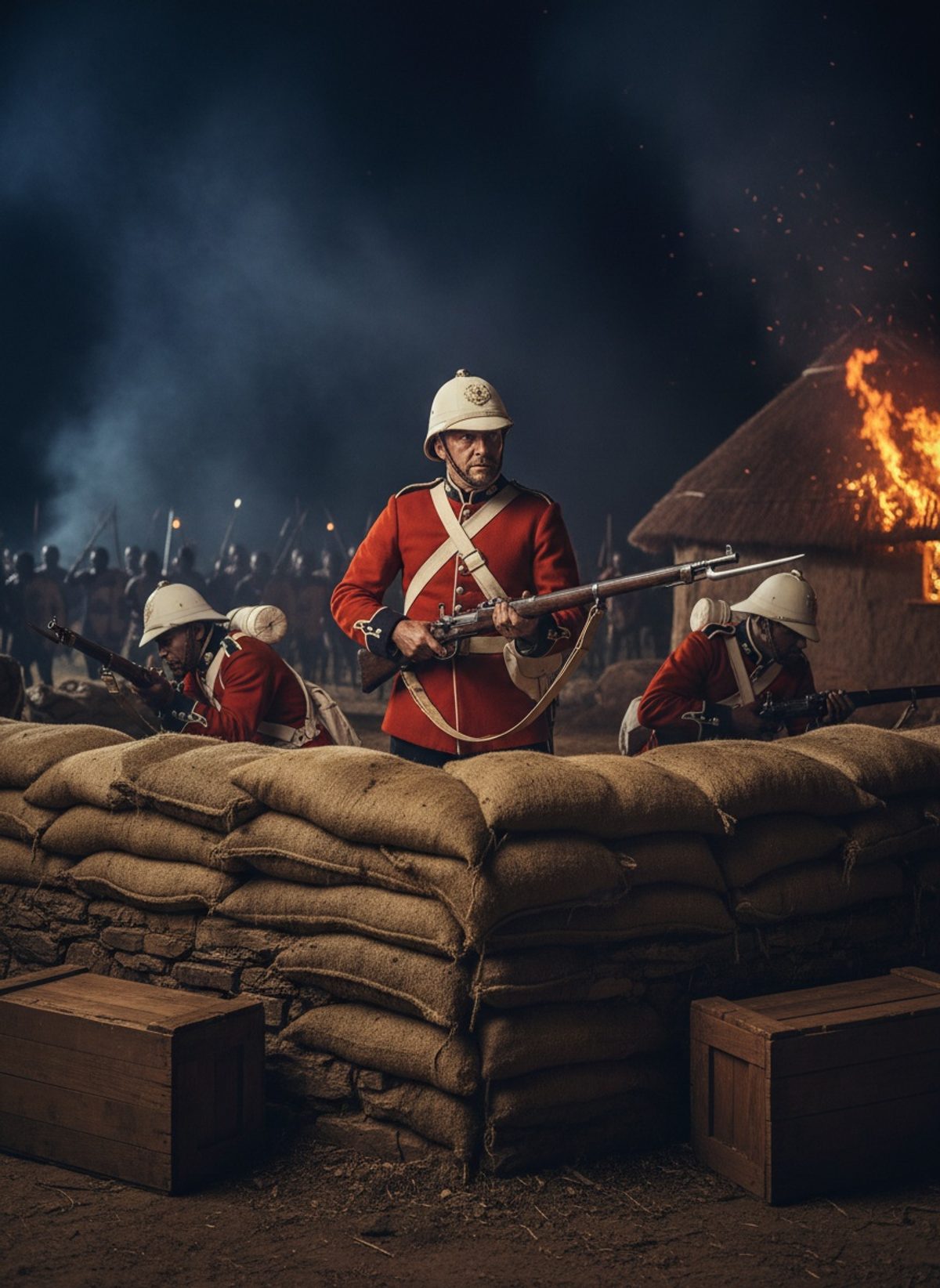
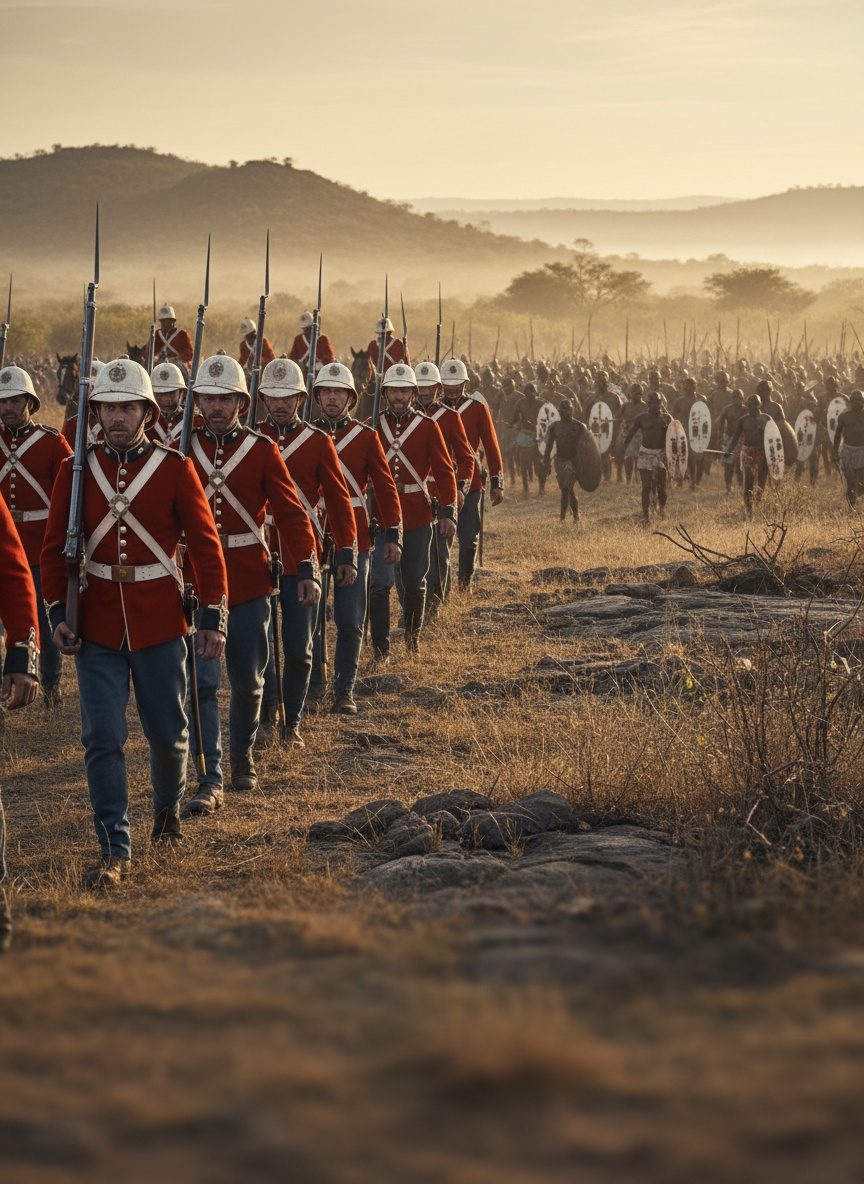
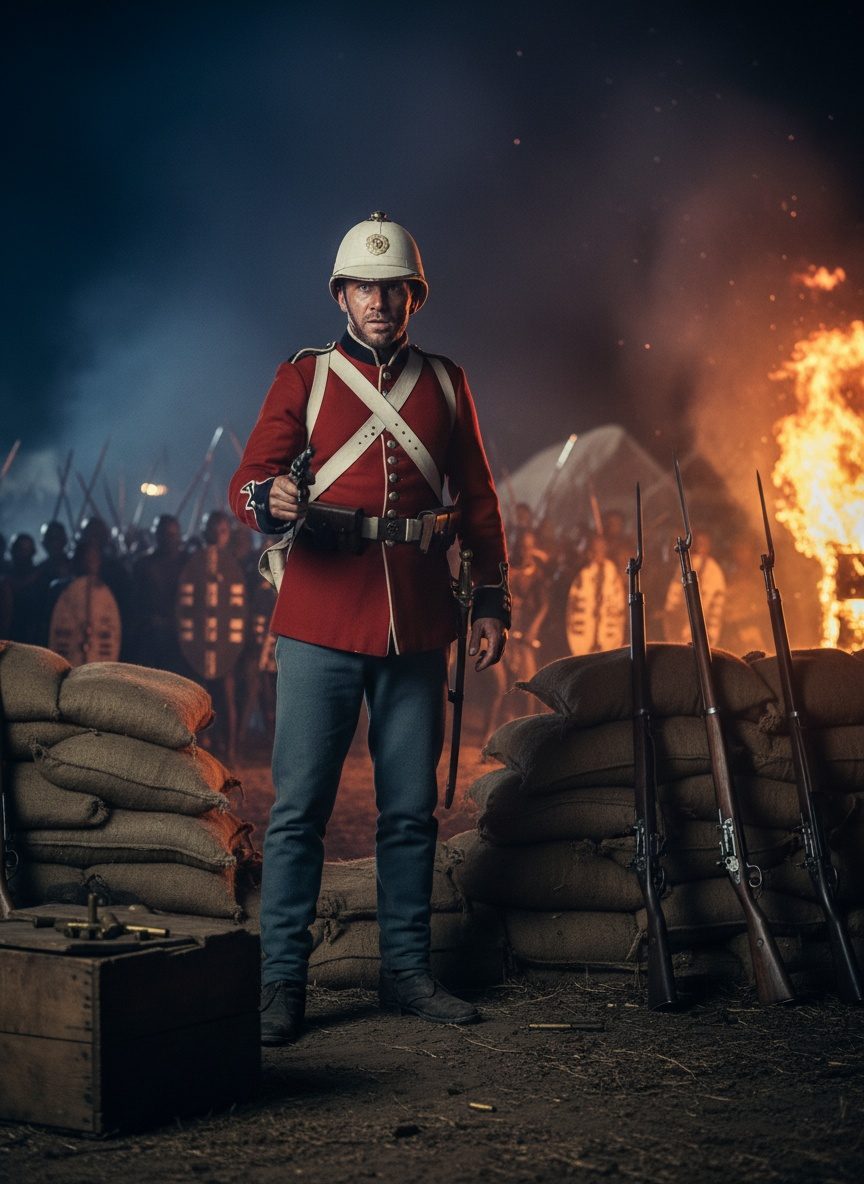
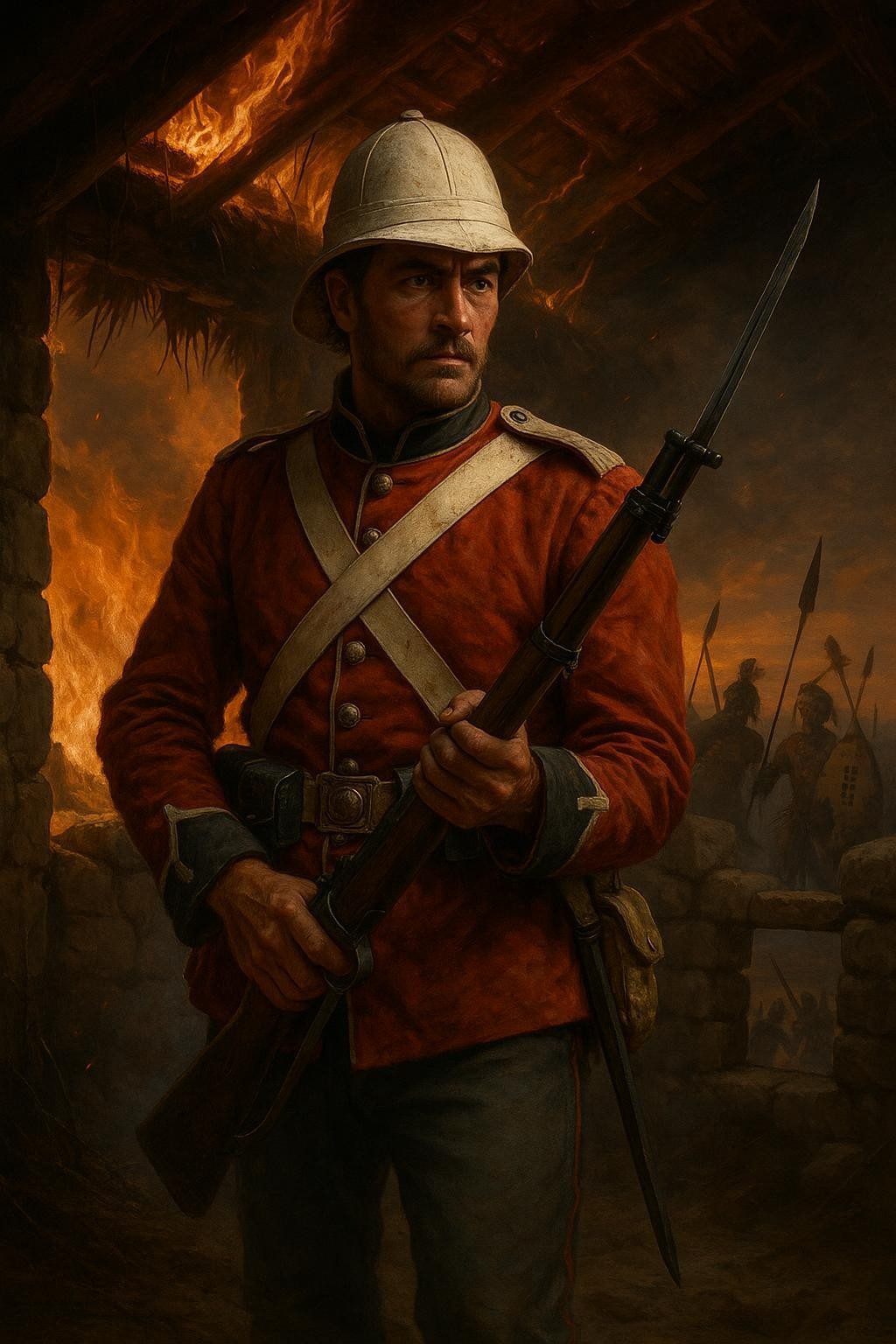
January 1879. Colour Sergeant Frank Bourne. 139 men. 4,000 Zulu warriors. They held all night. At dawn, the dead were stacked against the walls. Bourne outlived every man who fought beside him.
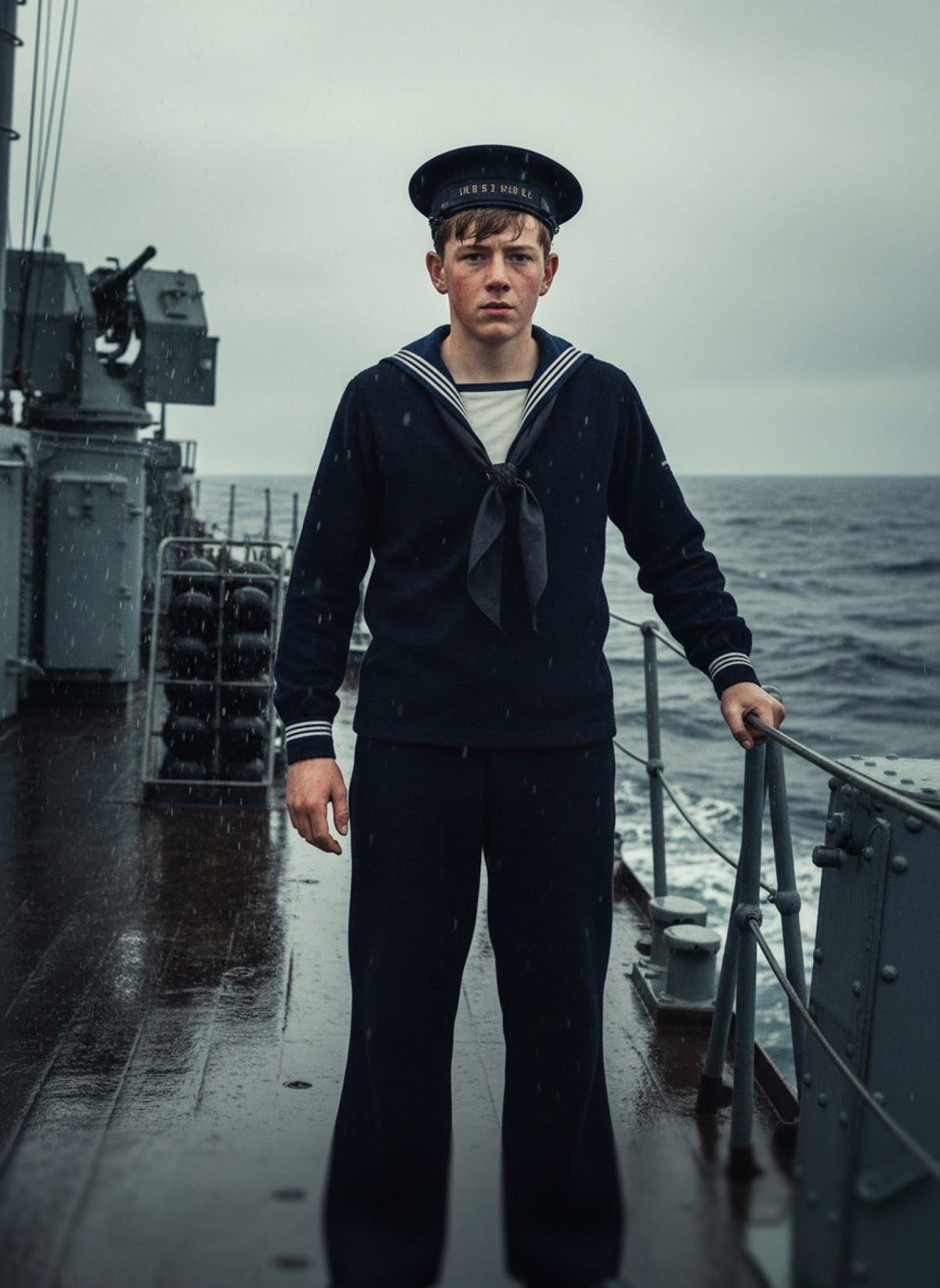
1942. A fourteen-year-old British boy forged papers and joined the Royal Navy. He survived the North Atlantic. When they found out his age, they took everything.
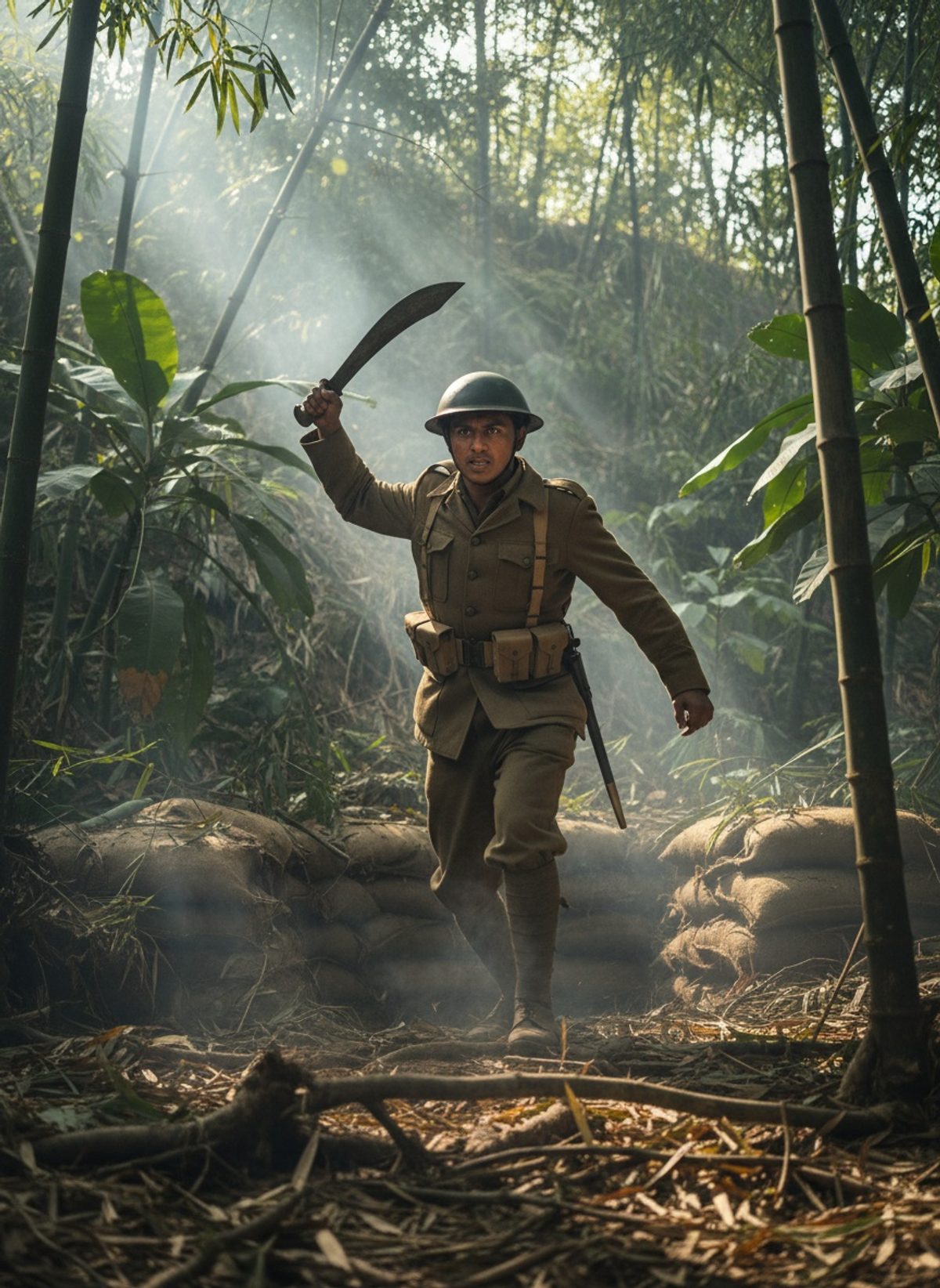
Burma, 1945. A Gurkha rifleman's platoon was pinned down and dying. He put down his rifle, drew his kukri, and went into five Japanese positions alone.
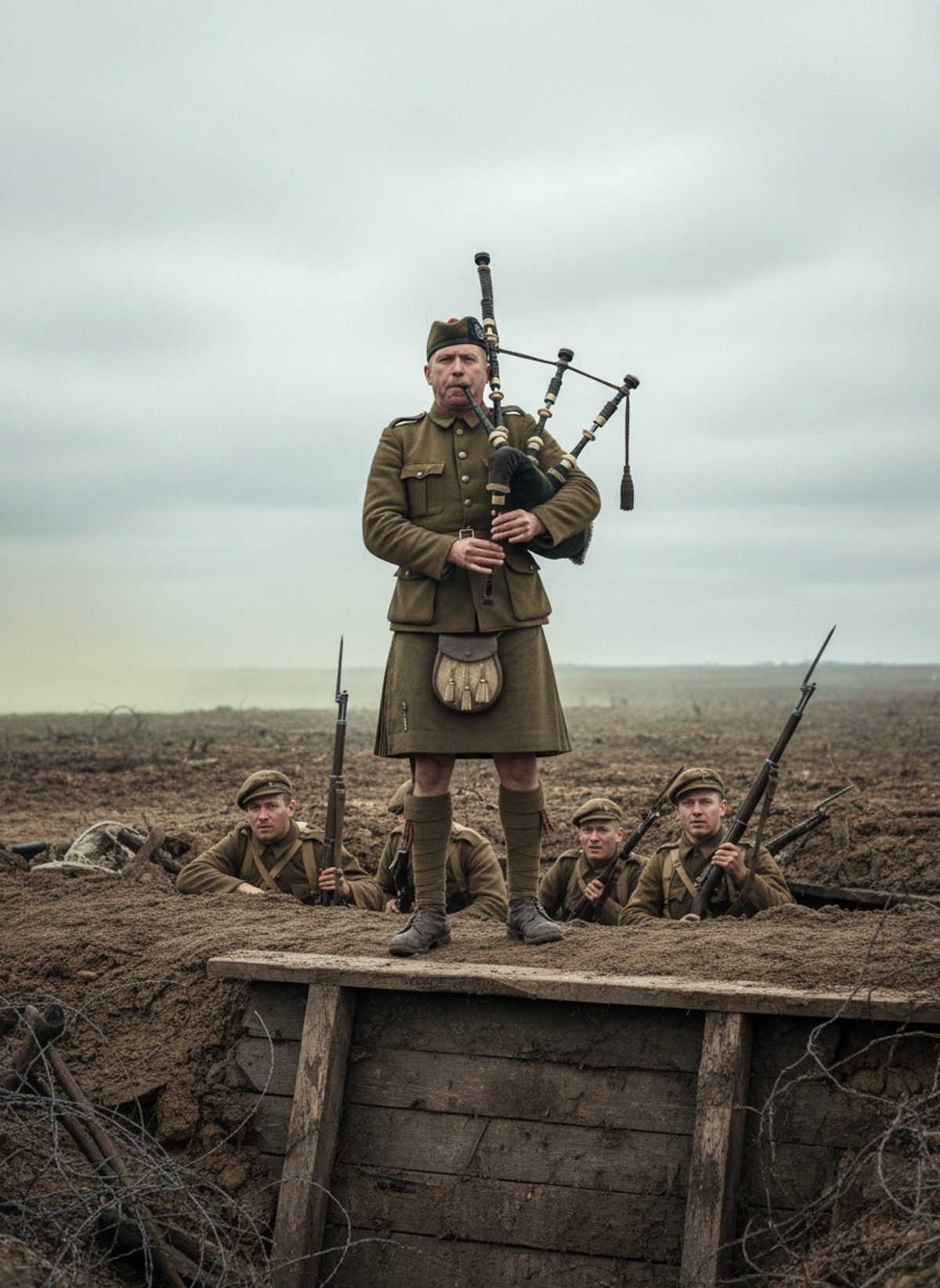
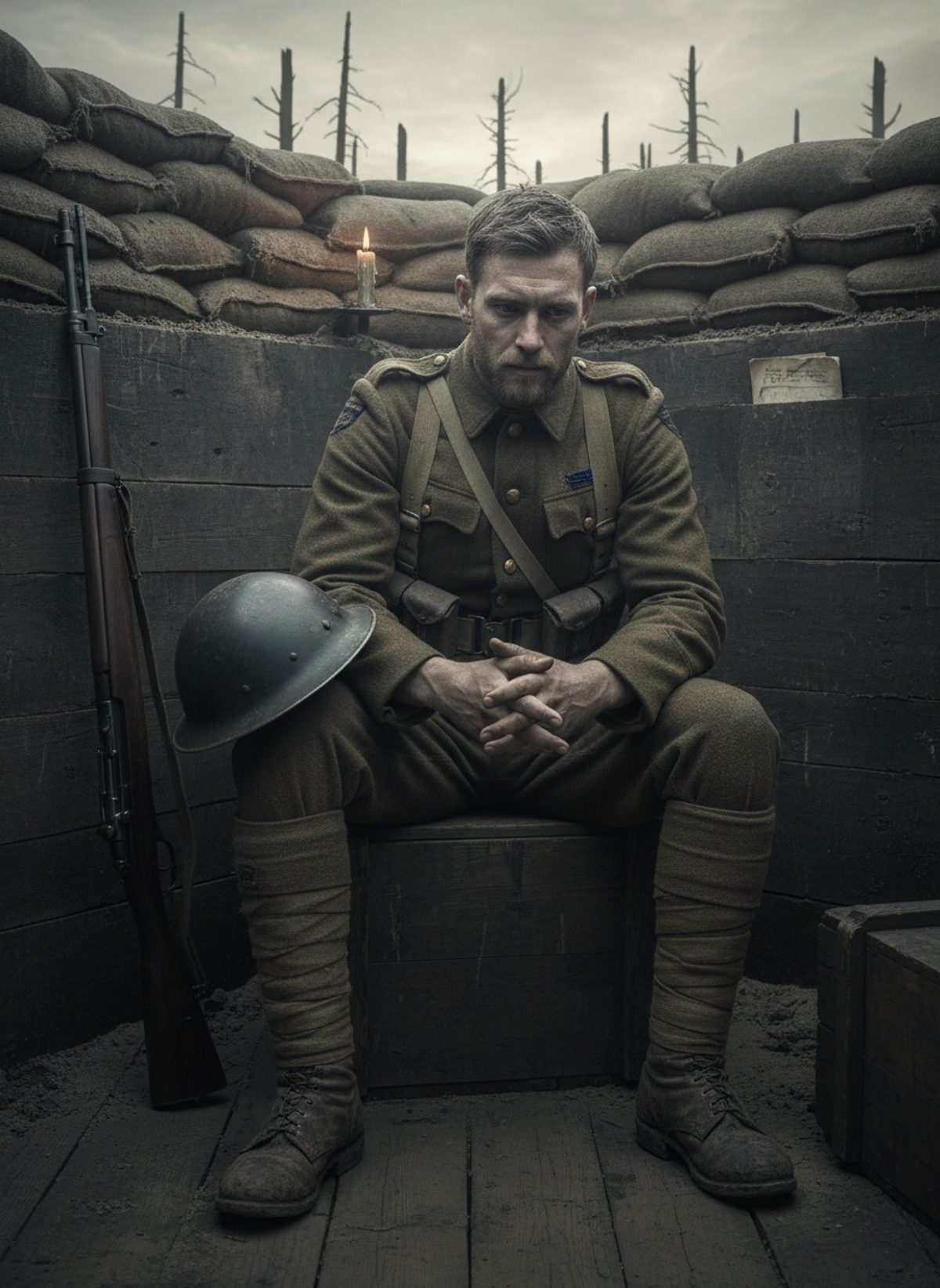
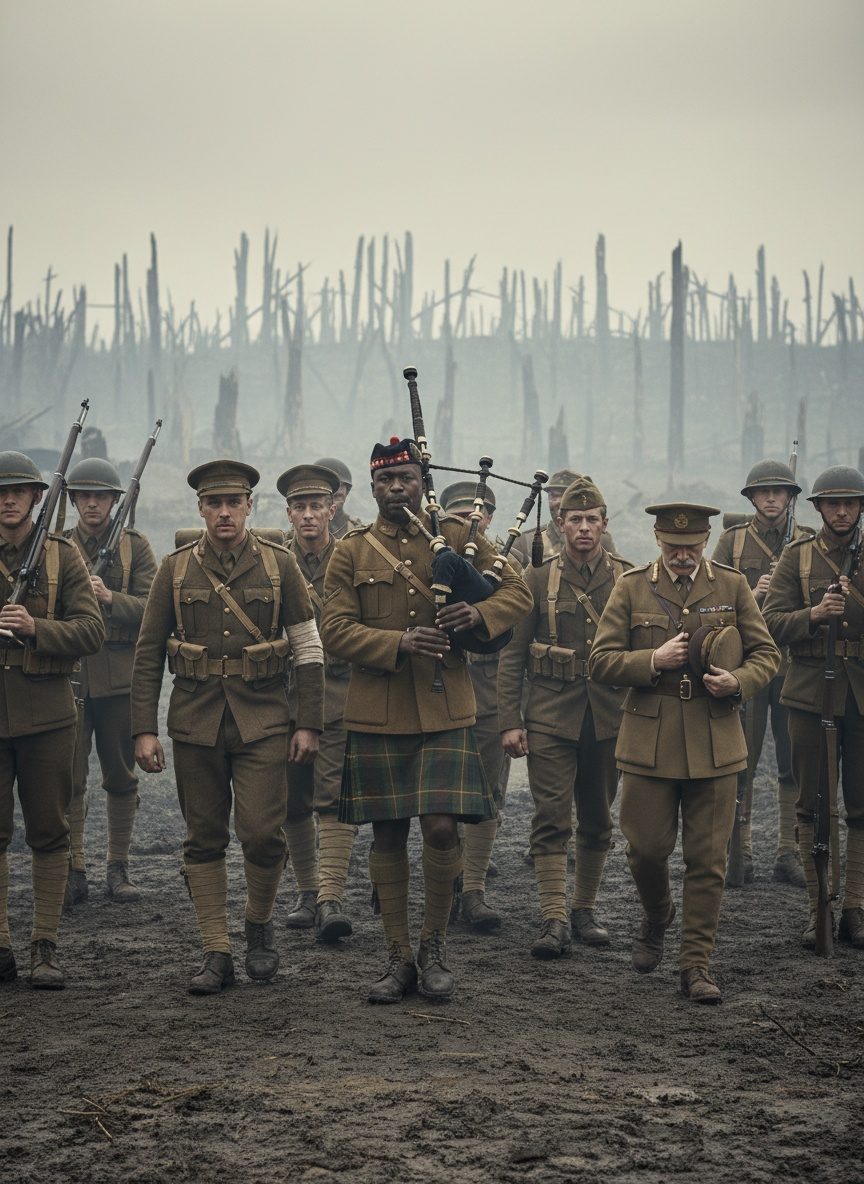
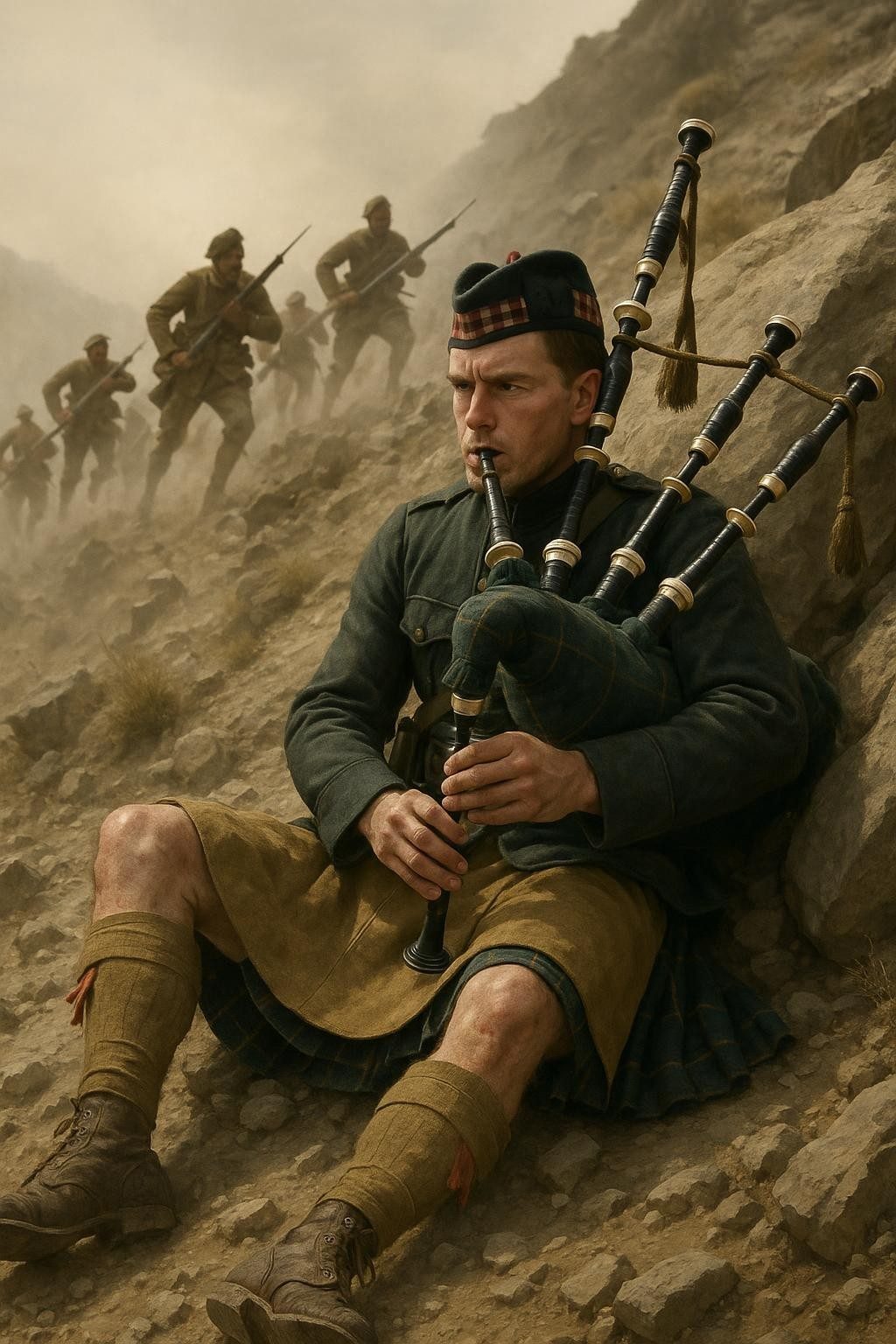
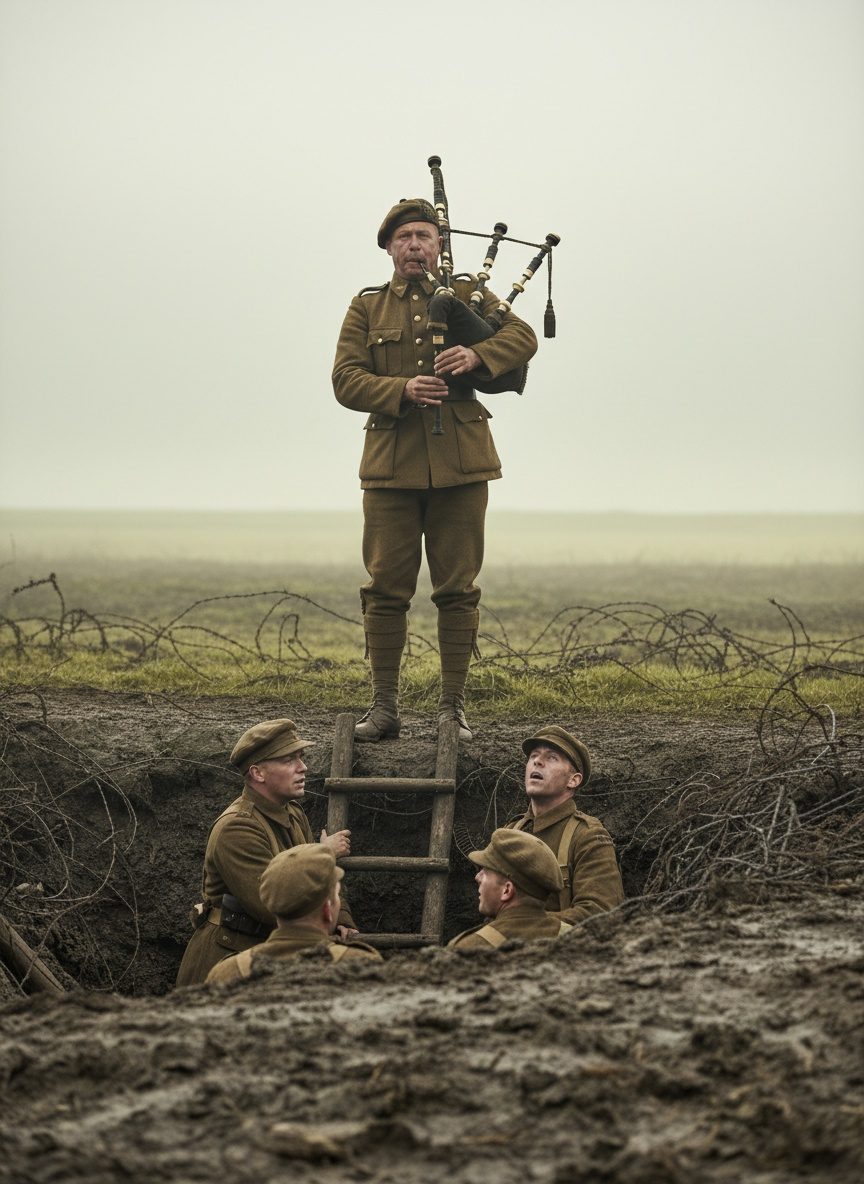
September 1915. The gas came first. Then the panic. Daniel Laidlaw climbed out of the trench. He stood in the open. He played his pipes. The King's Own Scottish Borderers rose and followed him forward.
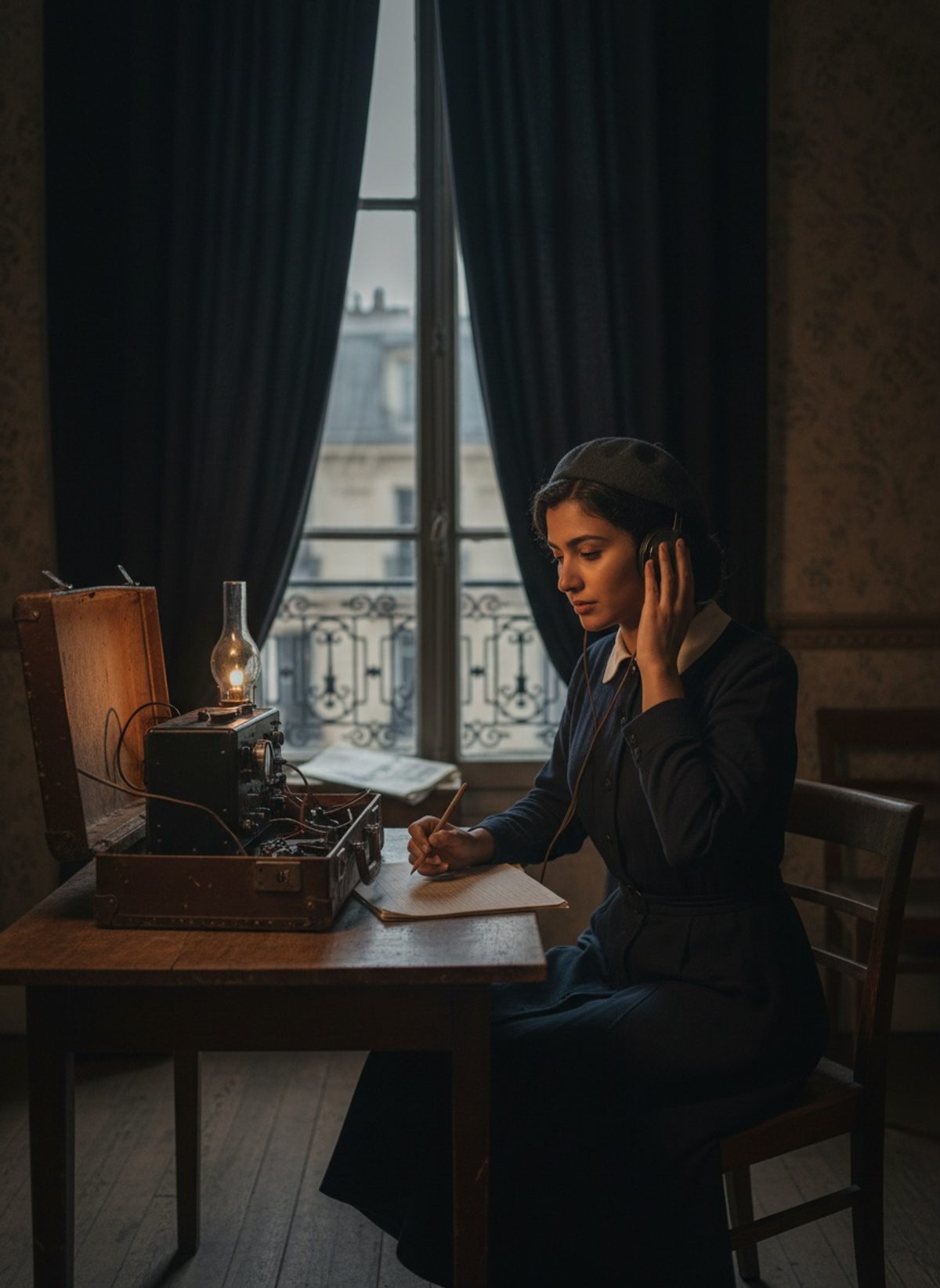
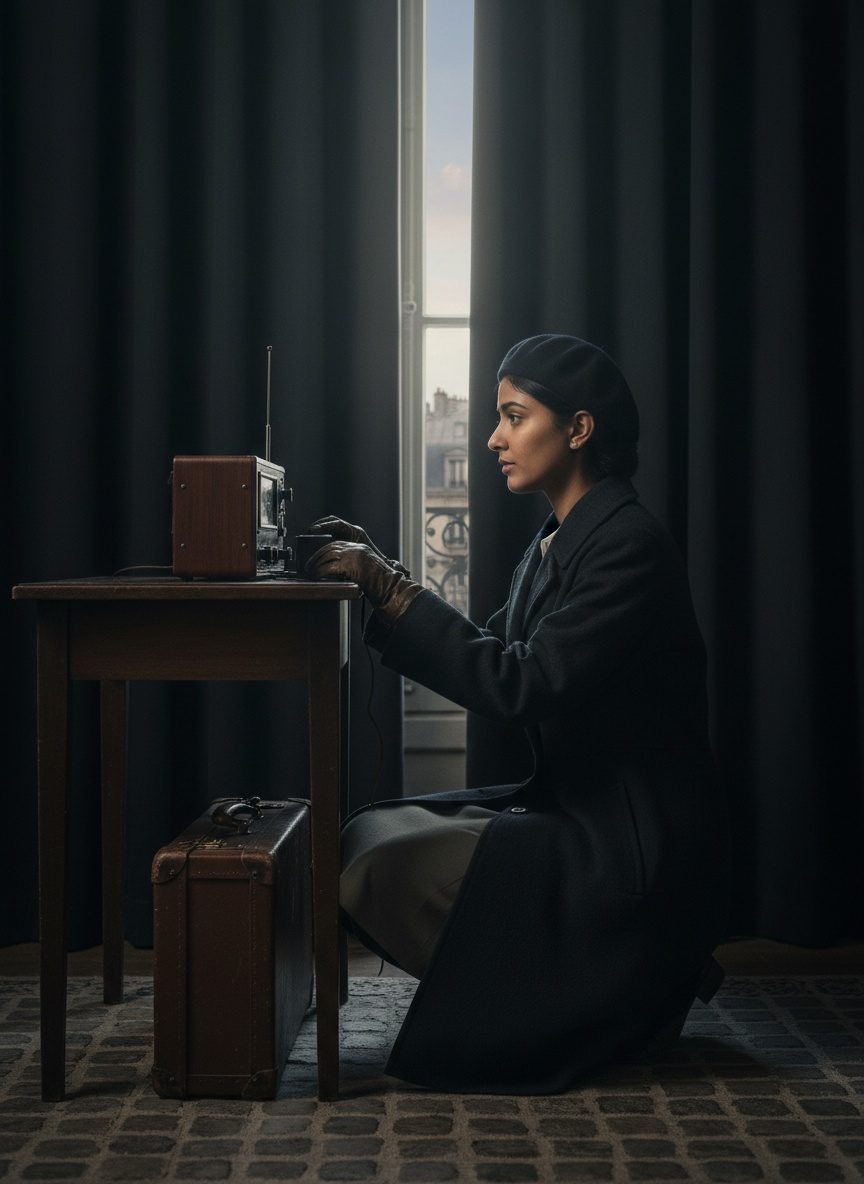
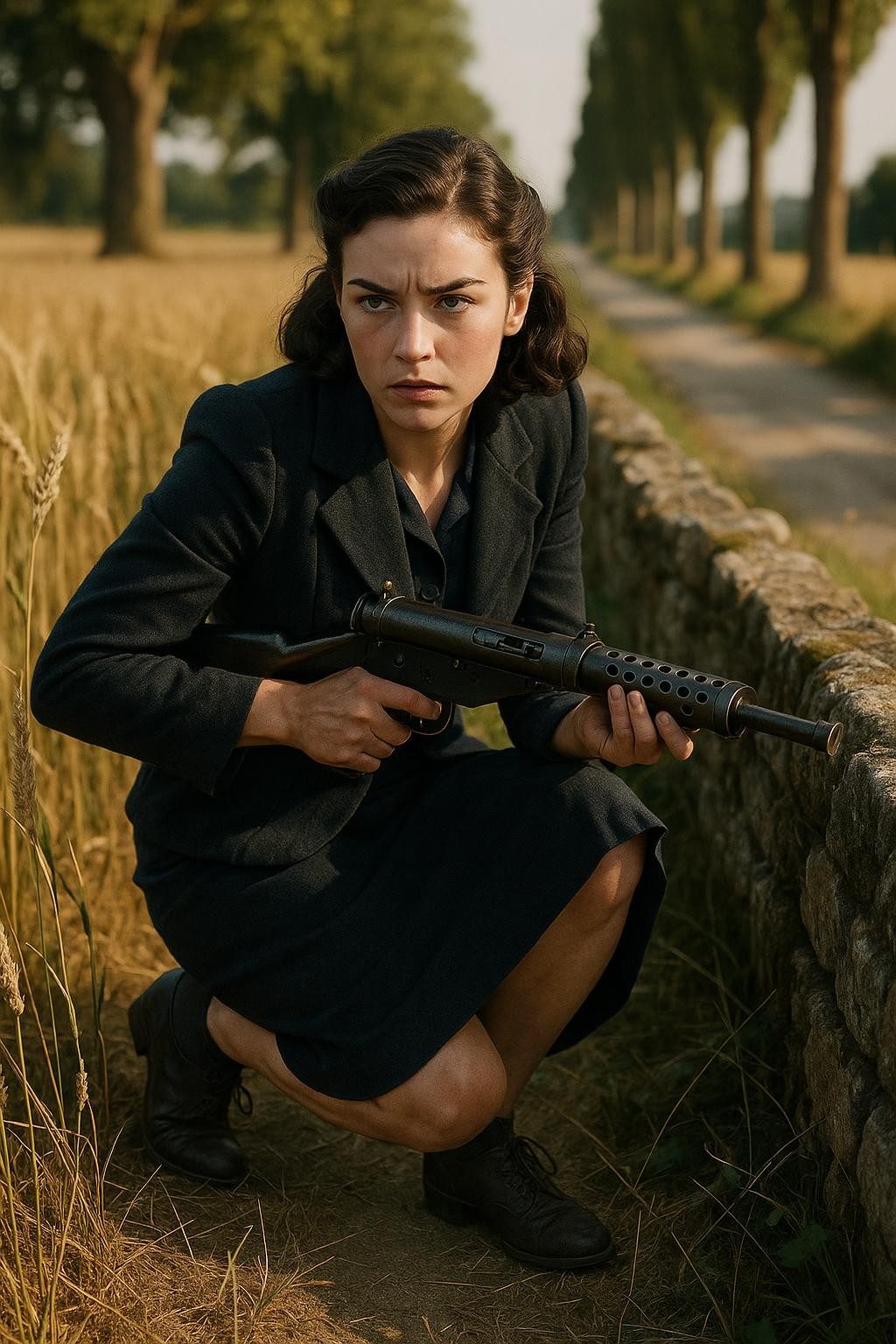
She was a pacifist. A children's author. A princess of Indian Sufi royalty. Britain sent her into occupied Paris anyway — as its last wireless operator alive. She refused to come home.
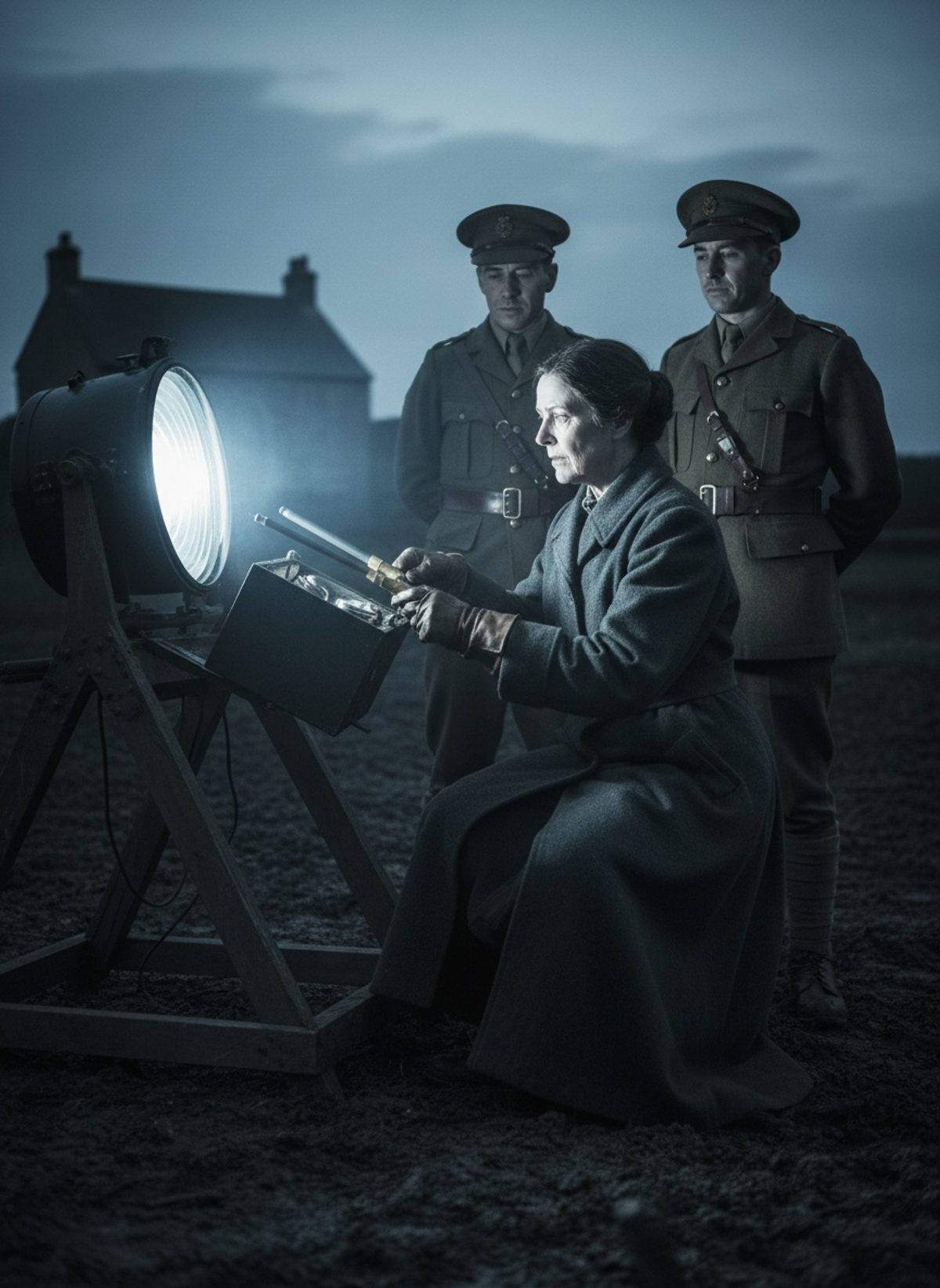
Britain's arc lamps kept failing at the Front. The War Office sent a woman. Hertha Ayrton fixed in days what men had failed to solve for months.
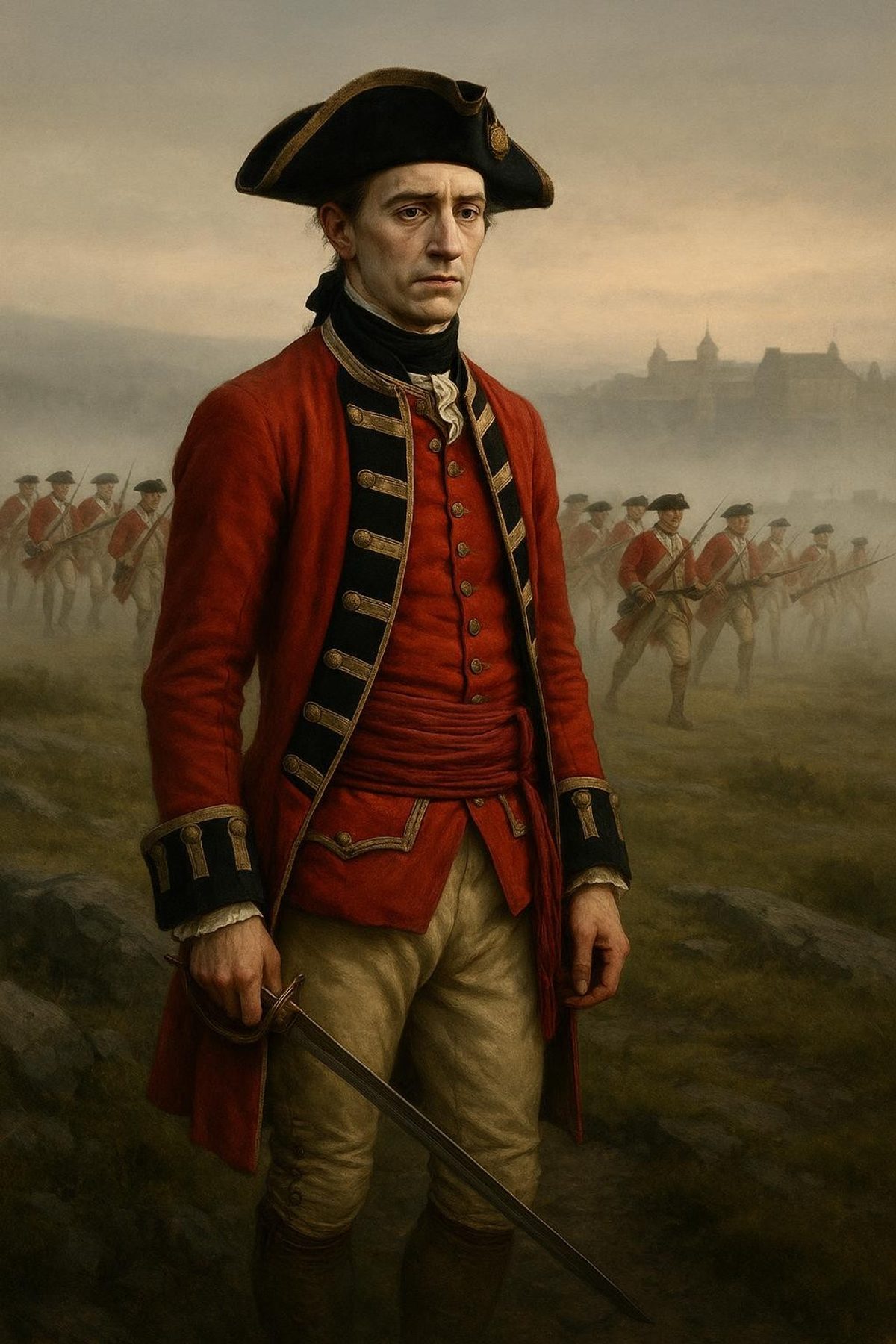
He was 32, consumptive, and widely doubted. Then James Wolfe scaled a cliff no French general thought climbable — and changed the map of North America. He did not live to see it.
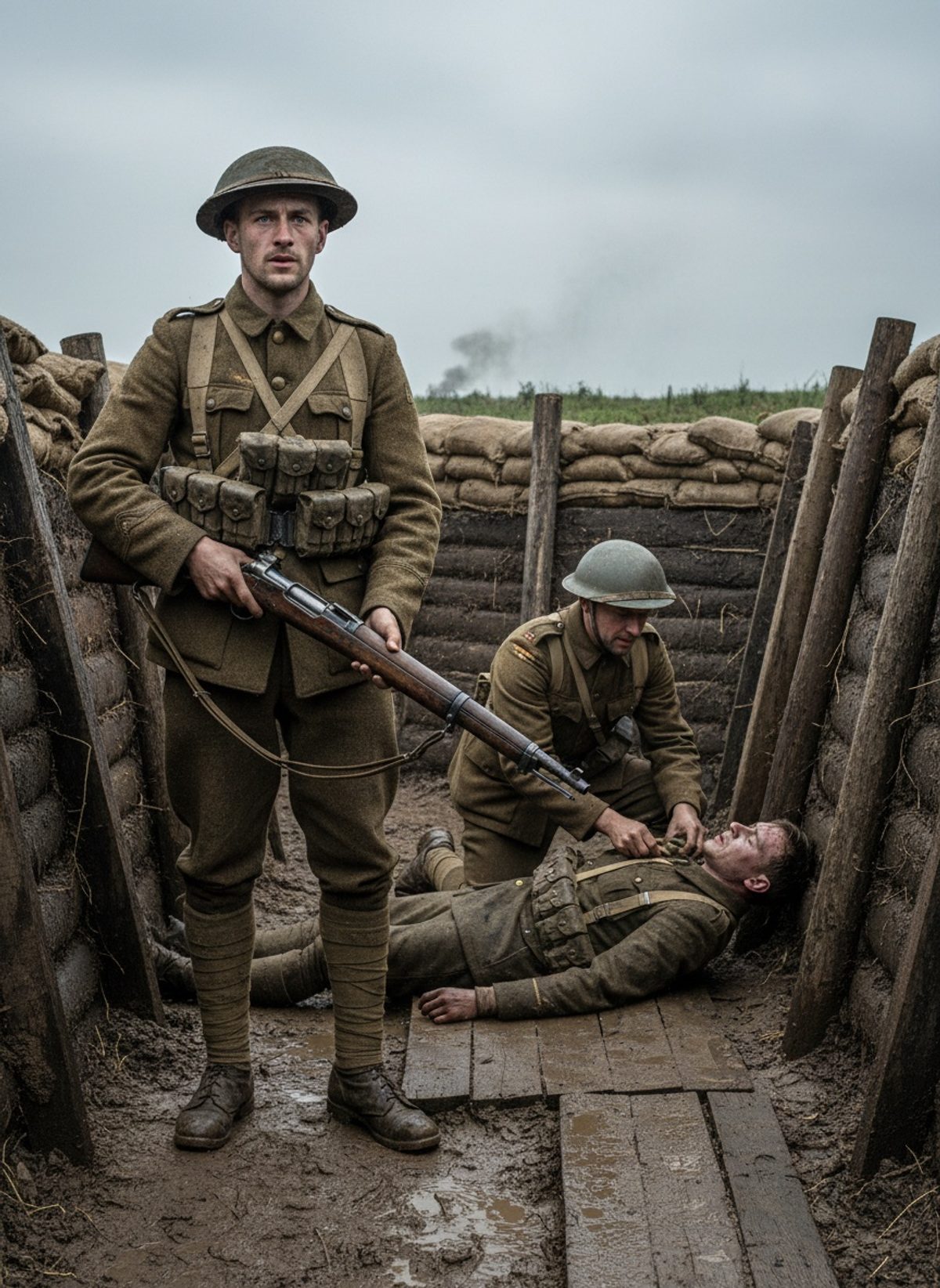
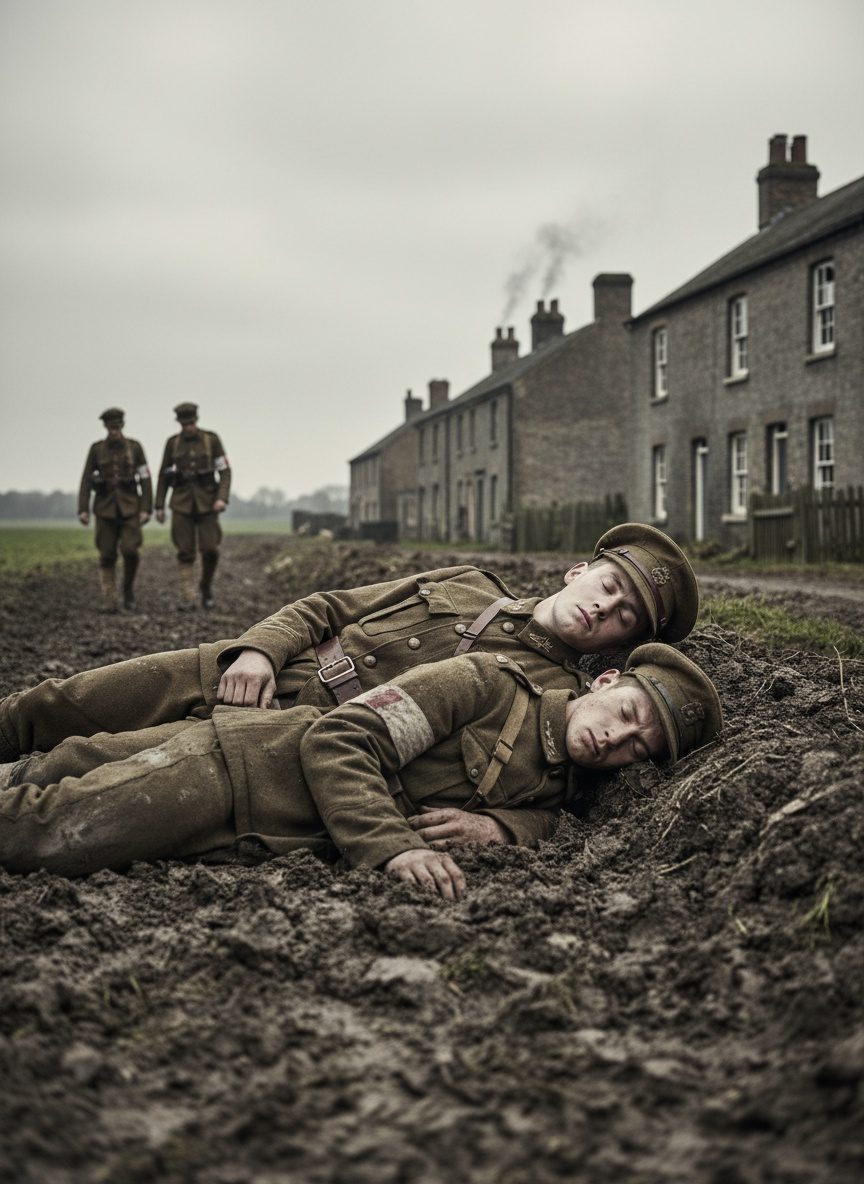
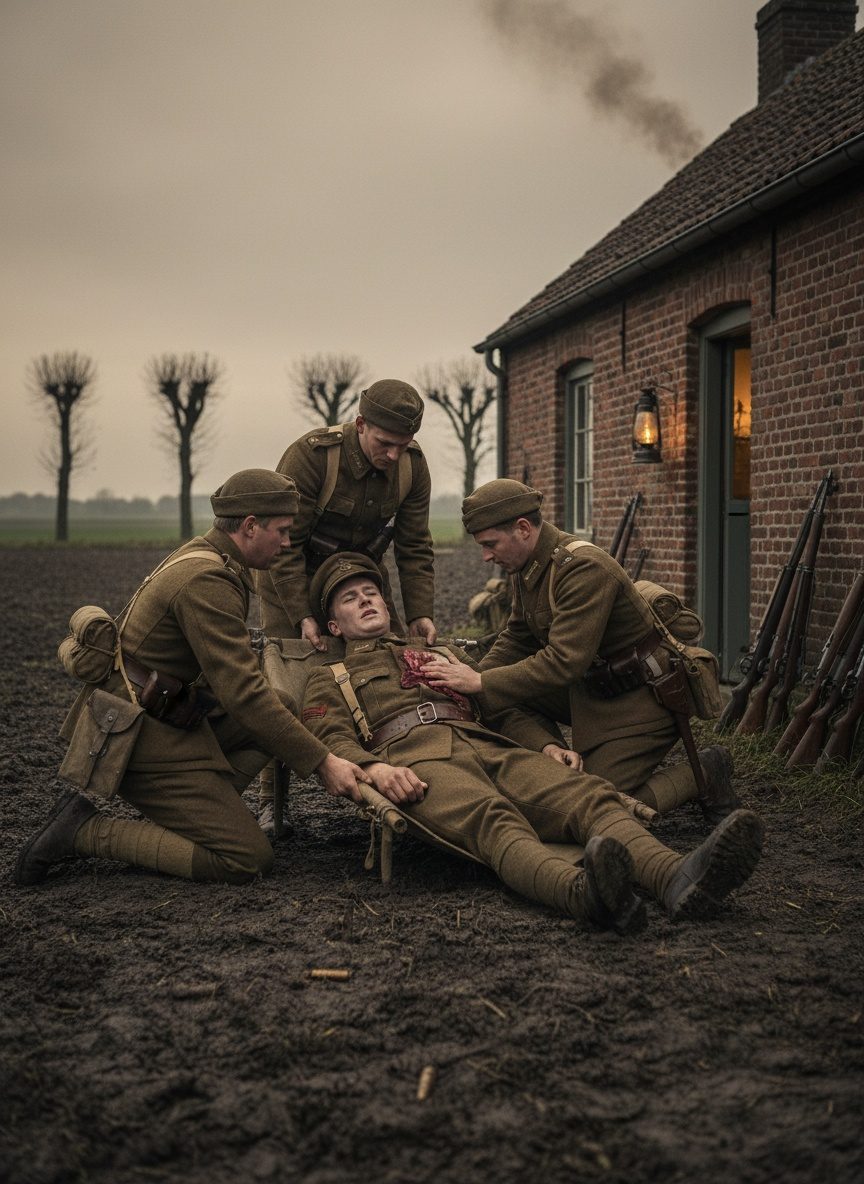
Shell fire was killing men faster than doctors could count. Britain issued a steel helmet. Recorded head wounds went up. Officers panicked. Then the truth landed: the dead were now surviving.
In 1899, as the British Army massed for the Boer War, Field Marshal Lord Kitchener authorised pocket-sized cards listing the locations of brothels — and warning signs of disease. The Army Chaplains refused to distribute them. The cards went out anyway.
He commanded armies. He also commanded soldiers to stay healthy. Kitchener's frank anti-disease cards enraged army chaplains. His response: ignore them entirely.
217 days. No relief. No surrender. Baden-Powell held Mafeking with a skeleton force and a town full of civilians. Then came the signal that changed everything.
Shot through the face, skull, hip, leg, ankle, and ear. Lost his left hand biting off his own fingers. Survived two plane crashes. Adrian Carton de Wiart fought on every time. Doctors called it impossible. He called it Tuesday.
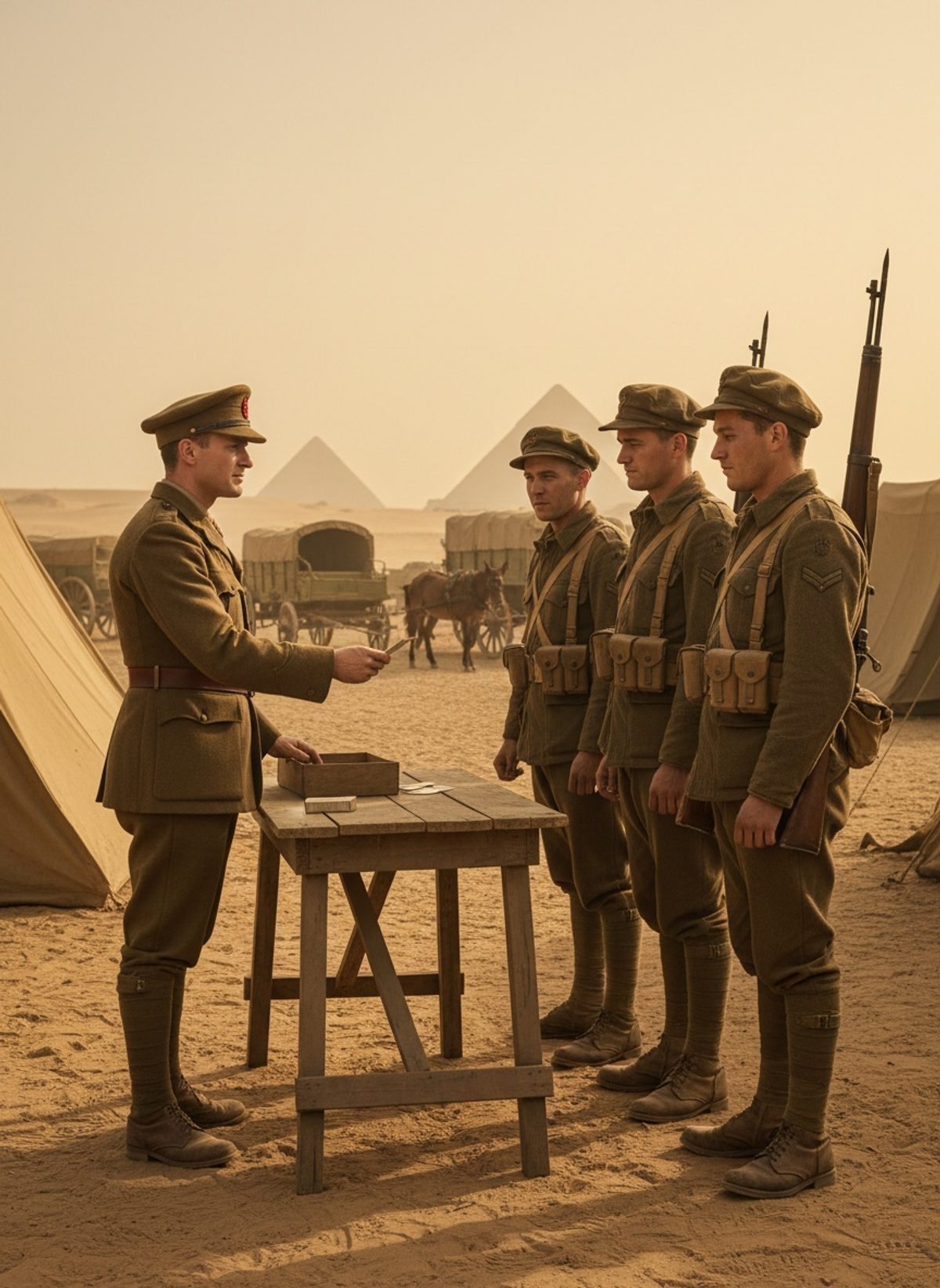
In 1898, British Army medics printed frank venereal disease warnings for soldiers in Egypt. Military chaplains demanded suppression. The Army ignored them. The pamphlets saved thousands.
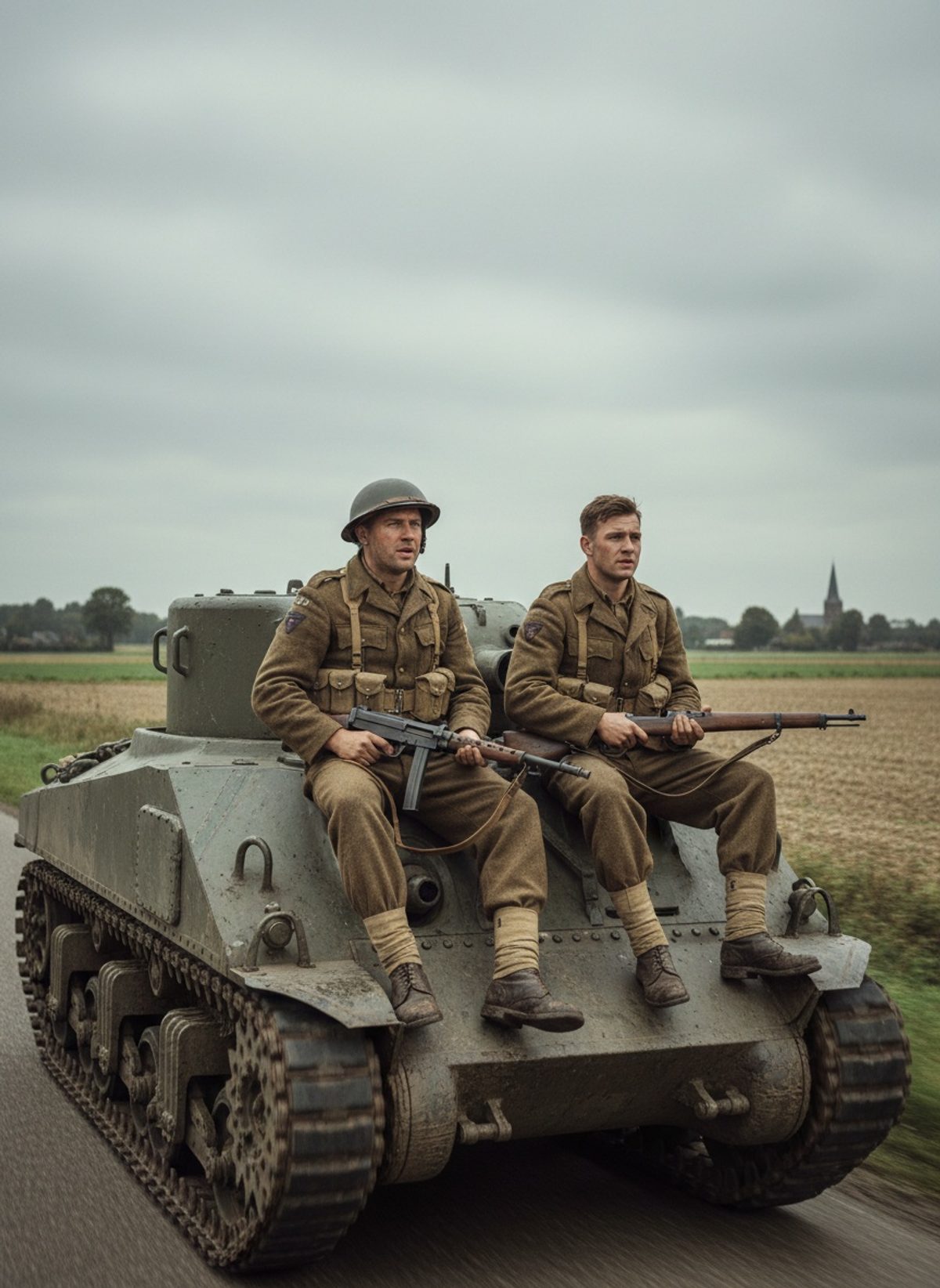
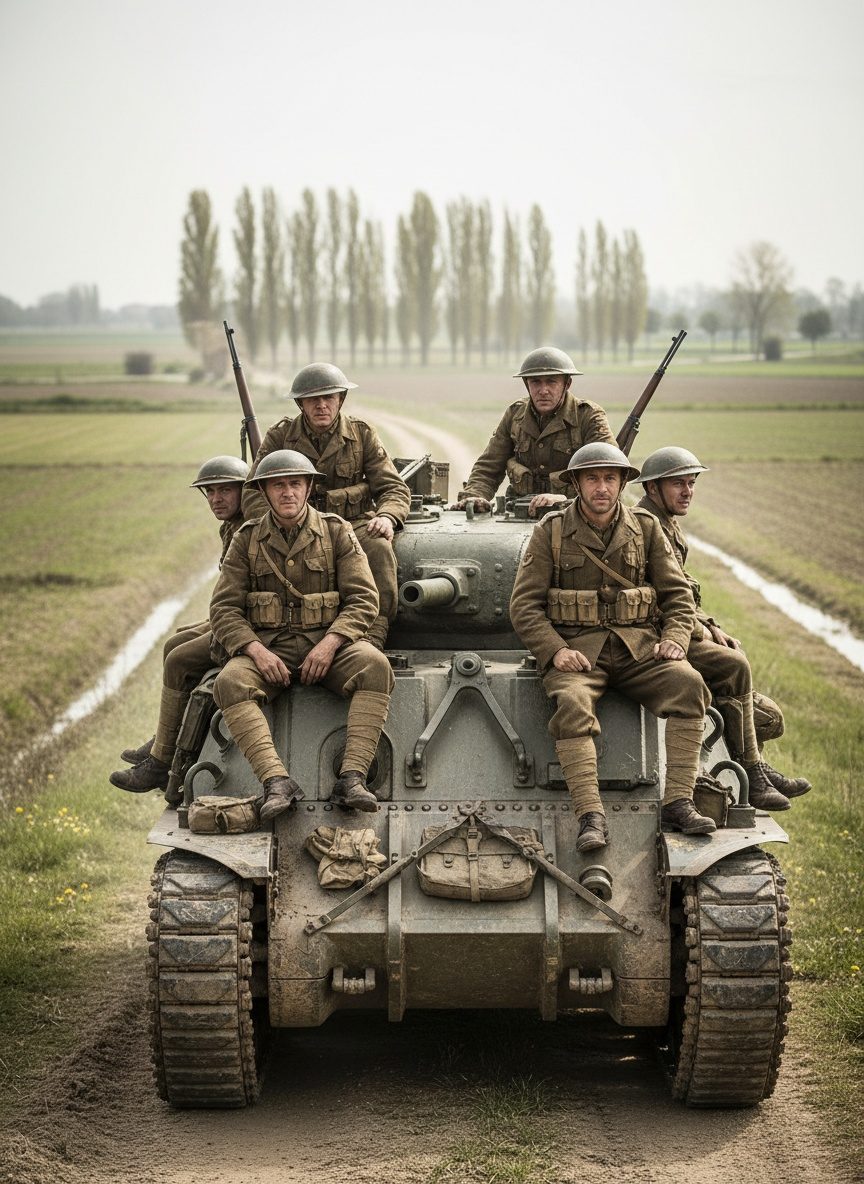
Holland, 24 September 1944. A British infantryman clings to a Sherman tank — carrying a captured German MP-40. 8th Corps is pushing forward. The enemy's own weapon rides with the men hunting him.
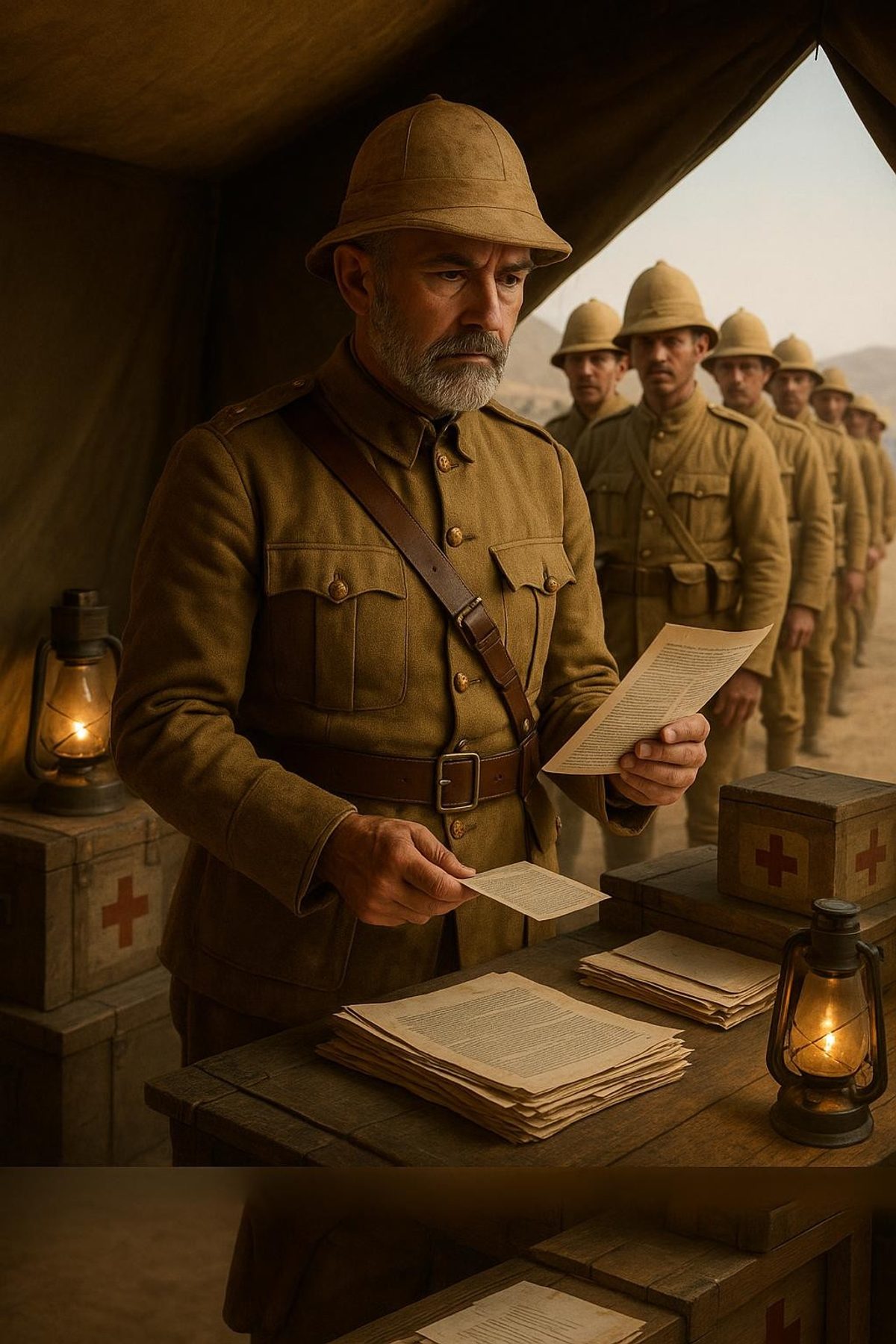
In 1916, the British Army in Egypt was losing more men to venereal disease than to Turkish bullets. One medical officer defied his superiors, printed blunt prevention cards, and handed them to every soldier. The Church was furious. The general was not.
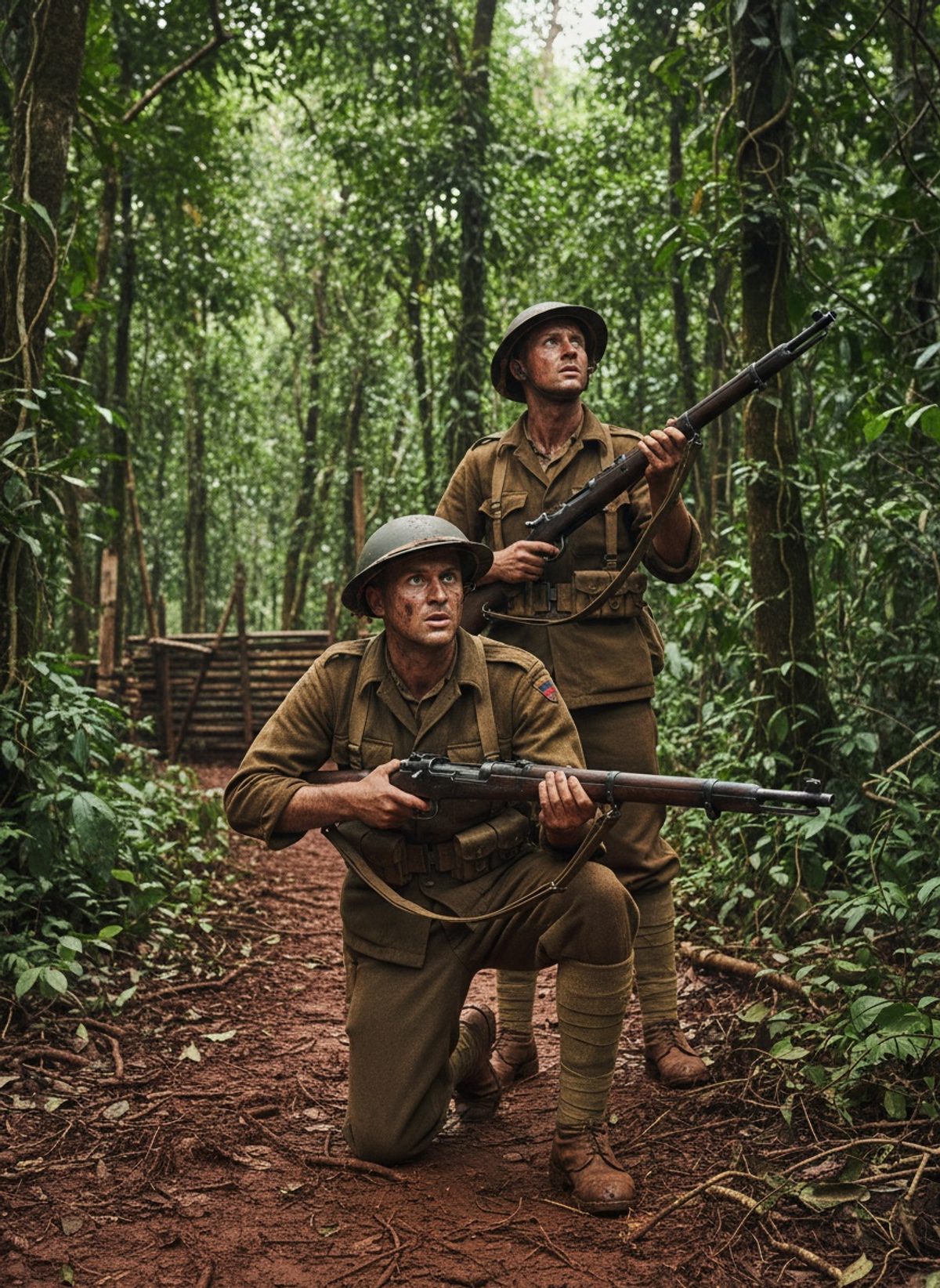
July 1942. A Japanese force of 6,000 pushes south through New Guinea's jungle. Between them and Port Moresby: two Australian militia battalions. Outnumbered, undersupplied — they bought time with blood.
In 1917, venereal disease was gutting Allenby's Egyptian Expeditionary Force faster than Turkish bullets. The Army's own medical chief printed a blunt, explicit pamphlet for every soldier. London was horrified. Allenby kept it.
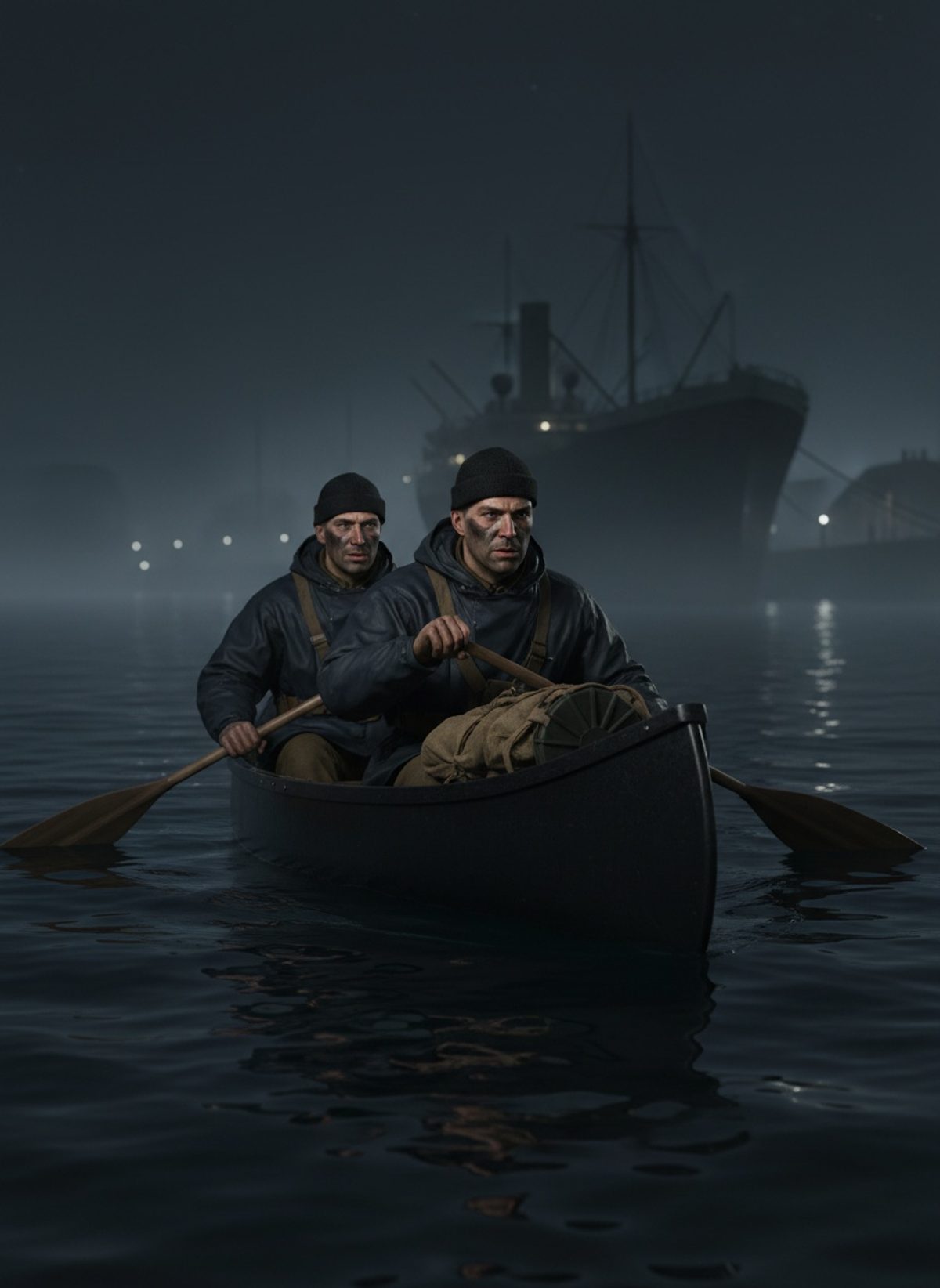
Ten Royal Marines. Six canoes. One of the most audacious raids of the war. Eight never came home. Two drowned. Six were executed. Only Hasler and Sparks made it back alive.
Two battles. One jungle ridge. The Japanese Imperial Army had never been forced to retreat. Then Kohima happened. Britain's forgotten victory changed the entire war in the East.
Britain declared war on Russia in 1854 with an army that had no maps, no winter boots, and no plan. The men who sailed to Crimea were magnificent. The system that sent them was rotten to the core.
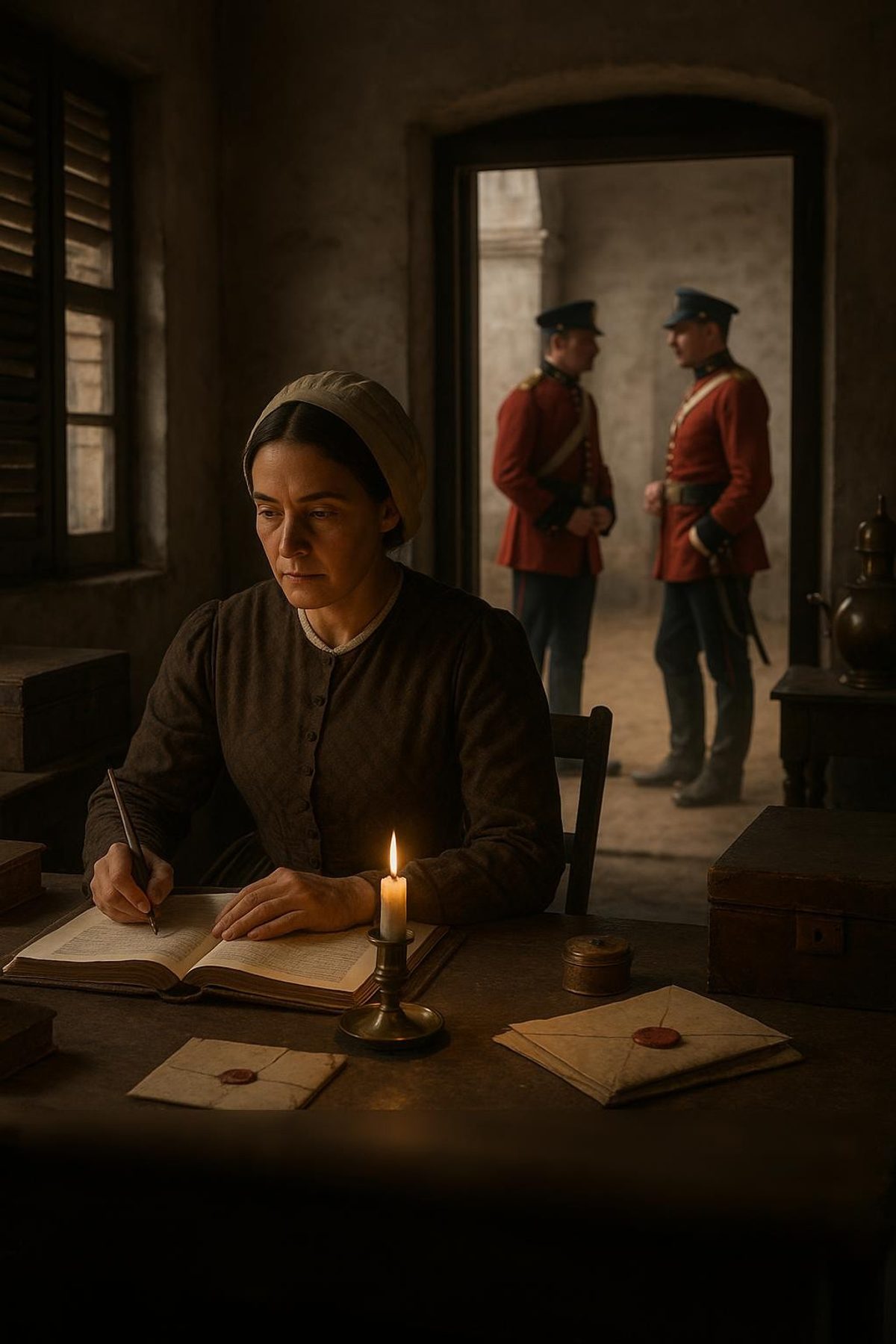
She kept the ledgers. She heard everything. When British officers joked about their own men dying, and troops bragged about cruelties carried out in India's dust, one woman wrote it all down.
A single torpedo. Nine minutes. 259 men gone. HMS Pathfinder was the first warship in history sunk by a self-propelled torpedo from a submarine. The North Sea swallowed her before anyone could react.
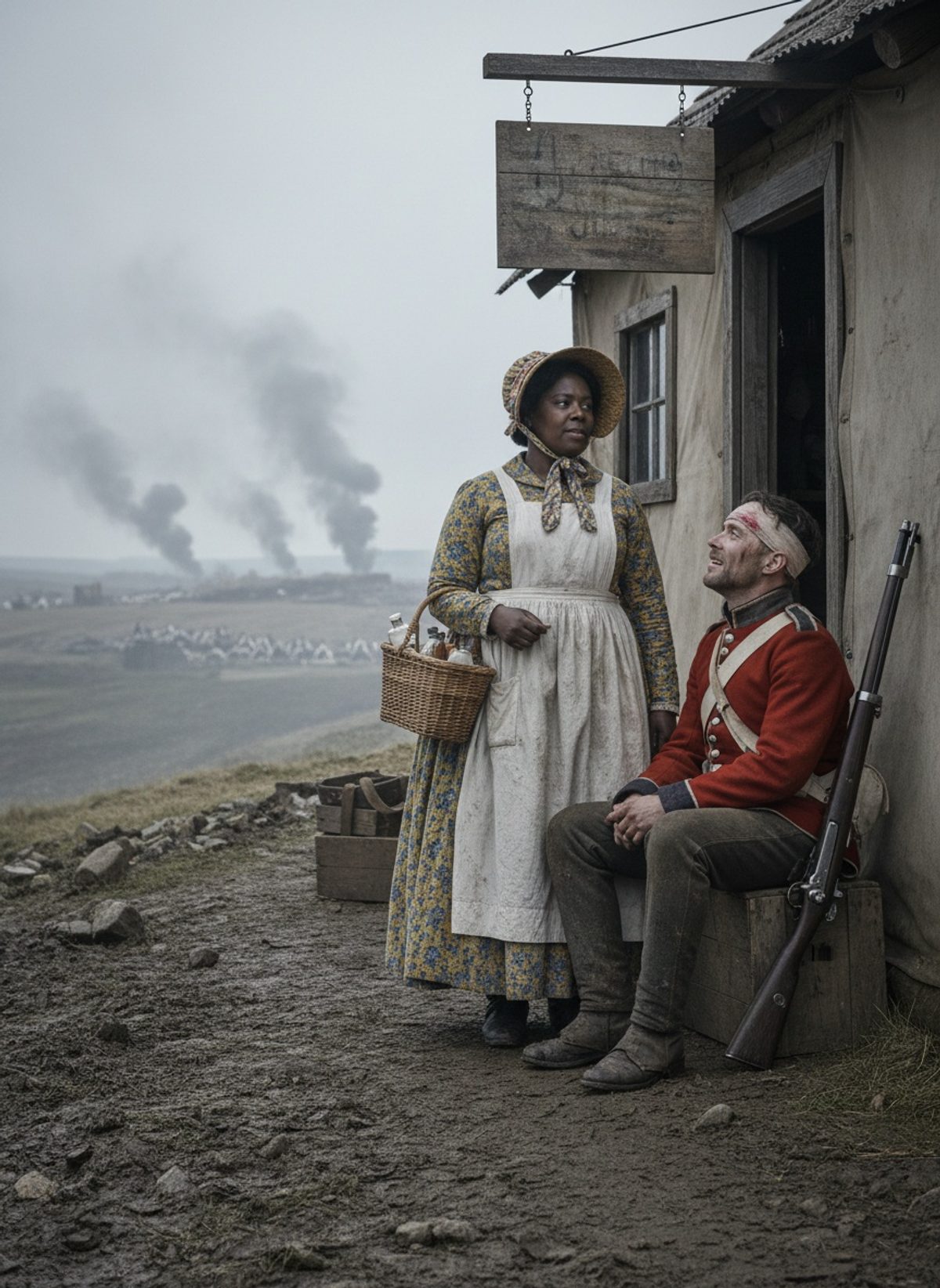
London said no. The War Office said no. Every nursing committee said no. Mary Seacole paid her own passage to the Crimea and built a hospital with her bare hands. She got there anyway.
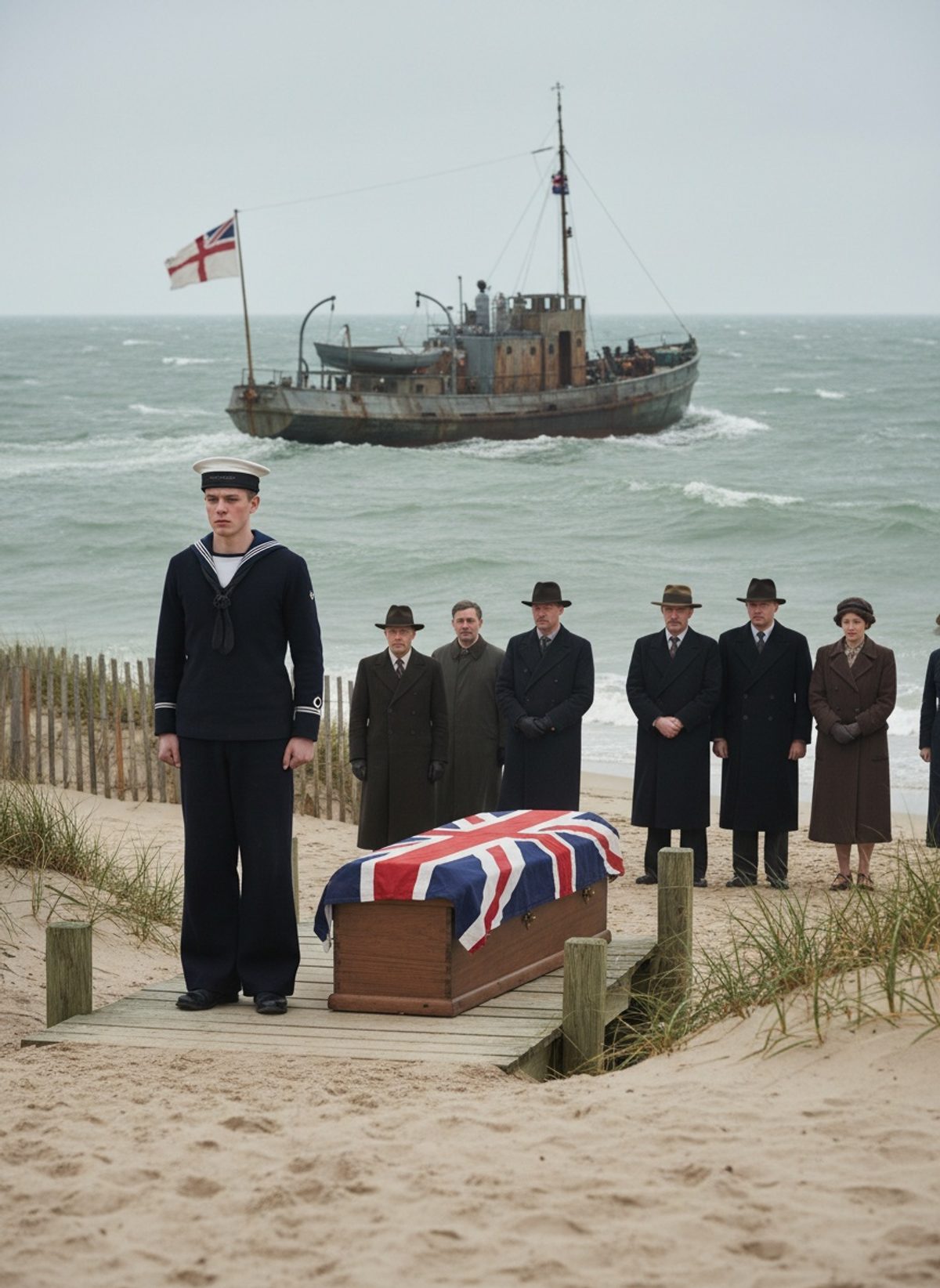
HMS Bedfordshire hunted U-boats off North Carolina. Then U-558 found her first. All 37 men were lost. Days later, the ocean returned four of them to Ocracoke Island. They are still there.
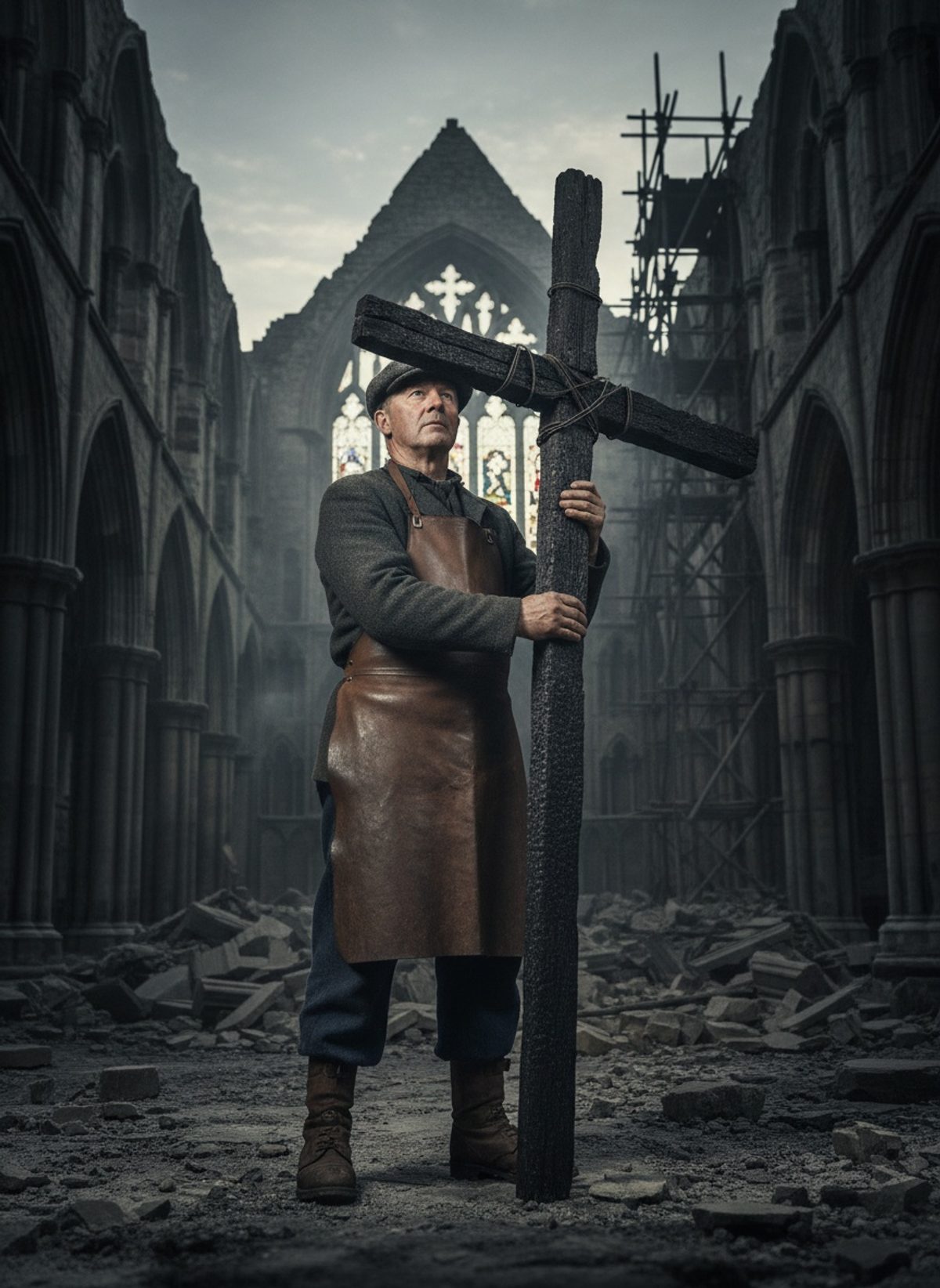
On the night of 14 November 1940, German bombers reduced Coventry Cathedral to a shell. The next morning, its stonemason made a cross from charred roof beams. That cross became a global symbol of forgiveness — not victory.
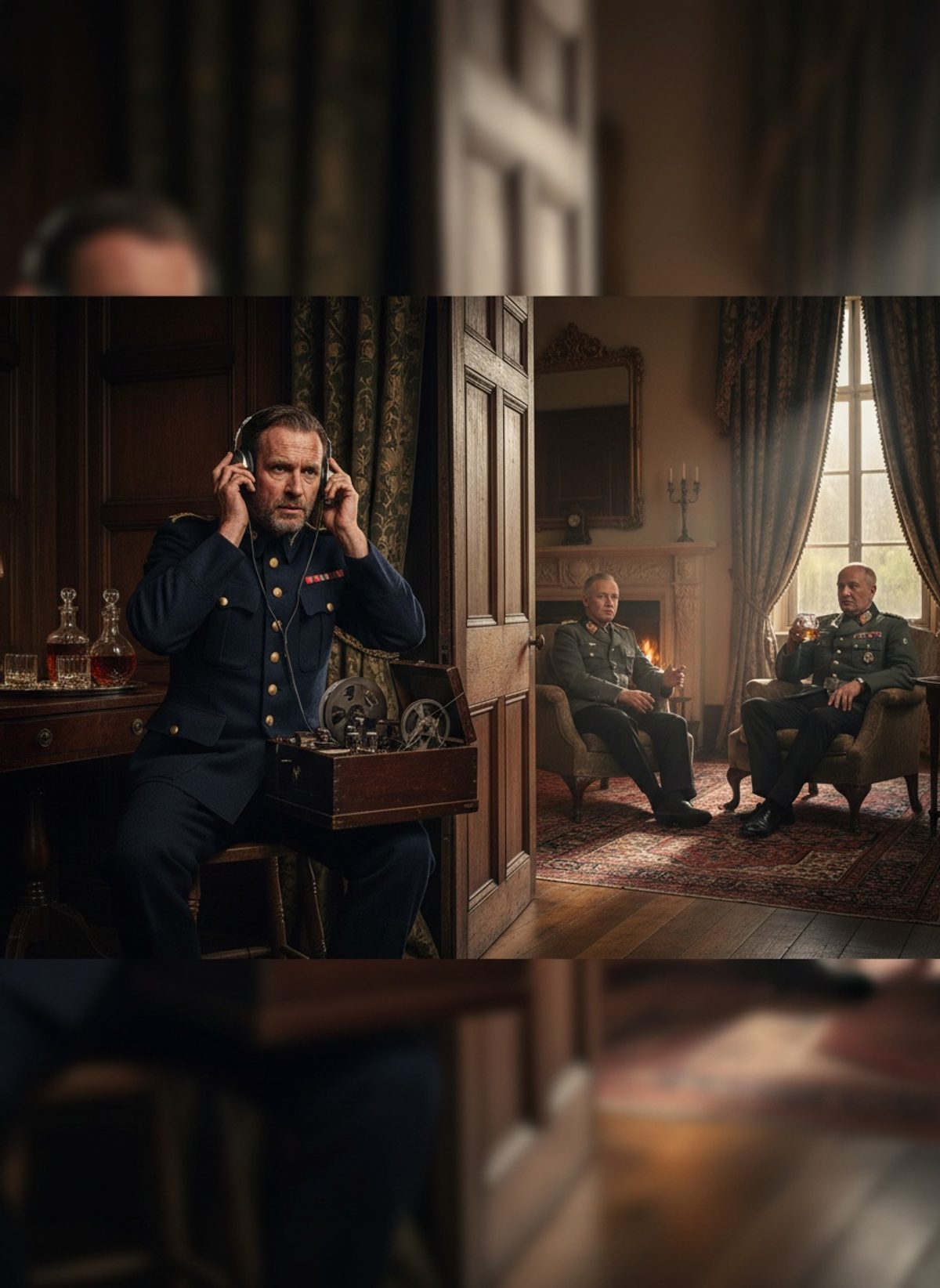
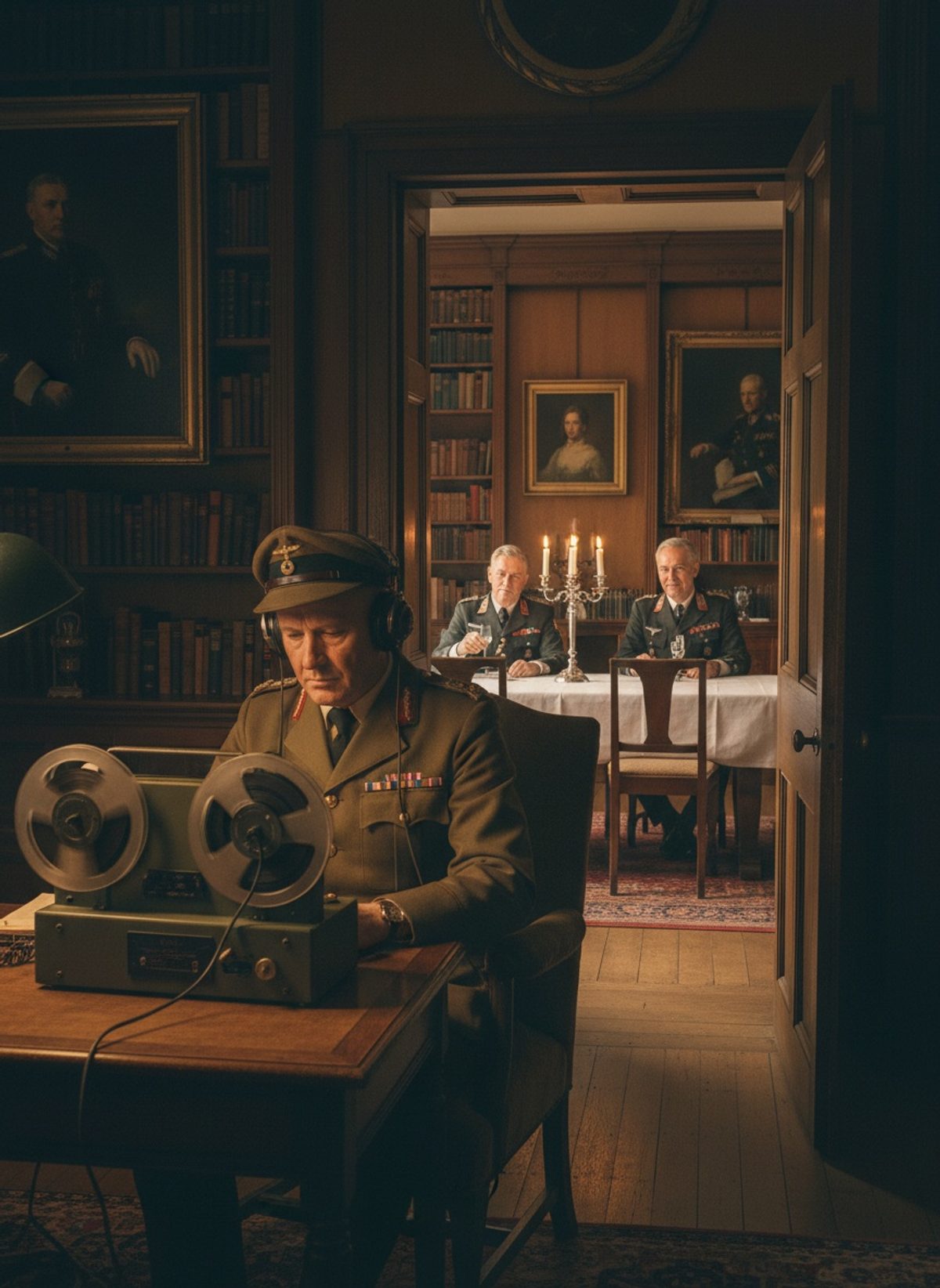
Britain needed German generals to talk. So it gave them brandy, fine china, and hidden microphones. CSDIC bugged three country houses and let the prisoners do the rest.
MI19 requisitioned a Georgian mansion. Wired every room. Staffed it with fluent German speakers posing as servants. Then invited captured Luftwaffe pilots to relax. They talked for months.
One crossing. One night. Two Victoria Crosses became eleven. A handful of soldiers held a mission station against four thousand Zulu warriors — and somehow, none of them ran.
June 28, 1914. One archduke. One wrong turn. One bullet. Within six weeks, the British Empire was at war — and four years later, a generation was gone.
Britain turned every captured German spy. Every single one. MI5's Double Cross System ran Hitler's entire spy network — and fed it lies. The Germans never knew.
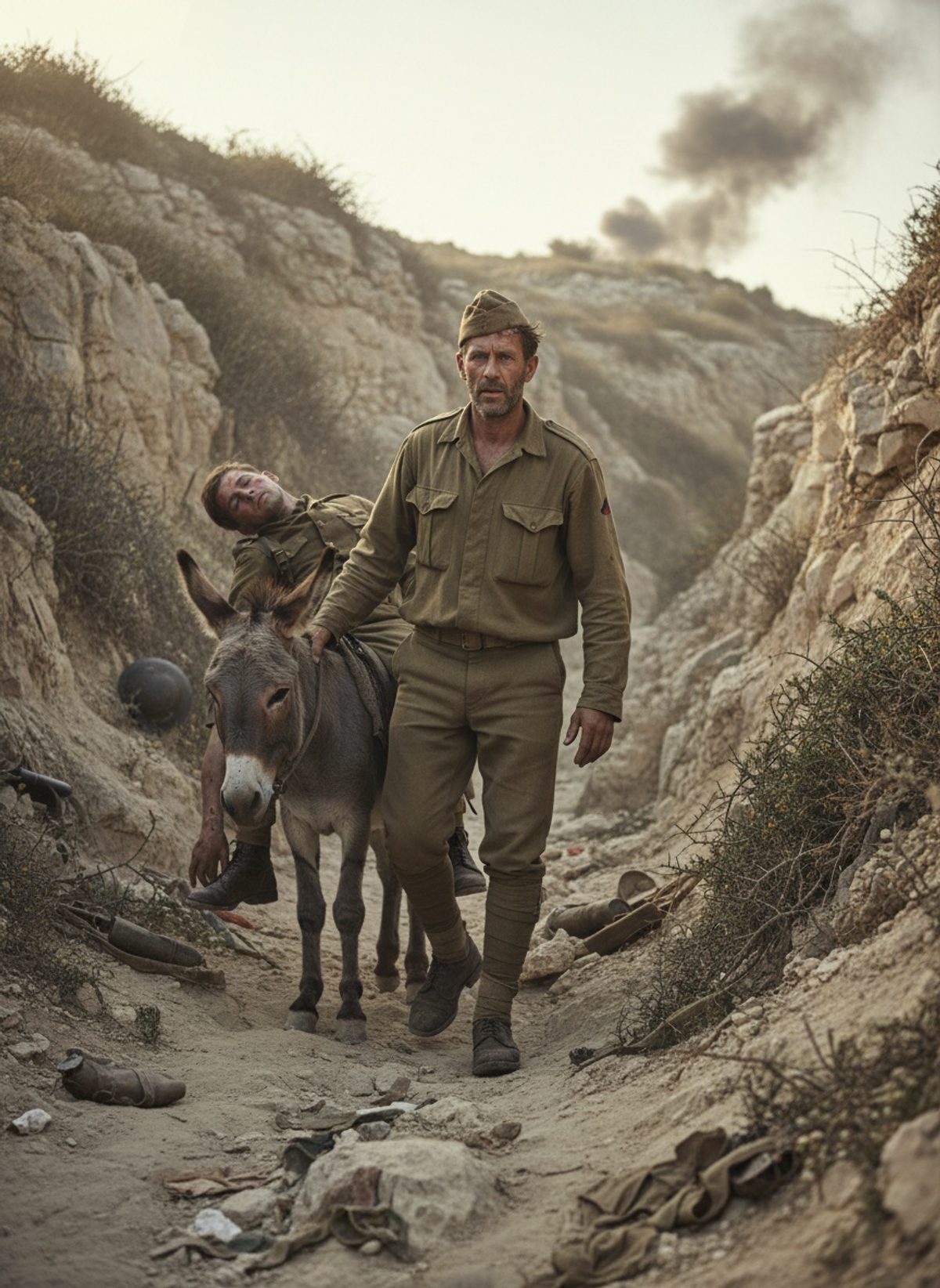
He enlisted as a stretcher-bearer. He had no donkey. He found one wandering in the dark. For 24 days he carried wounded men off Gallipoli's slopes. He never stopped. He never asked permission.
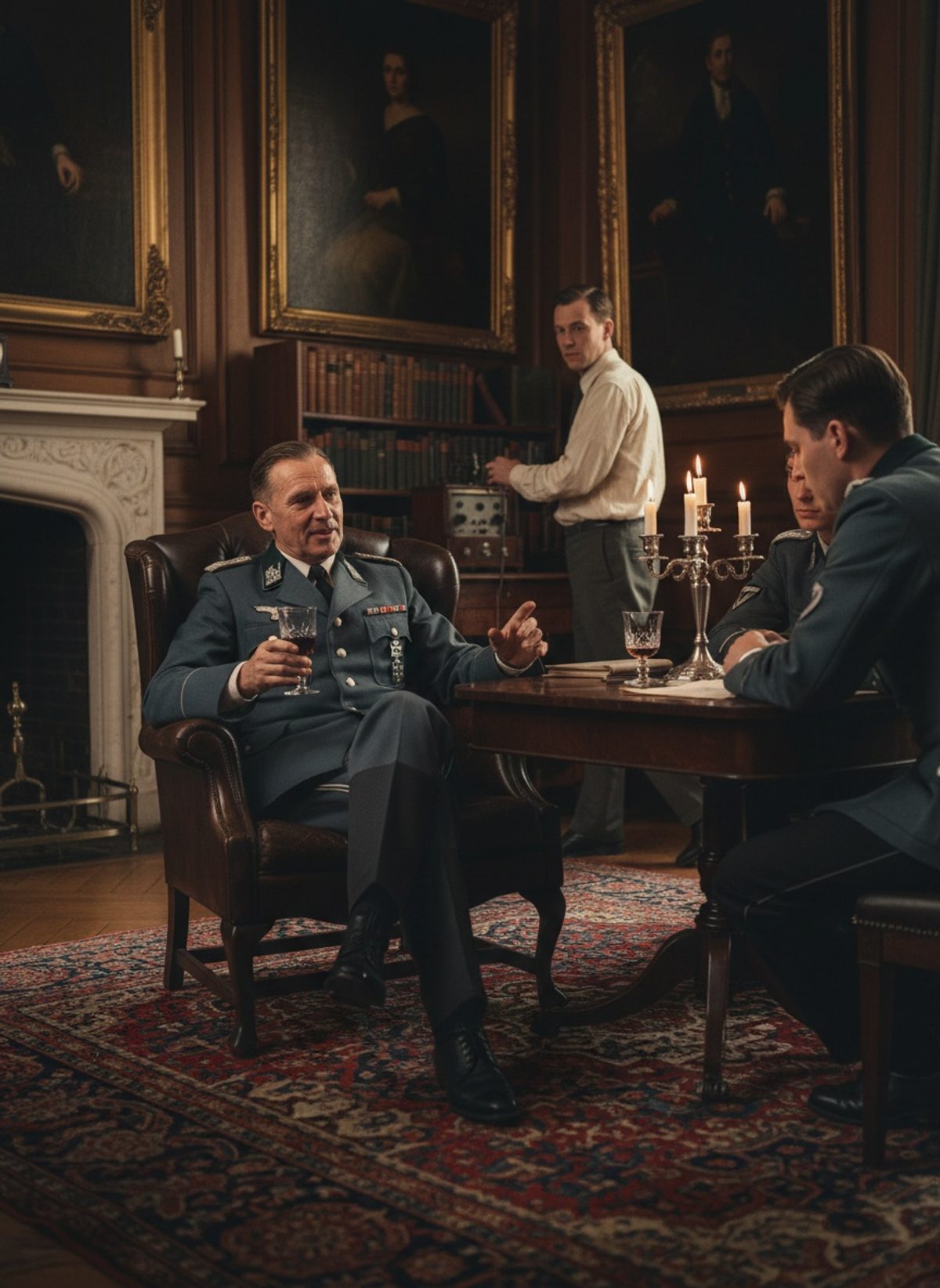
Britain bugged a country house. Filled it with wine. Then invited captured German generals to relax. Every word went straight to Whitehall. The enemy never suspected a thing.
Frederick Treves was the most celebrated surgeon in England. He had saved the King's life. Then he heard what happened at Spion Kop — and walked back into the carnage himself.
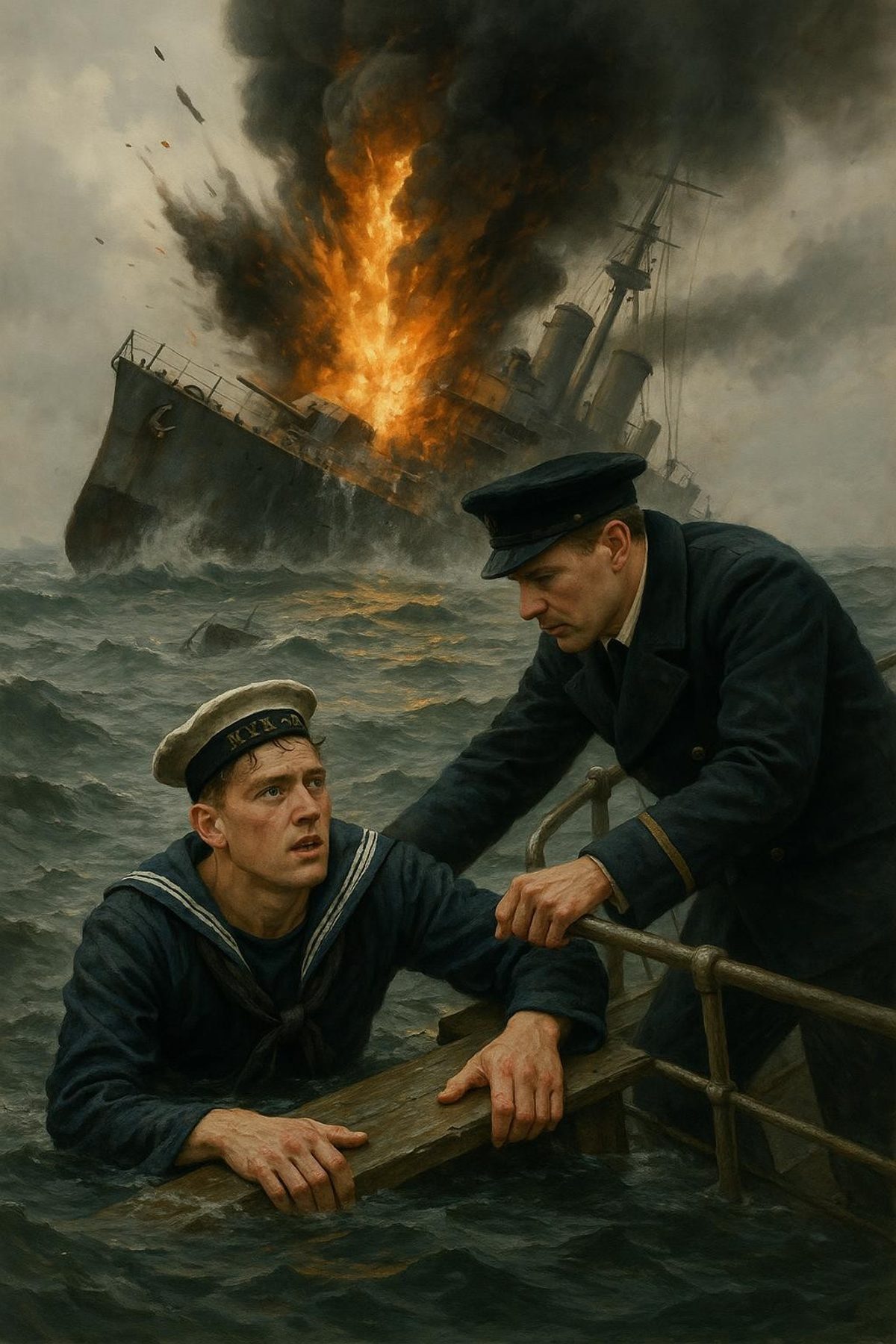
He was 16. His crew lay dead around him. The ship was on fire. Jack Cornwell stayed at his gun and waited for orders that never came. He died three days later.
Lucknow, 1857. The Residency was surrounded. 600 defenders held off 8,000 for 87 days. One woman stood in a doorway during the final assault and refused to leave the wounded behind.
She left England as a nurse. She ended the war as a combat sergeant. Flora Sandes charged enemy lines with a grenade in each hand. The British Army said women couldn't fight. The Serbian Army made her an officer.
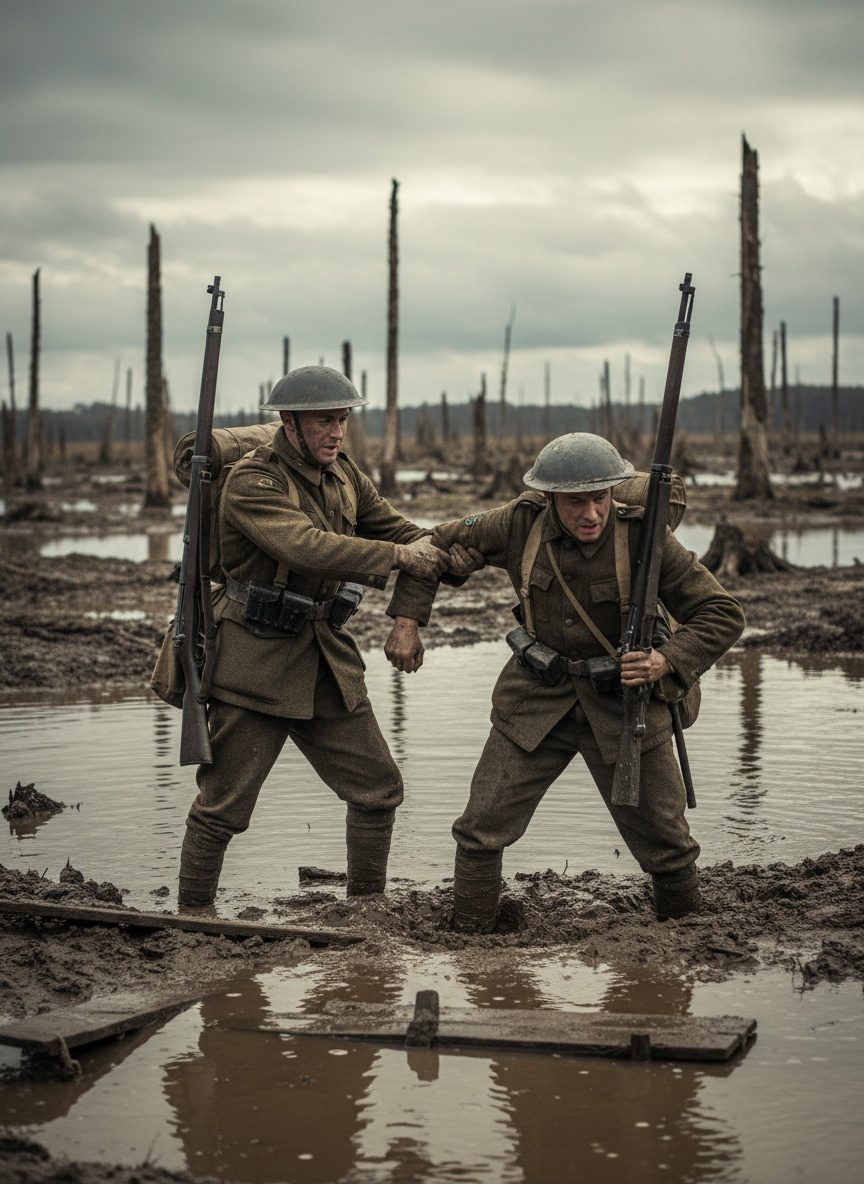
31 July 1917. The guns stopped. The men moved forward. Then the rain came. Within hours, the battlefield had turned to liquid mud. Passchendaele would cost Britain over 250,000 casualties.
He joined the Royal Navy at 15. Too young by law. Old enough for war. George Parker served Britain across two world wars and four decades — and never stopped.
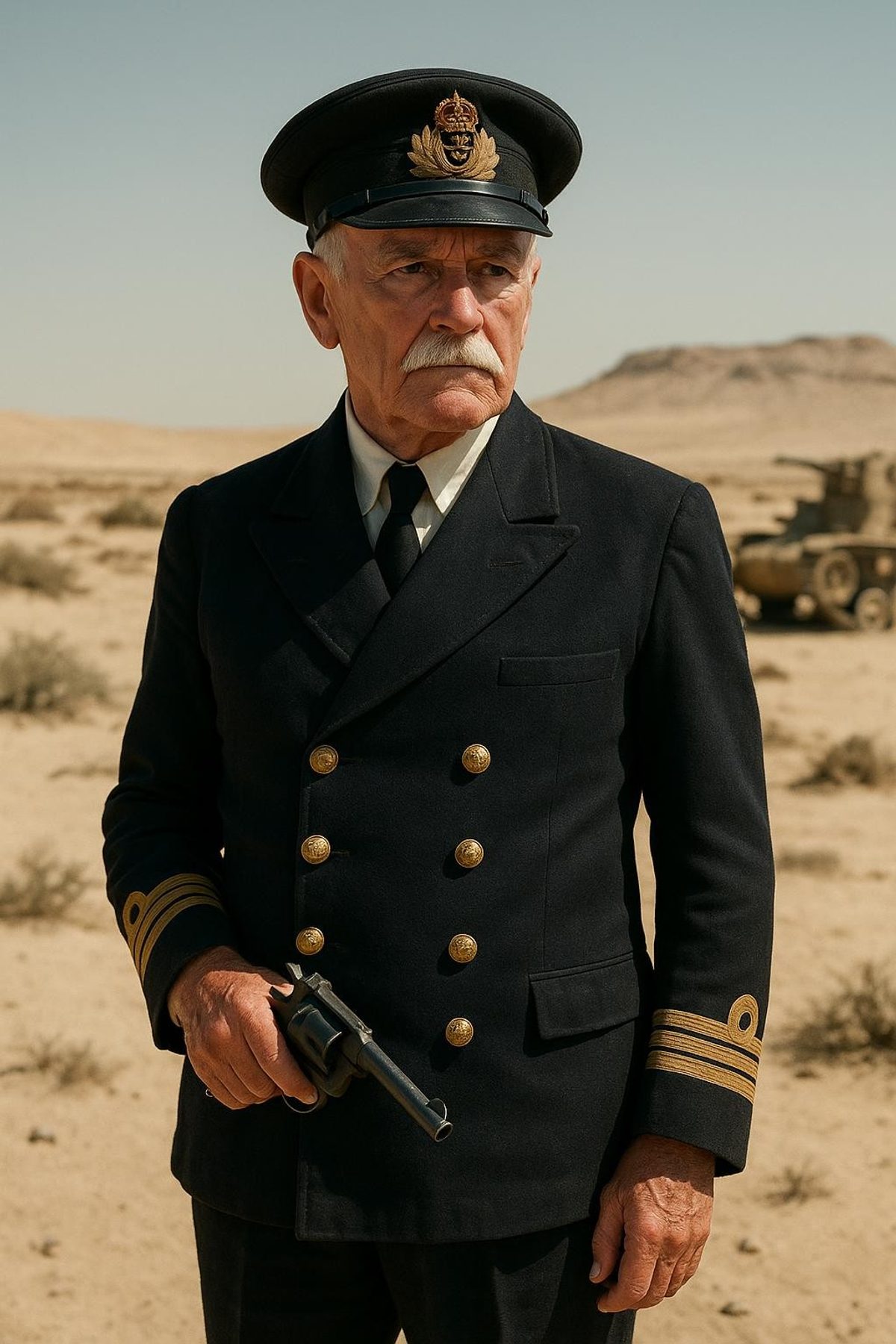
Retired admiral. 68 years old. Fought his way aboard an Italian destroyer with a pistol. Captured. Refused to quit. Churchill had him released — then let him go back.
After the Boer War, Britain had 450,000 men under arms. Within months, most were discharged with a handshake and a train ticket. The War Office lost track of nearly all of them. Nobody planned for what came next.
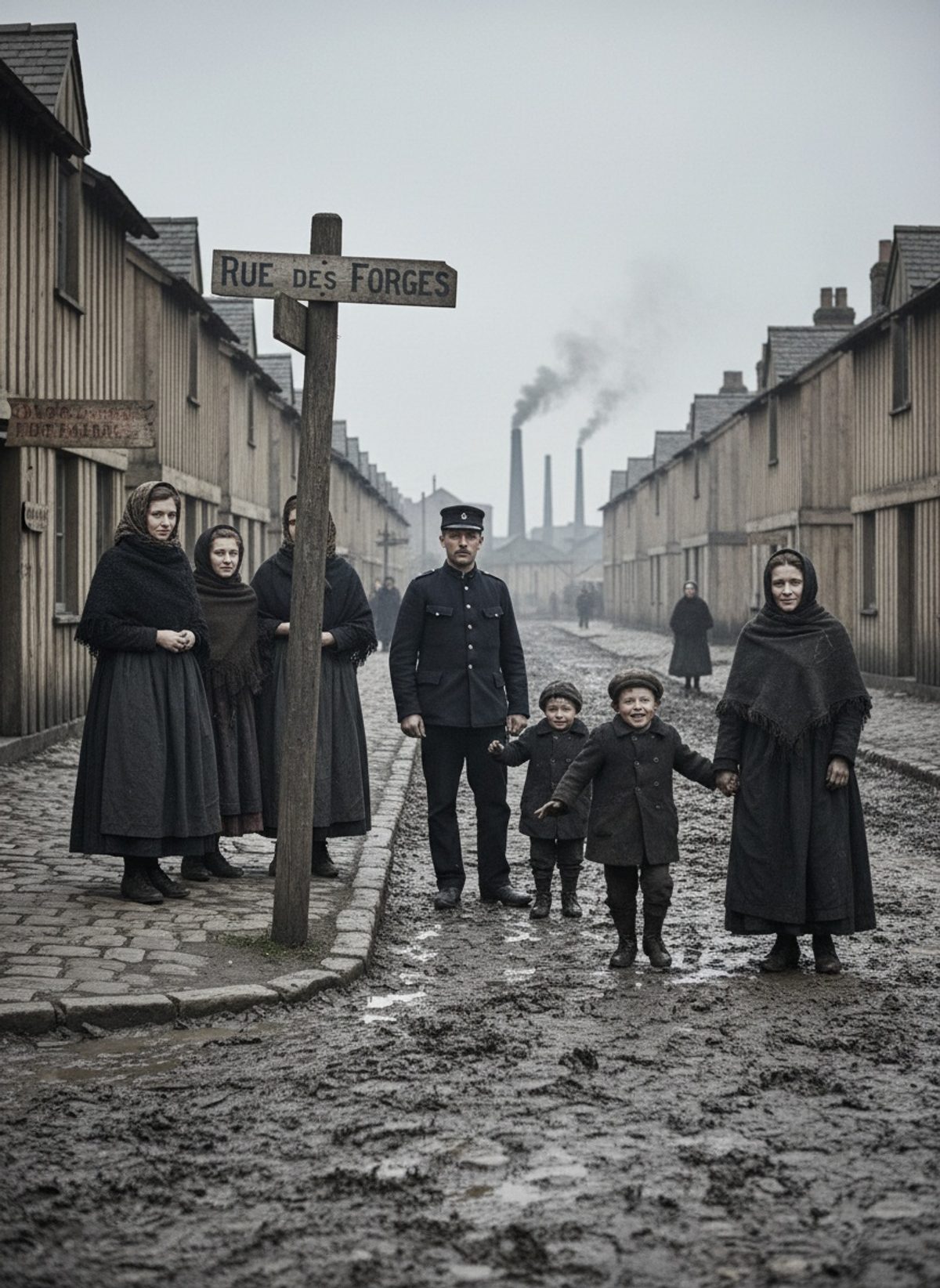
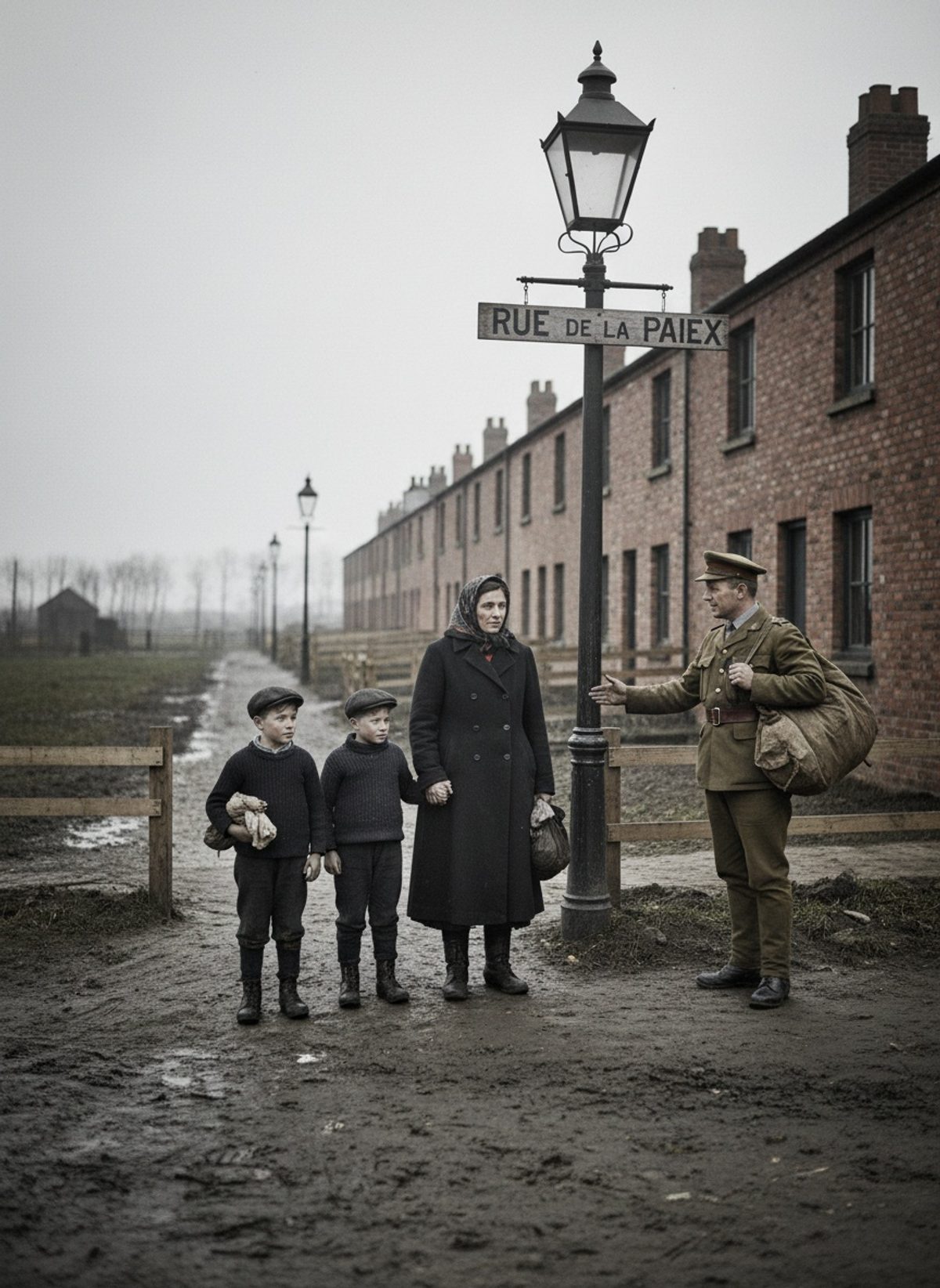
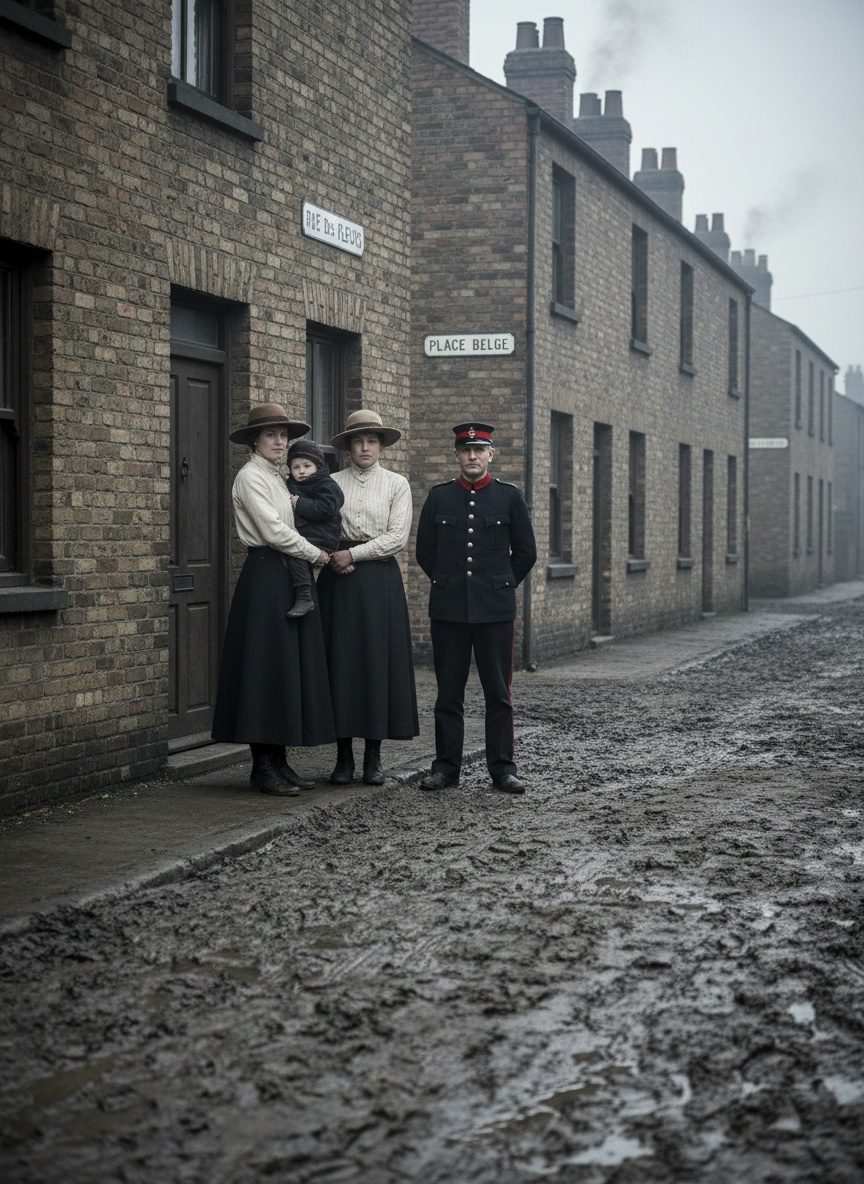
In 1914, a quarter-million Belgians fled to Britain. Most lived with local families. But for 6,000 munitions workers, Britain built them their own town — with Belgian laws, Belgian police, and Belgian street names.
1932. The Treasury told the Army to cut training. Regiments drilled with broomsticks instead of rifles. Three years later, Hitler remilitarised the Rhineland.
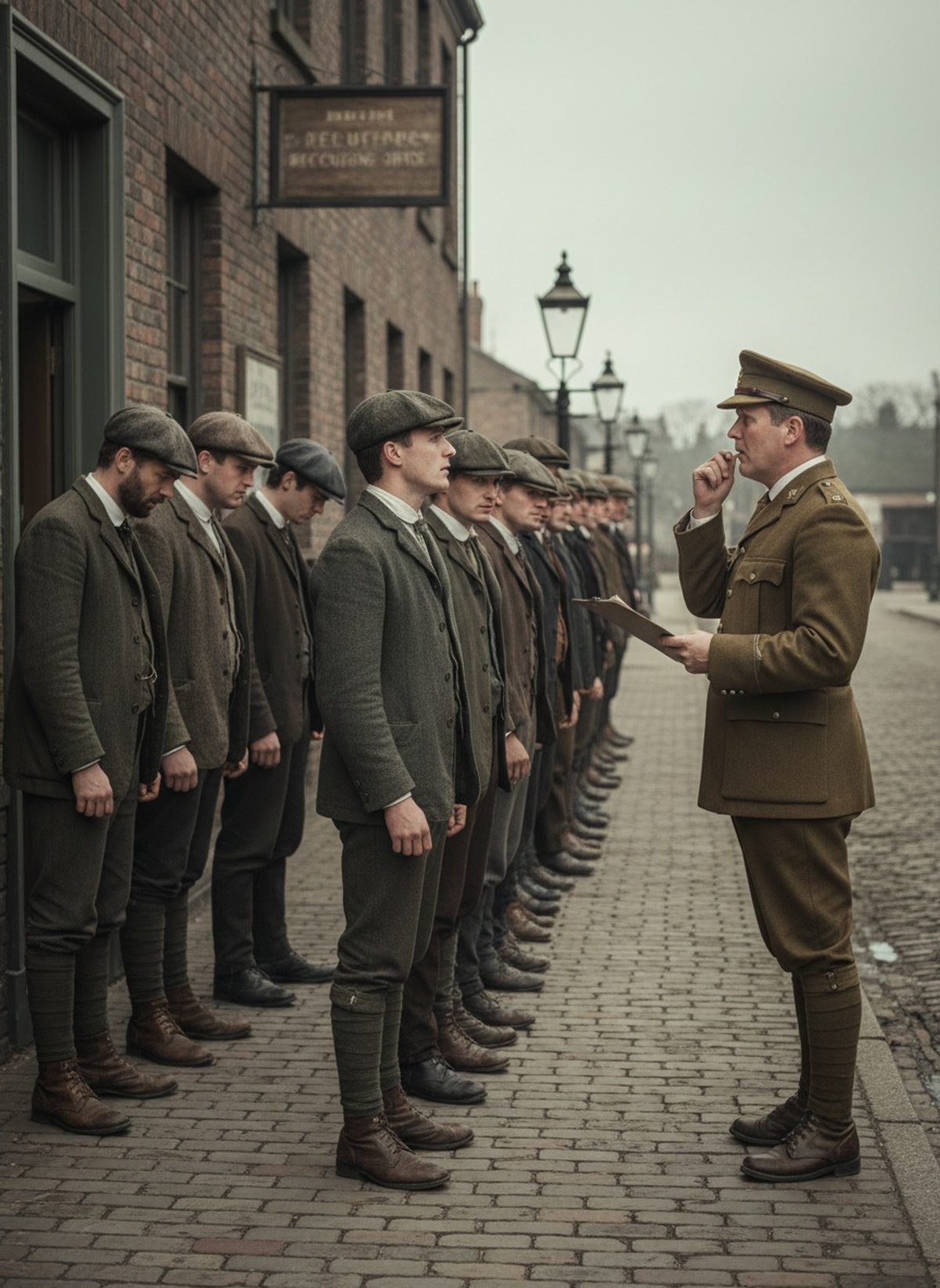
In 1914, Britain begged men to enlist. Then turned 35% of them away. Not for cowardice. For bad teeth, flat feet, and being too short. The Empire needed heroes — just not ones under 5'3".
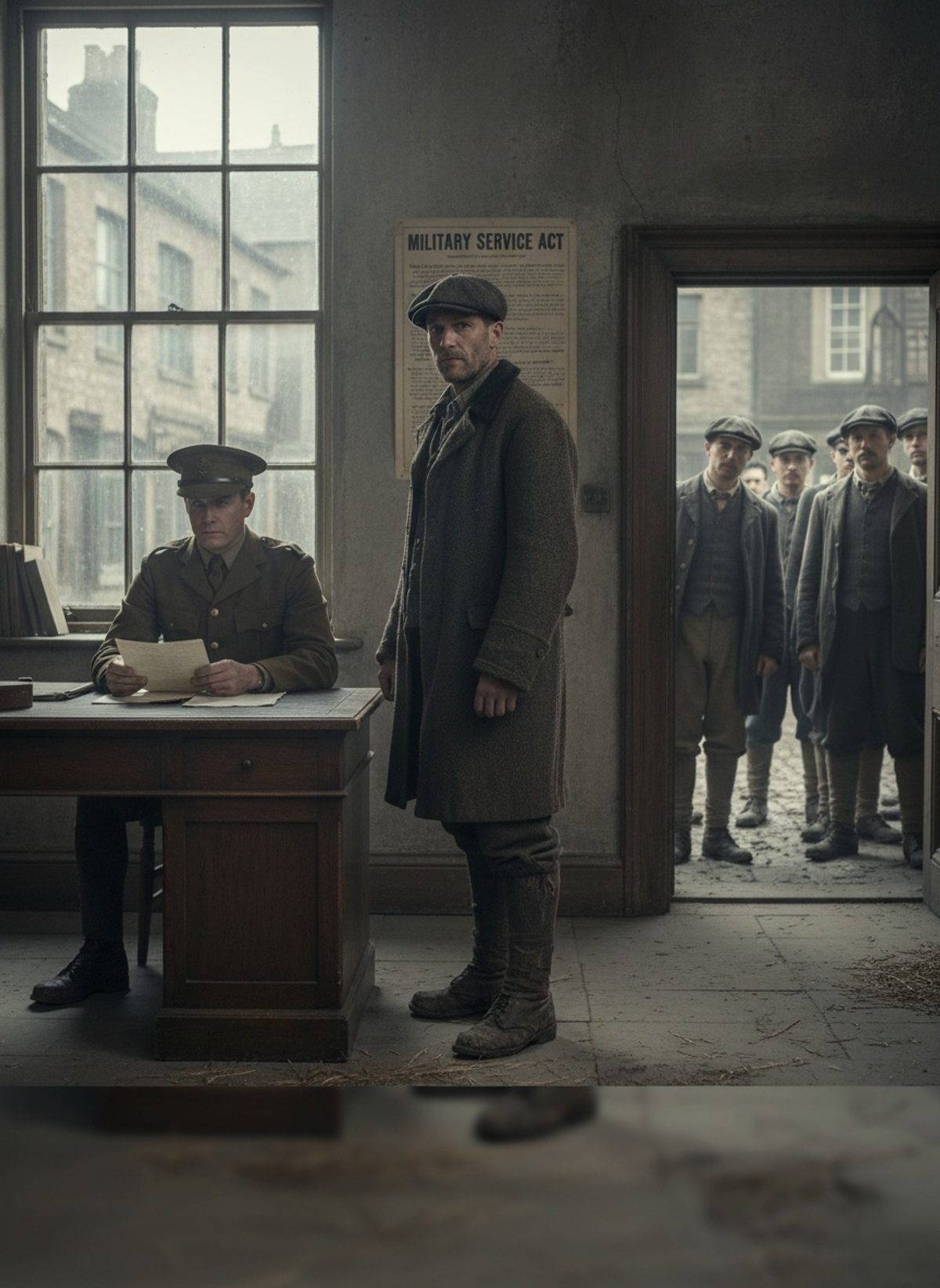
By 1917, Britain had run out of volunteers. The Military Service Act reached into every home, every farm, every factory. Men who thought they were safe discovered they were not. No one was exempt for long.
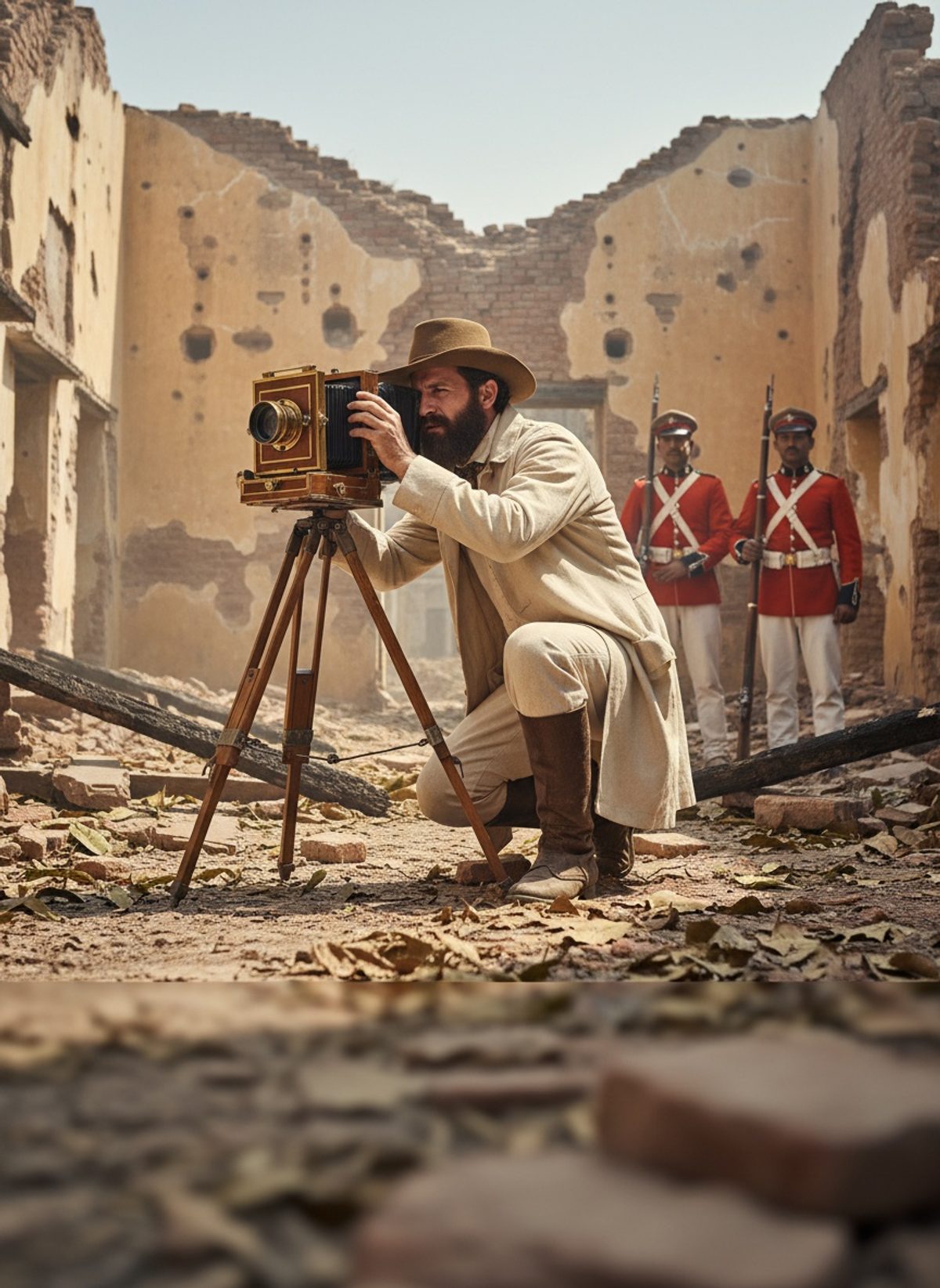
Felice Beato walked into the ruins of Lucknow with a camera. He photographed the dead before they were buried. His images were the first war photographs the British public had ever seen.
January 1879. Lord Chelmsford split his force. Isandlwana fell. 1,300 men died. One surviving private faced a court martial. The generals who made the decisions faced nothing.
He had one eye, one arm, and no interest in staying back. At 38, Adrian Carton de Wiart charged machine-gun nests on foot. His men followed because their general led from the front.
He had 317 days to be rescued. The relief column arrived two days late. Gordon knew they were coming. He stood at the window anyway. Some moments can't be changed.
He was warned the trench was a death trap. He went anyway. Captain Hedley Vicars of the 97th led his men into a Russian sortie and never came back. He was 29.
Luke O'Connor defused it with his hands. One wrong move and he was gone. He walked back to his men alive. They gave him the Victoria Cross. He was 19 years old.
November 1857. Lucknow was still burning. The Black Watch advanced through smoke and rubble. Piper George Muir walked upright. Pipes screaming. Men followed the sound when they could see nothing else.
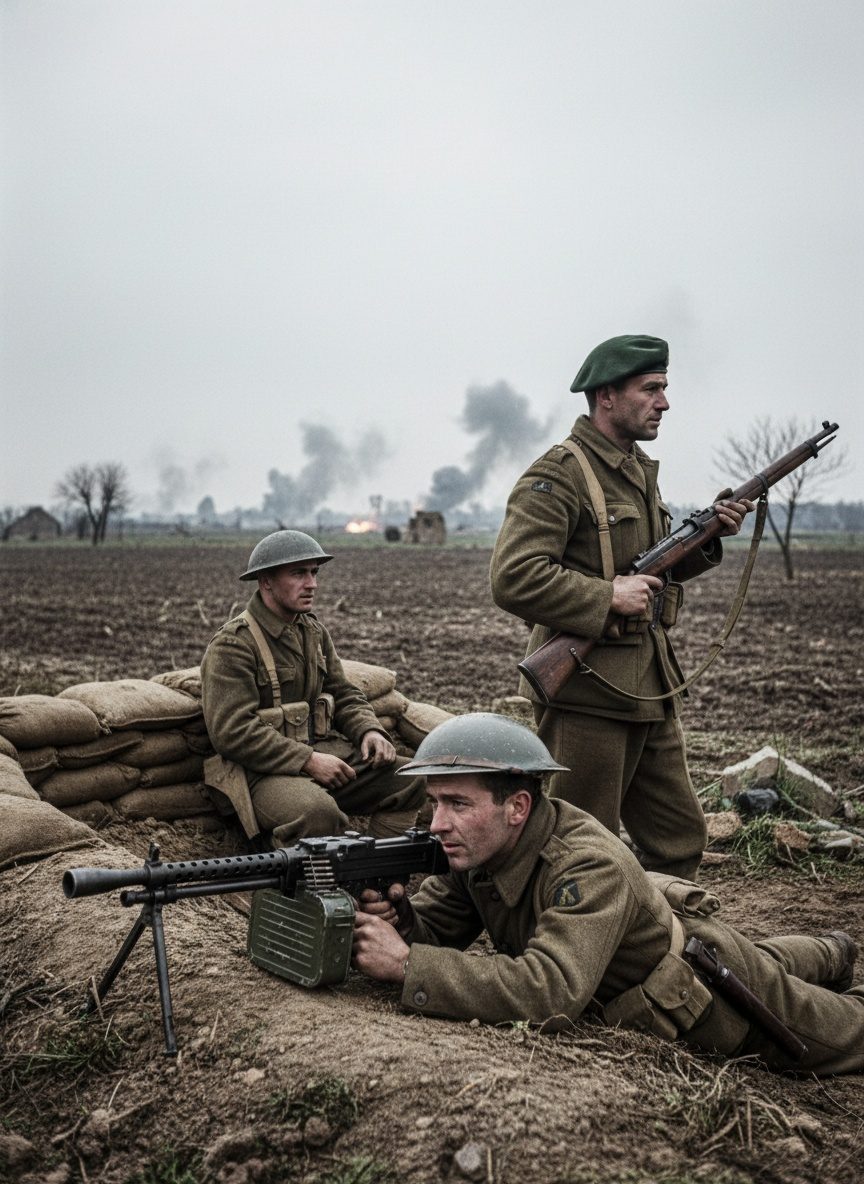
Burma, 1944. One British corporal. One Bren gun. Miles of jungle between him and the enemy. He carried it anyway. Some men don't make headlines. They just carry the weight.
Kohima, April 1944. The Japanese were fifty yards away. Sepoy Mast Khan of the 1/1st Punjab didn't wait for orders. He picked up the Bren and walked forward. Some men are simply made differently.
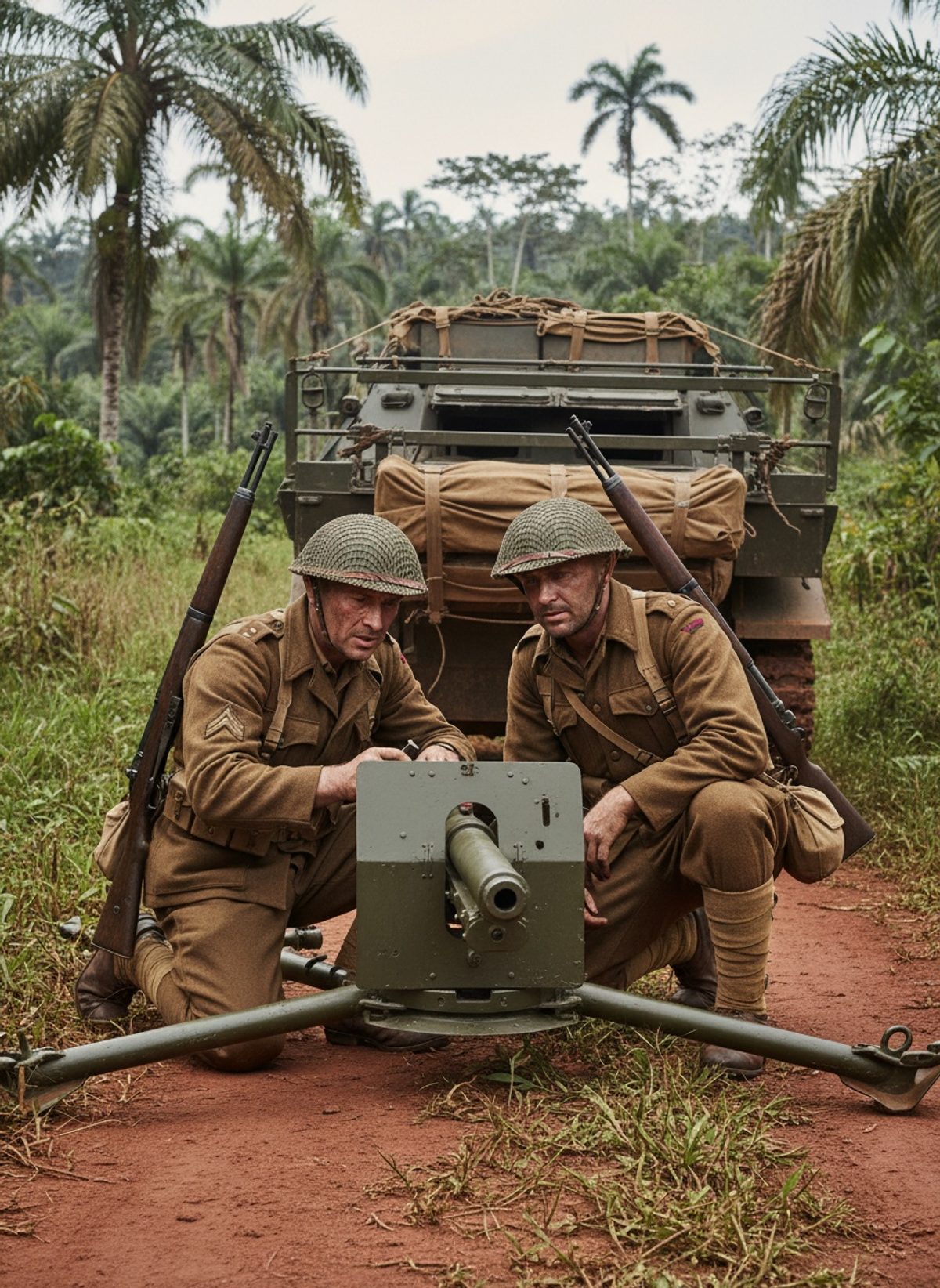
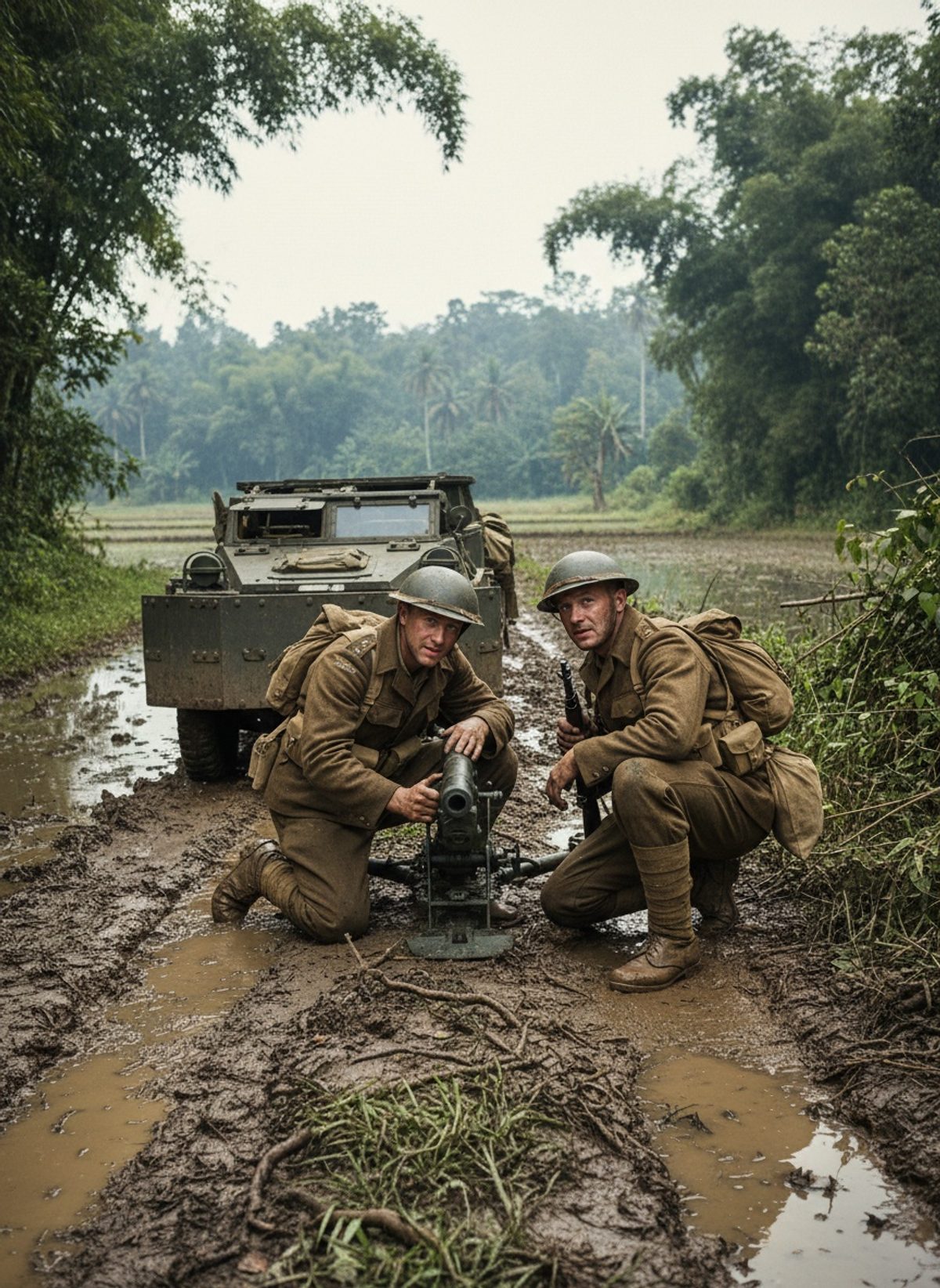
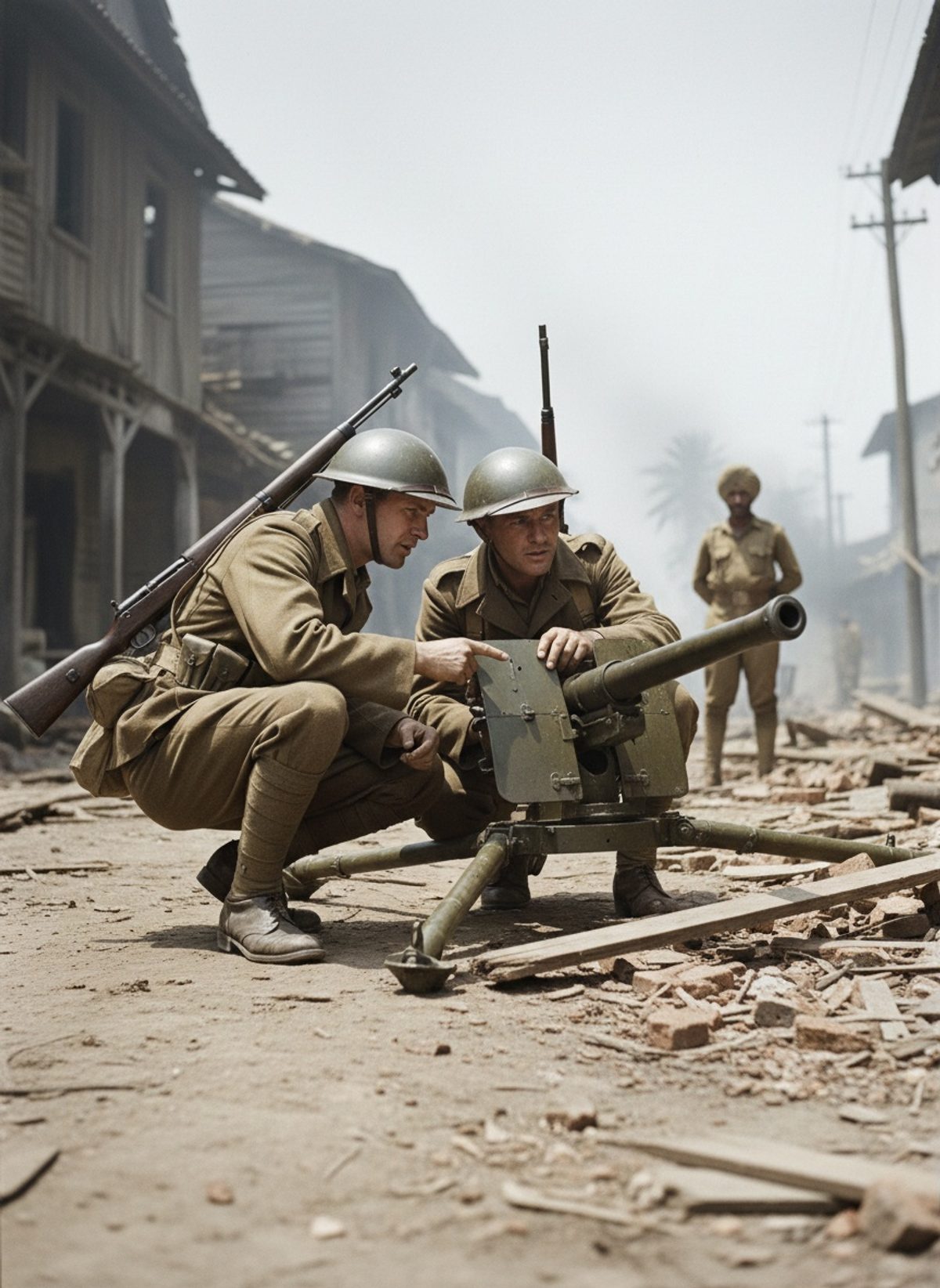
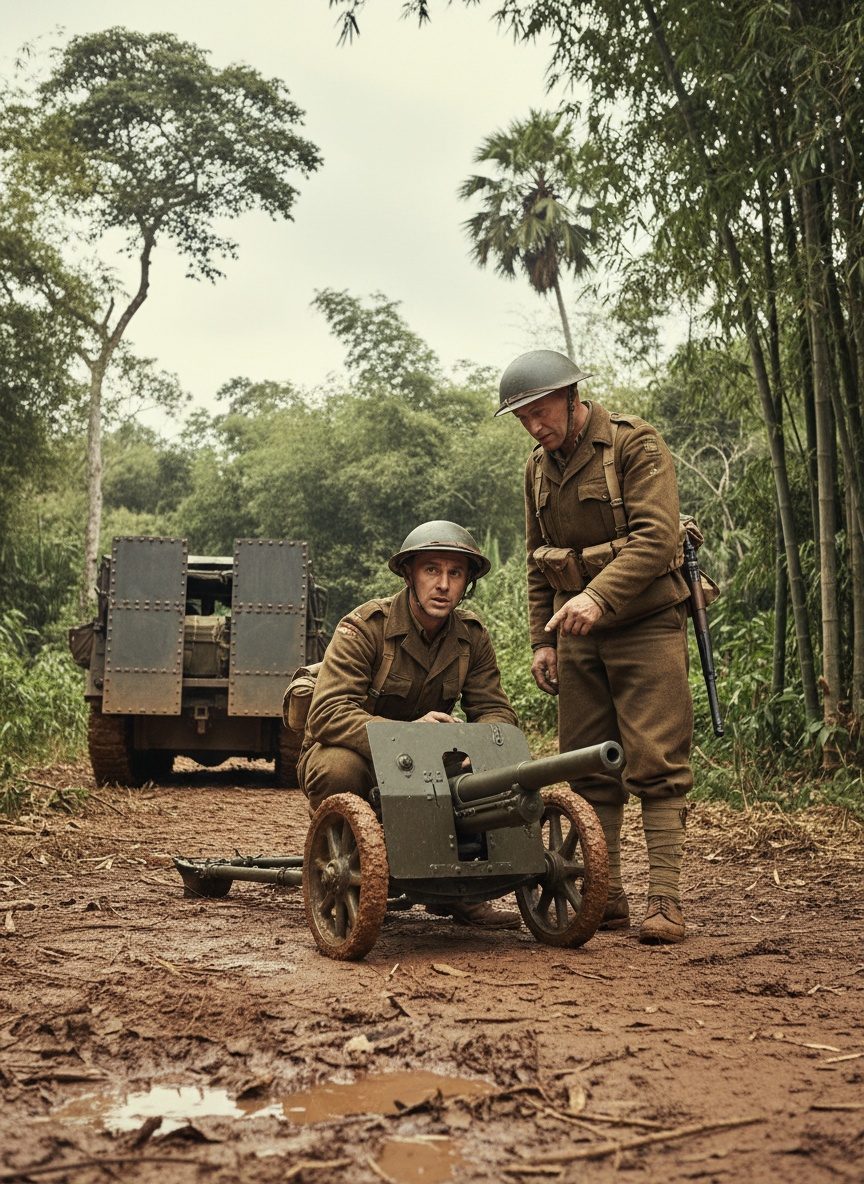
Burma, January 1945. A Japanese 37mm anti-tank gun — captured intact. British soldiers dismantled it piece by piece. Every weakness they found became a weapon against its makers.
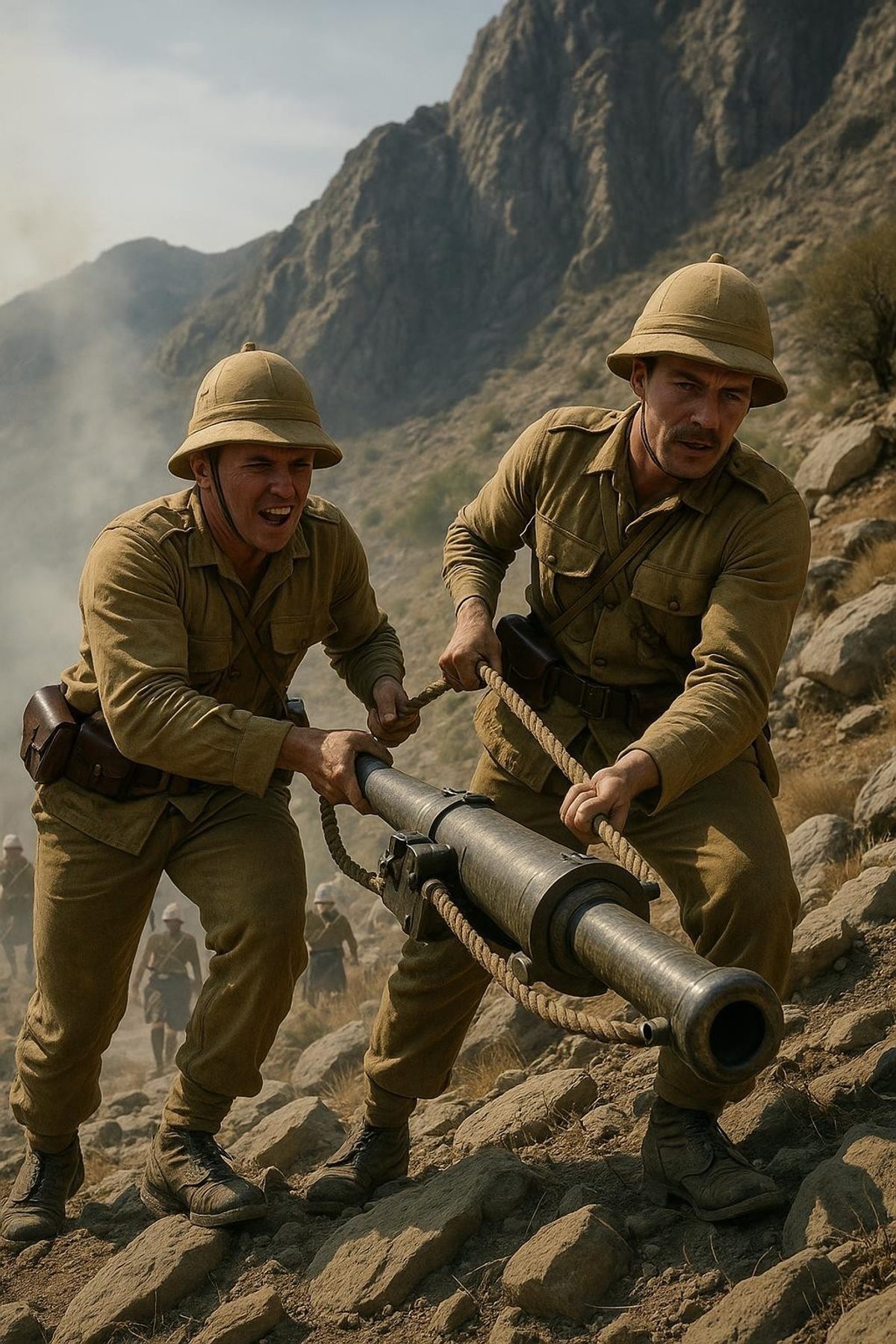
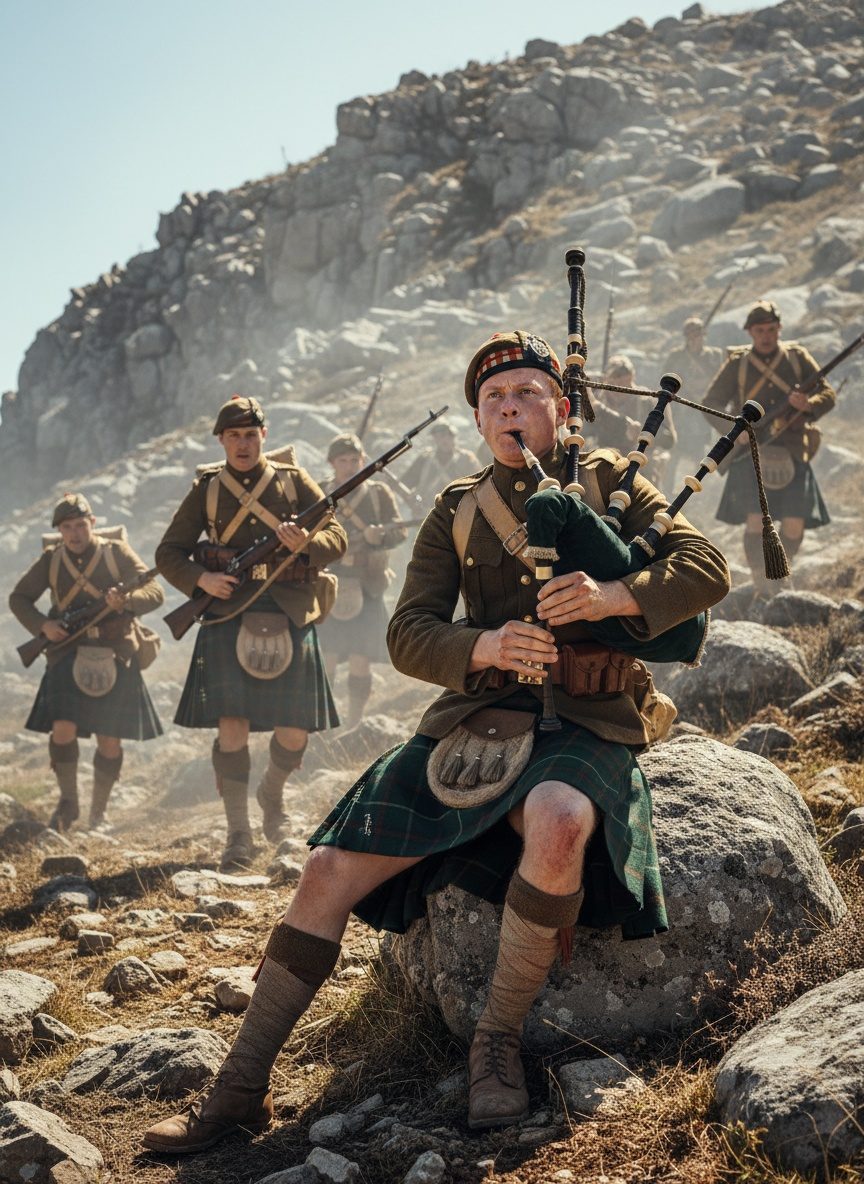
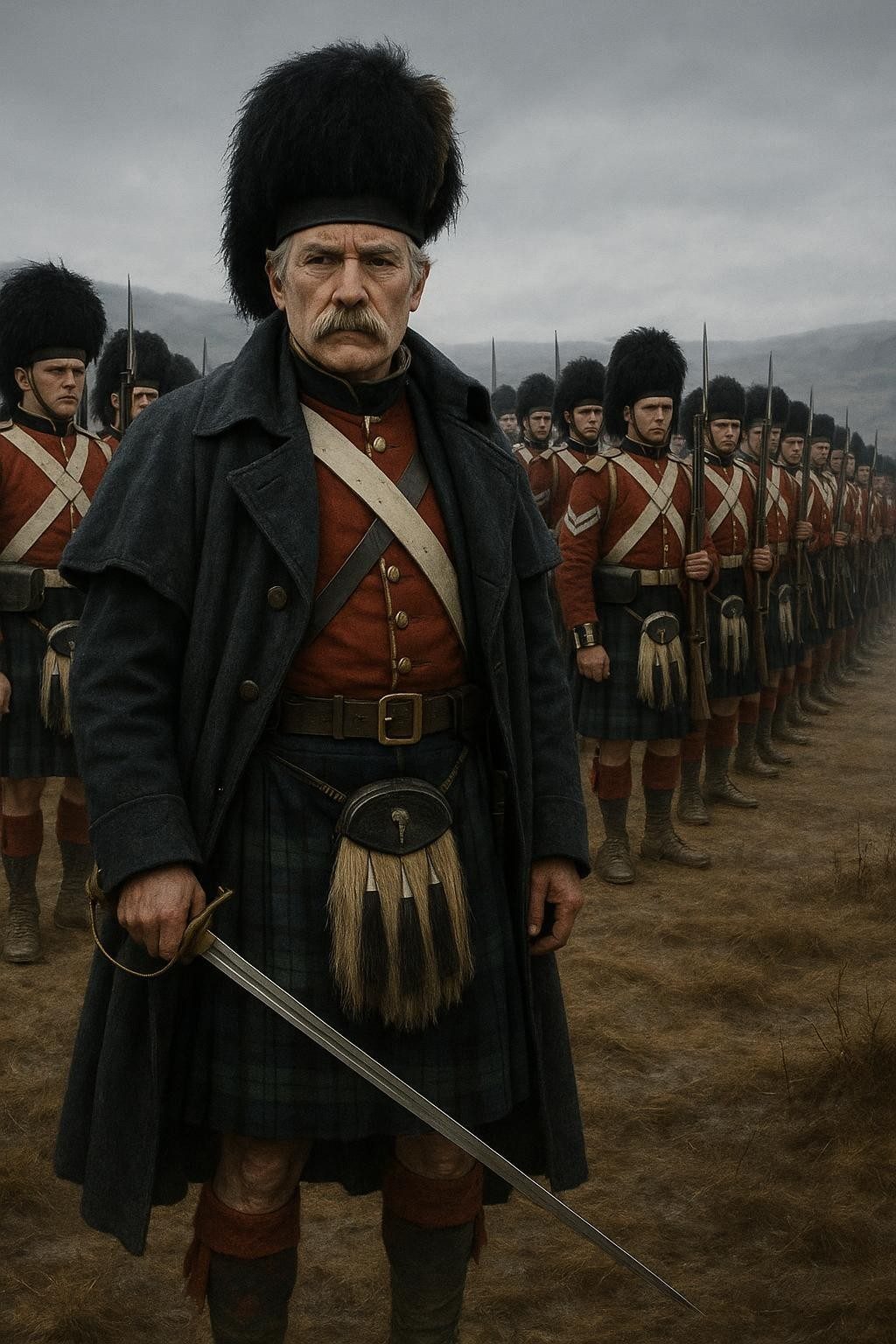
The Dargai Heights held by Afghan tribesmen. Four attempts failed. Then the Gordon Highlanders charged — bagpipes playing. A mountain gun crew dragged their 75mm up the cliff face behind them.
Burma, 1945. British armour pushed where tanks were never meant to go. Deep wading screens let Bren carriers cross flooded ground unsupported. The Japanese never expected iron to walk through water.
Burma, March 1945. British and Indian troops stormed Meiktila. The Japanese had ringed the town with weapons no one expected. When the guns fell silent, soldiers moved in to see what had stopped them.
Burma, January 1945. British troops stood over a captured Japanese 37mm anti-tank gun. Behind them, a carrier waited with deep wading screens fitted. The jungle war was turning.
Burma, 1945. A captured Japanese 37mm gun. British troops stripped it down on the spot. Behind them — a carrier fitted for deep wading. The tide of war had finally turned.
August 1918. New Zealand troops overran a German position near Grévillers, France. Inside: the most feared anti-tank weapon on the Western Front. They picked it up and posed for the camera.
Afghanistan, 1842. Britain's army was destroyed. One man survived. The generals kept their ranks. The sepoys kept their silence. The blame fell on a corporal.
Born in Dublin. Raised in Richmond. By 21, he commanded a RAF wing. Brendan 'Paddy' Finucane shot down 32 enemy aircraft — then vanished into the English Channel on a routine sweep.
Germany gave Norway's king an ultimatum: accept occupation or watch his capital burn. Haakon VII chose war. His 'no' would define a nation — and bind Norway to Britain for the rest of the fight.
He was 26 years old. He had no peer in the field. At Waxhaws, Tarleton's Legion hit so hard that 'Tarleton's Quarter' became a byword for terror across the American South.
31 July 1917. The guns had roared for two weeks. Then the rain came. The drainage was gone. The battlefield became a swamp. And British soldiers drowned in it.
British officers stripped of rank. Given a rifle and a pack. Told to march with their men. The Indian Army called it a leadership course. The men who survived it never forgot it.
He served 13 years. Six deployments to the same war. On his last tour, the helicopter never made it down. Private John Sherwood didn't come home either. The worst 24 hours in a generation.
June 1940. France surrendered. America stayed home. The Empire stood alone. Churchill knew the brutal truth: Britain had no guarantees. Only the sea and its own nerve stood between civilisation and collapse.
Germany invaded Belgium. A quarter million Belgians fled to Britain. For most, a spare room. For thousands, something stranger: a brand new Belgian town — built on English soil, run under Belgian law.
They followed orders all the way to France. Then one wrong order broke them. Britain's answer was a firing squad. These men are still waiting for justice.
A French munitions ship. A Belgian relief vessel. One harbour. The collision took seconds. The explosion that followed was the largest man-made blast in history — before the atomic age.
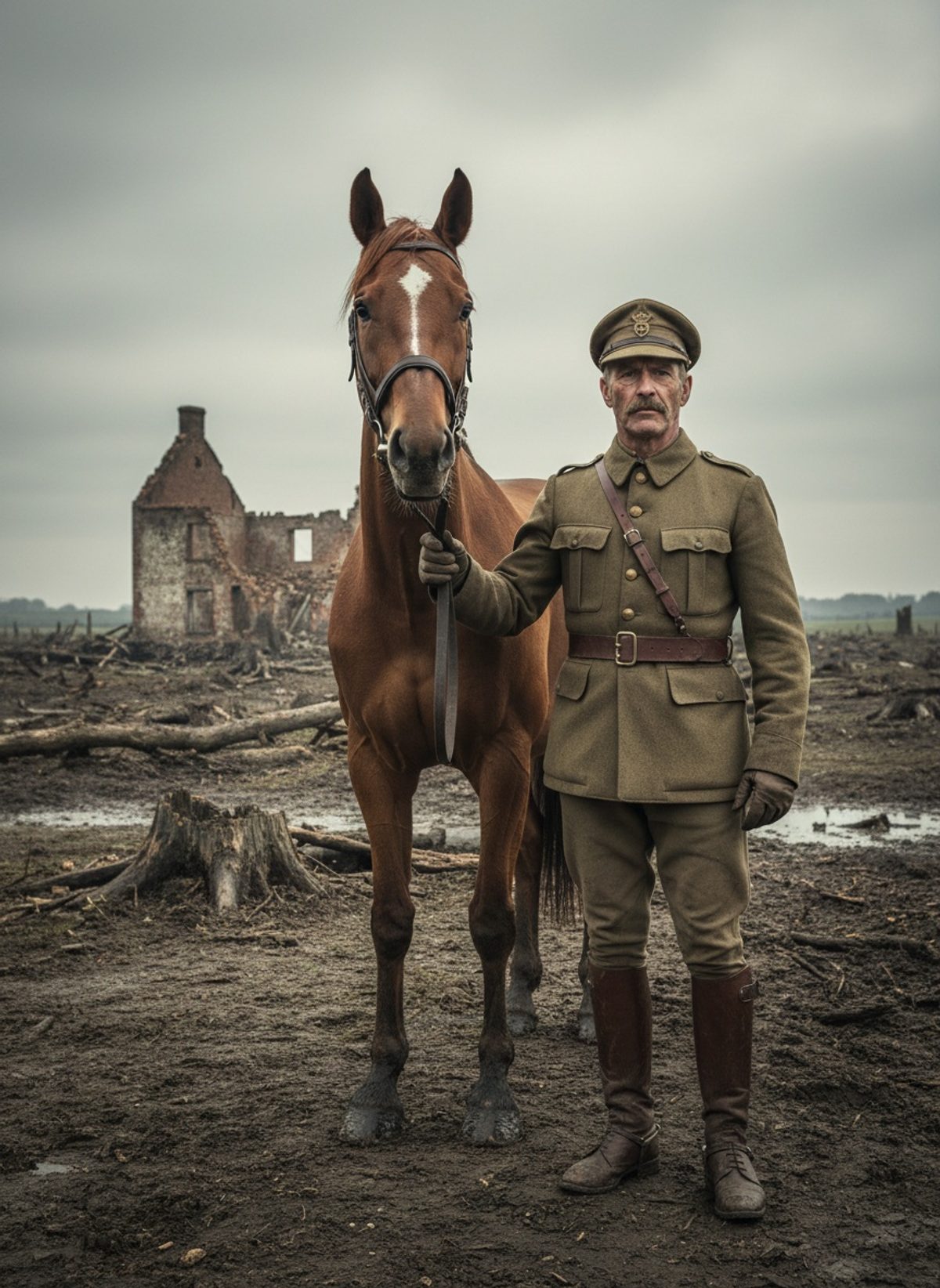
Britain sent hundreds of thousands of horses to the Great War. Almost none came back. One did. His name was Warrior. And his story broke a nation's heart.
She was a children's book author turned secret agent. Sent into occupied Paris alone. Captured, she refused to talk. The Gestapo called her 'highly dangerous.' She never gave a name.
She spoke perfect French. She had a baby daughter at home. She parachuted into Nazi-occupied France anyway. Violette Szabo ran her network until the Gestapo closed in — and she held them off alone.
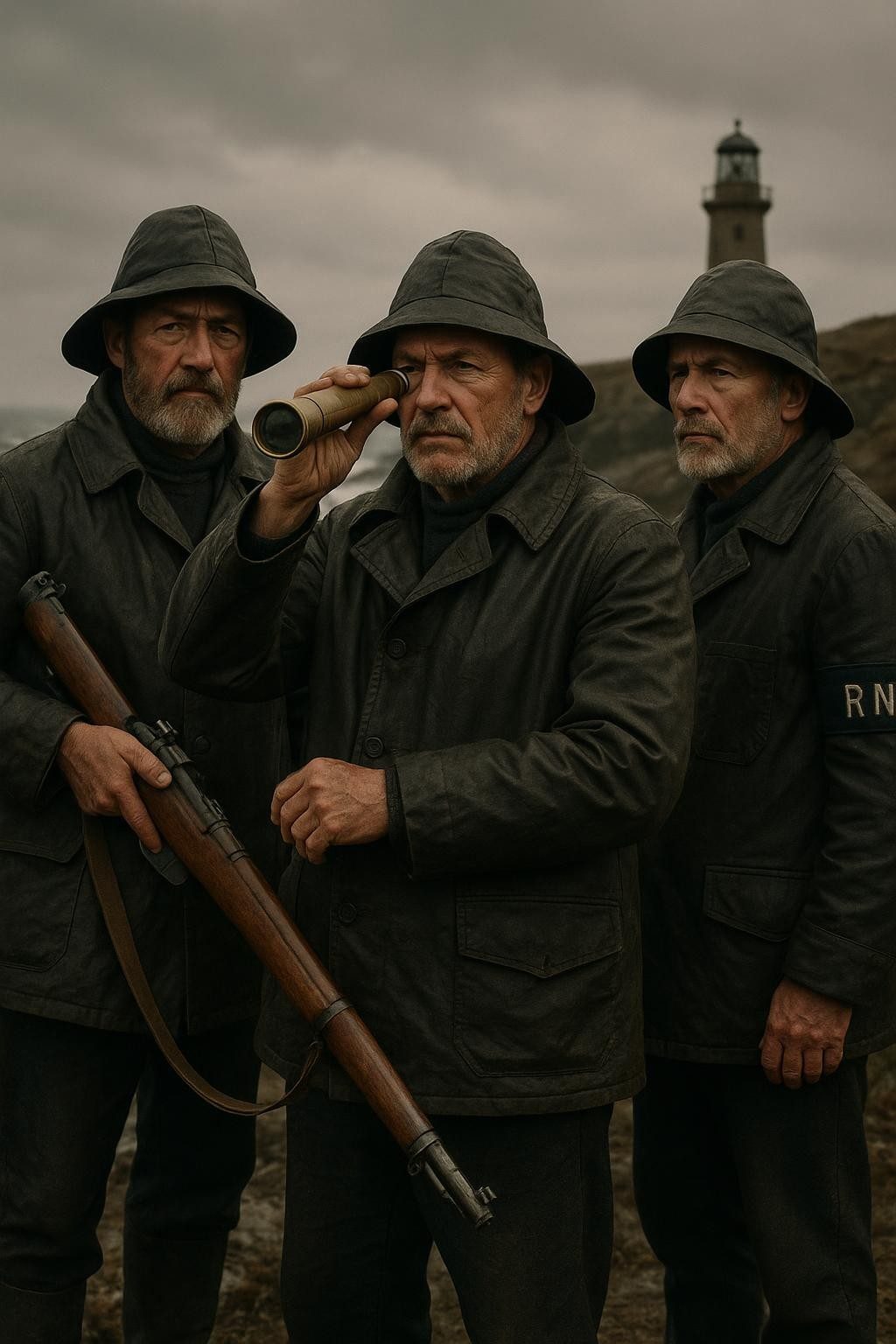
War broke out. The Navy was gone. Britain's coastline stood unguarded. So they handed rifles to fishermen, lighthouse keepers, and retired sailors — and called them a fighting force.
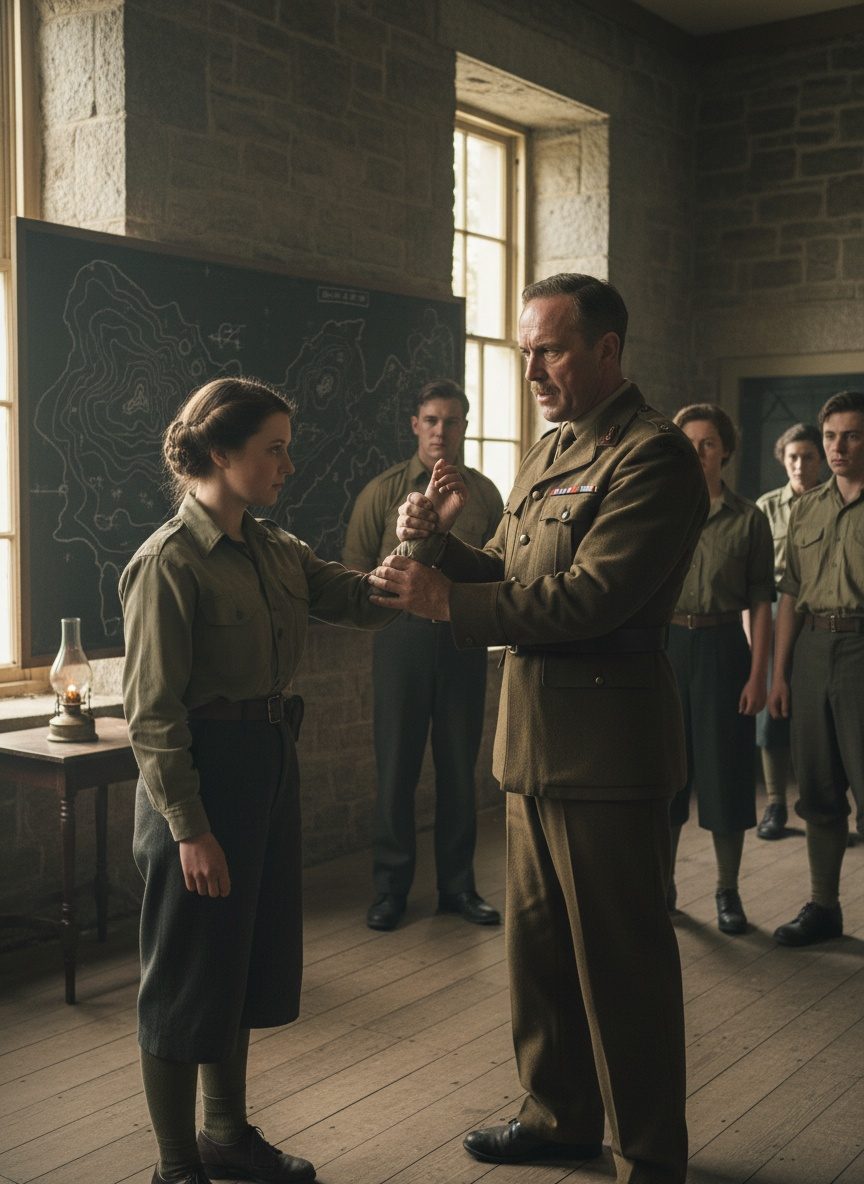
July 1940. France had fallen. Churchill needed a new weapon. So Britain built one in secret — training ordinary men and women to fight behind enemy lines. Few who went in came back unchanged. Many didn't come back at all.
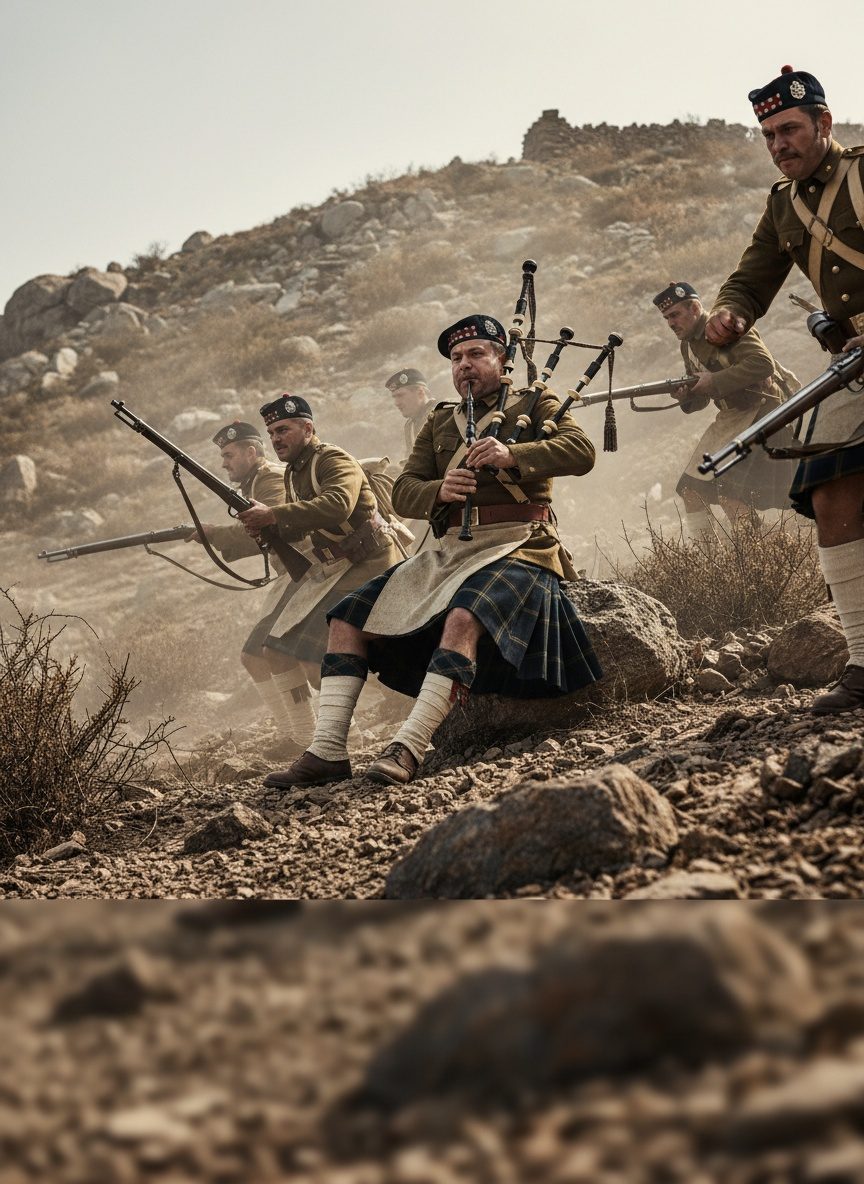
October 1897. The Gordon Highlanders were pinned on a rocky slope. Piper George Findlater was shot through both ankles. He propped himself against a boulder. And played his pipes. The men rose and charged.
In June 1942, Brendan 'Paddy' Finucane became the RAF's youngest Wing Commander at just 21. Born in Dublin. Trained by Britain. Feared by the Luftwaffe. Dead two months later.
July 1916. 140 survivors shuffled out of Delville Wood. The Black Watch pipers met them. General Lukin took the salute — then removed his cap and wept.
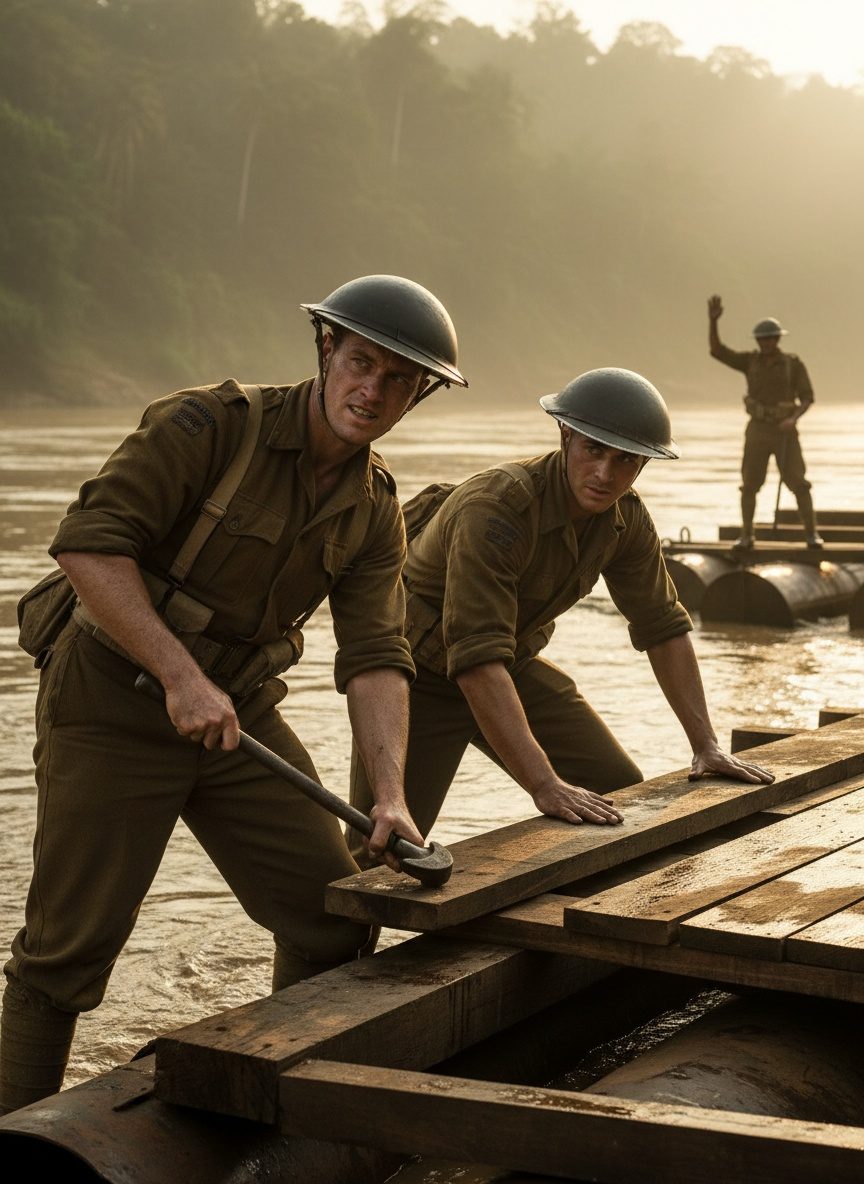
Burma, 1945. The Irrawaddy was a mile wide and the Japanese held the far bank. Britain's sappers built the bridge anyway — under fire, in the dark, in four days.
April 1945. The Po stood between the Eighth Army and the end. They bridged it in hours. Within four days, Axis forces in Italy surrendered — the whole campaign, over.
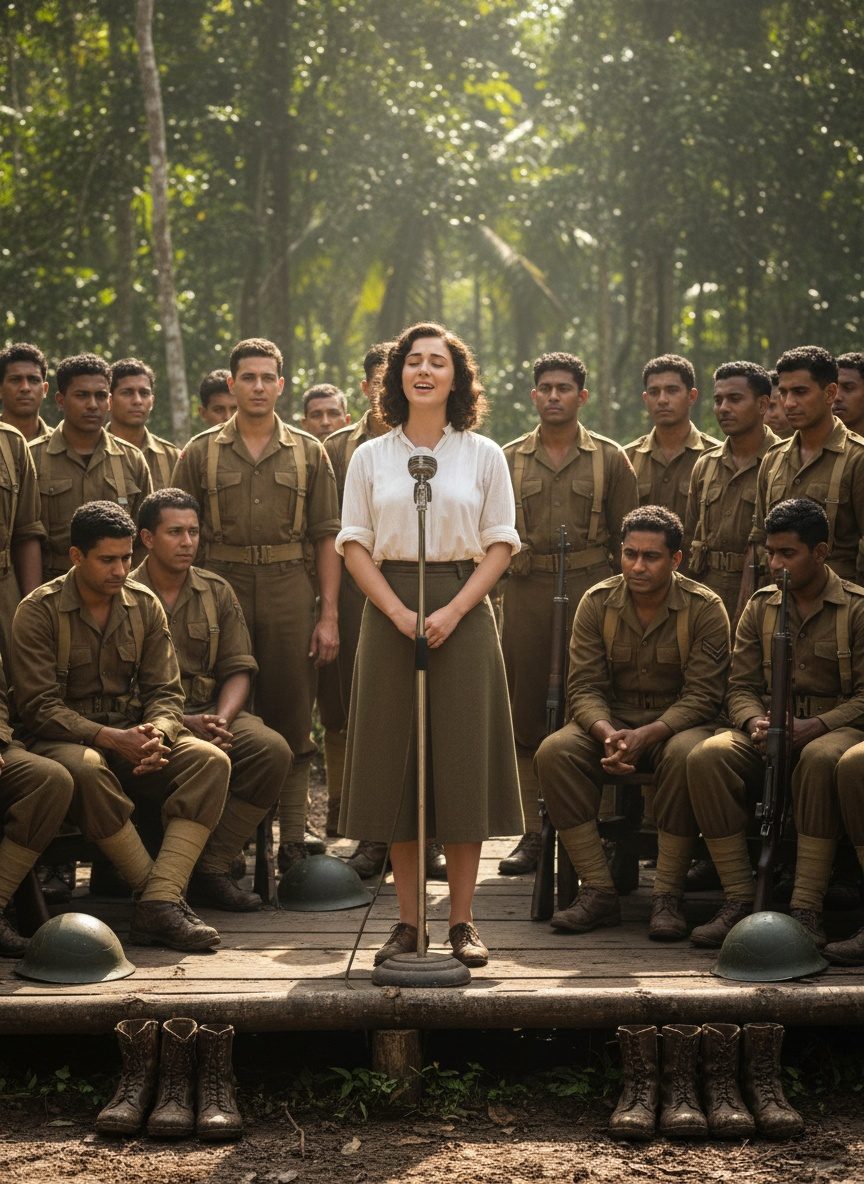
She had no rank, no rifle, no uniform. But when Vera Lynn sang to British soldiers in the Burmese jungle in 1944, she was given something no general ever received — unconditional devotion.
Soldiers weren't falling to Boer bullets. They were falling to their own rations. Tinned meat. Biscuit. No vegetables. Scurvy and enteric fever killed more British troops in South Africa than combat ever did.
2 May 1945. The war had days left. But in a pocket south of Lübeck, German troops still fought. The Wiltshires went in on foot. The Guards came in armour. Together, they finished it.
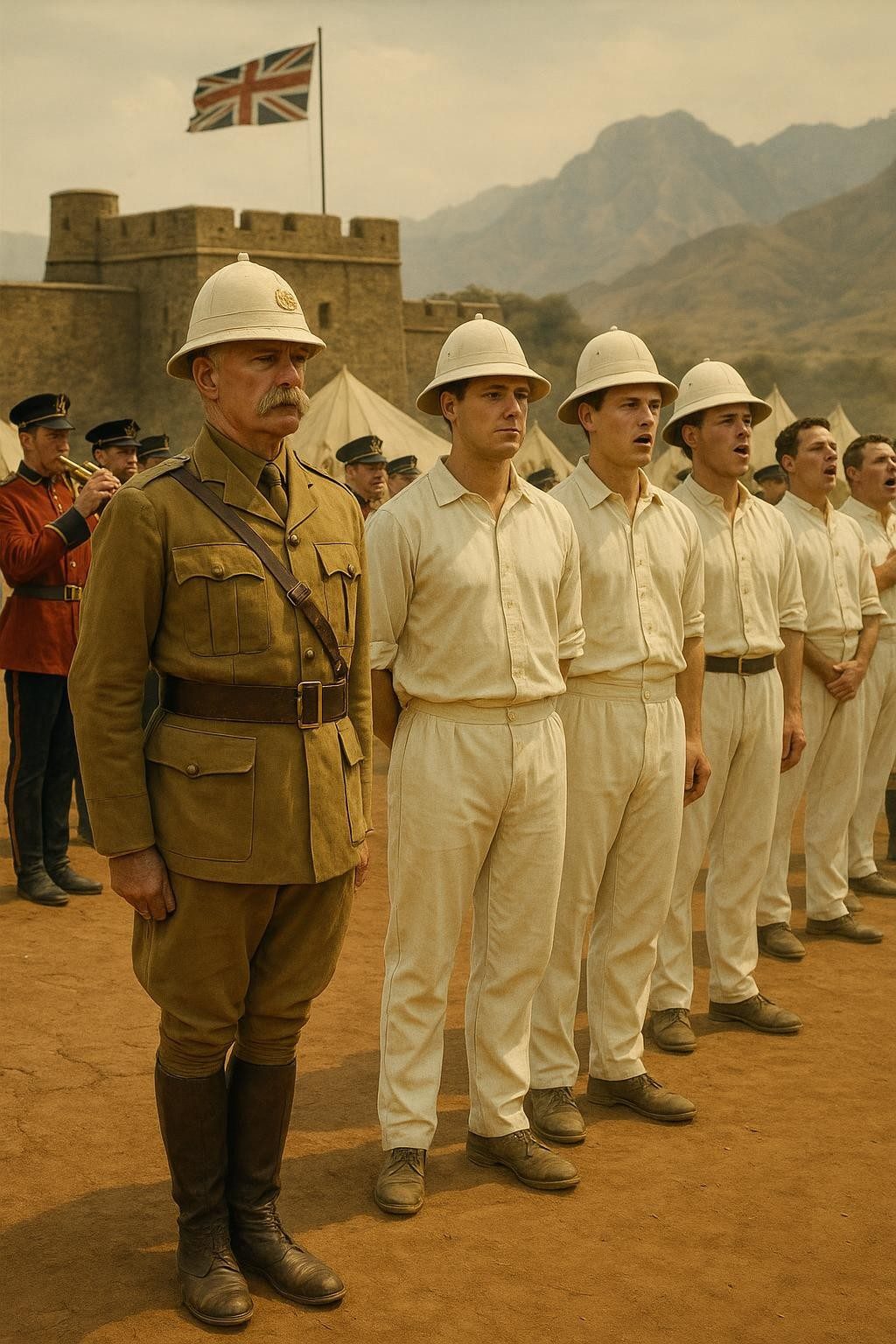
A British cricket XI toured India in 1878. Before a match near Peshawar, the band struck up God Save the Queen. Half the players stood silent. The regiment's colonel watched. He never picked three of them again.
22 January 1879. Chelmsford's column had been destroyed. By dawn on the 23rd, he led his exhausted survivors back — straight toward a Zulu force that had fought all night. Neither side fired. Both were spent.
November 1854. Russian cavalry charged toward Balaclava. One thin line of Highlanders stood between them and the base. Sir Colin Campbell told his men there was no retreat. They held. They fired twice. The Russians turned.
Dawn, 23 January 1879. Chelmsford's exhausted column approached the Buffalo River — and the Zulu force that had fought all night emerged from a valley 400 metres away. Both sides stopped. Neither fired.
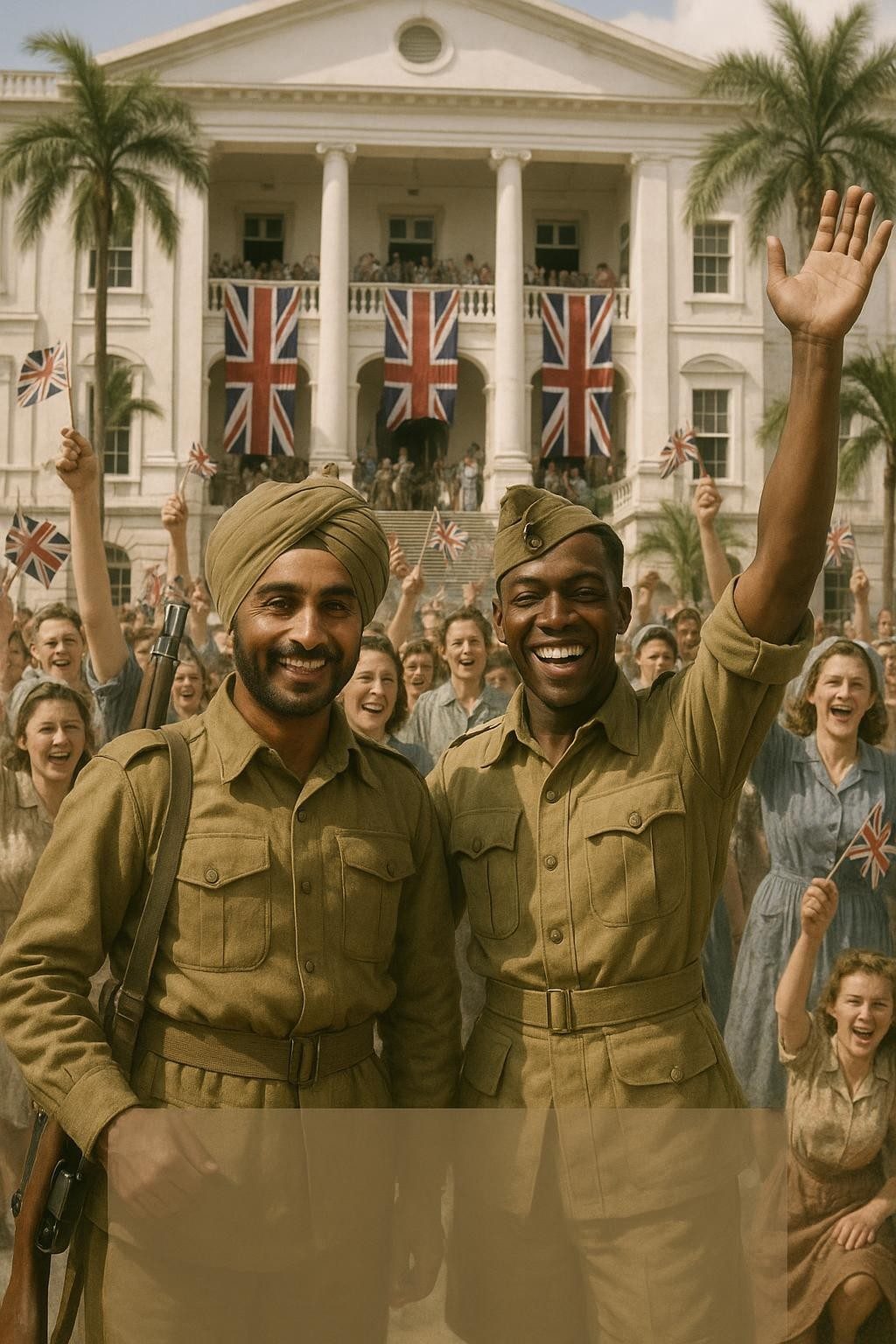
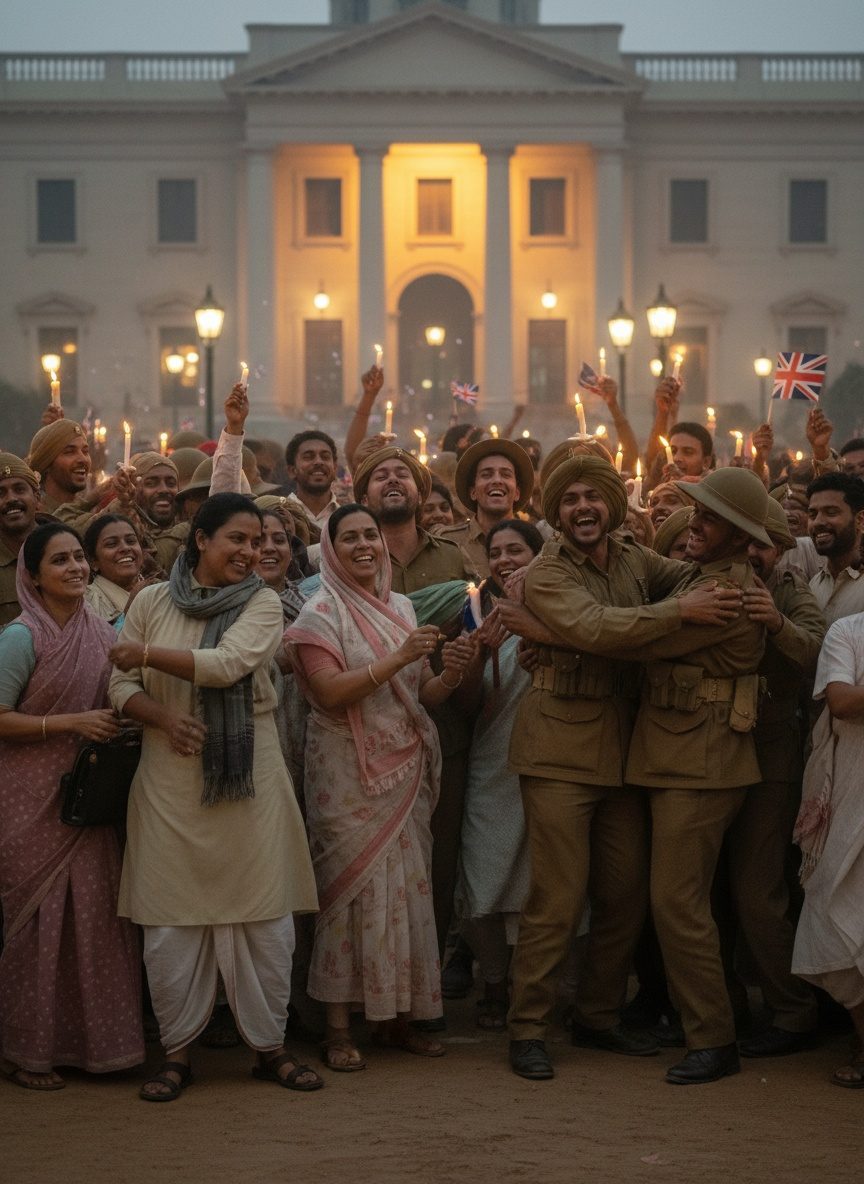
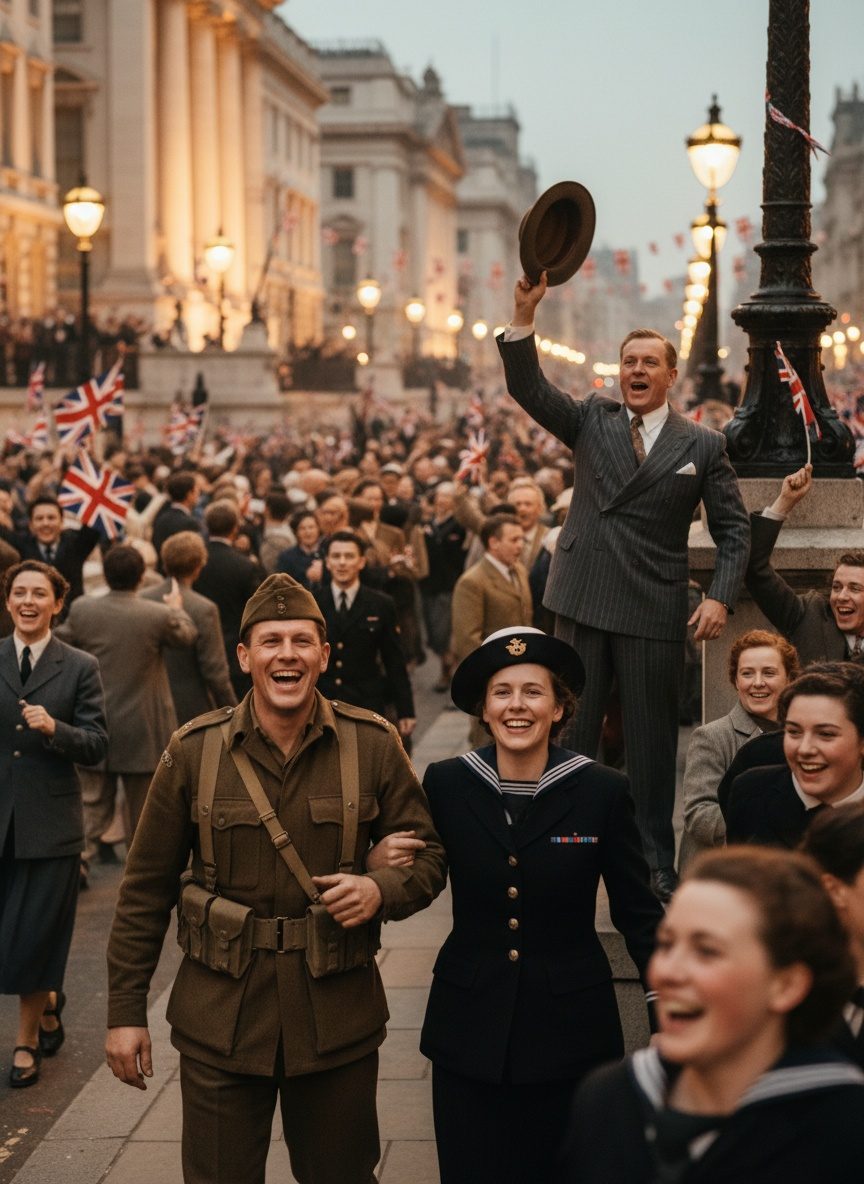
8 May 1945. London erupted. But across the Empire — Delhi, Nairobi, Kingston, Calcutta — millions who had fought and bled for Britain celebrated too. Victory was theirs as much as anyone's.
Germany invaded Belgium. A quarter million civilians fled to Britain. But 6,000 needed more than a spare room. So Britain built them their own town — with Belgian laws, Belgian police, and Belgian street names.
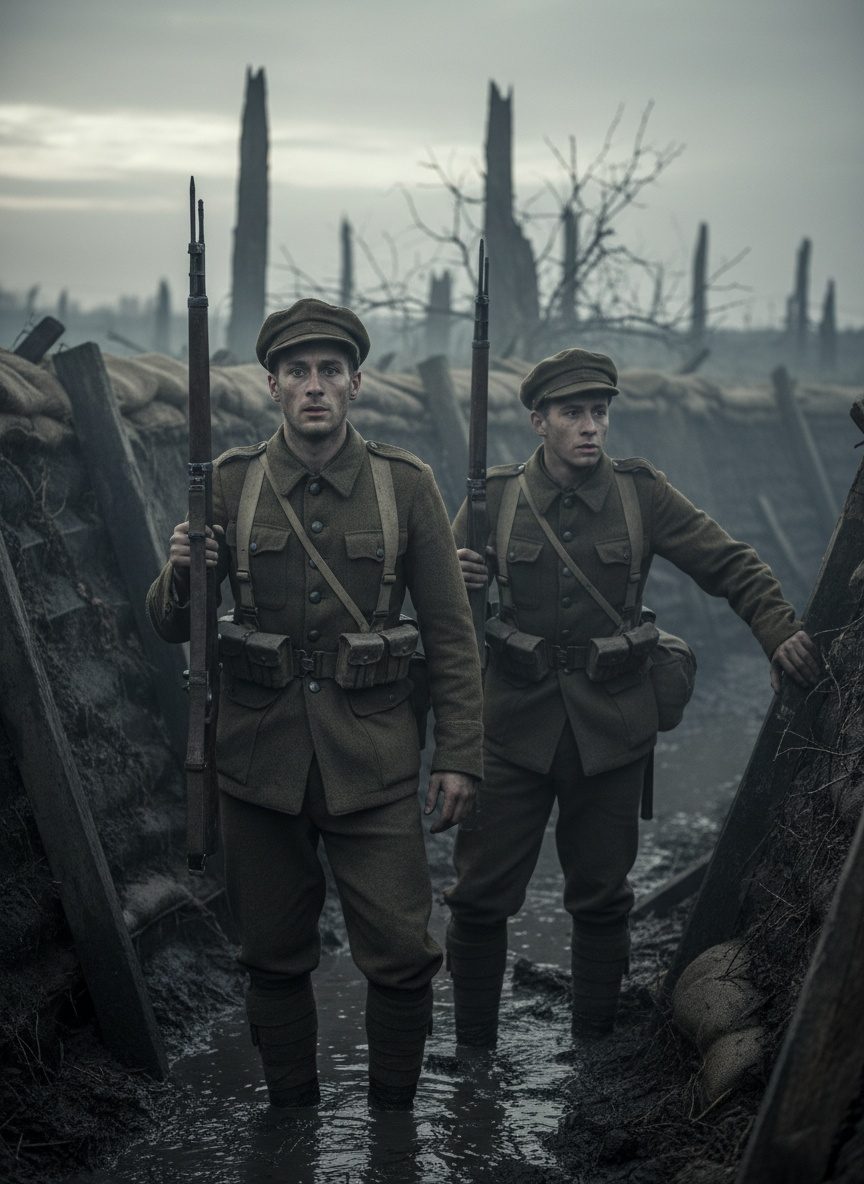
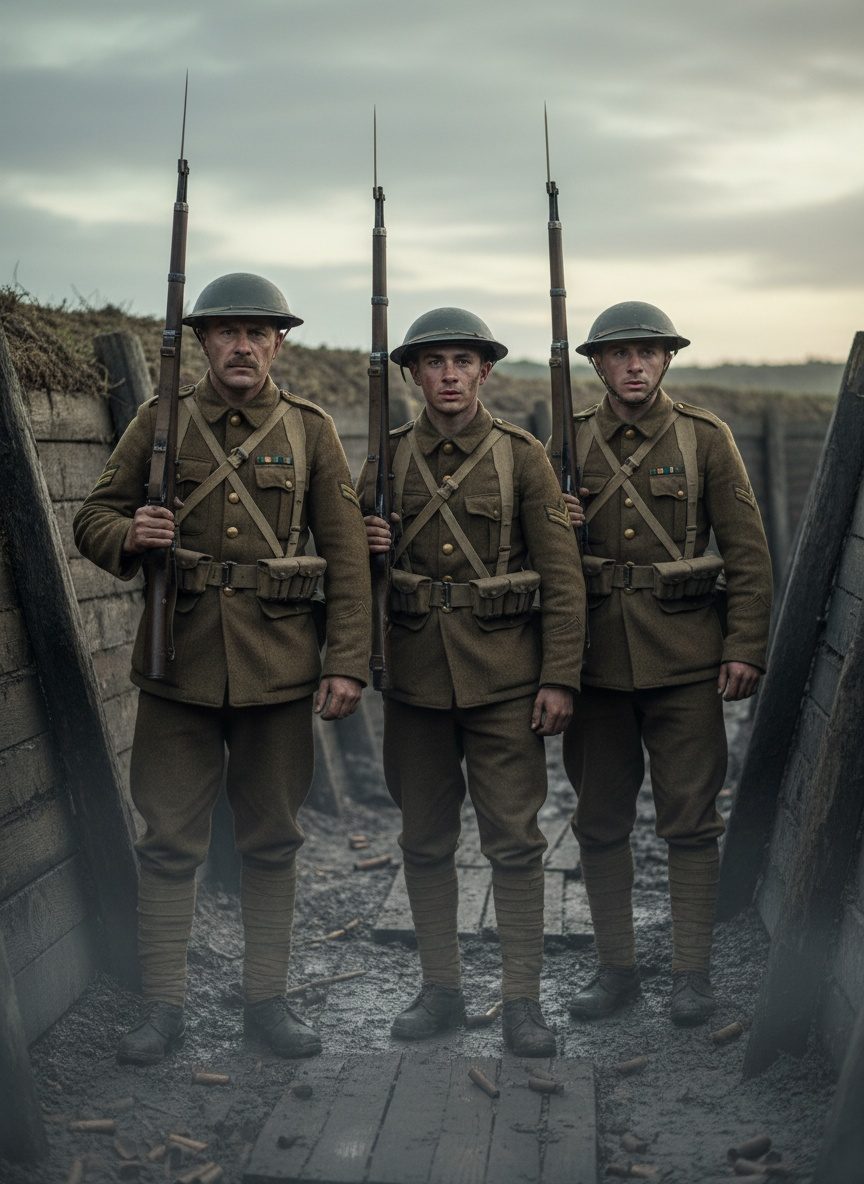
November 1914. The 1st Cameronians held a flooded trench at Ypres for six days without relief. Men drowned standing up. They held the line.
More British soldiers died of typhoid than Boer bullets. One man had the cure. The Army refused him. He injected himself first — then watched thousands die unnecessarily.
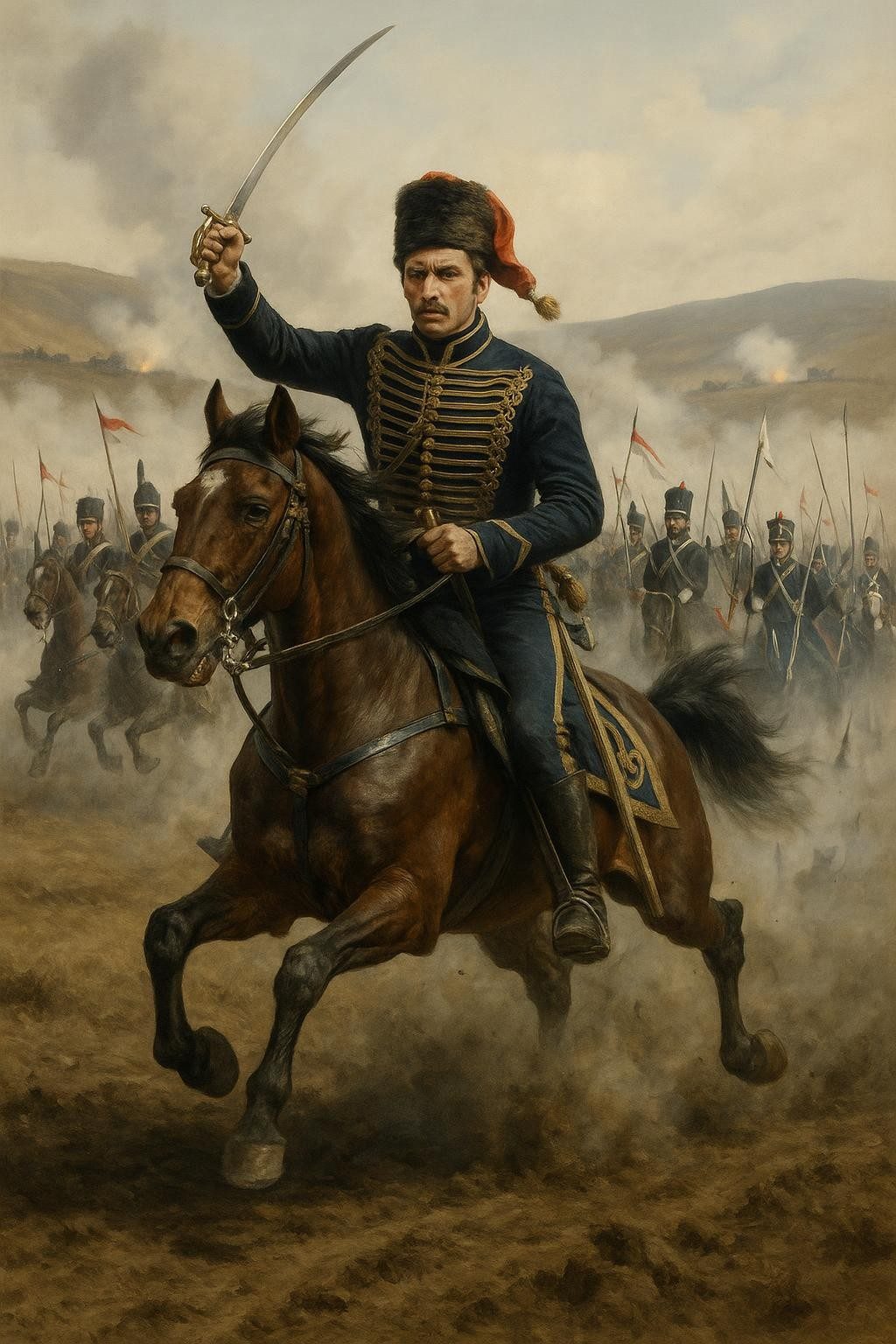
October 25, 1854. Six hundred and seventy British horsemen rode into a valley bracketed by Russian guns. In seventeen minutes, 278 men and horses were gone. The order that sent them was wrong. They went anyway.
9 August 1945. A second bomb fell on Japan. Britain had helped build it. Few knew. Fewer spoke of it. The Empire's hand was in the ash.
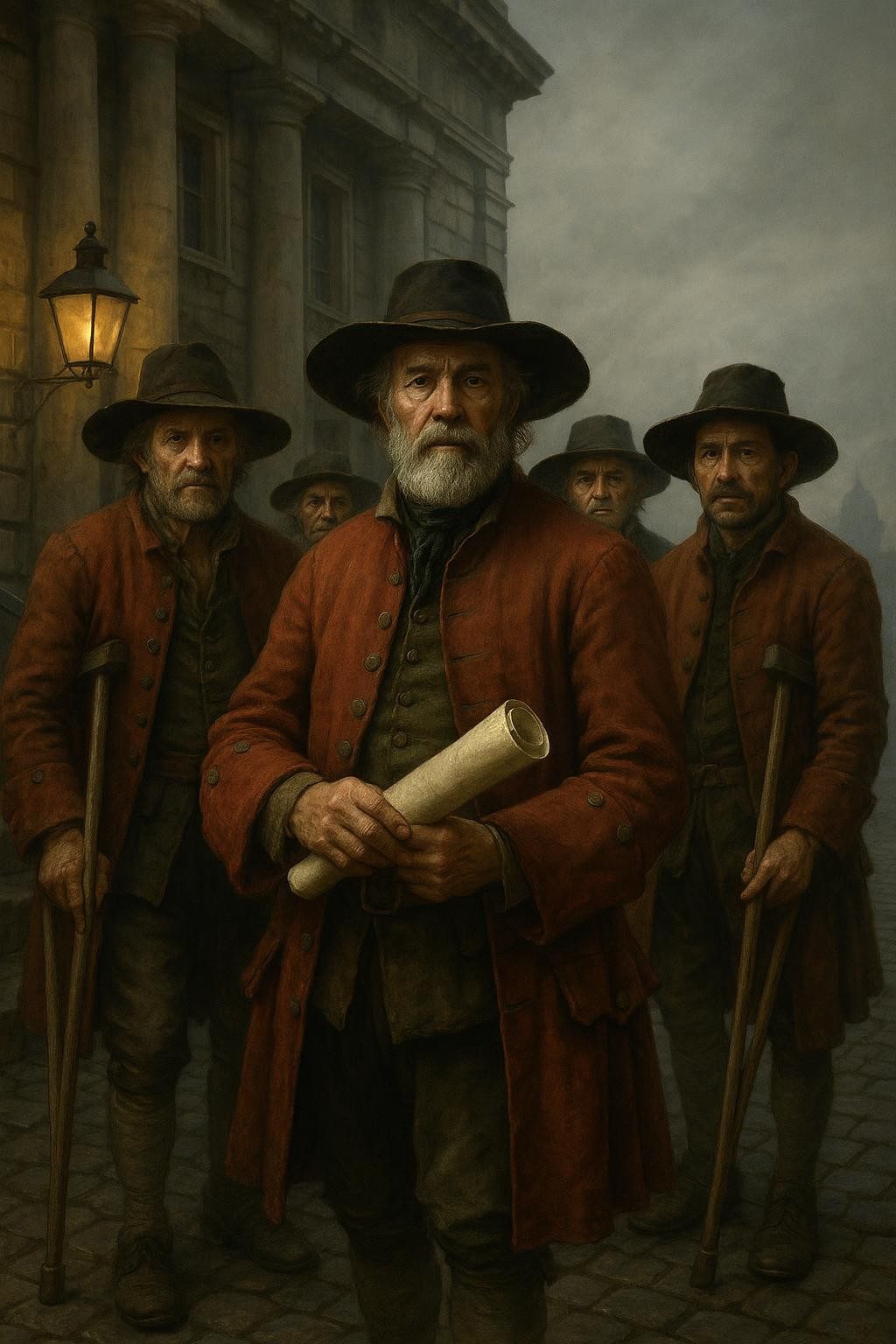
England's veterans came home from war to poverty and silence. No pensions. No protection. So they marched on Parliament itself. What followed changed the British military forever.
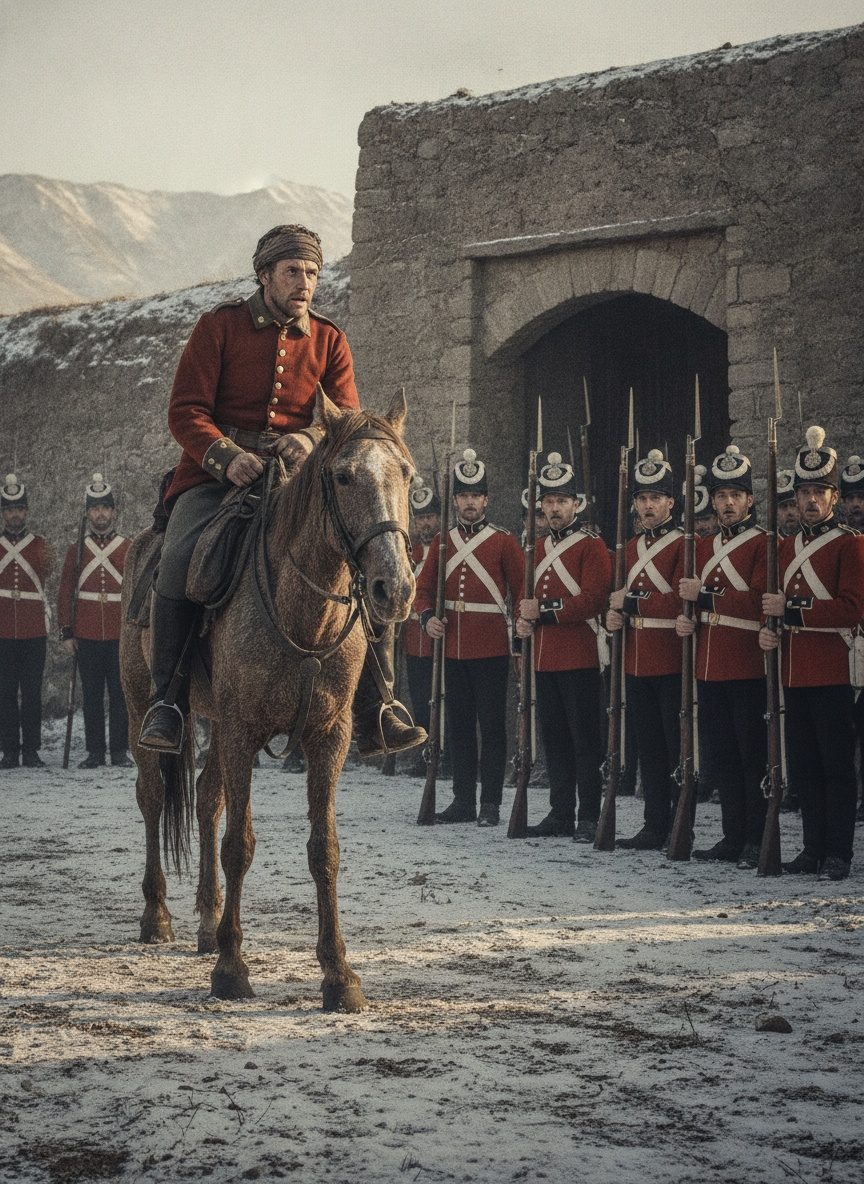
An army of 16,000 left Kabul. One man reached Jalalabad. William Brydon, half-dead in the saddle, was the sole survivor. He had plugged his skull wound with a page torn from a magazine.
October 1897. The Dargai Heights. Three British regiments had already tried. Three had failed. Then the Gordon Highlanders stepped forward. Their colonel gave one order. They charged uphill. Into open fire. Piper Findlater played the whole way. Shot through both ankles. Still playing.
July 1917. British guns had fired for two weeks straight. Then the rain came. The drainage was gone. The ground became a grave. Men drowned in shell craters before a single enemy bullet found them.
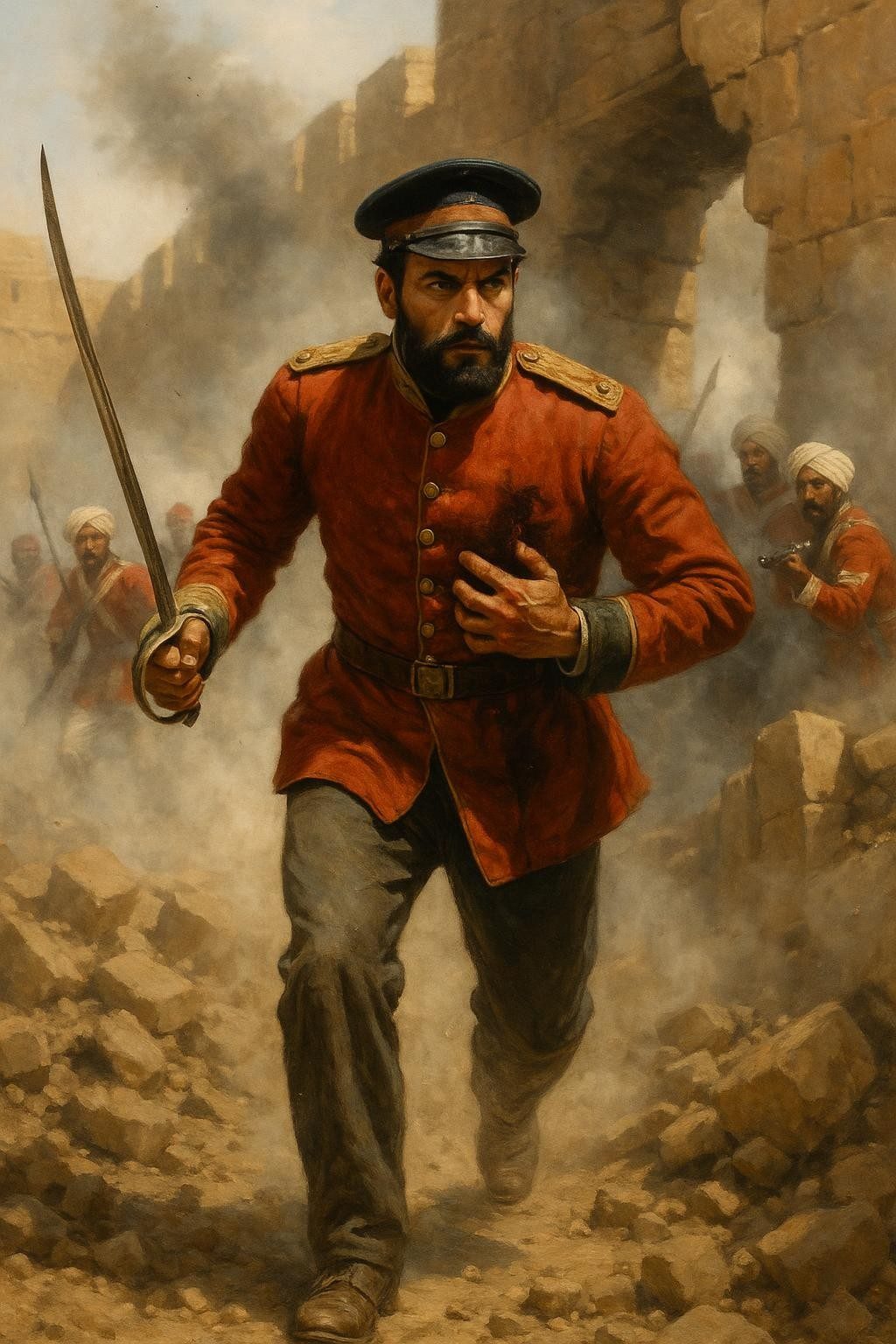
The breach was thirty feet of rubble and rifle fire. Brigadier John Nicholson led the assault column himself. He was shot through the chest on the steps. He refused to be carried back until Delhi fell.
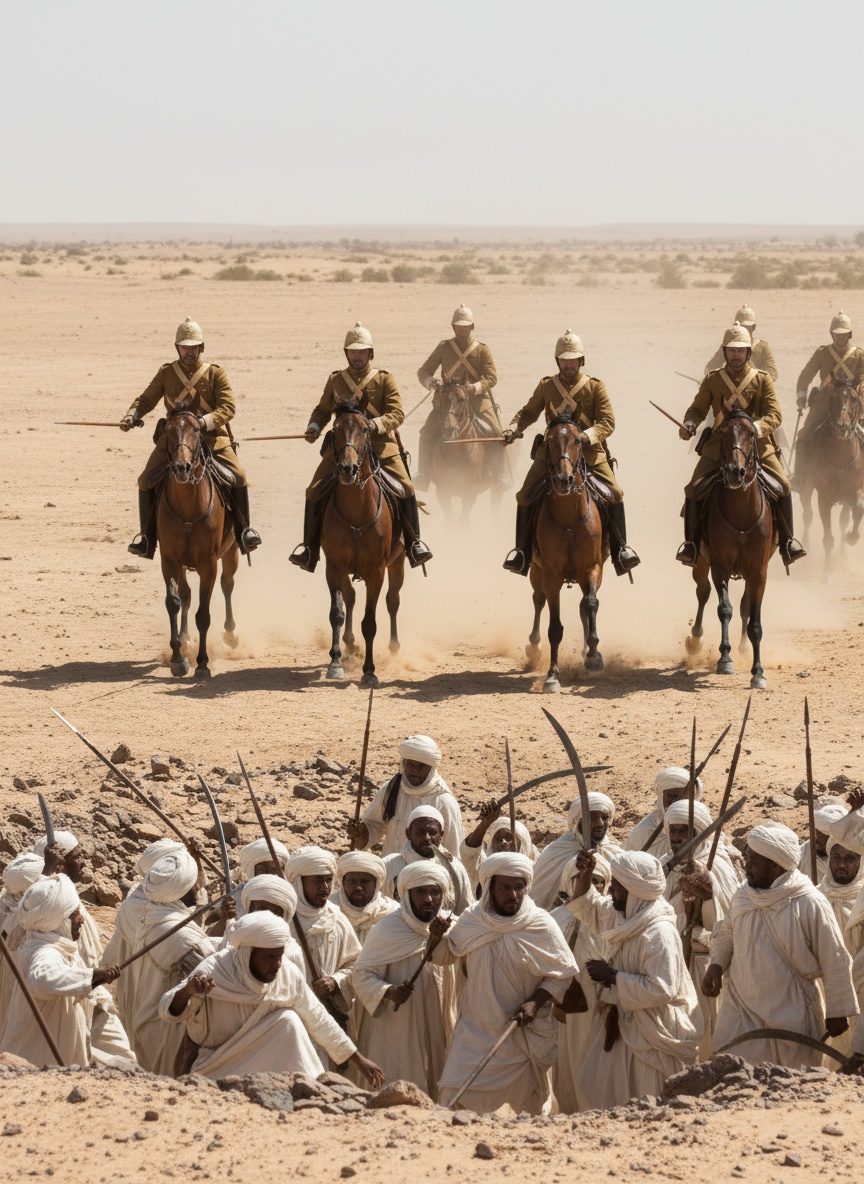
900 lancers. A dry riverbed. 2,000 hidden spearmen. The regiment was already at full gallop when the ground opened beneath them. 120 seconds. 21 men dead. Three Victoria Crosses earned going back in.
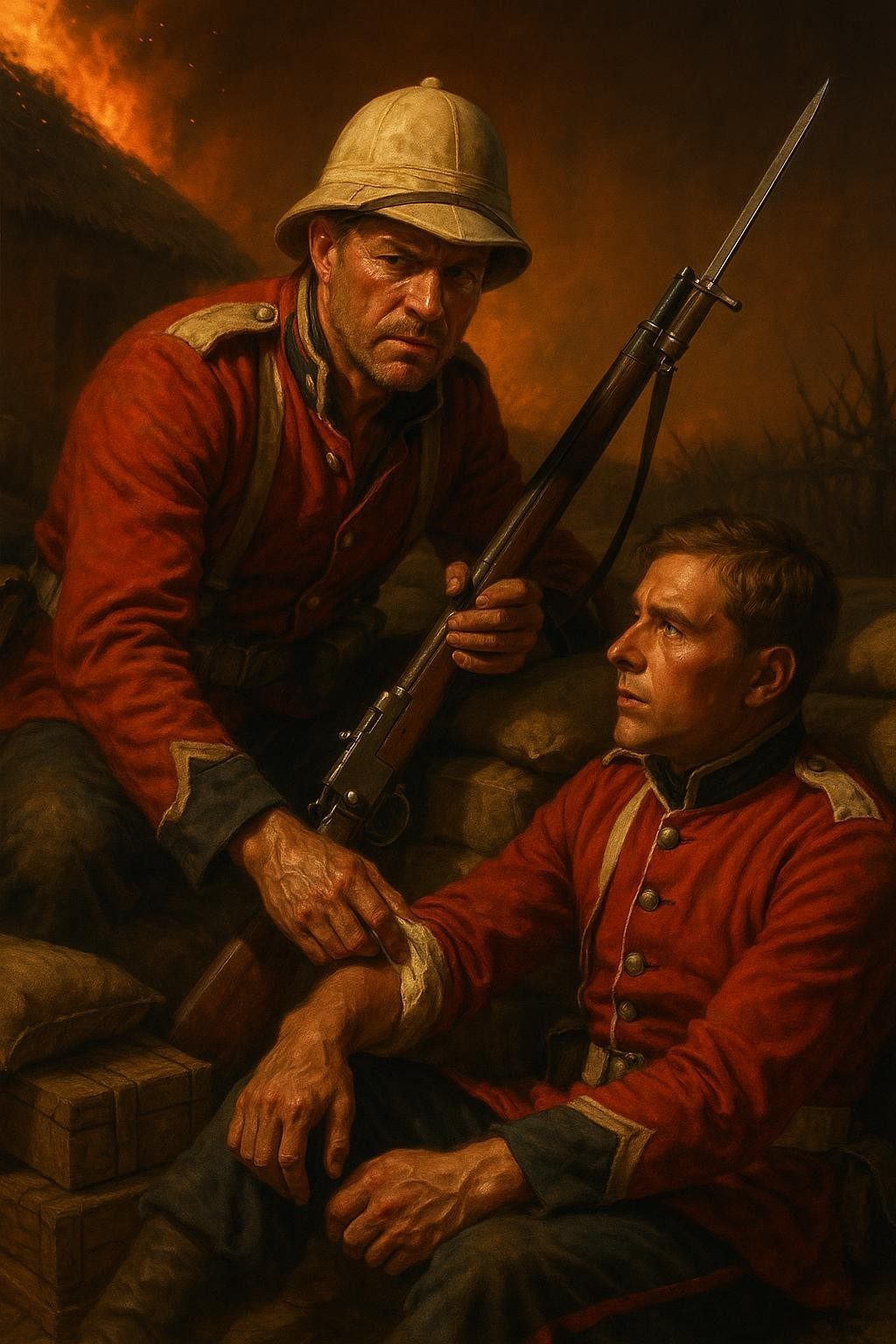
January 1879. The hospital was burning. James Reynolds had no orders to fight. He grabbed a rifle anyway. For eleven hours he treated the wounded under fire. Then went back to his patients.
January 1879. One hundred and thirty-nine men. Four thousand Zulu warriors. Lieutenant Bromhead was told to run. He refused. They held the wall. All night. Until dawn came red.
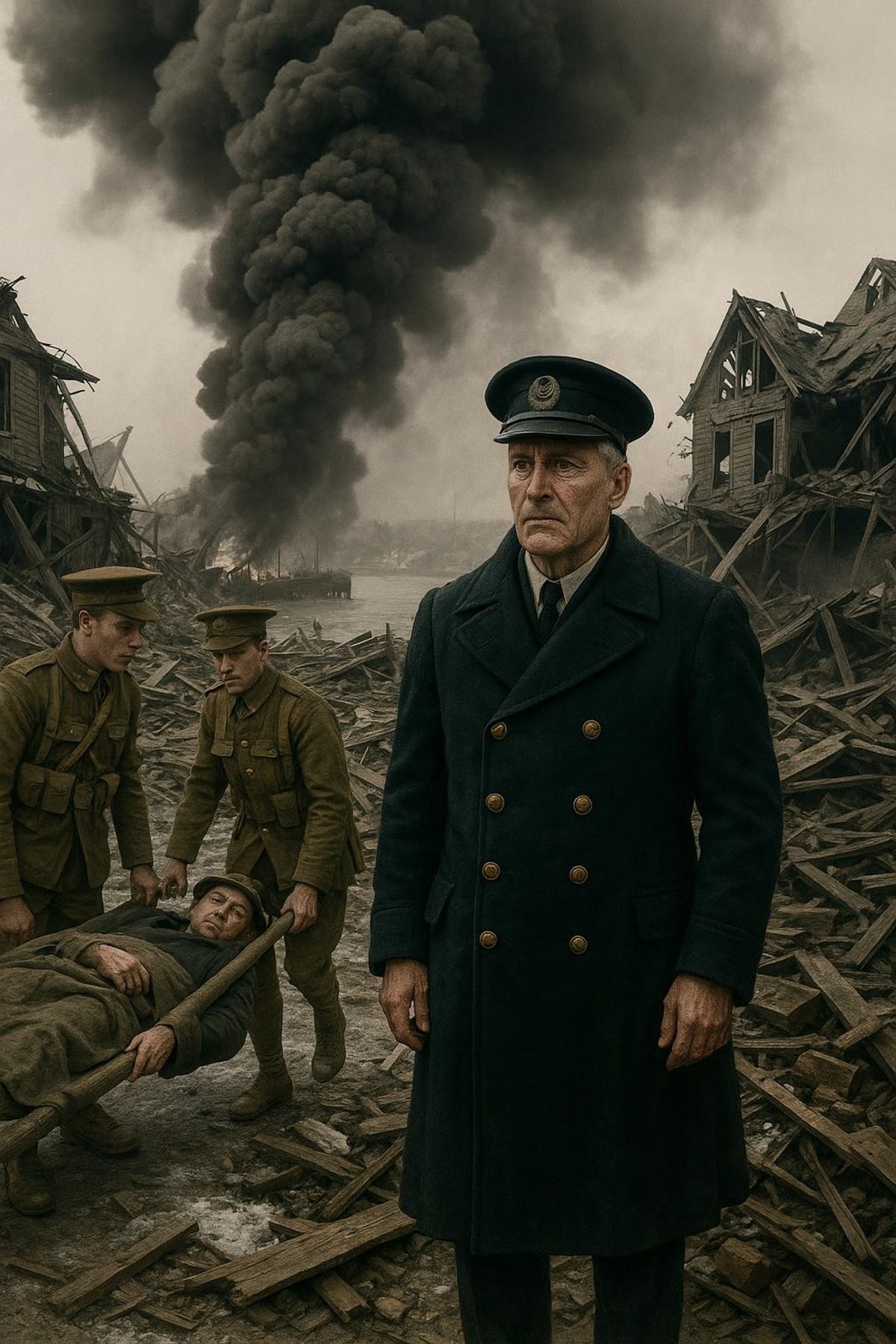
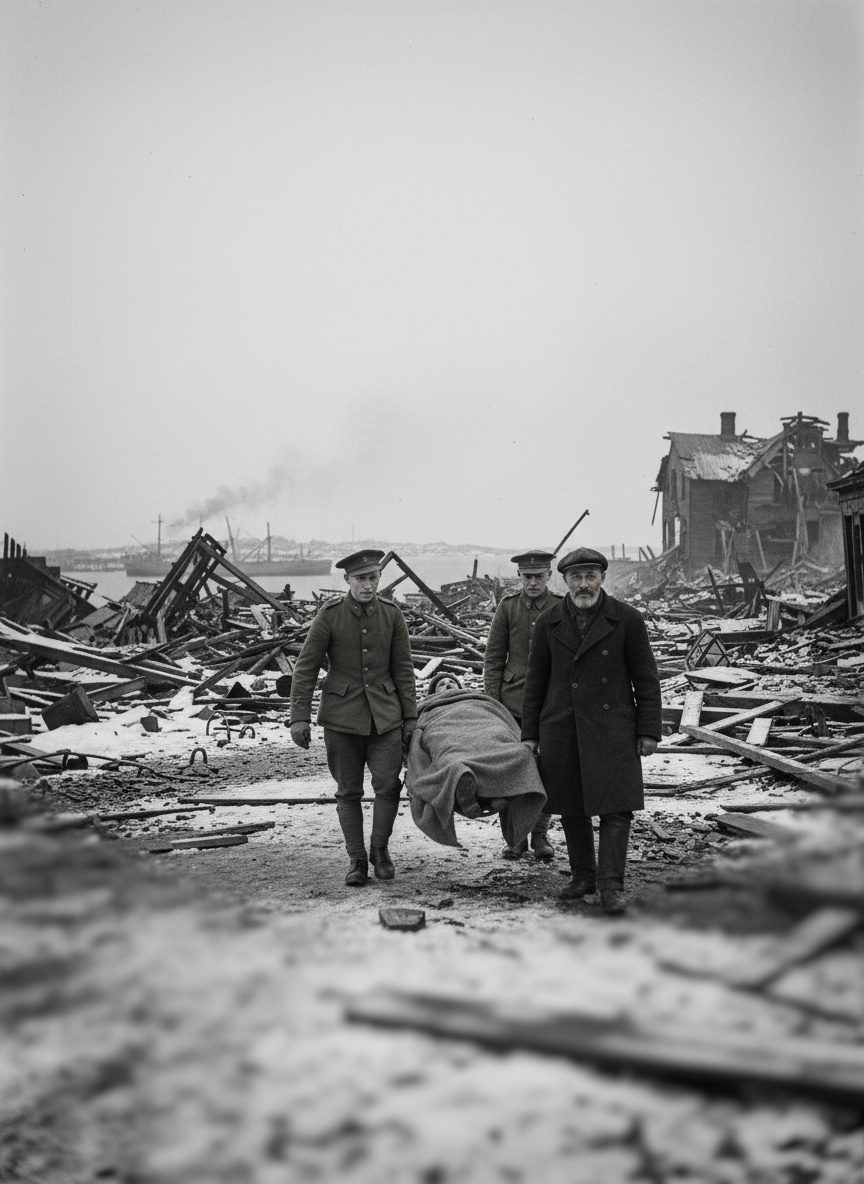
December 6, 1917. Halifax Harbour, Nova Scotia. Two ships collided. The blast killed 2,000 people instantly — the largest man-made explosion before the atomic bomb. An entire district was erased.
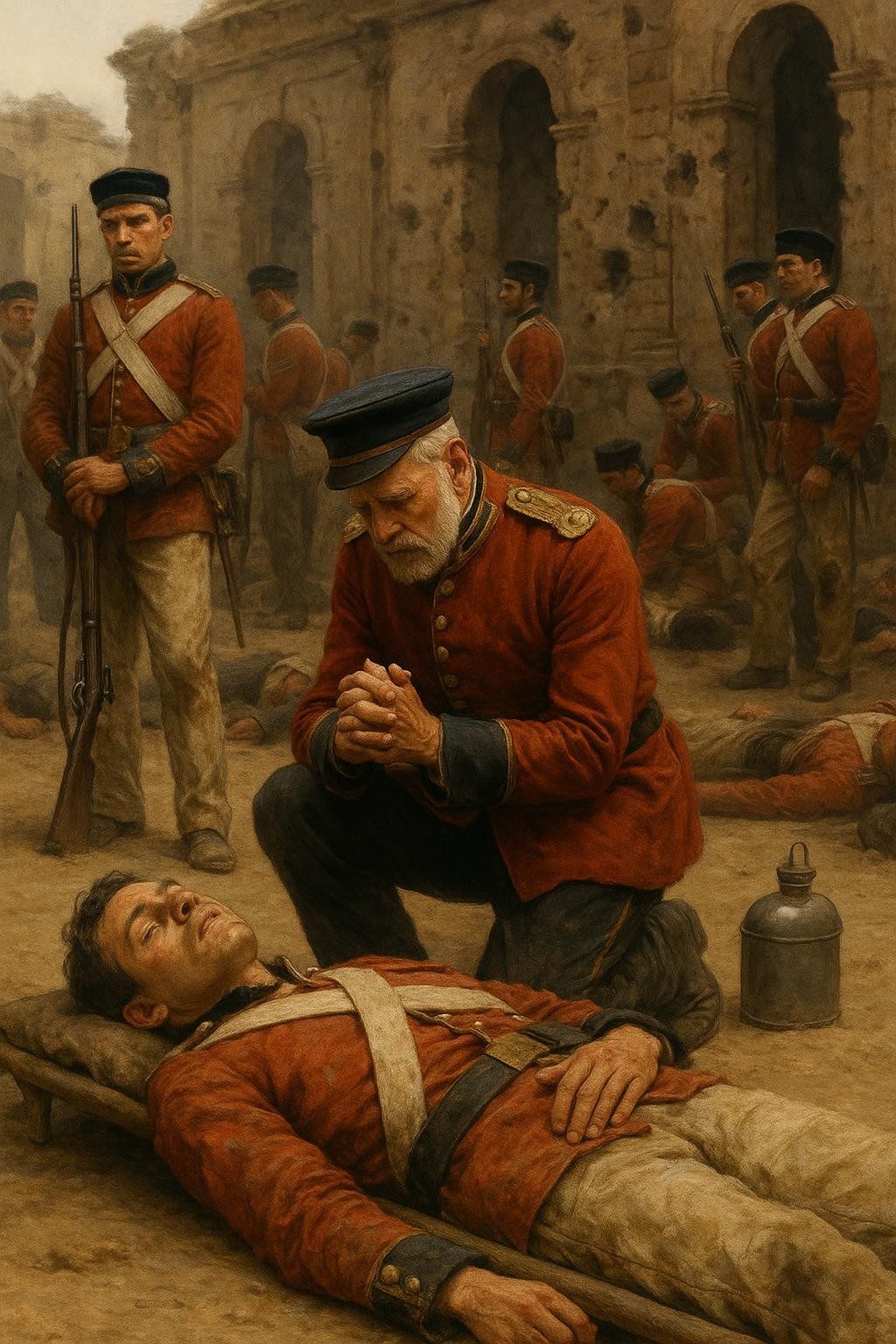
September 1857. Lucknow was burning. General Havelock had fought through six weeks of fever and fire. His men were starving. He sent the food to his wounded first. Then knelt and prayed.
September 1915. Gas drifted across the trenches at Loos. The men of the 7th KOSB faltered. Piper Daniel Laidlaw climbed onto the parapet. Stood upright. Played. Under full German fire. They rose and followed him.
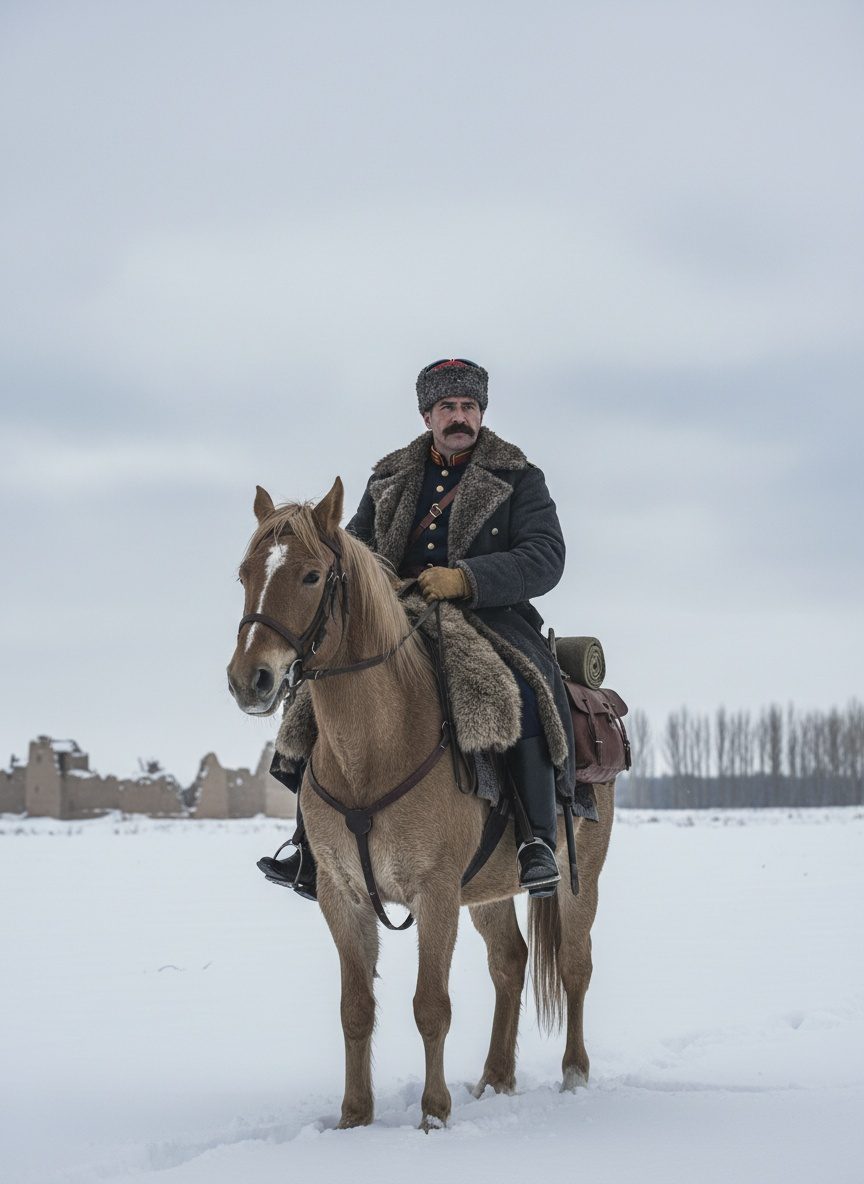
January 1875. The Russian Empire had warned every British officer away. Fred Burnaby saddled a horse anyway. He rode 800 miles through the Central Asian steppe. Alone. In winter. He came back alive. And wrote the book that shook an empire.
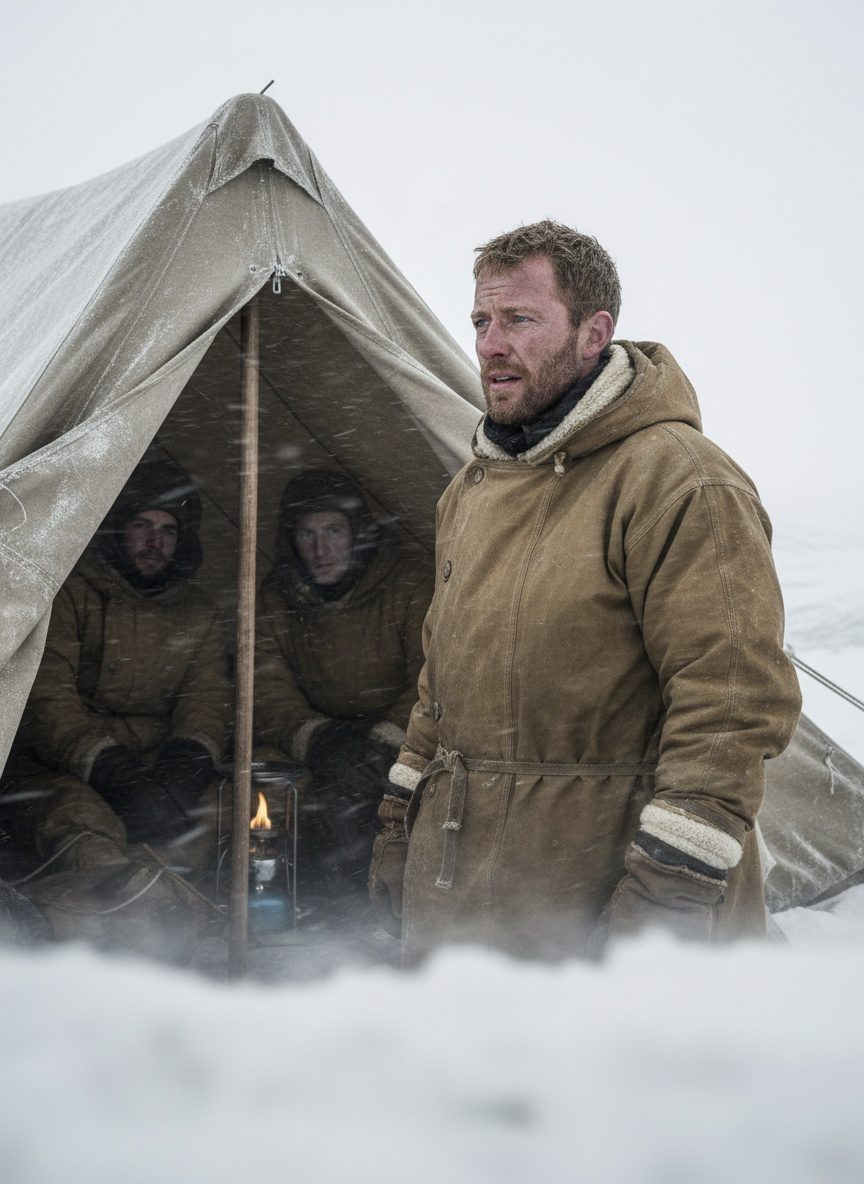
March 1912. Antarctica. The return from the Pole had gone wrong. Lawrence Oates was frostbitten. Dying. He stood up. Walked into the storm. Said only: 'I am just going outside. I may be some time.'
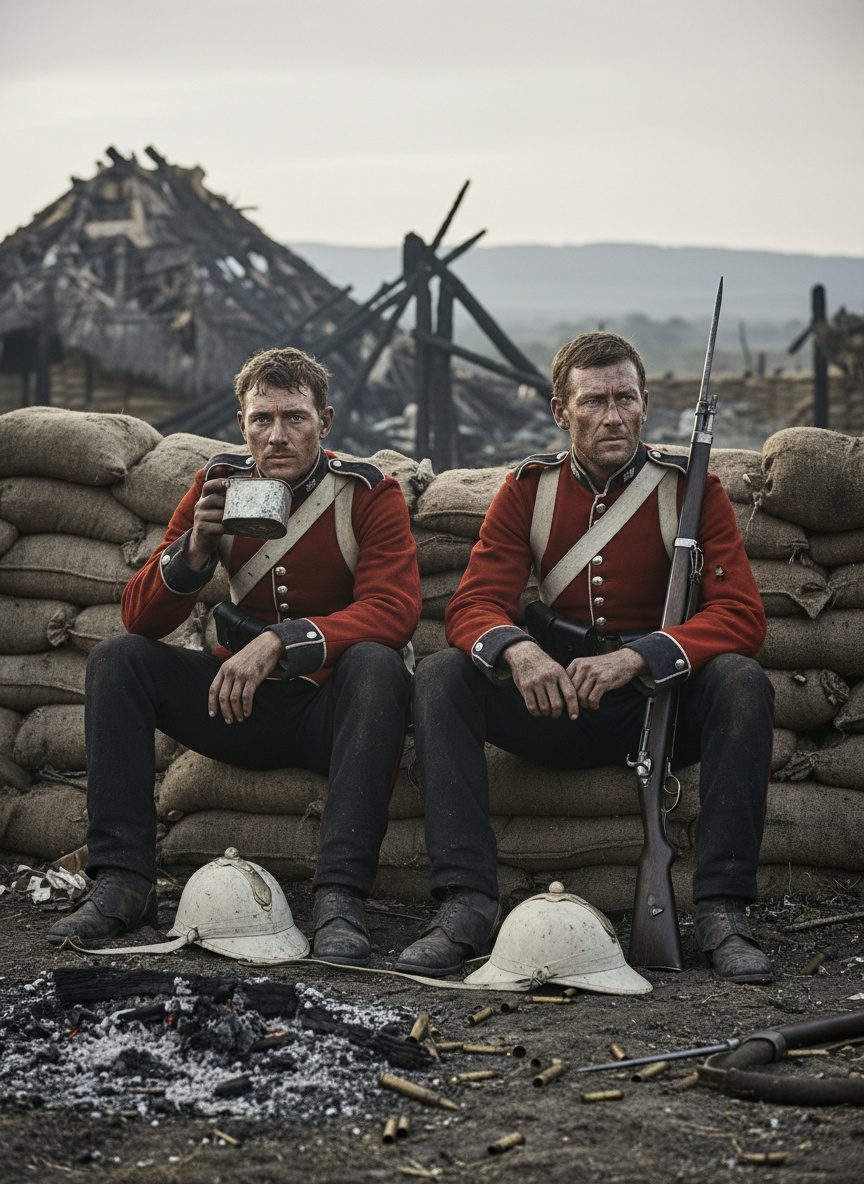
The battle was over. 150 men had held a mission station against 4,000 Zulu warriors. At dawn, two survivors sat in the wreckage and ate what was left. No triumph. Just silence and cold rations.
January 1879. One hundred and thirty-nine men. Four thousand Zulu warriors. Colour Sergeant Frank Bourne was twenty-four years old. He walked the barricades all night. Calm. Steady. Unbreakable.
He fell at Fromelles in 1916. His battalion lost 90% of its strength in a single day. For 92 years, no one knew where he lay. Then science gave him back his name.
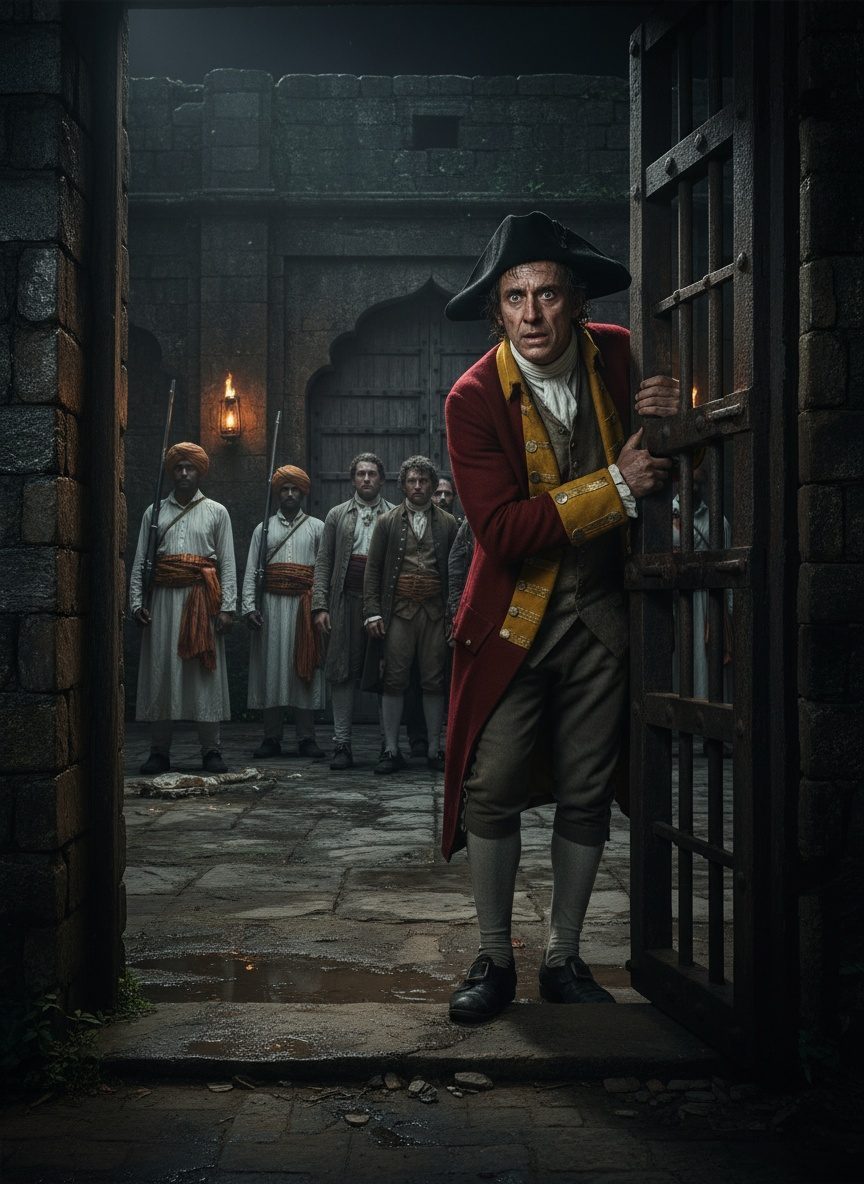
Siraj ud-Daulah had every reason to hate the Company. But seizing Fort William — and throwing British prisoners into a room built for six — was a declaration of war. Some never walked out.
Argentina claimed the Falklands. Britain took them back — without firing a single shot. But London stayed silent for decades. The islands that later cost 1,000 lives were almost forgotten the moment they were won.
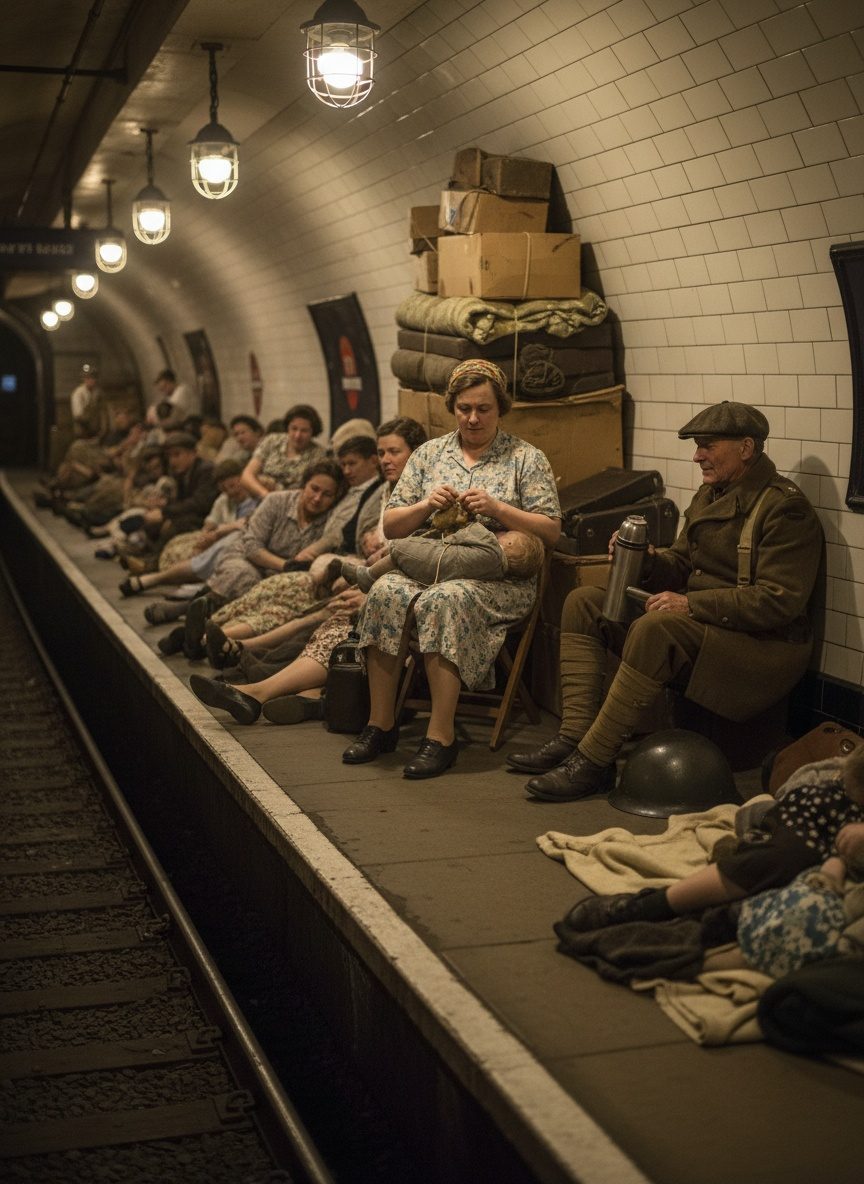
When the bombs fell, Londoners didn't wait for permission. They descended into the Underground and refused to leave. The government called it a problem. History called it survival.
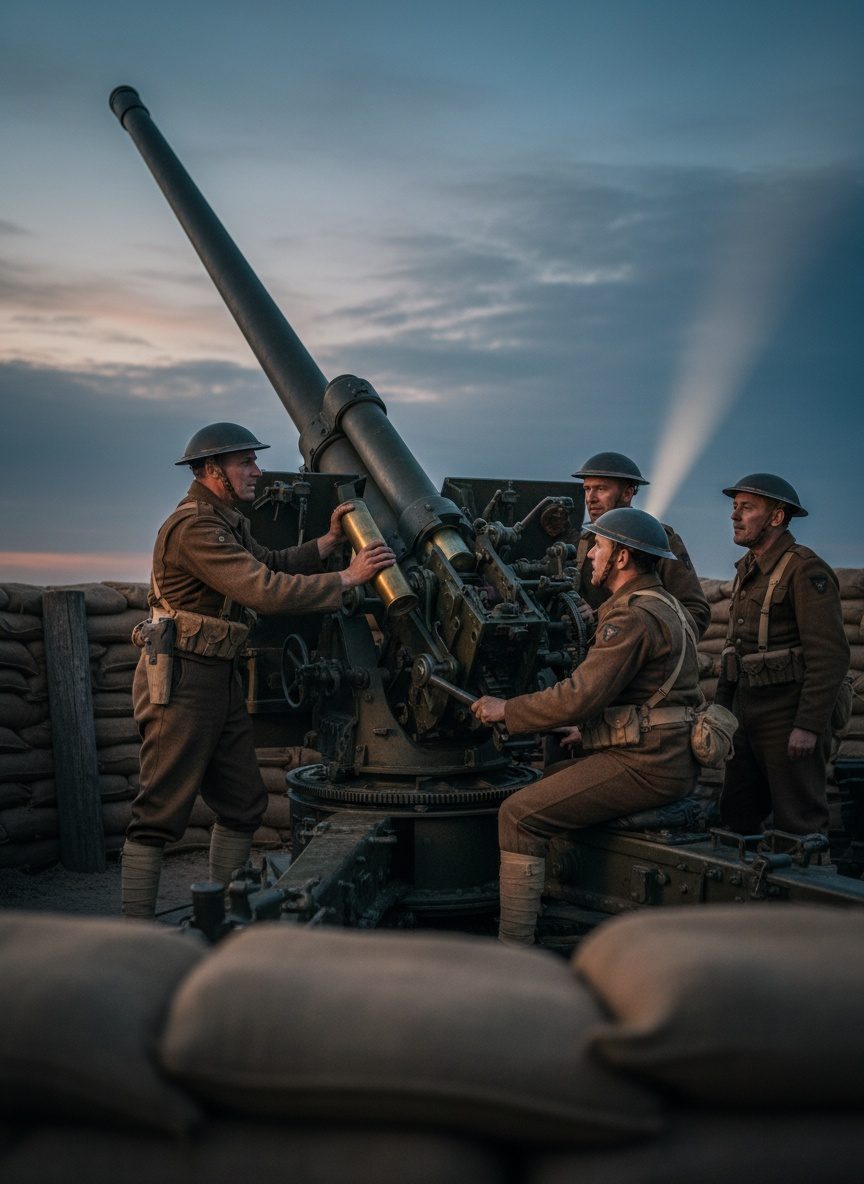
Britain needed a world-class anti-aircraft gun. Engineers delivered one so powerful the Army refused to use it as a tank-killer — a decision that haunted commanders for years.
He went to the Front as an official war artist. He came back changed. Paul Nash's canvases didn't show glory — they showed a landscape murdered by men. Britain had never seen war painted like this.
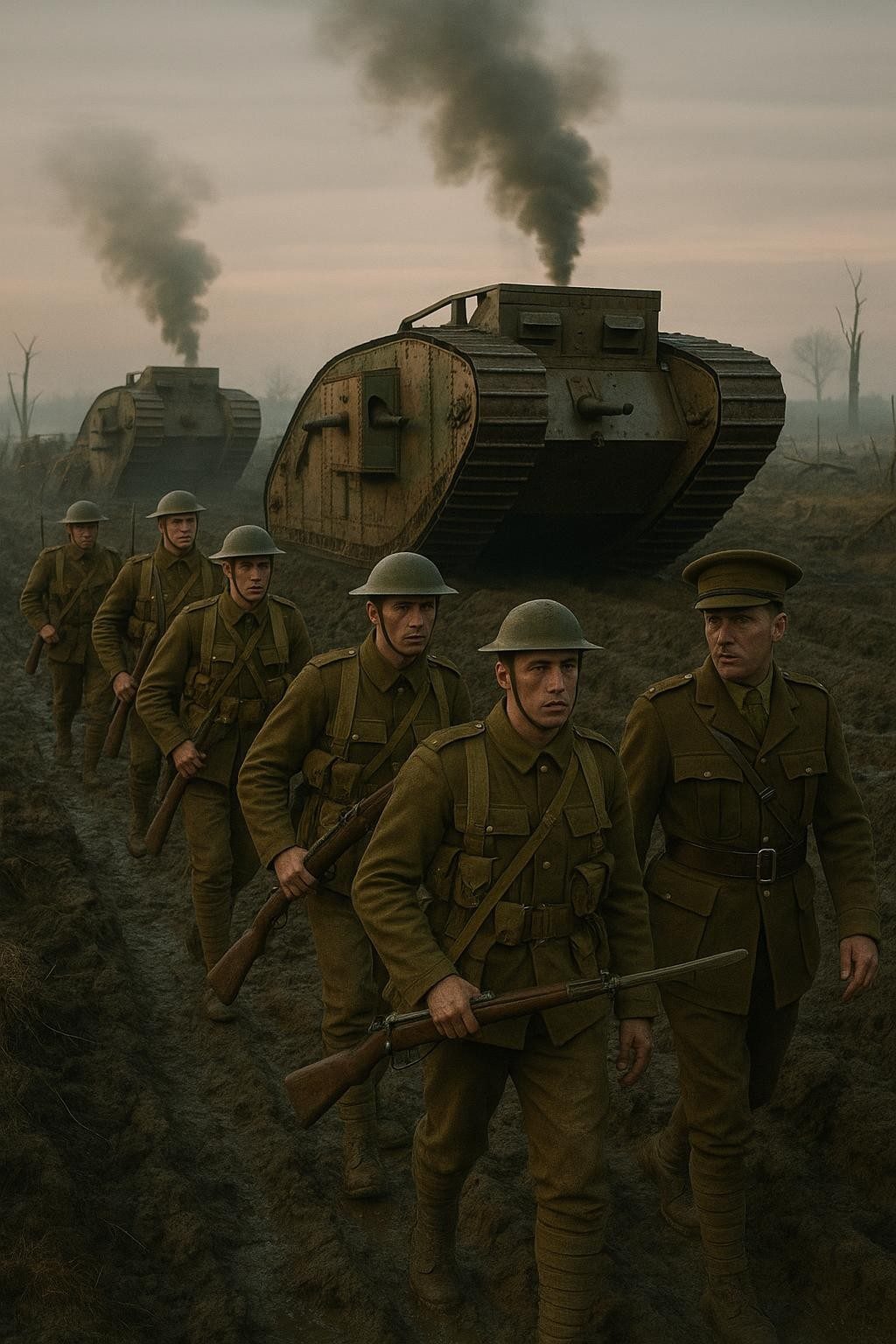
November 1917. Nearly 400 British tanks massed in secret. No artillery barrage. No warning. At dawn, they simply rolled forward — and punched a six-mile hole in the German line in hours.
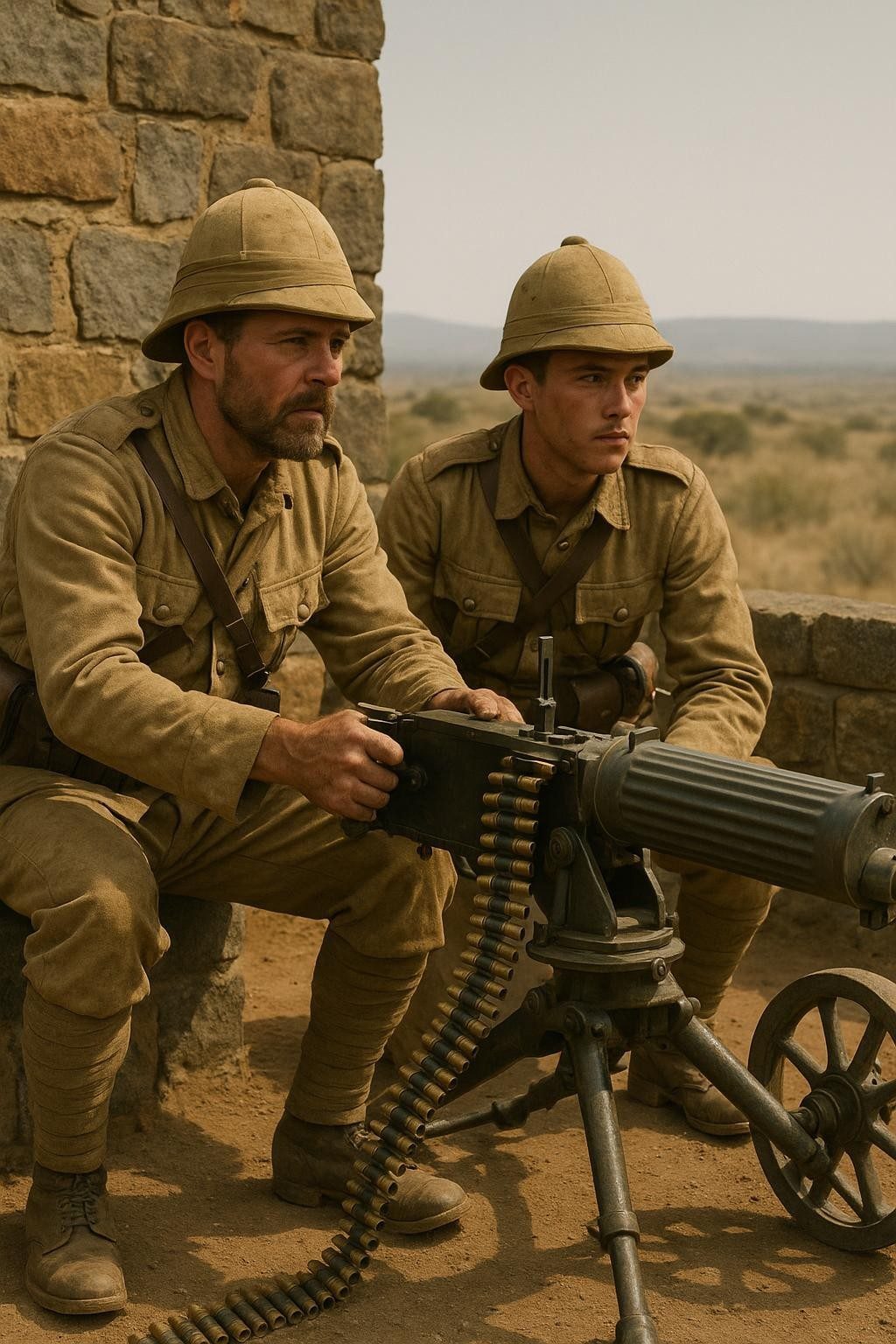
31 May 1900. Lord Roberts marched into Johannesburg. At the fort, a Maxim gun crew stood ready. The city fell without a shot. But the gun told the whole story.
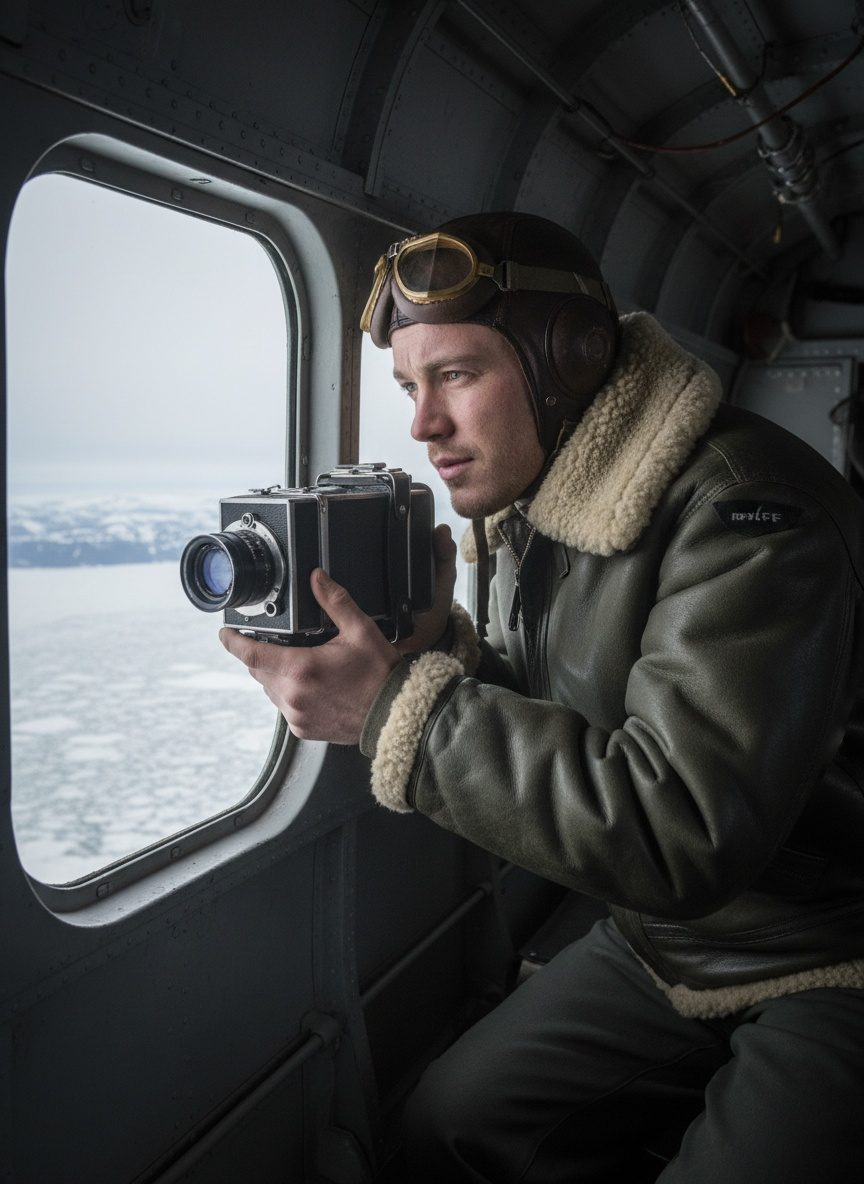
May 1942. A crewman leans from a Lockheed Hudson window above Iceland's frozen sea. His camera records what no sailor below could see. The ice patrol was unglamorous. The photographs were everything.
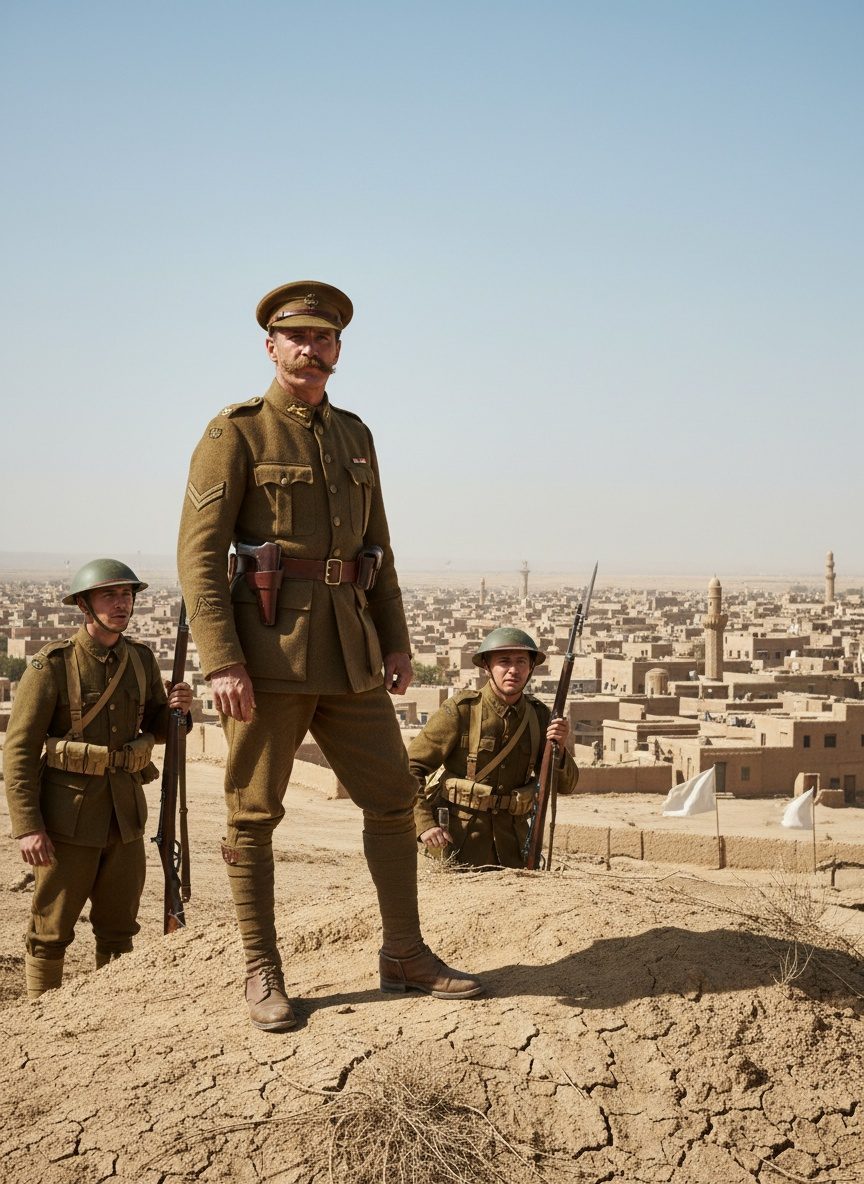
After the shame of Kut, Britain needed a victory. General Maude rebuilt a broken army. On 11 March 1917, white flags rose over Baghdad. The city had fallen.
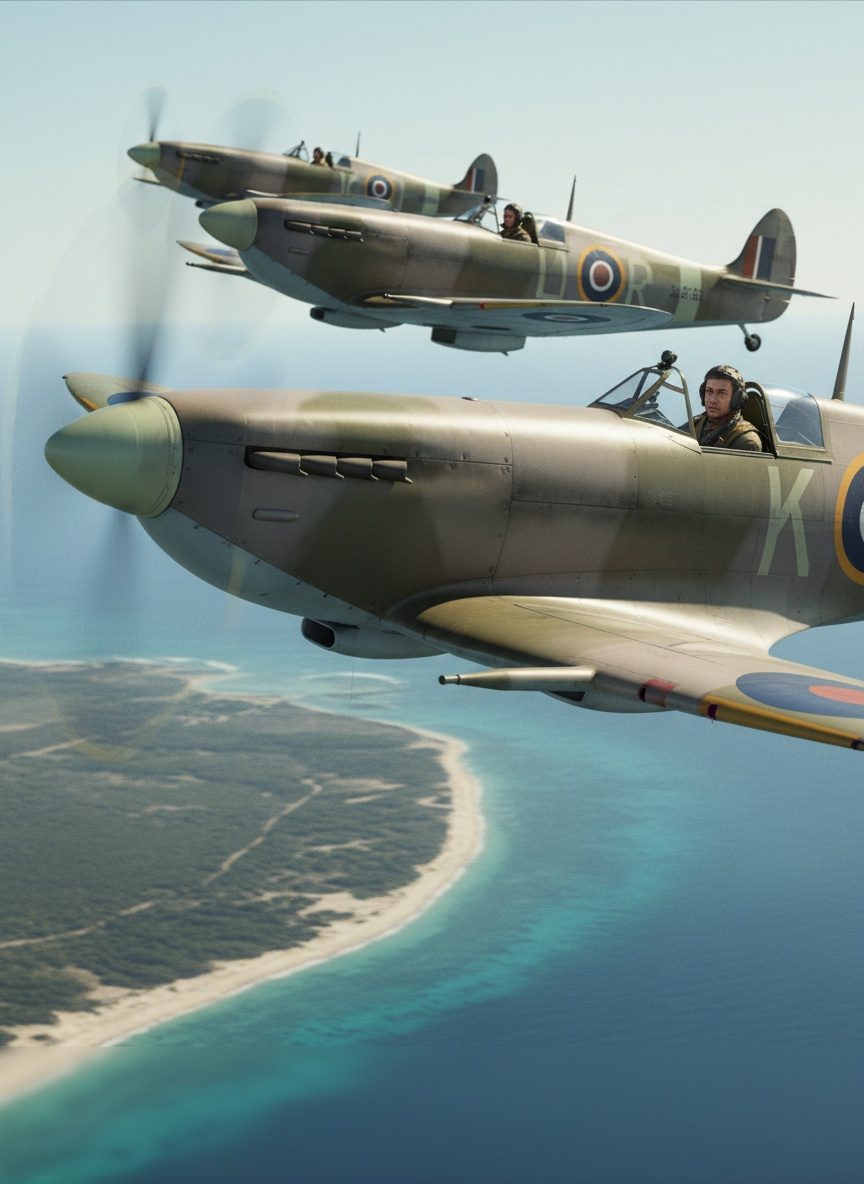
March 1943. Three Spitfires of No. 244 Wing peel off the Tunisian coast. Below them: Mareth. Behind them: light bombers they'd just shepherded home. The Afrika Korps never saw them coming.
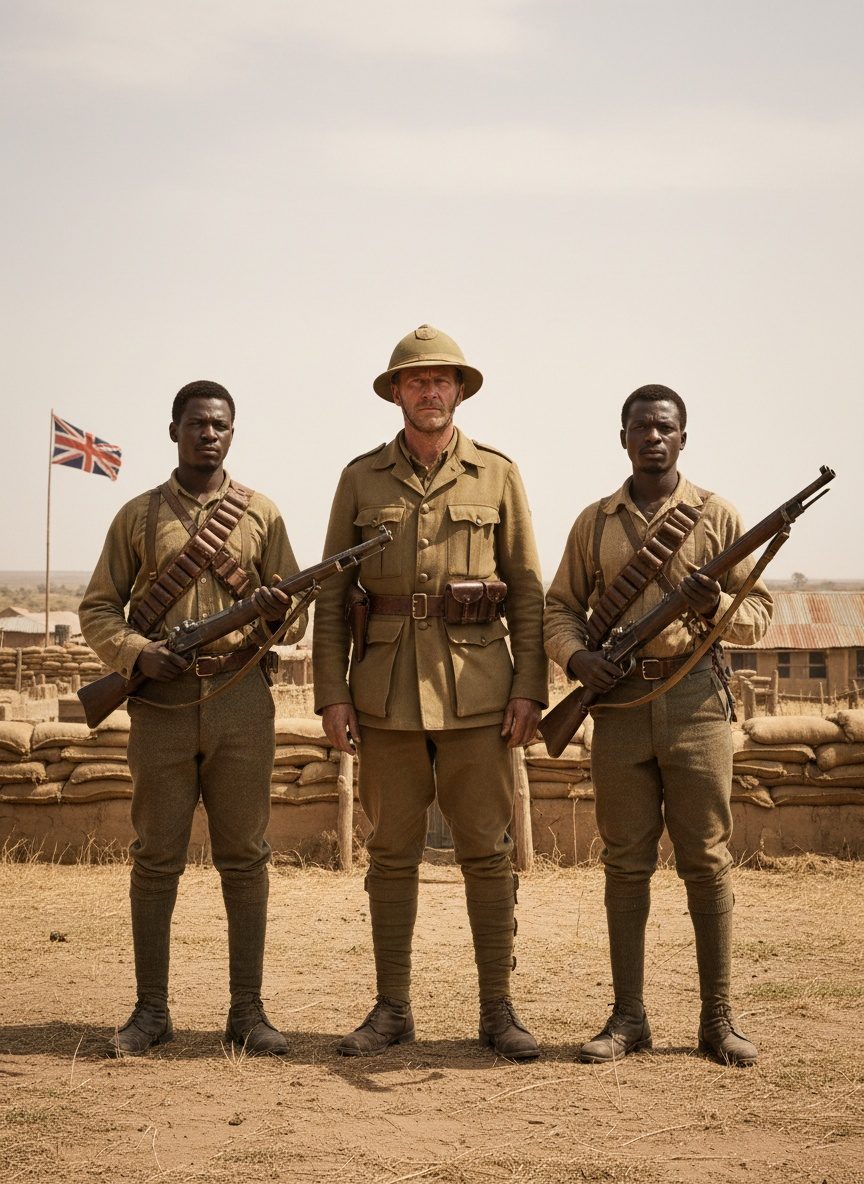
Mafeking. 217 days under siege. Baden-Powell was outnumbered, outgunned — and furious letters from the Boer lines kept arriving. His crime? Arming Black men in a white man's war.
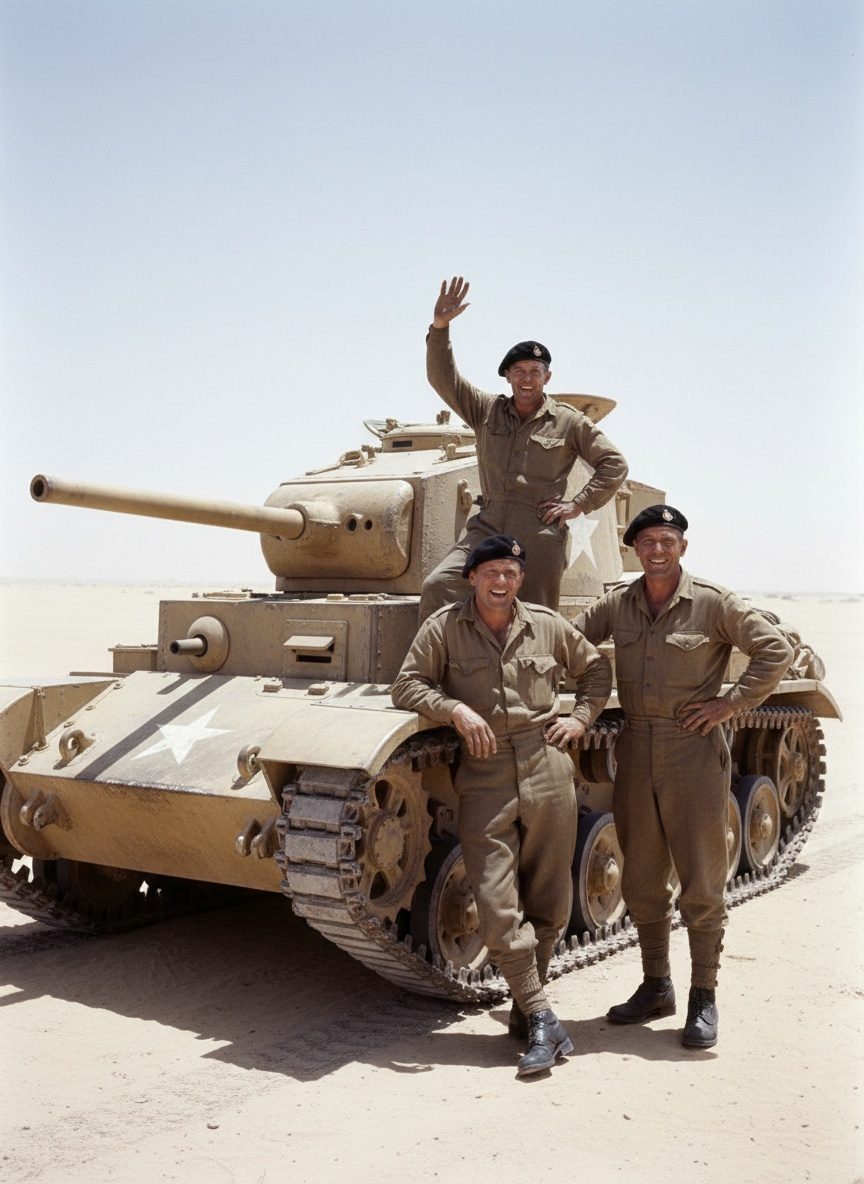
Libya, April 1942. A Crusader tank crew climbed aboard their machine and posed for a photograph. Not a battle shot. A thank-you. Britain had sent the tanks. The men wanted someone back home to know they were grateful.
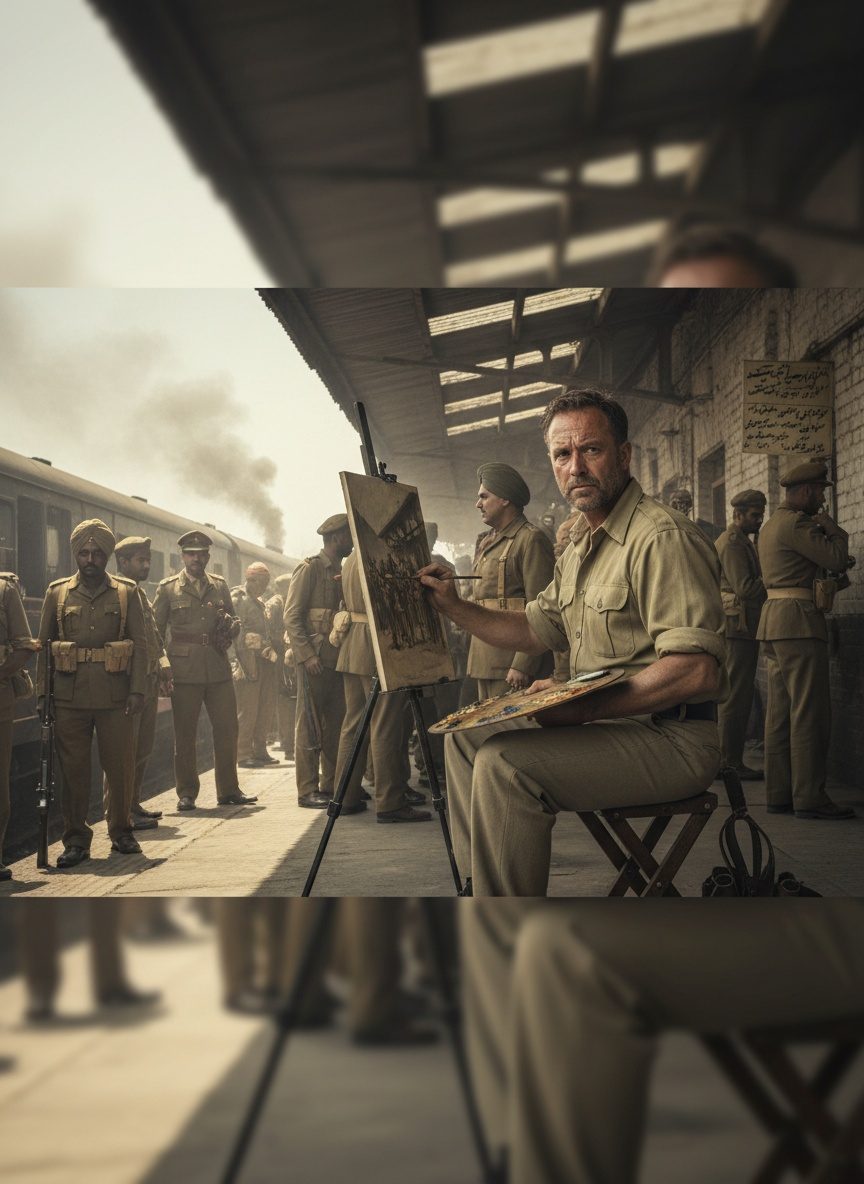
In 1943, Britain sent artists into India's war. Their canvases caught something cameras missed — an empire at its peak, already quietly ending. The paint barely dried before independence changed everything.
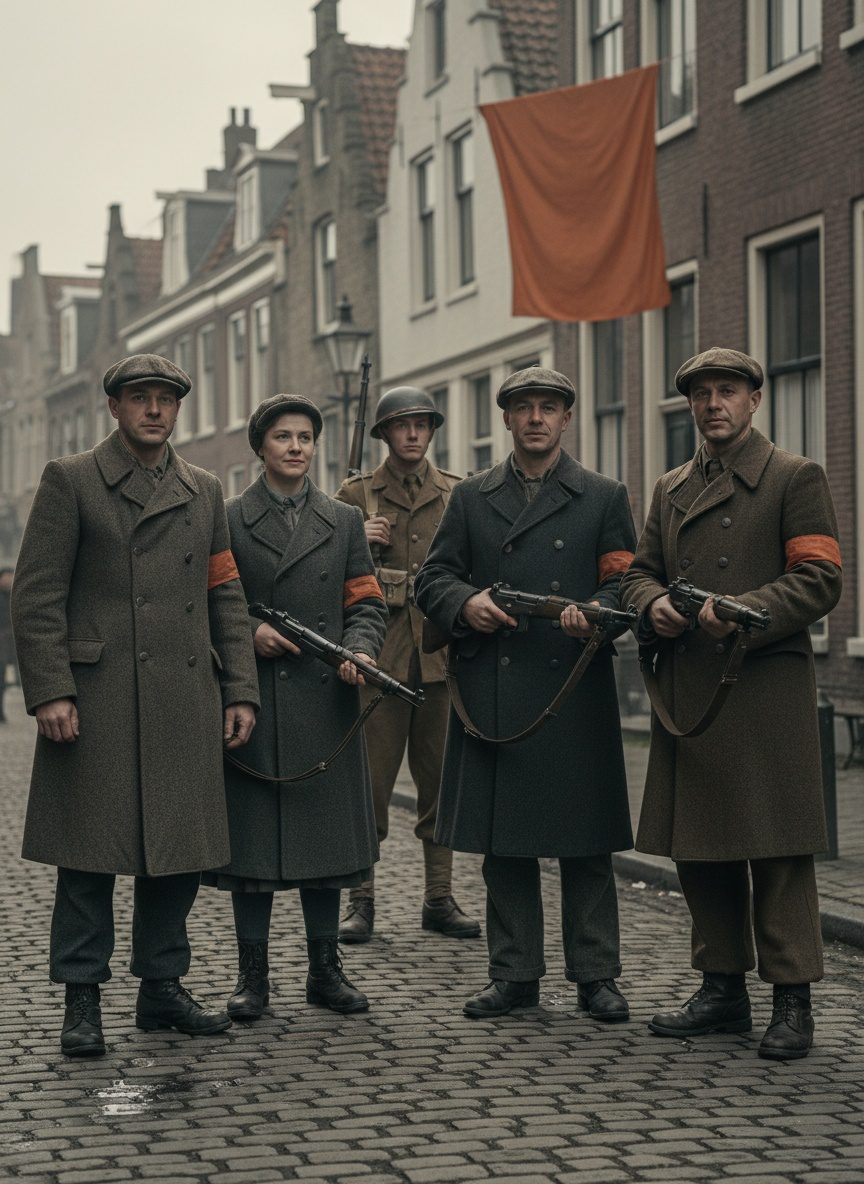
March 1945. British forces push into Holland. But ahead of them, ordinary Dutch men and women had already taken the streets. Armed with stolen weapons, they held their own town until the redberets arrived.
April 1945. The war was nearly over — but not yet. Men of the 2nd Lancashire Fusiliers climbed onto Sherman tanks near Ferrara and rode hard into the final push. No trenches. Just speed, steel, and nerve.
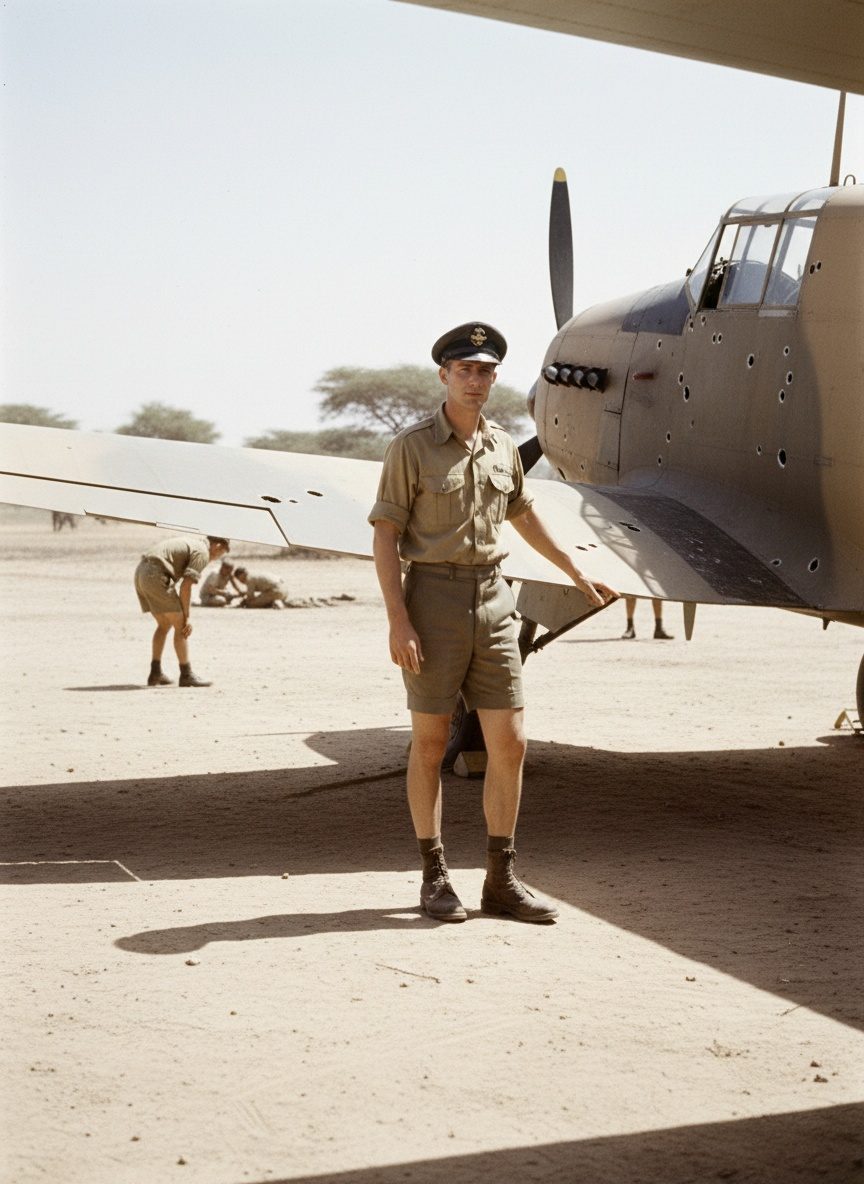
March 1941. East Africa. Kennedy's Wellesley limped back from Keren riddled with bullet holes. Two Italian Fiat CR.42 biplanes had jumped him over the target. He made it back. Just.
The ridge had already beaten two regiments. The Black Watch were told it had to fall. Piper Findlater played on — shot through both ankles, propped against a rock, pipes screaming above the guns.
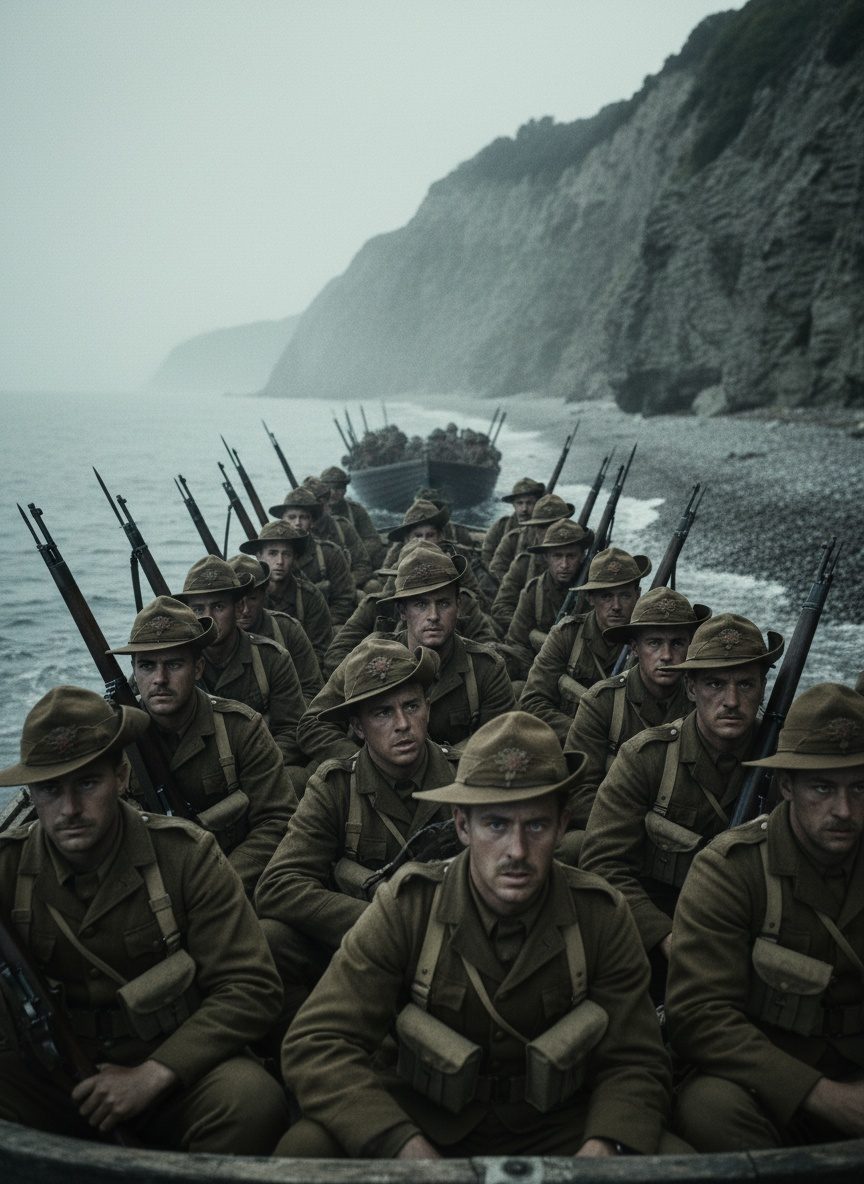
Before sunrise on 25 April 1915, thousands of young Australians and New Zealanders hit an unfamiliar shore under fire. They had landed in the wrong place. They fought anyway. 5,000 fell that day alone.
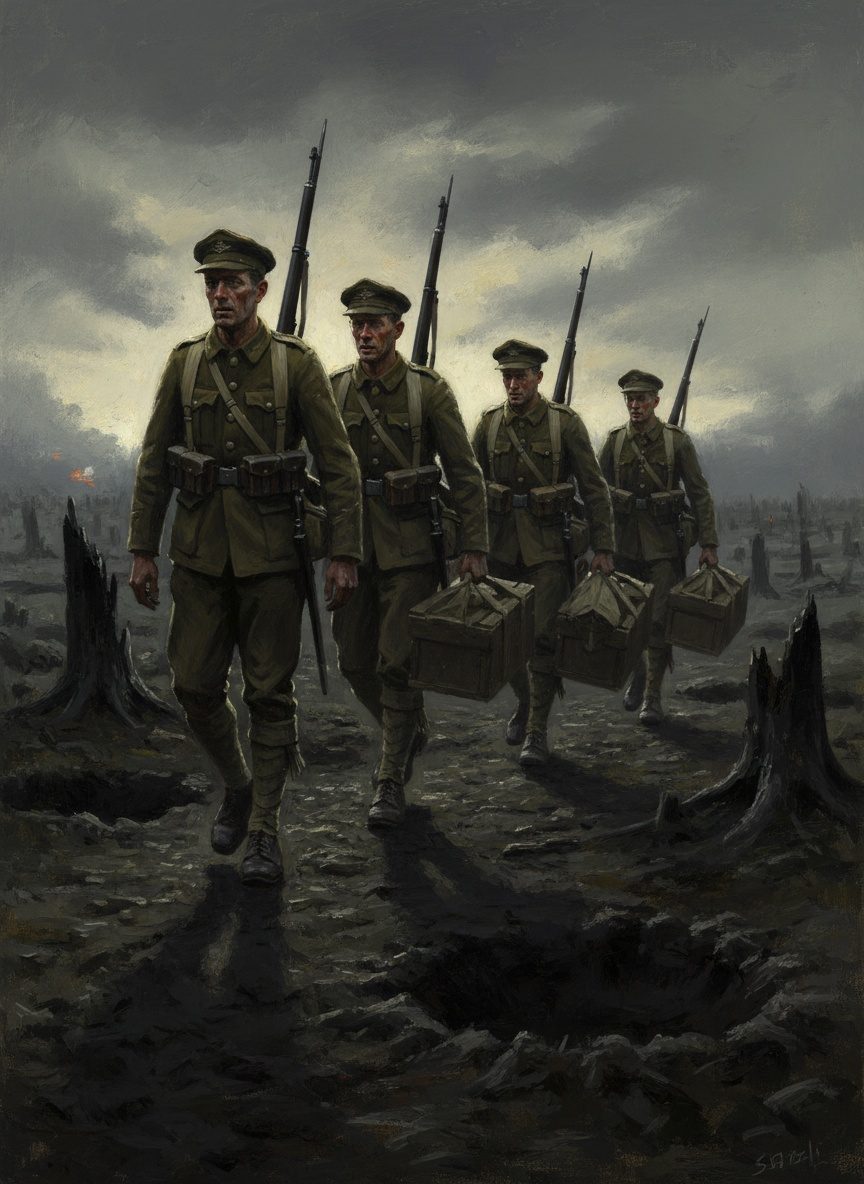
March 1915. The Battle of Neuve Chapelle. Men of the 4th Black Watch move through the dark, carrying rations to men who may already be dead. One of them will later paint exactly this.
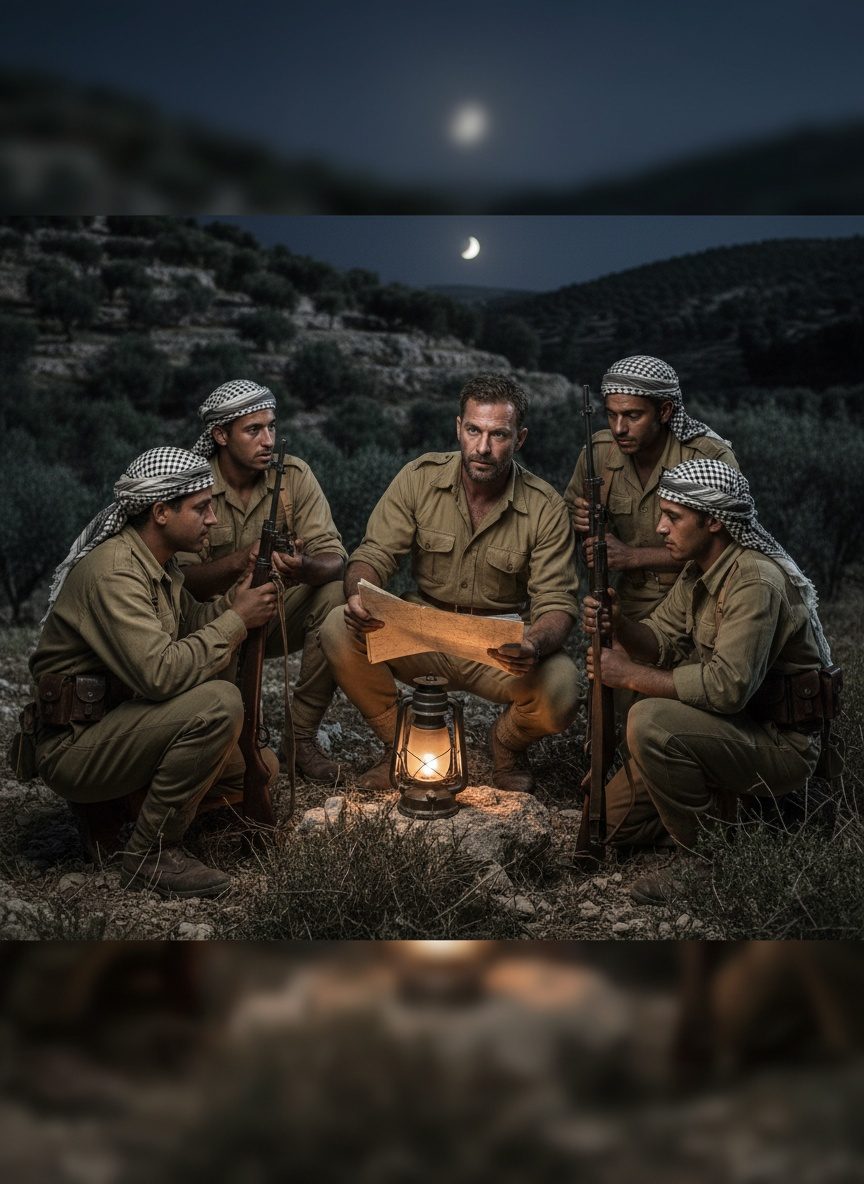
He dressed his men like rebels. Armed them with captured weapons. Sent them out at night to hunt by instinct. Orde Wingate broke every rule in the British Army manual — and invented modern counter-insurgency.
Britain had never fought a war like this. Eight nations. One shared enemy. And a web of secret treaties that would reshape Europe forever. The Grand Alliance of 1701 was the world's first modern coalition war.
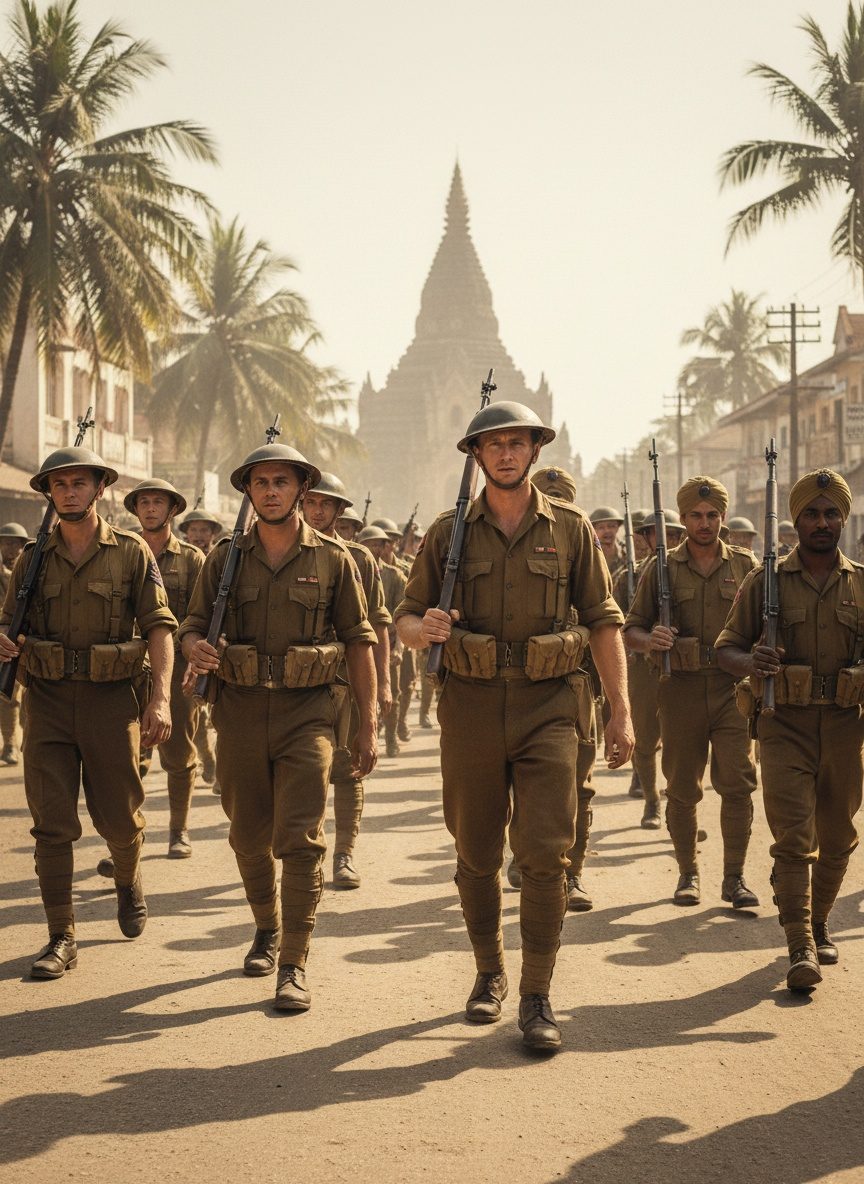
The war in Europe was over. In Delhi, Lahore and Calcutta, Indian soldiers and British civilians poured into the streets. But for the Indian Army, the real war was still raging — 1,000 miles east in Burma.
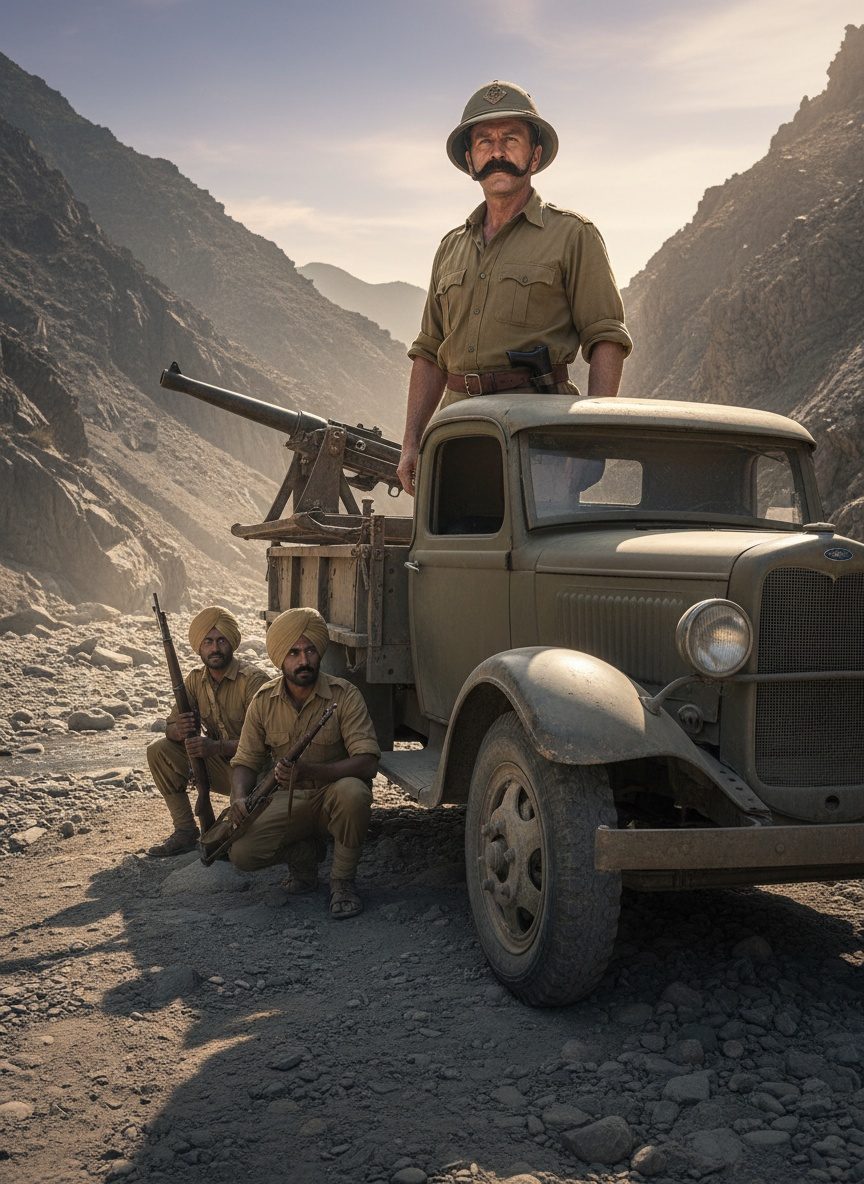
North-West Frontier, 1937. The British Army had artillery. The Scouts had something better — a 3-pounder bolted to a Ford truck. Fast, brutal, improvised. It worked.
Shot through the lung at 26. Doctors dug his grave before he died. A dead soldier fell on top of him and took the bullets meant for him. Montgomery survived — and never forgot what bad planning looked like.
Lucknow, 1857. The garrison was starving. A British sergeant slipped out alone through enemy lines — disguised as an Indian villager. His name was Henry Kavanagh. He had no military training for this. Just nerve.
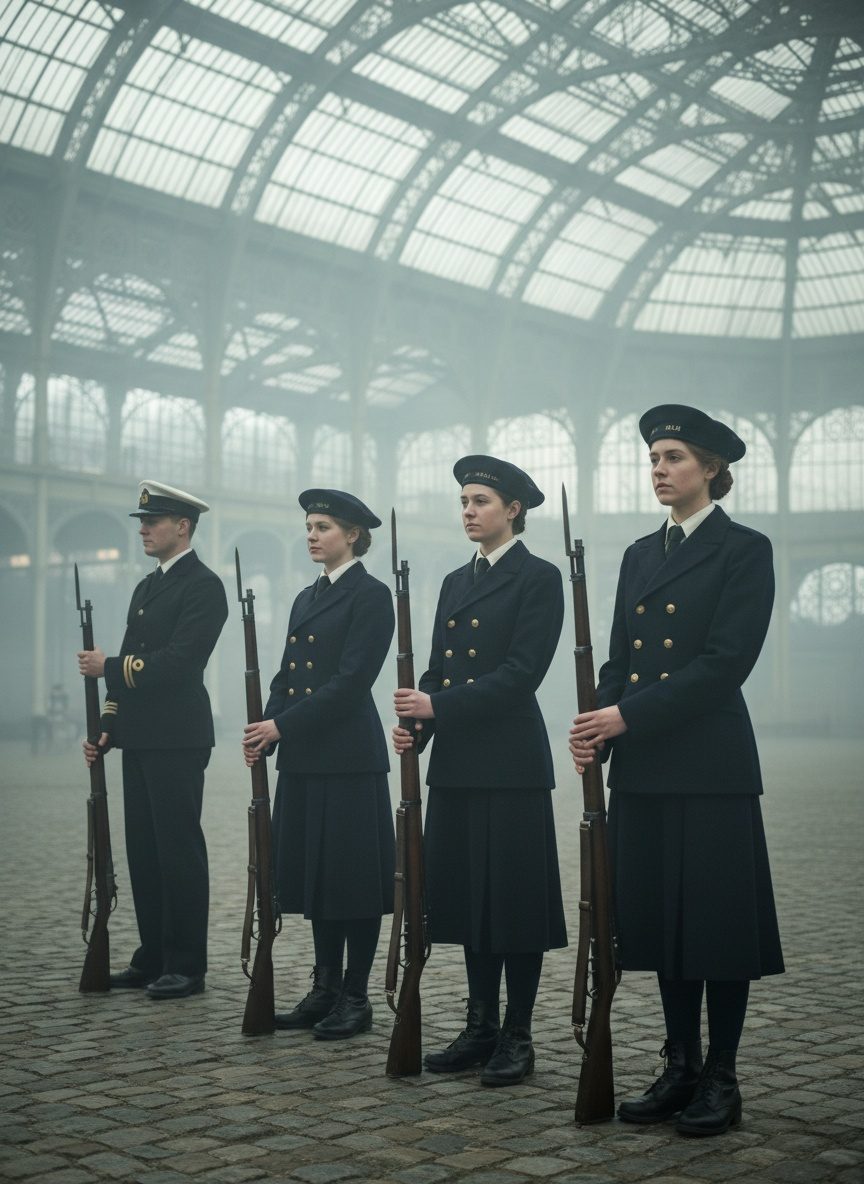
November 1917. Britain was desperate. So it did the unthinkable. It handed women rifles. Within months, 3,000 Wrens held the Royal Navy together — in over 100 roles no woman had ever been allowed to touch.
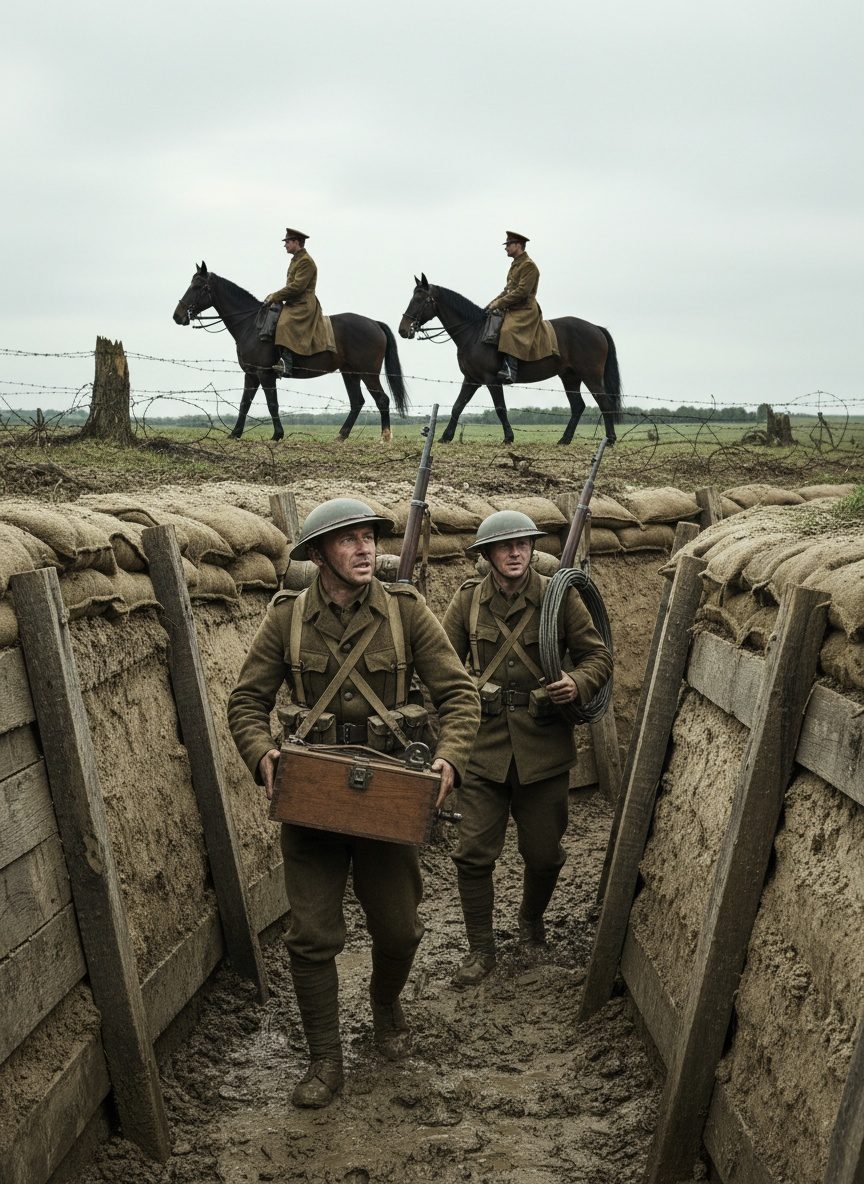
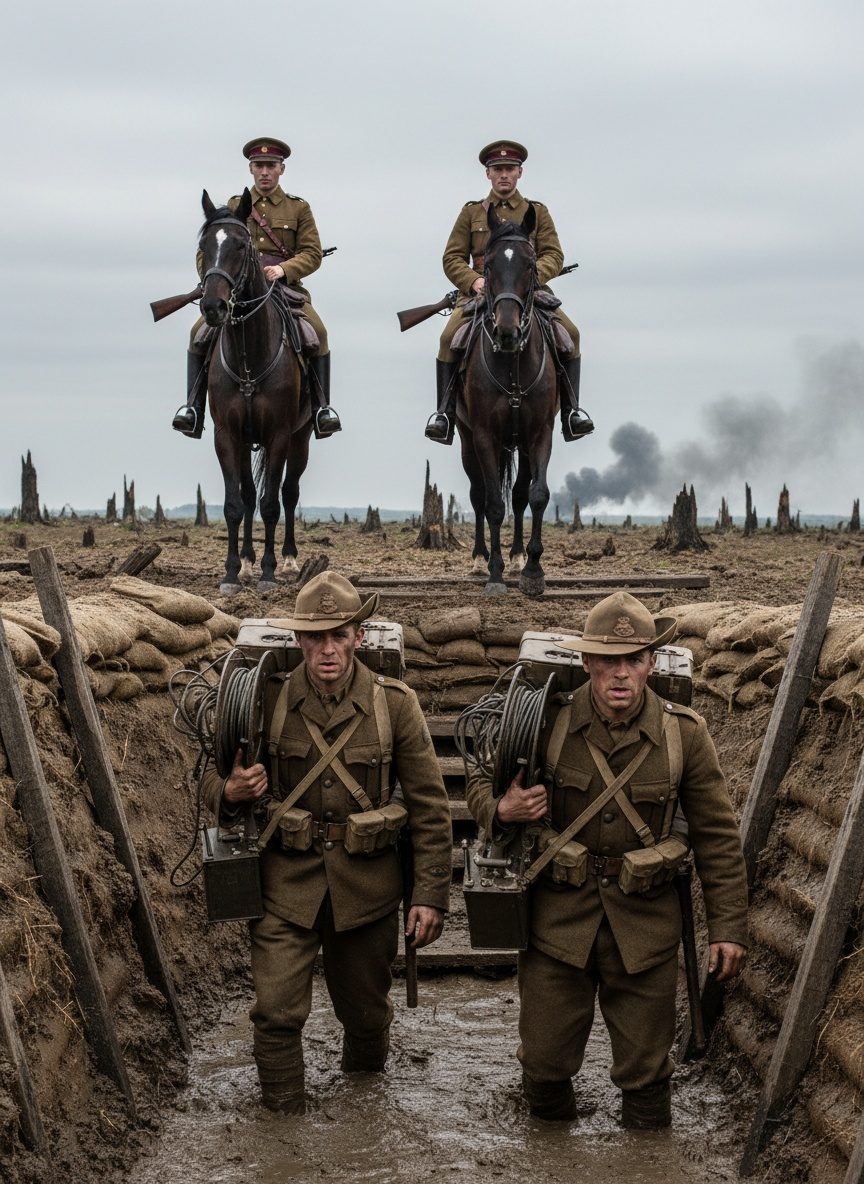
France, May 1917. Australian signallers moved through a communication trench near Neuve-Église. Above them, British cavalry crossed. Two worlds of the same war, passing without a word.
France, May 1917. Two worlds passed in silence. Colonial foot soldiers hauled cable through mud below. British horsemen moved above. Neither spoke. Both knew the old war was dying.
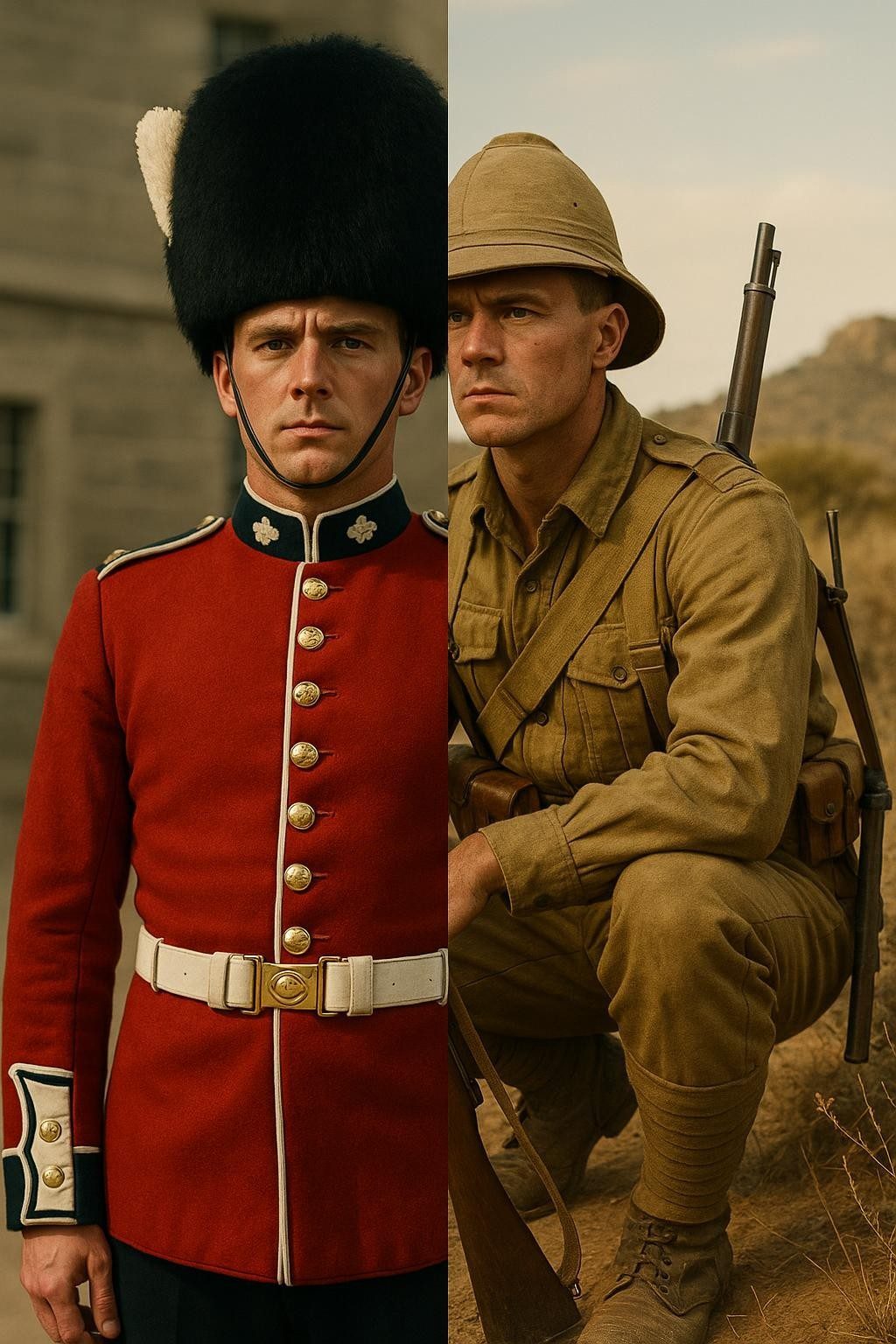
Same regiment. Same men. Two completely different soldiers. At home they gleamed in scarlet and bearskin. In South Africa they vanished into khaki dust. The Coldstream Guards fought both wars at once.
1942. British infantry had nothing against German armour. Then a drainpipe with a hollow charge changed everything. The PIAT was crude, terrifying to fire — and it saved the Eighth Army.
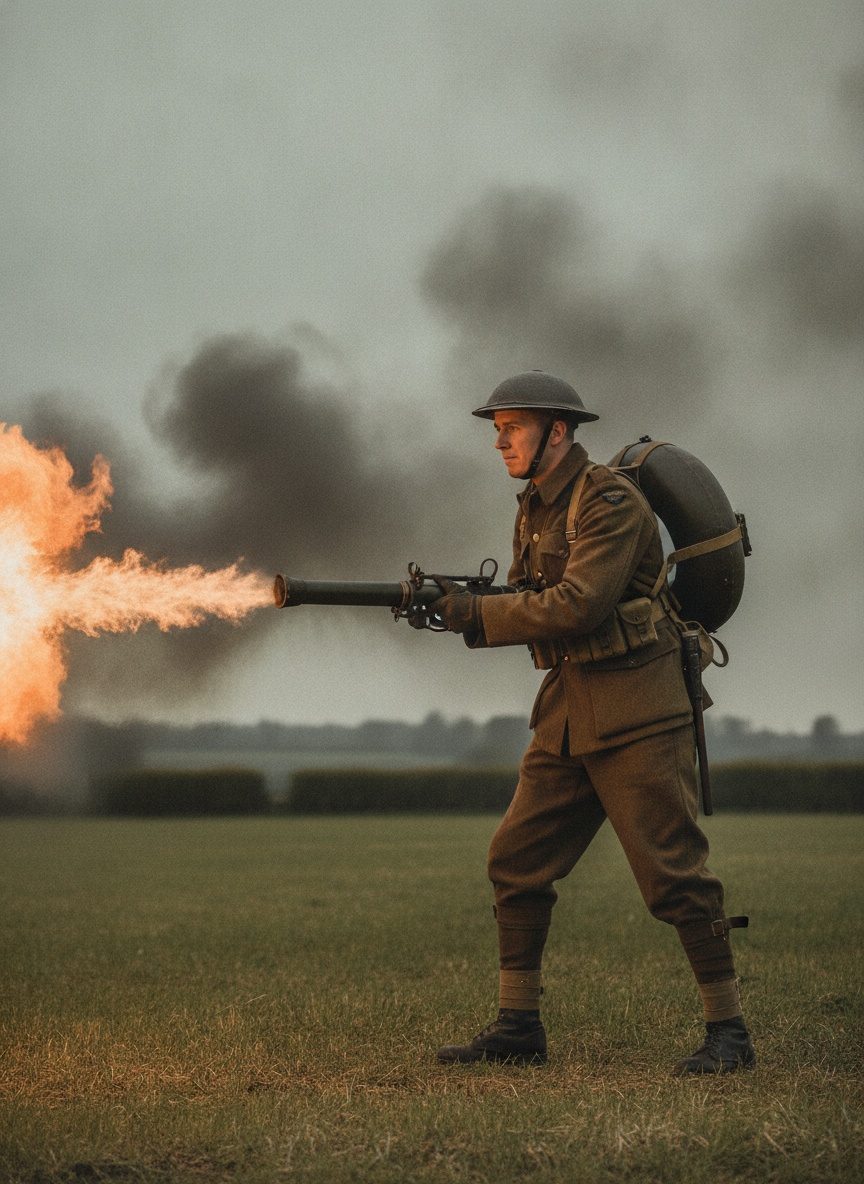
Spring 1944. A British soldier straps on 40 pounds of pressurised fuel. The Lifebuoy flamethrower could clear a trench in seconds — and cook its operator alive if hit. Few weapons in the British arsenal demanded more courage to carry.
One artist. Dozens of uniforms. A war that changed how Britain dressed for battle. Harry Payne captured the last great pageant of imperial military colour — just as khaki swallowed it whole.
November 1939. A 21-year-old New Zealander in a Hurricane intercepted a German Dornier over France. One burst. One kill. The gun he ripped from the wreckage became a trophy — and a prophecy.
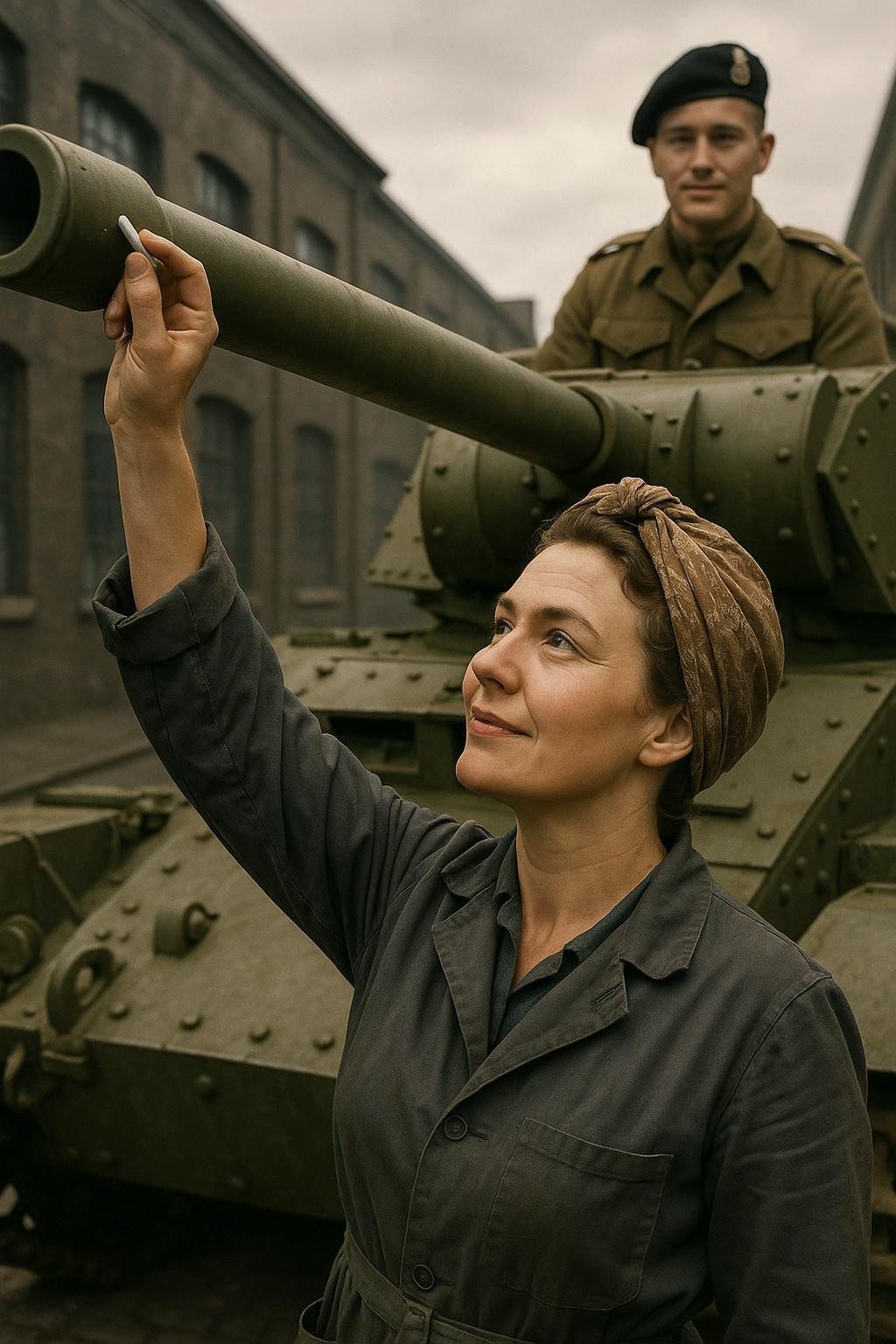
September 1942. A woman from a London munitions factory walks up to a Covenanter tank and chalks four words on the barrel. The Guards Armoured Division is heading to war. She just wanted them to know someone was watching.
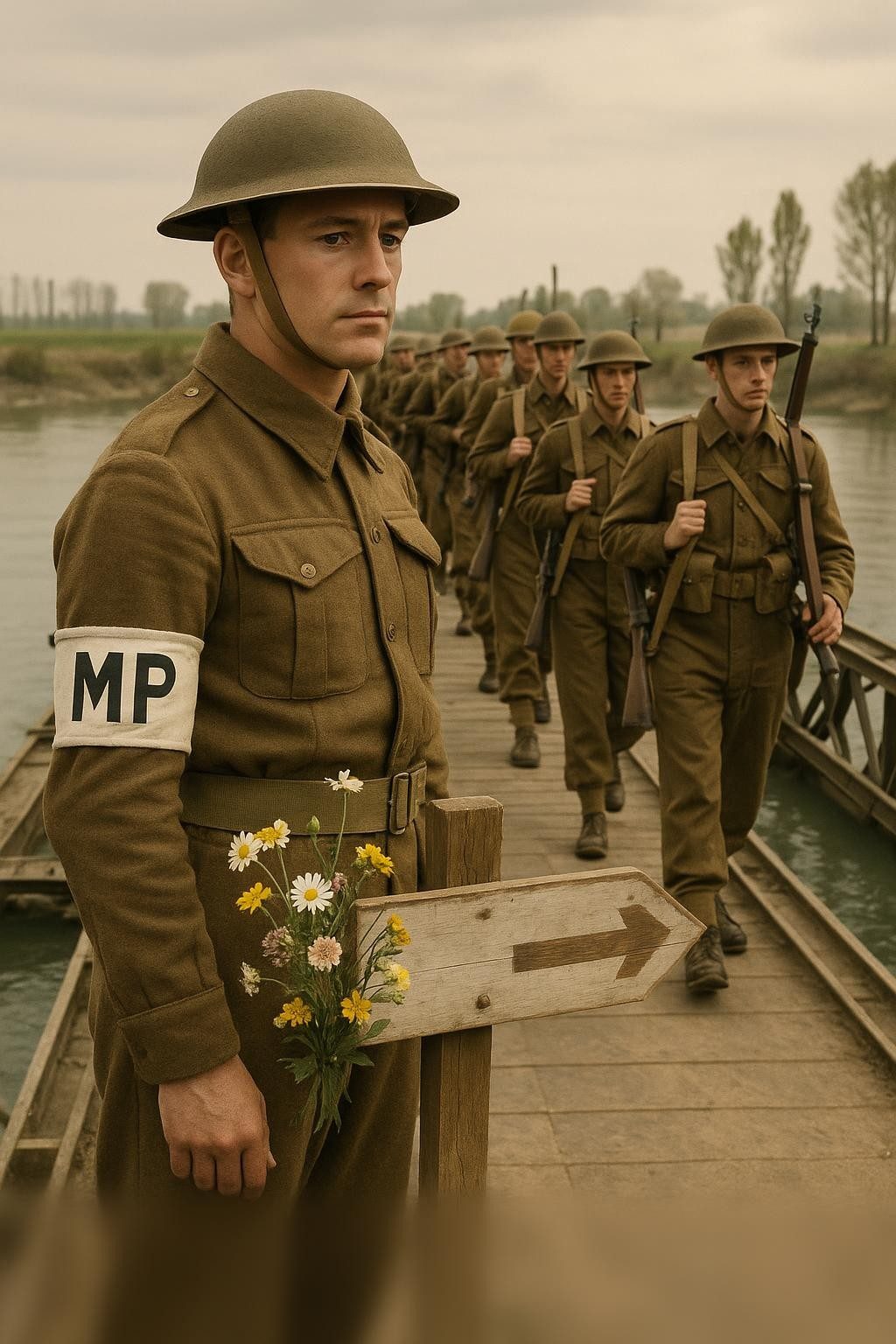
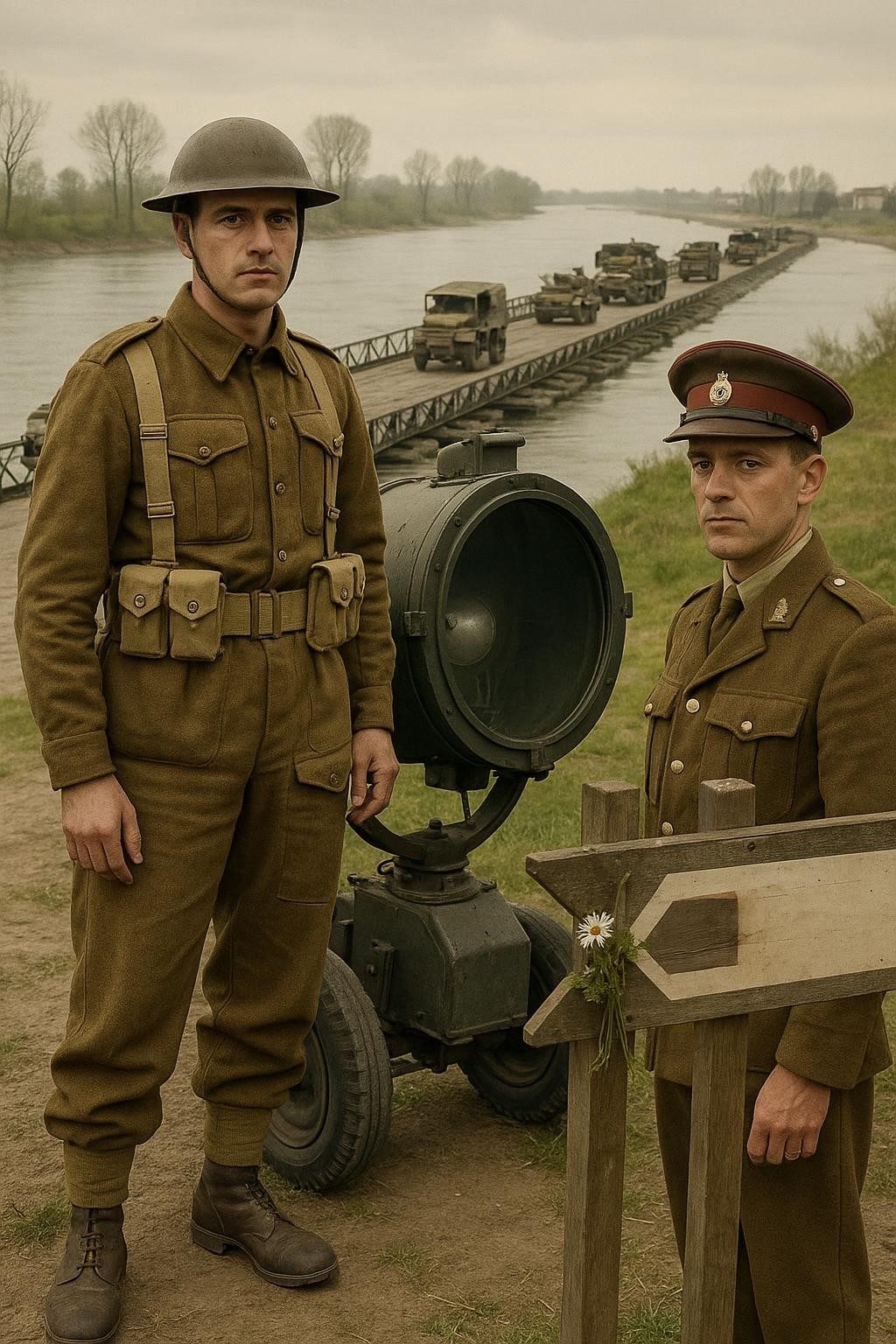
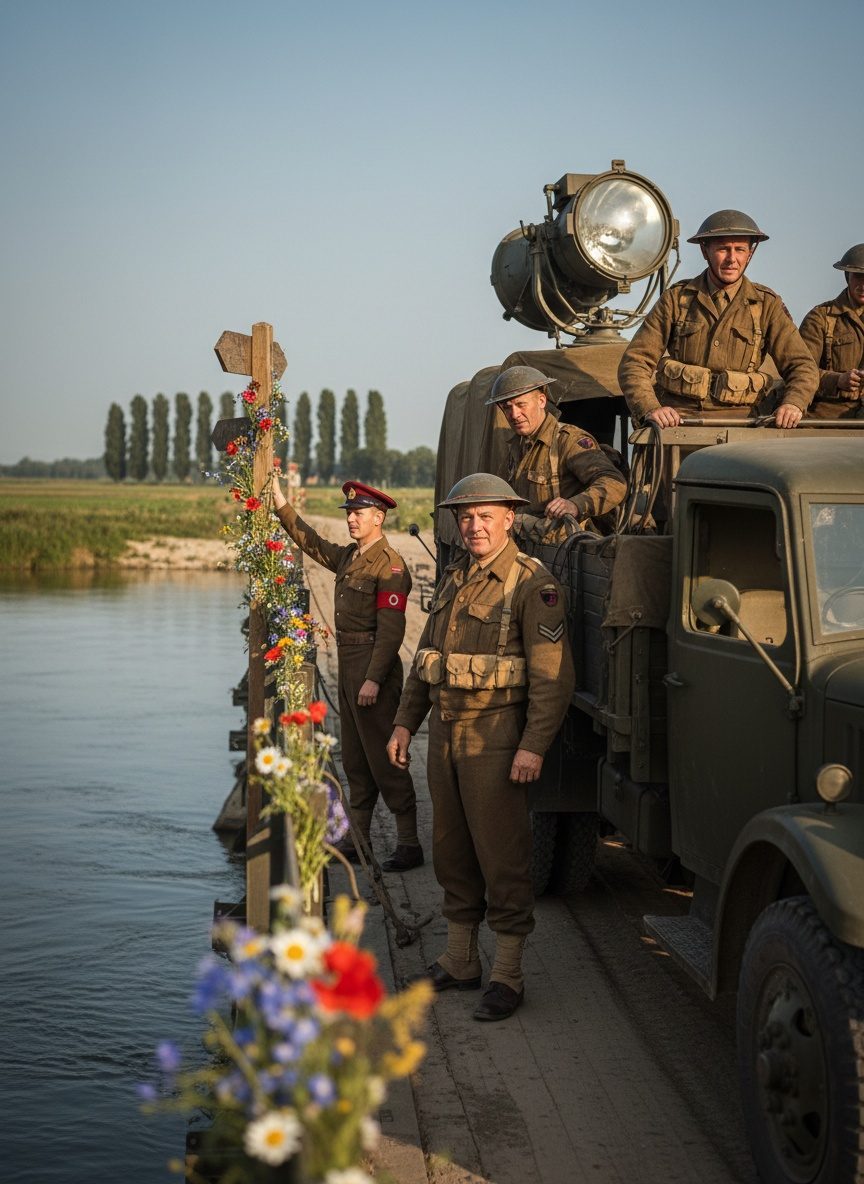
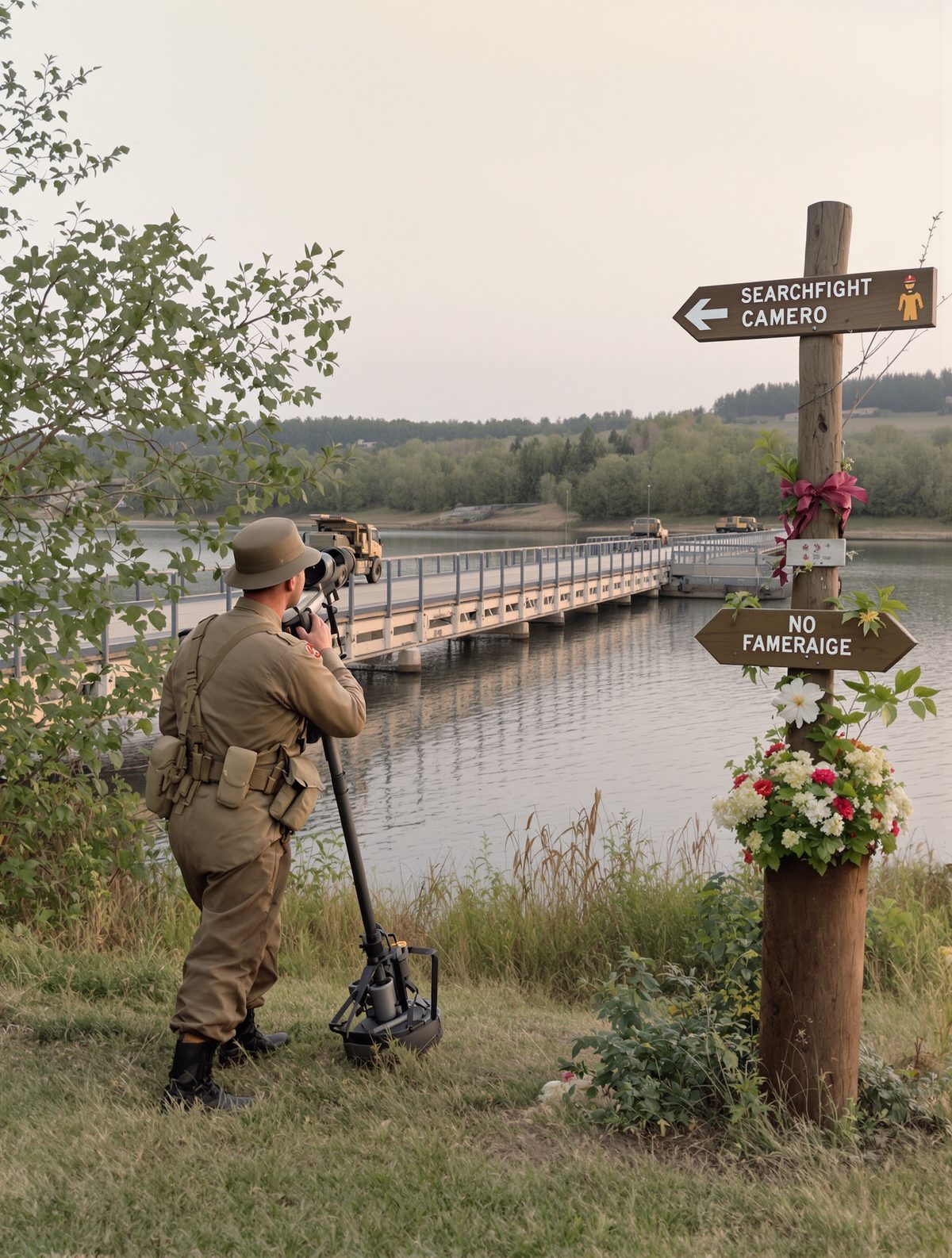
April 1945. Italy. The Eighth Army reaches the River Po. One pontoon bridge. One military policeman. One sign — wrapped in flowers. The war in Italy had days left to run.
2 May 1945. Germany was collapsing — but men were still dying. The Wiltshires pushed south of Lübeck with Churchill tanks at their shoulder. One last pocket of resistance stood between them and the end.
Kenya, 1953. A young British officer had a radical idea: use captured Mau Mau fighters to hunt Mau Mau. No one had tried it at this scale. It worked — and changed counter-insurgency warfare forever.
North-West Frontier, 1937. The tribesmen had cover. The road was exposed. So one British officer stripped a cannon from a crashed biplane and welded it to a Ford truck. The Empire improvised — or it died.
In January 1916, Britain did something it had never done in its history. It forced its men to fight. The Military Service Act ended voluntary enlistment. Two million civilians became soldiers almost overnight.
Shot through the lung at 26. Doctors ordered his grave dug. A sniper's bullet and a dead soldier's body were all that stood between Bernard Montgomery and oblivion — and they made him the general he became.
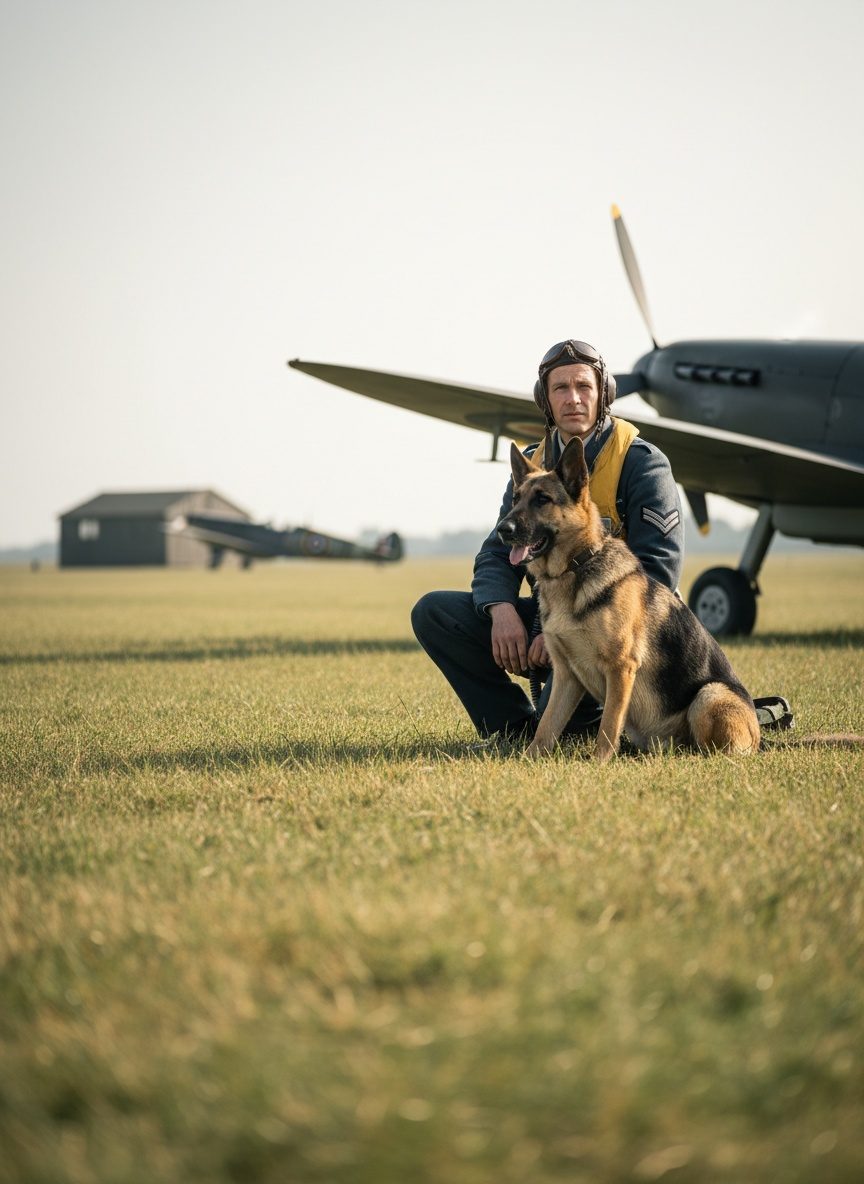
He joined the RAF as a clerk. A miner's son with no connections, no officer's accent, no path to a cockpit. Then he learned to fly. Then came the Battle of Britain. And he became one of its deadliest pilots.
On the North-West Frontier, the British had armies. But it was a tiny, mongrel force of frontier constabulary that held the passes. Mixed, lean, underfunded — they punched far above their weight.
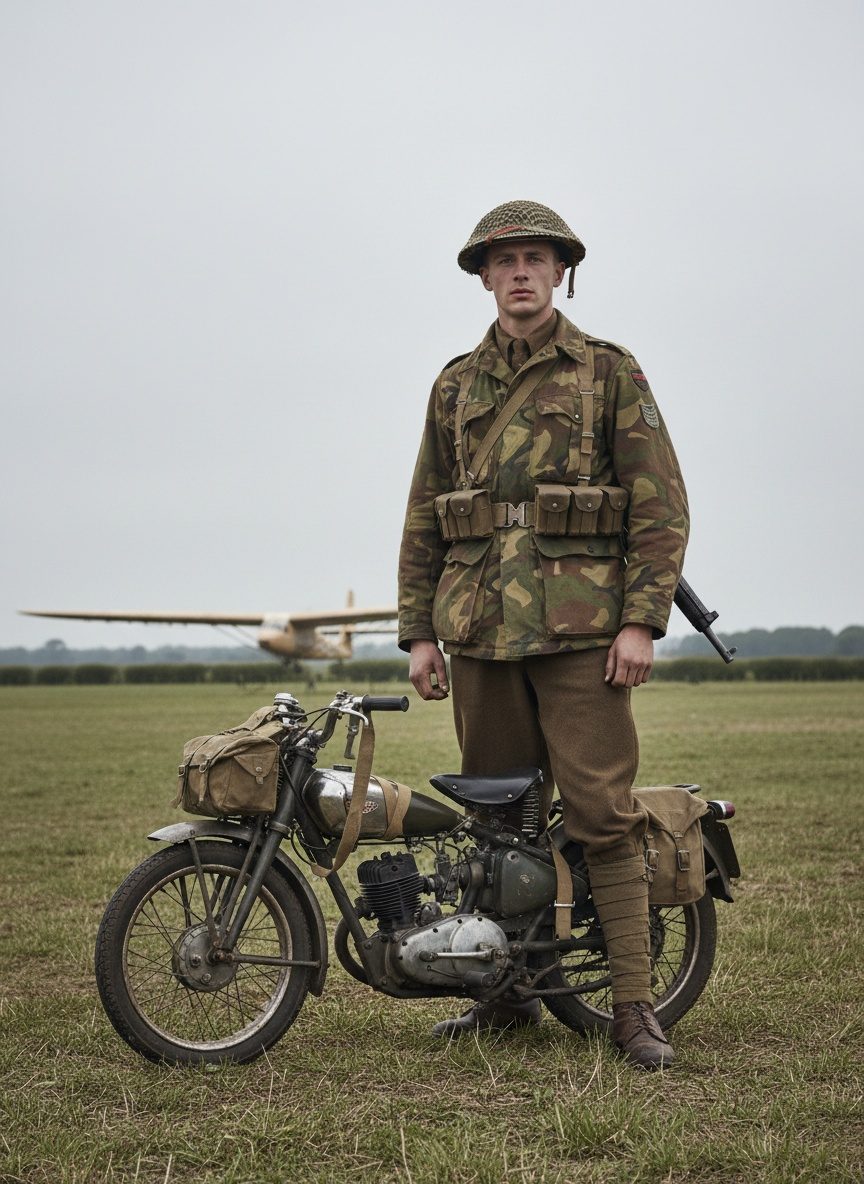
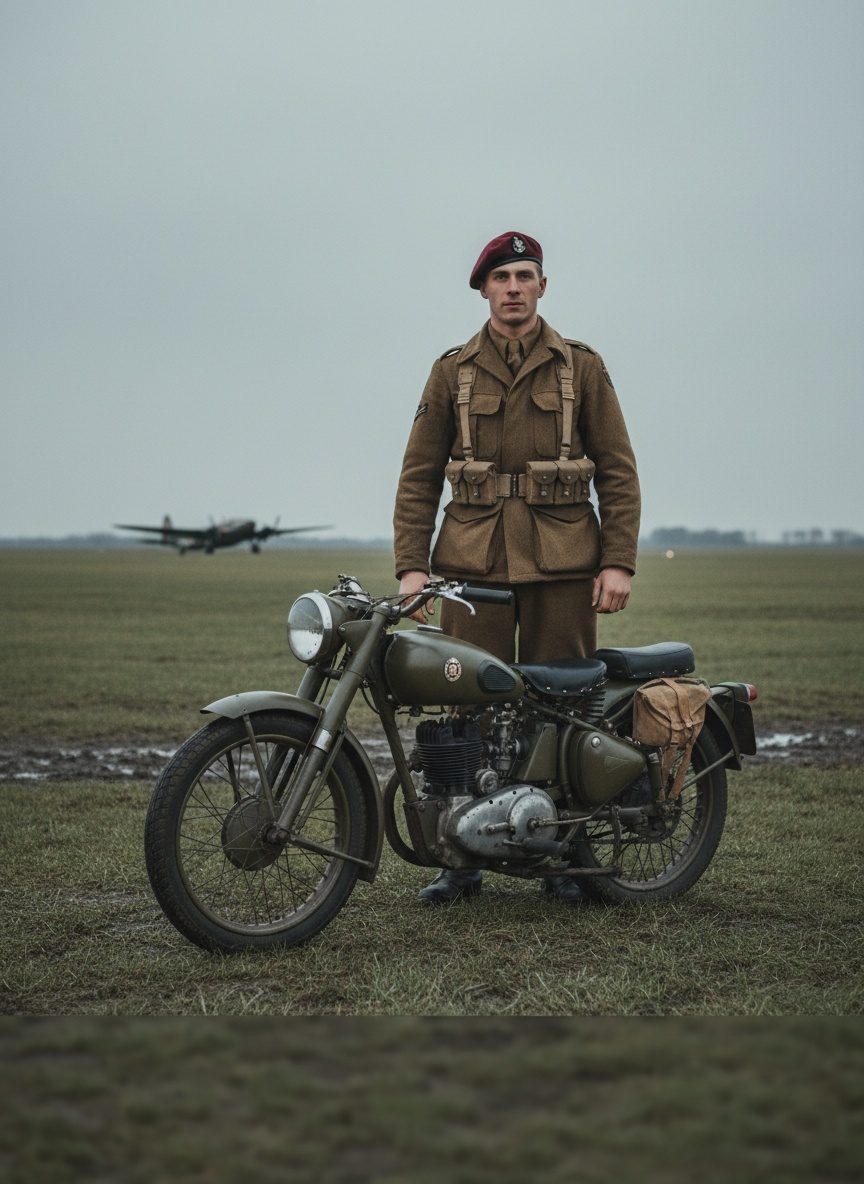
A motorcycle small enough to fit inside a glider. Light enough to drop by parachute. In 1944, British paratroopers jumped into battle with a Royal Enfield strapped beside them. War had never moved like this.
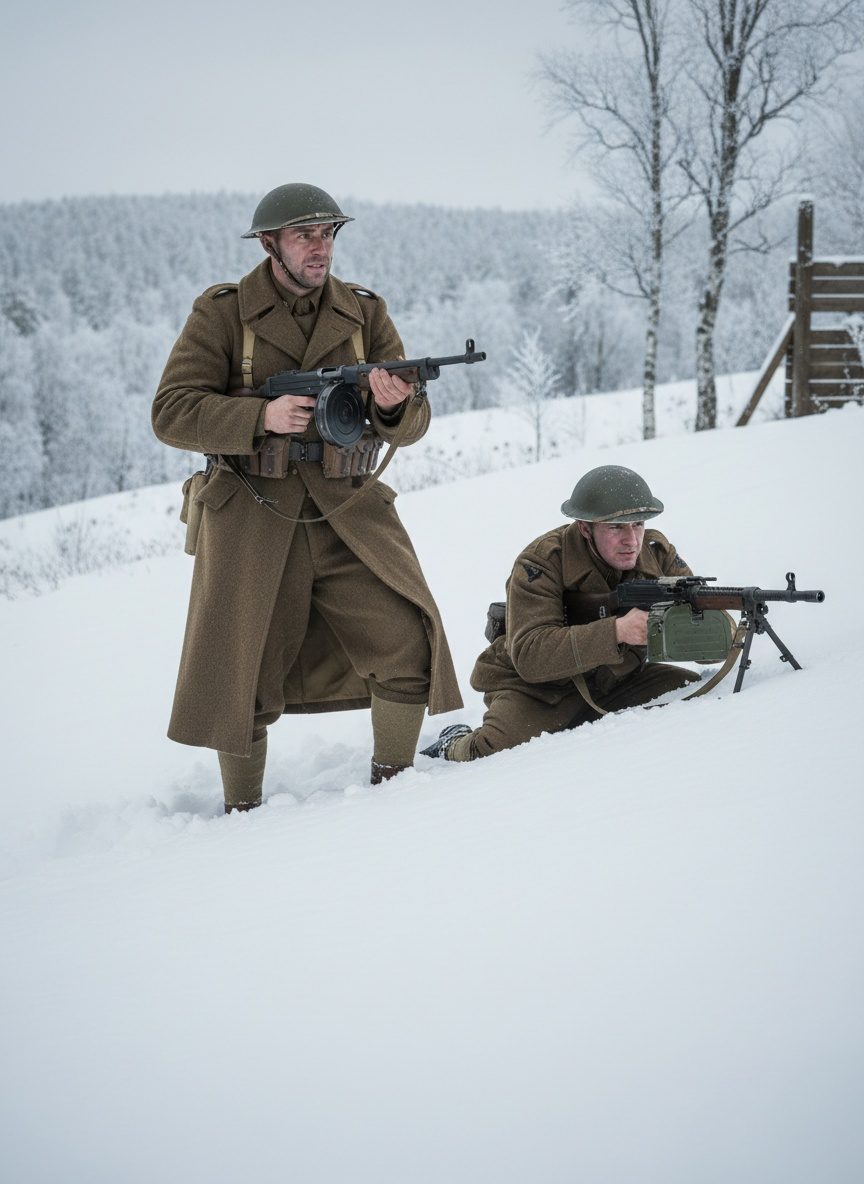
Scotland, March 1942. Royal Marines drill in deep snow with Thompson guns and Brens. No theatre yet assigned. No enemy named. Just bitter cold and the grinding work of becoming ready.
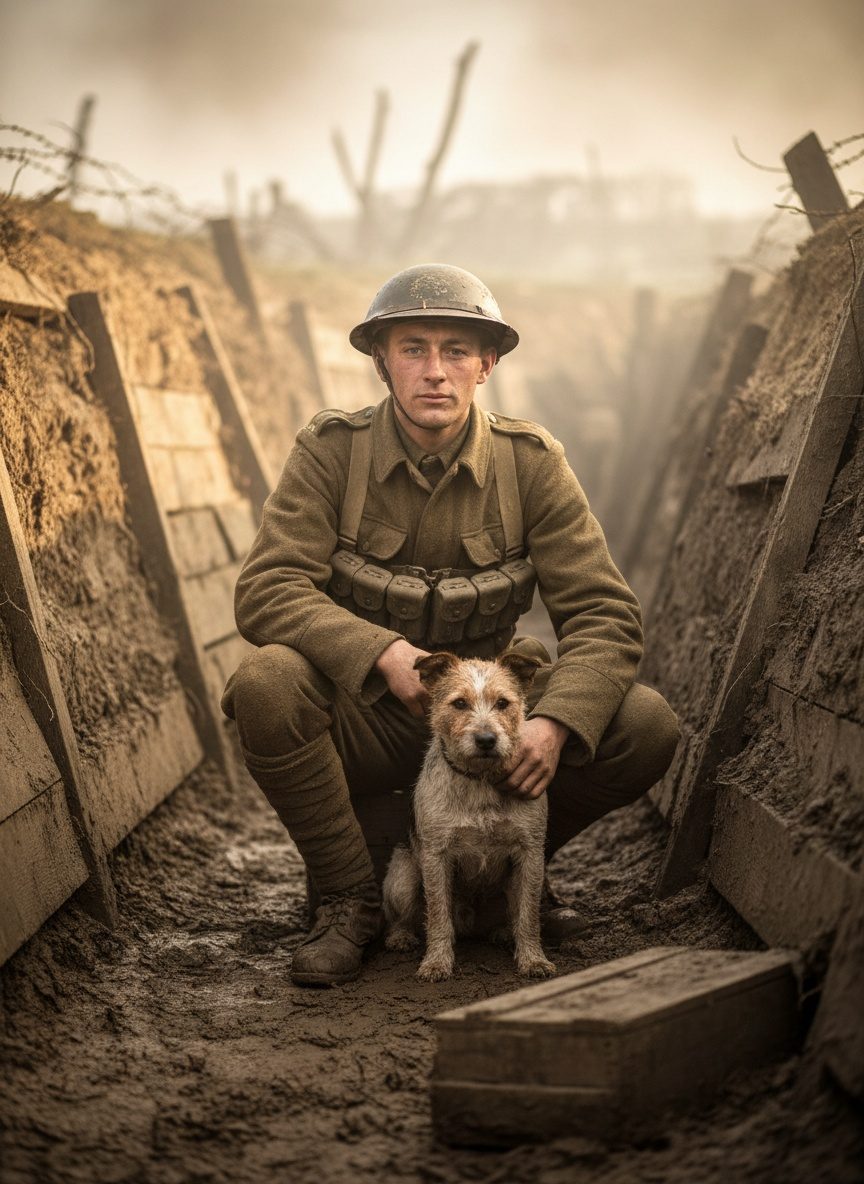
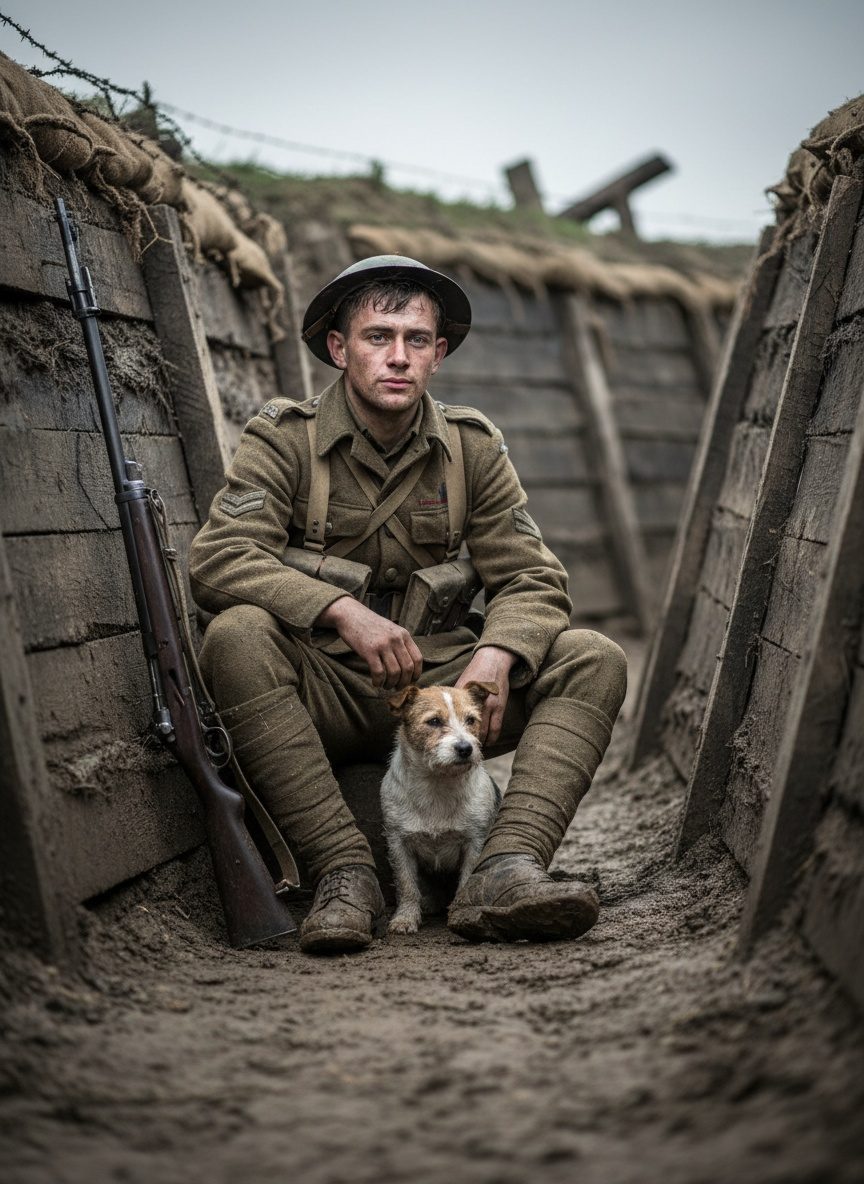
Western Front, May 1918. A soldier of the East Lancashire Regiment shelters in a ditch at Guyencourt. Beside him — a small dog. In the worst battle of that spring, the dog refused to leave.
France, May 1918. The front was collapsing. But one East Lancashire soldier had company — a small dog curled beside him in the mud. In the worst war the world had ever seen, one animal refused to leave his man.
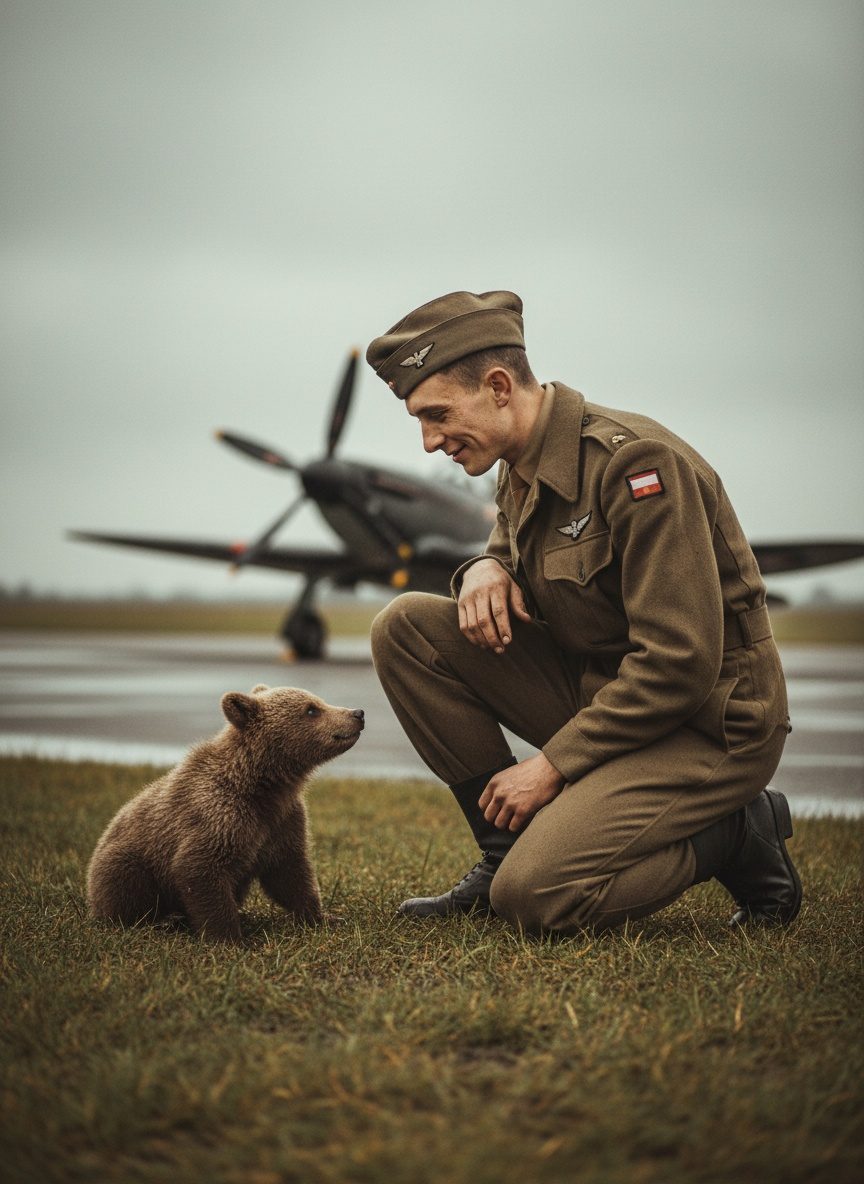
RAF Northolt, 1941. A Syrian bear cub named Wojtek arrived with Polish aircrew who had nowhere else to call home. He lived on the flight line. He became their reason to keep flying.
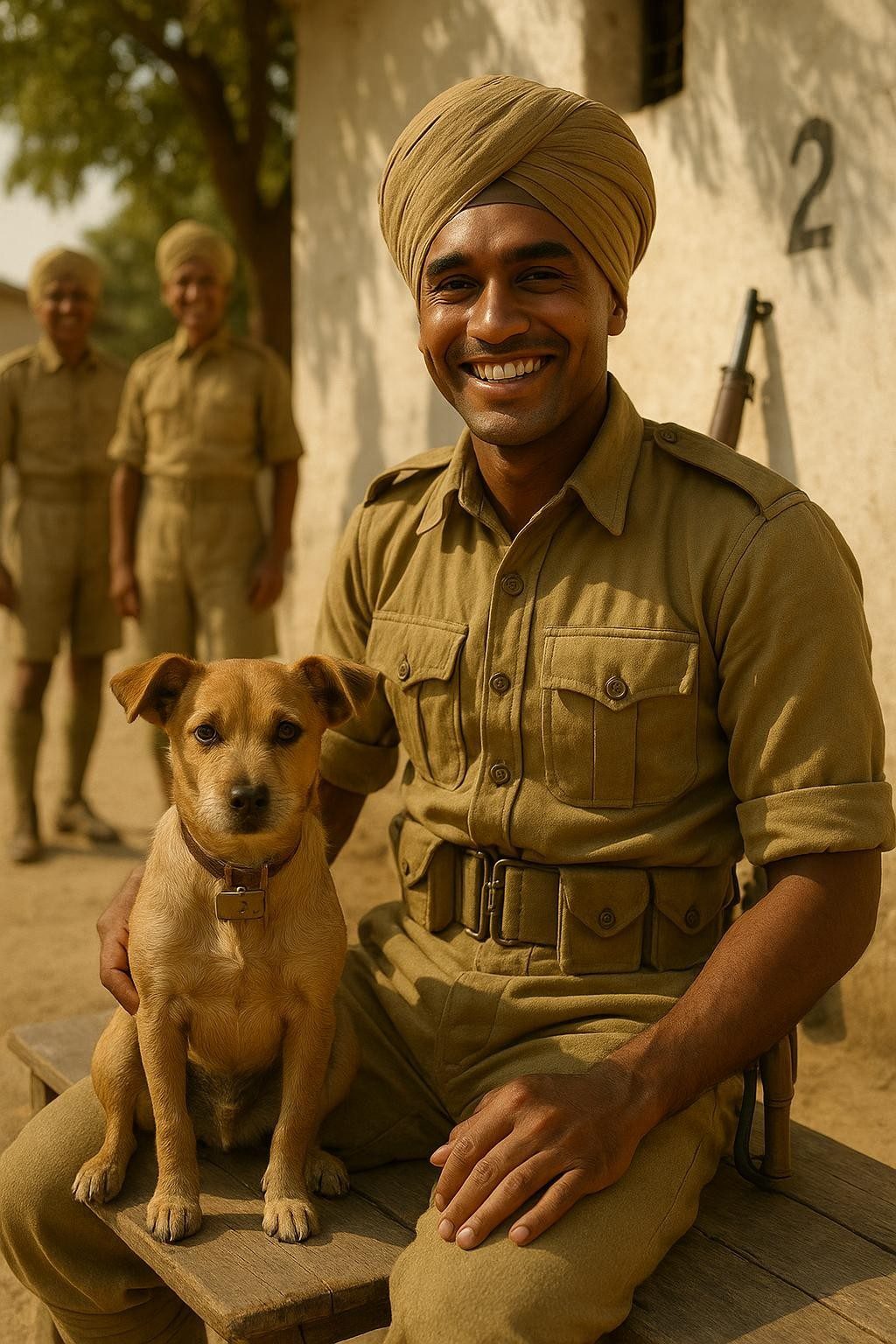
A stray pup followed a column of Indian Army soldiers into camp and never left. The men of the 2nd Punjab adopted him as their own. He wore a miniature regimental collar and attended every parade.
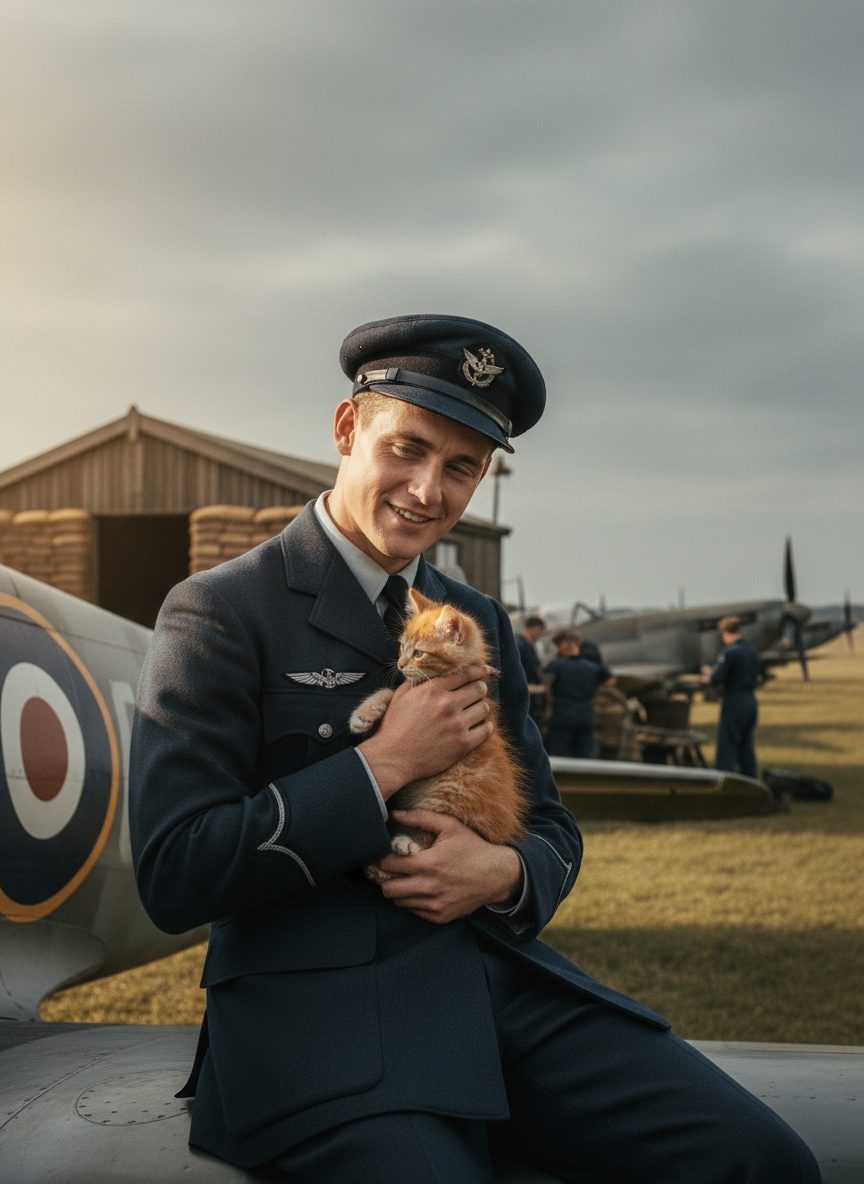
RAF Northolt, 1942. Between sorties, pilots sought something simple: an animal to hold. Squadron mascots — dogs, cats, even bear cubs — became lifelines for men who might not return.
Half of Canada's WWI dead were born in Britain. Not immigrants fighting for a new homeland. British subjects answering the Empire's call — and paying with their lives.
May 1945. Burma's capital falls. After three years of jungle war, British and Indian troops march into Rangoon. A cameraman captures it all in colour — and the images stop you cold.
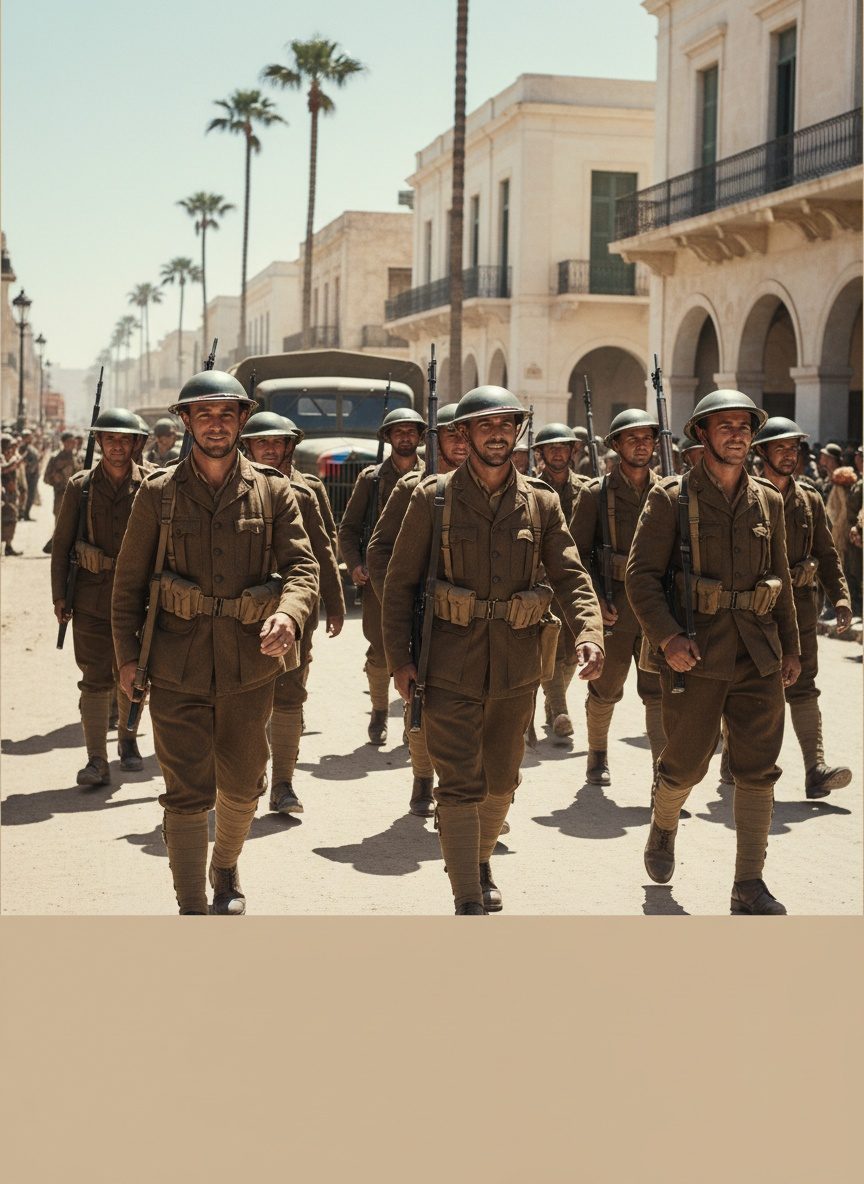
January 1943. The Eighth Army enters Tripoli. After 1,400 miles of desert war, the men who held at Alamein march through the gates. The cameras are rolling — in colour.
April 1945. Italy's last battle. The Eighth Army crossed the River Po as the Wehrmacht collapsed. Rare colour film caught it all — the bridge, the guns, the flowers on the signs.
28 May 1982. 2 Para was ready to attack Goose Green. Then the BBC broadcast their exact plan to the world. Argentine commanders were listening. Men were about to die for it.
Burma, January 1945. British soldiers gather around a captured Japanese 37mm anti-tank gun. Behind them, a Universal Carrier sits low on deep wading screens. The enemy had retreated. The hardware stayed.
Germany, May 1945. The war was days from ending. But south of Lübeck, men were still dying. The 2nd Wiltshires went house to house — rifles up, nerves raw — finishing the job nobody else would.
2 May 1945. Three years of grinding war. Now British infantry and Churchill tanks pushed into Germany's last holdouts. Not surrender. Clearance. House by house. The end was here — but the dying wasn't over.
In 1899, Britain called for volunteers. Thousands answered. But thousands more refused — quietly, stubbornly, at home. A forgotten draft crisis that shook the War Office before a single shot was fired.
February 1901. Kitchener offered Botha terms that most generals would have taken. Reconstruction. Language rights. A path to self-rule. Botha said no. Fifteen more months of war followed.
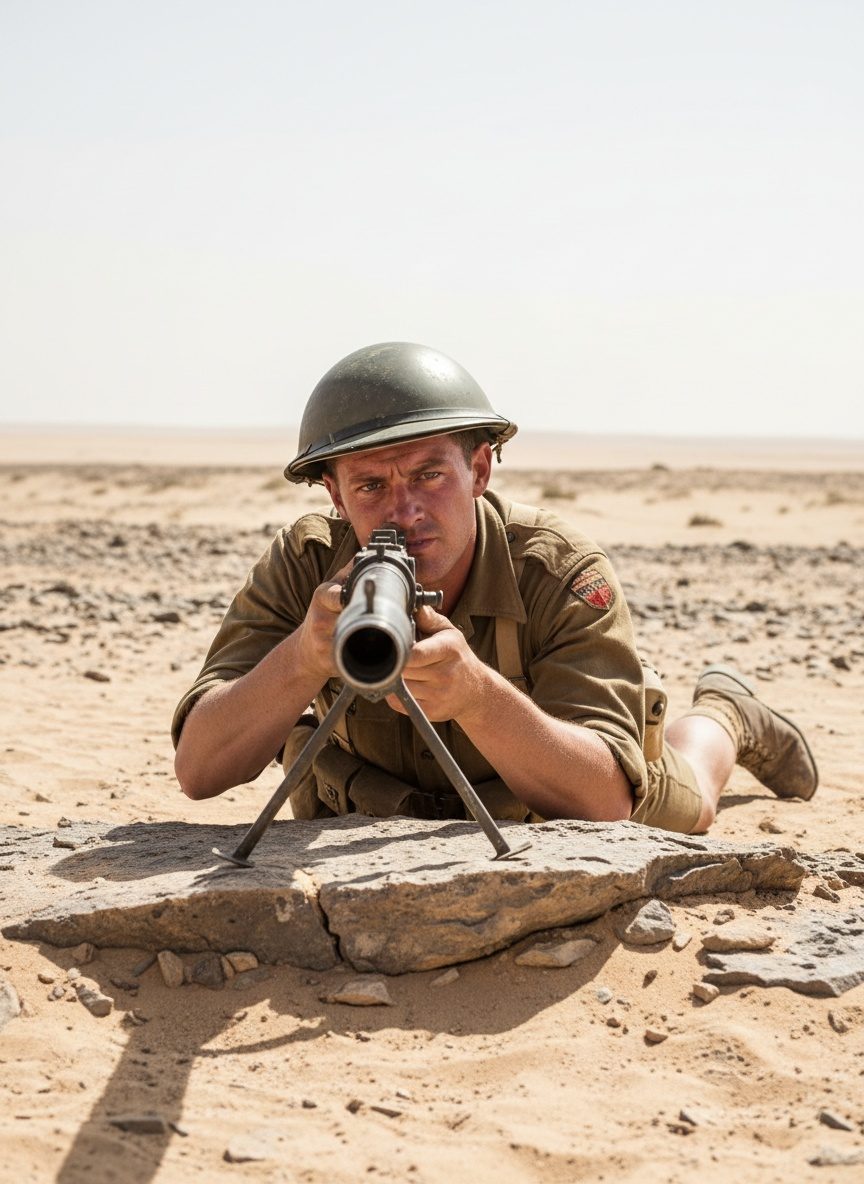
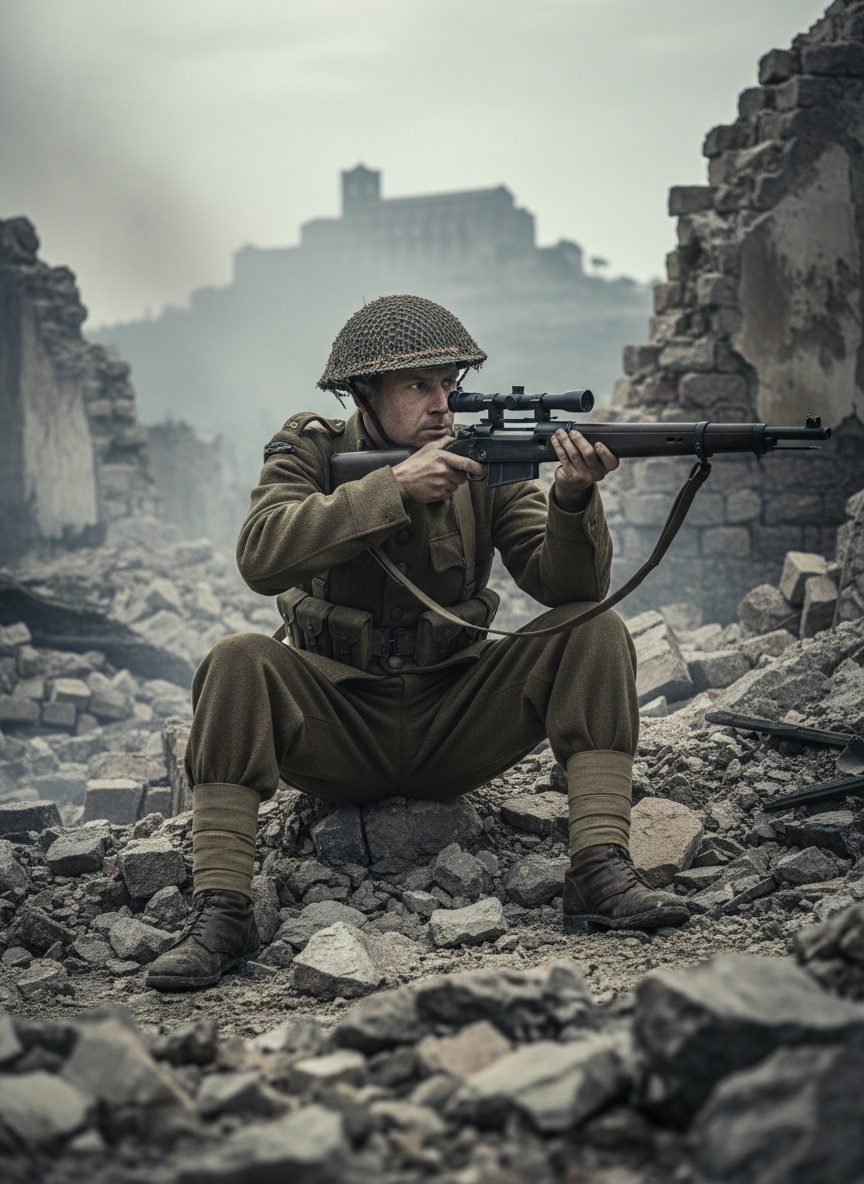
Monte Cassino, March 1944. A British sniper lay motionless for hours in the rubble. One shot. One breath held. The monastery loomed above. Some men fight battles. Others decide them.
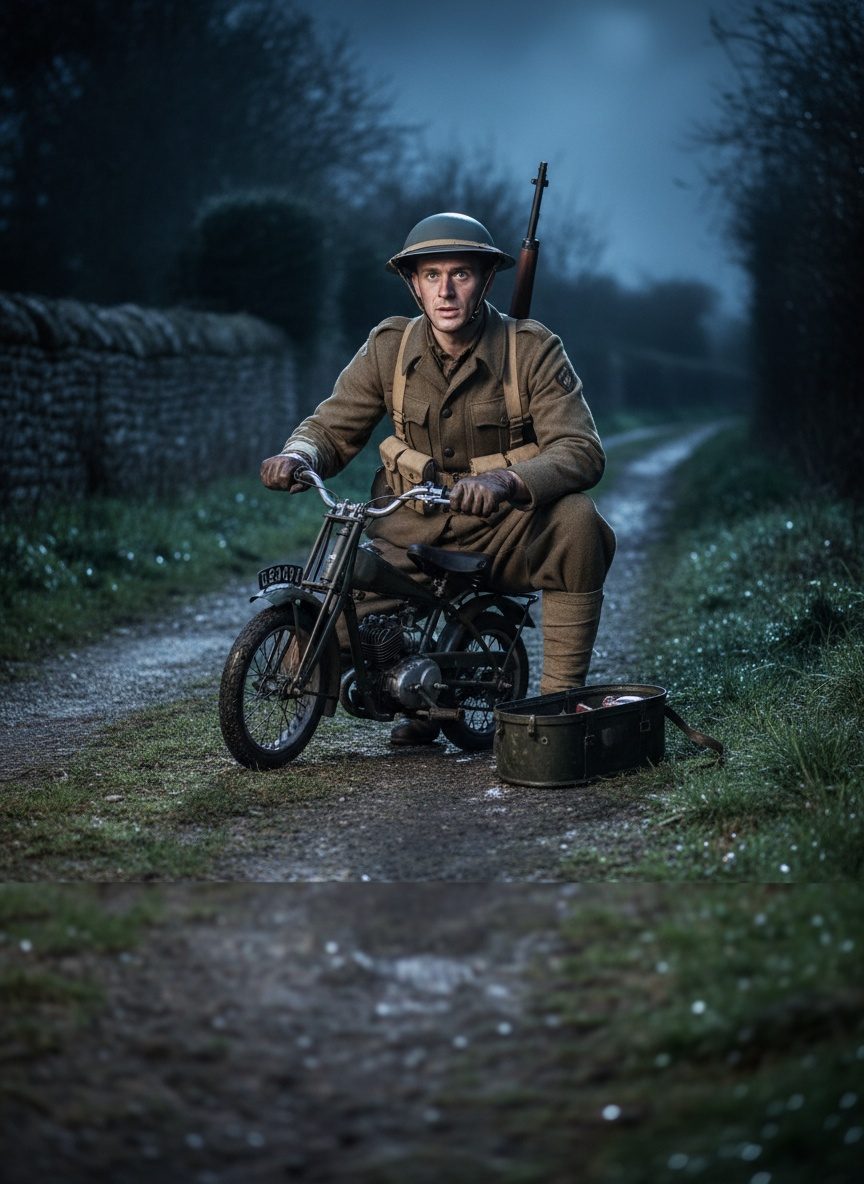
It weighed 70 pounds. It folded into a standard parachute canister. And it was meant to give one lone commando a fighting chance behind enemy lines. The Welbike was the war's most audacious getaway plan.
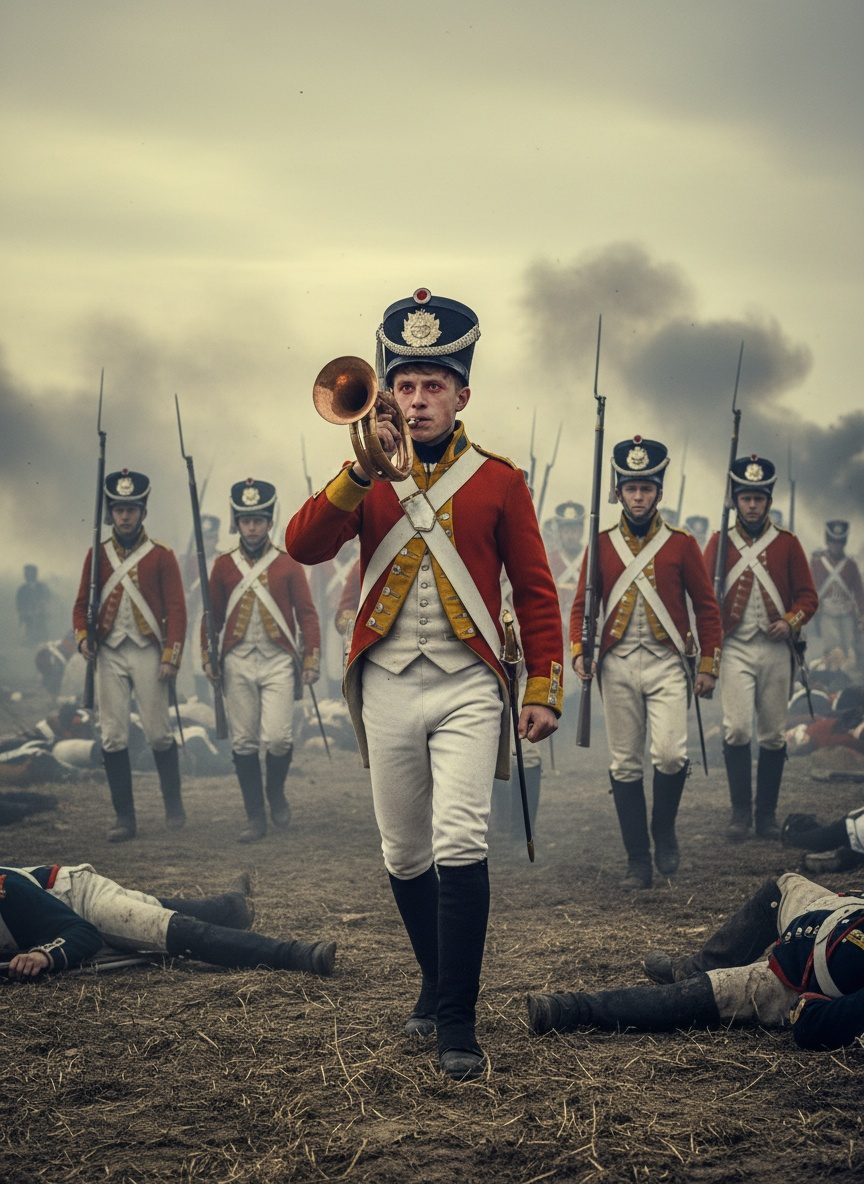
May 1811. Albuera, Spain. The Fusilier Brigade was shattered. French cavalry had torn through the line. Then a single bugler sounded the advance. The men heard it. They turned. They charged. They broke the French.
A motorcycle small enough to parachute into battle. The Royal Enfield WD/RE weighed just 60kg. British paratroopers dropped it from planes. Then rode it to war.
8 May 1945. Six years of war ended in one night. From Trafalgar Square to Delhi, the Empire celebrated together. But for the colonies, the question now was: what comes next?
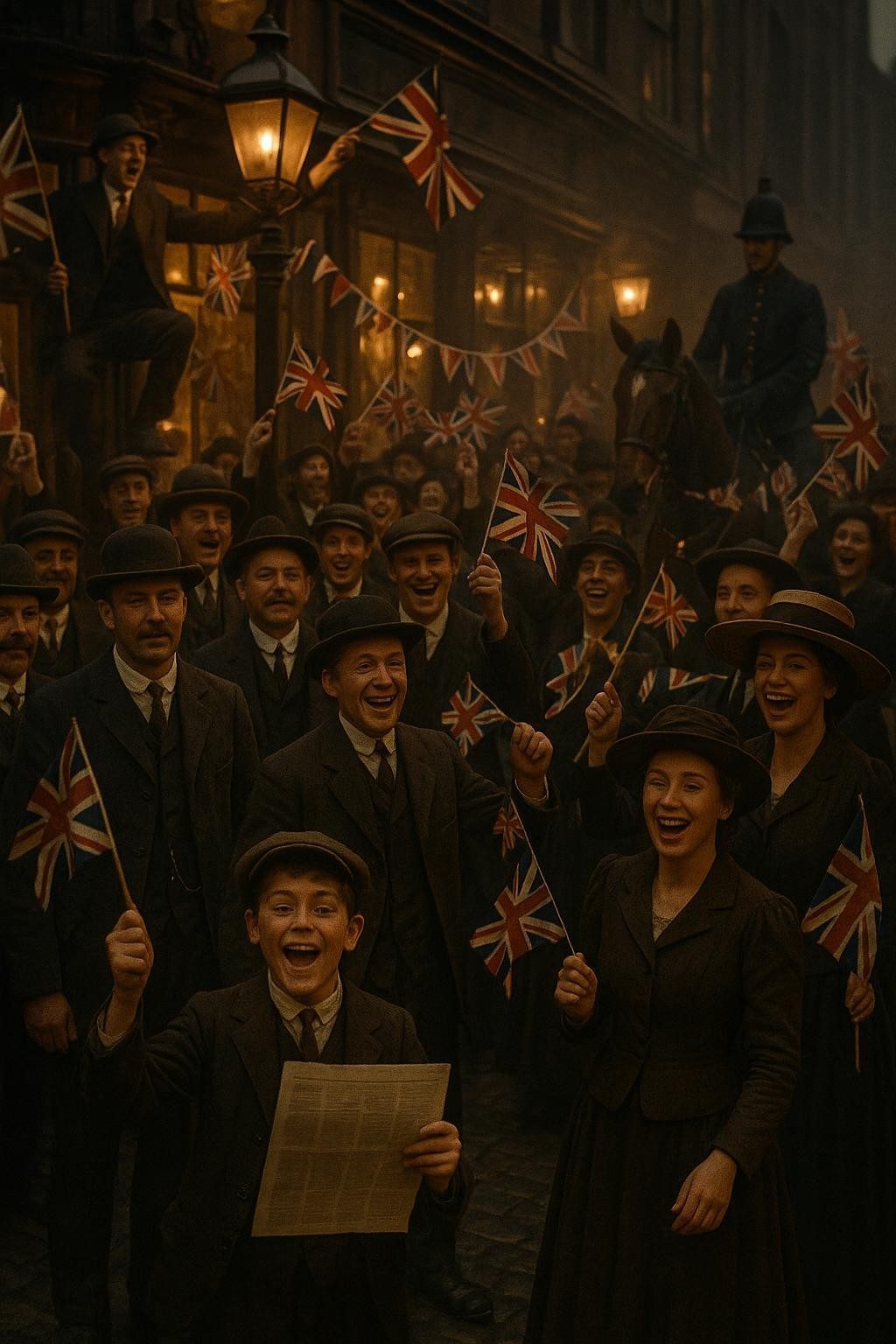
217 days. A British garrison pinned inside a dusty South African town. When the relief column finally broke through on 17 May 1900, the news hit London like a thunderclap — and the streets erupted.
The Sikh guns had torn his army apart for two days. His officers begged him to retreat. Gough refused. At dawn he ordered a bayonet charge into the smoke — and broke the strongest fortress the Punjab could build.
January 1879. One hundred and thirty-nine British soldiers faced four thousand Zulu warriors. Private Henry Hook fought through a burning hospital. He pulled eleven wounded men to safety. One by one. Under fire. They all survived.
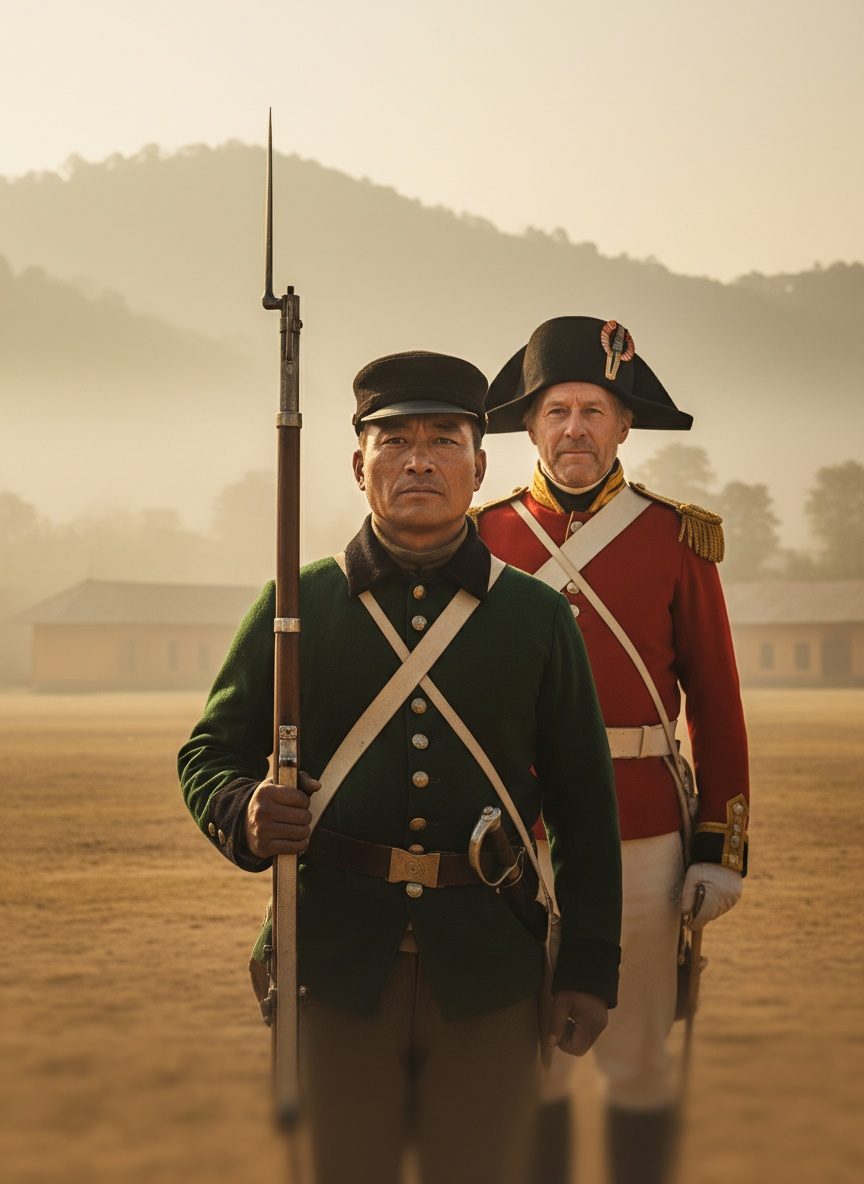
In 1815, Britain's hardest enemy became its most loyal soldier. Defeated in battle, the Gurkhas asked to serve the Crown. The British said yes — and nothing was ever the same.
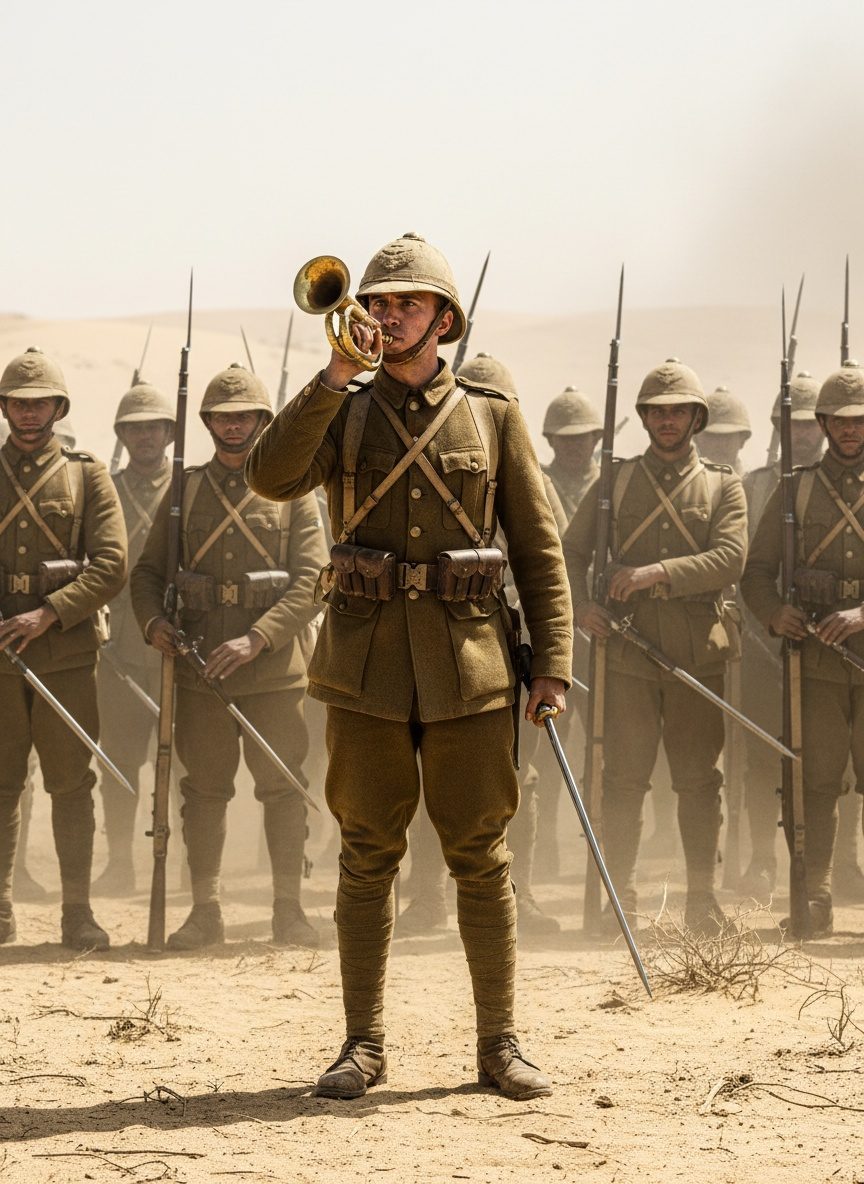
January 1885. The desert at Abu Klea. The British square broke. The Mahdist warriors poured in. Bugler William Joy raised his bugle. Sounded the rally. The square closed. The line held.
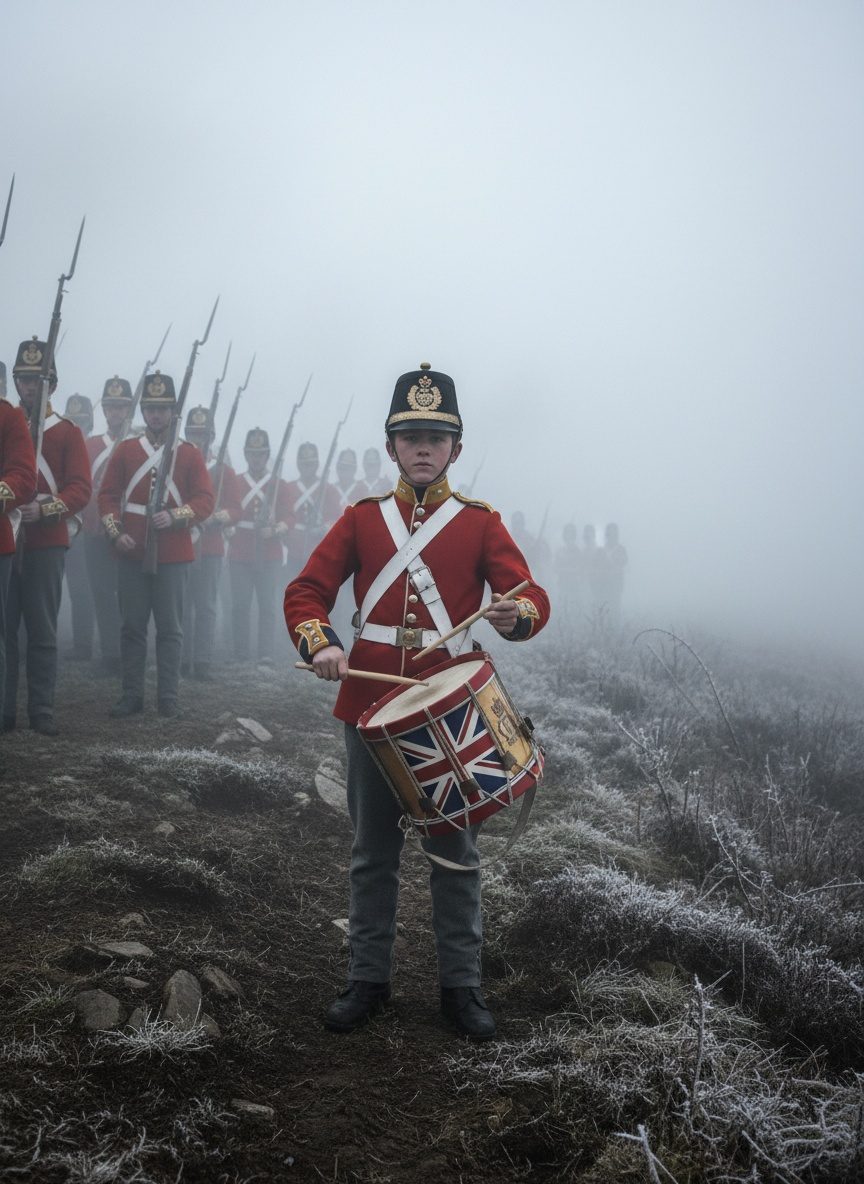
November 1854. Fog smothered Inkerman ridge. A Russian division emerged from the mist. British regiments stumbled into battle half-dressed. Drummer boys beat the rally. One kept beating. Through the chaos. Through the dead. Until the line held.
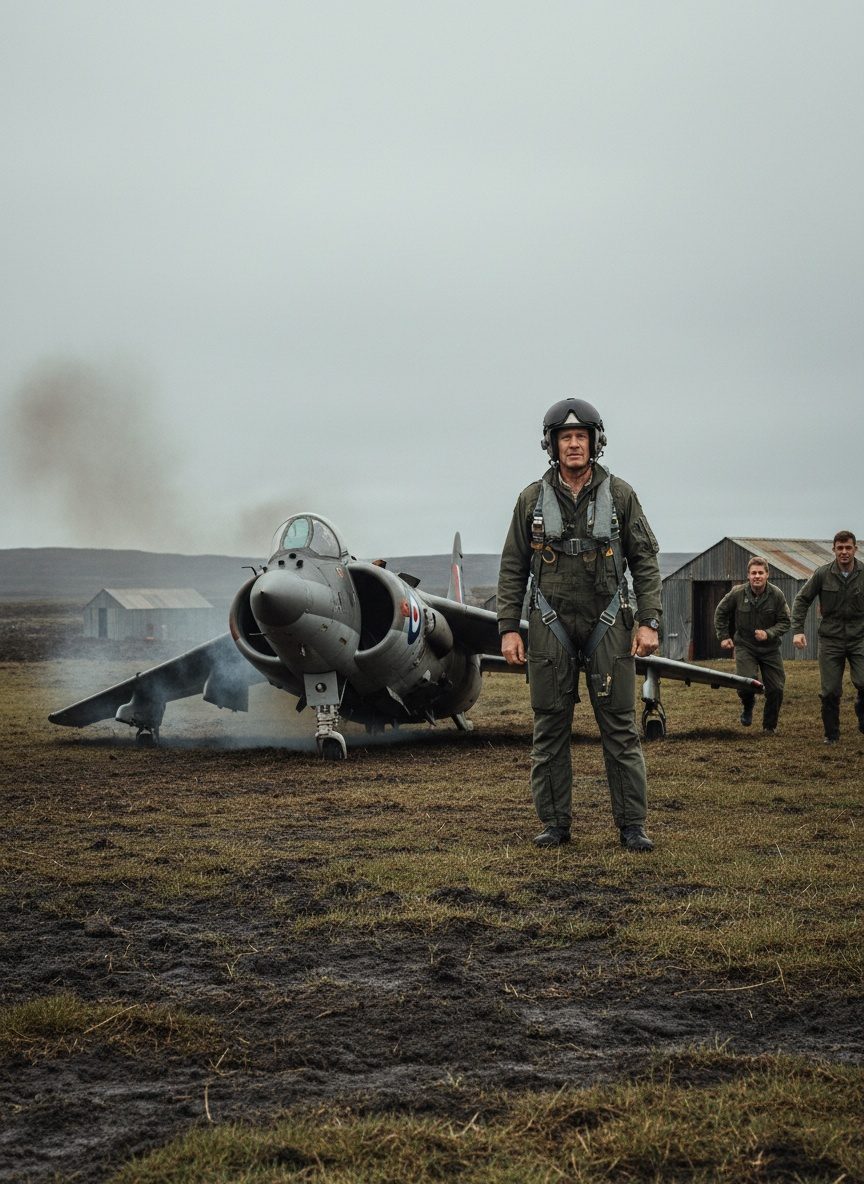
June 8, 1982. A Harrier GR.3 slammed into the ground at Port San Carlos. The pilot walked away. The forward base didn't get off so lightly. War in the South Atlantic had no margin for error.
January 1846. The Sikh army held the river. Sir Harry Smith had one chance. He turned to his bugler. The charge that followed shattered 20,000 men in under an hour. No British general had won so cleanly since Waterloo.
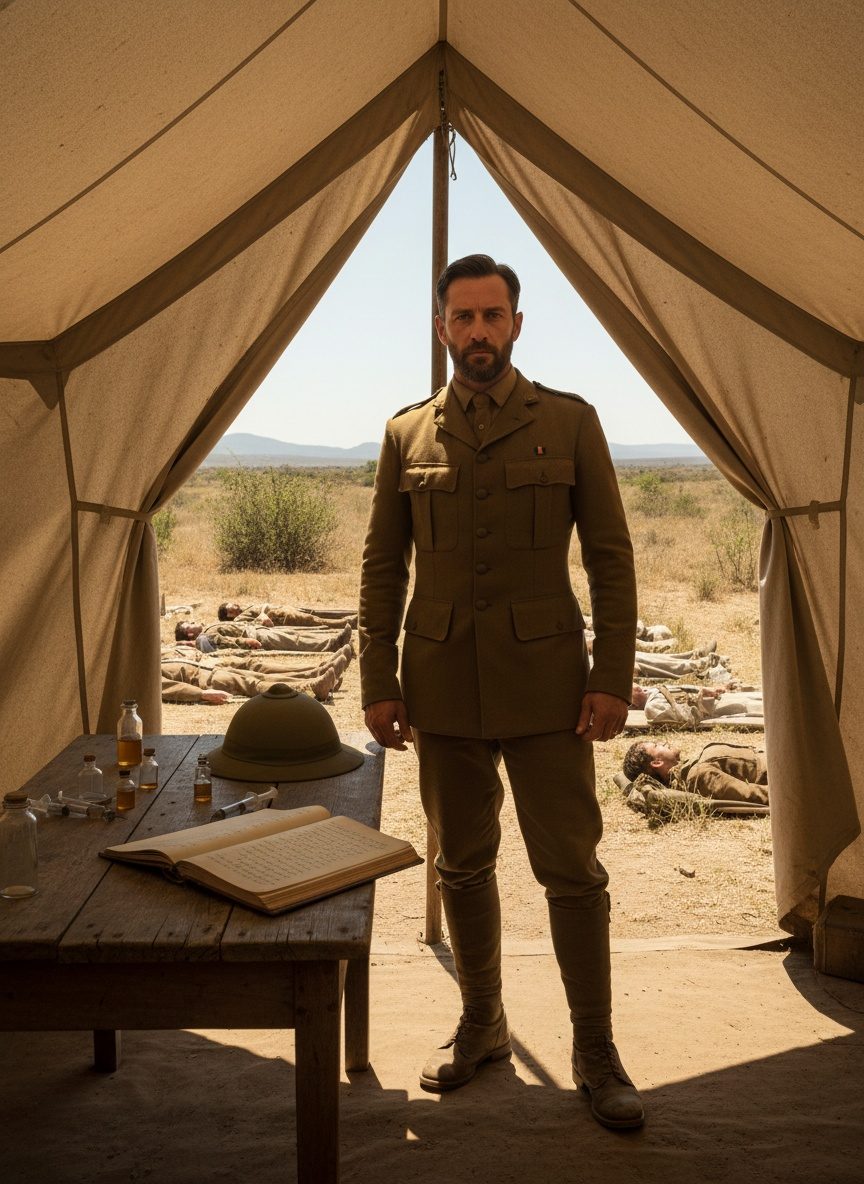
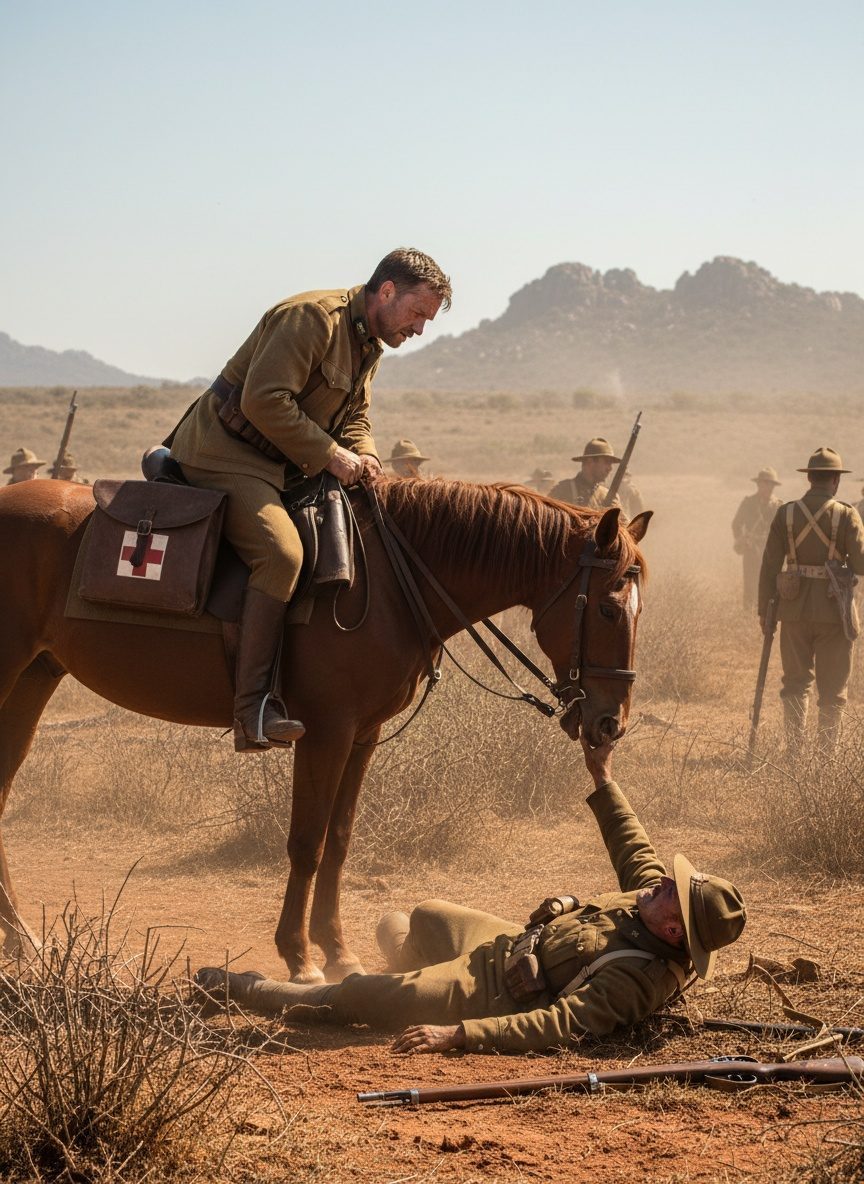
Boer War, 1900. While officers debated blame for disasters, one medical officer rode alone into open fire to drag a wounded man to safety. No orders. No glory-seeking. Just duty. He was a surgeon, not a soldier.
March 1944. No. 9 Commando. Anzio, Italy. The beachhead was a killing ground. These men — photographed mid-battle — refused to break. Three soldiers. One lens. One moment of empire at war.
October 1854. The Russian cavalry bore down on the 93rd Highlanders. Just 550 men. No squares. No retreat. Sir Colin Campbell told them: 'There is no retreat from here. You must die where you stand.'
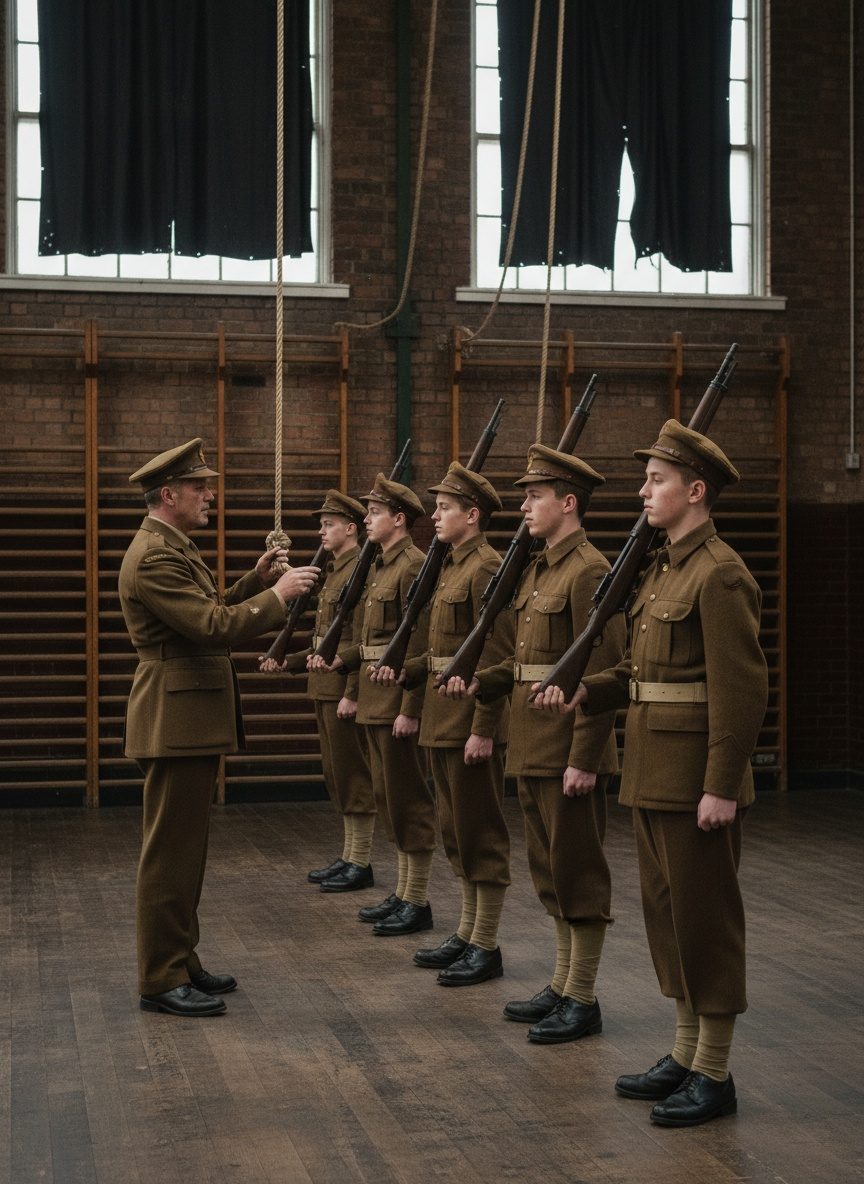
London, 1942. While bombs still scarred the East End, boys as young as fourteen were already preparing to fight. In Stepney's Jewish Settlement, under Captain Basil Henriques, the Bernhard Baron Cadets drilled with rifles. Not soldiers yet. But nearly.
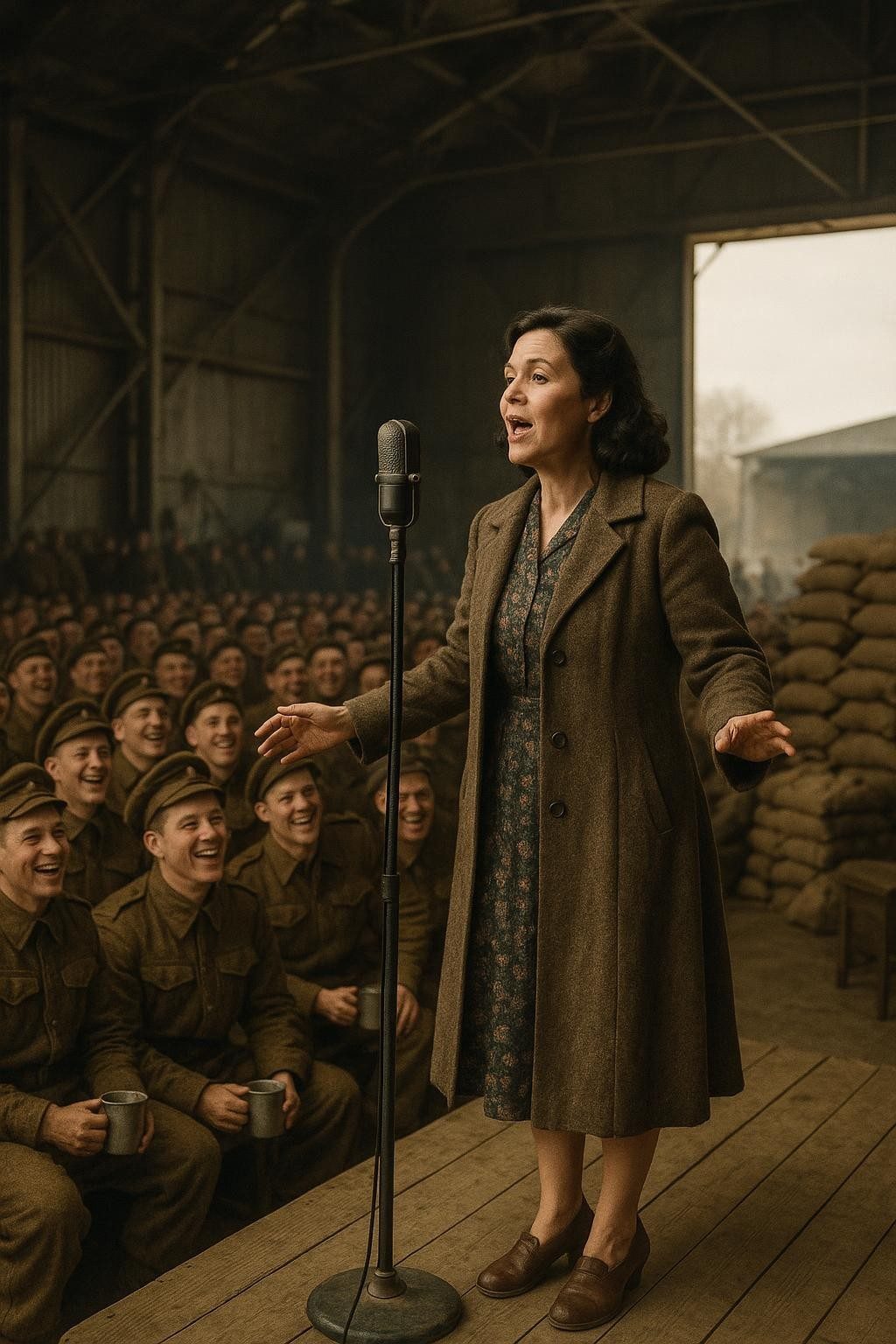
France, autumn 1939. While Britain waited for war to begin, Gracie Fields took her voice to the men waiting with it. She sang in hangars, cookhouses, and muddy fields. The troops went wild.
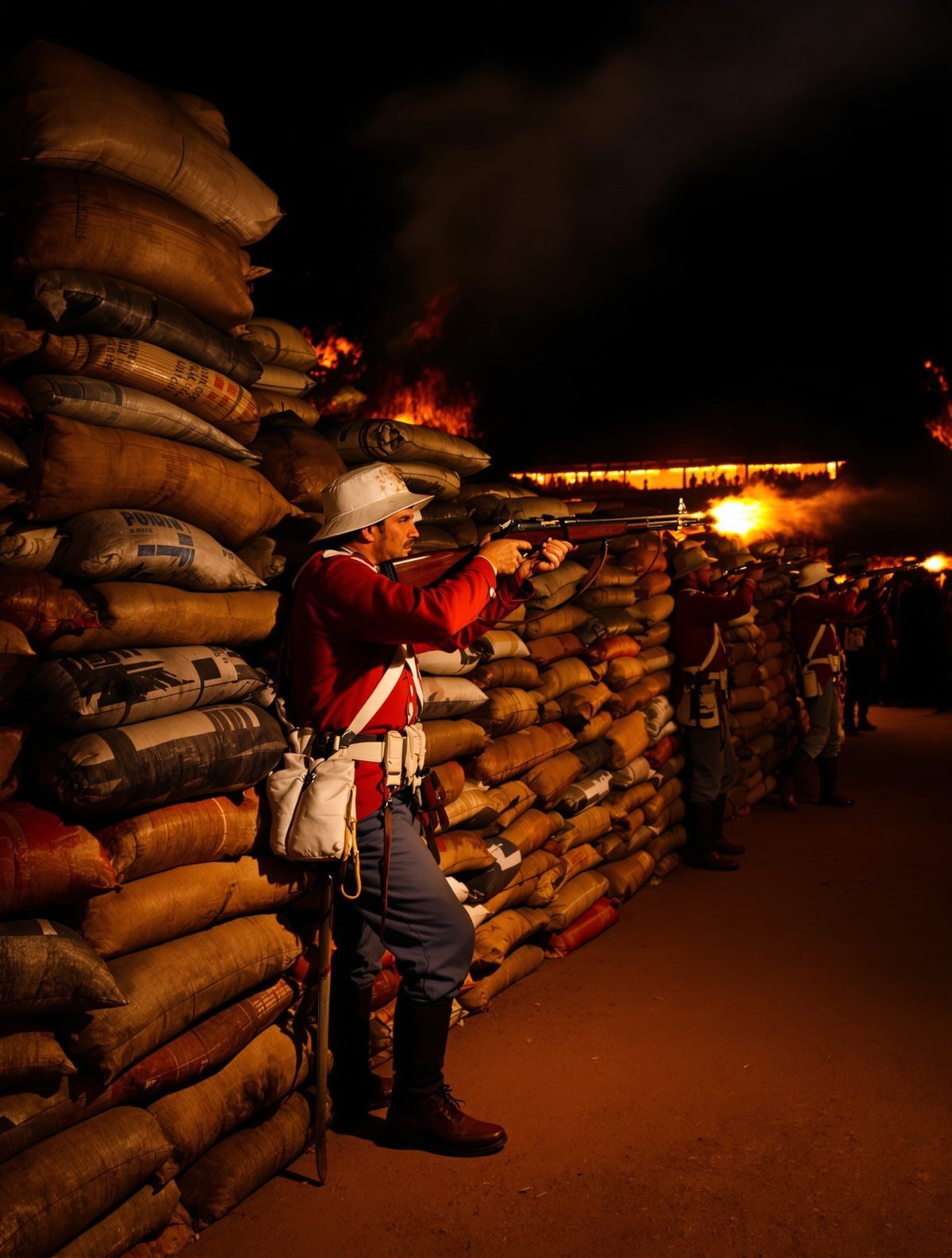
4,000 Zulu warriors. 139 British soldiers. One night. They had biscuit tins and mealie bags. They had the Martini-Henry. They had each other. By dawn, Britain had its greatest story.
April 1945. The war in Italy was nearly over. British Eighth Army engineers threw a Bailey bridge across the River Po near Ferrara. Within days, Axis forces in Italy surrendered entirely.
One galloping aide-de-camp. One misread order. Six hundred horsemen rode into the valley of death. Captain Louis Nolan died in the first seconds. He never knew what he had started.
Nepal, 1945. A Gurkha rifleman faced Japanese bunkers alone. No orders. No backup. Just a kukri and a bayonet. He earned the Victoria Cross that morning.
September 1857. The Kashmir Gate exploded. British assault columns waited in the rubble. Captain John Nicholson raised his sword. 'Follow me!' Twenty minutes later, Delhi was theirs.
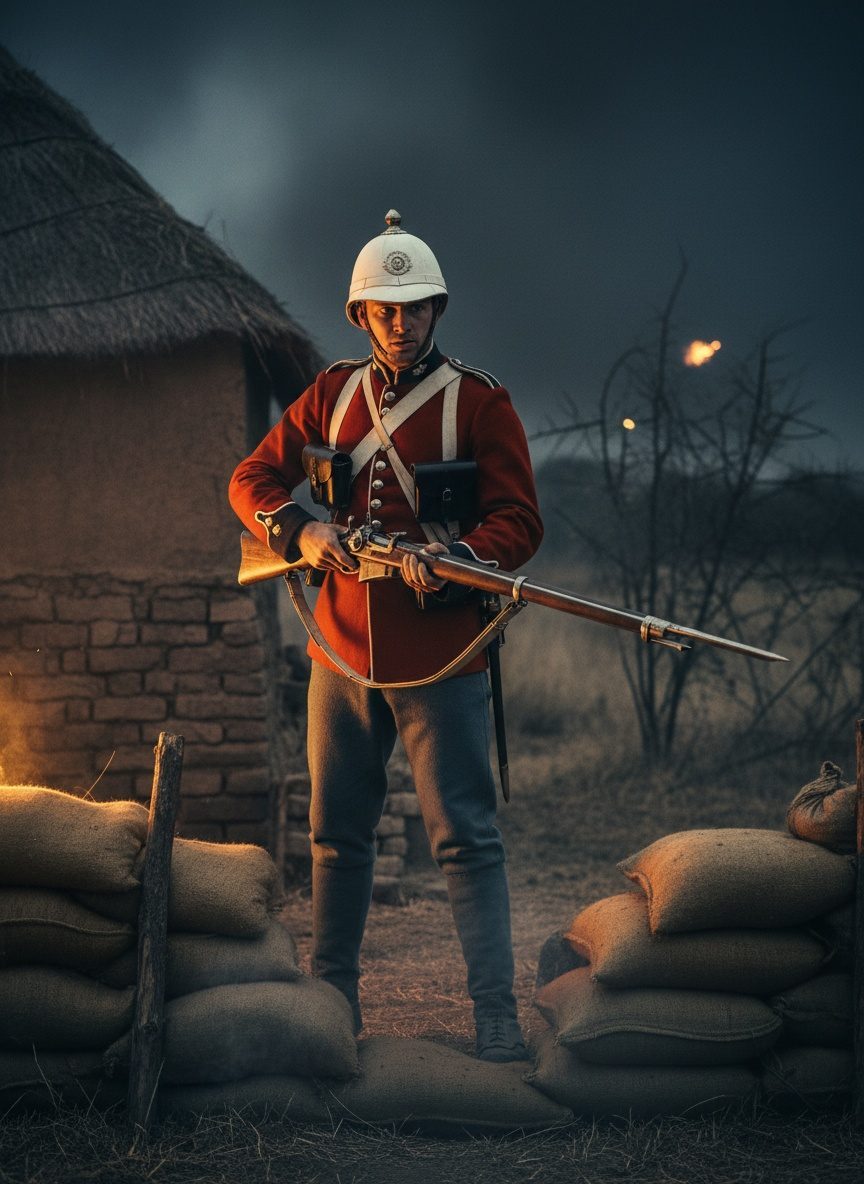
At Rorke's Drift, 139 British soldiers faced 4,000 Zulu warriors. Major Chard had twelve hours to turn a field hospital into an impregnable fortress. Using mealie bags and biscuit boxes. The longest night in Empire history was about to begin.
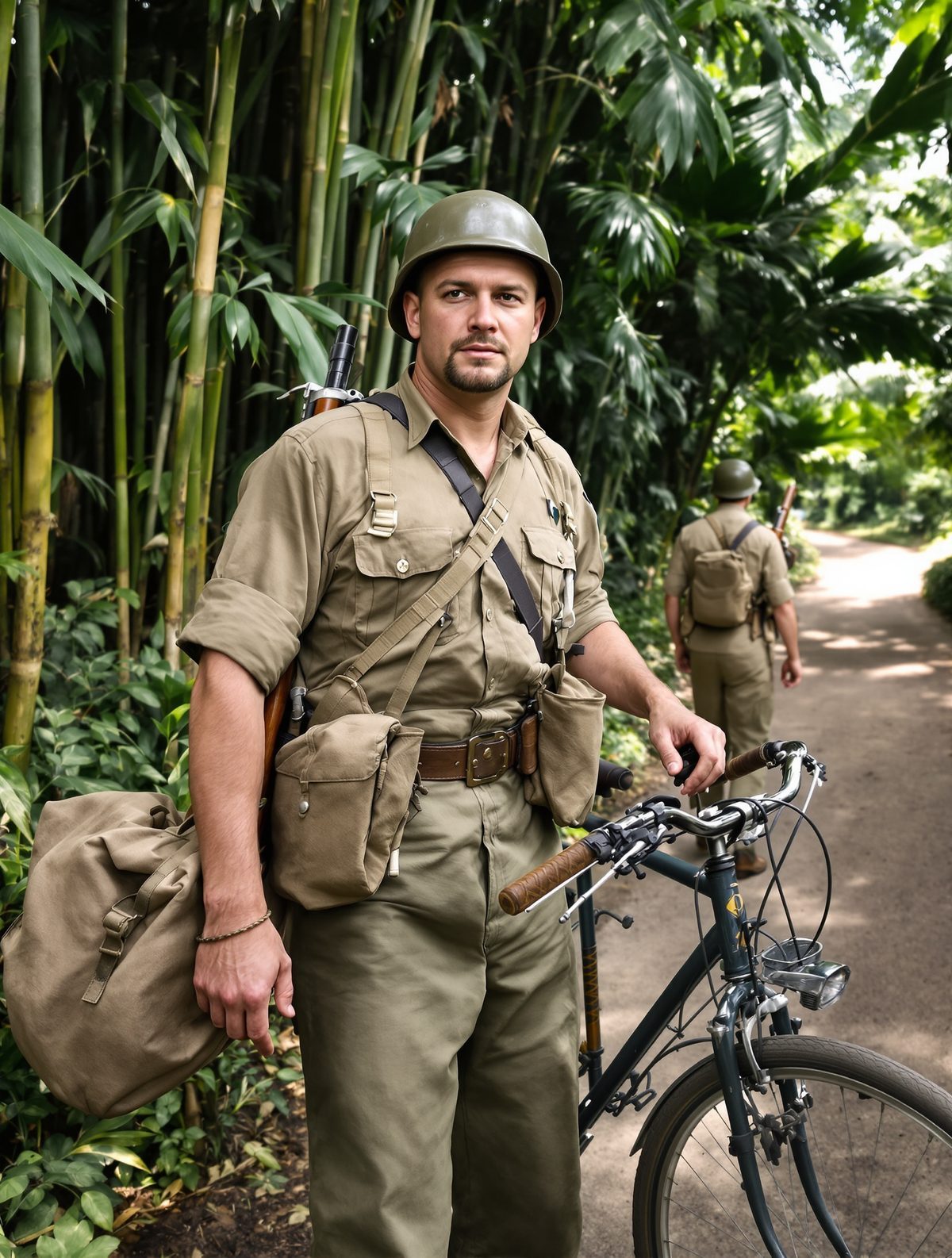
In 1941, British forces issued folding BSA airborne bicycles to troops in Malaya and Burma. Silent. Cheap. Unbreakable on jungle tracks. The Japanese had already proved bicycles could win a war.
Major-General Robert Sale held Jalalabad with 2,000 men for five months. Afghan armies surrounded the fortress. One garrison. 12,000 enemies. Sale's defiant message: 'We shall hold until relieved or die.'
July 1857. Cawnpore had fallen to mutineers. Colonel Havelock's relief force was dying of cholera and dysentery. Half his men could barely stand. But 200 British women and children were trapped in Lucknow. Havelock's order was simple: 'We march at dawn.'
General White's garrison ate horses and sawdust bread. Boer artillery pounded them daily. By February 1900, scurvy and typhoid killed more than bullets. Then Buller's relief column finally broke through.
Captain William Peel stripped HMS Shannon of her guns. Hauled them 1,000 miles overland to Delhi. Naval cannons had never fought a land siege. The sepoys called them 'the terrible guns that came from the sea.'
January 1842. General Elphinstone signed the retreat from Kabul. 16,500 British soldiers and civilians began the march to Jalalabad. Seven days later, one man arrived alive.
Captain Lawrence Oates walked into a blizzard with frostbitten feet. His last words: 'I am just going outside and may be some time.' He never returned. His sacrifice tried to save his comrades on Scott's doomed Antarctic expedition.
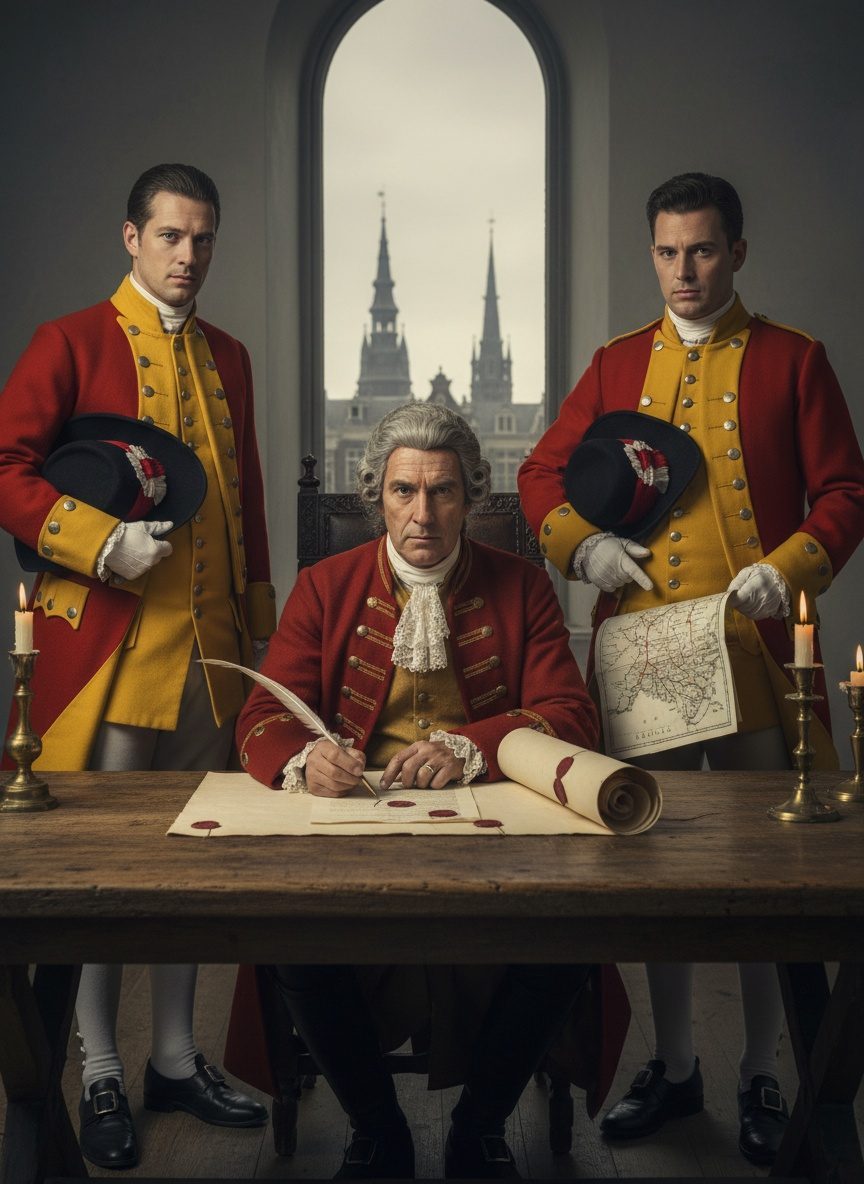
September 1780. Major John André carried Benedict Arnold's treason plans in his boot. American militia stopped him for a routine check. One breakfast note would cost Britain the colonies forever.
Major Herbert Edwardes faced 18,000 Sikh rebels at Multan with just 1,200 troops. He divided his tiny force into three columns. His audacious flanking maneuver convinced the enemy they faced a vast army. Victory secured the Punjab for Britain.
July 1857. Colonel Henry Havelock received desperate news from Cawnpore. British families massacred. His small force faced 120-degree heat and 25,000 rebels across 126 miles of hostile territory. He marched anyway.
September 1709. Colonel John Blackader's Cameronians charged through the bloodiest woods in Europe. 400 Scottish soldiers. 20,000 French muskets. Six hours of slaughter that broke Marlborough's enemies forever.
August 1880. British forces crushed at Maiwand. Afghanistan in revolt. General Roberts gets urgent telegram: march 10,000 men 313 miles through enemy territory in 22 days. Impossible. He does it anyway. Saves Kandahar. Saves the Empire.
January 22nd, 1879. Rorke's Drift mission station. 139 British soldiers face 4,000 Zulu warriors. Lieutenant John Chard builds barricades from mealie bags and biscuit boxes. Twelve hours of hand-to-hand fighting. Dawn breaks on impossible victory.
October 1759. French-allied Abenaki warriors had terrorized New England for decades. Major Robert Rogers gathered 142 Rangers for an impossible mission. March 400 miles through trackless wilderness. Destroy the Abenaki stronghold at Saint-Francis. Return alive.
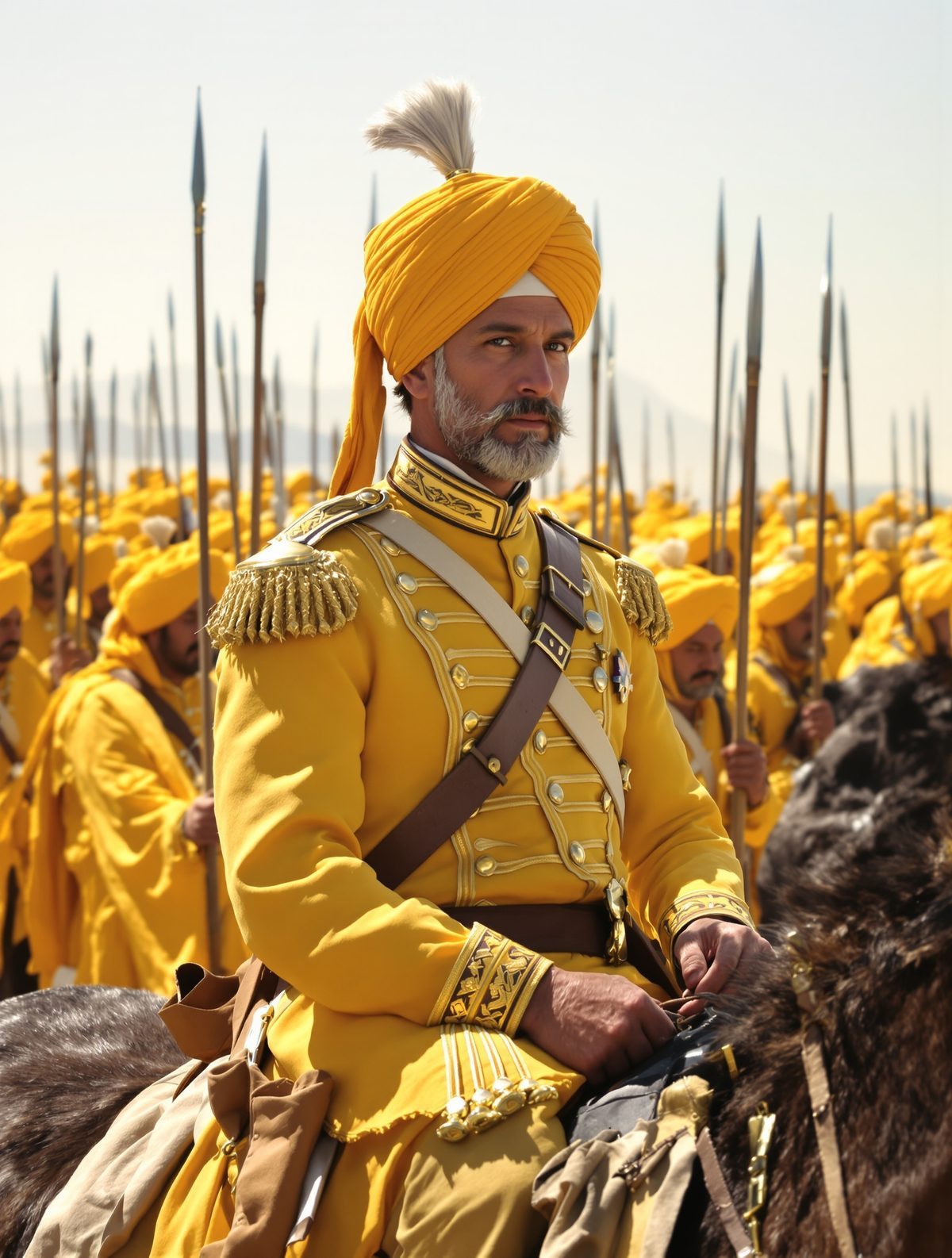
Major James Skinner commanded 3,000 irregular cavalry across northern India. His yellow-uniformed horsemen fought for whoever paid them best. They called themselves Skinner's Horse. The British made him a legend.
Captain John Nicholson was so feared on India's frontier that Sikh soldiers built temples to worship him. He discovered entire villages praying to his portrait. The 'Nikal Seyn' cult believed he was immortal.
At dawn on January 23rd, 1879, Frank Bourne was the youngest colour sergeant in the British Army. By sunset he had survived the longest sustained attack in military history. Eleven Victoria Crosses were awarded. Bourne lived to see them all.
Captain George Anson left England in 1740 with six warships and 1,900 men. Four years later he returned with one battered ship and 188 survivors. But in his hold lay the greatest treasure ever captured by the Royal Navy.
October 1899. Boer forces surround 13,000 British troops in Ladysmith. No food. No medicine. Shells falling daily. Major General George White refuses to surrender. For 118 days, they held the town. The siege that showed the world British resolve.
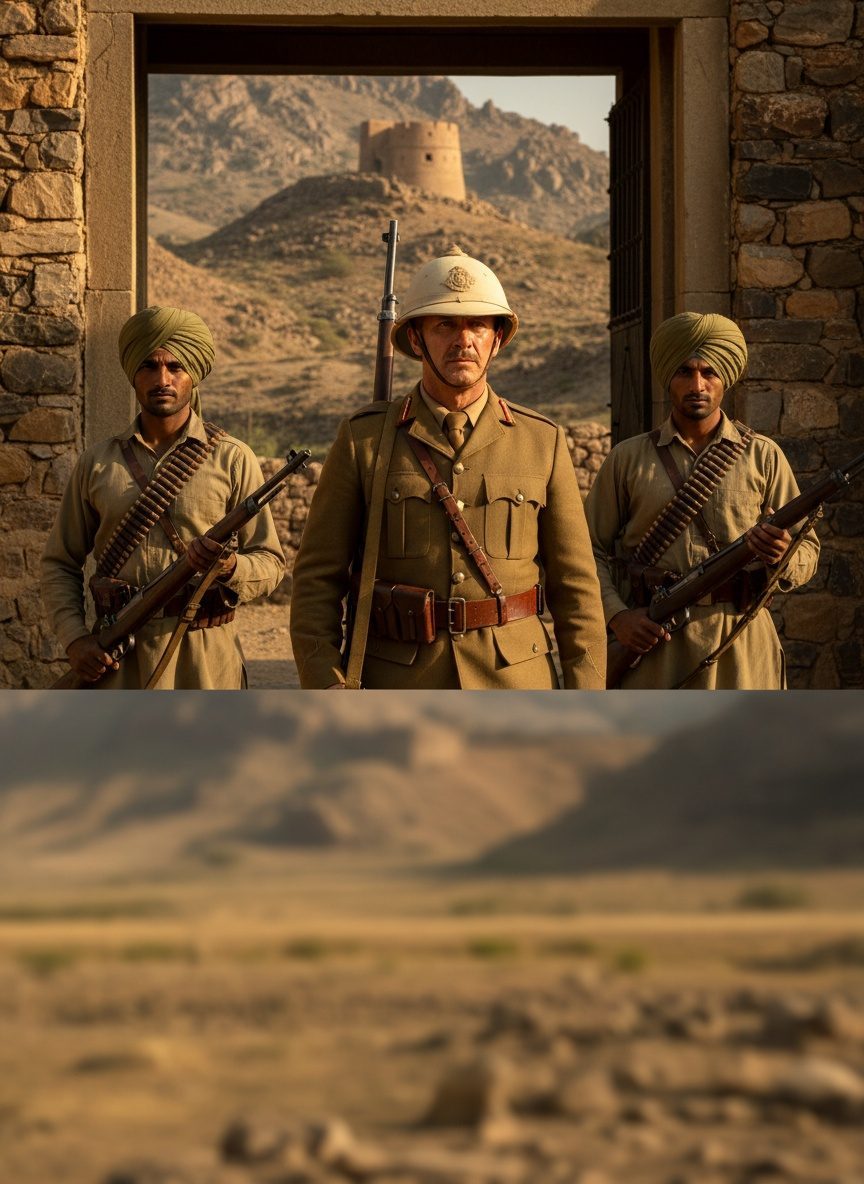
One British officer. The most dangerous frontier in the Empire. Major Robert Warburton commanded the Khyber Pass for 18 years. He spoke Pashto fluently. Tribal warriors who had killed his predecessors became his loyal guards.
Hand-picked from Britain Untold's archive. The stories you weren't taught at school. 3-minute read.
No spam. Unsubscribe in one click. We hate spam too. Privacy Policy.