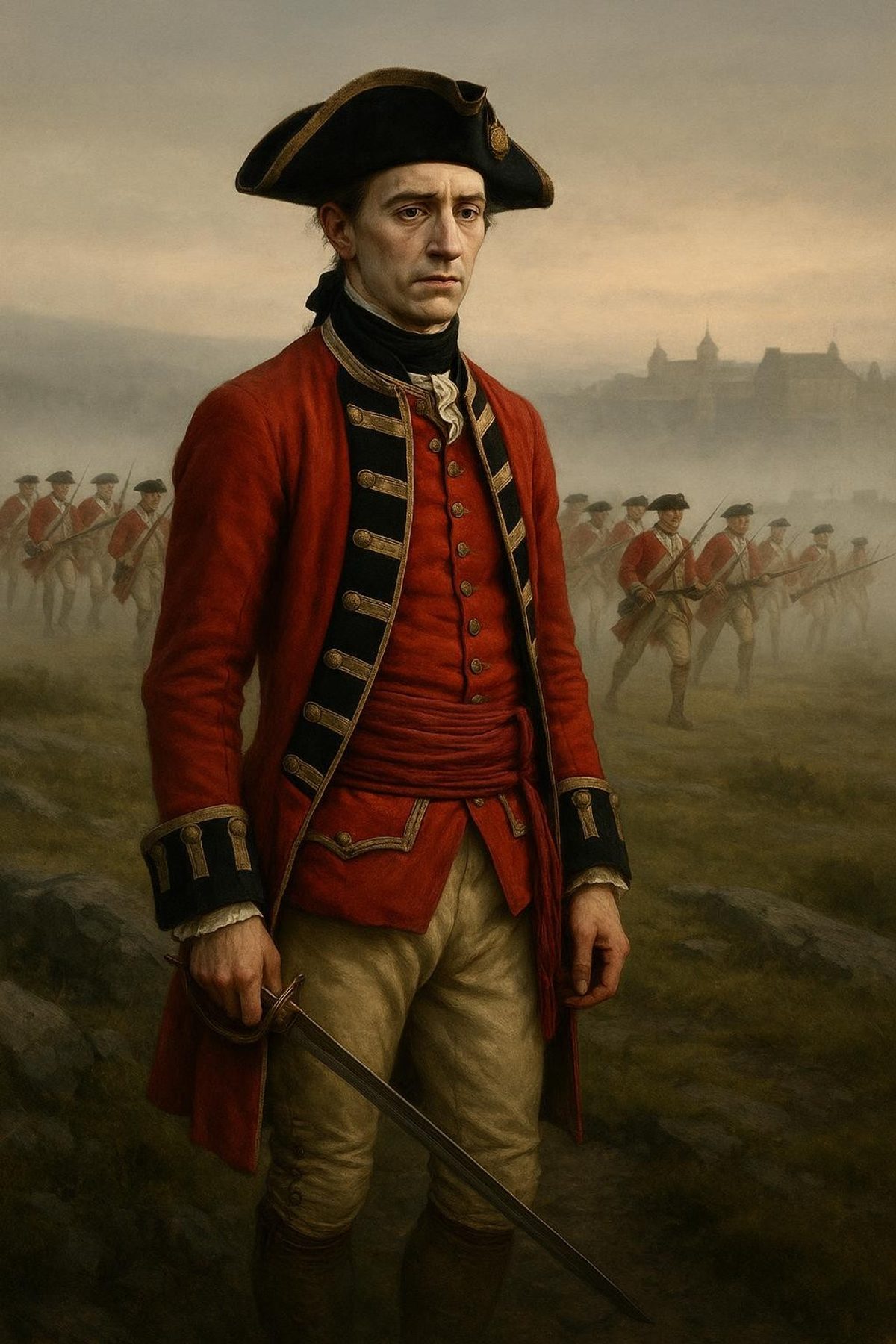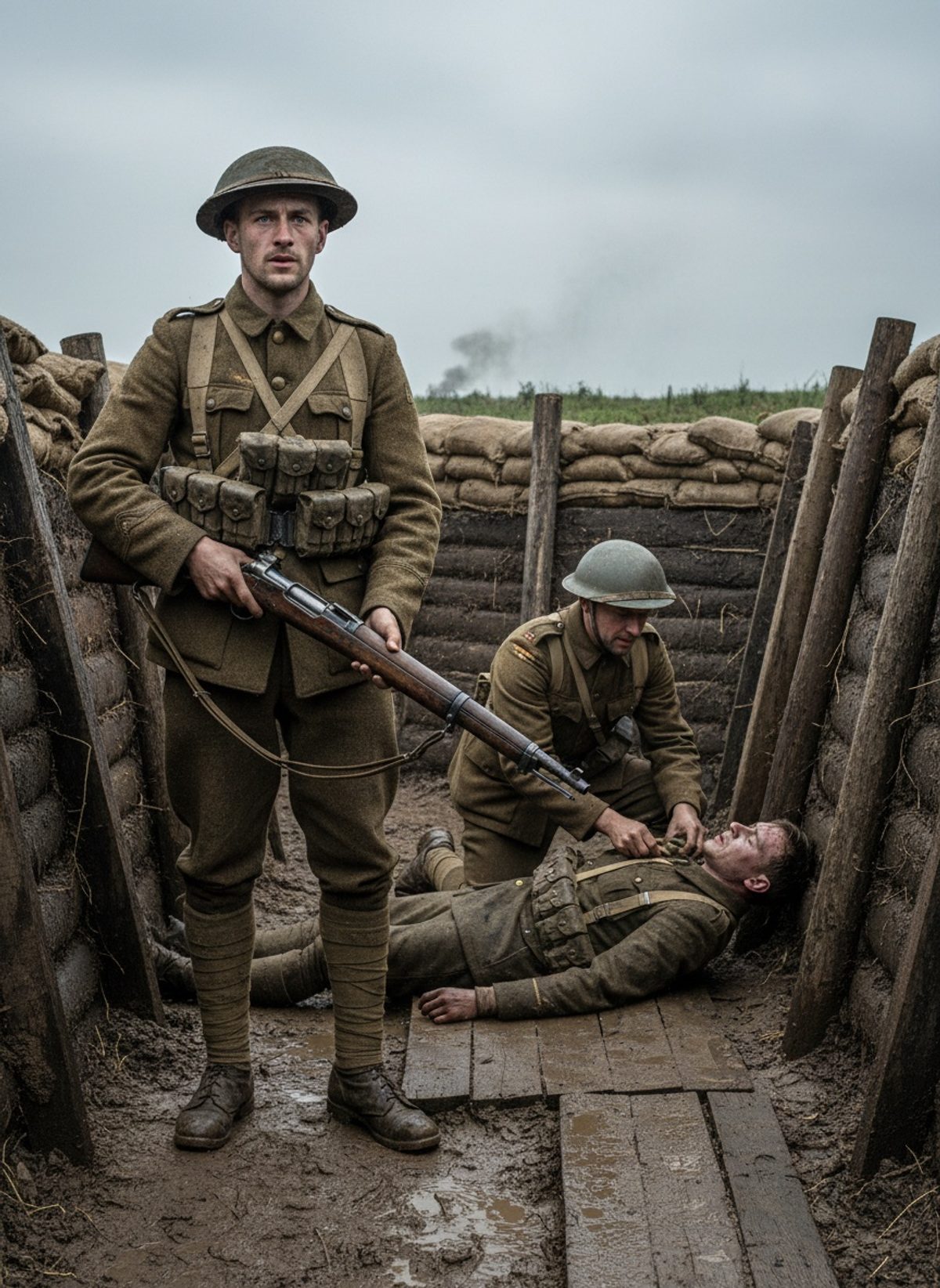
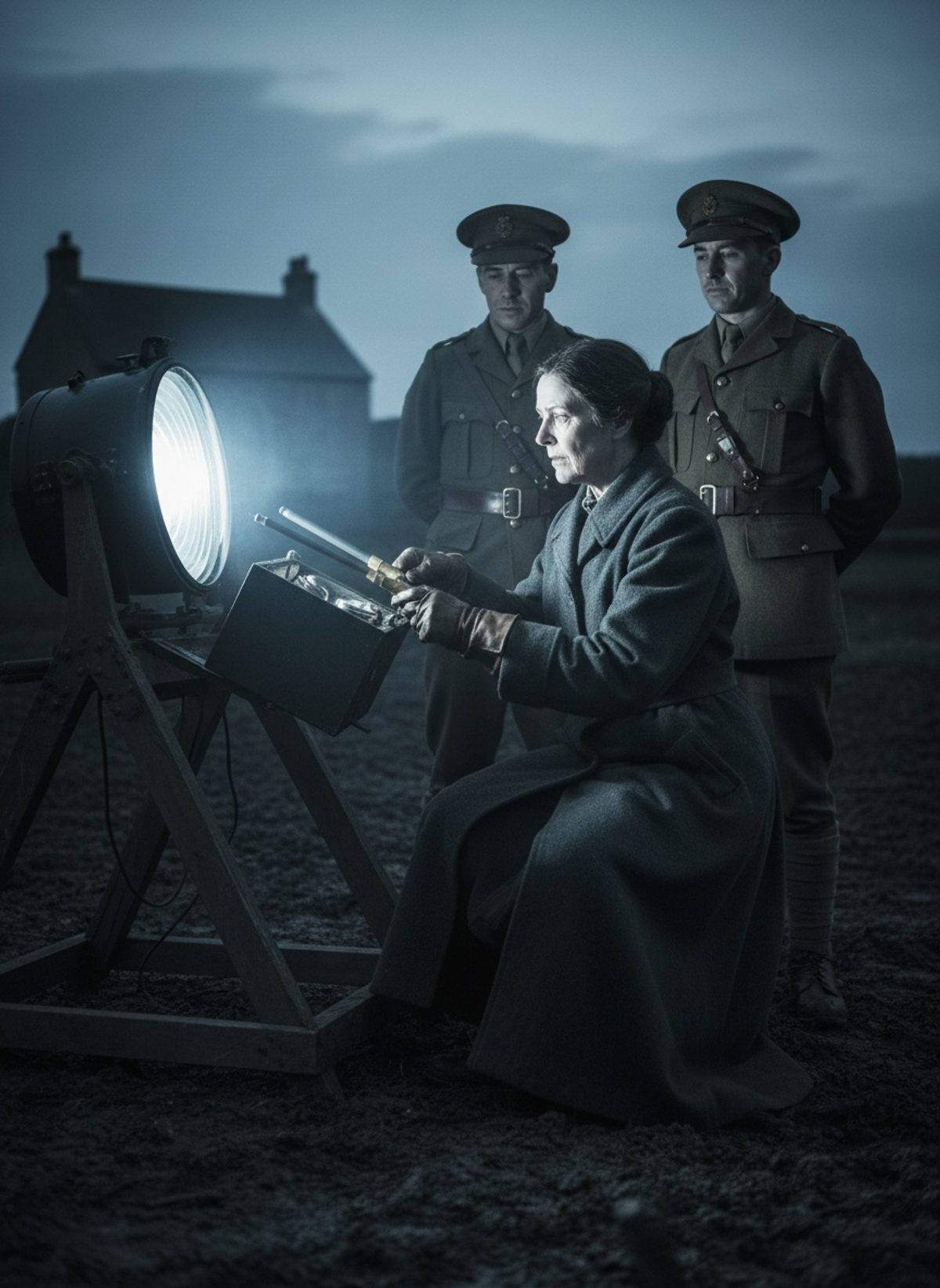
The windswept fields of the Western Front lay under a heavy, oppressive sky. The February air bit sharply at any exposed skin with strands of mist clinging to the cries of distant artillery. As night fell, darkness draped over the desolate landscape where British troops sought solace from hostilities under the unreliable glow of arc lamps.
But beneath this night-shroud came yet another battle—a quieter yet vital one. As shells hurtled, the searchlights intended to pierce the dark often flickered and failed. The British Army's night operations teetered on the brink of chaos. This insidious foe defied resolution by the engineers and mechanics entrusted with their upkeep. Then, through the gloom, the War Office found light in an unexpected place. Deep within the halls of scientific progress in Britain worked a woman whose intellect would soon sew the night with light—Hertha Ayrton.
Illuminating Genius
Hertha Ayrton, born Phoebe Sarah Marks, was a bright ember of ingenuity kindled in the unlikely setting of Victorian England. Having been raised by a Jewish immigrant, she carved her own path amidst prevailing societal conventions. An indomitable suffragette in her own right, Hertha wielded the torch of science to illuminate inequity both social and scholarly. She was the first woman to be admitted to the Institution of Electrical Engineers, a pioneer in an era that barely acknowledged women in academia.
With a mind unencumbered by the biases that often plagued her male contemporaries, Hertha turned her attention toward electrifying developments. Her work shifted from mathematical explorations to the formidable dance of electricity and light, converging eventually on the arc lamp. Its brilliance was matched only by its temperamental nature, prone to flickering and extinguishing. These anomalies, dismissed as mere mechanical faults by many, became Hertha's intellectual quarry.
Read next: When Lord Kitchener Issued Cards That Shocked the Church, 1899
Soon, Hertha had extrapolated the hidden intricacies of the arc's so-called "hissing" sound, a phenomenon that hinted at a deeper flaw in circuitry. In her laboratory, amid the alchemical hum of experimentation, she devised a method to regulate this unpredictable force, presenting her findings in papers that flickered brilliantly against the caution of her male peers.
Battlefield Shadows
As 1917 stretched over war-weary Europe, the Western Front needed every technological advantage. Arc lamps played a crucial role in the nocturnal dance of warfare, guiding troops by night and spotlighting enemies lurking in shadows. Yet the lights faltered with alarming regularity. It wasn't mere annoyance—it was a threat to tactical operations, to lives. Engineers toiled, their efforts drowned in the echoes of failure.
Hertha Ayrton arrived in this intertwined world of smoke and shadows at the War Office's request. Her presence, however, was a curiosity wrapped in competence. Nevertheless, the front saw sparks of her brilliance immediately. Amidst the mud-logged clamor of war, Ayrton's solution unfurled: a meticulous adjustment of the current. With deft precision, she rebalanced lights that eluded even the keenest military minds.
Ayrton saw how the atmospheric conditions of the battlefield accelerated the arc lamps' demise and applied her pioneering concepts to make them reliable. Her improvements were no mere temporary fixes; they were transformations. What she solved in days, the army's technical battalions had labored over with diminishing returns for months. To many, Hertha was an alchemist—she had wrested light from the jaws of darkness.
An Unlikely Messenger
What unfolded was a struggle for acknowledgment in a world unprepared to often credit female intellect. The military communicated their gratitude with awkward formalities, perplexed by the stature of a woman whose expertise not only matched but exceeded their own. Hertha’s presence challenged the gendered manuals of military protocol, and yet, her work spoke more eloquently than any commendation could.
Her complex examination of electric arcs bloomed into practical triumph, and while her fixes became deployed with success, Ayrton's name did not. The shadows of her contribution were selectively cast, leaving her innovations to dwell in the footnotes of war machinations. She never sought the limelight; her passion was the cause itself. Nonetheless, her lack of recognition reflects a broader narrative—where the contributions of brilliance like Hersha's were often eclipsed by the ineffable fog of history.
Britain’s military prowess and scientific advancement were interwoven threads of a tapestry with threads often left unnamed. Hertha’s case epitomized the systemic oversight of women in science—the very legends omitted from textbooks. Nevertheless, Ayrton found subtle satisfaction knowing that her arc lamps illuminated the vast dread of no man's land with certainty.
Beyond the Flame
Hertha Ayrton's tale, though obscured, flickers on, a reminder of the unnoticed contributions that often illuminate our way. In her life, Hertha Ayrton was a herald of gender equality, her works unwritten chapters of innovation. Her flame remains a testament to the silent spark kindled by the marginalized, no less bright for its partial obscurity. By revisiting the stages of history, \We must ensure that future narratives shine stronger for voices previously muted.
The drumming artillery of the Great War may cease, but the legacy of its ingenious proponents like Hertha Ayrton echoes yet. Her triumph over the challenges—technical and societal—reflects the enduring importance of persistence and the continuous expansion of boundaries once deemed insurmountable. When ingenuity lights the path of progress, history will bear witness, ensuring the forgotten legends no longer remain untold.