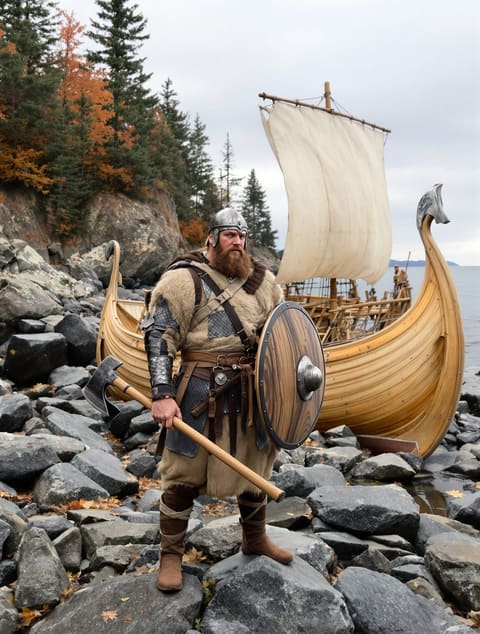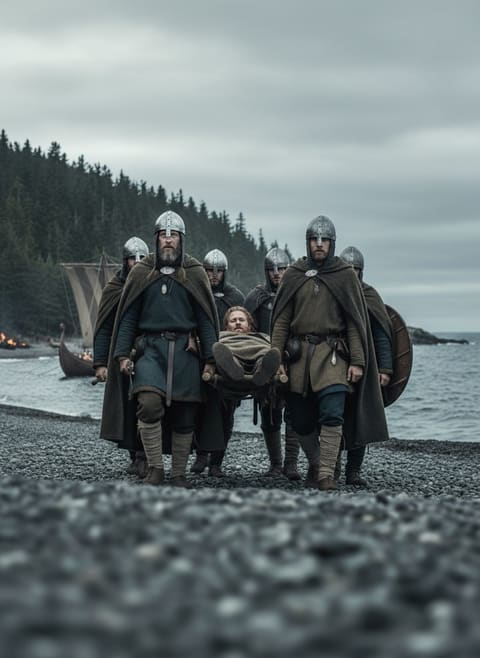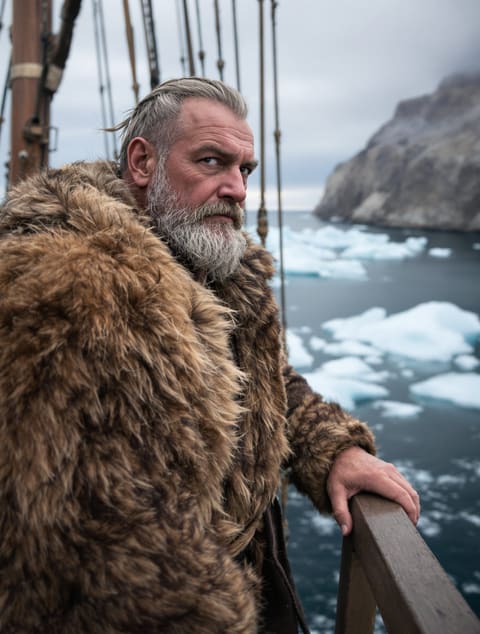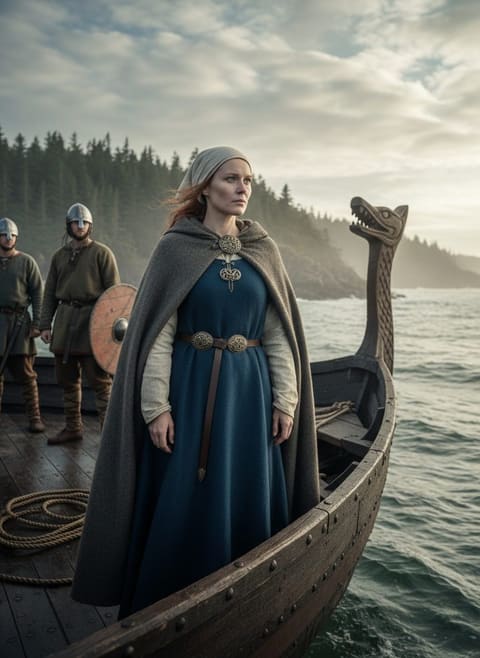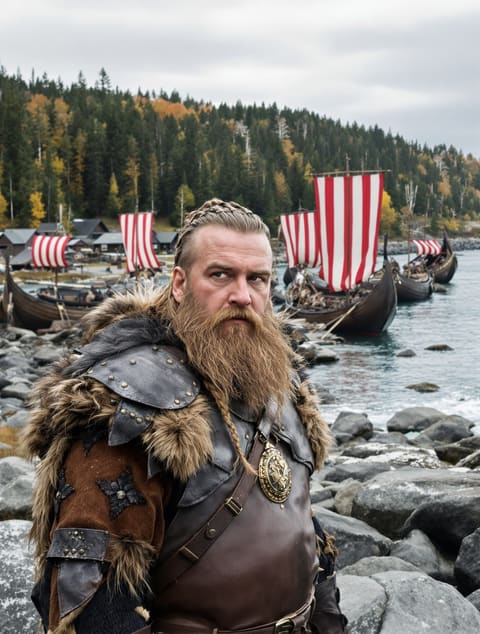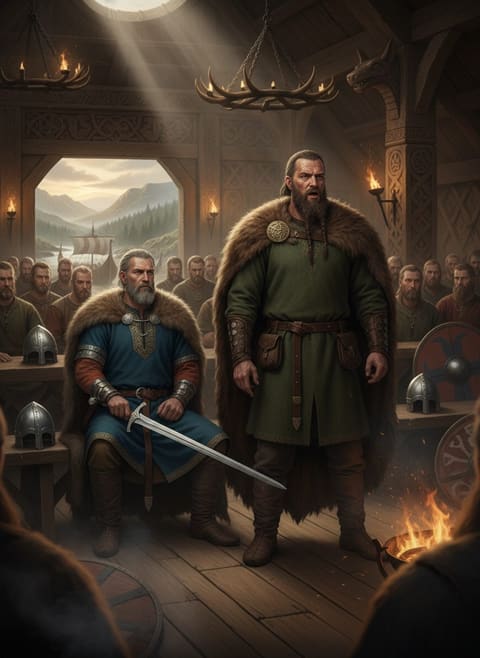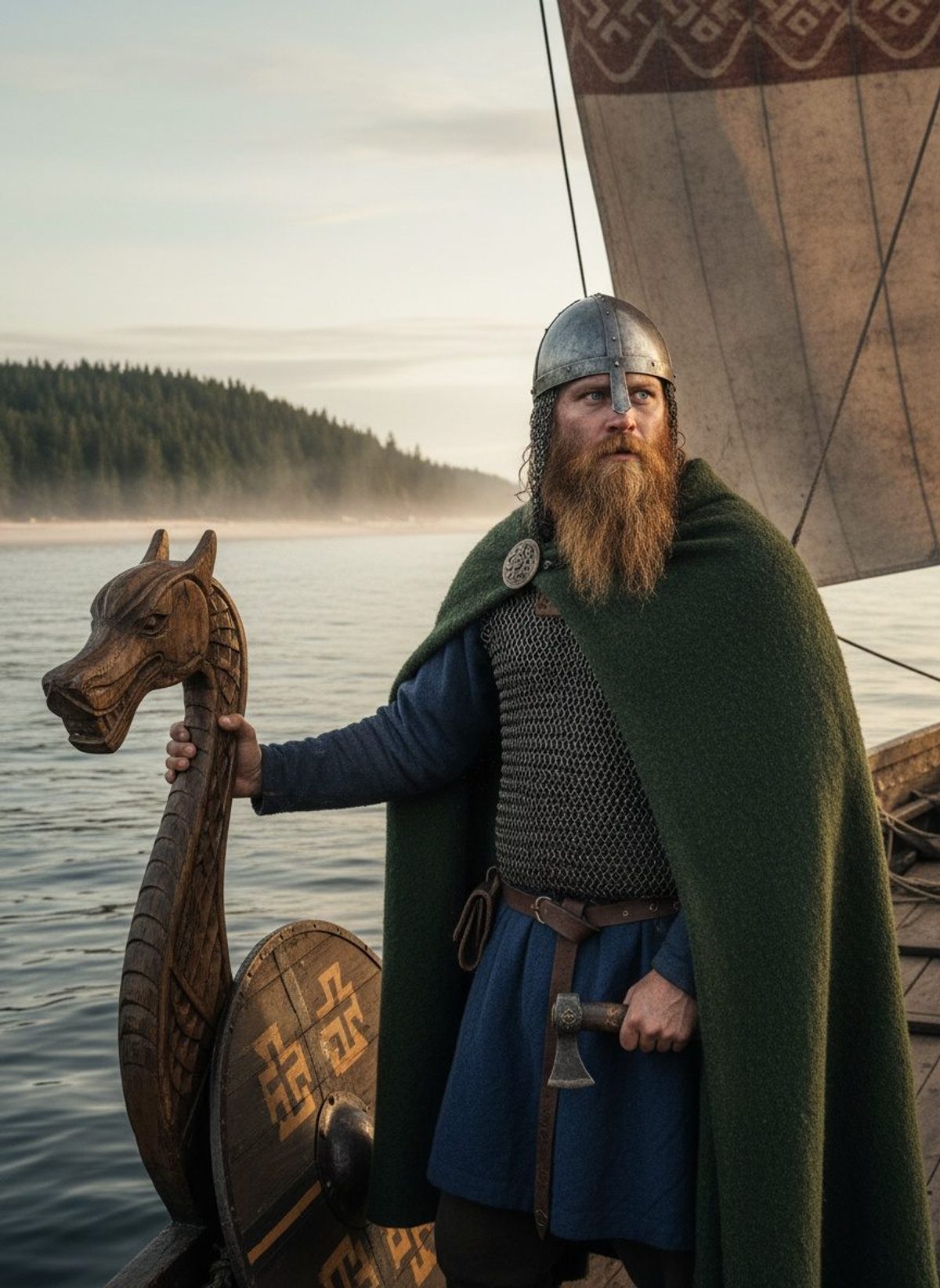
Leif Eriksson's father was banished. He sailed anyway.
In a time when defiance could seal a man's fate, Leif Eriksson dared to defy not just his society's taboos but also the vast, uncharted waters stretching across the Atlantic. Around the year 1000 AD, driven by whispers of undiscovered lands to the west, Leif embarked on a voyage that would forever alter the Norse understanding of the world. Imagine the raw courage needed for such an expedition at a time when the world's edges were believed to drop into the realm of myths and monsters.
The journey begins with a seemingly innocuous piece of gossip—a rumor floating through the salty air of Norse settlements, suggesting that a land lay beyond the western horizon, filled with untapped resources. Eriksson, known for his daring spirit, decided to put this rumor to the test. He purchased a second-hand ship from a sailor who claimed to have sighted this mysterious territory and set sail with a crew equally eager for adventure. Guided by nothing more than this tale, they faced the open ocean, its depths and whims known only to the ancient sea gods of Norse mythology.
As their sturdy ship cleaved the Atlantic waves, the crew encountered challenges that would have deterred many. Storms conjured by a moody sea lashed at the boat's timbers, threatening to scatter them into oblivion. Yet Eriksson's leadership, honed by the rugged upbringing as the son of the infamous Erik the Red, provided the compass they needed. Banished himself from Norway due to his father's banishment, Leif was no stranger to the concept of starting anew. His family's saga was one of exile, first when Erik the Red was banned from Norway, only to be exiled again from Iceland. Yet Erik's misfortune turned into opportunity with the settlement of Greenland, setting a backdrop of resilience that surely influenced Eriksson's own daring venture.
Read next: He Sailed Into the Ice. He Found a New World.
After enduring perilous conditions and boundless uncertainty, the sight of land must have seemed an apparition. But it was real—forests more extensive than any back in Greenland, teeming with untamed potential. Upon landing, Eriksson named this rich new territory Vinland, enchanted by the wild grapes and lush landscapes that promised bounty beyond imagination. Unlike the rugged shores of Greenland and Iceland, Vinland boasted a gentler climate, a critical discovery that offered the Norse a glimmer of sustainable expansion.
It's intriguing to think about the sensation of setting foot on Vinland's soil. Eriksson and his crew were the first Europeans to lay their eyes on, and perhaps taste, this verdant expanse. Every tree was a testament to the world’s secrets, every cluster of grapes a confirmation of Vinland's fertility. It was a land that defied what the Norse had come to expect—a benign paradise where herbs and game flourished. Their sense of awe must have been accompanied by an awareness of profound secrecy; to speak of it was to conjure disbelief from the hearths of Europe. Yet vindicated by the land's bounty, Eriksson knew this was a discovery worthy of the sagas.
Read next: Thorvald Eriksson: The First European Killed by Native Americans
Eriksson’s journey didn’t just end with Vinland. He and his crew explored further, encountering native peoples who represented not just a human connection across continents but also posed mysterious potential alliances or conflicts. These first interactions set the stage for an unheard-of dialogue that history would painfully catalog when continents would clash centuries later. Notably, records are sparse, and our understanding of these encounters remains fragmentary—a Norse narrative stitched with patches from later chroniclers.
When Eriksson eventually returned to Greenland, his story carried the weight of reality transformed into legend. Yet these legends were tempered by practical outcomes; Vinland remained a whisper among the Norse not because of Eriksson's lack of intent but due to the challenges of sustaining such distant exploits. The harsh reality of maintaining a presence across so much open ocean soon became apparent. Without immediate economic or strategic value underscored by continuous settlement, Vinland slipped back into the obscurity of the unknown, a mere chapter in life sung around the Viking hearths.
Why, then, does the story of Leif Eriksson's venture hold significance? It transcends the simple act of discovery. His tale serves as a prism through which we glimpse a moment of breathtaking exploration on the cusp of the medieval and the modern world. In Eriksson's world, daring bordered on recklessness, yet his voyage sketches a map of the human spirit's ceaseless quest to uncover boundaries and redefine them. It whispers across the ages, calling to the part of us that yearns to see what lies beyond our own horizons. As we contemplate Eriksson's Vinland from the vantage point of centuries later, it is not just the mapping of land that is highlighted but the mapping of human curiosity—the continuous charting of the unknown within us all.