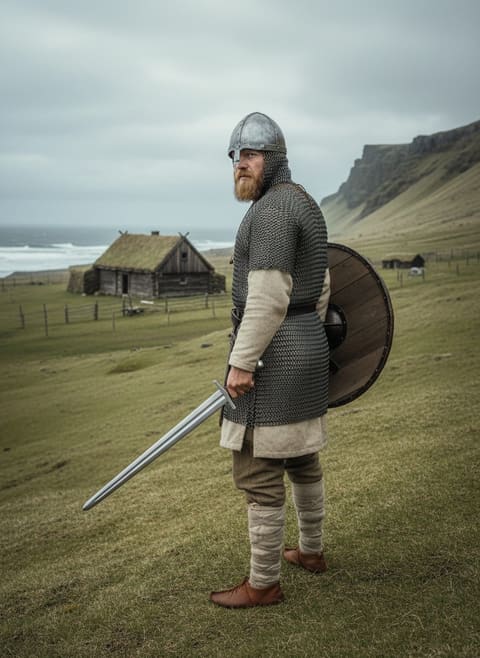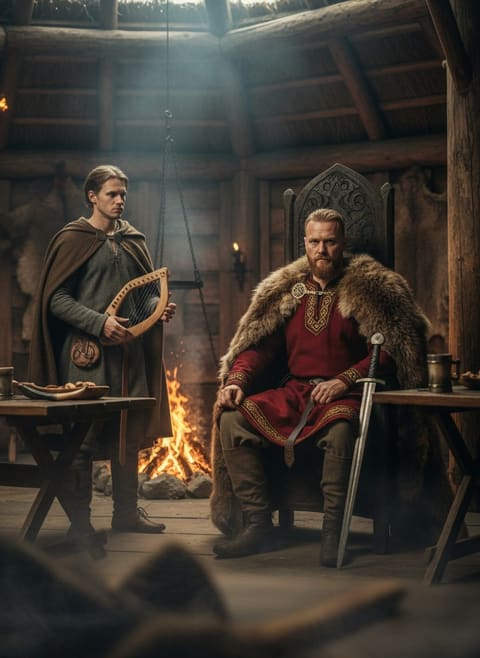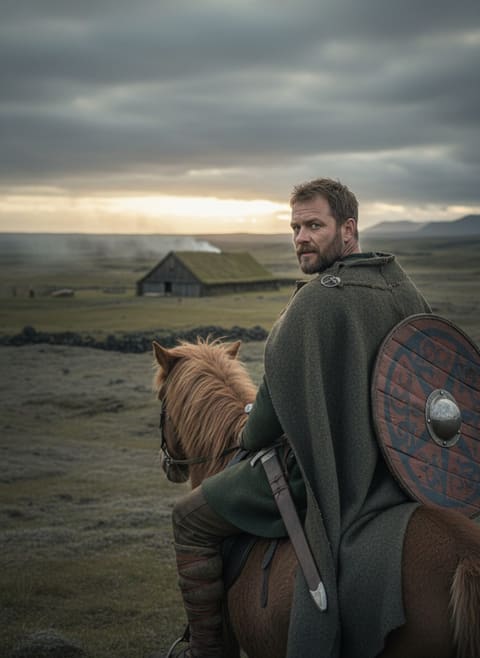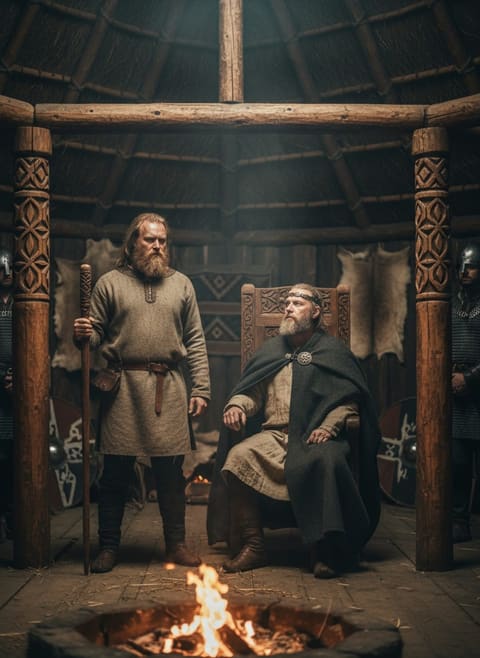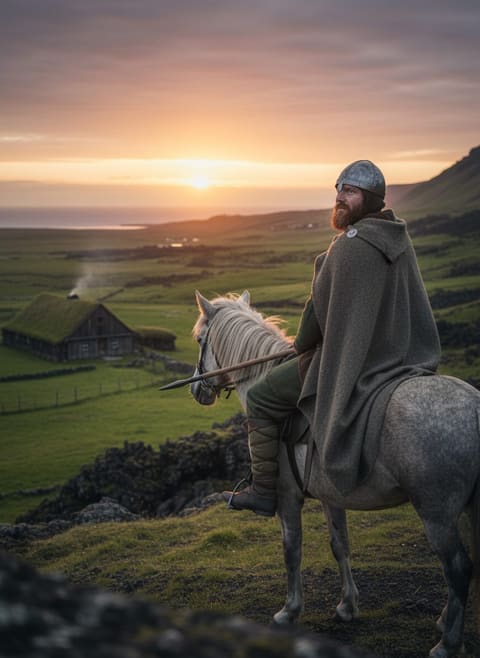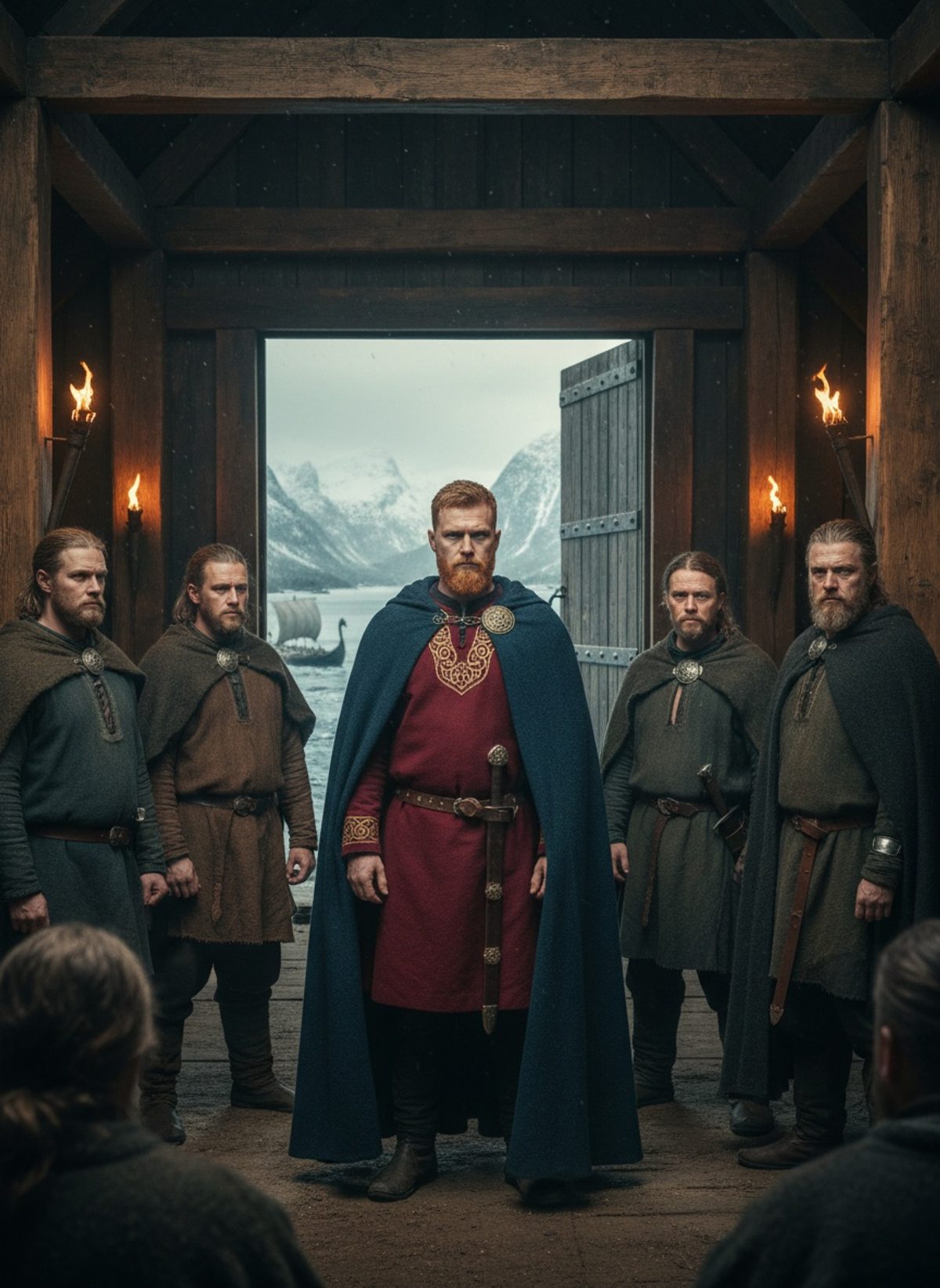
He was twenty, fresh from the chaos of mercenary life in foreign lands. Within five years, he would crown himself the king of a unified Norway, a triumph never before seen.
The Viking Who Turned Against the Gods of His People
Olaf Haraldsson grew up in a restless period, a time when power was taken by the sword and held by fear. Born around 995 in Ringerike, Norway, Olaf could trace his lineage back to Harald Fairhair, the legendary unifier of Norway. His early years as a Viking mercenary toughened him. He ventured across England and Normandy, absorbing the experiences of conquest and diplomacy beyond the seas. But Olaf returned home with an ambition surpassing mere chieftainship; he envisioned a Norway consolidated under a single monarch and a unified faith. This included overthrowing the old Norse pantheon, replacing it with Christianity, a religion that had already begun its gradual spread in Scandinavian society.
Arriving in Norway in 1015, Olaf Haraldsson found a fragmented land of petty kingdoms and fiercely independent jarls who resisted any central authority. The land’s complex tapestry of traditions and beliefs posed a formidable barrier to his aspirations, but Olaf was undeterred. His resolve would ignite a chain of events that reshaped not just a kingdom, but a cultural identity.
The Battle That Forged a King
The year 1016 became a milestone, marking Olaf's ascent to the throne through sheer might at the Battle of Nesjar. The battle was not merely a clash of arms; it was a deliberate move to consolidate power. The sea rang with the clamor of steel; shields splintered, and Viking warriors' roars mingled with the cries of the skalds singing of pending victory or doom. Nestled amidst the tumult, Olaf's strategic prowess shone, securing his kingship and planting the first seeds of his vision. He proved formidable, earning the epithet "Olaf the Stout" not just for his physical stature but his indomitable spirit.
Read next: Vigi: The Dog Who Guarded a Viking King
Yet, as king, Olaf faced a daunting political landscape. The jarls who swore fealty were deeply rooted in their pagan traditions, their loyalty as tenuous as winter ice. Recognizing religion’s power as a unifying force, Olaf embarked on a campaign to Christianize his newly won domains. His approach, however, was anything but conventional. Ignoring the slower path of persuasion and missionary work, Olaf employed a more forceful strategy—conversion by the sword or exile.
Baptism by Fire and Sword
Olaf's mission of Christian unification unfolded with a cold, decisive edge. He traveled across his realm, district by district, demanding allegiance to the new faith. The king's message was stark: embrace Christianity and be baptized, or face exile. His campaign blended the carrot and the stick, with the promise of mercy or the certainty of expulsion.
His actions were as much overtures of faith as they were political maneuvers. Aligning with Christianity provided Olaf with the moral ascendancy to break the jarls' traditional powers and solidify his central rule. Olaf’s encounters were not mere meetings; they were intense rituals decisive in their resolve. Countless Norsemen found themselves knee-deep in water, the chill of both nature and new spiritual resolve enveloping them as their pagan ties were symbolically washed away. Churches began to rise where pagan temples once stood, and the old Norse gods found themselves supplanted by a solitary, unfamiliar deity.
But such sweeping change could not be executed peacefully. Olaf’s iron-fisted strategy met resistance—waves of discontent swelled among his subjects and the newly displaced pagan elite. The king’s firm stance cultivated unrest that soon rippled through the land.
Read next: Sigurd the Stout Rode to His Death. He Knew It.
The Fall of a King and the Rise of a Saint
Despite his successes, Olaf's rule was not to last. In 1028, facing a rebellion led by Canute the Great, King of England and Denmark, Olaf fled into exile. His enforced departure symbolized both the prestige of his Christianity-driven realm and the resentment of those who opposed his methods. However, Olaf was not one to languish quietly in obscurity. He returned to Norway in 1030, aiming to reclaim his lost kingdom.
July 29, 1030, witnessed the climax of Olaf’s tumultuous life in the Battle of Stiklestad. It saw Olaf engage his former homeland for the last time. The battle, vivid and brutal, painted the earth in the iron hues of combat and the rich red of spilled blood. Yet Olaf fell, a martyr to his cause. His death was not the end; rather, it was a catalyst for transformation. Revered as a martyr shortly after, he was canonized by the Church a year later, his life and death paving the way for a nation’s faith to flourish. The tide of his martyrdom fueled the Christian consolidation across Scandinavia, extending its cultural and spiritual influence.
A Legacy Forged in a Kingdom Born Anew
In life, Olaf Haraldsson was a warrior at heart, embodying the fierce spirit of the Viking age. His reign, marked by both unity and divisiveness, literally carved out a future state. Olaf's tale is not only one of religious zeal but also a poignant reflection of power and purpose. Centuries later, he endures as Saint Olaf—patron of Norway and a symbol of national pride. His remains became the spiritual fulcrum of Nidaros Cathedral, grounding his temporal endeavors in everlasting sanctity.
Despite Olaf's turbulent reign and the cost of his strategies, his vision yielded a nation unified under a single law and faith, setting a course for future generations. Today, his legacy echoes in Norway's coat of arms, where the axe symbol aligns with his legendary status. His saga serves as a reminder of transformation’s complexity and the sacrifices entwined with the pursuit of a greater ideal. His story challenges us to contemplate the cost of a dream and its metamorphosis from earthly ambition to eternal legacy.