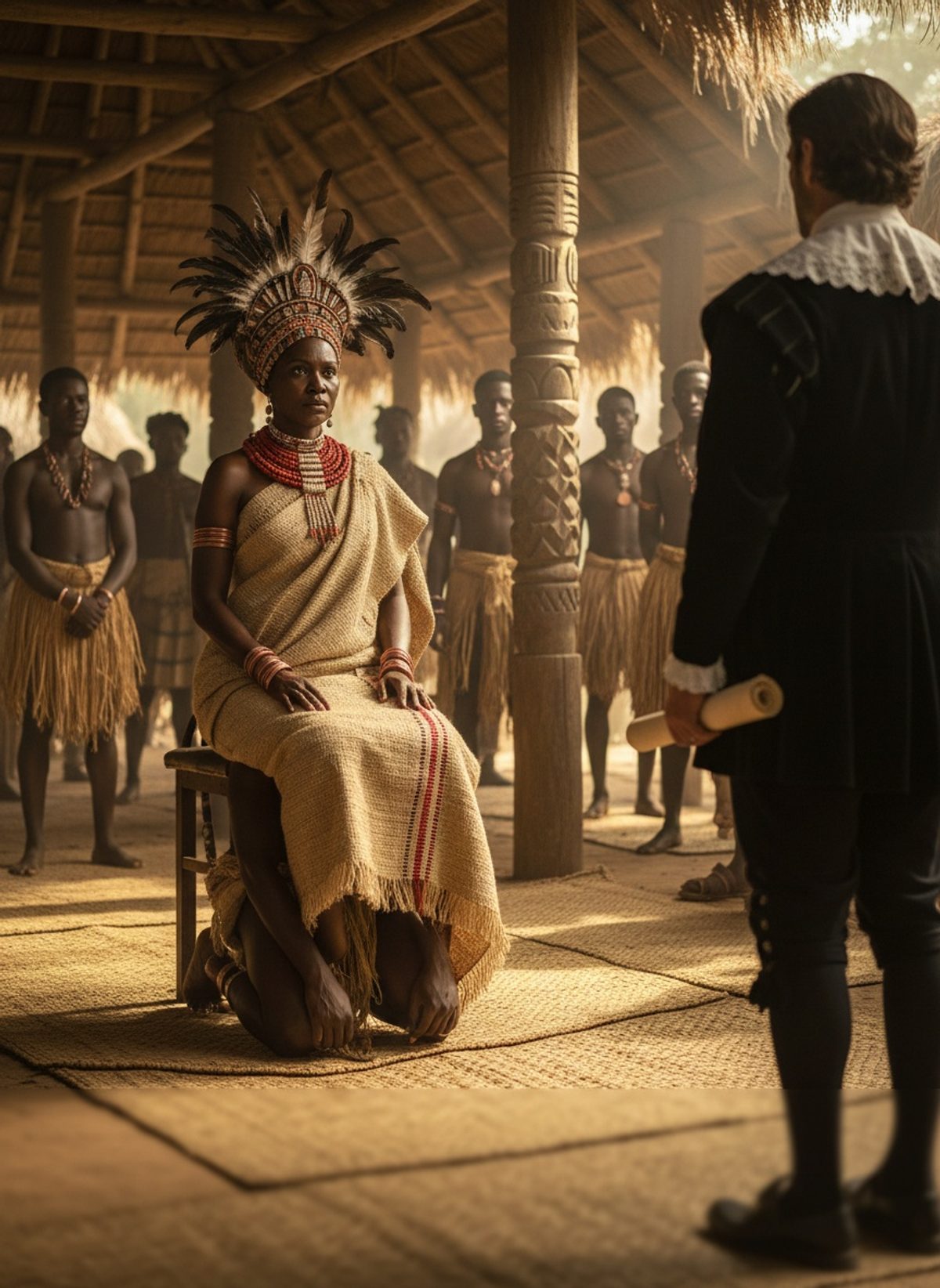
The room was eerily silent, the only sound the soft shuffle of sandaled feet as Queen Njinga drew the attention of every eye present. Sunlight streamed in from narrow windows, illuminating dust motes dancing across air heavy with tension. The Portuguese envoy stood rigid, flushed with the assurance that any moment now, the woman before him would bow to the might of his empire. But Njinga remained statuesque, an indomitable figure draped in brilliant fabrics that seemed to whisper tales of her defiant heart. An attendant, sensing the deliberate slight of the solitary chair reserved for the envoy alone, knelt without hesitation beneath her. Queen Njinga settled upon him, her gaze steady and unmoved, meeting those of her adversaries with regal impassivity. Her very posture conveyed what protocol could not: she was not someone to be diminished.
The Makings of a Monarch
Nascence in the Kingdom of Ndongo was illustrious yet tumultuous. Njinga's early life unfolded under the rule of a father who embodied both regal authority and the inevitable entanglements with Portuguese ambition. The Portuguese, initially traders, saw expansive opportunities in these sovereign territories, their aspirations masked with the veneer of diplomacy. They arrived with gifts — guns, gunpowder, and glittering trinkets — yet carried chains wrapped invisibly in their words.
From her father’s discussions with these foreign dignitaries, a young Njinga absorbed lessons in diplomacy and warfare. However, as tides of power shifted, she tasted the bitterness of betrayal: sold into slavery by rival factions within her own people, briefly exiled, and perpetually underestimated. Through adversity, she honed her resolve, each setback transforming into a stepping stone toward becoming one of history’s most tenacious queens.
The Ndongo kingdom during Njinga’s rise was a theater of political chess. Her brother's rule brought turmoil and eventual capitulation to Portuguese demands, yet his failures only underlined Njinga's growing eminence. With his death, Njinga seized her moment. Ascending to the throne, she refused to be merely a symbolic monarch, sidelined by gender and tradition. Skilled not only in statecraft but in the practicalities of warfare, she embodied a dual crown — one of the acumen and the other of fearlessness.
Read next: Nzinga Mbande Walked Into the Meeting. There Was No Chair.
Defying the Colonial Craft
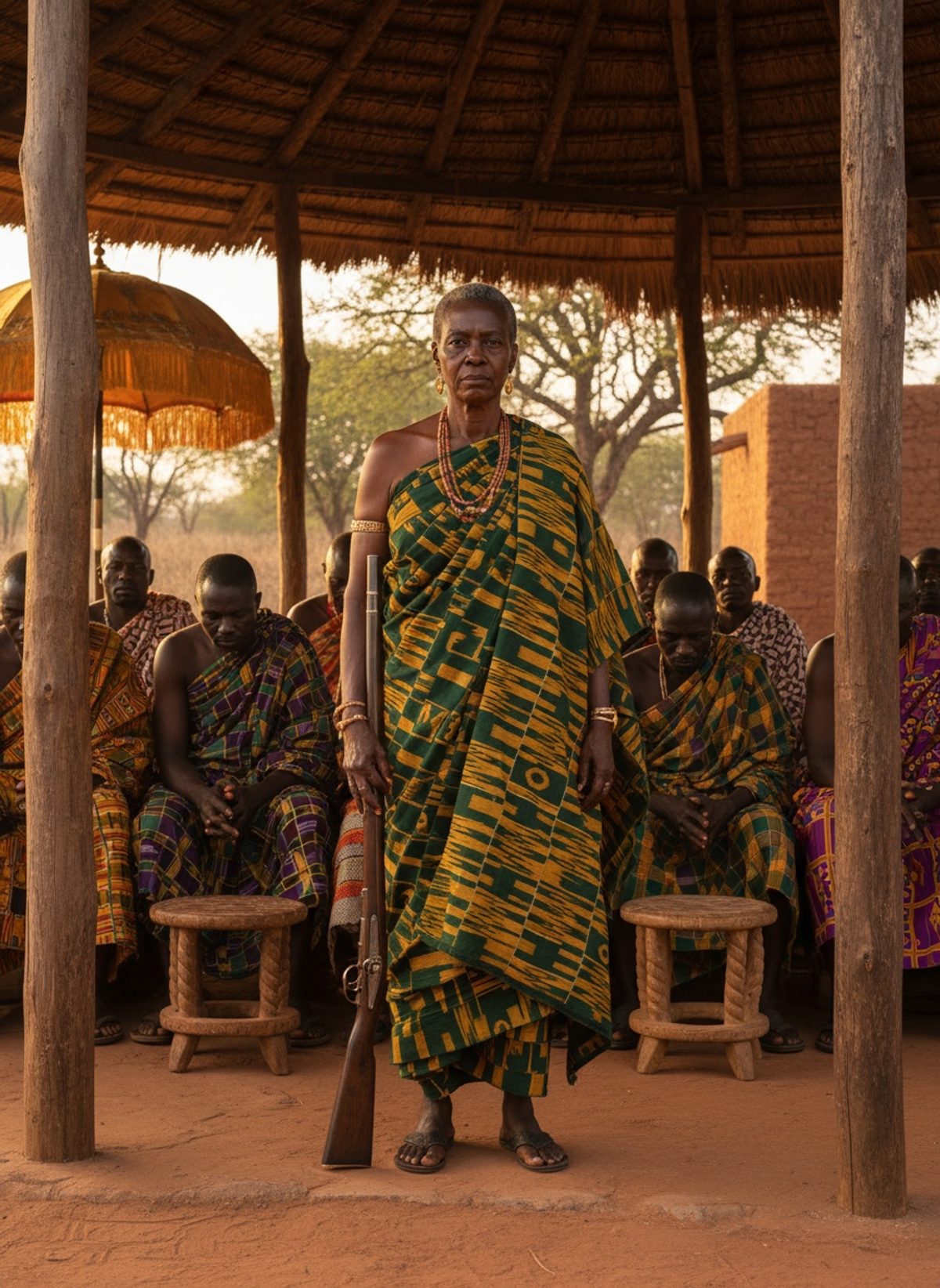
The delicate dance at court during negotiations with the Portuguese was a tableau of power plays and cultural clash. Njinga's refusal to kneel before the envoy was not a mere whim of defiance but a calculated maneuver in the perpetual battle of wills. This singular act, as vivid as the bold embroidery of her regalia, publicly repudiated any notion of subservience. Her formidability burned brightly, a beacon of leadership that resisted colonial encroachment on her terms.
To the Portuguese, accustomed to leveraging their strategic advantages and manipulative treaties, Njinga's tactics were an existential challenge. She engaged them not only in meeting rooms but on battlefields, where every tactical victory tightened her grip on autonomy. Her kingdom, a tapestry interwoven with alliances and trade, was never a passive recipient of European dictates. Instead, each diplomatic and military engagement was a meticulously crafted page in her rulebook of sovereignty.
In an era when women were seldom seen as equals in governance or war, Njinga redefined the contours of female agency. Her armies were as tenacious as her spirit, adapting to the unforgiving terrains of Central Africa. Even as diplomatic dialogues ebbed and flowed, her resilience meant the Portuguese rarely triumphed easily in their southern African ventures.
Legacy Carved in Defiance
The image of Njinga astride her human throne reverberated far beyond the walls of that gilded room. Stories of her audacity and skill passed through generations, casting ripples throughout history that are felt even today. Njinga’s reign was politically nuanced, underpinned by the delicate balance of diplomacy and war. Yet perhaps what is most remembered, most strikingly illustrated in that decisive moment against the envoy, was her unyielding embodiment of sovereign dignity — never bowing, never breaking. Her chapter in African history isn’t merely one of survival against colonial might but an enduring saga of empowerment and resistance.
The tableau of Njinga defying the envoy carries profound meaning, resonating in discussions of power, gender, and colonialism today. Her decision to create her throne from what others intended as humiliation underscored a larger truth — that sovereignty is not seated in the gilded comforts of a throne but in the unwavering stance of a queen unbent. As her legend is told and retold, Njinga’s spirit challenges each generation to stand tall, even when denied a throne.