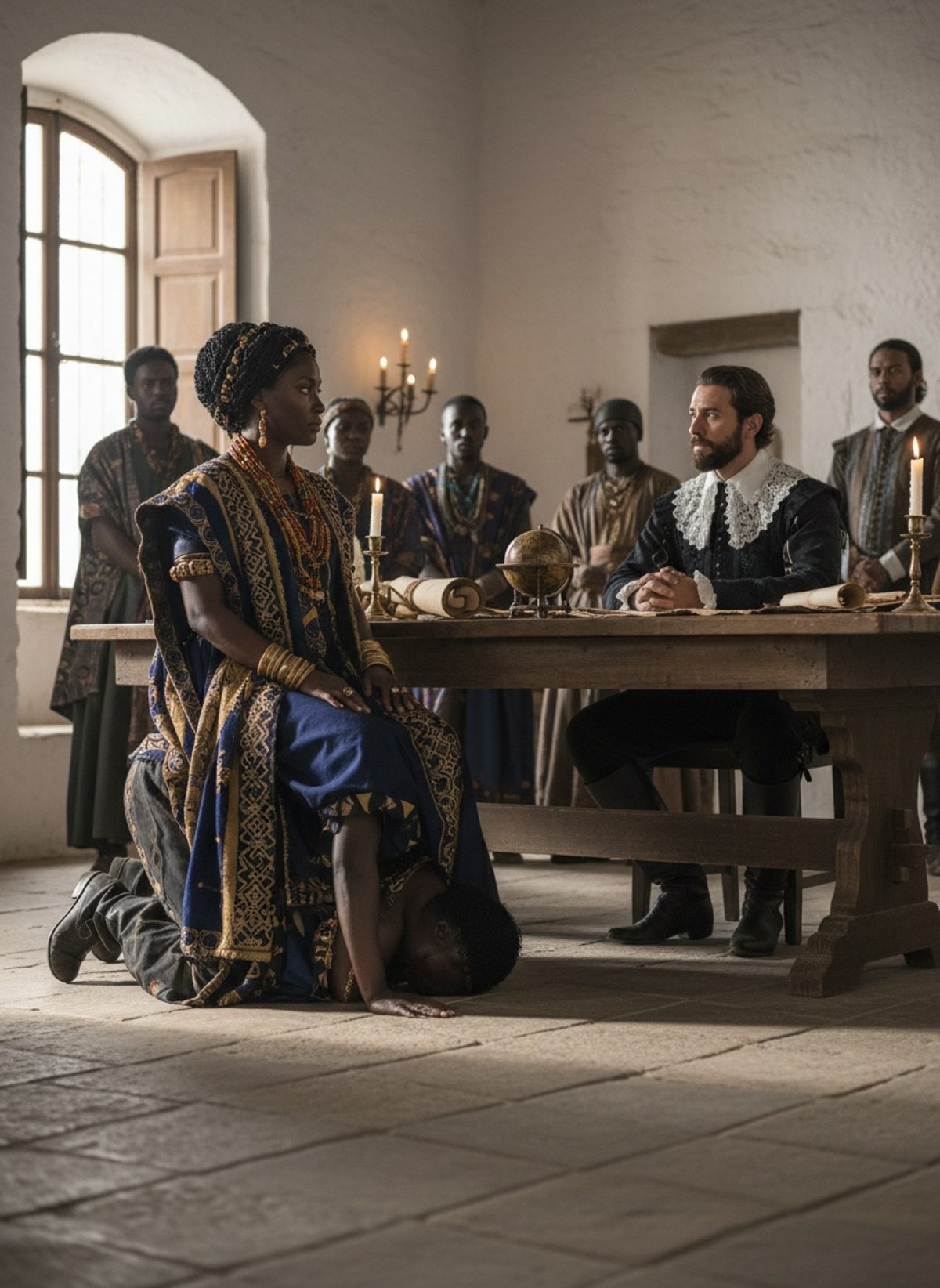
1622. The air of the room was heavy with the expectation of a confrontation. Into this charged atmosphere stepped Nzinga Mbande, a woman whose very presence demanded attention and whose legacy would echo through time. The Portuguese governor in Luanda had invited her to discuss the terms of peace and alliance between their peoples. Yet, in an audacious display of disrespect, no chair was offered to her. A deliberate slight meant to humble her, to reduce her stature in what was to be a delicate negotiation.
This moment was a turning point. Nzinga, daughter of an enterprising royal family, was no stranger to the intricacies of power plays. Born around 1583, she had grown up amidst the turbulent changes that came from the encroachment of European powers in southwestern Africa. Her father, Ngola Kilombo Kia Kasenda, provided her with military and political training usually reserved for those with a direct path to a throne. It imbued in her a resilience and strategic mind that would redefine the parameters of leadership in the Kingdoms of Ndongo and Matamba.
The encounter with the Portuguese was not her first brush with diplomatic maneuverings, but it certainly presented a unique challenge. The refusal to offer her a seat was not merely an oversight; it was a calculated move. The floor mat provided her was a direct assault on her status and was intended to signify subordination. But Nzinga, embodying the spirit and poise of a queen unfazed by the machinations of such indignities, looked past the slight with an ingenuity that left the Portuguese stunned.
Nzinga called forth one of her servants. Without a hint of hesitation, the servant knelt before her, and she settled upon his back, her impromptu throne. The message was clear: Nzinga would not be diminished. The audacity of her response turned the tables, striking a powerful blow to the assumption that her dignity and status could be so easily undermined. Her retort was as silent and potent as it was defiant, demanding that those who underestimated her reckon with her unyielding strength.
Read next: Ewuare the Great Rebuilt Benin. His Grief Made a City.
The negotiations that followed were conducted on her terms. Though the details of the agreement remain lost to history, the outcome was effective. Nzinga’s poise had ensured that the Portuguese recognized her as an equal in the discussion that ensued. Her persistence in standing up against the impositions of the Portuguese laid the foundation for future interactions, ultimately securing temporary peace for Ndongo amid the expanding pressures of settlement and European exploitation. More than a mere negotiation, it was a transaction of influence, paved with sharp-witted bravado that set a precedent for respect in her engagements.
This scene was far from the end of Nzinga’s exploits. She did not simply negotiate peace; she took an active and fearless leadership role, notably after succeeding her brother Mbandi as ruler of Ndongo in 1624. Her reign was fraught with continual opposition from colonial forces, which declared war just two years after she assumed power. Despite setbacks, Nzinga’s inventive tactical strategies and her ability to forge alliances — including one with Dutch forces against the Portuguese — illustrated her tenacity and strategic acumen.
Her alliance with the Imbangala, through marriage to the warrior Kasanje, was pivotal in rebuilding her military might and afforded her the strength necessary to capture the neighboring Kingdom of Matamba. From 1631 through to 1635, Matamba became a strategic stronghold, where she governed with the same bold spirit that had characterized her negotiations years earlier. Her efforts to contest Portuguese control continued for decades, culminating in a sustained guerilla resistance that included reclaiming large portions of Ndongo. Her collaboration with the Dutch may have been pragmatic, yet it was a testament to her forward-thinking and diplomatic savvy—realizing that alliances, even with former adversaries, could serve her people’s greater good.
Read next: Yaa Asantewaa Stood Before the Chiefs. She Picked Up the Gun.
Nzinga’s story is notable not only for her deft political maneuvers and military strategy but also for her resilience against the constraints of gender and the geopolitical mechanics of her time. A formidable leader in an era largely dominated by male rulers, she maintained a sense of agency and authority that inspired her people and left a lasting legacy. The peace treaty signed in 1656 underscored not just a cessation of hostilities, but a career of diplomacy marked by relentless courage.
In her later years, Nzinga's life was marked by a return to Catholicism, reflecting a spiritual and cultural adaptability. Nevertheless, her reign is often recalled for her unyielding spirit and willingness to fight uncompromisingly for her people’s dignity and autonomy. She passed away on December 17, 1663, but left behind a narrative of resilience that transcends the annals of African history to resonate with the universal human desire for freedom and self-determination.
Nzinga Mbande’s life and actions remain a poignant reminder that history is not merely filled with names and dates but with stories of individuals daring to challenge the status quo against formidable odds. Her story matters not only to Angola but to anyone witnessing the cyclical struggle against oppression. She teaches us that dignity and respect are never gifts offered freely, but rights to be asserted boldly, even, if need be, from the back of a kneeling servant.