The air was thick with tension, the courtroom echoing with murmured whispers as Socrates drank deeply from the cup of hemlock. The poison slipped silently down his throat, yet the crowd stood in a silent tempest of emotions. In that moment, the city of Athens watched its most formidable mind slip away into the void of history—an existence whose fourth-century cleverness would leave no personal testament of its own.
The Silence That Followed Hemlock
Socrates was gone, and with him, it seemed, was Athens's potential golden age of philosophical thought. Born around 470 BC, Socrates had spent his life in fiercely honest pursuit of wisdom's elusive nature. Yet this pursuer of truth left behind no writings, no tablets etched with his inquisitive dialogues or probing questions. The city that had deemed him unholy and unfit to corrupt its youth with his teachings had effectively silenced his voice. Or so they thought. Amid the milling crowds and the oppressive weight of a city recovering from the spectacle they had witnessed, a young man quietly grieved for his lost mentor. Plato, once a young student among many, began a solitary mission—to resurrect through words the man who had inspired him to think and question like no other.
Plato's Vanguard: Writing as Resurrection
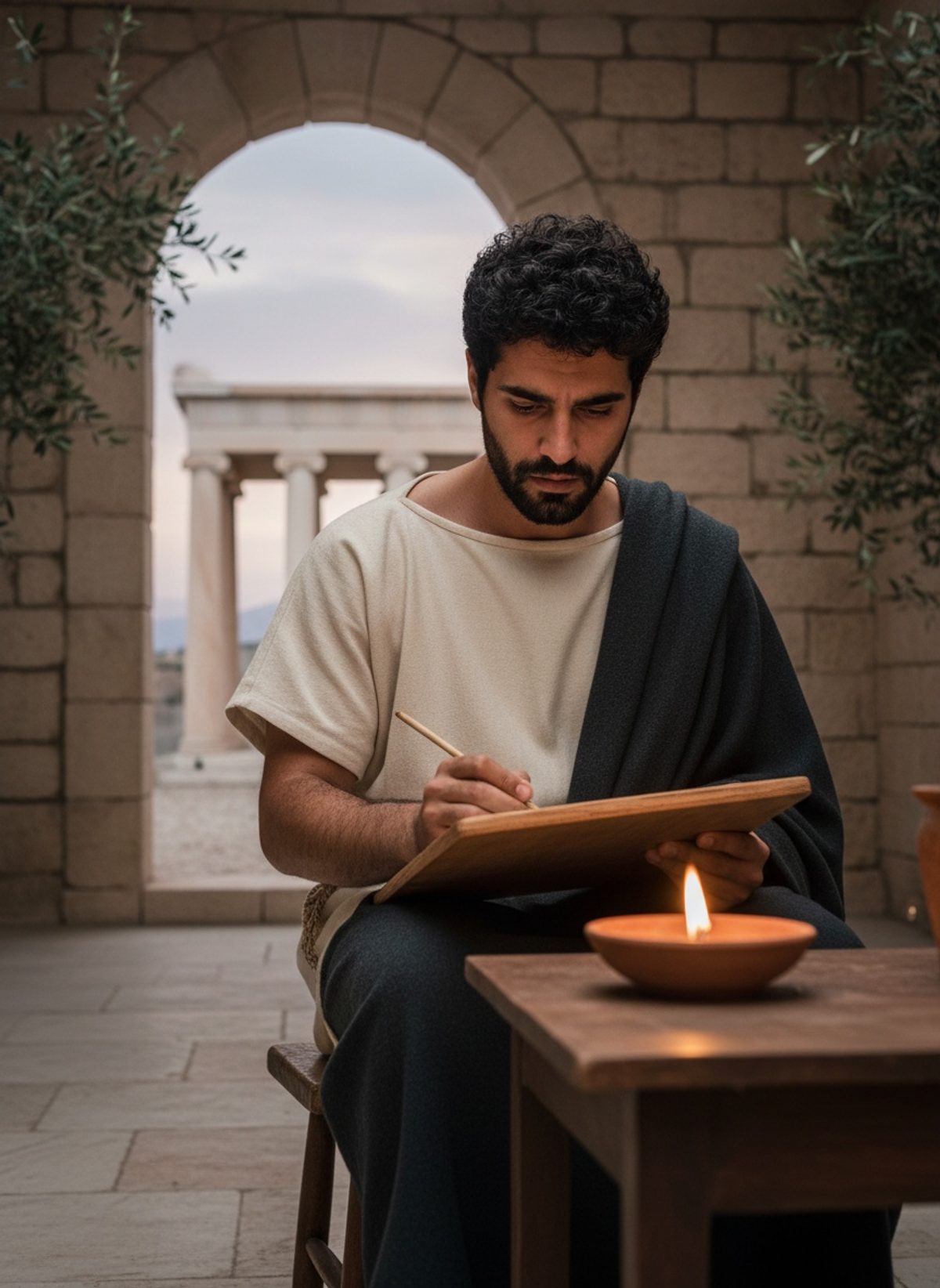
The young Plato faced an enormous task. With each heartbeat recalling the trials of his esteemed teacher, he recalled the dialogues, dissected the questions, and pieced together the myriad discussions that had taken place in Athens's agora. What unfolded in his writings was much more than mere preservation; it was a revolution in thought. Through Plato's methodical yet impassioned words, Socrates's presence began to rise, phantasmagoric, from the shadows. The dialogues were sharp, their inquiries piercing into epistemology and ethics with a fervor renewed each time a question was posed, each time an answer was challenged.
These dialogues were no simple transcription. Rather, Plato crafted them as living conversations, carefully architected to draw readers into the intellectual tumbles of his mentor's probing mind. Debates recorded in works like the *Apology*, *Crito*, and *Phaedo* captured not just ideas but the essence of a man who questioned what others took for certainty. Socrates's self-proclaimed ignorance in these texts was not weakness but invitation—a call to wrestle with one's own convictions and emerge wiser, if not more assured.
Read next: Phryne Stood Before the Judges. Athens Was Speechless.
The Socratic Method: Wisdom Reimagined
What Plato did for Socrates was unparalleled, immortalizing his method of inquiry—the Socratic method—a discursive style characterized by relentless questioning. This iterative process of asking and answering questions to stimulate critical thinking brought forth the deeper layers of philosophical inquiry still alive in the halls of academia today. In Plato's dialogues, we find Socratic irony, a method of feigning ignorance to provoke doubts and challenge assumptions, pushing his interlocutors to the brink of true understanding.
Socrates, through these dialogues, refused to provide easy answers. Instead, he introduced a way of examining the virtues that left participants at an impasse, more enlightened by the journey than the destination. These were more than teachings of the past; they had become tools of the present and the future. Through Plato, the philosopher who never wrote had become the educator of countless generations, inviting readers into a dialogue that never ends.
The Conundrum of Socratic Truth
With Plato's expansive works orchestrating Socrates's life and thought, a problem arose that would perplex scholars throughout the ages: the Socratic problem. Just how much of these dialogues reflected the true thoughts of Socrates versus the philosophical innovations of Plato himself? While figures like Xenophon and Aristophanes offered their portrayals—a pragmatic soldier’s reminiscence or an exaggerated comic mockery—the Platonic Socrates stood as the most compelling composite of ideas posthumously attributed to the philosopher.
The dialogues, rich and imaginative, left enough ambiguity to inspire and frustrate equally. As Aristotle observed, the divide between Socratic authenticity and Platonic creation blurred further with every argument examined through historic lenses. But does this ambiguity detract from their value, or does it only deepen the universal mystery and excitement of the philosophical quest?
The Unyielding Echo of Socrates
What remains undeniable is that Plato's dedication to capturing Socrates's essence transformed a historical execution into a birth of something far grander and endlessly more impactful. Socrates's subsequent influence over philosophers in later antiquity and beyond—from the holistic debates of medieval scholars to the existential inquiries of Kierkegaard and Nietzsche—drives home the transformative nature of Plato's endeavor.
The voices within Plato's dialogues challenge and demand our attention, still engaging us in a discourse that transcends centuries. As Socrates may have wandered the streets of Athens instigating debates, now every reader is invited into ancient conversations, led by the shadow of a man Socrates whose life refused closure. It matters not that the flesh fell in 399 BC; the legacy cradled by Plato’s unwavering memory continues to ask—and answer—the questions of minds who dare to listen.