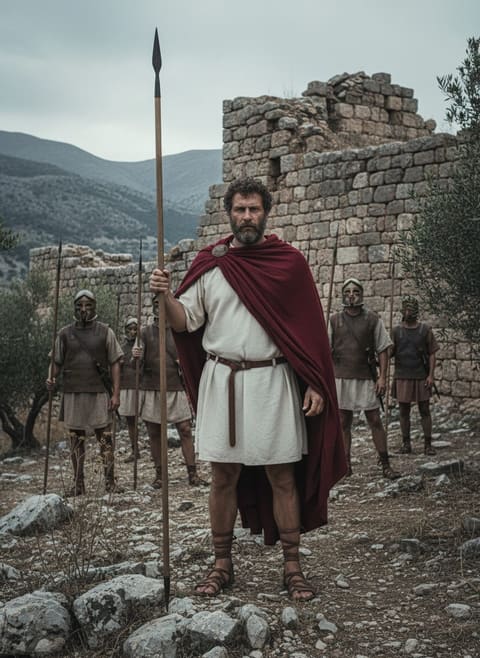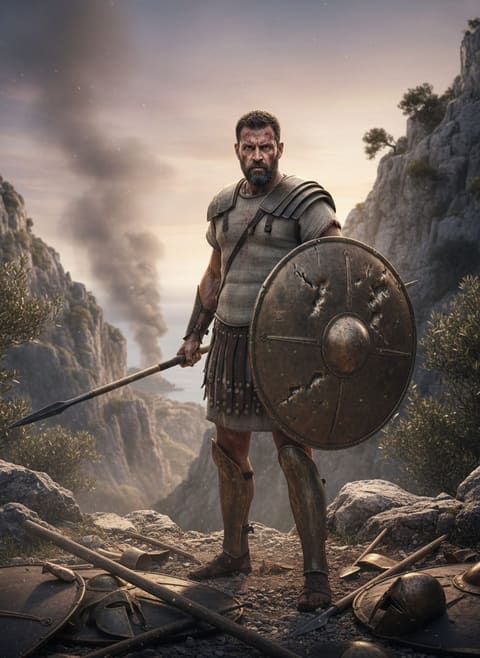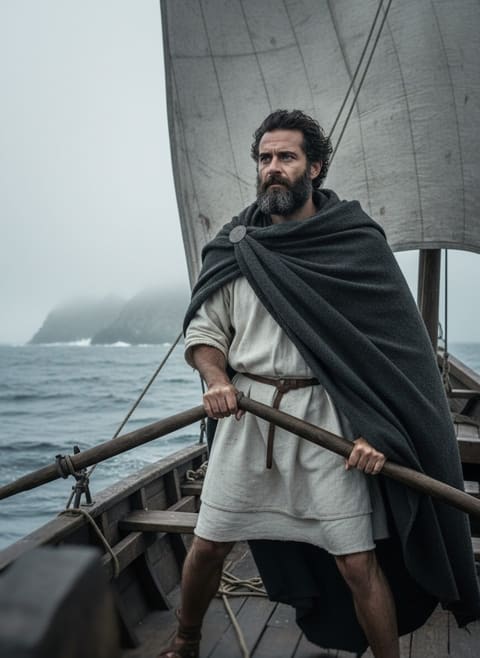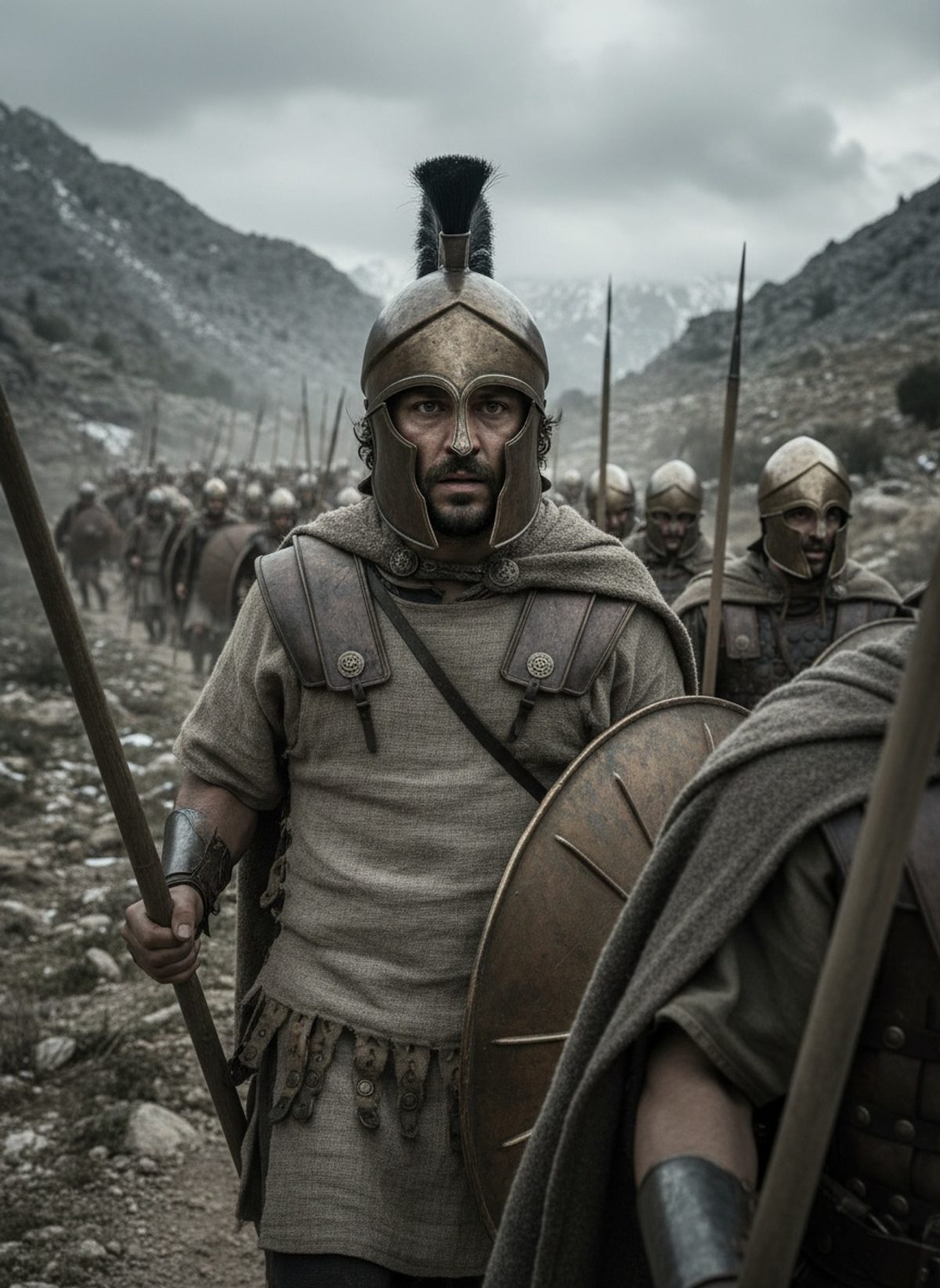
April 5, 401 BCE. Dust rose from the trampled path as the weary soldiers marched on.
The Ill-Fated Campaign
In the heart of the Persian Empire, near the banks of the Euphrates, a grand scheme unraveled. Cyrus the Younger, a Persian prince, sought to overthrow his brother, Artaxerxes II, and claim the throne. For this audacious bid, he amassed an army that included 10,000 Greek mercenaries. Led by experienced generals, they were lured by promises of wealth and glory, unaware that the journey would test them beyond imagination.
The Battle of Cunaxa in 401 BCE was both a triumph and a disaster. Though Cyrus' forces, including the Greeks, fought with powerful resolve, Cyrus fell in battle. The dream of a new Persian ruler died with him, leaving his followers in a precarious position. The Greeks, now leaderless and deep within enemy territory, faced a grim reality: they were surrounded by hostile forces, thousands of miles from home, with no clear path to safety.
Xenophon's Rise to Command
The situation grew dire when Persian satrap Tissaphernes lured the Greek generals to a supposed truce meeting and murdered them. This act of treachery cast the mercenaries into chaos, leaderless and vulnerable. Out of this turmoil emerged Xenophon, an Athenian of around thirty years whose military skills and philosophical training made him an unlikely but effective leader.
Read next: Phryne Stripped Before the Jury and Won Her Own Trial
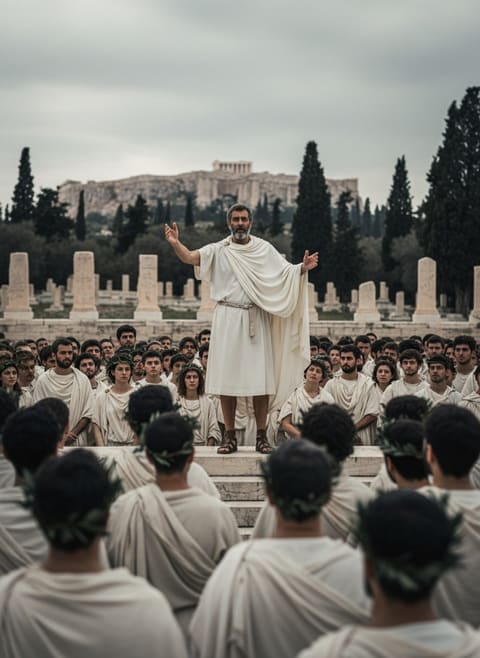
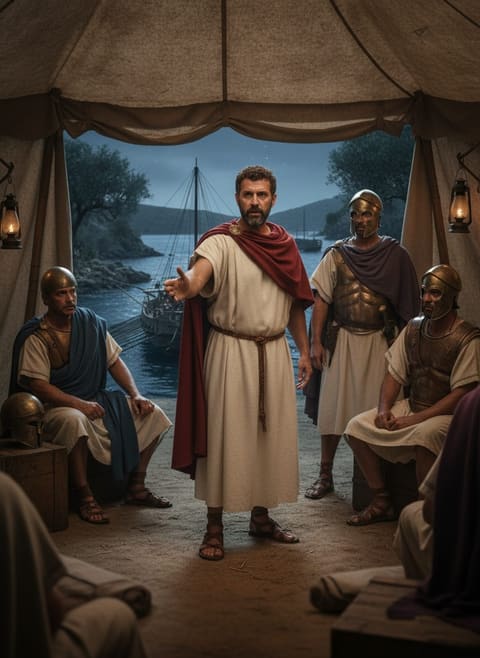
An associate of Socrates and an admirer of Spartan discipline, Xenophon seized the moment. Despite having joined the expedition more out of intrigue than ambition, his ability to strategize and inspire was undeniable. At a crucial assembly, Xenophon addressed the troops, urging unity and resilience. His proposal was both simple and audacious: to march north through hostile lands to the safety of the Black Sea.
Amidst fear and skepticism, Xenophon's clarity and confidence turned the tide. The Greeks reorganized, electing Xenophon as one of their leaders. His leadership would soon face its first stern test as the march began, a 1,500-mile odyssey fraught with danger.
Through Rugged Lands and Hostile Tribes
The retreat became a relentless struggle for survival against nature and foes alike. The mercenaries, clad in their bronze armor and armed with spears, traversed towering mountains and parched valleys. The terrain was as varied as it was unforgiving. Blizzards lashed them in the Armenian highlands, while scorching sun plagued their days in Mesopotamia. Each step was hard-won, but Xenophon’s leadership never wavered.
Encounters with local tribes often erupted into skirmishes, testing the Greeks' fighting mettle. Supplies dwindled to alarming lows, turning every day into a battle for sustenance. Xenophon’s strategies, inspired by his understanding of Spartan warfare and Socratic rationality, guided them through numerically and geographically unfavorable clashes. His accounts, penned in the *Anabasis*, describe the Ten Thousand's tactics—feigned retreats, surprise ambushes—that baffled enemy forces and showcased the Greek penchant for adaptive warfare.
Echoes of "Thalatta, Thalatta!"
The march dragged on for months, each day echoing the one before with its hardships. The goal was the Black Sea, a haven for Greek colonies and a route back to the comforts of home. As they neared the coast, the weary warriors emerged onto the Mount Theches summit. What they saw defied belief—a glint of blue stretching to the horizon.
Read next: Sophocles Stood Before the Court. He Read a Poem.
In that moment, tears flowed freely. Soldiers shouted in unison, "Thalatta, Thalatta!"—"The sea, the sea!" This cry resonated through the ages as a powerful testament to their endurance. The prospect of ships to carry them from the foreign land renewed their spirits.
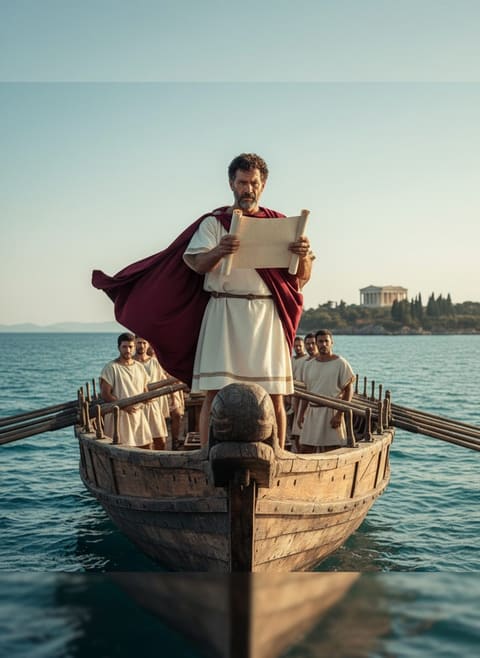
The Greeks eventually reached Trapezus, a Greek settlement on the Black Sea, where the promise of safety became a tangible reality. Here, they recuperated, reflecting on their ordeal. The journey had bonded these disparate mercenaries into a brotherhood forged in adversity.
A Legacy Written in History
Xenophon's account of the Ten Thousand’s journey, the *Anabasis*, is more than a military narrative. It's a profound exploration of human resilience, leadership, and the thirst for freedom. His writings later inspired military tacticians, from Alexander the Great to generals of modern history, with their innovative strategies and philosophical undertones.
This odyssey of courage and survival remains a captivating chapter in ancient history. It reminds us of the indomitable spirit shared across cultures and eras—a testament to the power of leadership and resolve to transform adversity into triumph. As history often does, it finds in these ancient events a mirror reflecting our own struggles and triumphs in the face of overwhelming odds.