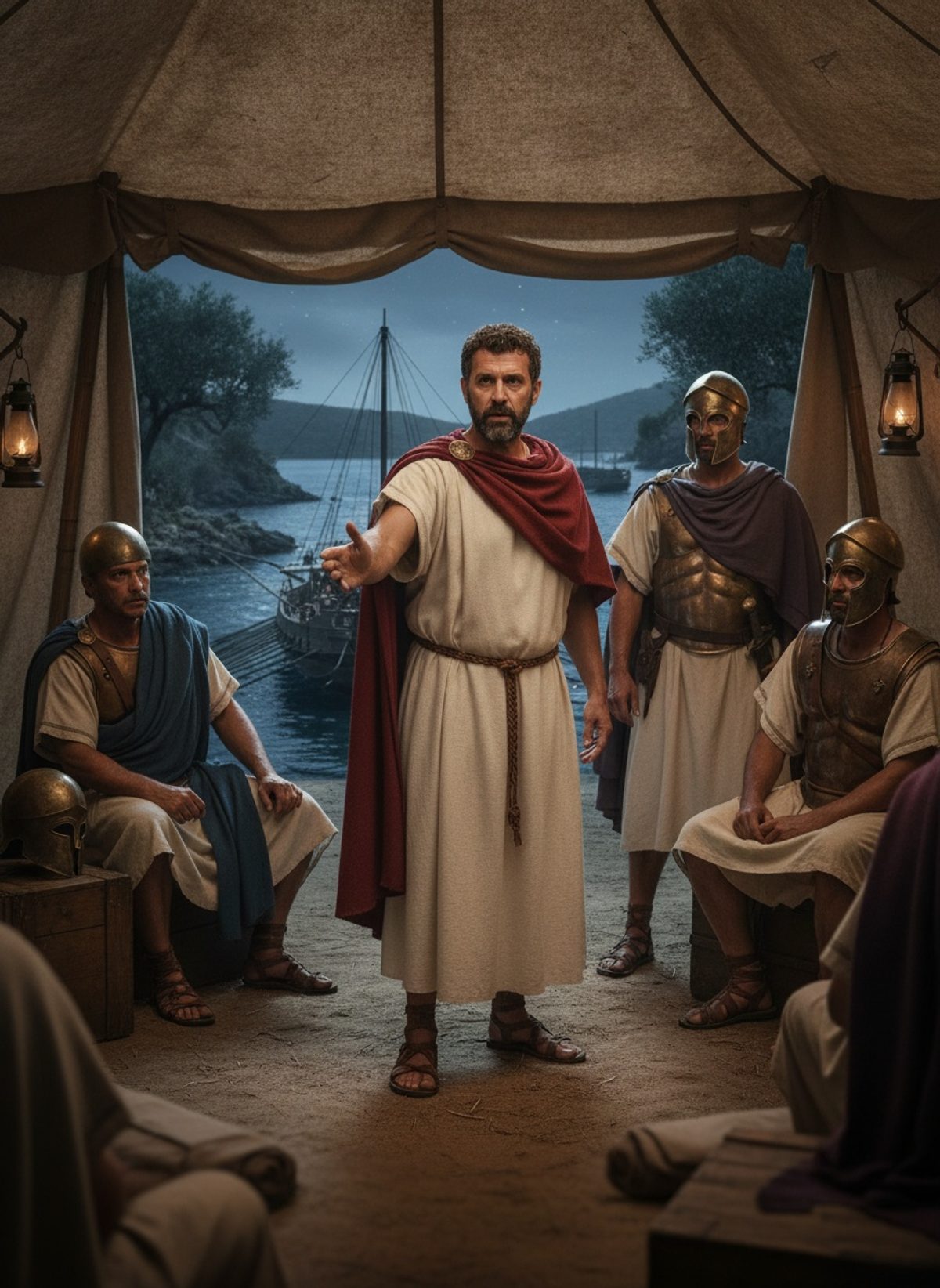
He described seeing a sea turning solid in the summer sun. Pytheas of Massalia was laughed at. His journey beyond the farthest reaches of the known world was the stuff of legends thrumming with icy seas and midnight suns—an odyssey dismissed by his contemporaries as fanciful yarn spinning. Yet Pytheas had done something no Greek before him had achieved: he had sailed to the edge of the world and returned to recount the wonders he found there.
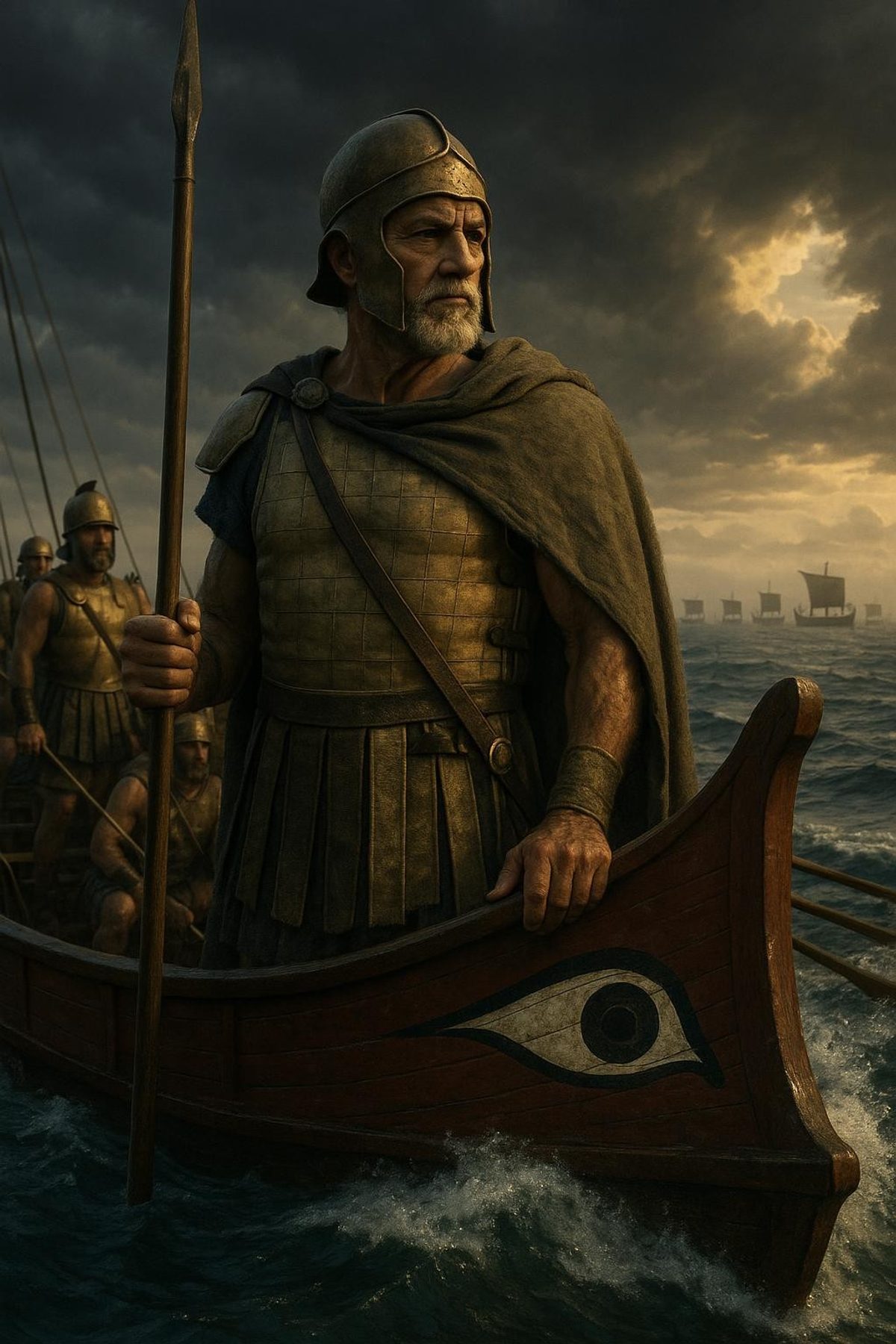
Born around 350 BC, Pytheas hailed from Massalia, the ancient Greek colony on the Mediterranean coast that today is known as Marseille. A mariner and geographer by trade, Pytheas possessed a wanderlust unusual for his time. Around 325 BC, he embarked on an expedition that would take him farther north than any Greek had ventured before, into the unknown lands whispered of in Mediterranean ports. As Pytheas set his sails north, the familiar coastlines of the settled world faded behind him, and the solemn solitude of uncharted waters stretched boundlessly ahead.
The accounts of his journey, compiled in a work that has not survived through the ages but is known from the fragments mentioned by later historians, describe his encounters with remote isles and distant peoples. The most astonishing of Pytheas's feats was his circumnavigation of the British Isles, an exploit that rendered him the first known Greek explorer to voyage so far. From the safety of their home cities, skeptical Greeks could barely conceive of the islands' size and diversity. Describing these lands, Pytheas detailed the vibrant Celtic and Germanic tribes, intriguing societies with their own rich lore and traditions.
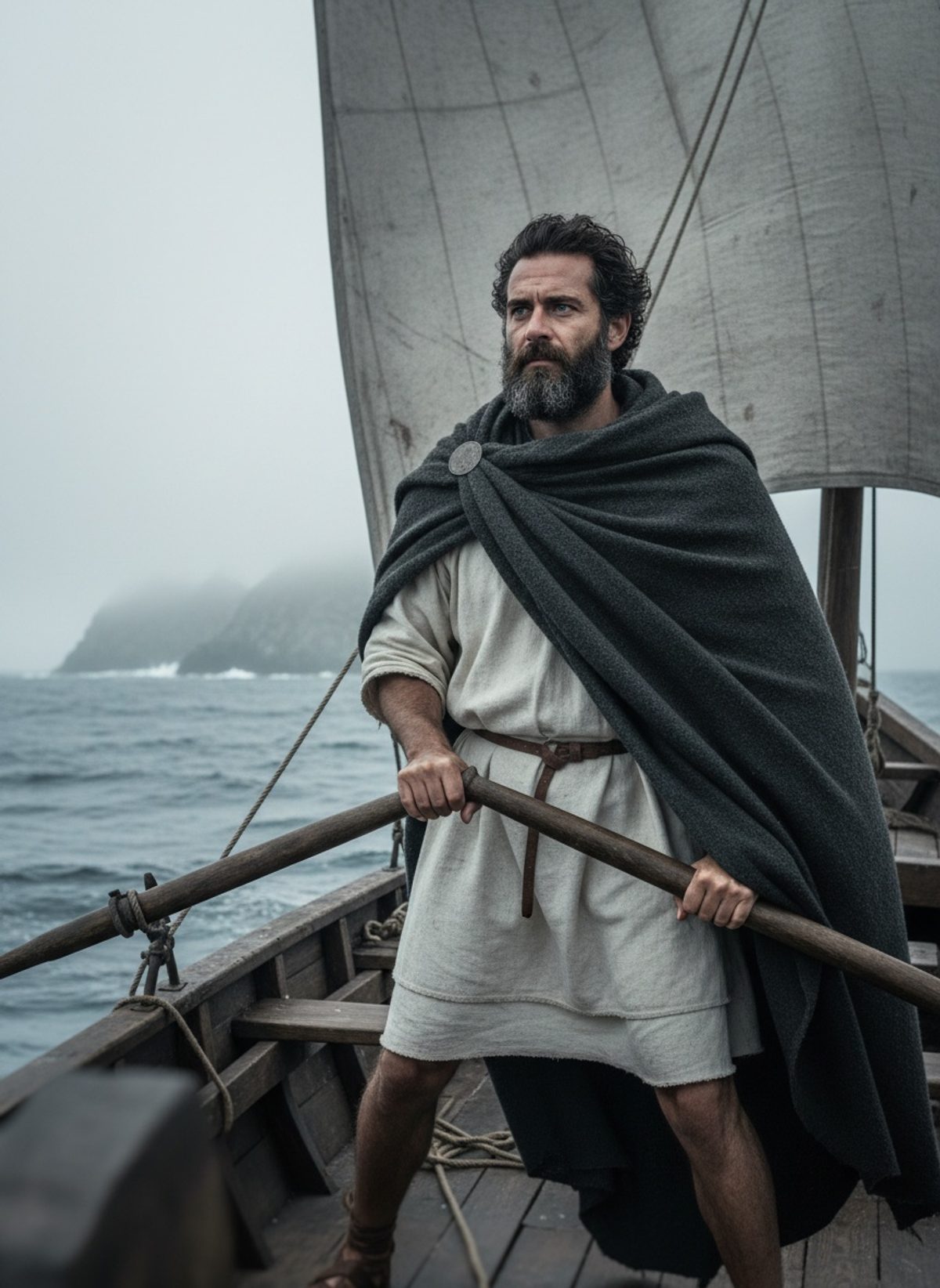
But Pytheas did not stop at Britain. Driven by curiosity and perhaps a dose of daring folly, he pressed on, his destination the mysterious Thule. For ancient Greeks, Thule was less a geographical location and more a symbol of ultimate remoteness. Pytheas's description of Thule suggested it lay just six days' sail north of Britain, potentially placing it in what's now acknowledged to be Norway or Iceland. It was there that he reportedly witnessed the 'midnight sun,' a phenomenon whereby the sun remains visible at midnight during the summer months. His was likely the first Greek account to describe this sunlit midnight, an ultimate confirmation that he was indeed in an ethereal corner of the Earth.
Read next: Cimon Ransomed Athens's Enemies. Then He Freed Them.
Beyond Thule, Pytheas described a sea so dense with ice that it adopted the quality of congealed jelly, impenetrable to ships. These were the Arctic waters, a frigid environment so alien to the Mediterranean experience that to Pytheas's contemporaries, it bordered on mythological absurdity. His observations of the sea connecting intimately with ice refuted established beliefs and were later matched by actual encounters of polar explorers more than a millennium onward.
His journey also fundamentally influenced the Greek understanding of the world's climatic zones. Pytheas proposed the concept of a frigid zone, an insightful addition to the existing knowledge that largely assumed more quite temperate and torrid regions. The Arctic phenomena observed by Pytheas substantiated theories floating among Greek intellectuals regarding abbreviated nights and continuous daylight near summer solstice, concepts western science would grapple with for centuries.
Yet, perhaps what struck Pytheas's audience as most incredible was his deduction about the tides' lunar connection. He posited that the moon's phases affected tidal behavior, representing one of the earliest attempts to correlate celestial cycles with earthly phenomena. His suggestion was not just revolutionary but also accurate, making him a precursor to much later tidal research.
Unfortunately, despite the astounding enormity of his discoveries, Pytheas's validity was fiercely derided by prominent figures of his era and those that followed. Skeptics, including the philosopher and writer Strabo, castigate his findings with the sharp tongue of a realist dismissing the fantastic. Aristotle made no note of him, nor did his student Dicaearchus, whose skepticism relegated Pytheas’s truths to the realm of hyperbole and fiction in the eyes of skeptical Greek scholars.
Strabo, during the first century BC, was particularly vocal in his criticism, condemning Pytheas's testimonies as more speculative tale than substantiated account. Owing much to Pytheas's own unrelenting march through these far off islands, Strabo's critiques ironically cemented the tale of Pytheas in perpetuity, inviting both doubt and enduring curiosity. Future generations, equipped with the benefit of more prolonged exploration and emerging scientific methodology, would eventually verify many of his claims. Thus, Pytheas stands today with a legacy both rabble-rousing and profound, a figure poised at the intersection of mythology and science.
Why does the tale of Pytheas matter? Because it speaks to the unyielding human spirit that nudges the boundaries of what is known. In a time when most mariners clung to familiar shores, Pytheas's untempered curiosity charted courses toward the unknown, threading the needles through specters that even the bravest would bypass. His journey exemplifies our collective hunger for understanding and the courage to embrace uncertainty, offering testimony, not just to geographical discoveries, but to the indefatigable pursuit of truth. As we continue our own voyages, perhaps across the maps of the mind or even eventually into the stars, we owe a nod to Pytheas—a pioneer who sailed beyond the world's edge and glimpsed the promises lying just beyond the horizon.