Socrates was given a chance to escape. He declined.
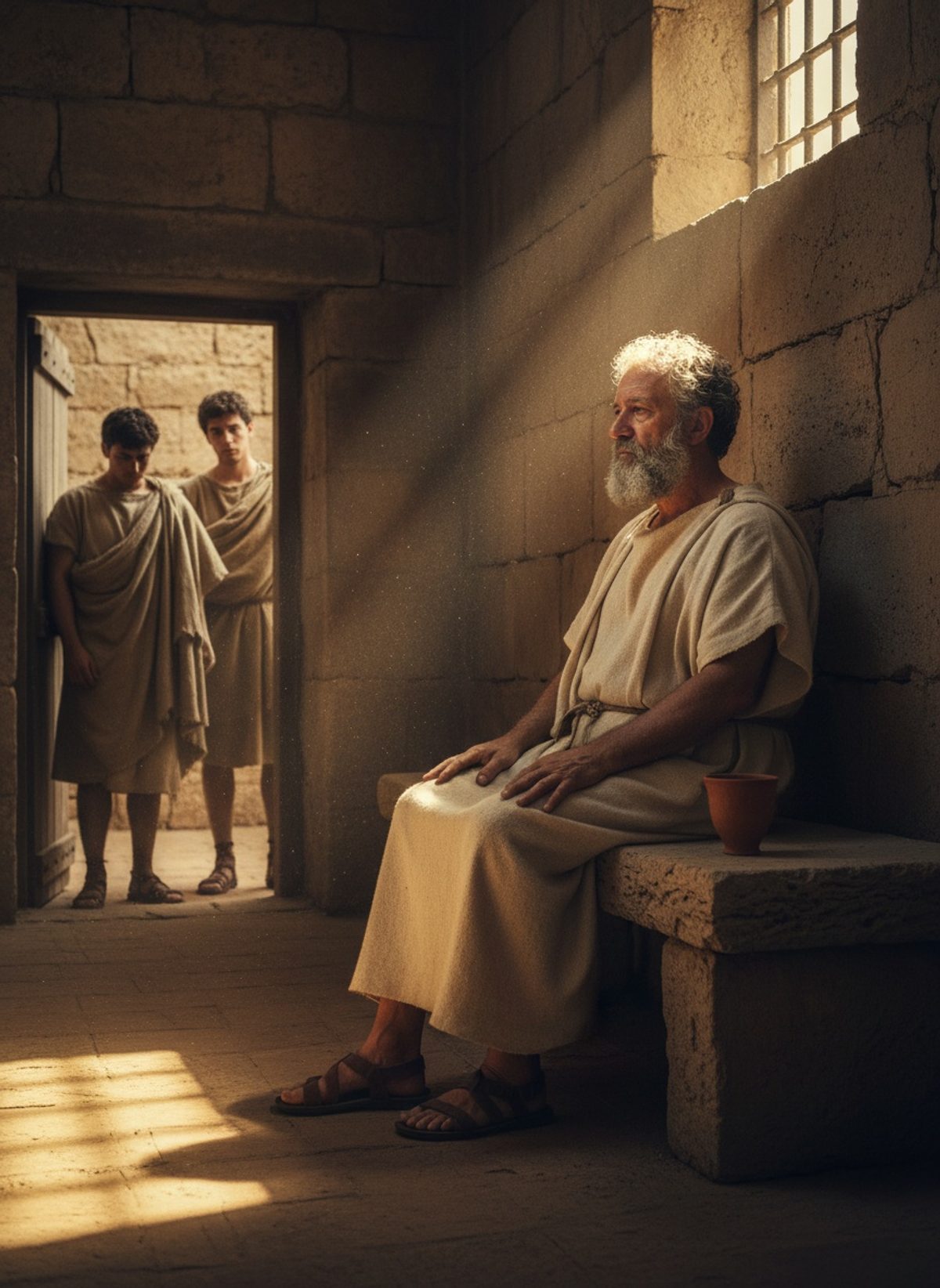
In the heart of Athens, 399 BC, the philosopher Socrates sat in the dimly lit confines of his prison cell. His sentence? Death. The charges? Impiety and corrupting the minds of Athenian youth. To the casual observer, it was a desperate situation with a seemingly simple solution. Thanks to the efforts of his loyal followers, the guards had been bribed, the cell door left ajar, and a vessel awaited to whisk him away to safety. Yet, the philosopher chose to remain. What compels a man to stay and meet his fate when escape is but a step away?
A Trial in the Cradle of Democracy
Athens prided itself on its democratic ideals, yet these very principles were put to the test during the trial of Socrates. The charges against him were severe, claiming he failed to acknowledge the traditional gods of the city and introduced new deities while leading the youth astray. Despite the gravity of these accusations, the legendary Greek philosopher transformed his trial into a lesson on principles and integrity.
The words of Plato, one of Socrates' most devoted students, paint a picture of a man steadfast in his beliefs amidst adversity. During the trial, Socrates seemed more concerned with the moral fabric of his society than with securing his own freedom. Confronted with the charges, he responded not with fear but with the elenchus, his method of dialectical questioning. It was an opportunity for Socrates to teach, to probe the very foundations of Athenian ethics, and to challenge his accusers and jurors to self-reflect on the true meaning of justice and piety.
Read next: Phryne Stood Before the Judges. Athens Was Speechless.
A jury of 501 Athenian citizens was tasked with weighing the fate of this influential thinker. Socrates made no attempt to pander to the jury for a lesser sentence. Instead, he suggested his recompense for a life devoted to the betterment of society should be free meals for the rest of his life—a stark contrast to the customary penance. In the end, the vote was taken, and Socrates was sentenced to death by a margin of just over 30 votes, setting the stage for one of history's most intriguing ethical stands.
The Open Door
Following his trial, Socrates awaited his execution in prison. His friends, unable to accept the impending loss of their mentor, devised an escape plan. Crito, one of Socrates' closest companions, made arrangements for a clandestine departure. The door to freedom was not merely metaphorical; at the proper timing, it lay juxtaposed against the dim walls of his cell, a test of philosophy against primal survival instincts.
What the escape plan offered was a tangible divergence from a fate determined by the volatile passions of the populace. The guards, swayed by money, had agreed to look the other way. A ship readied itself to take the philosopher to Thessaly, where he could continue his teachings—far from the reach of Athenian decree. But like the protagonists of stories untold, Socrates refrained. He would not flee, and his reasons were interwoven with the very essence of his moral teachings.
What kind of example would he set if he ran? Socrates reasoned that escaping would hypocritically contradict the virtues he espoused. A citizen must respect the laws of his city, however flawed, or work within its framework to enact change. To challenge injustice not as an insurgent but through the strength of ideas—a seemingly naive but profoundly virtuous pledge.
The Last Lesson
The day came when Socrates had to drink the potion that would rob him of life. He greeted this end with the calm assurance of a man unflinching in his principles. Witnesses to this final act, including Plato, Xenophon, and even his students, were enveloped in a poignant demonstration of resolve and philosophical consistency.
The hemlock was brought to him while Socrates remained engaged, discussing philosophical ideas as naturally as if he were at a symposium, not at death’s door. It was a moment surreal in execution, the kind you can only find in the annals of history's more perplexing narratives. He drank the poison without a hint of fear, his final discourse a testament to a life lived in pursuit of virtue.
Why does Socrates's choice to stand trial, and ultimately embrace his death, matter to us today? In reading about this historical decision, one cannot help but contemplate the values that govern modern society. In an age where principles often yield to expedience, Socrates reminds us of the power of steadfast adherence to one's moral compass. As we watch Socrates drink from the cup, we are confronted by the weight of living authentically and are challenged to consider how we might respond when confronted with our own "open doors."