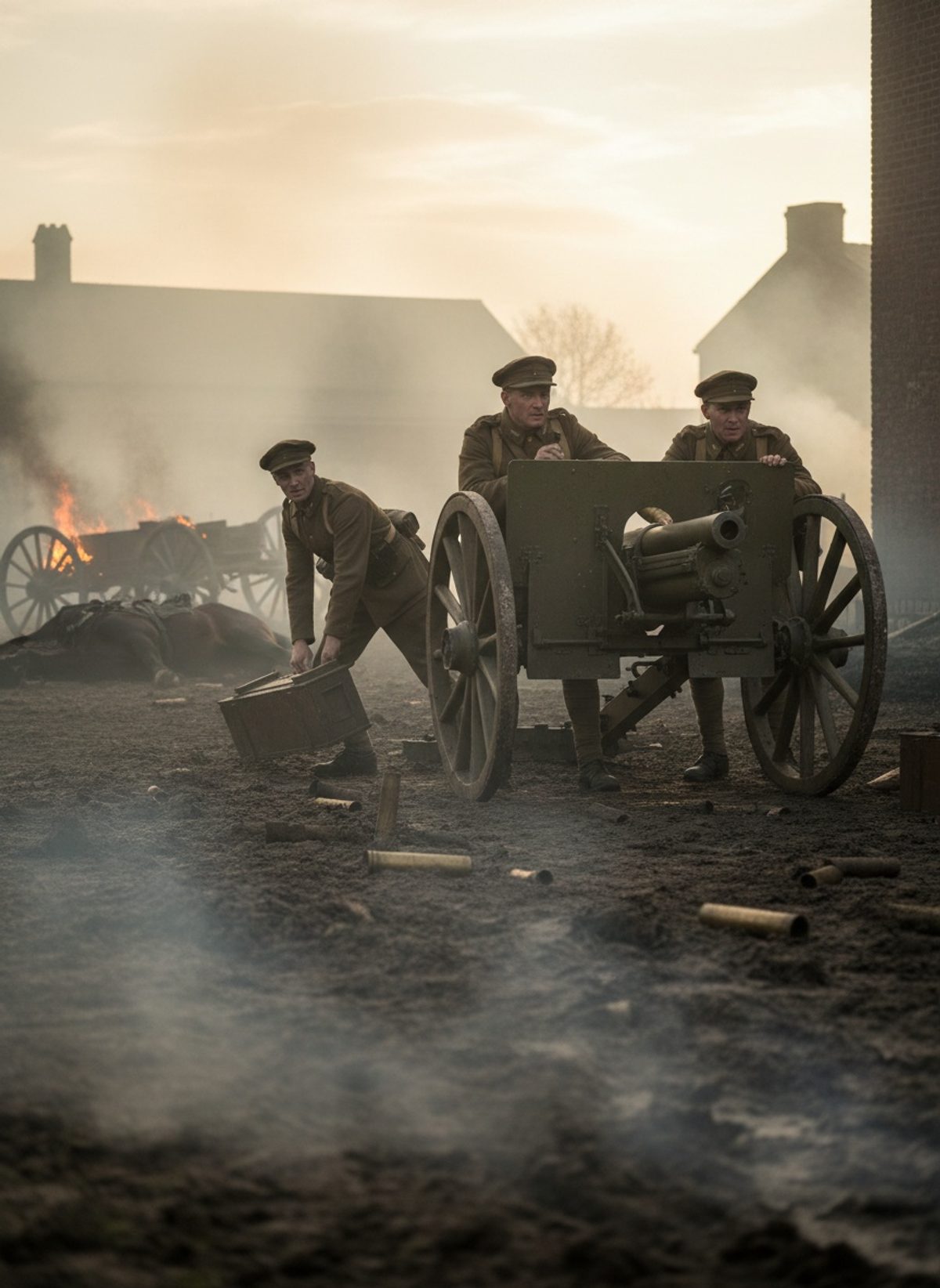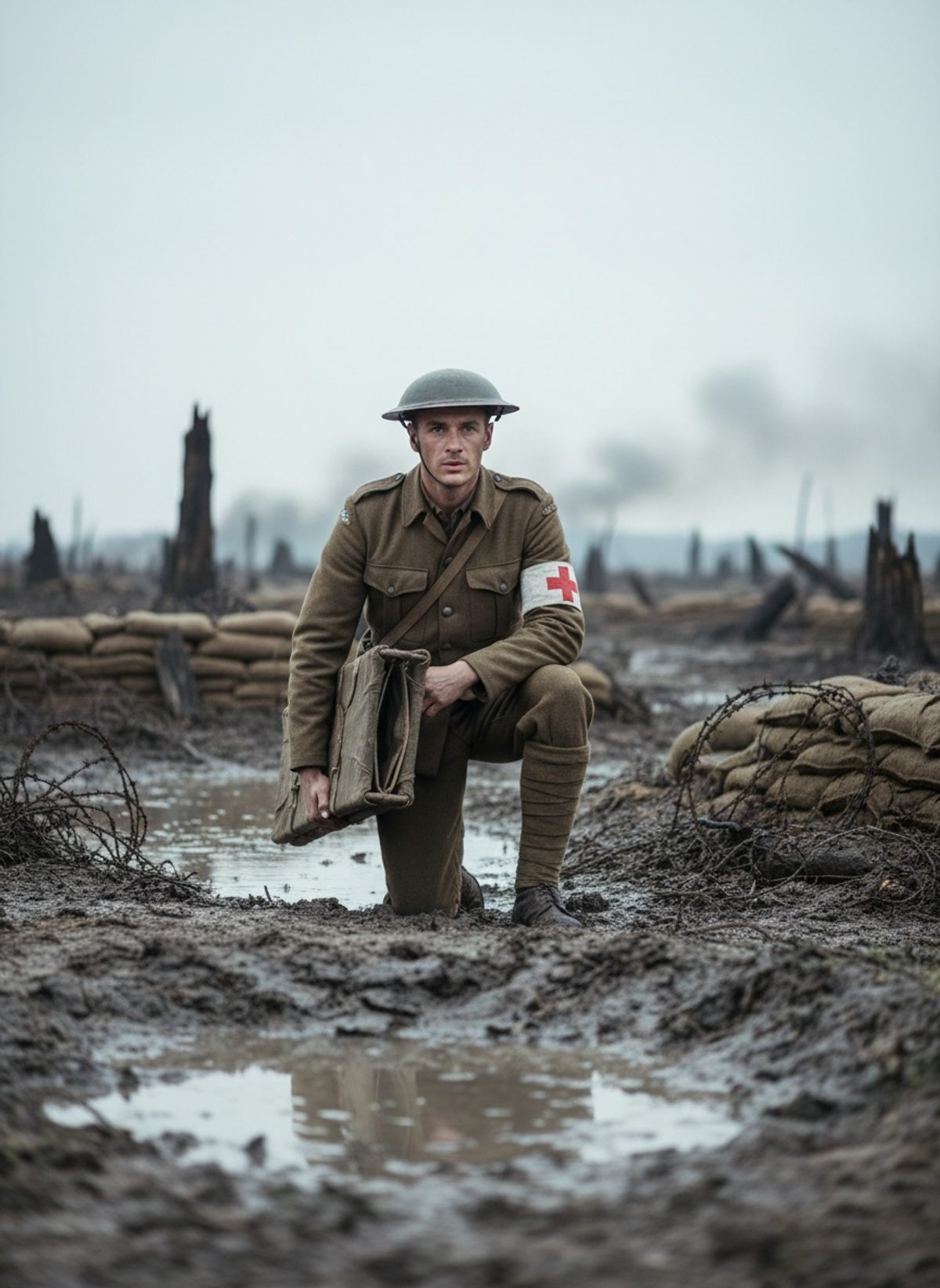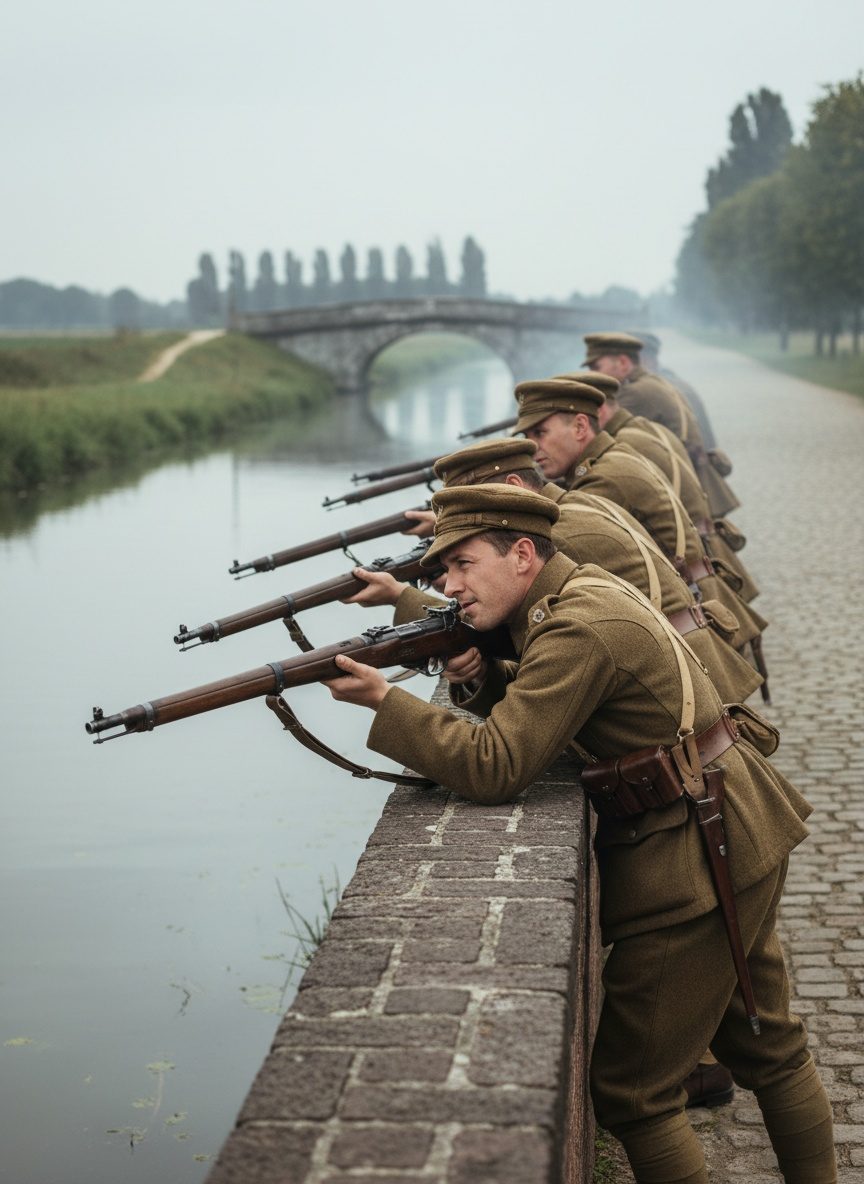
The acrid smoke of gunpowder clung to the air, mingling with the scent of damp earth along the banks of the Mons Canal. Corporal James Hardy squinted through the haze, the taut grip on his rifle as natural as the beat of his own heart. Beside him, the men of the British Expeditionary Force (BEF) mumbled grim reassurances to one another amid the crack of rifle fire that filled the August morning of 1914. Two to one, the odds screamed. But with steady eyes set on the advancing German ranks, they exuded a resolve that belied their numbers.
The Iron Wall of Riflemen
This band of 80,000 men, colloquially known as the "Old Contemptibles," had been sent to hold the line at the Mons Canal, and they were nothing less than an iron wall. The Germans, 160,000 strong, had grown accustomed to swift victories as they marched through Belgium. But they had not yet met their match until they clashed with these seasoned British troops—men who could unleash a fusillade so rapid and precise that it mimicked the staccato roar of machine guns. The reality was far more astounding: these were soldiers whose training enabled them to discharge fifteen aimed shots per minute, a devilish feat that the German forces scarcely believed could be attributed to mere infantry.
What made these men formidable was the meticulous discipline ingrained during their service years. Each held the bolt-action SMLE (Short Magazine Lee-Enfield) rifle with an expertise that turned the battlefield into a symphony of war, where each shot was not just fired but dealt with lethal intent. This unified cadence of destruction created an illusion so convincing that German officers, mere days into the battle, would recount the sheer terror of facing phantom machine gun nests.
The Unsung Heroes of Mons
In the ranks were men like Private William Matthew and Sergeant John Steele, whose names are too often buried beneath the headlines of history. Each had shared in the toil of relentless drills in dusty barracks, their fingers growing numb from polishing rifles that, unknown to them at the time, would save countless lives. Their camaraderie was stitched from shared laughter and a silent understanding of the burdens they bore. When the call to arms came, it was not just duty that compelled them to the canal's edge—it was an unwavering bond to the men beside them.
Read next: The Day a British Padre Carried the Dying From No Man's Land
These soldiers were not just cracksmen with a rifle; they were professionals honed by years in the regiment. Steel helmets had yet to grace their heads, leaving them exposed to the enemy’s artillery. Still, they stood resolute, their uniforms dyed brown with mud and sweat, embodying the steadfast spirit that marked this early chapter of World War I.
The Machine Gun Myth
As the Germans pressed on in escalating waves, the orchestration of British firepower never faltered. The ruse of phantom machine guns continued to play in the minds of German infantry who encountered death at an unseen hand. Captured documents reveal the disbelief etched in German reports, a testament to the confusion sowed by the British riflemen. The "machine gun corps," as imagined by the Germans, had never existed; only the rapid, methodical drill of marksmen practiced in pulling triggers with the precision of clocks ticked the seconds away until the calm between storms.
The tactic of "double tapping"—firing two shots in rapid succession—contributed to the psychological edge. For the Germans, it was as if every soldier in khaki carried a Gatling gun at their hip. The men themselves would later recall with muted pride the astonishment of their foes. This phantom army resonated as a testament to their forebears and training, outliving even the soldiers who coined it.
A Brief Triumph in Shadow
The skirmish at Mons was but the prelude to a retreat, a tactical withdrawal necessitated by overwhelming odds and strategic incongruities. For the men who endured the canal’s ordeal, however, it was an irrefutable victory—a moment where discipline and sheer will stopped the seemingly unstoppable tide of the German advance. In those tense minutes and hours upon the canal's banks, they changed the adversary's perception of what it meant to clash with the British Expeditionary Force.
Retirement from Mons was ordered, making way for the great movement that history remembers as the Great Retreat. But fate had already etched the battle into the annals of war, a fierce testament to the disciplined might of the "Old Contemptibles" who held fast, unwavering, against the torrents of a larger horde.
Memory of Courage, Unforgotten
To those who contemplate the shadows of warfare, the clash at the Mons Canal remains a tale of resilience and ingenuity, defying the boundaries of expertise with raw courage. It mattered little that the Old Contemptibles were eventually forced from their positions; they had demonstrated to the world the terrifying precision of a rifle in expert hands. In the rippling waters of Mons, one can still sense the echo of a time when men of grit and steel forged destiny not with machines, but with unwavering resolve and the bond of shared sacrifice.
In their steadfast stance, these men offered a pivotal glimpse into the spirit that would come to define the struggles and triumphs of British forces during the Great War. Long after the smoldering gunpowder faded with time, the story of Mons continues to serve as a reminder of the valor and resilience that challenges an empire in battle.