Joseph Swan is not a household name. He certainly should be.
The Quiet Chemist of Chesterfield
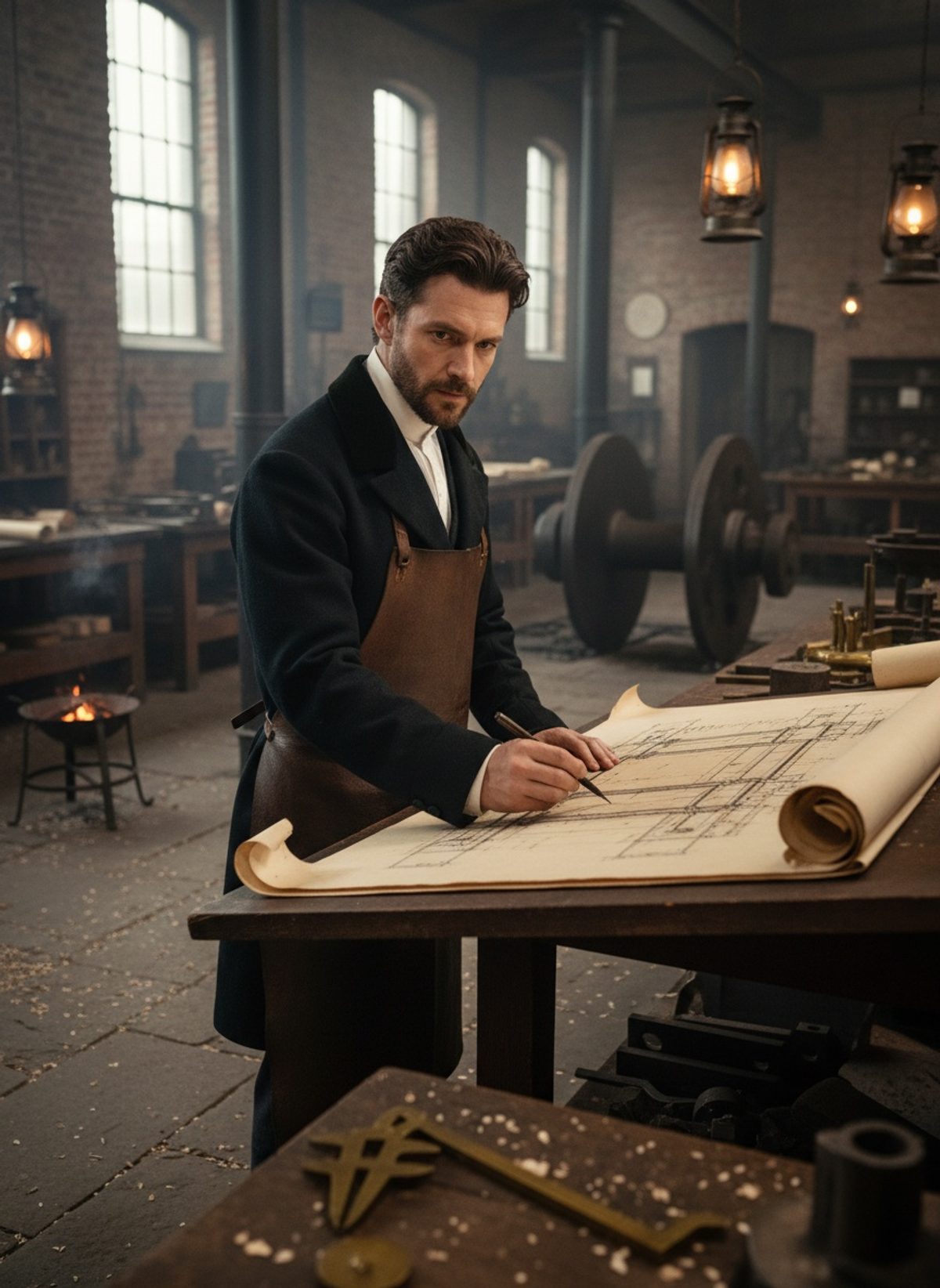
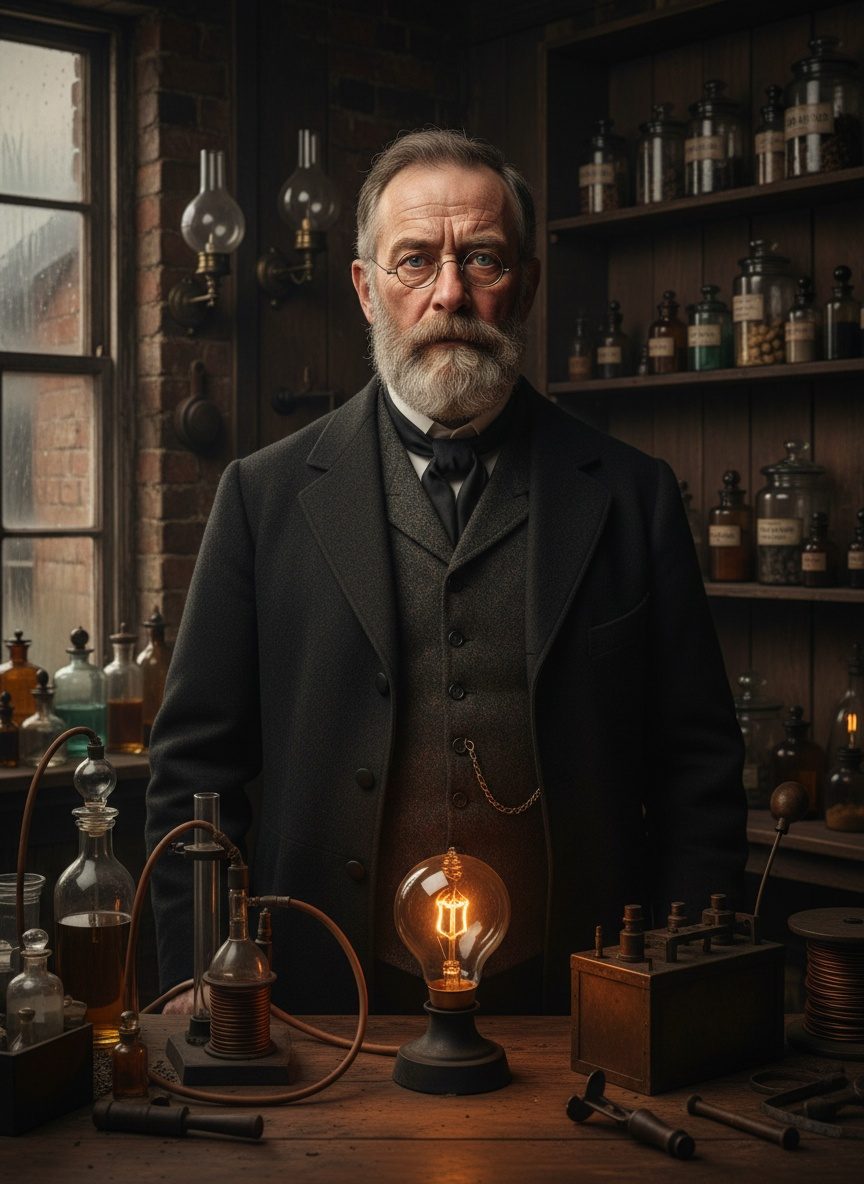
In 1873, while the bustling streets of Victorian England echoed with the clatter of carriages and the chatter of citizens, a less conspicuous cacophony echoed in an unassuming workshop in Chesterfield, Nottingham. This was where Joseph Swan, a man of quiet determination and remarkable vision, spent countless hours fiddling with wires and glass. The son of a lacemaker, Swan was evidently undeterred by his modest background. His dreams reached far beyond those of traditional craftsmanship, gravitating instead toward the untapped potential of electricity.
Swan was a chemist by training and an inventor by trade, contributing significantly to the burgeoning field of photography with his development of bromide paper. But it was the allure of electric light that captured his imagination, a dream that seemed as elusive as it was captivating. At a time when most of England relied on gas lamps and candles, Swan foresaw a future where light was harnessed effortlessly at the flick of a switch. To get there, he needed a delicate balance of physics and chemistry—chiefly involving that promising yet temperamental ally, carbon.
Weaving Light into a Vacuum
This was a period when visions of a modern, electrically illuminated world were taking shape, but the path was fraught with challenges. Swan's breakthrough came in the form of a slender carbon filament, a thin strip derived from cotton soaked in sulfuric acid, integrated into a bulb from which air was painstakingly evacuated to create a vacuum. This crucial detail, often passed over in broader histories, was instrumental in sustaining the filament's glow without being consumed.
Read next: The Day a Miner's Son Gave the World Safe Light
Imagine, for a moment, the scene: a modest room illuminated only by the fitful glow of a few tallow candles. In the middle of it all, Swan, with a mix of apprehension and excitement, connects his filament to a power source. The result—light, steady and unwavering—would have seemed almost mystical to the Victorian observer. In 1879, when Swan first successfully lit up a room in Gateshead with his invention, it was as though he had conjured a piece of the future. Unlike the ghostly flicker of gas lamps or the erratic dance of a candle flame, this was a luminance that promised reliability and brilliance.
A Room in Gateshead that Changed the World
The event itself took place in a quite unremarkable room, yet its impact was nothing short of revolutionary. In this mundane setting, Swan’s invention quietly dispelled the shadows, casting away centuries of soot-stained ceilings and tear-inducing fumes. The room glowed with an even, beautiful light—a triumph of human ingenuity over the murk of history, bridging the gap between past drudgery and future possibility.
Admittedly, Swan's invention was not the finished perfection that later electrified the globe, yet it was an undeniable milestone. This incandescent bulb didn’t merely illuminate; it marked a turning point. Soon enough, the intellectual spark Swan had kindled in Gateshead would ignite a fierce competitive spirit across the world. Thomas Edison, the name more frequently associated with the lightbulb, was but one of many, riding the wave of innovation Swan had set into motion. Edison would eventually patent his own version, leading to legal skirmishes that showcased both the collaborative spirit and the cutthroat reality of scientific advancement.
The Sun in a Bottle
While the serenity of Swan’s English countryside stands in stark contrast to the bustling laboratories of America, the profound significance of his quietly nurtured invention cannot be overstated. It reminds us that innovation often begins far from the limelight, nurtured in solitude and driven by a single determined mind. Swan’s story is not merely an anecdote in the annals of technological advancement; it’s a vivid illustration of how perseverance and vision can quite literally change the world.
Today, as we flick a switch and bathe in the warmth of electric light, we, perhaps unknowingly, pay homage to a lacemaker’s son from Nottingham. Swan’s lightbulb, a glowing testament to individual creativity and perseverance, epitomizes the spirit of innovation that defines the Victorian era—and indeed, our modern age. It serves as a poignant reminder that even the humblest among us have the power to harness the sun.