She sailed over half a million miles under two flags. Despite being a veteran of World War II, this legendary vessel would find her fate sealed not by a mighty aircraft carrier or a lurking battleship, but by a submarine.
A Ghost from Pearl Harbor
Imagine the mystique of a cruiser that had not only survived the infamous attack on Pearl Harbor but had returned to wreak havoc on the adversaries who had dared leave her in flames. The Argentine cruiser in question was none other than ARA General Belgrano. Initially crafted as part of the powerful U.S. Navy's Brooklyn-class light cruisers, she was christened as USS Phoenix before her destiny took her under the southern hemisphere's banner. Witness to the dawn of war in the Pacific, she emerged from Pearl Harbor's sordid waters defiantly intact, a testament to her fortitude and the skilled hands that sailed her.
This grandeur did not shield her on that fateful day in May 1982. At the height of the Falklands War, an unexpected adversary lay in the depths, charting her every move. HMS Conqueror, a stealthy British nuclear submarine, embarked on an audacious mission, trailing the cruiser for two painstaking days as tensions in the South Atlantic reached their zenith.
The Silent Hunters
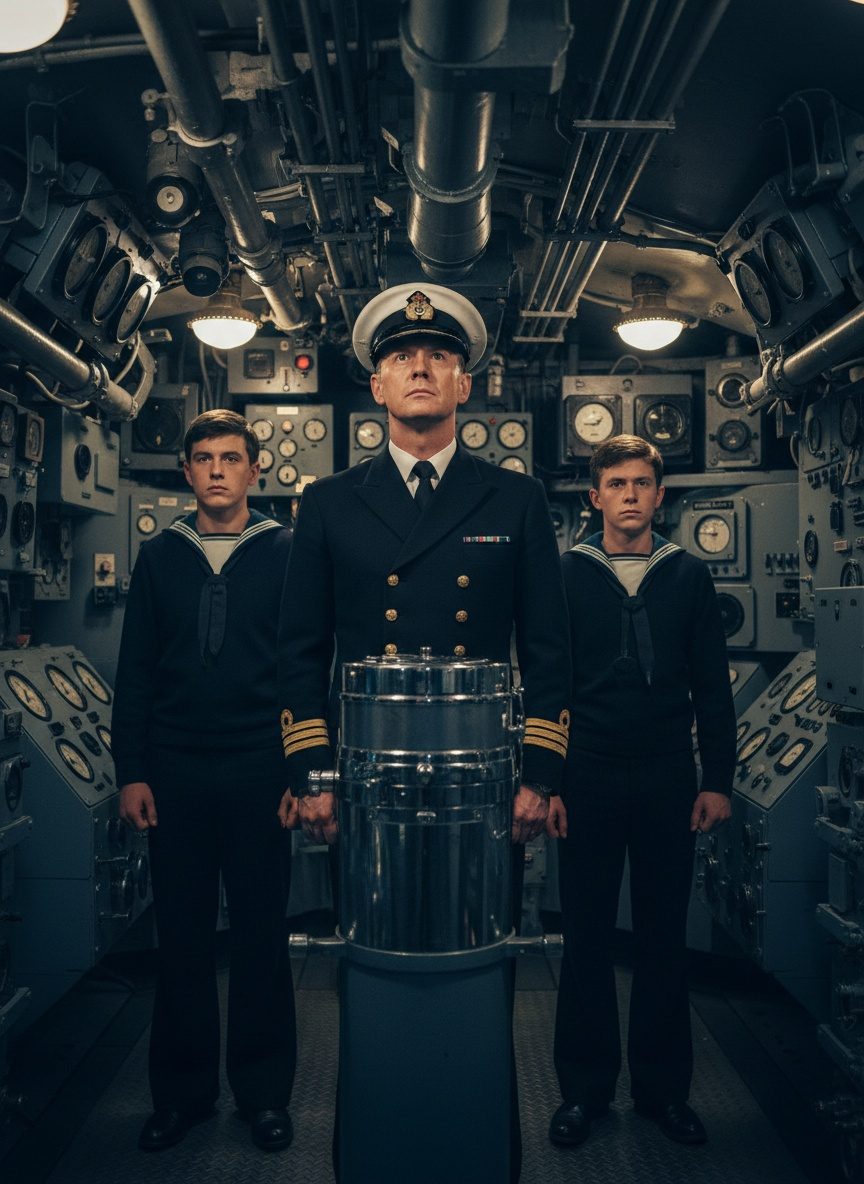
Far removed from the traditional battles that had defined naval warfare, this confrontation unfolded silently beneath the choppy waves. While Conqueror's crew operated in the shadows, they understood the weight of their mission. Weeks into the Falklands War, the British Navy sought control of the seas with urgency. Every order from the War Cabinet was underpinned by strategy, secrecy, and readiness. In this dance of skulking submarines and surface vessels, it was the submariners who became the silent hunters.
Read next: The Day a British Captain Stood Between Slaves and the Sea
HMS Conqueror was adept at this role. Having set sail from Faslane on the banks of the Clyde, she was to prove her mettle against an adversary that believed itself safe from submarine attack outside the established exclusion zone around the Falklands. But the rules of war shift with necessity and strategy. The Argentine Navy's activities within these bounds posed potential threats that demanded swift action. After the British War Cabinet's deliberations, Conqueror received the go-ahead, setting the stage for a confrontation that would tip the balance of naval power in this conflict.
Torpedo in the Darkness
The cautious stalk and ultimate confrontation were testament to the calculated risks of warfare. Sailing undetected beneath the waves, HMS Conqueror's decision to engage the ARA General Belgrano was not taken lightly. It was the first such instance of a nuclear-powered submarine engaging an enemy vessel in this manner. On the afternoon of May 2, 1982, the order was given; silence made way for action as the Conqueror shifted into an attack posture.
Within moments, the tranquility of the South Atlantic was shattered. Two torpedoes swiftly plummeted through the ocean's depths before closing in on their target. The torpedoes struck with precision, unleashing devastation reminiscent of naval battles of the past. In less than twenty minutes, the once-famed vessel, ARA General Belgrano, began its tragic descent into the frigid embrace of the South Atlantic. Despite the alarming speed of her sinking, over 700 of her crew were rescued by accompanying vessels and nearby ships. However, the encounter proved fatal for 323 sailors, a poignant loss for Argentina and a frantic call for ceasefire discussions amidst hostilities.
The Echoes of Silence
In the wake of this engagement, seismic shifts were felt across naval operations in the South Atlantic. The sinking of the General Belgrano not only dismantled Argentina's naval hopes in the conflict but effectively moored the entire Argentine Navy to secure ports for fear of further British attacks. This drastic change meant that for the remainder of the conflict, the British Royal Navy reigned supreme over the contested waters, while Argentina had little choice but to adapt their strategies around land and air operations.
The controversial strike on the cruiser spurred debates on wartime ethics, the legalities involved, and the broader implications of such engagements. While the legality was affirmed under international law due to the proclaimed exclusion zone, the moral dialogue around the act and its profound consequences remained a subject of intense debate. This unexpected turn of events highlighted the Cold War-era capabilities of submarines, whose silent presence and volatile power had come to dominate naval warfare scenarios.
In the story of HMS Conqueror and ARA General Belgrano, history reveals more than just a tale of tactical superiority or technological might. It compels us to ponder the unpredictable specter of warfare, where silence speaks with explosive force, and the stillness of the sea can conceal impending conflict. As the Falklands War unfolded, the encounter recast our understanding of maritime strategy. It shed light on how traditions from decades of prior combat could be shattered by unseen decisions made in the realms of shadows and clandestine operations.